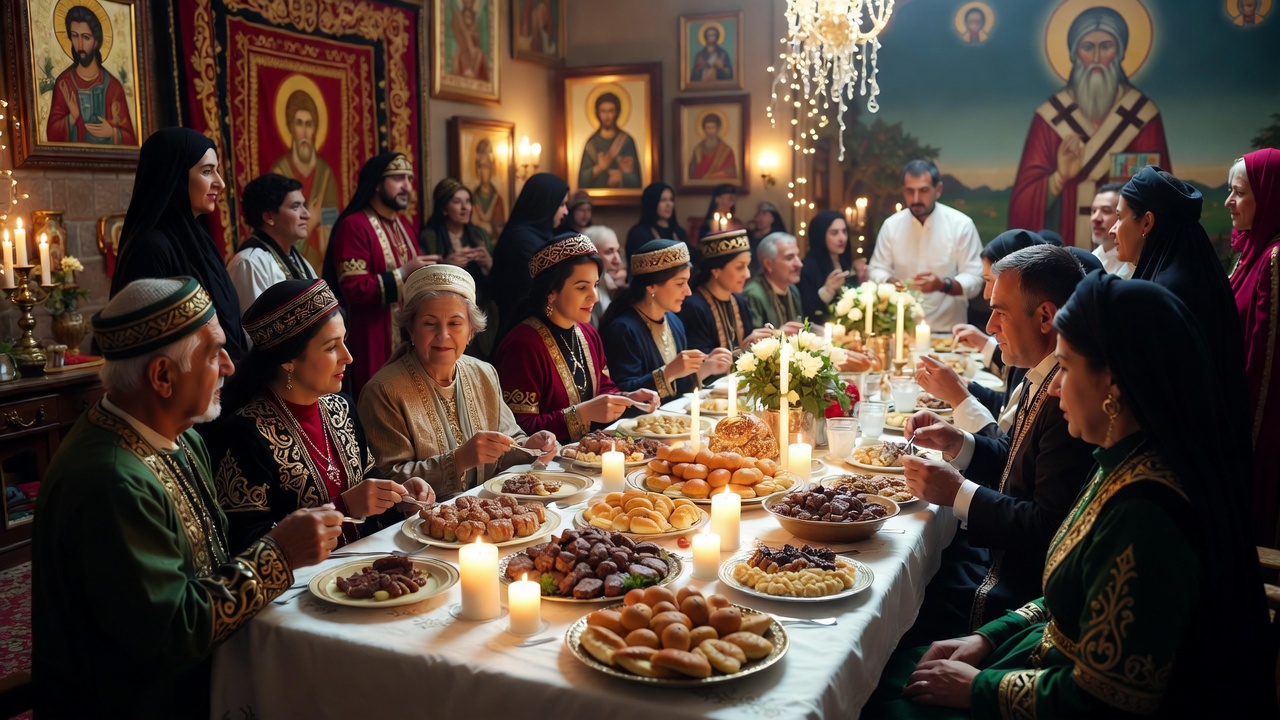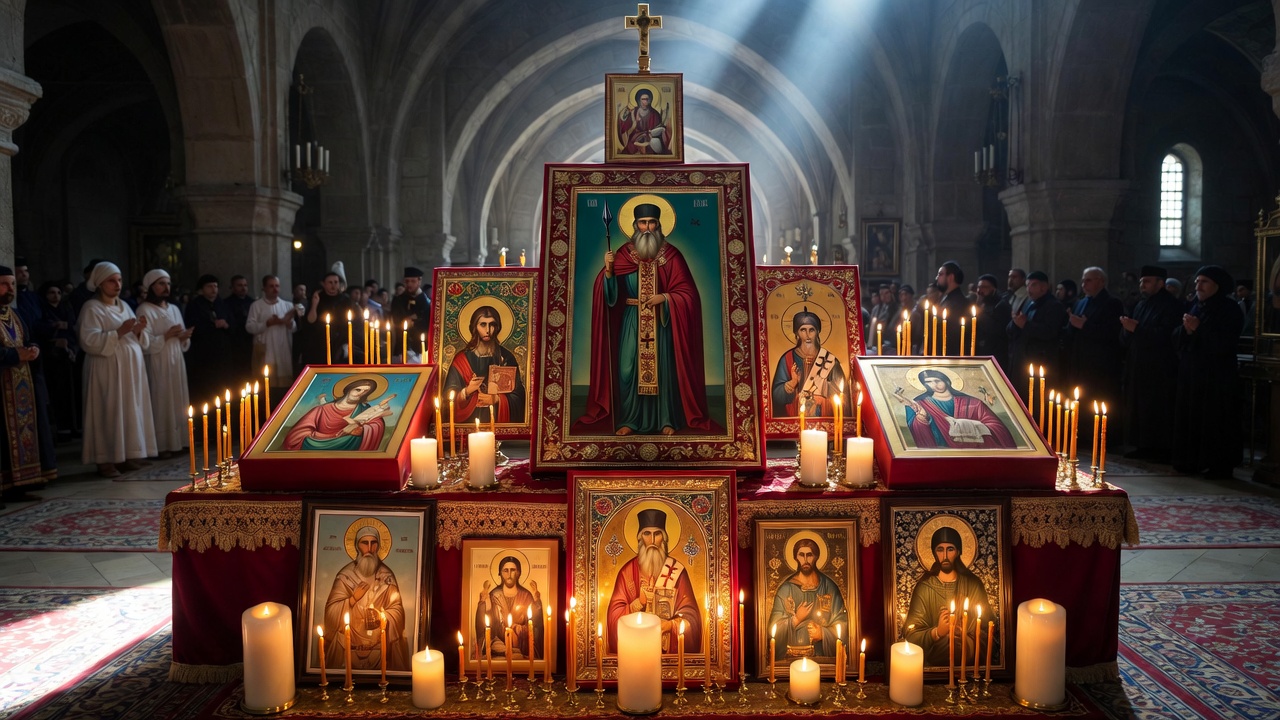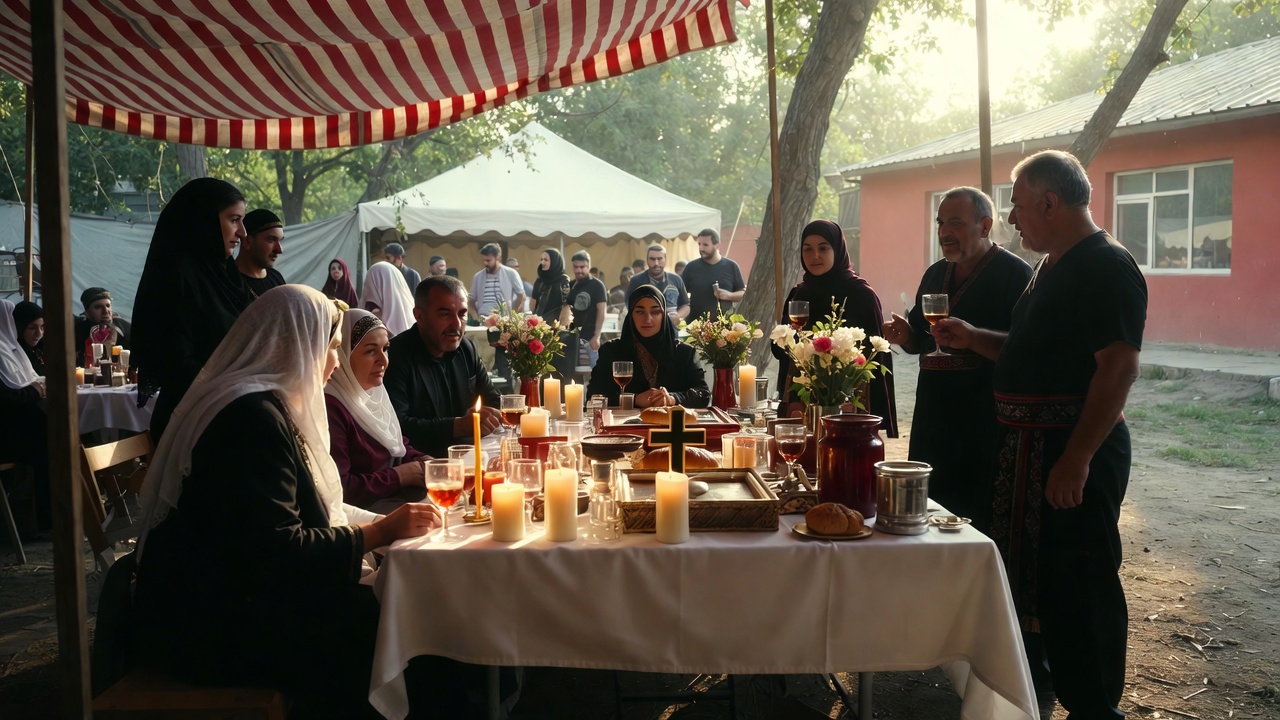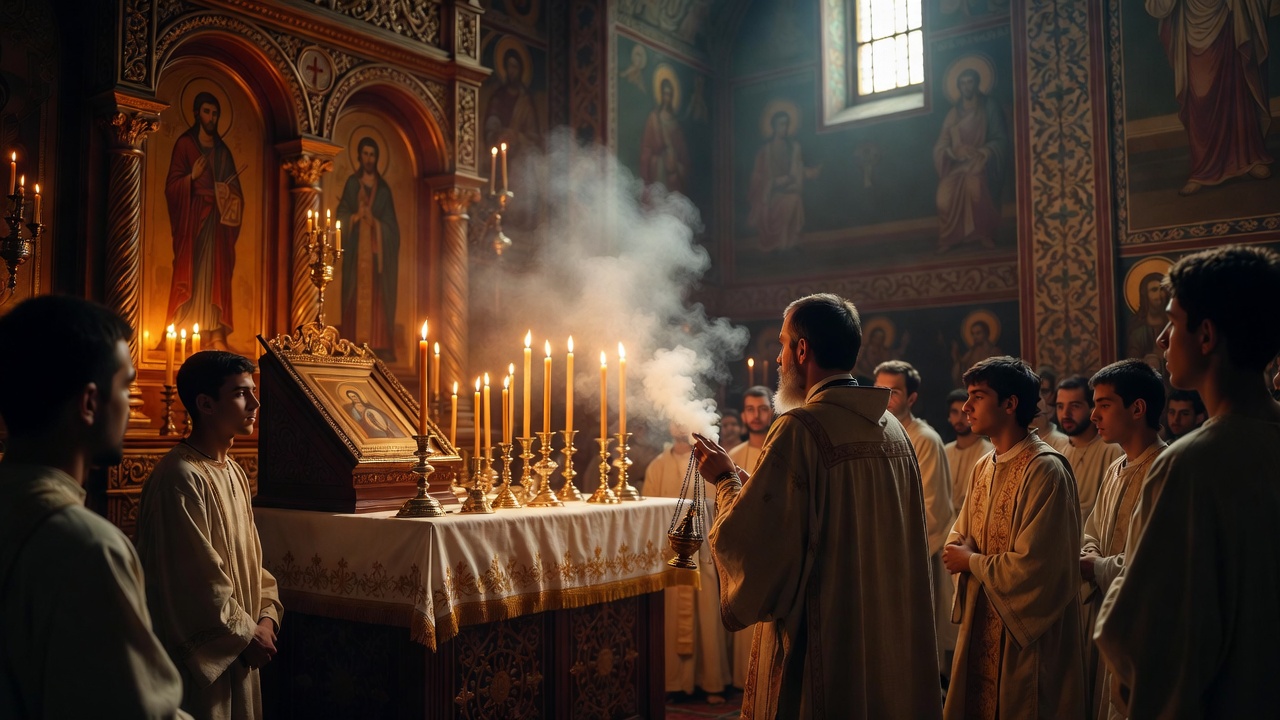
Every late January or early February, a hush falls over Armenian households around the world. Kitchens grow quieter. Meals become simpler. For five days, the faithful of the Armenian Apostolic Church enter a period of spiritual discipline that stretches back more than 1,700 years. This is the Fast of Catechumens — a solemn, deeply meaningful fasting period that serves as a gateway to one of the most joyful and romantic days on the Armenian calendar: Saint Sarkis Day.
In 2026, the Feast of Saint Sarkis the Captain falls on Saturday, January 31. That means the Fast of Catechumens runs from Monday, January 26, through Friday, January 30. For Armenians in Yerevan, Los Angeles, Beirut, Istanbul, Sydney, and every corner of the global diaspora, these dates carry deep emotional and spiritual weight.
But what exactly is this fast? Why does it exist? And how does it connect to a fourth-century warrior-saint who has become the Armenian patron of love and youth? This guide covers everything you need to know.
What Is the Fast of Catechumens in the Armenian Church?
The Fast of Catechumens (Armenian: Դրախտի Պահք, Drakhti Pahk) is a five-day period of strict fasting that is unique to the Armenian Apostolic Church. No other Christian denomination observes this particular fast. It begins on a Monday and ends on a Friday, always falling three weeks before the start of Great Lent.
The word “catechumen” comes from the Greek katēkhoumenos, meaning “one being instructed.” In the early Church, catechumens were adults who were preparing for baptism. They had not yet been fully received into the Christian community. Before their baptism, they were required to fast and pray as a form of purification.
According to the Diocese of the Armenian Apostolic Church in Georgia, the purpose of this fast is “the purification of the five human senses from pagan impurity.” The five days of fasting correspond symbolically to the five senses: sight, hearing, touch, taste, and smell. Each day of the fast is meant to cleanse one of these senses and bring the believer closer to God.
In ancient times, this was an extremely strict fast. The faithful could eat only bread and salt. The celebration of the Divine Liturgy was also prohibited during the fast. Today, most Armenian parishes observe a modified version, with the fast typically lasting three days rather than five in many diaspora communities, though traditionalists still keep all five.
Who Started the Fast of Catechumens? The Role of Saint Gregory the Illuminator
To understand why this fast exists, you need to travel back to the early fourth century and meet one of the most important figures in Christian history: Saint Gregory the Illuminator (Armenian: Սուրբ Գրիգոր Լուսավորիdelays, Sourb Grigor Lusavorich).
Gregory was the son of a Parthian nobleman named Anak. After a complex series of political events, the young Gregory was raised as a Christian in the city of Caesarea in Cappadocia, which was then part of the Roman Empire. As an adult, he returned to Armenia and entered the service of King Tiridates III (also known as Trdat).
The story of what happened next is one of the great conversion narratives in all of Christianity. When Gregory refused to offer a sacrifice to the pagan goddess Anahit, King Tiridates had him thrown into a deep underground prison known as Khor Virap (“deep pit”), where he remained for thirteen years.
Gregory was eventually freed after the king’s sister, Khosrovidukht, received a vision that only Gregory could cure the king’s illness. Upon his release, Gregory healed Tiridates, converted him to Christianity, and set about baptizing the entire Armenian royal court and population. This event — traditionally dated to 301 AD — made the Kingdom of Armenia the first state in the world to adopt Christianity as its official religion.
Before this mass baptism, however, Gregory ordered the people to fast for five days. They needed to purge themselves of their pagan practices and prepare their minds and bodies for the sacrament. According to the Armenian Diocese of Canada, this is the direct origin of the Fast of Catechumens. Gregory wanted the new converts — the catechumens — to enter their new faith with clean hearts and clear senses.
The tradition stuck. Over seventeen centuries later, Armenians still observe this fast every year.
Why Is the Fast of Catechumens Also Called the Fast of Saint Sarkis?
Here is where things get interesting. The Fast of Catechumens is sometimes called the “Fast of Saint Sarkis” (Sourb Sargis Pah’k). This name is technically a misnomer, but it has become widely used because the fast always ends on the Friday immediately before the Feast of Saint Sarkis, which falls on the following Saturday.
The Diocese of the Armenian Apostolic Church in Georgia explains the confusion clearly: during the Middle Ages, both the Byzantine and Georgian churches criticized the Armenian Church for this fast. They associated it with Saint Sarkis and accused the Armenians of practicing something close to sorcery. Armenian medieval writers pushed back against this claim, noting that the fast of catechumens existed independently of Saint Sarkis and had roots going back to Gregory the Illuminator.
Still, the popular connection between the fast and the saint persists. Many Armenian families today think of the fasting week as a period of preparation not just for spiritual renewal, but specifically for the celebration of Saint Sarkis. The fast and the feast have become inseparable in the Armenian imagination.
On the fifth and final day of the fast (Friday), the Armenian Church also commemorates the Prophet Jonah. This is not a celebration of Jonah as a figure, but a reflection on the theme of repentance and self-denial that Jonah preached to the people of Nineveh. It sets the tone for the festive day that follows.
Who Was Saint Sarkis the Warrior? The History Behind the Armenian Patron Saint of Love
Saint Sarkis (also spelled Sargis; Armenian: Սուրբ Սարգիس Զորdelays, Sourb Sargis Zoravar) is one of the most deeply beloved saints in Armenian culture. He is the patron saint of love and youth — the Armenian equivalent of Saint Valentine, though his story is far more dramatic.
A Military Hero of the Fourth Century
Sarkis was born in the fourth century in Cappadocia, a region in central Anatolia that bordered historic Armenia. He was of Greek origin. During the reign of Emperor Constantine the Great (roughly 285–337 AD), Sarkis rose through the military ranks and was appointed General in Chief of the Cappadocian region.
He was a devout Christian. He used his position of power to tear down pagan temples, build churches, and spread the Gospel across the lands under his command.
Flight from Persecution
When Constantine died, his nephew Julian the Apostate took the throne in 361 AD and immediately began persecuting Christians. Churches were destroyed. Believers were killed. Sarkis knew he was no longer safe.
He abandoned his rank and fled east with his son, Mardiros (also called Martiros), to Armenia. There, King Tiran — a grandson of King Tiridates III — welcomed them. But Julian’s armies kept advancing. King Tiran urged Sarkis and Mardiros to seek refuge farther east, in the Sassanid Persian Empire.
Service and Martyrdom in Persia
The Sassanid emperor Shapur II, impressed by Sarkis’s military reputation, appointed him as a commander in the Persian army. Sarkis led many successful campaigns. But he also continued to practice and preach Christianity, converting Persian soldiers along the way.
When Shapur learned of this, he was furious. He summoned Sarkis to the palace and demanded that he worship the Zoroastrian fire gods. Sarkis refused. According to the Armenian Church account, Sarkis spat in the king’s face and knocked down the temple idols.
The king ordered Sarkis’s son Mardiros killed before his eyes. Sarkis was then imprisoned. Even in captivity, his faith remained unshakable. Eventually, Shapur ordered Sarkis beheaded.
Before his execution, Sarkis prayed: “O Lord, all those who remember my name during their trials and tribulations, and who remember this event with prayers and fasting, hear their prayers and grant to them all their desires.”
Fourteen Persian soldiers who had remained loyal to Sarkis cared for his body after the execution. They too were martyred. In the fifth century, Saint Mesrop Mashtots — the creator of the Armenian alphabet — brought Sarkis’s relics to Armenia, to the village of Ushi in the Aragatsotn province, where the Saint Sarkis Monastery of Ushi was built over them.
When Is Saint Sarkis Day in 2026? Key Dates for the Fast and Feast
The Feast of Saint Sarkis is a moveable feast. It always falls on a Saturday, 63 days before Easter, according to the Armenian liturgical calendar. This means it can occur anywhere between January 11 and February 15 in a given year.
Here are the key dates for 2026:
| Event | Date (2026) |
|---|---|
| Fast of Catechumens begins | Monday, January 26 |
| Fast of Catechumens ends / Commemoration of Prophet Jonah | Friday, January 30 |
| Feast of Saint Sarkis the Captain | Saturday, January 31 |
| Great Lent begins | Sunday, February 15 |
| Easter (Armenian) | Sunday, April 5 |
Source: St. John Armenian Church Liturgical Calendar 2026 and the Armenian Apostolic Church in Georgia Calendar
For comparison, here are the dates for nearby years:
| Year | Saint Sarkis Day |
|---|---|
| 2024 | January 27 |
| 2025 | February 15 |
| 2026 | January 31 |
| 2027 | January 23 |
| 2028 | February 12 |
| 2029 | January 27 |
| 2030 | February 16 |
How Do Armenians Observe the Five-Day Fast of Catechumens?
The observance of the Fast of Catechumens varies depending on location, family tradition, and level of religious devotion. However, certain practices are common across Armenian communities worldwide.
Traditional Fasting Rules
In the strictest interpretation, the fast involves:
- No meat, dairy, or animal products for the entire five days (Monday through Friday)
- No celebration of the Divine Liturgy during the fasting period
- In ancient times, only bread and salt were permitted
- The fast is considered a form of dzom (total abstinence), the strictest category of Armenian fasting
Modern Practice
Today, most observant Armenian families follow a simplified version:
- Three to five days of abstaining from meat and animal products
- Some families limit the strict fast to the final three days (Wednesday through Friday)
- Special attention to prayer, reflection, and repentance
- Many parishes hold special evening prayer services during the week
The Friday Observance: Commemorating the Prophet Jonah
The final day of the fast, Friday, carries special meaning. The Armenian Church commemorates the Prophet Jonah on this day. Jonah famously called the people of Nineveh to repent. They fasted, prayed, and were spared from destruction. This theme of repentance through fasting mirrors the entire purpose of the Fast of Catechumens: spiritual renewal and preparation for what comes next.
Armenian Saint Sarkis Day Traditions: Salty Cookies, Flour Trays, and Dreams of Love
If the Fast of Catechumens is the serious, reflective prelude, then Saint Sarkis Day is the joyful celebration that follows. The feast blends religious liturgy with folk customs that are hundreds of years old. Many of these traditions center on love, marriage, and the hopes of young people.
Aghablit: The Salty Cookie Tradition on the Eve of Saint Sarkis Day
The most famous folk tradition of Saint Sarkis Day involves a salty biscuit called aghablit (Armenian: Աղdelays, sometimes written as aghi blit). On the evening before the feast — that is, Friday night, the last night of the fast — unmarried young people eat these extremely salty wafers.
The recipe is deliberately simple and punishingly salty. According to a recipe published by the Armenian Mirror-Spectator, aghablit is made by combining flour, salt, and water into a dough, rolling it out, cutting it into shapes, and baking at 350°F (180°C) until golden. The salt content is intentionally extreme.
After eating the aghablit, the person must not eat or drink anything else before going to sleep. The point is to go to bed extremely thirsty. Armenian tradition holds that whoever appears in your dream bringing you water is your future spouse.
The details of the dream are said to matter. According to the Ecokayan Dilijan Resort’s account of the tradition:
- A golden cup means your future spouse will be wealthy
- A silver cup means average wealth
- A copper or clay cup suggests a more modest partner
- The volume of water in the cup predicts the length of the couple’s union
This tradition is practiced by both men and women, though it has historically been more popular among young women. In the diaspora, especially in cities like Los Angeles, Glendale, and Beirut, it remains a lively social ritual.
Placing Flour or Porridge Outside the Door
Another beloved custom takes place on Friday evening. Families place a tray of pokhindz (roasted wheat flour) or porridge outside their front door or on the rooftop. The belief is that Saint Sarkis will ride past on his legendary white horse during the night.
If the family finds horseshoe prints in the flour the next morning, it means the saint has blessed their home. It is also taken as a sign that an unmarried person in the household will soon find love.
Feeding Birds on Saint Sarkis Day Morning
In some regions of Armenia, young people feed birds with bread on the morning of the feast. The direction the birds fly after eating is believed to indicate the direction from which a future spouse will come. It is a gentle, poetic custom — one that connects the natural world to the human longing for love and companionship.
The Saint Sarkis Halva
On the morning of the feast itself, after the salty aghablit of the night before, Armenian families prepare and enjoy Saint Sarkis Halva — a sweet confection traditionally made from whipped soapwort root, sugar, and sesame seeds. Many modern versions use marshmallows as a shortcut. The halva represents the sweetness that comes after the difficulty of fasting.
As cookbook author Lena Tashjian puts it in The Vegan Armenian Kitchen Cookbook, the holiday’s food traditions follow a clear arc: first the bitter, salty aghablit, then the sweet, fragrant halva. First the struggle, then the reward.
The Legend of Saint Sarkis and the White Horse: Why He Became the Patron Saint of Love
How did a fourth-century military commander become the Armenian patron saint of love? The answer lies in a folk legend that has been passed down for centuries.
According to the tale, after a great military victory, Sarkis and his forty soldiers attended a celebratory feast hosted by a Persian ruler. During the banquet, the soldiers were drugged. The ruler then ordered forty young women to kill the sleeping soldiers by stabbing them in the heart.
One of the women, however, was so struck by the beauty of the sleeping Sarkis that she could not bring herself to kill him. Instead, she kissed him. Sarkis woke up. Seeing the carnage around him, he grabbed the young woman, leapt onto his white horse, smashed through the palace gates, and rode off into a violent snowstorm.
From that moment, the image of a handsome warrior on a white horse, riding through a blizzard became the Armenian symbol of romantic love. The Armenian Apostolic Church of Holy Resurrection in Sydney notes that this legend has been told and retold across Armenian communities for centuries, and it is this story that connects the saint to the dreams of young lovers.
In Armenian folk tradition, Saint Sarkis is depicted as a figure of strength, honesty, and devotion. He helps the poor and punishes the wicked. When he rides, the earth trembles. When he twirls his spear, snowstorms erupt. He is, in every sense, a figure of power — but also of tenderness toward those who love purely.
How Is the Feast of Saint Sarkis Celebrated in Armenian Churches in 2026?
The religious observance of Saint Sarkis Day is centered on the Divine Liturgy (Surb Patarag), which is celebrated in all Armenian churches, with special services in the many churches named after the saint.
The Blessing of the Youth Ceremony
By the order of His Holiness Karekin II, Supreme Patriarch and Catholicos of All Armenians, the Feast of Saint Sarkis has been officially proclaimed a day of blessing the youth. At the end of the Divine Liturgy, young people are invited to approach the altar. A special blessing service is held for them. This practice reflects the Church’s recognition that Saint Sarkis holds a special place in the hearts of younger Armenians.
The Relic Procession in Yerevan
In Yerevan, the capital of Armenia, the feast includes a special procession. A relic of Saint Sarkis is carried from the Mother See of Holy Etchmiadzin — the spiritual center of the Armenian Apostolic Church — to the Saint Sarkis Church in Yerevan. This practice has been part of the celebration for over a decade and draws large crowds.
The relics of Saint Sarkis have an important history. After being kept in Assyria for centuries, they were brought to Armenia by Saint Mesrop Mashtots in the fifth century and placed in the village of Ushi. During excavations at the Saint Sarkis Church of Ushi in 1999, the relics were uncovered and transferred to the museums of the Mother See of Holy Etchmiadzin.
Cultural Events and Festivities
Since the early 2010s, the celebration of Saint Sarkis Day in Armenia has expanded beyond the church. Cultural events, concerts, exhibitions, and traditional folk activities are held in Yerevan and other cities. The feast has become a kind of informal national holiday of love — a day when couples exchange gifts, flowers, and sweets, and when the whole nation celebrates youth and romance.
Saint Sarkis Day vs. Valentine’s Day: How Armenia Celebrates Love Differently
Many people describe Saint Sarkis Day as the “Armenian Valentine’s Day.” While there are surface similarities — both celebrate love, both fall in late January or February — the two holidays are fundamentally different in origin and spirit.
| Feature | Saint Sarkis Day | Valentine’s Day |
|---|---|---|
| Origin | Fourth-century martyrdom and Armenian folk legend | Third-century Roman martyrdom and medieval European courtly love tradition |
| Religious connection | Armenian Apostolic Church feast day with Divine Liturgy | Originally a Catholic feast day, now largely secular |
| Associated fasting | Five-day Fast of Catechumens precedes the feast | No associated fasting period |
| Key food traditions | Aghablit (salty cookie), Saint Sarkis Halva | Chocolates, candies |
| Key ritual | Eating salty biscuits to dream of a future spouse | Exchanging cards and gifts |
| Patron saint | Saint Sarkis the Captain (warrior on a white horse) | Saint Valentine (Roman priest/martyr) |
| Primary symbol | White horse and horseshoe prints | Hearts and red roses |
| Date in 2026 | January 31 | February 14 |
The two holidays coexist in Armenia. Valentine’s Day has gained popularity among younger, urban Armenians, particularly since the 2000s. But Saint Sarkis Day holds a deeper cultural resonance. It is rooted in Armenian identity, Armenian faith, and Armenian storytelling. For many families, it is the more meaningful of the two.
The Deeper Spiritual Meaning of the Fast of Catechumens for Armenian Christians
Beyond the folk customs and romantic traditions, the Fast of Catechumens carries a serious spiritual message. It is, at its core, a reminder of the moment when the Armenian nation turned from paganism to Christianity. Every year, when Armenians fast during these five days, they are symbolically re-enacting the experience of their ancestors who prepared for baptism under the guidance of Gregory the Illuminator.
The fast is sometimes called the “fast of salvation” because it represents deliverance from spiritual darkness. In the fourth century, the catechumens fasted to free themselves from the grip of pagan practice. Today, the fast is understood more broadly as a time to reflect on personal failings, to practice self-discipline, and to prepare the soul for the joy of the feast that follows.
As Rev. Vazken Movsesian writes on epostle.net: “Often, because the Fast of the Catechumens is just before St. Sarkis’ Day, the lessons of the day are forgotten and the physical disciplines (e.g. fasting) have replaced those important reasons for the fasting, namely the message of Jesus Christ.”
This is a gentle reminder that the fast is not merely a cultural tradition or a prelude to a romantic holiday. It is a spiritual practice with roots in the very foundation of Armenian Christianity.
Armenia as the First Christian Nation: Why the Fast of Catechumens Matters for World History
The Fast of Catechumens is not just an Armenian curiosity. It is a living link to one of the most significant events in the history of Christianity.
In 301 AD (the traditional date, though scholars have proposed alternatives ranging from 284 to 314), the Kingdom of Armenia became the first state in the world to adopt Christianity as its official religion. This happened a full generation before the Roman Emperor Constantine issued the Edict of Milan in 313 AD, and well before Christianity became the Roman state religion under Emperor Theodosius I in 380 AD.
The Armenian historian and scholar Nina Garsoïan called this conversion “probably the most crucial step in [Armenian] history.” It set Armenia apart from its Persian and Mazdean neighbors and gave the Armenian people a distinct identity that has persisted through centuries of invasion, genocide, and diaspora.
The Fast of Catechumens is a direct echo of that founding moment. When Gregory the Illuminator ordered the people to fast before baptism, he was not just following a religious protocol. He was creating a ritual of national transformation. Every year, when Armenians observe this fast, they are participating in a tradition that connects them to the very birth of their Christian identity.
How to Observe the Fast of Catechumens if You Are Not Armenian: A Guide for Visitors and Curious Souls
If you are traveling to Armenia during late January 2026, or if you simply want to participate in this tradition from wherever you are, here are some practical ways to engage respectfully.
During the Fast (January 26–30, 2026)
- Eat simply. Follow the Armenian example and abstain from meat and dairy for some or all of the five days. Bread, vegetables, fruit, and grains are traditional.
- Reflect and pray. The fast is a time for quiet contemplation. Consider the theme of spiritual renewal.
- Visit an Armenian church. Many parishes hold special services during the week. You will be warmly welcomed.
- Learn about the history. Read about Gregory the Illuminator, King Tiridates, and the Christianization of Armenia.
On the Eve of the Feast (Friday, January 30, 2026)
- Make aghablit. The recipe is simple: flour, salt, and water. Be warned — it is extremely salty. That is the point.
- Place a tray of flour outside your door. Check for horseshoe prints in the morning.
- Go to bed thirsty. See who appears in your dreams.
On the Feast Day (Saturday, January 31, 2026)
- Attend a Divine Liturgy at an Armenian church if possible.
- Prepare or purchase Saint Sarkis Halva. It is a sweet, sesame-coated confection that is the traditional reward after the salty aghablit.
- Exchange gifts with someone you love. Flowers, sweets, and heartfelt cards are all appropriate.
Saint Sarkis Churches and Pilgrimage Sites Around the World
Saint Sarkis is one of the most widely commemorated saints in the Armenian world. There are over 200 monasteries and churches dedicated to him. Here are some of the most notable:
- Saint Sarkis Church, Yerevan — The main church in the Armenian capital where the relic procession takes place each year on the feast day.
- Saint Sarkis Monastery, Ushi — Located in the Aragatsotn province of Armenia, this monastery was built over the original burial site of the saint’s relics. Pilgrims visit each year on the feast day.
- Saint Sarkis Armenian Apostolic Church, Pasadena, California — One of the most active Armenian parishes in the United States, serving the large Armenian community in the Los Angeles area.
- Saint Sarkis Armenian Orthodox Church, Dearborn, Michigan — A parish that serves the growing Armenian community in the American Midwest. The church is planning a pilgrimage to Armenia for June 2026.
- Saint Sarkis Cathedral, Tehran — A testimony to the centuries-old Armenian community in Iran, where Sarkis has been revered since the time of his martyrdom.
The Victoria and Albert Museum in London holds a large printed curtain made in Madras in 1710 that depicts Saint Sarkis and his son Mardiros on horseback — evidence of how far the saint’s veneration has spread.
The Wedding Season That Follows Saint Sarkis Day in Armenia
One of the most practical consequences of Saint Sarkis Day is its effect on the Armenian wedding calendar. The feast falls during the brief window between the end of the post-Christmas season and the beginning of Great Lent.
Once Great Lent begins (February 15 in 2026), the altar curtains in Armenian churches are closed. No wedding ceremonies take place during Lent, which lasts approximately seven weeks. This means that couples who want to marry in the church must do so before Lent starts. As a result, the two weeks between Saint Sarkis Day and Great Lent are one of the busiest wedding seasons in Armenia.
In 2026, that window runs from January 31 to February 14 — just two weeks. Couples who miss this period will need to wait until after Easter (April 5, 2026) to hold their church wedding. The urgency gives Saint Sarkis Day an extra layer of practical romantic significance.
Frequently Asked Questions About the Fast of Catechumens and Saint Sarkis Day
Q: Is the Fast of Catechumens the same as Great Lent? No. The Fast of Catechumens is a separate, five-day fast that occurs three weeks before Great Lent. Great Lent lasts approximately seven weeks and is the major fasting period of the Armenian Church year.
Q: Can non-Armenians celebrate Saint Sarkis Day? Yes. Armenian churches welcome visitors of all backgrounds. The folk traditions — making aghablit, placing flour outside the door — can be practiced by anyone who wishes to participate respectfully.
Q: Is Saint Sarkis Day a public holiday in Armenia? It is observed as a cultural and religious holiday, though it is not an official day off from work. However, celebrations are widespread, and many businesses in Armenia acknowledge the day.
Q: What is the difference between aghablit and regular cookies? Aghablit is made with an intentionally excessive amount of salt and contains only flour, salt, and water. It is not meant to be enjoyable to eat. The extreme saltiness is the whole point — it makes the person thirsty so they will dream about water.
Q: How is Saint Sarkis Day different from Trndez (Candlemas)? Trndez, celebrated on February 14 in 2026, is another Armenian holiday associated with couples. It involves jumping over a bonfire for good luck in love. While both holidays involve themes of love and youth, they are distinct celebrations with different origins and traditions.
The Enduring Power of the Fast of Catechumens in 2026 and Beyond
In a world of rapid change, the Fast of Catechumens stands as a quiet monument to continuity. It has been observed without interruption for more than seventeen centuries. It has survived the fall of kingdoms, the rise and fall of empires, the Armenian Genocide of 1915, Soviet atheism, and the challenges of diaspora life.
Today, in 2026, the fast is observed by Armenians on every continent. A grandmother in Yerevan and her granddaughter in Glendale, California, may keep the same fast during the same week. A young man in Beirut and a young woman in Sydney may both eat aghablit on the same Friday night and go to bed hoping to dream of their future. The tradition binds them together across distance and time.
The Fast of Catechumens is more than a religious obligation. It is a thread that connects living Armenians to their ancestors — to the catechumens who fasted under Gregory the Illuminator’s guidance before stepping into the waters of baptism, and to the warrior-saint who gave his life rather than deny his faith. It is a story of sacrifice, renewal, and the persistent human hope that love will come when we are ready to receive it.
If you find yourself near an Armenian community at the end of January 2026, pay attention. The kitchens may be quieter than usual. The meals may be simpler. But the hearts of the faithful will be full — preparing, as they have for over 1,700 years, for the sweetness that follows the salt.
How Diaspora Armenian Communities Keep the Fast of Catechumens Alive in 2026
The Armenian diaspora is enormous. More Armenians live outside Armenia than inside it. Communities in the United States, France, Lebanon, Russia, Iran, Canada, Australia, and Argentina all maintain their own parishes, cultural organizations, and holiday traditions.
In Los Angeles and Glendale, California — home to the largest Armenian diaspora community in the United States — Saint Sarkis Day is a major social event. Armenian bakeries prepare aghablit and halva in the days before the feast. Churches hold packed liturgies. Young people organize dinners and social gatherings around the holiday.
In Beirut, Lebanon, where the Armenian community has deep historical roots, the feast is observed with special devotion. Armenian schools teach children the story of Saint Sarkis, and families gather for the aghablit ritual on Friday evening.
In Sydney, Australia, the Armenian Apostolic Church of Holy Resurrection holds services and community events to mark the day. Even in communities where the diaspora population is small, the traditions persist — passed from grandparents to grandchildren, sustained by shared food, shared prayers, and shared memories.
The resilience of these traditions speaks to something essential about Armenian culture. The Fast of Catechumens and the Feast of Saint Sarkis are not just observed — they are lived. They are woven into the fabric of daily Armenian life, connecting people to their faith, their heritage, and their hopes for the future.