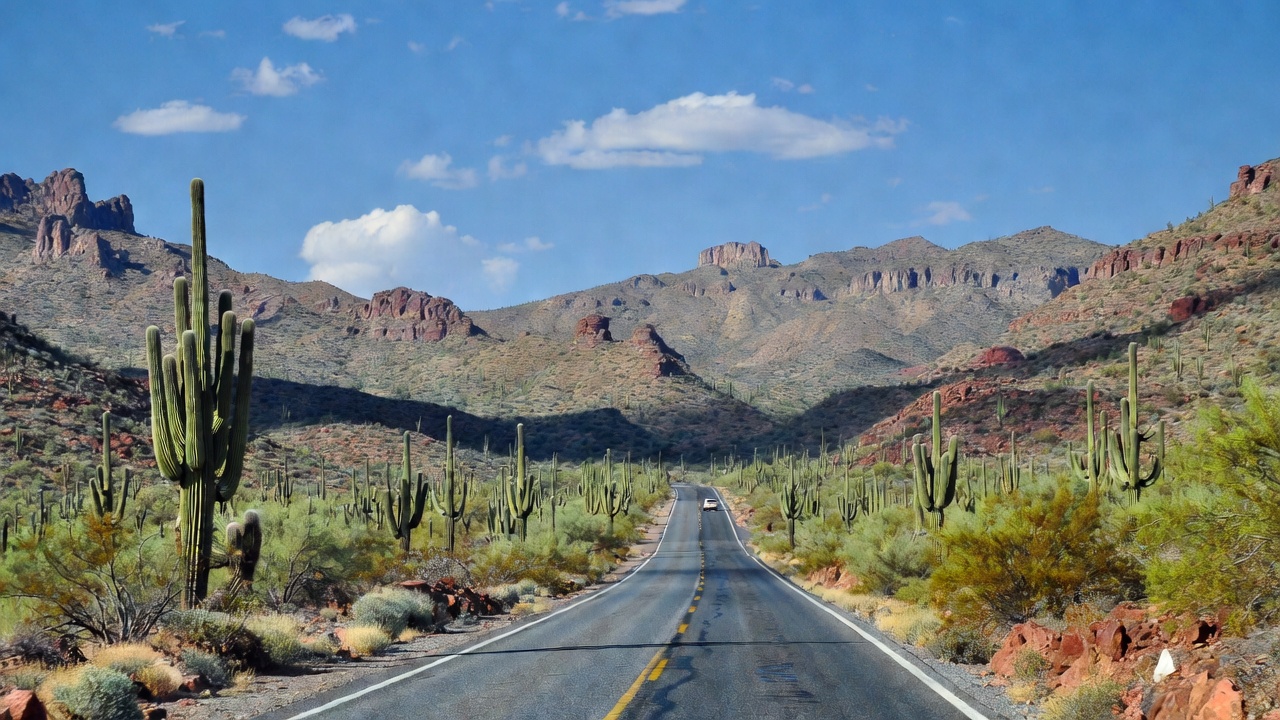
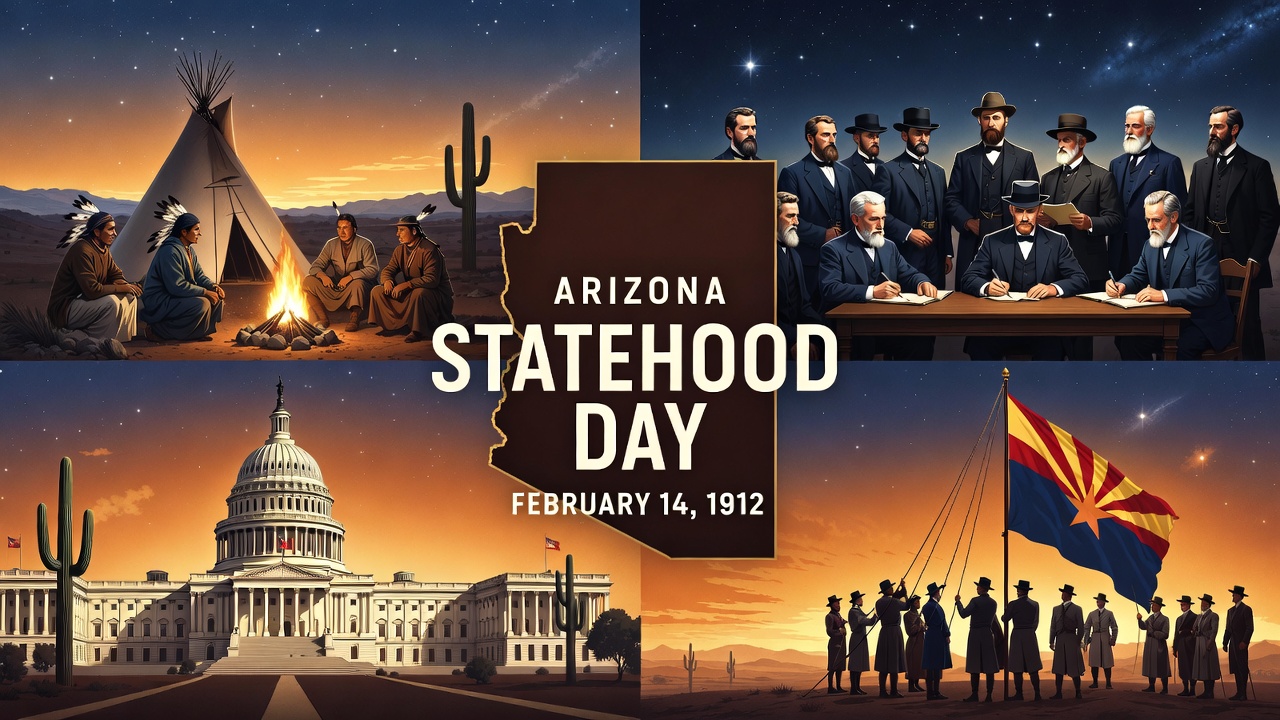
Every February 14, while the rest of the country reaches for roses and chocolate, Arizona celebrates something deeper — its birthday. In 2026, the Grand Canyon State marks 114 years since President William Howard Taft signed it into the Union. This is the story of how a sprawling desert territory fought, stumbled, and charmed its way into becoming America’s 48th state.
When Did Arizona Become a State and Why Is Statehood Day on Valentine’s Day?
Arizona became a state on February 14, 1912. The date was not chosen for its romantic meaning. It simply happened to be the day President Taft signed the proclamation. As the Arizona Historical Society notes, the timing was a matter of scheduling, not symbolism. But the coincidence has stuck. For over a century, Arizonans have joked that they share their state’s birthday with the most romantic day of the year.
Statehood Day is recognized as an official observance across Arizona. Government offices and some schools close. Communities host open houses, historical reenactments, and readings of the original statehood proclamation. In 2026, the celebration falls on a Saturday — February 14, 2026 — giving families a full day to take part.
The Arizona Historical Society hosted a free open house at the Arizona History Museum in Tucson from 10:00 AM to 3:00 PM. Meanwhile, the Arizona Secretary of State’s Office held a ceremonial event at the State Historic Capitol Rotunda in Phoenix, featuring a recitation of the statehood proclamation originally issued by President Taft and a display of the original State Constitution.
Ancient Peoples and Early Civilizations: Who Lived in Arizona Before Statehood?
The land we call Arizona has been home to human beings for at least 10,000 years. Long before European powers drew borders on maps, complex civilizations rose and fell across this terrain.
The Hohokam people built an advanced canal irrigation system in the Salt River Valley — some of the earliest engineered waterways in North America. The Ancestral Puebloans (sometimes called the Anasazi) constructed cliff dwellings in the northern plateaus. The Mogollon culture thrived in the eastern mountains. The Sinagua settled near present-day Flagstaff and Sedona.
These civilizations largely disappeared from the archaeological record by the 15th and 16th centuries. But their descendants did not vanish. Today, 22 federally recognized tribal nations maintain a sovereign presence in Arizona. The Navajo Nation, Hopi Tribe, Tohono O’odham Nation, and several Apache groups all hold deep ancestral ties to the land. Any honest history of Arizona statehood must begin here — with the understanding that the territory had thousands of years of governance, culture, and community before the first European arrived.
How Spanish Explorers and the Mexican Era Shaped Arizona’s Borders
In 1539, Fray Marcos de Niza became the first European to enter Arizona, searching for the mythical Seven Cities of Cíbola — fabled cities of gold. His reports, largely exaggerated, drew Spanish explorer Francisco Vásquez de Coronado north from Mexico the following year. Coronado found no gold. But the Spanish footprint in Arizona had begun.
Over the next two centuries, Spanish missionaries — most notably Father Eusebio Francisco Kino — established missions across southern Arizona. The stunning Mission San Xavier del Bac, completed in 1797 near Tucson, still stands as one of the finest examples of Spanish colonial architecture in the United States.
After Mexico declared independence from Spain in 1821, Arizona fell under Mexican rule as part of the state of Sonora. The settled population remained small and concentrated near Tucson. The region was remote, arid, and dangerous by European standards — but it was home, as it had always been, to Indigenous peoples.
The name “Arizona” itself likely comes from the O’odham word “Alĭ ṣonak,” meaning “place of the small spring.” It is a name rooted in the land’s Indigenous languages, not in Spanish or English.
How the Mexican-American War and the Gadsden Purchase Created Arizona Territory
The Mexican-American War (1846–1848) reshaped the map of the American Southwest. Under the Treaty of Guadalupe Hidalgo in 1848, Mexico ceded a vast territory — including most of present-day Arizona north of the Gila River — to the United States. The price was $15 million (roughly equivalent to over $545 million today). The treaty also guaranteed the language, cultural, and property rights of the existing Mexican citizens in the region.
But the story of Arizona’s borders was not yet finished. In 1853, the United States negotiated the Gadsden Purchase from Mexico for $10 million, acquiring the land south of the Gila River. The primary motivation was practical: the U.S. government wanted a southern corridor for a transcontinental railroad connecting Texas to California.
With the Gadsden Purchase complete, Arizona’s modern geographic outline was roughly in place. The entire region was administered as part of the Territory of New Mexico, created in 1850. Residents in the southern and western portions of the territory, centered around Tucson, soon began calling for their own separate territory.
| Key Event | Year | Significance |
|---|---|---|
| Treaty of Guadalupe Hidalgo | 1848 | Arizona north of the Gila River ceded to the U.S. |
| Gadsden Purchase | 1853 | Southern Arizona acquired for railroad corridor |
| First Tucson Convention | 1856 | Residents petition Congress for separate territory |
| Provisional Constitution | 1860 | 31 delegates adopt a provisional territorial government |
The Civil War and the Birth of Arizona Territory in 1863
Arizona’s path to territorial status ran straight through the American Civil War. Sentiment in southern Arizona leaned toward the Confederacy. In March 1861, secession conventions at Mesilla and Tucson adopted an ordinance of secession, established a provisional Confederate Territory of Arizona, and petitioned the Confederate Congress for admission.
The Confederacy saw Arizona as a strategic route to the Pacific Ocean — and ultimately to California. In July 1861, Confederate forces from Texas under Lieutenant Colonel John R. Baylor captured Fort Fillmore and declared the Confederate Territory of Arizona, with Mesilla as its capital. The territory ran east-to-west, splitting New Mexico along a horizontal line.
The Union had other plans. In March 1862, Union troops from California recaptured southern Arizona. The Battle of Picacho Pass on April 15, 1862, was the westernmost major engagement of the Civil War.
To prevent any future Confederate claim, the U.S. Congress created the United States Territory of Arizona using a north-south boundary along the 109th meridian — deliberately different from the Confederate east-west split. President Abraham Lincoln signed the Arizona Organic Act on February 24, 1863, officially establishing the territory.
The first territorial governor, John N. Goodwin, traveled by wagon train and held a brief ceremony at Navajo Springs on December 29, 1863, where officials took the oath of office and raised the American flag. The first capital was established at Prescott in 1864.
Arizona’s Capital on Wheels: From Prescott to Tucson to Phoenix
Arizona’s territorial period lasted 49 years — from 1863 to 1912. During that time, the capital moved so often that it earned the nickname “the Capital on Wheels.”
Here is the timeline:
- 1864 — Capital established at Prescott, in the northern Union-controlled area
- 1868 — Capital moved to Tucson
- 1877 — Capital returned to Prescott
- 1889 — Capital permanently moved to Phoenix
Each move reflected shifting political power and population growth across the territory. Phoenix, benefiting from its central location in the Salt River Valley and the arrival of the railroad, ultimately won the fight for good.
The territorial era also saw explosive growth. Arizona’s population grew from just 9,658 in 1870 to over 40,000 in 1880, then 88,000 in 1890, and past 200,000 by 1910 — just before statehood. The railroad’s arrival in the 1880s, the rise of copper mining in Bisbee and Jerome, and ranching across the southern grasslands all fueled this expansion.
By the early 1900s, copper production had eclipsed gold and silver mining. Arizona was producing more copper than any other territory or state, earning the nickname “the Copper State.”
Why Did Arizona’s Statehood Take So Long? The Struggle for Admission
Arizona’s road to statehood was one of the longest in American history. Residents began agitating for statehood as early as the 1890s, but Congress blocked them for decades. The reasons were a mix of politics, prejudice, and population concerns.
Congressional objections included:
- The territory’s population was considered too small and too poor
- Members of Congress were uncomfortable with the large proportion of Mexican and Native American residents
- Eastern politicians viewed the Southwest as too remote and undeveloped
- There were political fears about how new Western states would shift the balance of power in the Senate
In 1891, Arizona residents ratified a draft state constitution. Congress rejected it. More statehood bills followed, and Congress rejected those too.
Then came the most controversial proposal. In the early 1900s, a Republican-led plan in Congress sought to combine Arizona and New Mexico into a single state — a scheme designed partly to limit the number of new Democratic-leaning Senate seats. The idea was accepted by most New Mexicans but overwhelmingly rejected by Arizonans, who had no interest in merging with their eastern neighbor.
It was not until 1910 that Congress finally passed enabling legislation allowing Arizona to hold a constitutional convention.
The Arizona Constitutional Convention of 1910 and the Fight Over Judicial Recall
Arizona’s constitutional convention met from October 10 to December 9, 1910, in Phoenix. The 41 Democratic and 11 Republican delegates drafted one of the most progressive state constitutions in the country.
Influenced by the national Progressive movement, the delegates included provisions for:
- Initiative and referendum (allowing citizens to propose and vote on laws directly)
- Recall of all public officials, including judges
- Direct election of U.S. senators
- Strong labor protections (collected in Article XVIII of the constitution)
- An independent Corporation Commission to regulate public utilities
Arizona voters approved the constitution on February 9, 1911, by a wide margin. Congress passed a joint resolution granting statehood to both Arizona and New Mexico in August 1911.
Then came the veto.
On August 15, 1911, President Taft vetoed the statehood resolution. His primary objection was Arizona’s provision allowing voters to recall judges. According to the National Archives, Taft argued that judicial recall undermined the independence of the judiciary. He called the provision “pernicious and destructive” and compared it to “legalized terrorism” against judges.
Taft believed judges needed to be free to apply the law without fear of being voted out after an unpopular ruling. Arizona’s delegates countered that the recall was a check on judicial power and that the high threshold of signatures required (one-quarter of voters in the last election) made frivolous recalls nearly impossible.
How President Taft’s Veto Nearly Blocked Arizona from Becoming a State
Taft’s veto put Arizona in a difficult position. The territory had to choose between its constitutional principles and statehood itself.
Arizona chose statehood — at least temporarily. On December 9, 1911, voters approved a revised constitution that removed the judicial recall provision. With the offending clause gone, the path was clear.
President Taft signed the proclamation admitting Arizona as the 48th state on February 14, 1912.
But the story didn’t end there. Almost immediately after statehood, Arizona’s first legislature proposed a constitutional amendment restoring the recall of judges. In the 1912 general election, Arizona voters overwhelmingly approved it. The recall was back in the constitution — and Taft could no longer do anything about it. As the Center for American Civics at ASU notes, Taft had predicted this outcome. He accepted it, knowing that once Arizona became a state, it could make its own decisions.
One of the first bills introduced in the Arizona Senate was provocatively titled: “An Act to Amend Sec 1 of Article VIII of the Constitution of the State of Arizona as adopted under coercion, (directed by William Howard Taft, President of the United States).”
The people of Arizona had played the long game — and won.
George W.P. Hunt: Arizona’s First Governor and the Inauguration of a State
Arizona’s first governor was George W.P. Hunt, a Democrat and self-made man. Born in Missouri in 1859, Hunt arrived in Arizona as a young man seeking work. He waited tables, worked in mines, and eventually rose to become president of both a mercantile store and a bank in Globe, Arizona.
Hunt entered politics reluctantly but rose through the territorial legislature, serving multiple terms in both the Territorial House and Council (Senate). He presided over the Council during the critical years leading up to statehood.
On February 14, 1912, Hunt delivered his inaugural address from the balcony of the State Capitol in Phoenix to cheering crowds. Photographs from the Arizona Memory Project show him greeting the public on that historic day.
Hunt would go on to serve seven terms as governor — more than any other Arizona governor in history. His tenure shaped the early identity of the state, particularly its progressive labor laws and its independent streak.
What Happened After Arizona Became the 48th State in 1912?
Statehood was just the beginning. Arizona’s first decades as a state were shaped by dramatic economic changes, national conflicts, and social movements.
Key milestones after statehood:
- 1912 — Women’s suffrage approved by Arizona voters, eight years before the 19th Amendment granted the right nationwide
- 1917 — The Bisbee Deportation, in which over 1,000 striking copper miners were forcibly removed from the town at gunpoint — one of the darkest chapters in Arizona labor history
- 1910–1920 — The Mexican Revolution brought conflict to border towns, with several battles fought just across the line from Arizona communities
- 1930s — The Great Depression devastated Arizona’s mining and ranching industries, with the federal government spending millions to buy starving cattle
- World War II — Military bases and defense manufacturing diversified Arizona’s economy and triggered rapid population growth
- 2012 — Arizona celebrated its centennial with statewide events
Today, Arizona is the 6th largest state by area and the 14th most populous, with over 7 million residents calling it home. Its capital, Phoenix, is one of the fastest-growing cities in the United States.
Arizona Statehood Day 2026: How to Celebrate 114 Years of the Grand Canyon State
In 2026, Arizona marks its 114th anniversary of statehood. The celebrations coincide with the buildup to America’s 250th anniversary (America250) in July 2026, giving the year a special national significance.
Here are some ways to celebrate Statehood Day in Arizona in 2026:
- Visit the Arizona History Museum in Tucson — The Arizona Historical Society held a free open house on February 14, 2026, with exhibits, activities, and community celebrations.
- Attend the Capitol Rotunda ceremony in Phoenix — The Secretary of State’s Office hosted a ceremonial reading of the statehood proclamation, displayed the original State Constitution, and previewed Arizona’s participation in the America250 celebrations.
- Explore Arizona’s national parks and monuments — Arizona has 22 national parks and monuments, from the Grand Canyon to Saguaro National Park to Montezuma Castle. Statehood Day is a perfect excuse to hit the trails.
- Watch Arizona PBS programming — Arizona PBS airs special Arizona-themed documentaries and shows to mark the occasion.
- Learn local history at a library — Many county and city libraries, including the Pima County Public Library, host Statehood Day events with exhibits and book displays.
As Arizona Secretary of State Adrian Fontes said in 2025: “Arizona’s journey as a state is a story of resilience, diversity, and community.”
Fun Facts About Arizona Statehood You Probably Didn’t Know
Arizona’s history is full of surprises. Here are some facts that even lifelong residents may not know:
| Fact | Details |
|---|---|
| Arizona is the only state with two statehood days | President Eisenhower designated December 24, 1911 as a national statehood date — the day Taft initially rejected Arizona’s constitution |
| The name “Arizona” is Indigenous | It likely comes from the O’odham word Alĭ ṣonak, meaning “place of the small spring” |
| Arizona’s flag wasn’t adopted until 1917 | The 13 red and yellow rays symbolize the original 13 colonies and the Western sunset; the copper star represents the mining industry |
| The Territorial Cup is college football’s oldest trophy | Arizona and Arizona State have competed for it since 1889 — 23 years before statehood |
| Arizona gave women the vote in 1912 | This was 8 years before the 19th Amendment was ratified nationally |
| The saguaro cactus grows only in the Sonoran Desert | Arizona’s iconic cactus is found nowhere else on Earth |
Why Arizona Statehood Day Matters More Than Ever in 2026
Arizona’s journey from territory to state is more than a dusty chapter in a textbook. It is a story about democracy in action — about a people who refused to be merged with another territory, who wrote a bold constitution, who defied a president’s veto, and who restored their own values the moment they had the power to do so.
In 2026, as the nation prepares for its own 250th birthday, Arizona’s story takes on fresh meaning. The state’s history reflects the broader American tension between federal authority and local self-determination, between progressive ambition and conservative caution, between Indigenous heritage and settler expansion.
For travelers, Statehood Day is a gateway into Arizona’s extraordinary cultural landscape. For Arizonans, it is a day to remember the fight that made their state possible — and to celebrate everything the Grand Canyon State has become.
Happy 114th birthday, Arizona. Here’s to the next chapter. 🌵
Last updated: February 2026