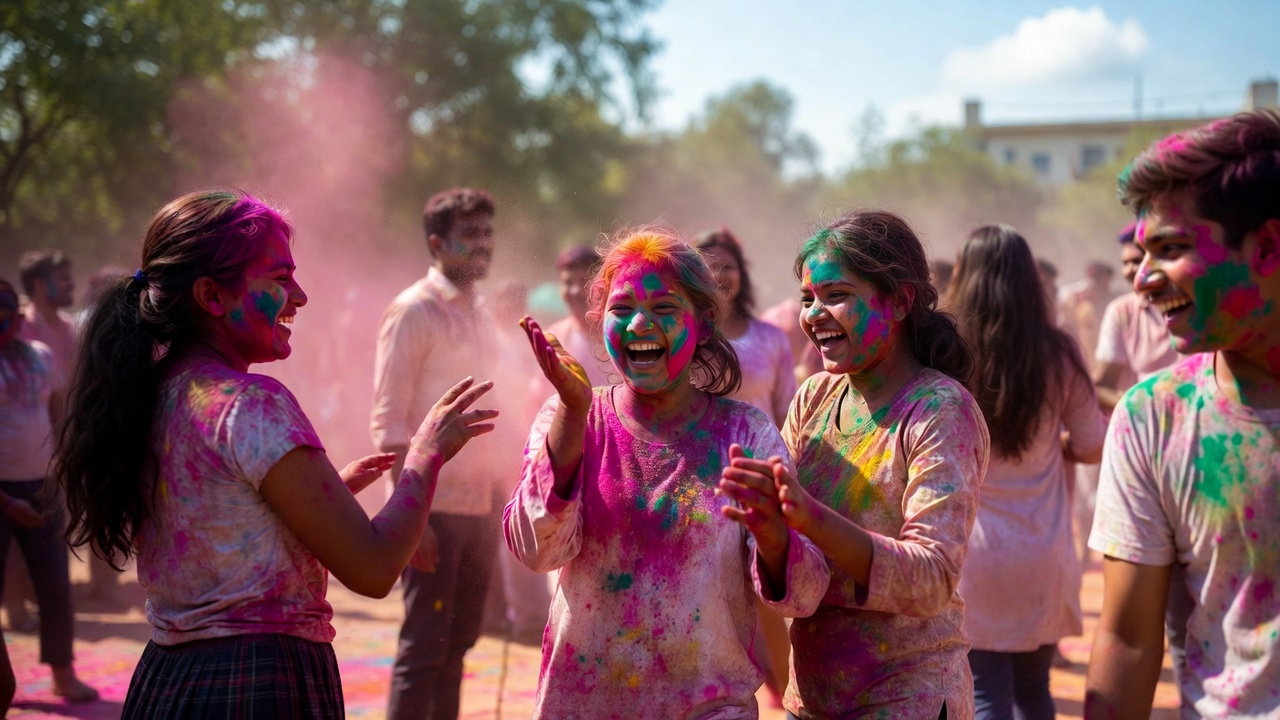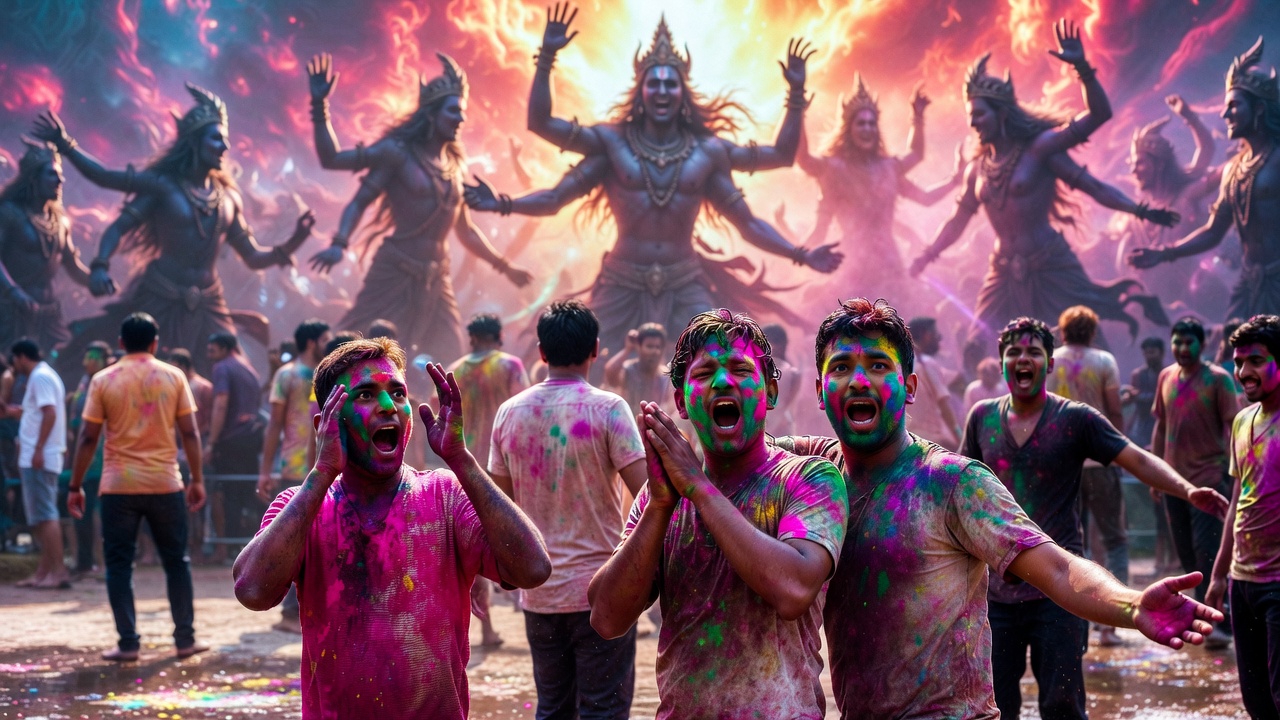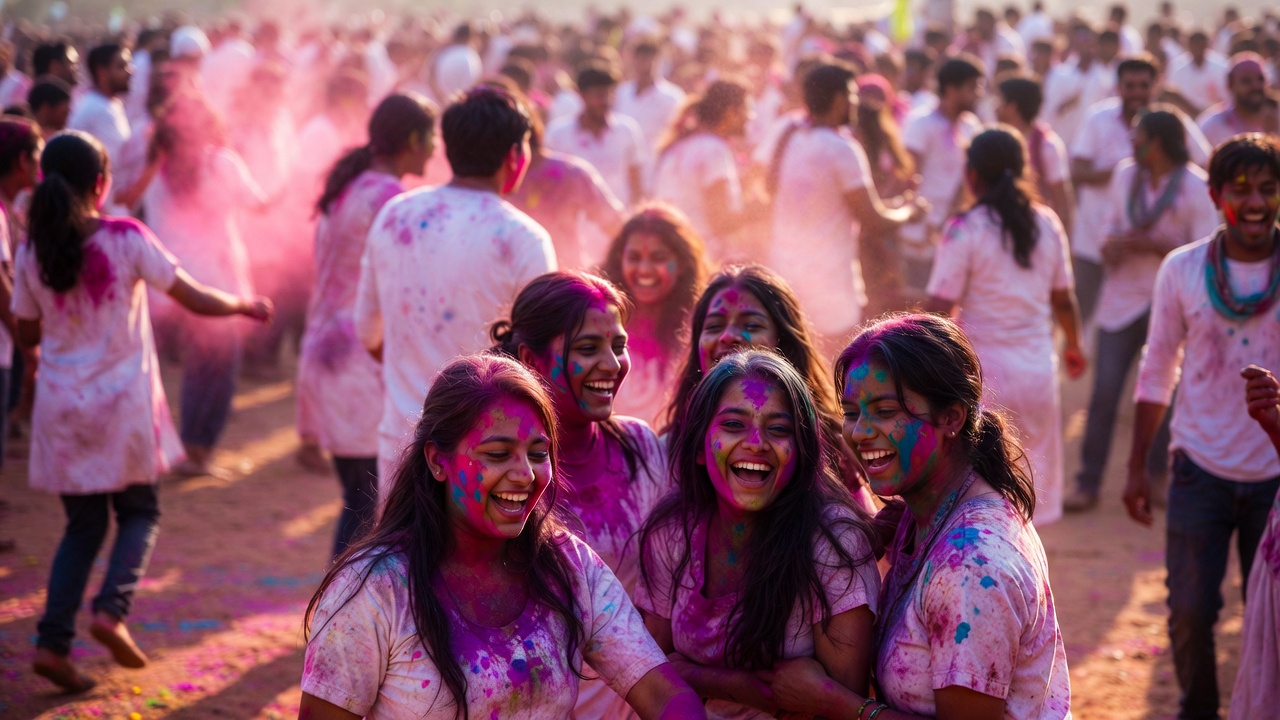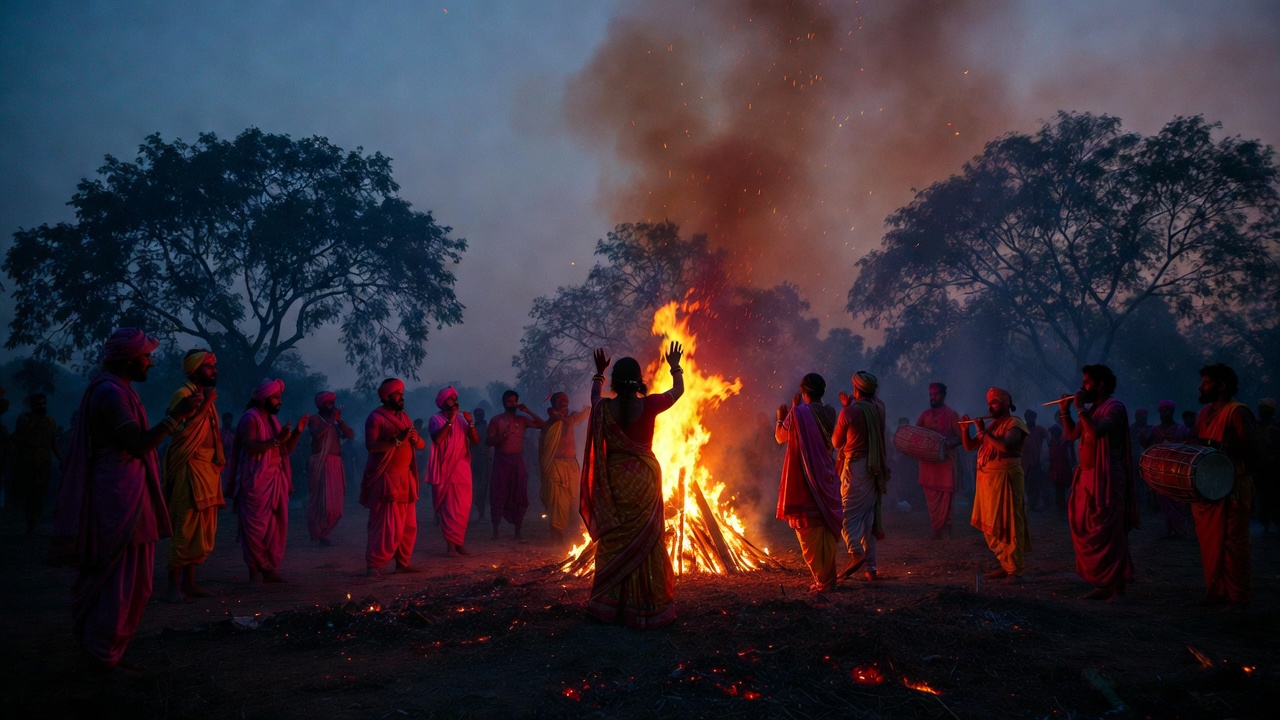
The air fills with laughter. Clouds of pink, yellow, and blue powder drift across streets lined with revellers. Music pulses through temple courtyards and village squares alike. This is Holi, India’s legendary Festival of Colours. Every spring, millions celebrate this ancient tradition that transforms the subcontinent into a living canvas.
But Holi is far more than a photogenic party. Behind every splash of gulal lies centuries of mythology, devotion, and cultural evolution. The festival weaves together tales of divine love, the triumph of good over evil, and the eternal human desire to welcome spring’s warmth after winter’s darkness.
This comprehensive guide explores the rich tapestry of Holi’s history. We trace its origins from ancient Vedic rituals to its modern global celebrations. You will discover the legends that shaped the festival. You will learn about regional traditions that make each celebration unique. And you will understand why this vibrant festival continues to unite communities across boundaries of caste, class, and geography.
What Is Holi and Why Is It Called the Festival of Colours?
Holi is one of the most ancient and beloved Hindu festivals. The celebration takes place annually on the full moon (Purnima) of the Hindu lunar month of Phalguna. This typically falls in late February or early March. In 2026, Holi celebrations will occur on March 3-4.
The festival spans two days of distinct rituals. The first evening, called Holika Dahan or Choti Holi, centres around sacred bonfires. Communities gather to light pyres that symbolise the burning of evil forces. The next day, Rangwali Holi or Dhulendi, brings the famous colour play. People of all ages throw coloured powders (gulal) and coloured water at each other. Streets transform into rivers of rainbow hues.
But why colours? The tradition has deep mythological roots. According to Hindu legend, the blue-skinned deity Krishna felt insecure about his complexion when courting the fair Radha. His foster mother Yashoda playfully suggested he colour Radha’s face to match his own. Krishna did so, and Radha fell in love with him. This divine colour play between the two lovers became the basis for Holi’s most recognisable ritual.
The festival also marks spring’s arrival. After winter’s grey monotony, nature bursts with colour. Flowers bloom across the landscape. The Holi colours mirror this seasonal transformation. They represent renewal, hope, and the vibrant energy of new beginnings.
| Aspect | Details |
|---|---|
| Other Names | Festival of Colours, Festival of Love, Festival of Spring |
| Religion | Primarily Hindu, also celebrated by Sikhs, Jains, and others |
| Duration | Two days |
| Main Activities | Holika Dahan bonfire, colour throwing, feasting, socialising |
| 2026 Dates | March 3-4 |
Ancient Origins of Holi: When Did the Festival Begin?
The roots of Holi stretch back millennia. The festival predates the Gupta period (320-550 CE), making it one of India’s oldest continuous celebrations. Archaeological and textual evidence confirms its ancient pedigree.
Evidence in Ancient Hindu Scriptures
References to Holi appear in numerous ancient texts. The Jaimini’s Purva Mimamsa Sutras and Kathaka-Grhya-Sutras contain early descriptions of spring colour festivals. According to holifestival.org, historians believe Holi was celebrated by all Aryans, particularly in the Eastern regions of the Indian subcontinent.
The Narada Purana and Bhavishya Purana provide more detailed accounts of festival rituals. These sacred texts established many traditions still followed today. The Puranic literature also preserved the mythological stories that give Holi its spiritual significance.
Archaeological Discoveries and Inscriptions
A stone inscription discovered at Ramgarh in the Vindhya region dates to approximately 300 BCE. This inscription mentions “Holikotsav,” providing concrete archaeological evidence of the festival’s antiquity. The inscription confirms that organised Holi celebrations occurred over two thousand years ago.
Temple sculptures also document Holi’s historical importance. A 16th-century panel at Hampi, the capital of the Vijayanagara Empire, depicts a joyous Holi scene. A prince and princess stand surrounded by maids holding pichkaris (water syringes). These artistic representations show how deeply embedded the festival was in Indian royal and popular culture.
Literary Mentions Through the Centuries
The famous poet Kalidasa referenced Holi celebrations during the 4th-century reign of Chandragupta II. The Sanskrit work Dasakumara Charita by Dandin also mentions the festival. Perhaps most significantly, King Harsha’s 7th-century Sanskrit drama Ratnavali describes elaborate Holikotsav celebrations at the royal court.
The Persian scholar Al-Biruni documented Holi in his historical memoirs during the medieval period. His account confirms that the festival was celebrated openly during Muslim rule in India. This cross-cultural documentation highlights Holi’s broad appeal that transcended religious boundaries.
The Legend of Prahlad and Holika: Story Behind Holika Dahan
The most famous legend associated with Holi explains the ritual of Holika Dahan. This story, preserved in the 7th chapter of the Bhagavata Purana, tells of devotion’s triumph over tyranny.
The Demon King Hiranyakashipu
Long ago, a powerful demon king named Hiranyakashipu ruled over an ancient kingdom. Through severe penances, he had obtained a boon that made him nearly immortal. No man, beast, or god could kill him during day or night. He could not die indoors or outdoors, neither on land nor in the air.
Drunk with power, Hiranyakashipu declared himself the supreme being. He demanded that all his subjects worship only him. Anyone who mentioned the name of Lord Vishnu faced execution. His reign of terror spread darkness across the land.
The Devotion of Prince Prahlad
Yet within Hiranyakashipu’s own palace grew his greatest challenger: his own son Prahlad. Despite his father’s commands, young Prahlad remained devoted to Lord Vishnu. No punishment could shake his faith. Hiranyakashipu tried drowning him, throwing him from cliffs, and setting venomous snakes upon him. Each time, Prahlad emerged unharmed through divine grace.
Enraged beyond reason, the demon king devised a final plan. He summoned his sister Holika, who possessed a magical cloak that protected her from fire. Hiranyakashipu commanded Holika to sit in a blazing pyre with Prahlad in her lap. The child would burn while she remained protected.
The Divine Intervention
Holika obeyed her brother. She sat upon the funeral pyre with the young prince. But she did not know that her boon worked only when she entered fire alone. As the flames rose higher, a divine wind swept through. The magical cloak flew from Holika and wrapped around Prahlad instead.
Holika burned to ashes. Prahlad stepped from the flames unharmed. His unwavering devotion had conquered evil.
Lord Vishnu then appeared in his avatar as Narasimha, half-man and half-lion. At twilight (neither day nor night), on the threshold of a palace (neither indoors nor outdoors), Narasimha placed Hiranyakashipu on his lap (neither land nor air). He slew the demon king with his claws, fulfilling all conditions of the boon while ending the tyrant’s reign.
Why We Light Bonfires on Holi Eve
Holika Dahan commemorates this legend every year. Communities gather around bonfires on the night before Holi. They throw cow dung cakes, wood, and grains into the flames. Some regions even burn effigies representing Holika and evil forces.
The bonfire ritual symbolises several important themes:
- Victory of good over evil
- The power of devotion
- The destruction of arrogance and tyranny
- Purification and renewal
People circumambulate the fire, offer prayers, and seek blessings for the coming year. The ashes are considered sacred. Some devotees apply them to their foreheads as a mark of purification.
The Divine Love Story of Radha and Krishna: Origin of Colour Throwing
While Holika Dahan explains the bonfire ritual, another legend illuminates Holi’s colourful playfulness. This story centres on Krishna, one of Hinduism’s most beloved deities, and his eternal beloved Radha.
Krishna’s Complexion and His Mother’s Advice
According to the Garga Samhita and other texts, young Krishna possessed dark blue skin. The colour came from his divine nature, but Krishna worried about it nonetheless. Radha, the most beautiful gopi (cowherd girl) in Vrindavan, had fair skin. Krishna despaired that Radha would never accept him because of their different complexions.
One day, Krishna complained to his foster mother Yashoda. She listened to her son’s worries with maternal tenderness. Then she made a playful suggestion. Why not smear colour on Radha’s face? If her complexion changed, the difference would disappear.
Krishna found the idea delightful. He gathered coloured powders made from flowers and approached Radha in the village. Before she could protest, he playfully applied colour to her face. According to Britannica, this moment transformed their relationship. Radha fell deeply in love with Krishna.
The Playful Colour Games of Vrindavan
The colour play did not stop there. Krishna, known for his mischievous nature, extended his pranks to other gopis. He would hide in bushes with his friends and ambush the village girls with coloured water. At first, the gopis protested. But Krishna’s charm soon won them over. They began to play back, drenching the boys with colours of their own.
This divine play became legendary. Artists throughout the centuries depicted these joyful scenes in paintings and sculptures. The Mewar painting tradition (circa 1755) and various Ahmednagar paintings from the 16th century show royal couples playing Holi. The images capture the essence of carefree celebration that defines the festival.
Braj Region: The Heartland of Holi Traditions
The region of Braj, which includes Mathura (Krishna’s birthplace), Vrindavan (where he spent his childhood), Barsana (Radha’s home), and Nandgaon, celebrates Holi with special intensity. Here, the festival can extend for up to sixteen days or even forty days in some traditions.
The connection to Krishna’s legends makes every ritual deeply meaningful. When devotees throw colours in Vrindavan’s ancient temples, they participate in a cosmic play. They become part of the eternal love story between Radha and Krishna.
How Holi Traditions Vary Across Different Regions of India
India’s vast geography and diverse cultures have created remarkable variations in Holi celebrations. Each region adds its own flavours, rituals, and local legends to the festival. Understanding these regional differences reveals Holi’s extraordinary adaptability.
Lathmar Holi in Barsana and Nandgaon
The villages of Barsana and Nandgaon near Mathura host India’s most famous regional Holi celebration: Lathmar Holi (Holi of Sticks). This unique tradition directly recreates Krishna’s legendary visits to Radha’s village.
According to local tradition, Krishna would travel from his village of Nandgaon to Barsana to play Holi with Radha. The village women would chase him away with bamboo sticks (lathis), playfully beating any man who dared approach.
Today, men from Nandgaon visit Barsana several days before the main festival. Women dressed as gopis chase the men with sticks while the men try to protect themselves with shields. The men attempt to reach Radha’s temple while enduring the colourful assault. The next day, the roles partially reverse when Barsana men visit Nandgaon.
The atmosphere combines devotion with celebration. Crowds sing traditional songs. Drums beat rhythmically. Clouds of gulal fill the air. The event draws thousands of spectators and participants each year.
| Regional Holi Event | Location | Unique Feature |
|---|---|---|
| Lathmar Holi | Barsana/Nandgaon | Women beat men with sticks |
| Phoolon ki Holi | Vrindavan | Flowers instead of colours |
| Laddoo Holi | Barsana | Sweets thrown as blessings |
| Widow Holi | Vrindavan | Widows participate in celebrations |
| Dauji ka Huranga | Baldeo | Post-Holi colour play near Krishna’s brother’s temple |
Phoolon Ki Holi: The Flower Holi of Vrindavan
At the historic Banke Bihari Temple in Vrindavan, Holi takes a more delicate form. During Phoolon ki Holi (Flower Holi), priests shower devotees with fragrant flower petals instead of coloured powders.
This celebration typically occurs on Rangbhari Ekadashi, a few days before the main Holi. The temple gates open in the late afternoon. Devotees pack the courtyard. Suddenly, cascades of rose, marigold, and jasmine petals rain down from above. The brief but magical event lasts only 15-20 minutes.
The flower tradition represents a gentler form of Krishna’s play. Legend says Krishna once became annoyed when Radha and the gopis smeared too much colour on him. He retreated, and they could only throw soft flowers to coax him back. The ritual honours this moment of divine sulking and reconciliation.
Holi Celebrations in West Bengal and Odisha
Eastern India celebrates Holi as Dol Jatra or Dol Purnima (Festival of the Swing). The name comes from the tradition of placing Krishna idols on decorated swings (dola). Devotees rock the swing while singing devotional songs.
The celebrations in Bengal have a more subdued, devotional character. Families visit temples in clean white clothes. They apply sandalwood paste and coloured powder (abir) to deities before applying it to each other. The mood emphasises spiritual renewal rather than boisterous play.
Dol Jatra also commemorates the birthday of Sri Chaitanya Mahaprabhu (1486-1533), the great Vaishnava saint who popularised the devotional kirtan tradition. His followers celebrate with ecstatic singing and dancing that continues through the night.
Holi in Gujarat: Matki Phod Tradition
Gujarat adds the tradition of Matki Phod (pot breaking) to its Holi celebrations. Similar to the Dahi Handi ritual during Janmashtami, young men form human pyramids to reach and break earthen pots hung high on ropes.
The pots contain butter or buttermilk, recalling Krishna’s childhood reputation as a “makhan chor” (butter thief). Women throw coloured water on the pyramid to make the task harder. When the pot finally breaks, celebrations erupt.
The coastal city of Dwarka hosts particularly grand celebrations at the Dwarkadhish Temple. Being associated with Krishna’s kingdom, Dwarka’s Holi carries special spiritual significance.
Manipur’s Yaosang Festival
In the northeastern state of Manipur, Holi merges with the local Yaosang Festival. Celebrations extend for six days. The festival begins with burning thatched huts made of hay and twigs, symbolising the destruction of evil.
Children go door-to-door collecting money (nakadeng) as gifts during the first two days. Youths perform the traditional Thabal Chongba folk dance under the full moon. In recent decades, a unique sporting competition also called Yaosang has developed. Participants of all ages compete in various games.
The festival demonstrates how indigenous traditions blend seamlessly with pan-Indian celebrations. Holi adapts to local cultures while maintaining its core themes of renewal and community bonding.
The Spiritual Significance of Holi: Why Hindus Celebrate This Festival
Holi carries profound spiritual meanings that elevate it beyond mere celebration. The festival addresses fundamental questions about good and evil, love and devotion, and humanity’s relationship with the divine.
The Triumph of Good Over Evil
The Prahlad-Holika legend establishes Holi’s primary spiritual message. Devotion conquers tyranny. Faith protects the righteous. Evil ultimately destroys itself.
This theme resonates across religious traditions. Many see parallels with concepts of divine justice and the ultimate victory of light over darkness. The bonfire ritual makes this abstract concept tangible. Communities physically witness “evil” consumed by flames while “good” emerges unharmed.
Breaking Social Barriers and Promoting Equality
Holi has always been a festival of social levelling. During the celebrations, traditional hierarchies dissolve. Children splash elders with colour. Servants play alongside masters. Wealthy and poor become indistinguishable under layers of gulal.
The phrase “Bura na mano, Holi hai” (Don’t feel offended, it’s Holi) gives licence to friendly mischief. People can approach strangers, embrace rivals, and mend broken relationships. The festival creates a temporary utopia where all humans stand equal.
Historical accounts confirm this egalitarian spirit. During the Mughal period, Holi was celebrated with such exuberance that people of all castes could throw colour on the Emperor himself. According to Wikipedia, multiple paintings show Mughal emperors participating in Holi festivities.
Spring Renewal and Agricultural Significance
Beyond mythology, Holi connects to agricultural cycles. The festival coincides with the ripening of the Rabi (winter) crop. Wheat fields turn golden. The harvest season approaches. Communities celebrate the fruits of their labour and pray for continued prosperity.
The bonfire ritual originally had practical purposes too. Farmers would throw old crop residue and dried leaves into the flames. This helped prepare fields for the next planting season while symbolically burning away the old year’s troubles.
The full moon of Phalguna also marked the traditional end of the Indian year in some calendar systems. Holi celebrations thus welcomed the new year, much like other cultures’ new year festivities.
Ayurvedic and Health Connections
Traditional Holi colours were not merely decorative. According to Wikipedia, the playful throwing of natural coloured powders called gulal had medicinal significance. The colours were traditionally made from palash (flame of the forest), neem, kumkum, haldi (turmeric), bilva, and other medicinal herbs suggested by Ayurvedic doctors.
Spring in India brings seasonal changes that cause viral fevers and colds. The herbs in traditional gulal contained antibacterial and antifungal properties. Applying these natural colours to the skin supposedly helped strengthen immunity during the vulnerable seasonal transition.
Traditional Holi Colours and Their Meaning: What Each Colour Represents
The colours of Holi are not random. Each hue carries symbolic meaning rooted in Hindu philosophy, mythology, and natural associations.
Red: Love, Passion, and Fertility
Red dominates many Holi celebrations. The colour symbolises love, fertility, and the power of transformation. In Hindu tradition, red is auspicious. Brides wear red. Temples use red cloth for ceremonies. During Holi, red represents the passionate devotion shared between Radha and Krishna.
Traditionally, red gulal came from the pomegranate, red sandalwood, and the bright flowers of the flame of the forest (palash or tesu tree). These natural sources produced vibrant reds that were gentle on the skin.
Yellow: Purity, Spirituality, and Health
Yellow connects directly to turmeric, one of India’s sacred spices. Turmeric symbolises purity, healing, and auspiciousness. Its golden hue represents knowledge, learning, and happiness.
The colour honours the sun’s life-giving energy. Yellow gulal was traditionally made by mixing turmeric with gram flour. This combination provided skin benefits along with bright colour. Many Hindu ceremonies begin with turmeric applications, making yellow an especially sacred Holi colour.
Blue: Divine Connection and Krishna
Blue holds special significance because of its association with Krishna. The deity is typically depicted with blue skin, earning epithets like “Shyam” (the dark one). Blue represents the infinite sky and vast oceans. It symbolises depth, calm, and divine consciousness.
Natural blue came from indigo plants and butterfly blue flowers. The colour reminds celebrants of Krishna’s presence in the festivities. In regions like Mathura and Vrindavan, blue takes on particular importance during Holi.
Green: Nature, Harmony, and New Beginnings
Green celebrates spring’s arrival. The colour represents nature, vegetation, and renewal. As fields turn green with new growth, the colour embodies hope and fresh starts.
Traditional green powders used neem leaves, henna, and other plant extracts. Neem, known for its medicinal properties, added health benefits to the celebratory colour.
Pink and Orange: Joy, Energy, and Optimism
Pink symbolises affection, harmony, and playful joy. It is particularly popular among children and first-time participants. Pink invites gentle interactions and light-hearted fun.
Orange combines red’s passion with yellow’s happiness. The warm colour represents energy, creativity, and optimism. It evokes the sacred fire of Holika Dahan and the warmth of approaching summer.
| Colour | Symbolism | Traditional Natural Source |
|---|---|---|
| Red | Love, fertility, passion | Pomegranate, red sandalwood, flame of the forest |
| Yellow | Purity, health, knowledge | Turmeric, marigold |
| Blue | Divine connection, infinite | Indigo, butterfly blue flowers |
| Green | Nature, new beginnings | Neem leaves, henna |
| Pink | Affection, joy | Beetroot, rose petals |
| Orange | Energy, creativity | Saffron, flame of the forest |
| Purple | Wisdom, spirituality | Jamun berries, grapes |
The Evolution of Holi From Ancient Times to Modern Day
Holi has continuously evolved while maintaining its spiritual core. Each era added new dimensions to the celebration, adapting ancient traditions to contemporary contexts.
Holi in Ancient and Medieval India
In ancient India, Holi was primarily a Vedic ritual connected to spring agricultural cycles. Early celebrations likely involved simple fire rituals and applications of natural colours for health purposes.
As Puranic literature developed (300 CE – 1000 CE), mythological narratives enriched the festival. The stories of Prahlad, Holika, and Krishna’s colour play became central. Temple traditions formalised specific rituals. Royal courts adopted elaborate Holi celebrations as demonstrations of prosperity and cultural refinement.
During the medieval period, Holi maintained its importance even under Islamic rule. Some Mughal emperors not only tolerated but actively participated in celebrations. The festival became known as Eid-e-Gulaabi (Rose-coloured Eid) or Aab-e-Pashi (water splash) in Mughal courts. Historical records describe grand celebrations at Delhi’s Lal Qila (Red Fort) where nobles and commoners mixed freely.
However, this tolerance was not universal. Emperor Aurangzeb banned public Holi celebrations through a Farman issued in November 1665. This attempt at suppression ultimately failed, as the festival’s deep roots in Indian society proved impossible to eliminate.
Colonial Period Transformations
British colonial rule brought new challenges and changes to Holi celebrations. Missionaries sometimes discouraged what they saw as “pagan” rituals. Urban planning disrupted traditional community spaces. Yet Holi persisted in villages and towns across India.
Interestingly, some British administrators documented Holi with fascination. Their accounts provide valuable historical records of 19th-century celebrations. The festival also became a marker of Indian identity during the independence movement, symbolising cultural resilience against colonial influence.
Industrial Era and Synthetic Colours
The advent of synthetic dyes in the mid-19th century transformed Holi colours. Natural, plant-based gulal gave way to cheaper industrial alternatives. These synthetic colours allowed for brighter hues and mass production.
However, this shift came with costs. According to Wikipedia, the disappearance of trees in urban areas and the pursuit of higher profits led to the abandonment of natural colours. Some synthetic dyes contain toxic metal-based pigments that cause skin irritation, allergies, and eye problems.
In recent decades, a return to organic, natural colours has gained momentum. Organisations campaign for safer celebrations. Artisans produce traditional gulal using ancient methods. Many families now specifically seek chemical-free alternatives.
Holi in Post-Independence India
After 1947, Holi became a national celebration unifying India’s diverse population. The government declared it a national holiday in many states. Public celebrations grew larger and more organised.
The festival also became associated with national identity and cultural pride. Bollywood films featuring Holi songs became cultural touchstones. The iconic “Rang Barse” and similar songs became inseparable from the festival experience.
Contemporary Holi: Digital Age Celebrations
Today’s Holi reflects technological and social changes. Social media transforms celebrations into shareable experiences. Hashtags like #HappyHoli trend worldwide. Photographers capture stunning images that spread awareness of the festival globally.
The widow Holi movement represents particularly meaningful evolution. Traditionally, widows in Hindu society faced severe restrictions. White clothing, absence from celebrations, and social isolation defined their lives. In recent years, widow ashrams in Vrindavan have begun hosting special Holi celebrations. These events mark a significant shift toward social inclusion and have attracted international attention.
How Holi Is Celebrated Around the World by the Indian Diaspora
Holi has transcended geographical boundaries to become a truly global festival. Indian diaspora communities maintain traditions while adapting to local contexts. Meanwhile, the festival’s joyful essence has attracted participants from diverse backgrounds.
Holi Celebrations in the United States and North America
The United States hosts numerous large-scale Holi events. According to Hindutone, New Jersey serves as a major Holi hotspot due to its significant Indian population. New York City’s celebrations attract thousands to Central Park and Flushing Meadows Corona Park.
One of the most remarkable American Holi celebrations occurs in Spanish Fork, Utah. The local Krishna temple began celebrations in 1995. The event has grown into a massive festival that attracts participants of all backgrounds. The setting—amidst Utah’s mountains—creates a striking visual contrast to traditional Indian celebrations.
American Holi celebrations have developed unique characteristics:
- Scheduled colour throws at specific times rather than spontaneous play
- Outdoor venues like parks to accommodate regulations
- Weekend scheduling to suit working families
- Organic colours to address health-conscious consumers
- Adapted bonfire traditions or their elimination due to safety regulations
Holi in the United Kingdom and Europe
London’s Holi Fest has become a major annual event, often held at prestigious venues like Wembley or Hyde Park. According to Global Indian, these celebrations feature live performances, dance shows, and large-scale colour throwing.
The festival attracts both South Asian communities and curious participants from other backgrounds. British universities and colleges host Holi events that introduce students to Indian culture. Corporate offices increasingly recognise Holi as part of diversity celebrations.
Caribbean Holi: Phagwah Traditions
Countries with significant Indo-Caribbean populations maintain robust Holi traditions. In Guyana, Suriname, Trinidad and Tobago, and Jamaica, the festival is known as Phagwah or Phagwa.
Caribbean Holi has developed distinctive elements:
- Chowtal singing – traditional Holi folk songs
- Pichakaree – humorous calypso-style Holi songs
- Unique colour preparations using local ingredients
- Community parades and public celebrations
In Suriname, Holi Phagwa is a national holiday. People of all ethnicities participate in celebrations, demonstrating how thoroughly the festival has integrated into national culture.
Holi in Australia, New Zealand, and the Pacific
Sydney’s Holi Festival of Colours has grown into one of the Southern Hemisphere’s largest Holi celebrations. The event takes place in sprawling outdoor spaces, accommodating thousands of participants.
Indian communities in Australia have adapted celebrations to the reversed seasons. While Holi marks spring’s arrival in India, March falls during autumn in the Southern Hemisphere. Celebrations emphasise cultural connection rather than seasonal timing.
Fiji, with its substantial Indo-Fijian population, maintains strong Holi traditions. Hindu schools and temples organise celebrations featuring folk songs, colour play, and community gatherings.
Gulf Region and Middle Eastern Celebrations
Dubai and other Gulf cities host increasingly elaborate Holi celebrations. According to Global Indian, Dubai Holi Beach Parties combine traditional celebrations with the city’s luxury lifestyle.
The large Indian expatriate population in the Gulf has created demand for organised Holi events. Hotels and resorts compete to offer the most spectacular celebrations. These events often feature Bollywood entertainment, traditional foods, and carefully curated colour experiences.
Nepal and South Asian Neighbours
Nepal celebrates Holi as a national two-day holiday. Known locally as Fagu Purnima, the festival holds particular importance in the Kathmandu Valley. Celebrations begin with the erection of a ceremonial bamboo pole called “Chir” in Kathmandu’s historic Basantapur Durbar Square.
The hilly regions and Terai plains of Nepal celebrate with distinct local traditions. Large-scale processions, cultural performances, and community events mark the festival. The observance reflects Nepal’s deep Hindu heritage while incorporating unique Nepali elements.
Bangladesh and Pakistan also host Holi celebrations, though on smaller scales due to Hindu minority populations. These celebrations serve important functions in maintaining cultural identity and promoting interfaith understanding.
Traditional Holi Foods and Recipes You Should Try
No Indian festival is complete without special foods. Holi brings a distinctive menu of sweets, snacks, and beverages that have been perfected over generations.
Gujiya: The Quintessential Holi Sweet
Gujiya holds pride of place on Holi tables across North India. These crescent-shaped deep-fried pastries contain sweet fillings of dried milk solids (khoya), nuts, and dried fruits. The crispy outer shell contrasts delightfully with the moist, aromatic interior.
Each region has its own gujiya variation. Some families add cardamom and coconut. Others incorporate dried rose petals. The preparation traditionally involves the whole family, turning cooking into a bonding activity.
Thandai: The Traditional Holi Beverage
Thandai is a sweet, cold milk drink that has become synonymous with Holi. The traditional recipe includes almonds, fennel seeds, watermelon seeds, rose petals, poppy seeds, cardamom, saffron, and milk. The result is refreshing, cooling, and subtly complex.
In parts of North India, thandai is sometimes prepared with bhang, a mild cannabis preparation. This intoxicating version has religious connections to Lord Shiva and is consumed under controlled conditions. Its use during Holi adds to the festival’s atmosphere of altered consciousness and social permission.
Other Popular Holi Treats
| Food Item | Description | Region |
|---|---|---|
| Malpua | Sweet pancakes soaked in sugar syrup | Pan-Indian |
| Jalebi | Spiral-shaped deep-fried sweets in syrup | Pan-Indian |
| Puran Poli | Sweet flatbread with chickpea filling | Maharashtra |
| Dahi Vada | Lentil dumplings in yoghurt | North India |
| Kanji Vada | Fermented mustard drink with dumplings | Rajasthan |
| Papri Chaat | Crispy wafers with chutneys and yoghurt | North India |
Eco-Friendly Holi: The Return to Natural Organic Colours
Growing environmental and health awareness has sparked a movement to reclaim Holi’s natural traditions. The shift toward organic, herbal colours represents both a return to roots and adaptation to modern concerns.
Problems with Synthetic Colours
Commercial synthetic colours pose several risks:
- Skin irritation and allergies from chemical dyes
- Eye damage from toxic particles
- Respiratory problems when colours are inhaled
- Environmental pollution as chemicals wash into water systems
- Harm to animals who ingest or absorb toxic colours
Studies have found heavy metals like lead, mercury, and chromium in some commercial Holi colours. These substances can cause serious health problems with repeated exposure.
Traditional Natural Colour Sources
Returning to nature offers safer alternatives:
- Turmeric (haldi) produces bright yellows
- Neem leaves create greens with antibacterial properties
- Beetroot yields pinks and light reds
- Pomegranate provides deep reds
- Indigo gives blues
- Flame of the forest (palash/tesu) creates oranges and saffrons
- Dried hibiscus produces reds and magentas
These natural colours wash off easily and benefit rather than harm the skin. Many contain medicinal properties that align with Holi’s traditional health associations.
The Organic Holi Movement
Numerous organisations now promote natural Holi celebrations:
- NGOs campaign for colour safety awareness
- Social enterprises produce certified organic gulal
- Schools educate children about traditional colour-making
- Corporate sponsors provide natural colours at public events
- Environmental groups organise clean, green Holi celebrations
The movement has gained significant traction. Many urban families now specifically seek organic options. Vendors selling natural gulal have multiplied in markets before Holi.
Tips for Celebrating an Authentic Holi Experience in India
Experiencing Holi in India remains on many travellers’ bucket lists. Proper preparation ensures a memorable and safe celebration.
Best Places to Experience Holi in India
Mathura-Vrindavan-Barsana (Uttar Pradesh) offers the most traditional and elaborate celebrations. The week-long festivities include unique rituals like Lathmar Holi. However, crowds can be overwhelming.
Jaipur (Rajasthan) combines Holi with the Elephant Festival, adding royal grandeur to celebrations. The Pink City’s palaces and forts provide stunning backdrops.
Udaipur (Rajasthan) offers relatively organised celebrations with traditional Rajasthani hospitality.
Pushkar (Rajasthan) attracts backpackers and international travellers seeking authentic yet manageable Holi experiences.
Shantiniketan (West Bengal) provides a more refined, cultural celebration focused on Dol Jatra traditions.
Practical Tips for Holi Visitors
What to wear:
- Old white clothes that you do not mind discarding
- Clothes that cover arms and legs for some protection
- Waterproof footwear
What to bring:
- Waterproof phone case or pouch
- Minimal valuables
- Sunscreen for pre-celebration application
- Oil for hair protection (coconut or mustard oil)
Safety considerations:
- Stay in groups, especially women and solo travellers
- Respect others’ boundaries—consent matters
- Avoid bhang if unfamiliar with its effects
- Stay hydrated in the spring heat
- Seek organic colours when possible
Cultural etiquette:
- Embrace the spirit of play and joy
- Accept colours gracefully from others
- Apologise if you accidentally cause discomfort
- Join in traditional songs and dances
- Respect temple protocols during religious ceremonies
Frequently Asked Questions About Holi Festival History and Traditions
What is the origin of Holi?
Holi originated in ancient India, with references dating back to at least 300 BCE. The festival evolved from Vedic spring rituals and agricultural celebrations. Over centuries, it incorporated mythological stories like the Prahlad-Holika legend and the Radha-Krishna colour play narratives.
Why do we burn Holika?
The Holika bonfire commemorates the legend of Prahlad’s survival and Holika’s destruction. It symbolises the triumph of good over evil and devotion over arrogance. Communities gather around the fire to purify themselves and pray for protection in the coming year.
What is the significance of colours in Holi?
Each colour carries symbolic meaning. Red represents love and fertility. Yellow symbolises purity and knowledge. Blue connects to Krishna. Green represents nature and new beginnings. The colours also had traditional medicinal properties when made from natural sources.
When is Holi celebrated each year?
Holi falls on the full moon (Purnima) of the Hindu lunar month of Phalguna. This typically occurs in late February or March. The exact date varies each year based on the lunar calendar.
How long do Holi celebrations last?
In most of India, Holi spans two days—Holika Dahan on the eve and Rangwali Holi the following day. In the Braj region (Mathura-Vrindavan area), celebrations extend for up to sixteen days or even forty days.
Is Holi only a Hindu festival?
While Holi is primarily a Hindu festival, it has been celebrated by people of various faiths throughout history. Sikhs, Jains, and Newars in Nepal observe the festival. Historically, some Mughal emperors participated in Holi celebrations. Today, the festival attracts participants of all backgrounds, particularly in diaspora communities.
What foods are traditionally eaten during Holi?
Traditional Holi foods include gujiya (sweet dumplings), malpua (sweet pancakes), jalebi (spiral sweets), and thandai (spiced milk drink). Savoury snacks like dahi vada and papri chaat are also popular. Regional variations add local specialties to the Holi menu.
Conclusion: Why Holi Remains Relevant in the Modern World
Holi has survived and thrived for over two millennia because it addresses timeless human needs. The festival offers release from daily constraints. It celebrates love in its many forms. It reminds communities of their shared humanity beneath surface differences.
In our increasingly divided world, Holi’s message of unity resonates powerfully. When strangers colour each other’s faces, barriers dissolve. When communities gather around bonfires, shared purpose emerges. When colours fly through the air, joy becomes contagious.
The festival also demonstrates cultural resilience. Despite attempts at suppression, changing technologies, urbanisation, and globalisation, Holi has adapted without losing its essence. From ancient Vedic rituals to modern Instagram posts, from village squares to international concert stages, Holi continues to evolve.
Perhaps most importantly, Holi teaches that renewal is always possible. Winter ends. Evil burns. Colours return to the world. The legends may be ancient, but their lessons remain fresh. Each year, Holi offers another chance to forgive, to connect, and to celebrate life’s vibrant possibilities.
Whether you celebrate in Vrindavan’s ancient temples, New York’s urban parks, or your own backyard, the spirit of Holi invites you to let go. Throw your colours. Dance with strangers. Welcome the spring. In that moment of colourful abandon, you join a tradition that has united humanity across centuries and continents.
Holi Hai! It’s Holi!