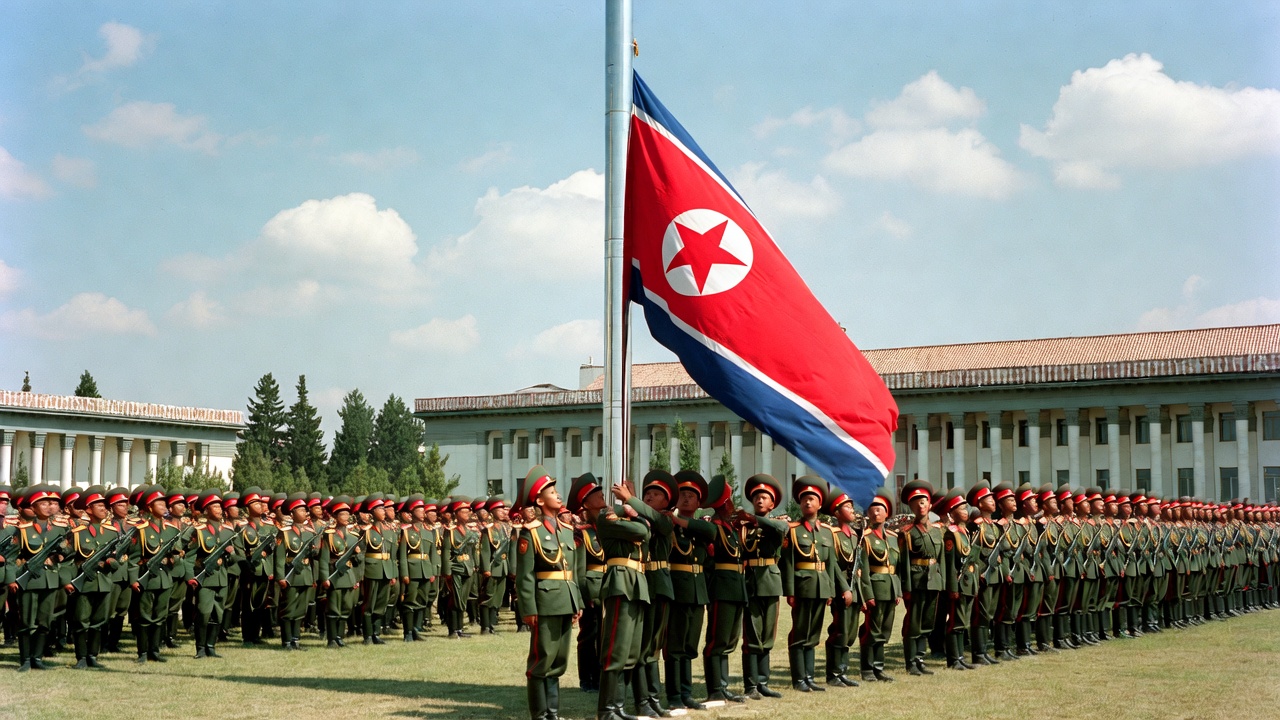
Every year on February 8, the streets of Pyongyang come alive with military pomp. Soldiers march in lockstep across Kim Il Sung Square. Tanks roll past towering portraits of the nation’s founding leaders. Fireworks burst over the frozen Taedong River. This is Korean People’s Army Day — one of the most politically charged holidays on the North Korean calendar.
But this holiday carries a secret that most outside observers miss. The date itself — February 8 — has not always been the day North Korea honored its armed forces. For nearly four decades, a completely different date held that distinction. The story of how and why the date changed reveals a great deal about the inner workings of the Kim dynasty and the shifting power structures of the Democratic People’s Republic of Korea (DPRK).
In 2026, North Korea marks the 78th anniversary of the Korean People’s Army (KPA) on February 8. This year’s commemoration arrives at a time when the KPA is receiving unprecedented global attention, with North Korean soldiers deployed alongside Russian forces in the Kursk region of Ukraine. The holiday’s history — and the political chess game behind its changing date — matters more than ever.
What Is Korean People’s Army Day and When Is It Celebrated?
Korean People’s Army Day, known in Korean as 조선인민군 창건일 (Chosŏn inmin’gun ch’anggŏnil), is an annual public holiday in North Korea. It falls on February 8 each year. The holiday commemorates the formal founding of the Korean People’s Army (KPA) in 1948.
On this day, most workplaces and schools close. Soldiers and civilians alike are given time off to celebrate. The government holds a commemorative assembly in Pyongyang, along with concerts, demonstrations, banquets, and — on milestone anniversaries — grand military parades.
Here is a quick-reference summary of the holiday:
| Detail | Information |
|---|---|
| Official Name | Korean People’s Army Foundation Day (조선인민군 창건일) |
| Date | February 8 |
| Country | North Korea (DPRK) |
| Type | Public holiday (day off) |
| Founded | Originally celebrated from 1948; revived in 2015 |
| 2026 Anniversary | 78th anniversary of the KPA’s founding |
| Key Activities | Military parades, banquets, wreath-laying, concerts |
The holiday is not to be confused with April 25, which North Korea also marks as the founding day of the Korean People’s Revolutionary Army (KPRA) — a guerrilla unit from the 1930s. Understanding the difference between these two dates is key to understanding the political dynamics of the Kim family’s rule.
The Founding of the Korean People’s Army on February 8, 1948
To understand Army Day, we need to go back to the chaotic years after World War II. When Japan surrendered in August 1945, Korea — which had been under Japanese colonial rule since 1910 — was divided along the 38th parallel. The Soviet Union occupied the north. The United States controlled the south.
In the Soviet-occupied zone, Korean fighters who had served in the Soviet Red Army were dispatched to organize local security forces. A constabulary force was established on October 21, 1945. Over the following two years, this force gradually evolved into a more structured military organization.
On February 4, 1948, the State Security Department was created under the Interim People’s Committee. Four days later, on February 8, 1948, the formal creation of the Korean People’s Army was announced. This followed the Fourth Plenary Session of the People’s Assembly, which approved the plan to separate military and police roles. The new army was placed under a newly established Ministry of Defense.
That very first military parade took place at Pyongyang Station. Soviet generals from the 25th Army attended. About 20,000 North Korean soldiers stood at attention as Premier Kim Il Sung presided as commander-in-chief. It was a cold February morning, but the message was clear: the new Korean state would have a powerful army at its foundation.
February 8 was then set as the official date for the army’s founding celebration. For three decades, this date anchored one of the country’s most important holidays.
Why Did Kim Il Sung Change Army Day to April 25?
In 1978, something unusual happened. The North Korean government shifted the army’s founding date from February 8 to April 25. This was not a minor bureaucratic adjustment. It was a deliberate rewriting of history.
The reason goes back to a contested piece of North Korean historiography. According to the official DPRK narrative, Kim Il Sung founded the Korean People’s Revolutionary Army (KPRA) — an anti-Japanese guerrilla force — on April 25, 1932, in Ando County, Manchuria. This guerrilla unit was presented as the direct predecessor of the modern KPA.
In reality, historians outside North Korea have found little evidence that a formal organization called the KPRA existed in 1932. What did exist were Korean units within the broader Northeast Anti-Japanese United Army, a Chinese-led resistance movement. Kim Il Sung was indeed involved in anti-Japanese guerrilla activities in Manchuria during the 1930s, but the scale and nature of these activities have been heavily embellished in official DPRK accounts.
The shift to April 25 served a critical political purpose. It extended the revolutionary legitimacy of the Kim family’s rule all the way back to 1932 — well before the Soviet-assisted creation of the North Korean state in 1948. In the DPRK’s official telling, the Korean revolution did not begin with Soviet support after World War II. It began with Kim Il Sung’s own guerrilla struggle against Japan, decades earlier.
This reframing is rooted in what North Korean scholars call the “Kim Il Sung revolutionary tradition” (김일성혁명전통). By anchoring the military’s origin in 1932 rather than 1948, the regime could argue that the KPA was born not from foreign assistance, but from the independent revolutionary will of the Korean people — led, of course, by Kim Il Sung himself.
After 1978, February 8 essentially disappeared from the holiday calendar. April 25 became the sole Army Day. Large celebrations, including military parades, were held on this date. In 1996, April 25 was elevated to an official national holiday.
How North Korea Uses Military Holidays for Political Control
To grasp why the date of Army Day matters so much, it helps to understand the broader role of holidays in North Korean society. The DPRK’s calendar is packed with more than 30 holidays and commemorative dates each year. Most of these are tied to the Kim family or to key moments in the nation’s revolutionary narrative.
The most important holidays include:
- April 15 — Day of the Sun: Birthday of Kim Il Sung. The single most important holiday in North Korea.
- February 16 — Day of the Shining Star: Birthday of Kim Jong Il.
- February 8 — Korean People’s Army Foundation Day: Founding of the KPA in 1948.
- April 25 — Chosun People’s Army Foundation Day: Founding of Kim Il Sung’s guerrilla army in 1932.
- July 27 — Victory Day: Anniversary of the Korean War armistice.
- September 9 — National Day: Founding of the DPRK in 1948.
- October 10 — Party Foundation Day: Founding of the Workers’ Party of Korea.
- August 25 — Day of Songun: Commemorating Kim Jong Il’s “military-first” leadership.
Each of these dates is a carefully calibrated tool of political messaging. Military parades, mass dances, banquets, and media campaigns are timed to reinforce specific narratives about the Kim family’s leadership. Changing a date — or reviving an old one — sends a signal to the entire country about where power lies and which historical narrative is in favor.
Kim Jong Il and the Rise of Songun Military-First Politics
Before we can understand Kim Jong Un’s decision to change the date back, we need to understand his father’s era.
Kim Jong Il (1941–2011) assumed power after his father Kim Il Sung’s death in July 1994. He inherited a country in crisis. The Soviet Union — North Korea’s primary patron — had collapsed in 1991. A devastating famine, known as the Arduous March, swept the country in the mid-1990s, killing hundreds of thousands of people.
To consolidate power and manage the crisis, Kim Jong Il introduced a governing philosophy called Songun (선군), or “military-first politics.” Under Songun, the Korean People’s Army was elevated above all other institutions in North Korean society. The military received priority in resource allocation, policy decisions, and political status.
The Songun doctrine gave the army enormous influence. Kim Jong Il’s power base was built on military loyalty. He was appointed Supreme Commander of the Korean People’s Army on December 24, 1991, and received the rank of Marshal on April 20, 1992 — just days before the April 25 Military Foundation Day celebrations that year.
At the 1992 Army Day parade, Kim Jong Il made his first — and only — public speech, declaring: “Bring glory to the heroic people’s military.” This remains the sole recording of Kim Jong Il speaking publicly. The moment symbolized how deeply the army and the Kim family’s power were intertwined.
Under Songun, the April 25 date remained supreme. It connected the army to Kim Il Sung’s guerrilla legend. It reinforced the idea that the military was not just a state institution but the living embodiment of the Kim family’s revolutionary tradition.
Why Kim Jong Un Changed the Date Back to February 8
When Kim Jong Un took power after his father’s death in December 2011, he faced a familiar challenge: how to consolidate authority while putting his own stamp on the regime.
Kim Jong Un was young — believed to be in his late twenties at the time. He needed to demonstrate that he was not merely continuing his father’s policies, but leading the country in a new direction. One of the most visible ways he did this was by restructuring the relationship between the party and the military.
In 2015, Kim Jong Un revived the February 8 date. That year, celebrations were held for the 67th anniversary of the KPA’s founding. The revival included wreath-laying ceremonies and a meeting addressed by senior military officials, all explicitly referencing February 8, 1948, as the army’s founding date.
The move was a significant symbolic break from his father’s and grandfather’s legacies. Here is why it mattered:
1. Asserting Party Supremacy Over the Military
Kim Jong Un’s governance philosophy departed from his father’s Songun doctrine. While Kim Jong Il placed the military at the center of power, Kim Jong Un has worked to increase the influence of the Workers’ Party of Korea (WPK) and reduce the army’s independent political authority.
In May 2016, he convened the WPK’s 7th Congress — the first party congress in 36 years. By 2019, references to Juche and Songun in North Korea’s constitution were replaced by Kimilsungism-Kimjongilism. The constitution also stipulated that the armed forces’ mission was to “defend unto death the Party Central Committee headed by the great Comrade Kim Jong Un.”
Changing Army Day back to February 8 subtly demoted the April 25 guerrilla narrative — a narrative that had been used to elevate the military’s status. By emphasizing the 1948 date, Kim Jong Un reminded the country that the modern army was created as an instrument of the state, not as an independent revolutionary force.
2. Creating Distance from the Songun Era
The April 25 date was closely associated with the Songun period and, by extension, with Kim Jong Il. Returning to February 8 allowed Kim Jong Un to create a clean narrative separation. He could honor his grandfather’s legacy (since Kim Il Sung presided over the February 8, 1948, founding) while subtly downgrading the ideological framework his father had built.
Kim Jong Un replaced Songun with the Byungjin (병진) doctrine — the policy of “parallel development” of the national economy and nuclear weapons. This represented a shift from pure military-first thinking to a dual-track approach. The date change complemented this ideological shift.
3. Putting His Own Stamp on History
Every Kim family leader has rewritten aspects of North Korean history to suit their political needs. Kim Il Sung created the 1932 guerrilla origin story. Kim Jong Il elevated it with Songun. Kim Jong Un’s revival of February 8 was his own act of historical reinterpretation — a signal that he controlled the national narrative.
As 38 North noted in a 2018 analysis, when Kim Jong Un revived February 8, it “seemed an important symbolic move, possibly an example of how he was putting his own stamp on things.”
The 70th Anniversary Parade of February 8, 2018: A Turning Point
The most dramatic expression of the date change came on February 8, 2018, when North Korea held a massive military parade to mark the 70th anniversary of the KPA’s founding.
This was the first military parade held on February 8 since 1977. The political bureau of the WPK Central Committee had formally announced the switch just days earlier, with the party newspaper Rodong Sinmun reporting that April 25 would continue to mark the KPRA’s founding, while February 8 would now be known as “the Day of Army Founding.”
The parade took place in Kim Il Sung Square in central Pyongyang during the late morning. About 13,000 soldiers participated. Kim Jong Un, dressed in a black coat and black fedora, delivered a congratulatory speech from the review platform alongside his wife Ri Sol Ju and his sister Kim Yo Jong.
In his speech, Kim stated that February 8 was “a day of historic significance in building up the revolutionary armed forces.” He described the parade as demonstrating “the mettle of the powerful Democratic People’s Republic of Korea which has developed into a world-class military power.”
The timing was notable. The parade took place one day before the opening ceremony of the 2018 Winter Olympics in Pyeongchang, South Korea — an event where North Korean and South Korean athletes marched together under a unified flag. Many observers speculated that the timing was deliberate, designed to project strength even as inter-Korean diplomacy unfolded.
The 2018 parade also revealed a new short-range ballistic missile resembling Russia’s Iskander system — a reminder that Army Day remained, above all, a showcase of military capability.
How North Korea Celebrates Army Day: Traditions and Ceremonies
Army Day celebrations in North Korea follow a well-established pattern. While the scale varies from year to year, the core elements remain consistent.
Military Parades: Grand parades through Kim Il Sung Square are the centerpiece of major anniversaries. These typically take place every five or ten years. Parades feature infantry formations performing the signature North Korean goose-step, along with mobile columns of tanks, artillery, and ballistic missiles. Troops train for months at the Mirim Parade Training Facility in eastern Pyongyang, which includes a full-scale replica of Kim Il Sung Square for rehearsals.
Commemorative Assemblies: Senior officials gather for formal ceremonies, including speeches by the Supreme Leader or top military commanders. These events are broadcast on Korean Central Television (KCTV).
Wreath-Laying: Officials and delegations lay wreaths at monuments and memorial sites, including the Kumsusan Palace of the Sun, where the embalmed bodies of Kim Il Sung and Kim Jong Il lie in state.
Banquets: Lavish banquets for military officers and their families are held in major venues. During the 2023 celebrations, Kim Jong Un hosted a banquet at the Yanggakdo Hotel with his wife Ri Sol Ju and daughter Kim Ju Ae — one of several recent public appearances by his daughter that have fueled speculation about succession planning.
Concerts and Cultural Events: Mass dances, musical performances, and cultural exhibitions are organized throughout Pyongyang. State media produces special content paying tribute to the army’s history and the Kim family’s leadership.
Media Campaigns: In the weeks surrounding Army Day, North Korean state media intensifies its coverage of military themes. Political study sessions are held in military units, emphasizing loyalty to the Supreme Leader.
The Two Army Dates Explained: February 8 vs. April 25
One of the most confusing aspects of North Korean military holidays is the existence of two dates linked to the army’s founding. Here is a clear breakdown:
| Feature | February 8 | April 25 |
|---|---|---|
| Event Commemorated | Founding of the Korean People’s Army (KPA) | Founding of the Korean People’s Revolutionary Army (KPRA) |
| Year | 1948 | 1932 |
| Historical Basis | Formal establishment of North Korea’s regular armed forces | Kim Il Sung’s anti-Japanese guerrilla activities in Manchuria |
| Current Status | Primary Army Day (public holiday) | Still recognized as a separate commemorative day |
| Holiday Name | Korean People’s Army Foundation Day | Chosun People’s Army Foundation Day |
| Parade Years | 1948–1977, revived 2018 | 1978–2014, still observed |
Both dates remain on the 2026 North Korean calendar. February 8 is the primary public holiday with time off work. April 25 is still commemorated, sometimes with its own events and, on milestone years, military parades. In May 2022, a decree was issued to formally institute April 25 as a national holiday as well, ensuring that both dates coexist.
The dual-date system reflects a compromise. Kim Jong Un restored February 8 as the main Army Day, but he did not abolish April 25 — to do so would be to directly contradict his grandfather’s legacy. Instead, the two dates serve complementary purposes: February 8 celebrates the modern, party-controlled military, and April 25 honors the revolutionary guerrilla tradition.
Kim Jong Un’s Military Reforms and the Changing Role of the KPA
The date change was just one piece of a broader effort by Kim Jong Un to reshape the military’s role in North Korean society.
Under Kim Jong Il’s Songun doctrine, the army had grown into a powerful political institution with its own economic interests, construction projects, and internal patronage networks. Kim Jong Un moved to bring the military firmly under party control.
Key steps included:
- Purging senior military officials: The most dramatic example was the 2013 execution of Jang Song Thaek, Kim Jong Un’s uncle and a powerful figure in the regime’s power structure.
- Rapid personnel rotations: Between 2012 and 2015, the KPA High Command experienced constant reshuffling, with Kim Jong Un cycling through military leaders to prevent any single general from accumulating too much power.
- Elevating the Workers’ Party: The 2016 Party Congress and subsequent constitutional changes cemented the WPK’s authority over the military.
- Promoting Byungjin: The doctrine of parallel development of nuclear weapons and the economy signaled that the military was no longer the sole priority. Economic development shared the stage.
The February 8 date change reinforced this message. By celebrating the army’s 1948 founding — when the military was created as a state institution — rather than the 1932 guerrilla origin story, Kim Jong Un framed the army as a tool of the party-state, not an independent revolutionary force.
North Korea’s Army Day in 2023: The 75th Anniversary and Kim Ju Ae’s Appearance
The 75th anniversary of the KPA, celebrated on February 8, 2023, was a particularly notable occasion. Kim Jong Un presided over celebrations that included a military parade, a visit to officers’ quarters, and a grand banquet.
The most-discussed detail was the appearance of Kim Jong Un’s daughter, Kim Ju Ae, estimated to be around 10 years old at the time. She attended the banquet alongside her father and mother, Ri Sol Ju. Some observers interpreted her presence as Kim’s way of suggesting that nuclear weapons would protect future generations of North Koreans. Others saw it as an early signal about the next succession in the Kim dynasty.
The 2023 celebrations also reflected North Korea’s growing confidence on the world stage. The year before, the country had conducted a record number of missile tests. The parade and associated events projected an image of a military that was both technologically advancing and deeply loyal to its leader.
Korean People’s Army Day 2026: What to Expect This Year
In 2026, February 8 falls on a Sunday. North Korea will mark the 78th anniversary of the KPA’s founding. While 78 is not a quinquennial or decennial milestone, the holiday carries special weight this year for several reasons.
The North Korea-Russia Military Alliance: Throughout 2024 and 2025, North Korean soldiers were deployed to fight alongside Russian forces in the Kursk region of Ukraine. This marked the KPA’s first participation in a major armed conflict since the Korean War ended in 1953. Kim Jong Un has publicly praised these troops as heroes. In late 2025, he attended ceremonies honoring returned soldiers and announced plans for a Memorial Museum of Combat Feats in Pyongyang dedicated to those who served overseas.
Growing Nuclear Capabilities: North Korea has continued to expand its nuclear and missile programs. In 2025, the country launched its largest naval destroyer and tested a supersonic cruise missile that analysts said resembled a nuclear-capable Russian model. The KPA’s arsenal is more advanced than ever.
The Ninth Party Congress: North Korea’s 2026 calendar suggests that the Ninth Congress of the Workers’ Party of Korea is expected to take place this year. Major celebrations may be front-loaded around both the Party Congress and Army Day.
Continued Emphasis on Overseas Operations: Kim Jong Un’s 2026 New Year message highlighted the troops fighting in “alien land” and emphasized the “invincible alliance” with Russia. Army Day 2026 will likely continue this theme, celebrating the KPA’s role not just as a defensive force but as an internationally deployed military.
Whether or not a full military parade takes place in 2026 remains to be seen. North Korea typically reserves large parades for quinquennial or decennial anniversaries. However, given the current geopolitical climate and the regime’s desire to project strength, any commemoration is likely to carry heightened symbolism.
The Korean People’s Army by the Numbers: Size and Structure in 2026
The KPA is one of the largest military forces in the world. Its sheer size reflects the country’s long-standing commitment to military readiness.
| Category | Estimate |
|---|---|
| Active-duty personnel | Approximately 1.28 million |
| Reserve forces | 5.7–7.7 million |
| Paramilitary | Additional millions in Worker-Peasant Red Guards |
| % of population in military service | ~29.9% (active, reserve, or paramilitary) |
| Major branches | Ground Force, Naval Force, Air Force, Strategic Force, Special Operations Forces |
| Wartime food reserves | Estimated to feed troops for 500 days |
| Wartime fuel/ammunition | Estimated for 100 days of full-scale conflict |
Under Kim Jong Un, the KPA has added new capabilities. These include GPS jammers with ranges exceeding 50 km, electromagnetic pulse research, advances in submarine-launched ballistic missiles, and the development of tactical nuclear weapons. The military’s five branches operate under the command of the WPK Central Military Commission, chaired by Kim Jong Un himself.
How Army Day Fits Into the Broader North Korean Holiday Calendar
Army Day does not exist in isolation. It falls early in the North Korean calendar year and sets the tone for a series of major celebrations in the first half of the year.
Here is the sequence of key early-year holidays:
- January 1 — New Year’s Day: Kim Jong Un typically delivers a major policy speech.
- January 8 — Kim Jong Un’s Birthday: Not an official public holiday, but increasingly celebrated with media tributes.
- February 8 — Korean People’s Army Foundation Day: Military celebrations.
- February 16 — Day of the Shining Star: Kim Jong Il’s birthday. One of the country’s most important holidays.
- April 15 — Day of the Sun: Kim Il Sung’s birthday. The single most important holiday.
- April 25 — Chosun People’s Army Foundation Day: Guerrilla army anniversary.
The clustering of military and leadership holidays in the first four months of the year creates a sustained period of national mobilization, ideological reinforcement, and public display. Each holiday builds on the themes established by the previous one, creating a cumulative effect that reinforces the regime’s narrative of revolutionary continuity.
What the Date Change Tells Us About Power and Legitimacy in North Korea
The shifting of Army Day between February 8 and April 25 — and back again — is more than a calendar curiosity. It reveals deep truths about how political legitimacy is constructed in North Korea.
Each generation of Kim family leadership has used the army’s founding story to serve its own needs:
- Kim Il Sung originally celebrated February 8, the day he personally presided over the army’s formal creation. Then he shifted to April 25 to anchor his legitimacy in an earlier, more heroic narrative — the anti-Japanese struggle — that only he could claim.
- Kim Jong Il maintained April 25 because it fit perfectly with his Songun doctrine. Military-first politics required a military origin story that predated the state itself. The guerrilla tradition of 1932 provided that.
- Kim Jong Un revived February 8 because he needed to subordinate the military to the party. The 1948 date reminds everyone that the army was created by and for the state. It recenters the narrative around institutional authority rather than guerrilla mythology.
This pattern — each leader rewriting the calendar to reflect his political priorities — is one of the most reliable indicators of where power truly lies in Pyongyang at any given moment.
Frequently Asked Questions About Korean People’s Army Day
Q: Is Korean People’s Army Day a public holiday? Yes. February 8 is an official public holiday in North Korea. Schools and most workplaces are closed.
Q: When did North Korea change Army Day back to February 8? Kim Jong Un revived the February 8 date in 2015. The first major parade on this date was held in 2018 for the 70th anniversary.
Q: Does North Korea still celebrate April 25? Yes. April 25 remains on the calendar as Chosun People’s Army Foundation Day, commemorating the 1932 founding of Kim Il Sung’s guerrilla forces. It was formally designated a national holiday by decree in 2022.
Q: Why are there two army-related holidays? The two dates reflect two different historical narratives. February 8 marks the creation of the modern military in 1948. April 25 marks the earlier guerrilla tradition from 1932. Under Kim Jong Un, both dates coexist, each serving a different symbolic function.
Q: Are military parades held every year on Army Day? No. Large military parades are typically reserved for quinquennial (every 5 years) or decennial (every 10 years) anniversaries. In non-parade years, celebrations include banquets, concerts, wreath-laying, and media campaigns.
Q: What happened at the 2018 Army Day parade? On February 8, 2018, North Korea held a parade with about 13,000 soldiers to mark the KPA’s 70th anniversary. It was notable for coinciding with the eve of the Pyeongchang Winter Olympics and for debuting a new short-range ballistic missile.
Visiting North Korea During Army Day: What Travelers Should Know
For the small number of international visitors who travel to North Korea through authorized tour operators, Army Day can be a fascinating time to visit. However, there are important caveats.
Tour access is limited. Foreign tourists are not guaranteed access to military parades. In 2018, no foreign media were invited to cover the February 8 parade. Tour groups such as Young Pioneer Tours and Koryo Tours sometimes arrange visits during major celebrations, but access depends on the North Korean government’s decisions.
Parades are not annual events. Visitors hoping to witness a military parade should time their visits to quinquennial or decennial anniversary years. The next major milestone for February 8 will be the 80th anniversary in 2028.
Cultural sensitivity is essential. North Korea expects absolute respect for its military traditions. Visitors should follow all guidance from their official guides and avoid any behavior that could be interpreted as disrespectful toward the army or the leadership.
The Global Significance of Korean People’s Army Day in 2026
As we observe Army Day in 2026, the KPA is no longer just North Korea’s internal affair. The deployment of North Korean troops to Russia has given the holiday international strategic significance.
The North Korea-Russia mutual defense treaty, signed in 2024, formalized a military partnership that has already seen thousands of North Korean soldiers fight — and die — on European soil. In exchange, North Korea is believed to be receiving Russian military technologies that are enhancing its nuclear, missile, and naval capabilities.
This means that when Kim Jong Un reviews his troops on February 8, 2026, he is no longer just celebrating a national holiday. He is signaling the KPA’s emergence as a force with global reach and global ambitions. The date change that began as an internal power play has taken on new meaning in a world where North Korean soldiers are building memorials in Kursk and being honored as heroes in Pyongyang.
Final Thoughts: A Holiday That Reflects a Nation’s Soul
Korean People’s Army Day is more than a military celebration. It is a window into the political soul of North Korea. Every aspect of this holiday — its date, its ceremonies, its speeches, its parades — is engineered to reinforce the ruling family’s grip on power.
The story of why February 8 was abandoned, why April 25 took its place, and why Kim Jong Un brought February 8 back is ultimately a story about legitimacy. In a country where the calendar itself is a political instrument, the date of Army Day tells you who holds power, what they value, and where they want the country to go.
As the KPA enters its 78th year in 2026, with soldiers serving on foreign battlefields for the first time in over seven decades, the significance of this holiday is evolving once again. What began as a parade at Pyongyang Station in 1948 has become a global story. And the date on the calendar — February 8 — is Kim Jong Un’s way of telling that story on his own terms.