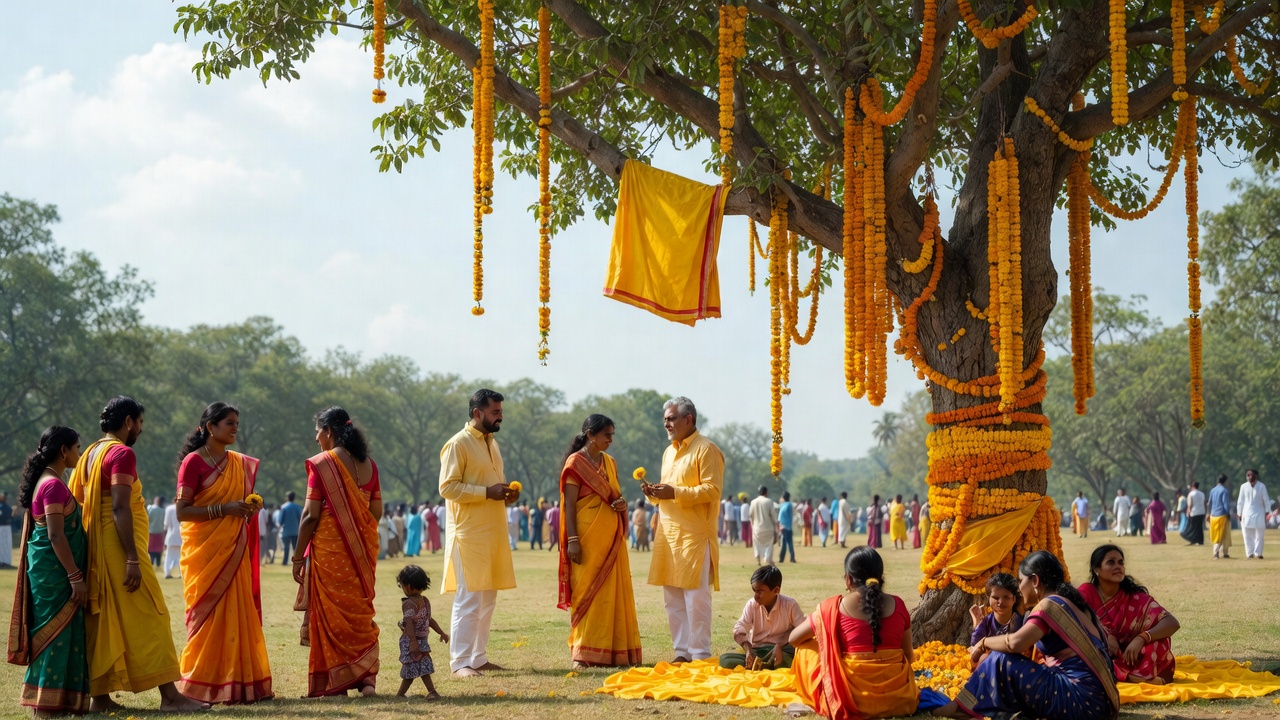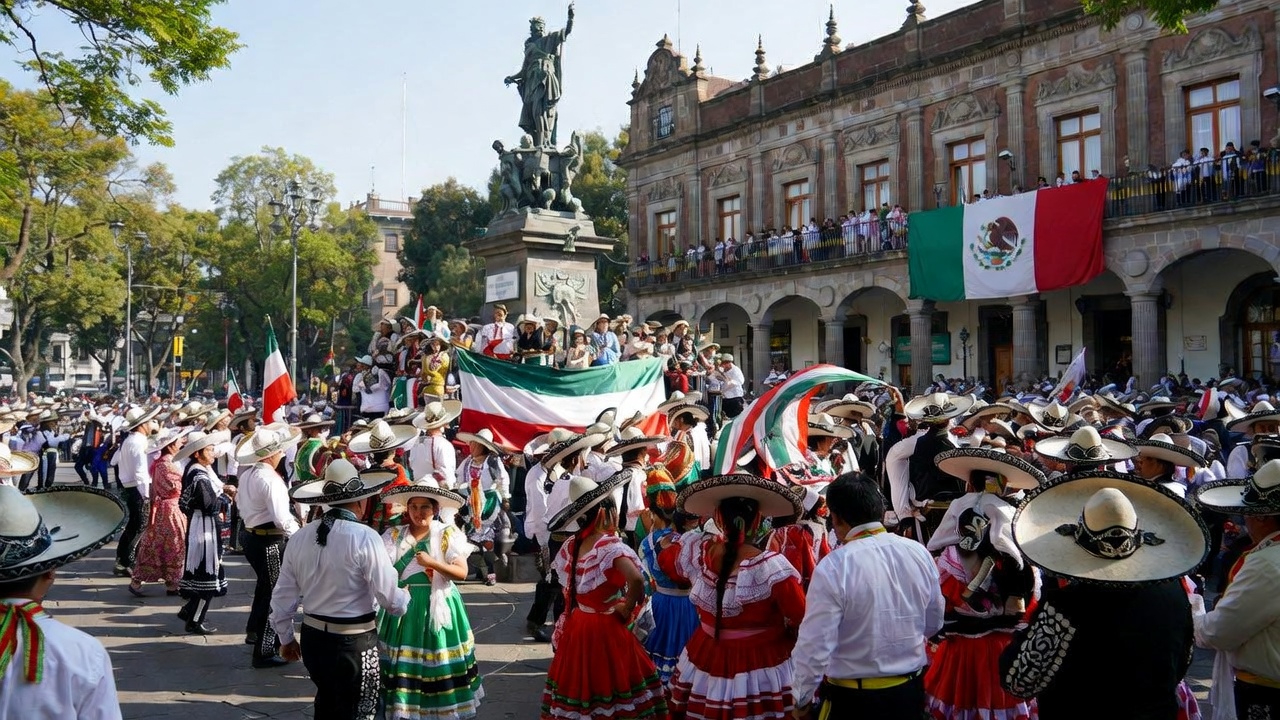
Every February, Mexico pauses. Schools close their doors. Government offices fall silent. Families gather for picnics, and the colonial streets of Querétaro fill with the sound of marching bands and the flutter of green, white, and red flags. This is Día de la Constitución — Constitution Day — and in 2026, the nation marks 109 years since President Venustiano Carranza promulgated the document that still governs the country today.
But Constitution Day is not merely a day off work. It is a civic remembrance of blood spilled, ideals forged, and a nation reborn. The Political Constitution of the United Mexican States (Constitución Política de los Estados Unidos Mexicanos), signed on January 31 and proclaimed on February 5, 1917, emerged from seven years of revolution, civil war, and social upheaval. It was the first constitution in the world to enshrine social rights — ahead of both the Russian Constitution of 1918 and Germany’s Weimar Constitution of 1919.
This is its story.
What Was Mexico Like Before the 1917 Constitution? Understanding the Porfiriato Era
To understand why Mexico needed a new constitution, you must first understand the country it replaced. For more than three decades — from 1876 to 1911 — one man dominated Mexican political life: General Porfirio Díaz.
The era of his rule is known as the Porfiriato. Díaz was a war hero of Mixtec and Spanish descent, born in the southern state of Oaxaca. He had fought with distinction against the French-backed Emperor Maximilian in the 1860s. He first rose to the presidency in 1877, briefly stepped aside in 1880, then returned in 1884 and never let go of power again until he was forced into exile in 1911.
The Two Faces of the Porfiriato
Under Díaz, Mexico modernized at dizzying speed. His government built roughly 15,000 miles of railroad track, connecting remote regions to major cities and ports for the first time. Foreign capital poured into the country — from the United States, Britain, and France — funding mines, oil fields, factories, and electricity grids. Mexico City itself was remade in the image of Paris, with wide boulevards, ornate theaters, and grand public monuments.
But this progress came at a brutal cost. Díaz governed through a formula he summarized bluntly: “Pan o palo” — “Bread or the stick.” Accept his authority and prosper. Resist, and face the rurales (rural police), imprisonment, or worse.
The wealth generated during the Porfiriato was concentrated in the hands of a small elite — many of them foreign investors. The civil liberties promised by Mexico’s prior Constitution of 1857 were effectively suspended. The free press was silenced. Independent courts were gutted. And in the countryside, where the vast majority of Mexicans lived, conditions were devastating.
| Aspect | Porfiriato Reality |
|---|---|
| Railroad miles built | Approximately 15,000 miles by 1910 |
| Land ownership | Millions of peasants displaced from ancestral lands |
| Average worker | Poorer in 1910 than in 1870, according to multiple historical studies |
| Press freedom | Virtually nonexistent; opposition newspapers shut down |
| Presidential terms | Díaz served seven consecutive terms (1884–1911) |
| Foreign ownership | U.S. and British firms controlled most oil and mining operations |
Through a series of land laws passed between 1883 and 1894, Díaz’s government enabled the seizure of millions of acres of communal indigenous land. Local judges were bribed to declare lands “vacant,” and vast estates — called haciendas — swallowed entire villages. Workers on these estates often lived under conditions of debt peonage, a system barely distinguishable from slavery.
By 1910, most ordinary Mexicans were poorer than their grandparents had been. The country was a pressure cooker. And when the lid finally blew off, it produced one of the most consequential revolutions of the twentieth century.
How Did the Mexican Revolution of 1910 Begin? The Fall of Porfirio Díaz
The spark came, improbably, from an interview.
In March 1908, the American journalist James Creelman sat down with Díaz for Pearson’s Magazine. Díaz, then 77 years old, told Creelman that Mexico was “ready for democracy” and that he would welcome an opposition candidate in the upcoming 1910 election. The comments were intended for a foreign audience and meant to reassure American investors. Díaz never expected the interview to be translated and published in Mexico. But it was — in the Mexico City newspaper El Imparcial — and it changed the course of history.
A wealthy landowner from the northern state of Coahuila named Francisco I. Madero took Díaz at his word. Madero was an idealist and a democrat. He formed the Anti-Reelectionist Party, published a book titled La Sucesión Presidencial en 1910 (The Presidential Succession of 1910), and campaigned across the country. His message was simple: no re-election, genuine suffrage, rule of law.
Díaz, who had no intention of stepping down, had Madero arrested before the election and declared himself the winner. But Madero escaped to the United States and on November 20, 1910, issued the Plan of San Luis Potosí, calling for armed uprising against the dictatorship.
The Revolution Unleashes
What followed was not a single revolution but a cascade of overlapping conflicts. In the north, the former bandit chieftain Francisco “Pancho” Villa raised an army of cowboys, miners, and railroad workers. In the south, the Nahua farmer Emiliano Zapata rallied the sugar-cane workers of Morelos behind his Plan de Ayala, demanding the return of stolen communal lands. Across the country, local strongmen, idealists, opportunists, and social reformers took up arms.
By May 1911, the revolution had succeeded in its first aim. The Federal Army was defeated at Ciudad Juárez, and Díaz — now 80 years old — signed the Treaty of Ciudad Juárez, resigned, and boarded a ship for France. He died in Paris in 1915, never to return to Mexican soil.
Madero was elected president in a genuinely democratic vote. But his triumph was short-lived.
Who Were the Key Revolutionary Leaders Behind Mexico’s Constitutional Change?
Madero proved a better idealist than a practical ruler. He retained much of the old Porfirian army and bureaucracy, alienating the very revolutionary forces that had brought him to power. In February 1913, a military coup orchestrated by General Victoriano Huerta — with tacit approval from the U.S. Ambassador — toppled Madero’s government. Madero and his vice president were murdered.
Huerta’s seizure of power united the revolutionaries in outrage. Venustiano Carranza, the governor of Coahuila, issued the Plan of Guadalupe on March 26, 1913, refusing to recognize the Huerta government and declaring himself “First Chief” (Primer Jefe) of the Constitutionalist Army. His stated goal: restore the Constitution of 1857 and return Mexico to legitimate governance.
The Constitutionalists vs. the Conventionists
The war against Huerta brought together strange allies. Carranza, a patrician senator from the old Porfirian class, led the political movement. Villa’s fearsome División del Norte (Division of the North) provided the military muscle. Zapata’s guerrillas controlled the south. And a younger generation of generals — most notably Álvaro Obregón, a farmer from Sonora with a genius for modern warfare — proved decisive on the battlefield.
By July 1914, Huerta was driven from power. But the victorious factions immediately turned on each other. Carranza’s Constitutionalists clashed with Villa and Zapata’s Conventionists (so called because they allied at the Convention of Aguascalientes in late 1914). A vicious civil war followed.
Obregón’s forces defeated Villa decisively at the Battles of Celaya in April 1915. Zapata was pushed back into Morelos. By the end of 1916, Carranza controlled nearly every state in Mexico except Chihuahua and Morelos. It was time to govern — and to build a new legal order.
| Leader | Region | Core Demand | Fate |
|---|---|---|---|
| Francisco I. Madero | Coahuila (North) | Democracy, no re-election | Assassinated in 1913 |
| Emiliano Zapata | Morelos (South) | Land reform, return of communal lands | Assassinated in 1919 |
| Pancho Villa | Chihuahua (North) | Social justice, regional autonomy | Assassinated in 1923 |
| Venustiano Carranza | Coahuila (North) | Constitutionalism, legal order | Assassinated in 1920 |
| Álvaro Obregón | Sonora (Northwest) | Modernization, labor rights | Assassinated in 1928 |
It is worth pausing to note the grim pattern in this table. Nearly every major leader of the Mexican Revolution died violently. The Constitution they built was born from — and haunted by — extraordinary sacrifice.
Why Did Carranza Call the Constitutional Convention in Querétaro in 1916?
Carranza needed legitimacy. Military victory alone could not sustain a government. He needed elections, a legal framework, and international recognition. Most urgently, he needed to consolidate the competing demands of workers, peasants, middle-class reformers, and his own generals into a single national project.
On September 19, 1916, Carranza issued a decree calling for the election of delegates to a Constituent Congress. The elections took place on October 22, and the Congress would convene in Santiago de Querétaro, a colonial city about 130 miles northwest of Mexico City.
Why Querétaro?
The choice of Querétaro was deliberate and rich with symbolism. This was the city where Emperor Maximilian had been executed by firing squad in 1867, ending the French intervention and restoring the Mexican Republic. For Carranza, holding the convention there linked his movement to the great liberal tradition of Benito Juárez. There was also a practical reason: Mexico City was considered too politically conservative and potentially hostile to the revolutionary agenda.
The Teatro de la República (Theatre of the Republic) — a neoclassical building where Maximilian had been sentenced to death — served as the convention hall. The delegates who gathered there in late November 1916 would, in just two months, produce one of the most influential legal documents of the twentieth century.
Who Were the Delegates at the 1916–1917 Mexican Constitutional Congress?
The Constituent Congress opened its preparatory sessions on November 21, 1916, and formally began on December 1, when Carranza presented his draft of reforms to the Constitution of 1857.
Approximately 220 delegates arrived in Querétaro. They were all Constitutionalists — supporters of Carranza — since Villa’s and Zapata’s factions were excluded from the political process. But “Constitutionalist” did not mean “unanimous.” The delegates disagreed fiercely among themselves.
A Young, Educated, and Divided Assembly
The delegates were remarkably young. Their average age was roughly 35 years old. About half had attended university. Lawyers predominated, but the assembly also included teachers, engineers, doctors, journalists, and military officers. Only about 30 percent had actually fought in the Revolution.
Two factions quickly emerged within the Congress:
- The Moderates (Carrancistas): Led by José Natividad Macías, Luis Manuel Rojas, and journalist Félix F. Palavicini, they were close allies of Carranza. They favored a cautious revision of the 1857 Constitution, strengthening executive power while preserving liberal principles.
- The Radicals (Jacobinos): Led by General Francisco J. Múgica of Michoacán and Heriberto Jara of Veracruz, they pushed for bold social reforms — land redistribution, labor rights, secular education, and strict limits on the Catholic Church. Though they lacked a formal leader, they were backed indirectly by General Álvaro Obregón, who understood that military victory had to be consolidated through major concessions to workers and peasants.
Carranza had expected his Congress to produce a lightly updated version of the 1857 document. He was wrong. The radicals prevailed on nearly every major issue, producing a constitution far more ambitious than Carranza had envisioned.
What Are the Most Important Articles in Mexico’s 1917 Constitution?
The finished Constitution contained 137 articles organized into nine sections (títulos). Three articles stand above all others in their historical impact: Article 3, Article 27, and Article 123. Together, they transformed Mexico’s legal landscape and influenced progressive movements worldwide.
Article 3: The Right to Free Secular Education
Article 3 declared that all education in Mexico — public and private — must be secular and free of religious instruction. It also prohibited religious orders and clergy from running schools. This was the most fiercely debated article at the convention. General Múgica argued passionately that the Catholic Church’s control over education had kept Mexico’s poor in ignorance for centuries.
The article was rooted in a long tradition of Mexican liberal anticlericalism stretching back to the Reform Laws of the 1850s. But the 1917 version went further than anything that had come before. It declared education not just a government responsibility, but a fundamental right of every Mexican citizen — the first national charter in the world to do so explicitly.
Article 27: National Ownership of Land and Natural Resources
Article 27 is perhaps the single most consequential provision of the entire Constitution. It established that the Nation is the original owner of all lands and waters within the national territory. The government retained the right to transfer property to private individuals, but it could also reclaim land for the public good.
In practical terms, this article provided the legal foundation for agrarian reform — the breaking up of vast haciendas and the creation of communal farms called ejidos. It also declared that subsoil resources — oil, minerals, and metals — belonged to the Nation, not to the surface landowner. This provision would later be used by President Lázaro Cárdenas to nationalize Mexico’s oil industry in 1938, one of the defining events of twentieth-century Latin American history.
Article 27 also restricted foreign ownership of land near Mexico’s borders and coasts: no foreigner could own land within 100 kilometers of a land border or 50 kilometers of a coast. This restriction remains in effect today, though it has been partially addressed through bank-administered land trusts (fideicomisos) introduced in the 1990s.
Article 123: Workers’ Rights and Labor Protections
Article 123 was groundbreaking in its detail and ambition. It established:
- An eight-hour workday and a six-day workweek
- A minimum wage sufficient to meet the basic needs of a family
- Equal pay for equal work, regardless of sex or nationality
- The right to organize unions, bargain collectively, and strike
- Protections for women and children in the workplace, including maternity leave provisions
- Employer liability for workplace accidents and occupational diseases
These were not vague aspirations. They were enforceable constitutional mandates. In 1917, no other country in the world had embedded such detailed labor protections in its supreme law.
| Article | Core Provision | Historical Significance |
|---|---|---|
| Article 3 | Free, secular education for all | First constitution to declare education a universal right |
| Article 27 | National ownership of land and subsoil resources | Legal basis for land reform and oil nationalization |
| Article 123 | Eight-hour day, minimum wage, right to strike | Most comprehensive labor protections in any constitution to that date |
| Article 5 | Freedom to choose any lawful profession | Restricted religious orders and clergy |
| Article 130 | Strict separation of church and state | Denied legal personhood to religious organizations |
How Was the Mexican Constitution of 1917 Signed and Promulgated on February 5?
The debates in Querétaro were intense, passionate, and often chaotic. The delegates worked under enormous time pressure — Carranza had given them less than three months to produce a finished document.
On January 31, 1917, the delegates gathered in the Teatro de la República for the signing ceremony. A journalist of the era recorded a memorable detail: the ceremony was delayed by half an hour because of a power outage, and the ceremonial pen — the same pen that had been used to sign the Plan of Guadalupe in 1913 — ran out of ink. The delegates scrambled for substitutes.
The signing was followed by celebrations. Champagne bottles were passed around, and delegates grabbed souvenirs — desk bells, inkwells, portfolios — as keepsakes. Afterward, a group of radical delegates, led by the irrepressible Múgica, paraded through the streets of Querétaro shouting enthusiastic vivas (cheers) for the new Constitution.
On February 5, 1917 — a date chosen to echo the anniversary of the 1857 Constitution — President Carranza officially promulgated the new charter. It was published in full in the Diario Oficial (the Official Gazette) and reprinted in newspapers across the country. The Constitution took legal effect on May 1, 1917.
February 5 has been a national holiday ever since. Since 2006, Mexican law moved the observance to the first Monday of February, creating a three-day weekend known as a puente (bridge). In 2026, the public holiday falls on Monday, February 2, while the actual 109th anniversary is on Thursday, February 5.
How Does Mexico Celebrate Constitution Day (Día de la Constitución) in 2026?
Constitution Day is one of Mexico’s Fiestas Patrias — the patriotic holidays that anchor the national calendar. While it is not as exuberant as Independence Day (September 16) or as emotionally charged as the Day of the Dead (November 1–2), it carries a quiet civic weight that resonates across generations.
Celebrations Across the Country
In Querétaro, the birthplace of the Constitution, the celebrations are naturally the most elaborate. The city hosts cultural events, theatrical reenactments of the signing, concerts, and historical exhibitions throughout the week. The Teatro de la República — now a national museum — opens its doors for special commemorative programs.
Across the country, parades are held in town squares, often featuring marching bands, folkloric dancers in colorful regional costumes, and schoolchildren waving Mexican flags. Civic ceremonies take place at government buildings, and politicians deliver speeches recalling the revolutionary origins of the charter.
For many ordinary Mexicans, the puente weekend is also a cherished opportunity for domestic travel. Popular beach destinations like Cancún, Puerto Vallarta, and Los Cabos see a surge in visitors, as do the country’s beloved Pueblos Mágicos (Magic Towns) — small towns recognized for their cultural or historical significance.
A Day for Reflection
Constitution Day also invites reflection on how well the promises of 1917 have been kept. Conversations at family dinners and on social media turn to questions of democracy, justice, labor rights, and the ongoing struggle against inequality. In a country where these themes remain deeply relevant, the holiday serves as both celebration and challenge: a reminder that the ideals written into the Constitution are aspirations that each generation must actively defend.
How Has Mexico’s 1917 Constitution Been Amended Over More Than a Century?
The Constitution of 1917 is not a museum piece. It is a living document that has been amended more than 700 times since its promulgation. Some of these changes have been technical adjustments. Others have been seismic shifts that reshaped Mexican society.
Major Amendments Through the Decades
The Cristero War and Anticlerical Enforcement (1920s–1930s): The anticlerical articles of the Constitution (3, 5, 24, 27, and 130) were not vigorously enforced until President Plutarco Elías Calles came to power in 1924. His strict enforcement triggered the Cristero War (1926–1929), a bloody armed rebellion by Catholic peasants in central and western Mexico. The conflict killed tens of thousands and was only resolved through diplomatic negotiations between the Mexican government and the Vatican.
Oil Nationalization (1938): President Lázaro Cárdenas invoked Article 27 to nationalize Mexico’s petroleum industry, expropriating the assets of foreign oil companies. The nationalization created Pemex (Petróleos Mexicanos), the state oil company, and made March 18 — the anniversary of the expropriation — a celebrated date in the Mexican calendar.
Women’s Suffrage (1953): Although the 1917 Constitution spoke of “citizens” and did not explicitly exclude women from voting, in practice women were denied the franchise for decades. It was not until 1953 that the Constitution was formally amended to guarantee women’s right to vote in federal elections.
NAFTA-Era Reforms (1990s): Under President Carlos Salinas de Gortari, several landmark amendments were passed to prepare Mexico for entry into the North American Free Trade Agreement (NAFTA) with the United States and Canada. Article 27 was modified to allow the privatization of ejido lands. Article 130 was amended to restore limited legal rights to religious organizations. Diplomatic relations between Mexico and the Vatican were re-established.
Human Rights Reform (2011): A major constitutional overhaul elevated international human rights treaties to constitutional rank, strengthened protections against discrimination, and broadened access to amparo proceedings (Mexico’s equivalent of a constitutional injunction).
Mexico City Statehood (2016): Mexico City — formerly governed as the Federal District (Distrito Federal, or DF) — was granted the status of a full federal entity with its own constitution and elected officials.
What Impact Did the 2024 Judicial Reform Have on the Mexican Constitution?
No discussion of the Constitution’s modern evolution would be complete without addressing the sweeping judicial reforms pushed through by former President Andrés Manuel López Obrador (AMLO) in the final months of his presidency.
On February 5, 2024 — symbolically, on Constitution Day — López Obrador submitted a package of 18 constitutional amendments to Congress. The most controversial among them was the judicial reform, which proposed replacing Mexico’s appointment-based system for selecting judges with direct popular elections.
The reform was approved by Congress in September 2024, just weeks before President Claudia Sheinbaum took office on October 1. It was swiftly ratified by a majority of state legislatures. The reform reduced the number of Supreme Court justices from eleven to nine, eliminated judicial tenure, and established that all judges — from the Supreme Court to local district courts — would be elected by popular vote for renewable nine-year terms.
The 2025 Judicial Elections
On June 1, 2025, Mexico held its first-ever nationwide judicial elections. The vote was unprecedented in global terms: no other country has ever elected the entirety of its judiciary through direct popular vote. Roughly 881 federal judicial positions were on the ballot, including nine seats on the Supreme Court.
Voter turnout was strikingly low — approximately 13 percent of eligible voters participated, a record low for any federal election in Mexico. The number of invalid and blank ballots also reached historic highs, surpassing 20 percent of total votes cast in many races. All nine candidates elected to the Supreme Court had ties to the ruling party, MORENA (Movimiento Regeneración Nacional).
The Organization of American States and other international observers raised concerns about transparency, the distribution of partisan “cheat sheets” (acordeones) guiding voters to specific candidates, and the potential impact on judicial independence. Human Rights Watch described the process as one that “undermined judicial independence.”
The newly elected judges took office on September 1, 2025. A second round of judicial elections is scheduled for 2027, when the remaining half of all judicial positions will be filled.
This reform is the most profound change to the structure of the Mexican state since the Constitution was written in 1917. Whether it strengthens or weakens Mexican democracy will be a question debated for decades to come.
Why Is Mexico’s 1917 Constitution Considered the First Social Constitution in the World?
The phrase “social constitution” refers to a charter that goes beyond guaranteeing negative liberties (freedom from government interference) to actively guarantee positive rights — the right to education, healthcare, housing, land, and dignified labor.
Before 1917, the world’s most influential constitutions — those of the United States (1787) and France (1789) — focused primarily on limiting government power and protecting individual freedoms. They said little about what governments owed their citizens in material terms.
Mexico’s 1917 Constitution broke this mold. It declared that the state was not a neutral referee but an activist force responsible for social justice. The government was obligated to provide free education (Article 3), redistribute land to the dispossessed (Article 27), and guarantee workers’ rights to fair wages and safe conditions (Article 123).
This was revolutionary — not just for Mexico, but for the world. The Library of Congress describes the 1917 Constitution as a model that “would serve as a model for progressive constitutions around the world.” Within two years, both Russia (1918) and Germany (1919) adopted constitutions with social rights provisions. Throughout the twentieth century, newly independent nations in Asia, Africa, and Latin America drew on the Mexican example when drafting their own founding documents.
What Is the Legacy of the Mexican Revolution and the Constitution of 1917 Today?
Walking through the streets of any Mexican city in early February 2026, you can feel the Constitution’s legacy in ways both visible and invisible.
The visible legacy includes the massive public education system — one of the largest in Latin America — that grew from Article 3’s promise of free, secular schooling. It includes Pemex, the state oil company born of Article 27. It includes the labor unions and workers’ protections that trace their legal authority to Article 123. It includes the ejido system, which — though transformed by the 1990s reforms — still accounts for a significant portion of Mexico’s agricultural land.
The invisible legacy is harder to measure but no less important. The Constitution of 1917 enshrined a vision of the state as a guarantor of social rights — a vision that, even when imperfectly realized, continues to shape Mexican political culture. When Mexicans debate healthcare, education, wages, or land rights, they do so within a constitutional framework that declares these things to be rights, not privileges.
The document is not perfect. It has been amended so many times that some scholars argue it has lost coherence. Enforcement has always been uneven. Corruption, violence, and inequality continue to plague the country. But the Constitution remains the foundational covenant between the Mexican state and its people — a written promise, renegotiated with each generation, that the sacrifices of the Revolution were not in vain.
How to Experience Mexico’s Constitution Day as a Visitor in 2026
If you are planning to visit Mexico around Constitution Day in 2026, here are a few practical tips and cultural recommendations:
Dates to know:
- Monday, February 2, 2026: Official public holiday (first Monday of February). Banks, government offices, schools, and most businesses are closed.
- Thursday, February 5, 2026: The actual 109th anniversary of the Constitution’s promulgation. Cultural events and civic ceremonies may take place, especially in Querétaro.
Where to go:
- Querétaro: The city where the Constitution was drafted. Visit the Teatro de la República and the Regional Museum of Querétaro for historical exhibitions. The city hosts cultural events, concerts, and reenactments throughout the week.
- Mexico City: The National Palace (Palacio Nacional) houses Diego Rivera’s famous murals depicting the Mexican Revolution. The National Museum of the Revolution (Museo Nacional de la Revolución), located inside the distinctive dome of the Monument to the Revolution, offers excellent exhibitions on the constitutional era.
- Morelos: The heartland of Zapata’s movement. The town of Anenecuilco, where Zapata was born, and Cuautla, where he is buried, offer intimate connections to the revolutionary story.
What to expect:
- Parades with marching bands and folkloric dancers
- Many museums closed on Monday (as Monday is the standard closing day for museums in Mexico), but open the rest of the week
- Busy highways and crowded beach resorts, as millions of Mexicans take advantage of the long weekend
- A respectful, patriotic atmosphere — less raucous than Independence Day, but deeply felt
Cultural etiquette:
The Mexican Revolution and its Constitution are matters of genuine pride and also genuine debate. Visitors are welcome to ask questions, attend events, and engage in conversations. Approach the topic with curiosity and respect. Mexicans are generous with their history when they sense genuine interest.
Frequently Asked Questions About Mexico’s 1917 Constitution and Constitution Day
When was the Mexican Constitution of 1917 signed and promulgated? The delegates signed the final document on January 31, 1917. President Venustiano Carranza promulgated it on February 5, 1917, in Querétaro. It took legal effect on May 1, 1917.
Is Mexico’s 1917 Constitution still in use today? Yes. Despite having been amended more than 700 times, the 1917 Constitution remains the supreme law of Mexico.
Why is Constitution Day celebrated on the first Monday of February instead of February 5? In 2006, Mexico’s Congress approved a law moving several national holidays to the nearest Monday, creating long weekends (puentes) for workers and students. The historical date remains February 5.
What makes the 1917 Constitution historically unique? It was the first constitution in the world to guarantee social rights — including the right to education, land reform, and comprehensive labor protections — predating similar provisions in the Russian and German constitutions.
Where was the Constitutional Convention held? At the Teatro de la República in Santiago de Querétaro, a city chosen for both its symbolic association with the execution of Emperor Maximilian and its distance from the conservative politics of Mexico City.
How many delegates participated? Approximately 220 delegates attended, though not all were present for every session. The delegates were predominantly middle-class professionals — lawyers, teachers, engineers — with an average age of about 36.
Final Thoughts: Why the Story of Mexico’s 1917 Constitution Still Matters in 2026
Constitutions are more than legal documents. They are stories a nation tells itself about what it believes, what it has suffered, and what it hopes to become.
Mexico’s Constitution of 1917 was written by young men — many of them still in their twenties and thirties — who had lived through famine, war, and dictatorship. They wrote it in a provincial theater, under a deadline, with a pen that ran dry at the crucial moment. They disagreed violently among themselves. Several of them would be dead within a decade.
And yet, what they produced endures. Article 3 still guarantees every Mexican child the right to a free education. Article 27 still declares the nation’s sovereignty over its land and resources. Article 123 still protects the dignity of workers. These are not relics. They are living commitments.
In February 2026, as parades wind through city streets and families gather for pozole and tamales, this is what Mexico celebrates: not just a document, but a promise — imperfect, contested, amended hundreds of times, but never abandoned — that the suffering of the Revolution meant something. That the future could be better than the past.
That is the story of Mexico’s Constitution. And it is still being written.
This post was researched and written with reference to primary and secondary historical sources, including materials from the Library of Congress Mexican Revolution exhibition, Encyclopædia Britannica, and the Google Arts & Culture exhibit on the Constitution of 1917. All facts have been verified against multiple scholarly sources.