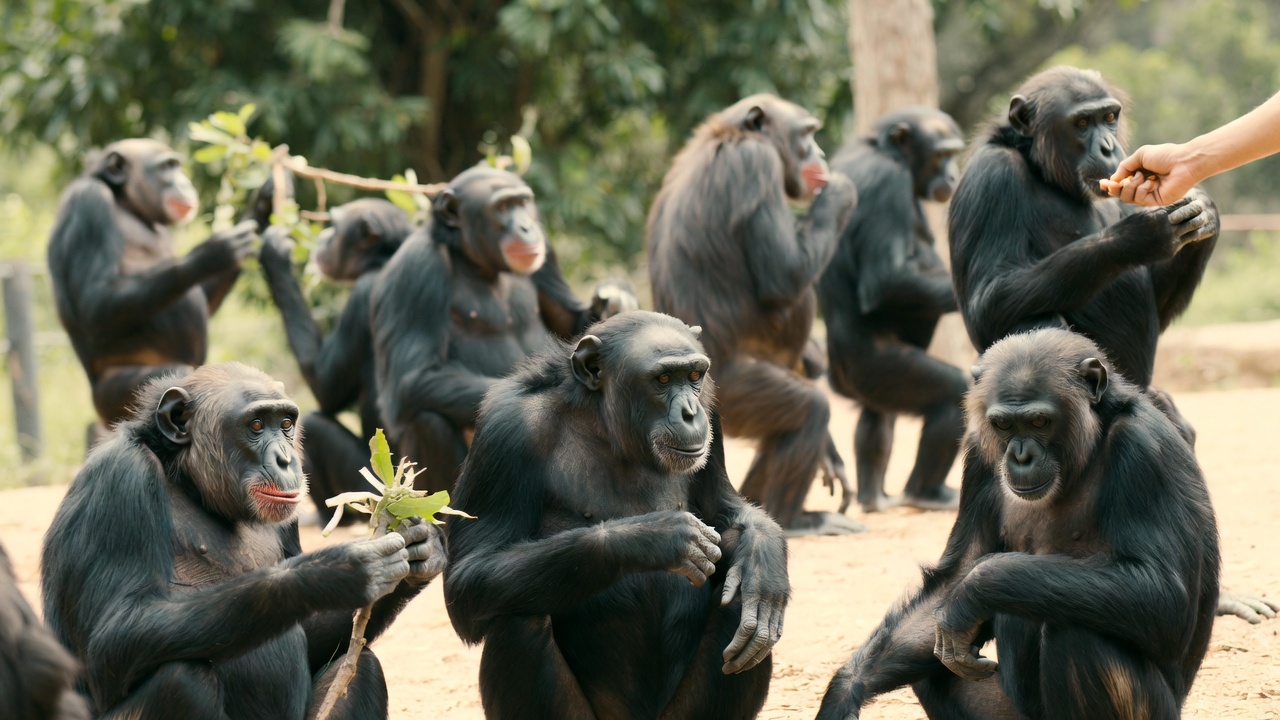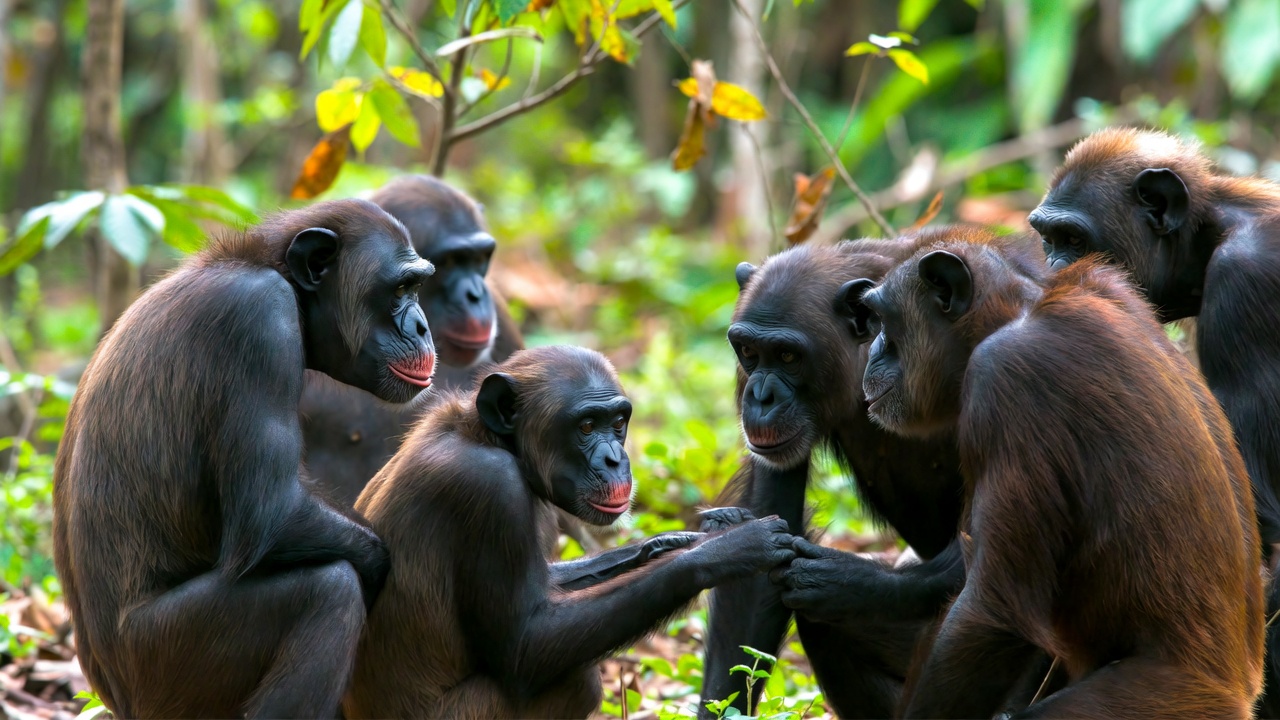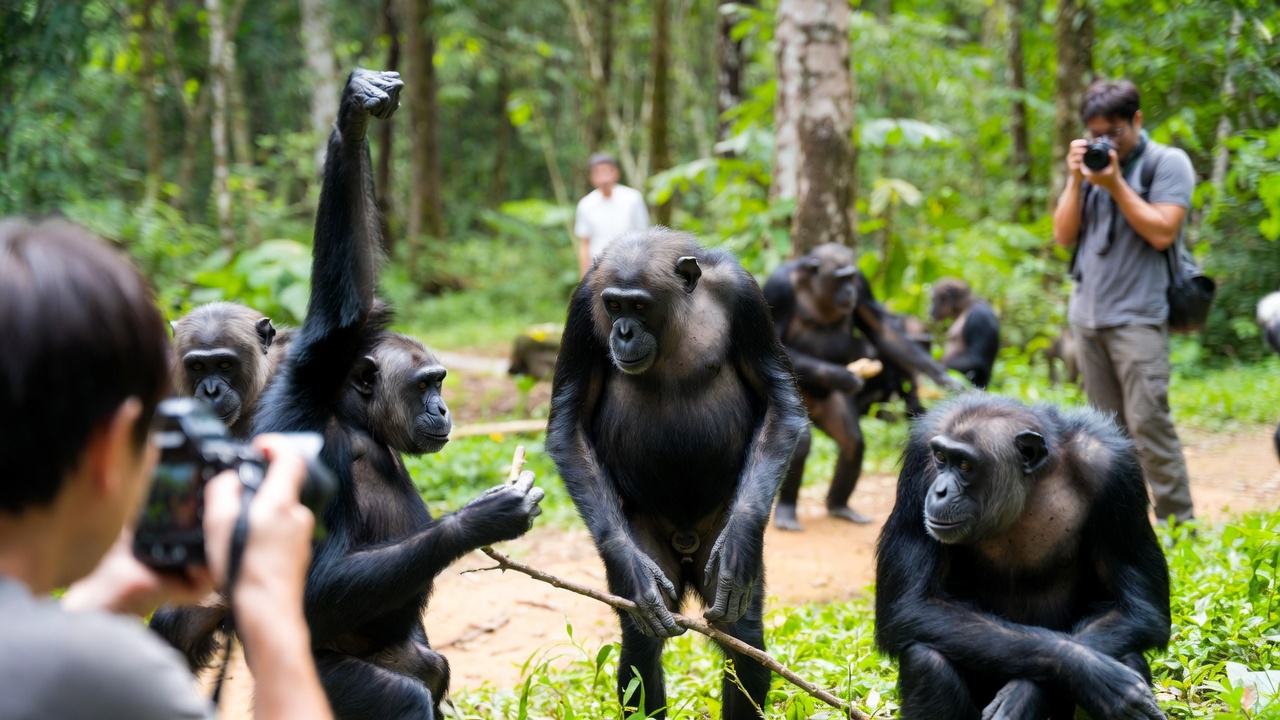
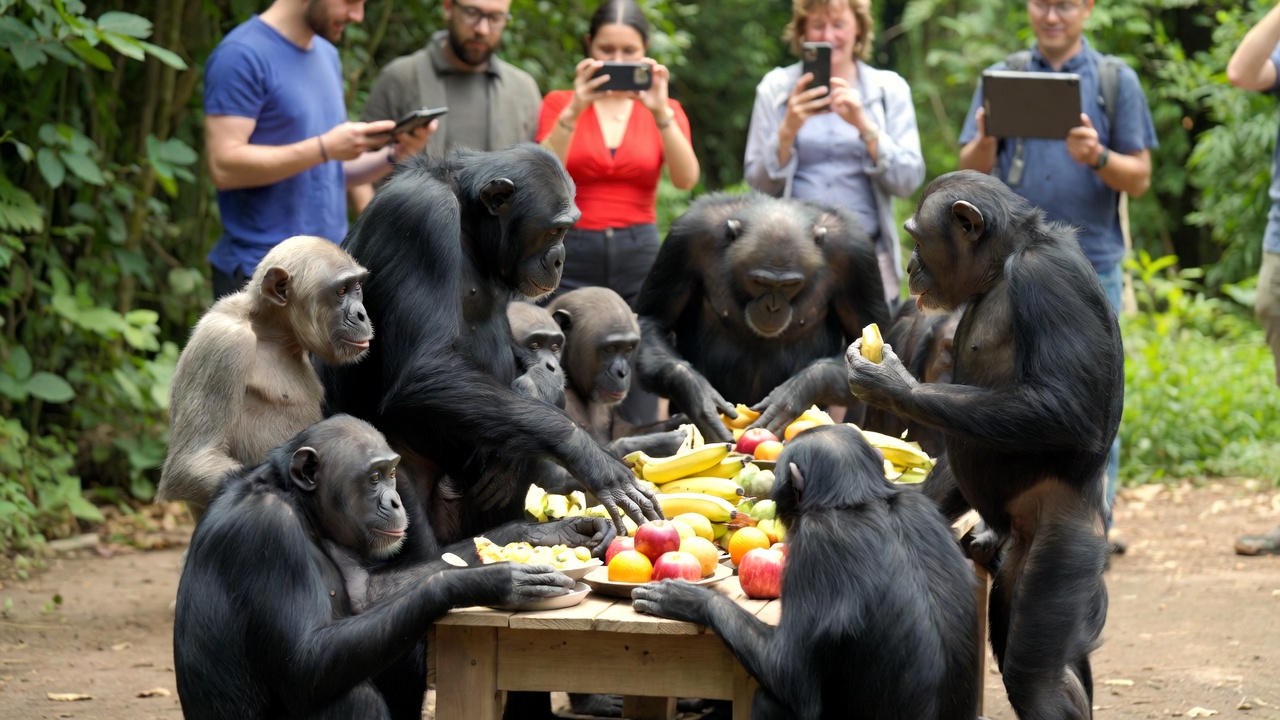
Every February 14, while the world exchanges roses and chocolates, a quieter celebration takes place — one dedicated to our closest living relatives in the animal kingdom. World Bonobo Day shares Valentine’s Day for a reason. Bonobos are nature’s great ambassadors of love and peace.
What Is World Bonobo Day and Why Is It Celebrated on Valentine’s Day?
World Bonobo Day falls on February 14 each year. It is a global awareness event that highlights the endangered bonobo (Pan paniscus) and the urgent need to protect this remarkable great ape from extinction.
But why Valentine’s Day? The answer lies in the bonobo’s extraordinary nature. Bonobos are often called the “make love, not war” apes. They resolve conflicts through affection, grooming, and social bonding rather than aggression. Their societies are led by cooperative female alliances. They kiss, hug, and even laugh during play. In a world of primates known for territorial violence, bonobos stand apart as symbols of peace and connection.
Pairing World Bonobo Day with the world’s most famous celebration of love was no accident. It was a deliberate and poetic choice — one that invites millions of people already thinking about love to also think about conservation.
How World Bonobo Day Started: The Founding Story Behind the Movement
The story of World Bonobo Day begins with Ashley Stone, a clinical social worker from Georgia who first learned about bonobos as an undergraduate studying anthropology under the renowned primatologist Dr. Frans de Waal at Emory University. Years later, in 2013, Stone met Claudine André, the founder of the legendary Lola ya Bonobo sanctuary in Kinshasa, Democratic Republic of Congo (DRC). That meeting changed everything.
Stone traveled to the DRC, spent time with bonobos at the sanctuary, and was so moved by the experience that she founded The Bonobo Project in 2014. The nonprofit’s mission was clear: elevate the public profile of bonobos and coordinate conservation efforts across organizations, researchers, zoos, and governments.
In 2017, The Bonobo Project launched the very first World Bonobo Day on February 14. The Pan African Sanctuary Alliance (PASA) joined as a partner from the start, helping to unite conservation organizations around the globe for the inaugural celebration.
The event was a success. It sparked social media campaigns, fundraising drives, and educational outreach that brought bonobos into mainstream conversation for perhaps the first time.
How World Bonobo Day Gained U.S. Congressional Recognition
World Bonobo Day took a major step forward in 2018 when U.S. Congressman Scott Peters (D-San Diego) introduced a federal resolution proclaiming February 14 as World Bonobo Day. In 2019, the effort expanded further. Peters introduced House Resolution 135 in the 116th Congress, co-sponsored by more than a dozen Representatives, formally expressing support for the designation.
The resolution recognized key facts about bonobos:
| Fact | Detail |
|---|---|
| Genetic similarity to humans | Bonobos share 98.7% of human DNA |
| Social structure | Only matriarchal great ape species |
| Conflict resolution | Use grooming and social bonding, not violence |
| U.S. zoos with bonobos | San Diego Zoo, Cincinnati Zoo, Columbus Zoo, Milwaukee County Zoo, Jacksonville Zoo, Memphis Zoo, Fort Worth Zoo |
| Conservation status | Endangered (IUCN Red List) |
This congressional recognition gave the day official weight. It signaled to the international community that bonobo conservation deserved policy-level attention, not just grassroots enthusiasm.
Why Bonobos Are Endangered: Threats Facing Our Closest Living Relatives
Bonobos are found in only one country on Earth — the Democratic Republic of Congo. They live in the dense rainforests south of the Congo River, scattered across a potential range of roughly 500,000 square kilometers. Yet their population has been declining for at least three decades.
Estimates vary widely. The Bonobo Conservation Initiative places the number at 10,000 to 20,000 individuals. The World Wildlife Fund cites a range of 29,500 to 50,000, though it cautions that reliable counts are extremely difficult to obtain. What every source agrees on is this: the population is fragmented and shrinking.
The major threats include:
Bushmeat hunting is the single greatest danger. In a region marked by extreme poverty and limited infrastructure, smoked bushmeat is one of the few commodities durable enough to transport to distant markets. Bonobos, due to their size, become easy targets. Because females only give birth to a single infant every four to five years, the population cannot recover quickly.
Habitat destruction from slash-and-burn agriculture drives farming deeper into the rainforest with each planting cycle. Large-scale industrial agriculture and commercial logging compound the problem. A study cited by the African Wildlife Foundation found that 99.2% of bonobo territory is suitable for palm oil cultivation, making future habitat loss a looming catastrophe.
Armed conflict has ravaged the DRC for decades. The First and Second Congo Wars flooded remote areas with modern weapons, making hunting easier even in previously inaccessible zones. Military forces have at times sanctioned the killing of bonobos. Political instability continues to undermine conservation enforcement.
Disease transmission is a growing risk as human contact increases. Bonobos and humans are susceptible to many of the same illnesses due to our close genetic relationship. Ebola and other zoonotic diseases have devastated gorilla and chimpanzee populations, and bonobos face similar vulnerability.
Three Genetically Distinct Bonobo Populations: Why This Discovery Matters
A groundbreaking genetic study co-led by University College London, the University of Vienna, and the Max Planck Institute for Evolutionary Anthropology revealed that bonobos are not a single, uniform population. Instead, they consist of three genetically distinct groups — central, western, and far-western — that have been isolated from one another for tens of thousands of years.
The study, published in Current Biology, found that one group may have separated from the others roughly 145,000 years ago, while the remaining two diverged around 60,000 years ago. The genetic differences between these groups are as significant as those between the most closely related chimpanzee subspecies.
Senior author Aida Andrés of UCL warned: “Losing one of these three groups would be a devastating loss to the total genetic diversity of the species” (Earth.com). This finding has major implications for conservation strategy. Protecting bonobos now means protecting all three populations, including the habitat corridors between them.
Lola ya Bonobo: The World’s Only Bonobo Sanctuary and Its Role in Conservation
No discussion of bonobo conservation is complete without Lola ya Bonobo — “Paradise for Bonobos” in Lingala. Founded in 1994 by Claudine André during the chaos of civil war in the DRC, this sanctuary near Kinshasa remains the only facility in the world dedicated to rescuing orphaned bonobos.
The pattern is heartbreaking and familiar. Poachers kill adult bonobos for bushmeat. The surviving infants — too small to eat — are sold as pets on the black market. When Congolese authorities confiscate these orphans, Lola ya Bonobo takes them in.
Today, the sanctuary is home to approximately 60 bonobos living in 30 hectares of primary forest. The rehabilitation process is intensive. Bonobo infants, unlike other great ape babies, will die without one-on-one love and nurturing. Each orphan is paired with a human surrogate mother who provides constant care.
Key milestones at Lola ya Bonobo:
- 2008 — First rewilding of 11 rehabilitated bonobos to the Ekolo ya Bonobo Community Reserve, a 117,000-acre protected area in Équateur Province
- 2022 — Second rewilding of 14 bonobos to Ekolo ya Bonobo
- 2025 — New baby born to bonobo mother N’djili at the sanctuary, marking a hopeful sign for the rehabilitation program
- 2025 — Devastating floods from torrential rains damaged the sanctuary’s infrastructure, prompting an international emergency fundraising campaign
More than 30 bonobos now live freely at Ekolo ya Bonobo. The reserve is co-managed by Les Amis des Bonobos du Congo in partnership with local communities — the Ilonga Poo, Baenga, and Lisafa peoples.
The Bonobo Project Merges with Friends of Bonobos: A New Chapter in 2025
In a significant development for bonobo conservation, The Bonobo Project officially merged with Friends of Bonobos in 2025. The announcement, shared on the Friends of Bonobos website, described the merger as a natural evolution.
Ashley Stone, the founder of The Bonobo Project, had already been serving on the Friends of Bonobos board. The merger consolidated seven years of awareness campaigns, celebrity partnerships, outreach events, and the creation of World Bonobo Day under a single organizational umbrella. It also ensured that the day’s legacy would continue to grow alongside on-the-ground conservation work in the DRC.
Friends of Bonobos now operates with a four-pillar strategy:
- Rescue and sanctuary care at Lola ya Bonobo
- Rewilding at Ekolo ya Bonobo Community Reserve
- Community development to address the root causes of the bushmeat trade
- Education and global awareness, including World Bonobo Day
How Bonobos Differ from Chimpanzees: Understanding Our Peaceful Cousins
Bonobos and chimpanzees are both members of the genus Pan and are equally close to humans genetically. But their societies could not be more different. Understanding these differences is central to appreciating why bonobos matter — and why they deserve their own day of celebration.
| Trait | Bonobos (Pan paniscus) | Chimpanzees (Pan troglodytes) |
|---|---|---|
| Social leadership | Matriarchal — led by female alliances | Patriarchal — led by dominant males |
| Conflict resolution | Social bonding, grooming, play | Aggression, territorial violence |
| Inter-group encounters | Often peaceful; play and social interaction | Often violent; raids and killing observed |
| Killing within species | Never observed in the wild | Well-documented |
| Physical appearance | Darker face, pink lips, longer limbs, parted hair | Lighter face, larger build |
| Range | South of the Congo River (DRC only) | Across equatorial Africa |
Bonobos are the only great apes never observed killing members of their own species in the wild. They are biologically wired to seek peaceful solutions. When two bonobo groups encounter each other in the forest, they are more likely to play and socialize than fight. This stands in stark contrast to chimpanzees, who are known to conduct lethal raids on neighboring groups.
How to Celebrate World Bonobo Day 2026: Practical Ways to Take Action
World Bonobo Day 2026 falls on Saturday, February 14. Whether you are a student, a teacher, a wildlife enthusiast, or someone who simply cares about our planet’s future, there are meaningful ways to participate.
Donate to bonobo conservation organizations. Direct funding is the most impactful way to help. Friends of Bonobos supports Lola ya Bonobo and Ekolo ya Bonobo. The Bonobo Conservation Initiative works with Congolese communities to protect wild bonobo habitat. The African Wildlife Foundation funds ranger training and community-driven conservation reserves in the DRC.
Recycle your old mobile phones. This one surprises people. Coltan, a mineral mined in bonobo habitat, is found in virtually every cell phone. By recycling old devices, you reduce the demand for new coltan mining and help protect the forests where bonobos live. The Cincinnati Zoo runs a phone recycling program specifically tied to bonobo conservation.
Spread the word on social media. Use the hashtags #WorldBonoboDay and #BonoboLove. Friends of Bonobos provides a Social Media Toolkit with shareable images, facts, and messages.
Choose sustainable products. Look for FSC-certified wood products. Avoid palm oil from unsustainable sources. Even small purchasing decisions, repeated by millions of consumers, can reduce pressure on Congo Basin rainforests.
Educate children. Friends of Bonobos offers kids’ activities, stories, and interactive content on their website. Teaching the next generation about bonobos is one of the most powerful long-term investments in conservation.
The Role of Congolese Communities in Bonobo Conservation
Any honest account of bonobo conservation must center the people who share the land with these apes. The DRC is one of the poorest nations on Earth. Decades of conflict, corruption, and colonial exploitation have left many communities without basic infrastructure, education, or economic opportunity.
The bushmeat trade is not driven by cruelty. It is driven by poverty. Families hunt bonobos because they need protein and income. Smoked meat is one of the few goods that can survive the long, difficult journey to market along the DRC’s limited road network.
This is why the most effective conservation programs work with communities, not against them. At Ekolo ya Bonobo, local community members are hired as eco-guards who patrol the reserve daily. Friends of Bonobos invests in schoolbooks, medicine, agricultural training, and economic alternatives for families living near bonobo habitat. The Bonobo Conservation Initiative collaborates with Congolese institutions and the DRC government to integrate conservation into regional development plans.
Education programs at Lola ya Bonobo welcome thousands of Congolese visitors each year. Research has shown that children who visit the sanctuary demonstrate improved attitudes toward bonobos and wildlife conservation afterward. When Congolese communities understand the value of their unique natural heritage — bonobos exist nowhere else on Earth — they become powerful advocates for protection.
The Future of Bonobos: What Needs to Happen Before It Is Too Late
The clock is ticking. At current rates of habitat loss and hunting, some experts have warned that bonobos could vanish from the wild within 50 to 70 years. The species’ slow reproductive cycle — one infant every four to five years — means that recovery, even under ideal conditions, will take generations.
Several priorities stand out for the years ahead:
Expand protected areas. Only a small fraction of bonobo habitat is currently under formal protection. Salonga National Park, the largest protected area in the bonobo range and a UNESCO World Heritage Site, has suffered from poaching even within its borders. New reserves like Ekolo ya Bonobo offer a model for community-managed conservation.
Fund long-term research. Bonobos were the last great apes to be discovered, and they remain the least studied. The WWF launched a bonobo habituation program in Salonga National Park in 2023, with the goal of developing sustainable bonobo tourism that benefits local communities while funding ongoing protection.
Address the palm oil threat. With nearly all of the bonobo’s range suitable for palm oil plantations, proactive land-use planning is essential. Conservation organizations must work with governments and the private sector to ensure that agricultural expansion does not erase the last bonobo strongholds.
Protect genetic diversity. The discovery of three distinct bonobo populations means that losing any single group would be catastrophic for the species’ long-term survival. Conservation strategies must account for this genetic substructure, including protecting habitat corridors and considering carefully managed translocations if necessary.
A Timeline of Key Events in Bonobo Conservation History
| Year | Event |
|---|---|
| 1933 | Bonobos officially recognized as a separate species from chimpanzees |
| 1970 | Salonga National Park established in the DRC |
| 1984 | Salonga designated a UNESCO World Heritage Site |
| 1994 | Claudine André founds Lola ya Bonobo sanctuary in Kinshasa |
| 1995 | Zoological Society of Milwaukee publishes the first Action Plan for Pan paniscus |
| 2003 | U.S. government allocates $54 million to the Congo Basin Forest Partnership |
| 2008 | First rewilding of bonobos from Lola ya Bonobo to Ekolo ya Bonobo |
| 2014 | Ashley Stone founds The Bonobo Project |
| 2017 | First World Bonobo Day celebrated on February 14 |
| 2018 | U.S. Congressman Scott Peters introduces federal resolution for World Bonobo Day |
| 2019 | House Resolution 135 introduced in 116th Congress supporting World Bonobo Day |
| 2022 | Second rewilding of 14 bonobos to Ekolo ya Bonobo |
| 2024 | Genetic study reveals three distinct, isolated bonobo populations |
| 2025 | The Bonobo Project merges with Friends of Bonobos; floods damage Lola ya Bonobo |
| 2026 | World Bonobo Day marks its 10th annual celebration |
Final Thoughts: Why World Bonobo Day Matters More Than Ever in 2026
This year, World Bonobo Day reaches a milestone. 2026 marks a full decade since the first celebration in 2017. In that time, the movement has grown from a grassroots social media campaign into a globally recognized observance backed by congressional resolutions, major conservation organizations, and zoos across the United States and beyond.
But milestones are only meaningful if they lead somewhere. The threats bonobos face have not diminished. In many ways, they have intensified. Climate change brings more extreme weather events — as the 2025 floods at Lola ya Bonobo painfully demonstrated. Palm oil expansion looms over the Congo Basin. Armed conflict continues to destabilize conservation efforts.
What has changed is awareness. Ten years ago, the most common response to the word “bonobo” was a blank stare. Today, millions of people around the world know what a bonobo is, why it matters, and what they can do to help.
That shift — from ignorance to awareness, and from awareness to action — is exactly what World Bonobo Day was created to achieve. On February 14, 2026, as you celebrate love in whatever form it takes, remember the apes who taught us that peace is not weakness. It is a strategy. It is a way of life. And it is worth fighting for.