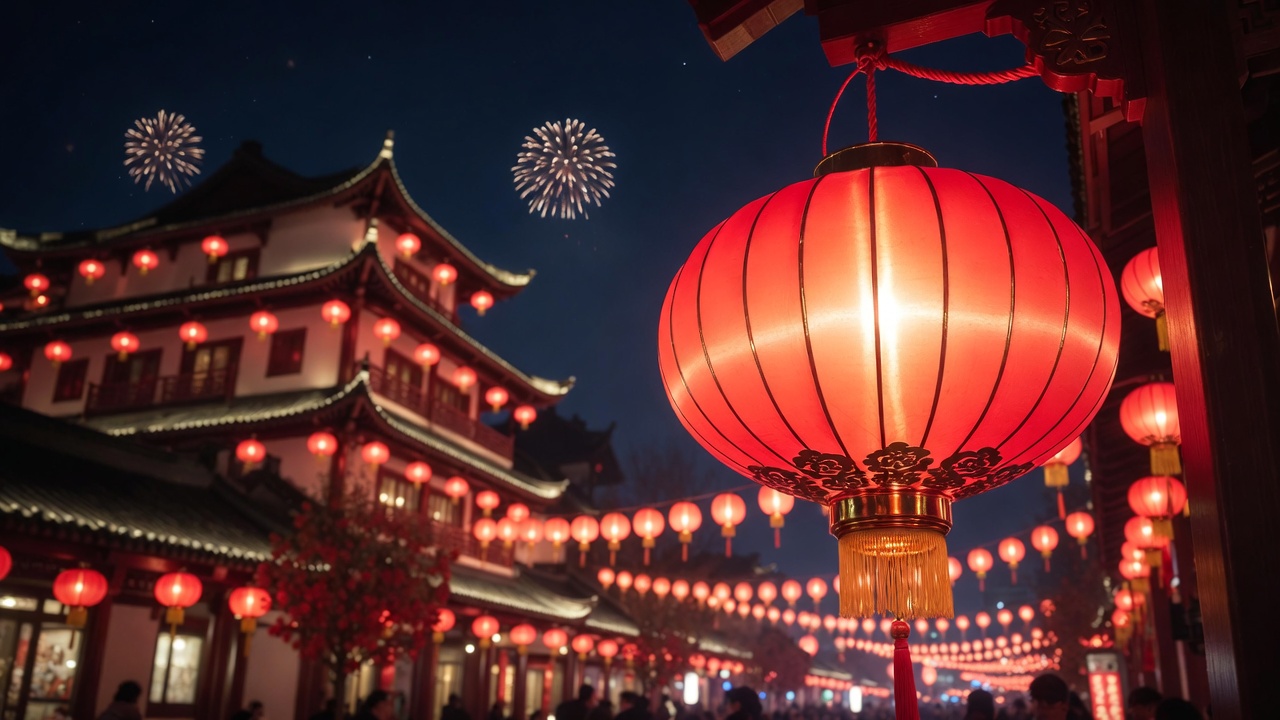
Every year, as the first full moon rises after Chinese New Year, the night sky across East Asia transforms. Red and gold lanterns sway above narrow lanes. Children clutch paper lanterns shaped like rabbits and goldfish. Families sit around steaming bowls of sweet rice balls. The air cracks with fireworks and hums with the beat of dragon-dance drums. This is the Lantern Festival — one of the oldest and most beloved celebrations in the Chinese calendar.
In 2026, the Lantern Festival falls on Tuesday, March 3. It is the fifteenth day of the first lunar month, and it signals the official end of the Chinese New Year season. After this day, the red couplets come down. The firecrackers go quiet. Everyday life resumes.
But on this one night, the lanterns glow.
This guide covers everything you need to know about the Lantern Festival — its ancient origins, its deeper cultural meaning, the food, the games, the dances, and the best places to celebrate it in 2026, whether you are in Beijing, Taipei, or Philadelphia.
What Is the Chinese Lantern Festival and When Is It Celebrated?
The Lantern Festival, known in Mandarin as Yuánxiāo Jié (元宵节), is a traditional Chinese holiday observed on the fifteenth day of the first month of the lunisolar calendar. This always coincides with the year’s first full moon. On the Gregorian calendar, the date shifts each year, landing somewhere between early February and early March.
The festival also goes by two other names. In formal literary contexts, it is called the Shangyuan Festival (上元节). Among Hokkien-speaking communities in Southeast Asia — particularly in Malaysia, Singapore, and Indonesia — it is known as Cap Go Meh (十五暝), which simply means “the fifteenth night.”
Here are the upcoming Lantern Festival dates for the next several years:
| Year | Lantern Festival Date | Day of the Week | Zodiac Year |
|---|---|---|---|
| 2025 | February 12 | Wednesday | Snake |
| 2026 | March 3 | Tuesday | Horse |
| 2027 | February 20 | Saturday | Goat |
| 2028 | February 9 | Wednesday | Monkey |
The Lantern Festival is not a public holiday in mainland China. Most businesses operate on normal hours. However, the cultural weight of this day is enormous. It is the emotional finale of the entire Spring Festival period — the last collective celebration before people return to the rhythm of daily work and school.
In Taiwan, the festival carries special linguistic significance. The Mandarin word for lantern — dēng (灯) — sounds similar to dīng (丁), which means “a newborn boy.” Lighting lanterns therefore becomes a symbolic wish for fertility and family growth. This layer of meaning gives the festival a warmth that goes beyond mere spectacle.
The Ancient Origins of the Lantern Festival: Over 2,000 Years of History
The roots of the Lantern Festival stretch back more than two millennia. No single origin story exists. Instead, several threads — imperial ritual, Buddhist devotion, Taoist belief, and folk custom — braided together over centuries to create the festival we know today.
The Imperial Worship of Taiyi
The earliest recorded connection dates to the Western Han dynasty (206 BC – AD 25). During the reign of Emperor Wu, the fifteenth day of the first lunar month was established as an official day to worship Taiyi (太一), the God of Heaven. Ancient Chinese believed Taiyi controlled human destiny — drought, storms, famine, and peace all fell under his authority. The emperor ordered grand ceremonies that lasted through the entire night, with lanterns burning until dawn to symbolize communication with the gods.
In 104 BC, Emperor Wu formally proclaimed this nighttime ceremony one of the most important state rituals of the year. This decree gave the fifteenth of the first month its initial framework as a festival date.
The Buddhist Influence Under Emperor Ming
A second widely accepted origin traces to the Eastern Han dynasty (25–220 AD). Emperor Ming, a devoted advocate of Buddhism, learned that Buddhist monks lit lanterns in temples on this night to honor the Buddha. He then ordered that every household, every temple, and the entire imperial palace should light lanterns on that evening. What began as a state-imposed religious observance gradually seeped into folk culture. Over generations, it transformed into a community celebration open to everyone — not just monks and emperors.
The Legend of the Jade Emperor’s Crane
Perhaps the most popular folk legend tells of a beautiful crane that flew down from heaven and was accidentally killed by villagers. Enraged, the Jade Emperor planned to set the village ablaze on the fifteenth day of the first lunar month as punishment. But the emperor’s own daughter took pity on the people and secretly warned them. A wise elder then devised a plan: hang red lanterns and set off firecrackers so the village would appear to be already burning. The Jade Emperor, seeing flames and smoke from heaven, was fooled. The village was saved.
This legend explains why red lanterns — symbols of both protection and good fortune — remain the visual centerpiece of the festival to this day.
The Taoist Layer: Tianguan’s Birthday
In Taoist tradition, the fifteenth of the first lunar month is the birthday of Tianguan (天官), the deity responsible for bestowing good fortune. Followers mark his birthday with entertainment and prayer. This Taoist dimension added yet another reason to celebrate on this date — and another layer of spiritual meaning.
All four of these origin threads — the imperial cult of Taiyi, Buddhist lamp-lighting, the Jade Emperor legend, and Tianguan’s birthday — fed into the same date. By the Tang dynasty (618–907 AD), the Lantern Festival had become a fully realized national celebration, featuring elaborate lantern displays that symbolized imperial power and cultural achievement.
What Does the Lantern Festival Mean? Symbolism of Light, Reunion, and Hope
The Lantern Festival is not merely a visual spectacle. It carries layers of meaning that touch on family, spirituality, and the natural world.
The full moon. The festival coincides with the first full moon of the lunar year. In Chinese culture, the round moon symbolizes completeness and family unity. Gathering under the full moon on this night carries the same emotional weight as a family reunion dinner.
The lanterns. Light has universal symbolic power, and in the context of this festival, lanterns represent the desire for a bright future. People light lanterns to “illuminate the path ahead” — a prayer for peace, health, and good fortune. Red lanterns specifically signal joy and luck.
Letting go and moving forward. One ancient interpretation holds that the lanterns represent people releasing their past selves. Each glowing lantern drifting upward or floating on water marks a symbolic goodbye to the old year and a welcome to the new.
Romance. In ancient China, young women from respectable families rarely ventured outside the home. The Lantern Festival was one of the few nights when social rules relaxed. Women could stroll the streets, admire lanterns, and encounter young men. For this reason, some historians consider the Lantern Festival to be the original Chinese Valentine’s Day — a claim that predates the more commonly cited Qixi Festival.
In 2008, the Lantern Festival was officially included in China’s National Intangible Cultural Heritage list, a recognition that placed its customs — the lantern-making, the riddle-guessing, the food traditions — under formal government protection.
Traditional Lantern Festival Food: What Is Tangyuan and How Is It Different from Yuanxiao?
No Lantern Festival celebration is complete without tangyuan (汤圆) — sweet glutinous rice balls served in warm soup. This is the signature dish of the holiday, and its meaning runs deeper than its taste.
Why Tangyuan Symbolizes Family Reunion
The word tangyuan sounds almost identical to tuányuán (团圆), which means “reunion” or “togetherness.” The round shape of the rice ball mirrors the full moon overhead. Served in a round bowl, floating in sweet soup, every visual element reinforces the same idea: wholeness, completeness, family harmony.
The lucky phrase spoken while eating tangyuan is “Tuántuán yuányuán” (团团圆圆) — roughly translated as “May the family be happy and whole.”
Tangyuan vs. Yuanxiao: A North-South Divide
Though people outside China often treat these words as interchangeable, tangyuan and yuanxiao are actually two different foods with distinct preparation methods. The divide follows a clear geographic line.
| Feature | Tangyuan (Southern China) | Yuanxiao (Northern China) |
|---|---|---|
| Method | Dough is kneaded by hand, filling is wrapped inside | Solid filling is rolled repeatedly in dry glutinous rice flour |
| Texture | Smooth, soft outer skin | Rougher, chewier surface |
| Filling | Sweet or savory (sesame, peanut, red bean, even minced pork) | Typically sweet (sesame, peanut, bean paste, walnut) |
| Cooking time | About 5 minutes | At least 10 minutes |
| Storage | Can be frozen and stored long-term | Best eaten fresh the same day; cracks when refrigerated |
| Broth | Clear, thin soup | Thicker, starchier liquid |
In cities like Shanghai, Guangzhou, and Chengdu, tangyuan dominates. In Beijing and across the northeast, yuanxiao is the local tradition. Both versions are round, white, and carry the same symbolic meaning — but ask a Northerner and a Southerner which is the “real” Lantern Festival food, and you may spark a spirited debate.
Regional Lantern Festival Dishes Beyond Rice Balls
China is vast, and local food traditions vary widely. Here are some lesser-known Lantern Festival dishes from across the country:
- Jujube cake (枣糕) — In Henan province, families eat date cake, a golden pastry made from jujubes and flour. This was once a dessert reserved for imperial households during the Qing dynasty.
- Shēngcài (生菜) — In Guangdong, people eat lettuce during the festival. The word shēngcài sounds like “making money” in Cantonese — a tasty pun on prosperity.
- Zào gēng (糟羹) — In Taizhou, Zhejiang, a thick savory soup made with shredded pork, bamboo shoots, mushrooms, and rice noodles is the traditional eve-of-festival dish.
How Do People Celebrate the Lantern Festival? Customs and Activities Explained
Watching Lantern Displays and Lantern Shows
The most iconic Lantern Festival activity is, naturally, watching lanterns. Streets, parks, shopping malls, and temple courtyards blaze with color. In ancient times, lanterns were simple — paper stretched over bamboo frames, lit by candles. Today, large-scale lantern shows feature installations that stretch entire city blocks, incorporating LED lights, mechanical movement, and even AI-driven effects.
Zigong, a city in Sichuan province, is known as China’s “City of Lanterns.” Its annual international lantern festival has run since 1964 and was inscribed on China’s national intangible cultural heritage list in 2008. Zigong’s lantern industry now includes over 1,000 enterprises, employs up to 130,000 people, and generates an annual output of approximately 6 billion yuan. Since debuting internationally in Singapore in 1990, Zigong lanterns have been exhibited in more than 90 countries and regions.
Other major lantern displays in mainland China include the Qinhuai International Lantern Festival in Nanjing and the Shanghai Yuyuan Garden Lantern Show, both of which draw hundreds of thousands of visitors each year.
Guessing Lantern Riddles: An Ancient Intellectual Game
One of the most charming Lantern Festival traditions is cāi dēng mí (猜灯谜) — guessing lantern riddles. Strips of paper are hung from lanterns, each bearing a riddle or wordplay puzzle. Passersby try to solve them. If you guess correctly, you may win the lantern itself — or a small prize.
This practice dates back to the Song dynasty (960–1279). The riddles range from playful puns to complex literary allusions, and they serve as both entertainment and a celebration of Chinese linguistic creativity. During the Qinhuai Lantern Festival in Nanjing, thousands of riddle strips dangle from ornate palace-style lanterns, turning the festival grounds into an open-air puzzle hall.
Dragon and Lion Dances: Driving Away Evil, Welcoming Good Fortune
Dragon dances and lion dances are a staple of Lantern Festival celebrations. Both have ancient roots — the lion dance originated during the Three Kingdoms period (220–280 AD) — and both are performed to drums and cymbals.
In the lion dance, two performers operate a single lion costume: one controls the head, the other the body. The lion leaps, rolls, and performs acrobatic feats on platforms or stilts. Chinese tradition holds that lions are symbols of courage and strength, and their presence at a festival drives away evil spirits while inviting prosperity.
Dragon dances involve a team of performers carrying a long, sinuous dragon on poles. The dragon winds through streets and plazas, rippling and diving. It symbolizes power, dignity, and the promise of good harvests.
Setting Off Fireworks and Firecrackers
The Lantern Festival offers one last explosive farewell to the New Year season. People set off whatever firecrackers and fireworks they have left, creating a wall of sound and light that marks the boundary between celebration and the return to ordinary life.
How Is the Lantern Festival Celebrated Around the World in 2026?
The Lantern Festival is not confined to mainland China. Chinese diaspora communities and cultural institutions have carried the tradition across the globe. In recent decades, lantern festivals — both traditional and reimagined — have become major cultural events in Asia, North America, Europe, and Oceania.
Taiwan: Pingxi Sky Lanterns and the National Taiwan Lantern Festival
Taiwan treats the Lantern Festival with special enthusiasm. The island hosts several large-scale events:
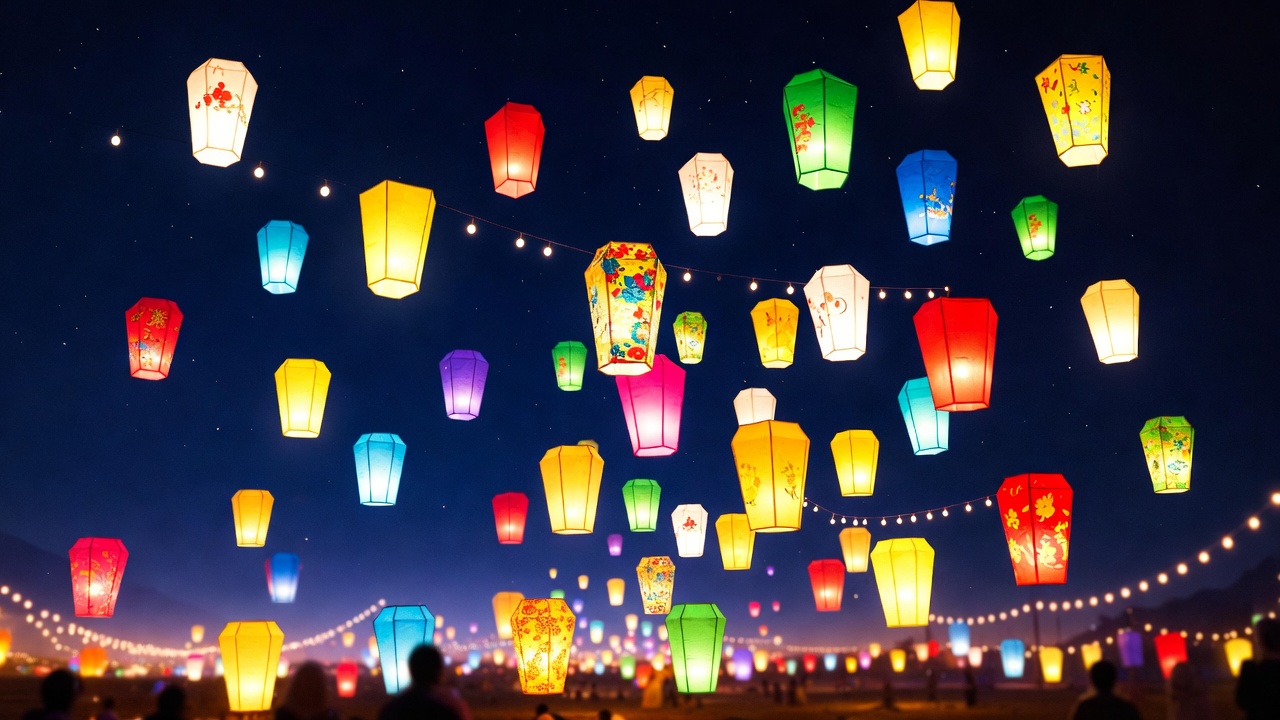
- Pingxi Sky Lantern Festival: Held near the mountain town of Pingxi in New Taipei City, this festival features mass releases of sky lanterns. In 2026, releases are scheduled for February 27 in Pingxi and March 3 in Shifen. Participants write wishes on their lanterns before sending them into the night sky.
- Taiwan Lantern Festival (national event): In 2026, the national lantern festival is hosted by Chiayi, running from March 3 to March 15 near Chiayi High Speed Rail station. Expect horse-themed lanterns in honor of the Year of the Horse.
- Yanshui Beehive Fireworks Festival: One of the world’s most intense fireworks events. Thousands of bottle rockets are launched simultaneously at participants — a controlled chaos that has earned it a reputation as one of the most dangerous festivals in Asia.
Vietnam: Hoi An Full Moon Lantern Festival
The ancient town of Hội An in central Vietnam holds a Full Moon Lantern Festival on the fourteenth day of each lunar month. On these nights, the town’s electric lights are switched off. Silk lanterns in every color — shaped like dragons, butterflies, and flowers — glow from balconies and along the Thu Bon River. Visitors float small lanterns on the water and make wishes. In 2026, these monthly celebrations take place from January through December.
Thailand: Yi Peng Sky Lantern Festival in Chiang Mai
Though distinct from the Chinese Lantern Festival, Thailand’s Yi Peng Festival shares a spiritual kinship. Held during the full moon of the second month of the Lanna calendar, Yi Peng features the mass release of khom loy — sky lanterns made from rice paper on bamboo frames. In 2026, the festival takes place on November 24–25 in Chiang Mai. Participants light candles inside the lanterns and release them in a meditative act of prayer and letting go.
United States: Water Lantern Festivals and Cultural Events
Lantern festivals have grown rapidly across the United States:
- Water Lantern Festival: This touring event operates in over 200 cities worldwide in 2026, with U.S. dates including Fresno (February 21), Fort Worth (March 7), Las Vegas (March 14), and Washington, D.C. (March 21). Participants personalize floating lanterns and release them on lakes at sunset.
- North Carolina Chinese Lantern Festival (Cary, NC): One of the largest Chinese lantern displays in the U.S., featuring hand-crafted silk and steel lanterns across sprawling outdoor grounds.
- O.C. Lantern Festival (Orange County, CA): Co-hosted by the Pacific Symphony and the South Coast Chinese Cultural Center, this free family event includes performances, lantern-making workshops, riddle-guessing, and food.
- Lunar Lantern Festival (Tampa/Orlando, FL): A sky lantern release event scheduled for February 14–15, 2026, featuring over 75 Asian street food vendors and live performances.
Hawaii: Shinnyo Lantern Floating
Every Memorial Day, thousands gather at Ala Moana Beach on O’ahu for the Shinnyo Lantern Floating ceremony. Organized by the Shinnyo-en Buddhist community, this event honors deceased loved ones. Participants send hand-decorated floating lanterns into the Pacific Ocean as the sun sets. The 2026 date has not yet been announced, but the ceremony typically draws visitors from across the world.
What to Wear to the Lantern Festival: Traditional Clothing and Modern Trends
In recent years, the Lantern Festival has become an occasion for reviving traditional Chinese dress. A cultural movement known as guócháo (国潮) — roughly meaning “national tide” — has inspired young Chinese to wear traditional garments during festivals.
The most popular choices include:
- Hanfu (汉服): The most common style is the Song dynasty crossed-collar design with a pleated skirt. It is elegant yet practical for walking through crowded festival streets.
- Qipao / Cheongsam (旗袍): This fitted, body-contouring dress became iconic during the Republican era (1912–1949). A red or pink qipao is a popular Lantern Festival choice.
- Tang suit (唐装): A modern adaptation of traditional Chinese jackets, often worn by both men and women during Spring Festival and the Lantern Festival.
There is no dress code for attending — casual clothes are perfectly fine. But wearing traditional garments has become a way for younger generations to connect with their cultural roots, turning the Lantern Festival into a living fashion show.
The Lantern Festival as China’s Original Valentine’s Day
One of the most romantic aspects of the Lantern Festival is its historical connection to courtship. In ancient China, strict social norms kept young women confined to private quarters. They had few opportunities to meet men outside of family-arranged encounters.
The Lantern Festival changed that. On this one night, young women could walk the streets freely, admiring lanterns and mingling in public. Young men could approach them. Matchmakers buzzed with activity. The brightest, most beautiful lanterns were thought to signal good luck in love.
The great Song dynasty poet Xin Qiji (辛弃疾) captured this perfectly in his famous ci poem “Qīngyùàn” (青玉案), which describes searching through a sea of festive lanterns for a beloved figure who stands alone in a quiet corner. This poem has been quoted for nearly a thousand years as a symbol of devotion and romantic longing.
For many scholars, this makes the Lantern Festival — not the Qixi Festival (often called “Chinese Valentine’s Day”) — the more authentic celebration of love in the Chinese tradition.
How to Say Happy Lantern Festival in Chinese: Greetings and Wishes
If you want to wish someone a happy Lantern Festival, here are the most common greetings:
| Chinese | Pinyin | Meaning |
|---|---|---|
| 元宵节快乐! | Yuánxiāo jié kuàilè! | Happy Lantern Festival! |
| 团团圆圆 | Tuántuán yuányuán | Wishing wholeness and family reunion |
| 阖家幸福 | Héjiā xìngfú | Happiness for the whole family |
| 花好月圆 | Huā hǎo yuè yuán | Flowers bloom and the moon is full (a wish for love and completeness) |
The most universal and casual greeting is simply “Yuánxiāo jié kuàilè!” — the equivalent of “Happy Lantern Festival!” You can use it in text messages, WeChat posts, or face-to-face conversation.
Lantern Festival 2026: Best Places to Experience the Celebration This Year
If you are planning to experience the Lantern Festival firsthand in 2026, here are some of the best destinations:
| Destination | Event | Dates (2026) | Highlight |
|---|---|---|---|
| Zigong, Sichuan, China | International Lantern Festival | Jan–late March | World-class lantern installations with AI and LED technology |
| Nanjing, Jiangsu, China | Qinhuai International Lantern Festival | Feb–March | Historic riverside lantern fair with riddle-guessing |
| Taipei & Pingxi, Taiwan | Pingxi Sky Lantern Festival | Feb 27 & Mar 3 | Mass sky lantern releases in mountain scenery |
| Chiayi, Taiwan | Taiwan Lantern Festival (national) | Mar 3–15 | Year of the Horse-themed national display |
| Hội An, Vietnam | Full Moon Lantern Festival | Monthly (14th of lunar month) | Ancient town illuminated by silk lanterns |
| Chiang Mai, Thailand | Yi Peng Festival | Nov 24–25 | Thousands of floating sky lanterns released at dusk |
| Cary, North Carolina, USA | NC Chinese Lantern Festival | Nov 2025–Feb 2026 | Handmade silk lanterns in a botanical garden |
| Orange County, California, USA | O.C. Lantern Festival | March 2026 | Free family event with music, food, and workshops |
Frequently Asked Questions About the Lantern Festival
Is the Lantern Festival a public holiday in China? No. The Lantern Festival is not an official public holiday. Businesses and schools operate on normal schedules. However, many people celebrate informally, and large-scale events are held in cities across China.
What is the difference between the Lantern Festival and the Mid-Autumn Festival? Both festivals involve lanterns and a full moon, but they occur at different times of year. The Lantern Festival falls in the first lunar month (usually February or March). The Mid-Autumn Festival is in the eighth lunar month (usually September or October). In some Southeast Asian countries, the Mid-Autumn Festival is also called a “Lantern Festival,” which can cause confusion.
Can foreigners participate in Lantern Festival events? Absolutely. Lantern festivals in China, Taiwan, Vietnam, and the United States are open to everyone. Many events are designed to be family-friendly and culturally inclusive.
Is it safe to release sky lanterns? Safety depends on the event. Organized festivals like Pingxi and Yi Peng have safety protocols. In many jurisdictions, releasing sky lanterns outside of sanctioned events is prohibited due to fire risk. Always follow local regulations.
What do you eat during the Lantern Festival? The primary dish is tangyuan (Southern China) or yuanxiao (Northern China) — sweet glutinous rice balls served in soup. Regional variations exist across the country.
Closing Thoughts: Why the Lantern Festival Still Matters in 2026
The Lantern Festival has survived for over two thousand years — through the rise and fall of dynasties, through wars and revolutions, through the digital transformation of the twenty-first century. It endures because its core message is timeless: families belong together. The past can be released. Light overcomes darkness.
In 2026, the festival continues to evolve. Zigong’s lantern makers now use AI and recycled materials. AR apps let smartphone users solve riddle puzzles in real time. Water Lantern Festivals draw thousands of non-Chinese participants in cities from Melbourne to Mexico City.
But beneath all the innovation, the heart of the festival remains unchanged. A round ball of sticky rice in a warm bowl. A red lantern swaying in the wind. A family gathered under the first full moon of the year, hoping for good things to come.
元宵节快乐 — Happy Lantern Festival!
Have you ever attended a Lantern Festival? Share your experience in the comments below. If you are planning to celebrate in 2026, bookmark this guide and check back for updated event listings.