Before dawn on February 2nd, crowds gather in the frozen darkness of a small Pennsylvania town, breath rising in white plumes as they await the pronouncement of a sleepy, reluctant prophet—a groundhog named Phil. This scene, repeated annually since 1887, might seem like pure Americana kitsch. Yet trace its roots backward through time, and you will find yourself journeying through centuries of European peasant wisdom, Celtic fire festivals, Christian holy days, and the quiet persistence of immigrant memory. Groundhog Day is far more than a quirky media event; it is a living artifact of how traditions migrate, mutate, and find new meaning on foreign soil. What follows is an exploration of this remarkable folklore—a story of shadows, seasons, and the eternal human hope that winter will not last forever.
What Is Groundhog Day and Why Do We Celebrate It on February 2nd?
Groundhog Day falls precisely at the midpoint between the winter solstice and the spring equinox—a calendrical position that ancient peoples across the Northern Hemisphere recognized as spiritually and agriculturally significant. This “cross-quarter day” represented a crucial turning point in the agricultural year, a moment when farmers and communities desperately sought signs that winter’s grip might soon loosen.
The date’s significance extends far beyond mere astronomical coincidence. In the Celtic calendar, this period corresponded to Imbolc, one of the four great fire festivals marking the year’s turning points. For agrarian societies dependent on precise seasonal timing, the ability to predict winter’s duration wasn’t mere curiosity—it was a matter of survival. Would stored provisions last? When should livestock be moved? Could early planting begin? These questions carried life-or-death weight, making any prognosticating tradition deeply meaningful to communities living close to the land.
The Ancient European Origins of Weather Prediction Traditions on Candlemas Day
Long before any groundhog saw its shadow, European peasants looked to the skies on February 2nd for omens of seasons to come. The Christian church had designated this date as Candlemas, commemorating the presentation of the infant Jesus at the Temple in Jerusalem and the Virgin Mary’s ritual purification. Clergy blessed candles for the coming year, and the faithful carried them in procession—hence the name.
Yet the church holiday absorbed and transformed far older traditions. An ancient English rhyme captures the weather-watching wisdom:
If Candlemas be fair and bright, Winter has another flight. If Candlemas brings clouds and rain, Winter will not come again.
This counterintuitive logic—that pleasant weather portends extended winter while clouds promise early spring—persists in Groundhog Day folklore to this day. The reasoning, while not meteorologically sound, follows a certain folk logic: a mild midwinter suggests the season hasn’t fully expressed itself and must therefore continue, while harsh conditions indicate winter has exhausted its fury.
| European Tradition | Date | Animal/Method | Origin Region |
|---|---|---|---|
| Candlemas weather watching | February 2 | Cloud observation | British Isles |
| Badger Day (Dachstag) | February 2 | Badger shadow | Germany |
| Bear emergence watching | Early February | Brown bear | Scandinavia, Eastern Europe |
| Hedgehog prognostication | Candlemas | Hedgehog shadow | France, Britain |
How German Immigrants Brought Badger Day Traditions to Pennsylvania
The transformation of European weather lore into America’s Groundhog Day represents one of the most successful examples of immigrant cultural adaptation in our national folklore. German-speaking settlers—often called the “Pennsylvania Dutch” (a corruption of Deutsch)—arrived in the Delaware Valley beginning in the late 17th century, carrying with them a rich tradition of animal-based weather prognostication.
In their homeland, Germans observed Dachstag (Badger Day), watching for the European badger to emerge from hibernation on Candlemas. If the creature saw its shadow and retreated, six more weeks of winter lay ahead. The logic mirrored the broader Candlemas tradition: a shadow requires sunshine, and sunshine on February 2nd meant prolonged cold.
Upon reaching the forests of Pennsylvania, these immigrants found no badgers but discovered an abundant, similarly burrow-dwelling creature perfectly suited to inherit the tradition: the groundhog, or woodchuck (Marmota monax). This New World marmot, with its habit of winter dormancy and early February emergence, seemed almost providentially designed to fulfill the prognosticating role. The Pennsylvania Germans seamlessly transferred their badger beliefs to this native animal, creating an authentically American tradition from European raw materials.
The History of Punxsutawney Phil and America’s Most Famous Groundhog
No discussion of Groundhog Day history would be complete without examining its epicenter: Punxsutawney, Pennsylvania. This small town in Jefferson County has become synonymous with the holiday, drawing tens of thousands of visitors annually to witness Phil’s emergence at Gobbler’s Knob.
The first official Punxsutawney Groundhog Day celebration occurred on February 2, 1887, organized by a group of local businessmen and groundhog hunters who called themselves the Punxsutawney Groundhog Club. The town’s newspaper editor, Clymer Freas, promoted Phil as the one and only true weather-forecasting groundhog, establishing a claim to authenticity that Punxsutawney has defended ever since.
Key Milestones in Punxsutawney Groundhog Day History:
- 1886: First newspaper mention of Punxsutawney’s groundhog celebration
- 1887: First official trek to Gobbler’s Knob by the Groundhog Club
- 1899: Phil’s handlers first claim he drinks “groundhog punch” to extend his life
- 1966: Phil appears on the Today show, gaining national exposure
- 1993: The film Groundhog Day starring Bill Murray transforms the holiday into a cultural phenomenon
- 2001: Phil’s prediction is broadcast live on the internet for the first time
- Present: An estimated 30,000+ visitors attend the Gobbler’s Knob ceremony annually
The mythology surrounding Phil has grown increasingly elaborate. His Inner Circle—a group of local dignitaries dressed in top hats and formal wear—claims Phil is immortal, sustained by sips of a magical “groundhog punch” that grants seven additional years of life per drink. According to official lore, there has been only one Phil since 1887, making him well over 130 years old. This obvious impossibility is part of the tradition’s charm: the entire community participates in a knowing wink, maintaining the fiction while celebrating the fellowship it creates.
Groundhog Day Folklore and Weather Prediction Accuracy: Separating Myth from Science
The central question surrounding Groundhog Day—does it actually work?—deserves serious examination. When Phil sees his shadow, tradition holds we face six more weeks of winter; when clouds obscure the sun, early spring approaches. How accurate is this folkloric meteorology?
Scientific analyses have consistently found groundhog predictions no more accurate than chance. A Canadian study examining 30 to 40 years of data found predictions correct only 37% of the time—worse than flipping a coin. The Stormfax Almanac’s analysis of Punxsutawney Phil’s record since 1887 suggests approximately 39% accuracy. Other groundhog prognosticators fare no better.
| Groundhog | Location | Claimed Accuracy | Independent Analysis |
|---|---|---|---|
| Punxsutawney Phil | Pennsylvania | “100%” per Inner Circle | ~39% |
| Staten Island Chuck | New York | ~80% per handlers | ~70% (best documented) |
| Wiarton Willie | Ontario, Canada | Variable claims | ~37% |
| General Beauregard Lee | Georgia | ~60% per handlers | Insufficient data |
| Shubenacadie Sam | Nova Scotia | First in North America (time zone) | ~50% |
Yet dismissing Groundhog Day as mere superstition misses its deeper cultural function. Folkloric traditions often serve purposes beyond their stated aims. Groundhog Day arrives at winter’s psychological nadir—the holiday decorations packed away, the new year’s optimism faded, weeks of cold darkness remaining. The ritual provides communal entertainment, seasonal acknowledgment, and most importantly, the promise that winter, however long, will end. Its “accuracy” matters less than its ability to mark time, build community, and offer hope.
Regional Groundhog Day Celebrations and Competing Weather-Predicting Animals Across North America
While Punxsutawney claims supremacy, dozens of communities across North America have developed their own Groundhog Day traditions, sometimes featuring entirely different animals. This proliferation speaks to the holiday’s adaptability and the universal human desire to participate in seasonal rituals.
Notable Regional Groundhog Day Celebrations:
- Staten Island Chuck (New York City): Held at the Staten Island Zoo, this ceremony has become a major civic event, with the mayor traditionally presiding. Chuck famously bit Mayor Michael Bloomberg in 2009, adding a touch of genuine wildlife unpredictability to the proceedings.
- Wiarton Willie (Ontario, Canada): This albino groundhog has predicted weather since 1956, serving as a symbol of Canadian participation in the tradition. Willie’s handlers emphasize his independence from American prognosticators.
- General Beauregard Lee (Georgia): Residing at the Yellow River Game Ranch (now Dauset Trails Nature Center), “Beau” offers Southern-calibrated predictions, acknowledging that Georgia’s seasons differ markedly from Pennsylvania’s.
- Shubenacadie Sam (Nova Scotia): As the first groundhog to make a prediction each year (thanks to Atlantic Time), Sam claims temporal precedence over his American counterparts.
- Birmingham Bill (Alabama): The Birmingham Zoo’s resident groundhog provides predictions tailored to Deep South conditions.
Some regions have adopted entirely different animals. Punxsutawney Phil faces competition from:
- Buckeye Chuck (Marion, Ohio) — groundhog
- French Creek Freddie (West Virginia) — groundhog
- Malverne Mel (Long Island, NY) — groundhog
- Dunkirk Dave (New York) — groundhog, claims second-longest prognosticating career
- Chuckles (Connecticut) — previously a groundhog, now uses a puppet due to animal welfare concerns
This multiplication of prognosticating animals reveals Groundhog Day’s essentially local character. Despite Punxsutawney’s claims to universal authority, communities prefer their own prophet—a dynamic reflecting broader American tendencies toward local pride and gentle regional rivalry.
The Cultural Significance of Groundhog Day in American Popular Culture and Media
The 1993 film Groundhog Day, directed by Harold Ramis and starring Bill Murray, transformed an obscure regional holiday into a national, even international, phenomenon. Murray plays Phil Connors, a cynical weatherman forced to relive February 2nd in Punxsutawney repeatedly until he achieves personal redemption. The film’s impact on the holiday’s visibility cannot be overstated.
Beyond mere publicity, the film added philosophical depth to public understanding of the day. “Groundhog Day” entered common parlance as shorthand for any repetitive, seemingly inescapable situation. Religious scholars and philosophers embraced the film as an exploration of karma, purgatory, existential freedom, and the potential for human transformation. Buddhist teachers have used it to illustrate concepts of cyclical existence and enlightenment through right action.
Groundhog Day References in American Culture:
- Music: Numerous songs reference the holiday, including tracks by artists from country to indie rock
- Television: Nearly every long-running sitcom has produced a “Groundhog Day episode” involving time loops
- Literature: The concept has inspired novels exploring repetition, choice, and consequence
- Philosophy: Academic papers examine the film’s implications for ethics, free will, and personal growth
- Language: “It’s like Groundhog Day” has become a common English idiom
The holiday’s cultural penetration demonstrates how folkloric traditions can find new relevance through mass media reinterpretation. What began as immigrant agricultural superstition became, through Hollywood, a vehicle for examining fundamental questions about how we should live our lives.
Indigenous North American Beliefs About Hibernating Animals and Seasonal Change
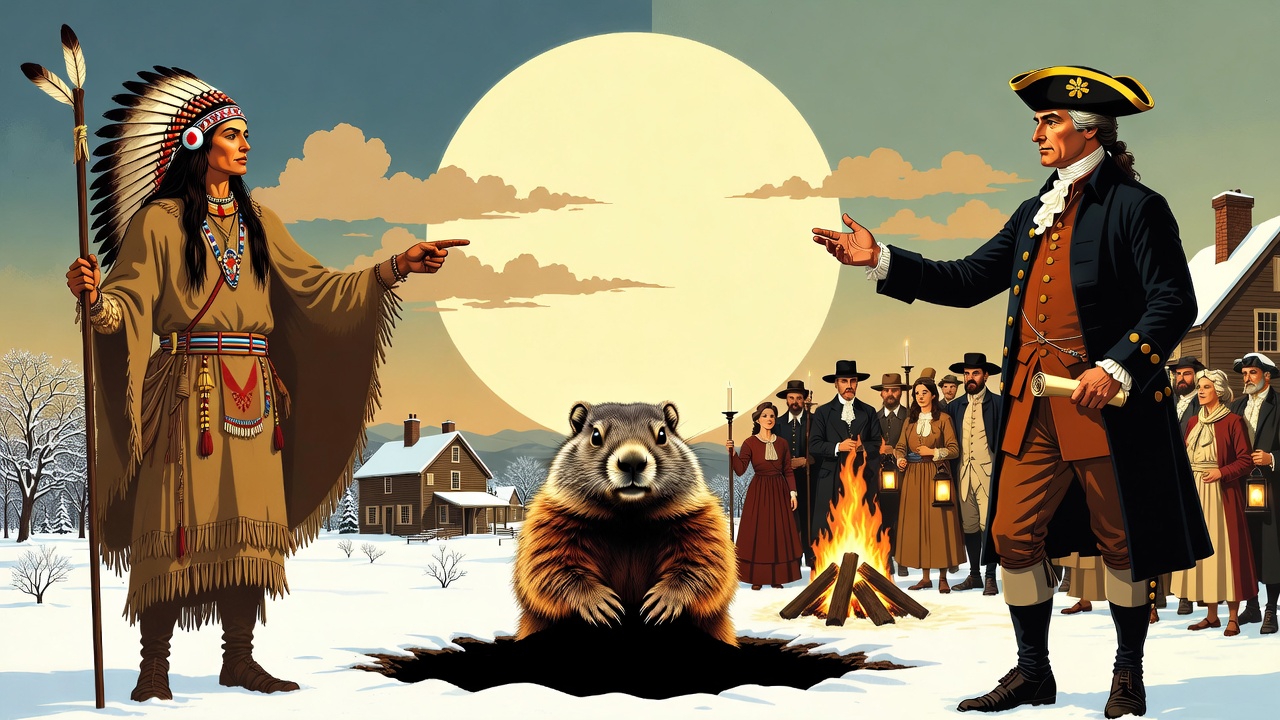
While Groundhog Day derives primarily from European traditions, examining Indigenous North American beliefs about hibernating animals and seasonal transitions enriches our understanding of how different cultures have interpreted the natural world.
Many Indigenous nations across the continent developed sophisticated understandings of animal behavior and seasonal cycles. The woodchuck (groundhog) held various meanings for different peoples. Among some Eastern Woodlands nations, the groundhog appeared in stories explaining animal characteristics or teaching moral lessons. The Lenape (Delaware) people, original inhabitants of the region where Groundhog Day traditions developed, included the groundhog in their understanding of the forest ecosystem.
The bear, as North America’s most prominent hibernating animal, figured more centrally in Indigenous seasonal beliefs. Many nations marked the bear’s emergence as a significant seasonal indicator, though the specific timing and meaning varied regionally. For some Pacific Northwest peoples, the bear’s awakening connected to salmon cycles and gathering seasons. Plains nations observed bear behavior as one element in complex seasonal calendars.
Comparative Approaches to Seasonal Prediction:
| Tradition | Key Animal(s) | Seasonal Marker | Cultural Context |
|---|---|---|---|
| European-American (Groundhog Day) | Groundhog | Shadow on Feb 2 | Agricultural timing |
| Anishinaabe | Bear | Spring emergence | Hunting/gathering cycles |
| Pacific Northwest | Bear, salmon | Multiple indicators | Fishing seasons |
| Haudenosaunee | Various | Maple sap flow | Sugar bush activities |
These Indigenous traditions remind us that observing animal behavior for seasonal insight is a near-universal human practice, though the specific animals, timing, and interpretations vary dramatically across cultures. The groundhog’s elevation to primary American prognosticator reflects the particular history of European settlement and cultural transmission in Pennsylvania rather than any inherent superiority of groundhog wisdom.
Why Groundhog Day Traditions Continue to Thrive in the Modern Digital Age
In an era of satellite weather forecasting, seven-day predictions, and climate modeling, why does anyone still watch a rodent for meteorological guidance? The persistence of Groundhog Day traditions in our technologically sophisticated age reveals important truths about human psychology and the function of folklore.
Reasons for Groundhog Day’s Continued Popularity:
- Communal celebration: The holiday provides shared experience in an increasingly fragmented society. Watching Phil’s emergence together—whether in person or via broadcast—creates momentary community.
- Seasonal acknowledgment: Modern life often disconnects us from natural rhythms. Groundhog Day forces recognition that we remain subject to seasons, that winter will end, that spring approaches.
- Playful defiance of rationality: Participating in an obviously “irrational” tradition offers psychological relief from the constant pressure toward efficiency and logic. We know Phil can’t predict weather; that’s partly the point.
- Media spectacle: The ceremony’s visual distinctiveness—top-hatted men, sleepy groundhog, dramatic pronouncement—provides excellent content for news broadcasts seeking light stories in dreary February.
- Tourism and local identity: For Punxsutawney and other communities, the holiday provides economic benefits and strengthens local pride.
- Connection to heritage: For descendants of Pennsylvania German settlers, the tradition connects to ancestral folkways, maintaining cultural continuity.
The holiday’s survival—indeed, its flourishing—demonstrates that folkloric traditions serve needs scientific progress cannot satisfy. We require ritual, shared silliness, and seasonal markers regardless of our technological sophistication. Groundhog Day provides all three in an accessible, family-friendly package.
How to Celebrate Groundhog Day: Traditional and Modern Ways to Honor This Unique Holiday
For those wishing to engage more deeply with Groundhog Day traditions, numerous options exist beyond passive television viewing. Whether honoring the folklore’s historical roots or creating new family traditions, February 2nd offers opportunities for meaningful celebration.
Traditional Celebrations:
- Attend a live groundhog ceremony (Punxsutawney draws the largest crowd, but regional events may be more accessible)
- Prepare Pennsylvania Dutch foods associated with the holiday: pork and sauerkraut traditionally bring luck
- Learn about Candlemas traditions and light candles at sunset
- Research your local groundhog or marmot species and their actual hibernation patterns
Modern and Family-Friendly Ideas:
- Host a Groundhog Day movie night featuring the Bill Murray classic
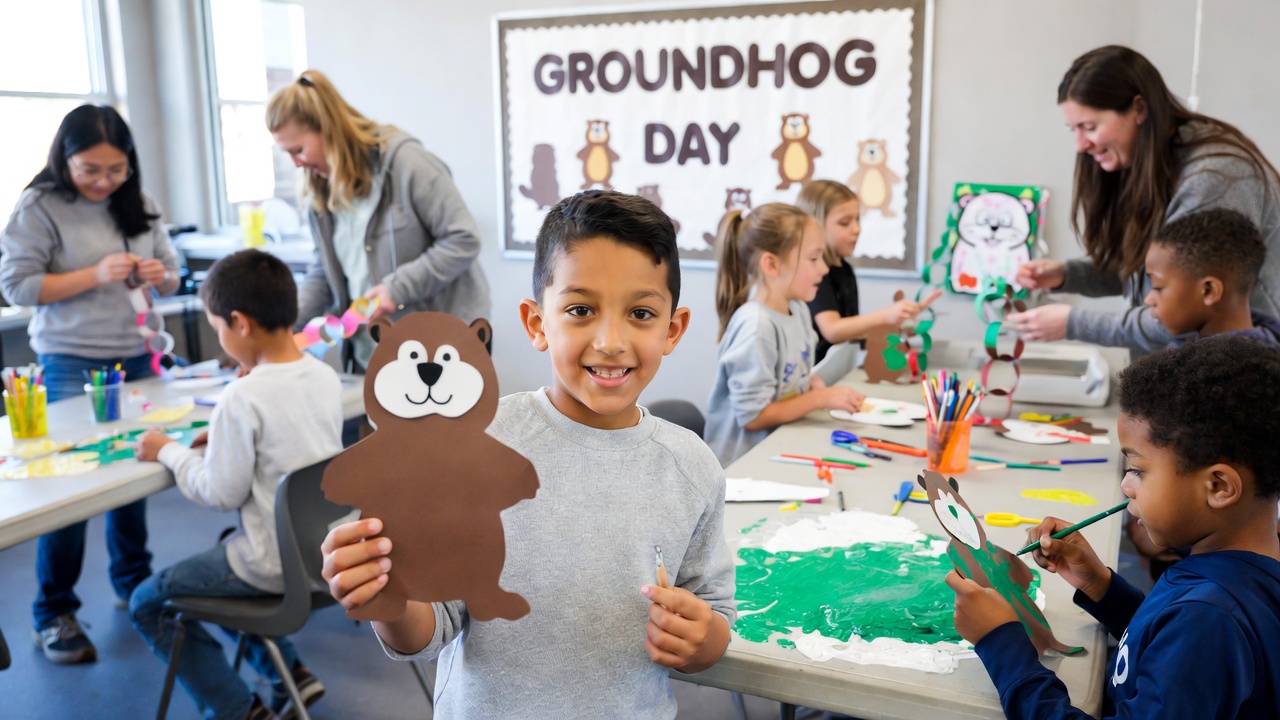
- Create groundhog-themed crafts with children
- Make predictions and track local weather through the remaining winter weeks
- Visit a zoo or nature center with groundhog residents
- Use the day to learn about hibernation and animal behavior
- Start a family tradition of sharing hopes for the coming spring
Educational Approaches:
- Study the folklore’s European origins and immigrant transmission
- Compare Groundhog Day with similar traditions worldwide
- Examine the holiday’s commercialization and media transformation
- Discuss the difference between folk belief and scientific meteorology
Conclusion: The Enduring Magic of America’s Most Unusual Weather Holiday
Groundhog Day represents American folklore at its most characteristic: a tradition borrowed from multiple Old World sources, adapted to New World conditions, localized intensely, commercialized cheerfully, and transformed through mass media into national shared experience. From Celtic Imbolc to German Dachstag, from Pennsylvania farm country to Punxsutawney’s Gobbler’s Knob, from regional curiosity to international film phenomenon, the holiday has traveled an improbable journey.
That we still gather each February 2nd to watch a groundhog’s shadow speaks not to any belief in animal meteorology but to deeper human needs: for seasonal ritual, communal experience, playful tradition, and hope that winter—literal and metaphorical—will eventually end. As long as those needs persist, Punxsutawney Phil and his many rivals will continue emerging each Candlemas to deliver their verdicts, and we will continue watching, knowing full well the forecast tells us nothing about the weather and everything about ourselves.