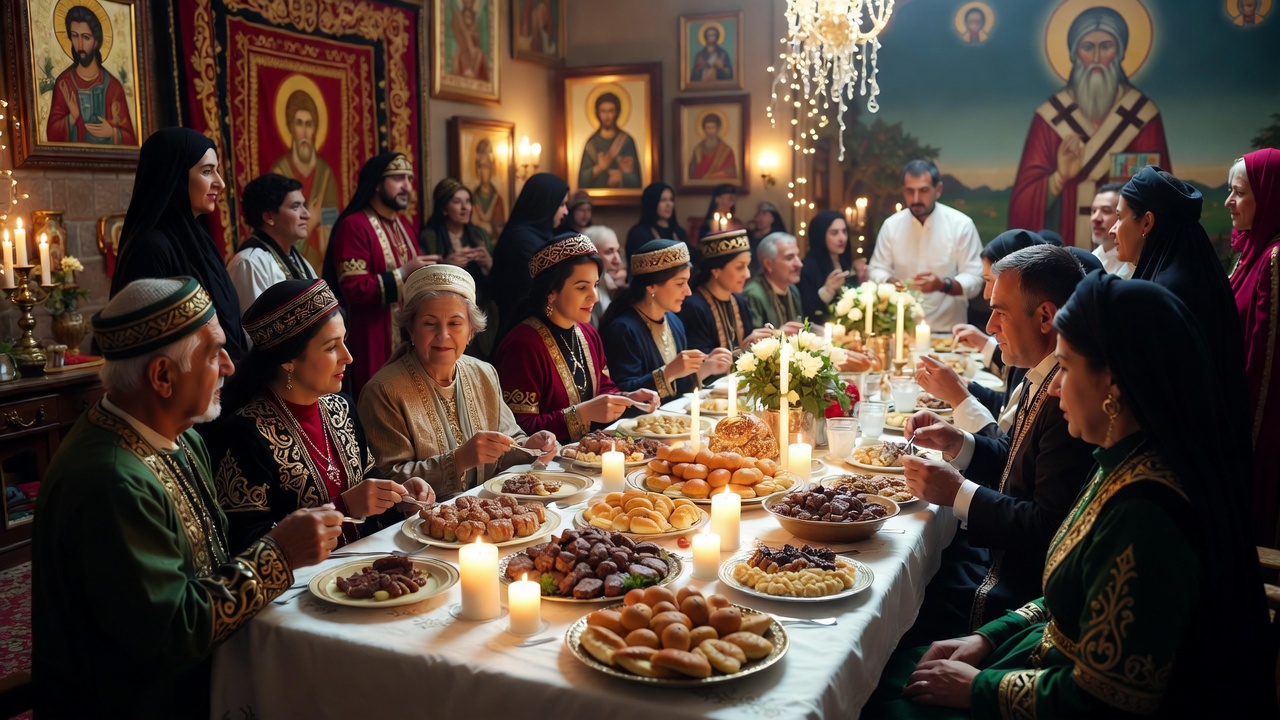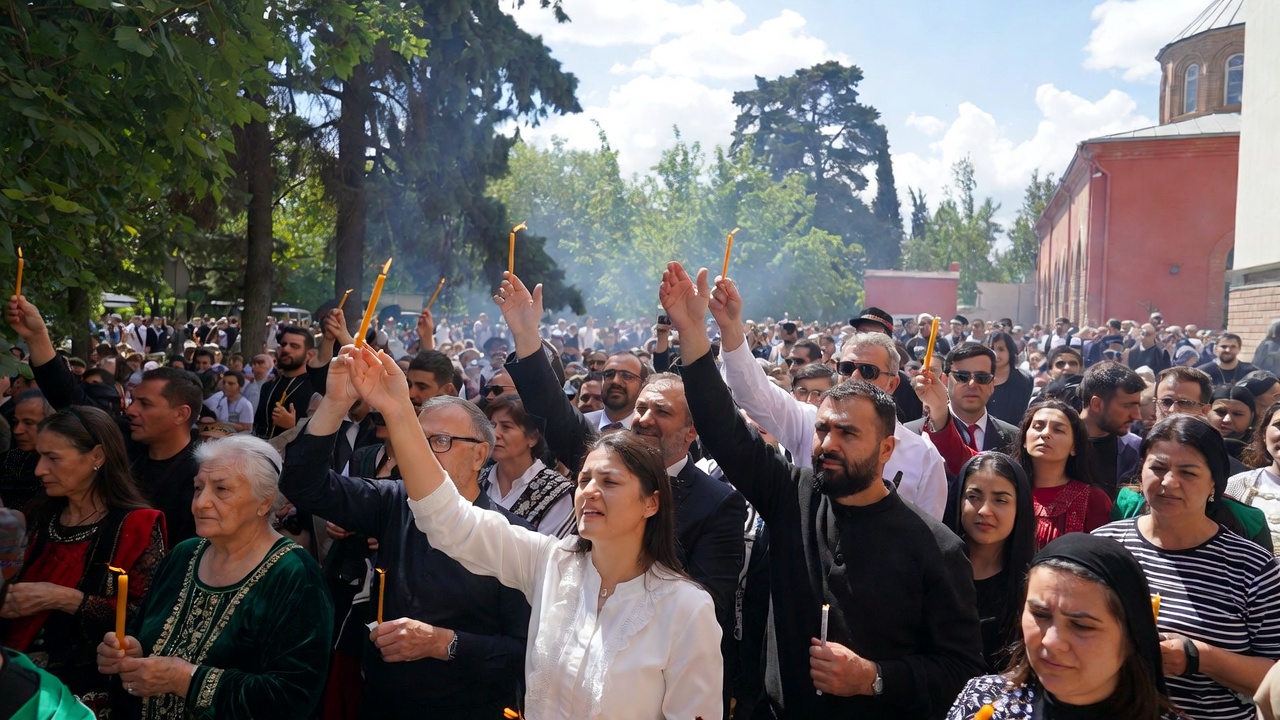
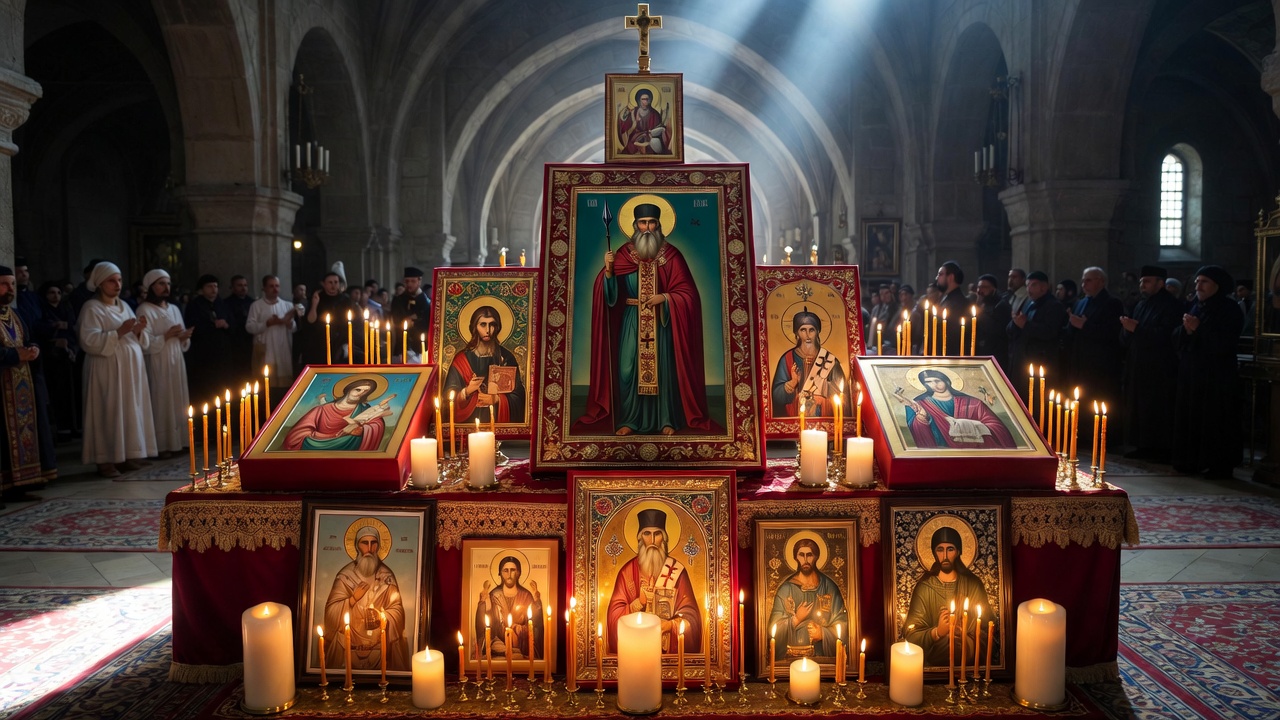
There is a winter Saturday in Armenia when the cold air carries something warmer than snow. It carries hope. Young men and women across the country wake up and check trays of flour left outside their doors. They look for a mark — the hoofprint of a white horse. That horse, according to centuries of Armenian belief, belongs to Saint Sarkis (Sourb Sargis Zoravar), the beloved patron saint of love and youth.
In a country where Christianity has shaped daily life for over 1,700 years, the Feast of Saint Sarkis stands out as one of the most joyful and deeply personal celebrations on the Armenian liturgical calendar. It is a day when faith, folklore, romance, and family intersect in ways that are both ancient and alive. Every year, from the snowy streets of Yerevan to Armenian communities in Los Angeles, Beirut, and Paris, this feast brings people together around a shared love story — one that stretches all the way back to the 4th century.
This guide explores the full story of Saint Sarkis: who he was, how he became Armenia’s patron of love, and how Armenians celebrate his feast day today. Whether you are planning a trip to Armenia, exploring your Armenian heritage, or simply fascinated by how a warrior-saint became a symbol of romance, this post will walk you through every tradition, recipe, and ritual associated with one of the most enchanting festivals in the world.
Who Was Saint Sarkis the Warrior? The History Behind the Armenian Patron Saint of Love
To understand why Armenians celebrate Saint Sarkis with salty cookies and flour trays, you first need to know the man himself.
Saint Sargis the General — known in Armenian as Sourb Sargis Zoravar — was a 4th-century Cappadocian Greek military commander. He lived during one of the most turbulent periods in early Christian history, when the Roman Empire was torn between emperors who protected the church and those who tried to destroy it.
According to the History of the Life of Saint Sargis the General, commissioned by Patriarch Nersēs and based on an Armenian translation of a Syriac text from the Monastery of Mor Bar Sauma in Melitene, Sarkis was appointed by Emperor Constantine the Great (who ruled from 306 to 337 AD) as General in Chief of the region of Cappadocia bordering Armenia. He was known for his piety, courage, and devotion to spreading the Christian gospel.
Everything changed when Constantine’s nephew, Julian the Apostate, took the throne in 361 AD. Julian reversed the empire’s tolerance of Christianity and launched brutal persecutions. According to Armenian church tradition, Jesus appeared to Sarkis in a vision and told him to leave his homeland, just as the patriarch Abraham had once done.
Sarkis obeyed. Together with his only son, Saint Martiros (Mardiros), he fled to Armenia, where King Tiran (Tigranes VII), the grandson of the famous King Tiridates III who had adopted Christianity as the state religion, welcomed him warmly.
But the threat of Julian’s advancing armies forced Sarkis and Martiros to move again. They traveled east into the Sassanid Empire (Persia), where Emperor Shapur II heard of Sarkis’s legendary military skills and appointed him as commander of a Persian regiment.
The Martyrdom of Saint Sarkis and His Son in Persia
Sarkis did not hide his faith. He continued to preach Christianity among his soldiers. Many of them converted and were baptized by priests who traveled alongside the army. This enraged Shapur II, a devout Zoroastrian.
The Persian emperor ordered Sarkis to worship fire and make sacrifices in a Zoroastrian temple. Sarkis refused. According to the Armenian Church in Georgia’s account, the captain declared: “We should worship one God — the Holy Trinity, which has created the earth and the heaven. Whereas fire or idols are not gods and the human being may destroy them.”
Then Sarkis destroyed items inside the Zoroastrian temple. The enraged crowd attacked. In the violence that followed, Sarkis’s son Martiros was killed first. Sarkis himself was imprisoned and later beheaded for refusing to abandon his faith.
According to Armenian tradition, a divine light appeared over his body after his death. His 14 soldier-companions were also martyred for their Christian beliefs.
How Saint Sarkis’s Relics Came to Armenia
The story does not end with his death. Saint Mesrop Mashtots, the 5th-century scholar who invented the Armenian alphabet, brought Sarkis’s relics back to Armenia. They were placed in the village of Karbi in the Ashtarak region of modern-day Armenia, where the Church of Saint Sarkis was built directly over them. Another important site, the Saint Sarkis Monastery in the village of Ushi, in Armenia’s Aragatsotn province, also claims relics of the saint and draws pilgrims to this day.
Why Is Saint Sarkis Called the Armenian Patron Saint of Love and Youth?
A martyred warrior does not sound like the obvious symbol of romance. So how did a 4th-century general become the Armenian equivalent of Saint Valentine?
The answer lies in a combination of church decree, folk legend, and centuries of popular belief.
The Church’s Role: Official Day of Blessing for Young People
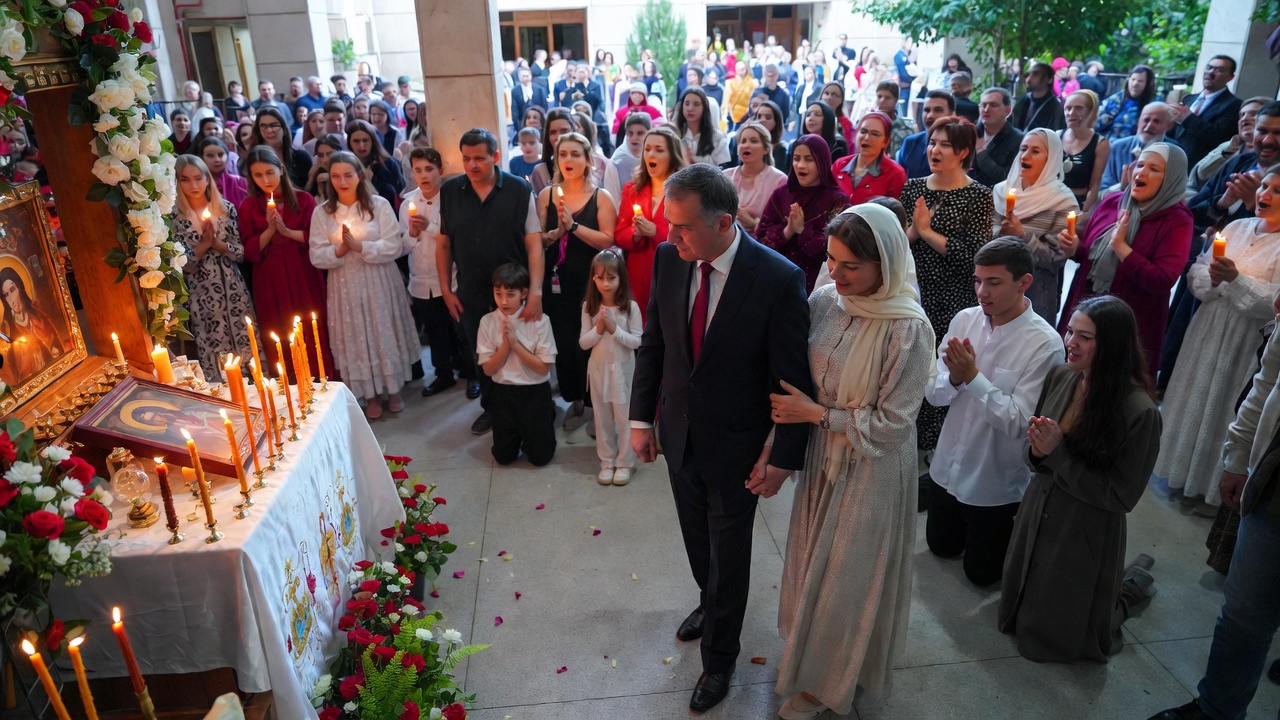
By the order of His Holiness Karekin II, Supreme Patriarch and Catholicos of All Armenians, the Feast of Saint Sarkis has been officially proclaimed a “day of blessing of the youth.” After the Divine Liturgy on the feast day, young people are invited to approach the altar, where a special blessing service takes place. This act carries deep significance in Armenian culture. It signals the church’s recognition that the young generation carries forward the faith, the nation, and the family.
The Folk Legend of Gharib and Shah-Sanam: A Love Story Rescued by Saint Sarkis
But the saint’s connection to love runs deeper than church decrees. It is rooted in one of Armenia’s most cherished folk legends.
A poor bard named Gharib fell deeply in love with Shah-Sanam, the daughter of a very wealthy man. Shah-Sanam loved him in return. But her father, who wanted her to marry a rich man, refused to bless their union.
Gharib made Shah-Sanam a promise. He would leave for foreign lands to earn his fortune. If he could return within seven years, she would wait for him. But if he was late by even a single day, she would be free to marry according to her father’s wishes.
For seven years, Gharib worked day and night in distant countries. He saved every coin. He endured loneliness and hardship, sustained only by the hope of reunion. Finally, with his wealth earned, he began the journey home.
But the road back was cruel. Obstacles piled up. Storms, bandits, and broken roads slowed him. It seemed impossible that he would make it back in time.
In his desperation, Gharib prayed. He called out to Saint Sarkis with a pure and honest heart.
And Saint Sarkis answered.
According to the legend, the saint appeared on his white horse, lifted Gharib onto its back, and carried him in an instant to Shah-Sanam’s door — just before the seven-year deadline expired. Shah-Sanam’s father, moved by the couple’s faithfulness and by the miracle, finally blessed their union.
This story is why, to this day, Armenian lovers pray to Saint Sarkis. He is not just a saint of battle. He is the “realizer of love longings” — the one who carries faithful hearts to where they belong.
When Is the Feast of Saint Sarkis Celebrated? 2026 Date and Liturgical Calendar
The Feast of Saint Sarkis is a moveable feast in the Armenian Apostolic Church. It is always celebrated on a Saturday, exactly 63 days before Easter. This means the date shifts each year, falling anywhere between mid-January and mid-February.
| Year | Feast of Saint Sarkis | Armenian Easter |
|---|---|---|
| 2024 | February 3 | April 7 |
| 2025 | February 15 | April 20 |
| 2026 | January 31 | April 5 |
| 2027 | February 13 | April 18 |
In 2026, the Feast of Saint Sarkis falls on Saturday, January 31, according to the liturgical calendar of the Armenian Apostolic Church. Note that certain Armenian church jurisdictions in the diaspora may observe slightly different dates due to variations in Easter computation. The Western Prelacy of the Armenian Apostolic Church lists the 2026 date as February 15.
The Five-Day Fast of Catechumens Before Saint Sarkis Day
The feast does not begin on Saturday. It begins with a five-day fasting period known as the Fast of Catechumens (Arajavor Bahk). This fast, established by Saint Gregory the Illuminator — the very man who converted Armenia to Christianity — runs from Monday to Friday in the week before the feast.
During this period, devout Armenians abstain from meat and animal products. The fast serves as both spiritual preparation and a physical reminder of sacrifice. For the young people eagerly awaiting the feast, the fasting period builds anticipation. The last night of the fast — Friday evening — is when the most beloved traditions begin.
Armenian Love Traditions on Saint Sarkis Day: Salty Cookies, Dream Divination, and Flour Trays
The folk customs of Saint Sarkis Day are what truly set this celebration apart from any other saint’s feast. They are playful, earnest, and deeply specific. They belong to winter kitchens and cold balconies and the half-asleep space between prayer and dreaming.
The Salty Cookie Tradition: How Aghablit Reveals Your Future Spouse
The most famous tradition is the aghablit (աfor blit), a small, very salty cookie or patty eaten on the eve of Saint Sarkis Day (Friday night). The recipe varies from family to family, but the essential ingredient is always the same: a lot of salt.
Here is what happens:
- On Friday evening, young unmarried people eat the aghablit.
- After eating, they must not drink any water — no matter how thirsty they become.
- They go to sleep and wait for a dream.
- In the dream, a figure will appear and offer them water.
- That figure is believed to be their future spouse.
There is even a detail about wealth in the dream. If the person offering water brings it in a golden cup, it means the future spouse will be rich. If in a simple cup, the marriage will be modest but loving.
This tradition has survived for centuries. It is practiced by teenagers in Yerevan apartments and by grandmothers in village homes alike. The aghablit connects the physical sensation of thirst with the spiritual longing for a partner — turning a simple cookie into a bridge between the waking world and the world of divine signs.
The Flour Tray Ritual: Waiting for Saint Sarkis’s White Horse
The second great tradition involves pokhindz — a tray of roasted wheat flour (or sometimes semolina) that families prepare on Friday evening and place outside their front door, on a balcony, or on the rooftop.
The belief is that Saint Sarkis rides through the town at dawn on his white horse. If, in the morning, the family finds a hoofprint on the flour, it means the saint has blessed their home. For an unmarried person in the household, this blessing signals that they will marry within the year.
According to Ecokayan Dilijan Resort Hotel’s cultural guide, families rush to the tray on Saturday morning to look for the mark. The ritual brings whole families together in a shared moment of excitement and hope.
Children’s Traditions: Socks on the Roof and Gifts from Above
Children are not left out of the celebration. In many families, kids hang socks or small pouches on the rooftop or in the attic on the eve of Saint Sarkis Day. The next morning, they climb up to check their socks, hoping to find small gifts and sweets inside.
This custom echoes similar gift-giving traditions in other cultures (like Christmas stockings). But in Armenia, the giver is not a jolly man in red. It is a warrior-saint on a white horse, riding through a winter storm with blessings for the faithful.
No Laundry Before Saint Sarkis Day: An Old Superstition
One of the more unusual customs is the rule against doing laundry in the week before the feast. The reason? Armenians believed that if soapy water was left on the ground, Saint Sarkis’s horse might slip as it passed through the town.
This small, practical detail reveals something important about how Armenians experience their faith. It is not abstract. It is physical and immediate. The saint is imagined as truly present, riding real streets, leaving real marks. The spiritual world and the everyday world are not separate.
What to Eat on Saint Sarkis Day: Traditional Armenian Feast Day Foods
Food is at the center of every Armenian celebration, and Saint Sarkis Day is no exception. Beyond the salty aghablit, there are several traditional dishes and sweets associated with the feast.
Saint Sarkis Halva: The Sweet Symbol of Blessings
The most iconic food of the feast is Saint Sarkis Halva — a chewy, sweet confection rolled in sesame seeds and filled with nuts. According to Wikipedia’s entry on Sargis the General, this halva is widely eaten in Armenian communities to symbolize the blessings brought by the saint.
The halva is distinct from other Middle Eastern halvas. It is white, sticky, and made from a sugar syrup base combined with marshmallow cream, then coated in toasted sesame seeds. Common fillings include walnuts or pistachios. Some versions incorporate orange blossom water for fragrance.
A widely shared recipe from the Armenian Kitchen includes these ingredients:
| Ingredient | Amount |
|---|---|
| White granulated sugar | 3 cups |
| Water | 4 tablespoons |
| Lemon juice | 1 tablespoon |
| Orange blossom water | 1 tablespoon |
| Marshmallow creme | 1 jar (7 oz) |
| Sesame seeds | 2 pounds |
| Walnuts or pistachios | As needed for filling |
The sugar, water, lemon juice, and orange blossom water are boiled until golden. The marshmallow creme is folded in. The mixture is shaped, filled with nuts, and rolled in chilled sesame seeds. The result is a confection that is sweet, nutty, and deeply satisfying — the taste of Saint Sarkis Day.
Pokhindz: The Ceremonial Roasted Wheat Flour
While pokhindz is primarily used for the flour tray ritual, it is also eaten as a simple, comforting food. Made from roasted wheat flour, it has a warm, toasted flavor. Families often prepare it fresh on the eve of the feast, and the aroma of roasting flour fills the home with a sense of anticipation.
The Aghablit Recipe: How to Make the Famous Salty Cookie
The aghablit (sometimes spelled “aghi blit”) is deceptively simple. It is basically a flatbread or patty made with flour, water, and a generous amount of salt. There is no sugar. There is no butter in the most traditional versions. The point is not flavor — it is thirst.
Some families add a bit of egg. Others keep it to just flour, salt, and water. The cookie is baked or fried until firm. Eating it before bed on Friday night, without drinking water afterward, is the heart of the tradition.
How Armenians Celebrate Saint Sarkis Day in 2026: Church Services, Processions, and Youth Blessings
The Feast of Saint Sarkis is not just a private, home-based celebration. It is also a major event in the life of the Armenian Apostolic Church.
The Divine Liturgy and Blessing of the Youth
On the feast day, all Armenian churches named after Saint Sarkis hold a special Divine Liturgy. But the ceremony extends to every Armenian parish. At the end of the liturgy, a special blessing service for young people takes place. Young men and women are invited to approach the altar, where the priest prays for their health, happiness, and future marriages.
This tradition was formalized by the decree of Catholicos Karekin II, who declared the feast a day of blessing for youth. It reinforces the role of the church not just as a place of worship, but as a place where the community invests in its future.
The Procession of Relics in Yerevan
In Yerevan, the capital, a procession brings a relic of Saint Sarkis from the Mother See of Holy Etchmiadzin — the spiritual center of the Armenian Apostolic Church, and one of the oldest cathedrals in the world — to the Saint Sarkis Cathedral in Yerevan, the seat of the Araratian Pontifical Diocese.
This cathedral, located on the left bank of the Hrazdan River in the Kentron district, has a history of its own. It was destroyed by the devastating earthquake of 1679, rebuilt in the early 18th century, and constructed again in its current form between 1835 and 1842. Major renovations under architect Rafayel Israelyan in the 1970s gave it the orange tufa facade that visitors see today.
Cultural Events: Concerts, Exhibitions, and Festivals
For over a decade, the celebration of the Feast of Saint Sarkis in Armenia has included cultural activities beyond the church walls. These include:
- Art exhibitions featuring works inspired by the saint and by Armenian love traditions
- Concerts with traditional Armenian music
- Folk events where traditional customs like the flour tray ritual and aghablit-making are demonstrated
- Festive parades through the streets of Yerevan
These public celebrations make the feast accessible to everyone, including tourists and those who may not attend church regularly. They transform Saint Sarkis Day from a purely religious observance into a citywide celebration of love, youth, and Armenian culture.
Saint Sarkis Day vs. Valentine’s Day: How Armenia Celebrates Love Differently
One of the most common questions visitors ask is: “Do Armenians celebrate Valentine’s Day or Saint Sarkis Day?” The answer is both — but with a clear preference.
While February 14 has become globally recognized as Valentine’s Day, and many Armenians (especially younger ones in cities) exchange gifts on that date, Saint Sarkis Day is widely considered the true Armenian day of love. The two holidays are often close on the calendar, which adds to the comparison.
Here is how the two compare:
| Feature | Saint Sarkis Day | Valentine’s Day |
|---|---|---|
| Origin | 4th-century Armenian Christian martyrdom | 3rd-century Roman Christian martyrdom |
| Date | Moveable (63 days before Easter) | Fixed (February 14) |
| Focus | Youth, marriage blessings, faith | Romantic love and gifts |
| Traditions | Aghablit, flour trays, halva, church blessing | Cards, flowers, chocolates |
| Scope | Primarily Armenian | Global |
| Religious element | Central (liturgy, procession, fasting) | Minimal in modern practice |
| Age group | All ages, especially youth | Primarily couples |
For many Armenians, especially those who value cultural identity, choosing to celebrate Saint Sarkis Day over Valentine’s Day is a matter of pride. It is a way of saying: “We have our own love story, and it is older and deeper.”
That said, the two holidays coexist comfortably. On Saint Sarkis Day, lovers exchange cards, flowers, and sweets — much as they would on Valentine’s Day. The difference is that the celebration is rooted in prayer, community, and the specific rituals of the aghablit and flour tray.
The Wedding Season After Saint Sarkis Day: Why Armenian Couples Rush to Marry
Saint Sarkis Day marks the beginning of one of the busiest wedding periods in the Armenian calendar. Here is why.
The feast falls roughly two weeks before the start of Great Lent (Medz Bahk), the 48-day fasting period leading up to Easter. During Great Lent, the curtains of church altars are closed, and no wedding ceremonies are performed.
This means that couples who want a winter wedding must schedule it during the narrow window between the Feast of Saint Sarkis and the start of Lent. Those who miss this window have to wait nearly seven weeks until after Easter.
In 2026, with the Feast of Saint Sarkis on January 31 and the Great Lent beginning around early March, couples have a brief but joyful period to celebrate their unions. Armenian wedding halls, florists, and pastry shops are at their busiest during these weeks.
Where to Experience the Feast of Saint Sarkis in Armenia: Travel Guide for 2026
If you are planning a trip to Armenia in late January or early February 2026, the Feast of Saint Sarkis offers one of the most authentic cultural experiences available.
Saint Sarkis Cathedral, Yerevan
The Saint Sarkis Cathedral is the center of celebrations in the capital. Located at 19 Israelyan Street in the Kentron district, it sits on the left bank of the Hrazdan River, near the famous Parajanov Museum and the Blue Mosque. The cathedral holds the special liturgy and youth blessing ceremony, and it is where the relic procession from Etchmiadzin arrives.
Practical tip: Arrive early. The church is small and fills up quickly, especially with young people seeking blessings.
Saint Sarkis Monastery, Ushi Village, Aragatsotn Province
For a more intimate pilgrimage experience, visit the Saint Sarkis Monastery in the village of Ushi, located in the Aragatsotn province about an hour’s drive from Yerevan. This monastery was built directly over relics of the saint and draws devoted pilgrims every year on the feast day.
The journey through the Armenian highlands in winter is stunning. Snow-covered landscapes, the peak of Mount Aragats in the distance, and small village churches along the road make this a deeply rewarding day trip.
Mother See of Holy Etchmiadzin
The Mother See of Holy Etchmiadzin, located in the city of Vagharshapat (about 20 km west of Yerevan), is the spiritual headquarters of the Armenian Apostolic Church and one of the oldest cathedrals in the world. While the main Saint Sarkis celebrations happen at the Yerevan cathedral, Etchmiadzin holds its own services and is the starting point for the relic procession.
Celebrating in the Diaspora: Los Angeles, Beirut, Paris, and Beyond
Armenian communities around the world celebrate the Feast of Saint Sarkis with local services and cultural events. In Los Angeles, home to one of the largest Armenian diaspora communities, churches across Glendale and Hollywood hold special liturgies. In Beirut, the Armenian quarter of Bourj Hammoud comes alive with halva sales and church services. Paris, Tehran, Buenos Aires, and dozens of other cities with Armenian populations mark the day as well.
Armenia as the First Christian Nation: Understanding the Context of Saint Sarkis Day
You cannot fully appreciate the Feast of Saint Sarkis without understanding the weight that Christianity carries in Armenian identity.
Armenia holds the distinction of being the first nation in the world to adopt Christianity as its state religion, traditionally dated to 301 AD. According to the World History Encyclopedia, King Tiridates III (Trdat) was converted by Saint Gregory the Illuminator, who had been imprisoned in a deep dungeon called Khor Virap for 13 years. After Gregory healed the king, Tiridates embraced Christianity and made it the official religion of the Armenian kingdom.
This happened more than a decade before the Roman Emperor Constantine issued the Edict of Milan in 313 AD, which legalized Christianity in the Roman Empire. For Armenians, this is not just a historical footnote. It is the foundation of national identity.
According to the Pew Research Center, approximately 97% of Armenians identify as Christian, with the vast majority belonging to the Armenian Apostolic Church. Faith and culture are inseparable in Armenia. The saints are not distant figures. They live in folk songs, in kitchen traditions, in the names of churches and streets.
Saint Sarkis is part of this living tapestry. His feast day is not just a religious observance. It is an expression of what it means to be Armenian — faithful, romantic, rooted, and resilient.
The Legend of the 40 Soldiers: An Alternative Folk Tradition About Saint Sarkis
Beyond the official church hagiography, Armenian folk tradition preserves another, more dramatic version of the Saint Sarkis story.
According to this legend, Saint Sarkis was a miracle worker whose small army of 40 soldiers once defeated an enemy force of 10,000. After the great victory, the soldiers celebrated with a feast. But during the celebration, they were tricked and drugged by a Persian ruler.
While the soldiers slept, the ruler ordered 40 women to kill them. Thirty-nine of the women obeyed, plunging daggers into the sleeping men’s hearts. But the 40th woman, assigned to kill Saint Sarkis himself, fell in love with him when she saw his face. Instead of killing him, she kissed him.
Sarkis awoke to the horror of his slaughtered companions. In his grief and rage, he took the woman who had spared him and fled the city. According to Harsanik, the Armenian wedding resource, this legend is the reason people in love came to symbolize their devotion through Saint Sarkis.
This alternative legend adds a layer of tragedy and passion to the saint’s story. It explains why love is central to his cult — not just divine love, but the raw, human kind. A love that saves a life in the middle of death.
Bird Feeding and Other Lesser-Known Saint Sarkis Day Customs
Beyond the aghablit and the flour tray, there are several smaller customs that enrich the celebration.
Feeding Birds to Divine Your Future Spouse’s Location
On Saint Sarkis Day morning, some young Armenians break bread and feed it to birds. The direction in which the birds fly is believed to indicate the direction from which their future partner will come. If the birds fly north, the spouse will come from the north. If they fly toward the mountains, the partner will be from the highlands.
This custom connects Saint Sarkis Day to a broader tradition of ornithomancy — divination by observing birds — that has roots in pre-Christian Armenian practices.
Exchanging Gifts Between Lovers
On the feast day itself, people in love exchange gifts, flowers, and sweets. This practice mirrors Valentine’s Day customs but predates the global adoption of that holiday in Armenia by centuries. The most traditional gift is a box of Saint Sarkis Halva, though modern Armenians also exchange chocolates, perfumes, and flowers.
Avoiding Heavy Work Before the Feast
As mentioned earlier, Armenians traditionally avoided strenuous work, especially laundry, in the days leading up to the feast. This was done out of respect for the saint and a desire not to interfere with his journey through the town. While this practice has faded in cities, it persists in some rural areas and among older generations.
How the Feast of Saint Sarkis Has Evolved in Modern Armenia
Like all living traditions, the Feast of Saint Sarkis continues to evolve.
Social Media and the Modern Aghablit
In recent years, Armenian social media has been flooded with aghablit selfies and dream reports on Saint Sarkis Day. Young people photograph their salty cookies, share them on Instagram and TikTok, and post about their dreams the next morning. The hashtag #SurpSarkis trends in Armenia every year on the feast day.
This digital embrace has not diluted the tradition. If anything, it has made it more visible and more communal. A young woman in Yerevan can share her flour tray photo and receive likes from a cousin in Marseille and a friend in Glendale. The feast becomes a global Armenian moment, connecting the diaspora through shared ritual.
Growing Tourism Interest
Armenia’s tourism industry has increasingly recognized the Feast of Saint Sarkis as an attraction for cultural travelers. The Armenia Travel website actively promotes the feast, highlighting the unique combination of religious ritual, folk tradition, and winter landscapes that make this holiday so appealing.
For travelers who visit Armenia in late January, the feast offers something rare: a chance to participate in a living, centuries-old tradition rather than simply observe a staged performance. Visitors are welcome to attend church services, try aghablit, and watch the procession of relics.
Saint Sarkis Halva as a Culinary Export
Saint Sarkis Halva has begun to gain recognition beyond Armenian communities. Armenian bakeries in cities like Los Angeles, New York, and Beirut report increased demand for the sesame-coated confection in the weeks around the feast day. Sarkis Pastry, a well-known Armenian bakery, actively promotes the halva and the story behind it, helping non-Armenians discover this unique sweet.
The Spiritual Meaning of Saint Sarkis Day: Why Faith and Love Are Connected in Armenian Culture
At its core, the Feast of Saint Sarkis is about the relationship between sacrifice and love. Sarkis sacrificed his position, his homeland, and ultimately his life for his faith. His son Martiros gave his life alongside him. The 14 soldiers who followed them chose death over the betrayal of their beliefs.
In Armenian thought, this kind of sacrifice is not separate from romantic love. It is the same impulse — the willingness to give everything for what matters most. When a young woman eats her aghablit and prays to see her future husband in a dream, she is not just asking for romance. She is asking for a love that is worthy of sacrifice, a love that mirrors the devotion of the saint.
This is what makes Saint Sarkis Day more than an Armenian Valentine’s Day. It is a meditation on the nature of love itself — fierce, faithful, and willing to ride through storms.
Planning Your Trip: How to Experience the Feast of Saint Sarkis in Armenia in 2026
If you want to experience the Feast of Saint Sarkis in Armenia in 2026, here is a practical guide.
Best Time to Arrive
Arrive in Yerevan by Wednesday, January 28, 2026. This allows you to experience the Fast of Catechumens (Monday to Friday), the Friday evening aghablit and flour tray rituals, and the Saturday feast day celebrations.
Where to Stay in Yerevan
Stay in the Kentron district, which puts you within walking distance of Saint Sarkis Cathedral, the Parajanov Museum, Republic Square, and the city’s best restaurants and cafes. Budget options, mid-range hotels, and luxury properties are all available in this area.
What to Do Day by Day
| Day | Activity |
|---|---|
| Wednesday–Thursday | Explore Yerevan. Visit the Matenadaran manuscript museum, the Cascade, and the Armenian Genocide Memorial. Notice the fasting atmosphere in the city. |
| Friday | Visit a local bakery to buy aghablit and Saint Sarkis Halva. In the evening, participate in the flour tray ritual (ask your hotel or guesthouse host to help you). Eat your aghablit and go to sleep without water. |
| Saturday (Feast Day) | Attend the Divine Liturgy at Saint Sarkis Cathedral. Watch the youth blessing ceremony. Join the festive atmosphere in the streets. Exchange gifts with a loved one. |
| Sunday | Take a day trip to the Saint Sarkis Monastery in Ushi or to Holy Etchmiadzin. |
What to Wear
January in Armenia is cold. Temperatures in Yerevan average around -5°C to 2°C (23°F to 36°F) in late January. Bring warm layers, a good coat, and waterproof boots if you plan to visit the Ushi monastery or travel outside the city.
Language Tips
While many younger Armenians in Yerevan speak English, learning a few Armenian phrases will enrich your experience:
- Sourb Sarkis — Saint Sarkis
- Shnorhavor (Շnorhavor) — Congratulations / Happy holiday
- Sirum em kez — I love you
- Barev dzez (Barev dzez) — Hello (formal)
Frequently Asked Questions About the Feast of Saint Sarkis
Is the Feast of Saint Sarkis a public holiday in Armenia? No, it is not an official state holiday. However, it is widely celebrated, and many businesses (especially bakeries and florists) prepare special offerings for the occasion.
Can non-Armenians participate in Saint Sarkis Day traditions? Yes. Armenian culture is famously hospitable, and visitors are warmly welcomed to attend church services, try aghablit, and join in the celebrations. Just be respectful of the religious components.
What if I don’t dream of anyone after eating the aghablit? According to tradition, some people simply do not receive a dream. This is not considered a bad sign. It may just mean the time is not yet right. Many Armenians treat the tradition with a mix of earnestness and humor.
Is Saint Sarkis the same as Saint Sergius? Yes. The name “Sarkis” is the Armenian form of “Sergius” (Sergios in Greek). However, Saint Sargis the General should not be confused with Saint Sergius the companion of Saint Bacchus, who was a different martyr from an earlier period.
Where can I buy Saint Sarkis Halva outside Armenia? Armenian bakeries in major diaspora cities — especially Glendale and Los Angeles, Beirut, Paris, and Moscow — typically produce Saint Sarkis Halva in the weeks before the feast. Some ship internationally.
Final Thoughts: Why the Legend of Saint Sarkis Matters in 2026
In a world of dating apps and algorithm-matched partners, there is something deeply appealing about a tradition that asks you to eat a salty cookie, go to bed thirsty, and trust the universe to show you a face.
The Feast of Saint Sarkis endures because it speaks to something universal. Every culture has its stories of love tested by distance, time, and hardship. Every culture has its rituals for asking the divine to bless the most human of desires — the desire to find someone, and to be found.
What makes the Armenian version special is its specificity. The salty cookie. The flour tray. The white horse. The halva rolled in sesame seeds. These are not generic symbols. They belong to a particular people, shaped by a particular history — a history of faith held onto through genocide, displacement, and Soviet repression, and celebrated anew each year in a country that calls itself the first Christian nation on earth.
If you visit Armenia for the Feast of Saint Sarkis, you will not just see a festival. You will witness a living testament to the idea that love — like faith — is strongest when it costs something. That a prayer uttered from a thirsty throat carries more weight than one spoken in comfort. And that a saint who died 1,600 years ago can still carry a lover home on the back of a white horse.
Shnorhavor Sourb Sarkis! Happy Feast of Saint Sarkis.