Every year on February 7, a small Caribbean island erupts in color, music, and pride. Grenada — a nation of just over 114,000 people — marks the anniversary of its freedom from British colonial rule. In 2026, this tiny island celebrates its 52nd year of independence, a milestone that carries new meaning in the wake of Hurricane Beryl and a rapidly changing world. This is the story of how one island broke free, how it survived revolution and invasion, and why its independence still resonates across the globe.
What Is Grenada Independence Day and Why Is It Celebrated on February 7?
Grenada Independence Day falls on February 7 every year. It is a national public holiday across the tri-island state of Grenada, Carriacou, and Petite Martinique. The date marks the day in 1974 when Grenada formally ended more than two centuries of British colonial rule and became a sovereign nation within the Commonwealth of Nations.
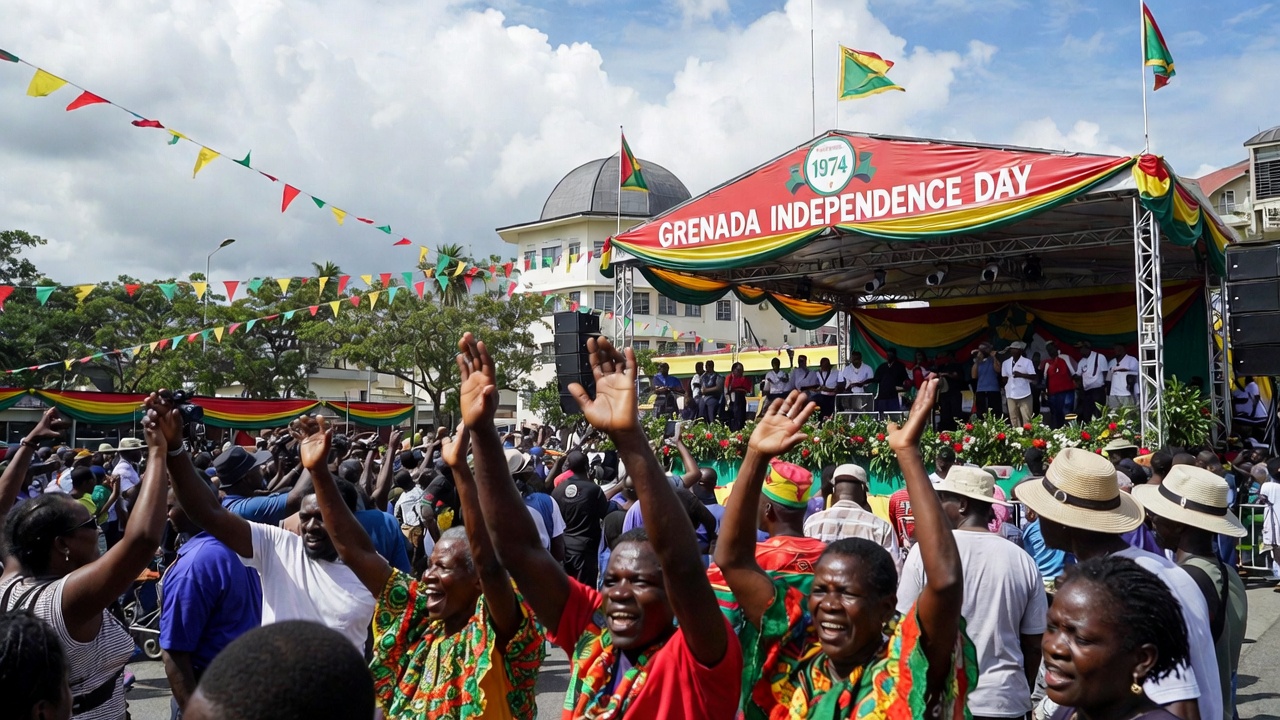
On this day, schools close, banks shut their doors, and shops pull down their shutters. Grenadians fill the streets of the capital, St. George’s, with parades and celebrations. The day is not simply about a date on the calendar. It is a living remembrance of the struggles, sacrifices, and courage that brought an island people from bondage to self-rule.
In 2026, February 7 falls on a Saturday. While this means there is no additional public holiday the following Monday, it also means that Grenadians — both at home and across the global diaspora — have the full weekend to celebrate. The National Celebrations Committee (NCC) has organized events that include a Youth Expo, cultural performances, and DJ clashes aimed at engaging the younger generation.
The 52nd anniversary follows a momentous 50th Golden Jubilee in 2024, which featured a year-long programme of calypso concerts, relay races, triathlons, arts exhibitions, and a grand military parade at the National Stadium. Prime Minister Dickon Mitchell announced those celebrations in October 2023, setting the tone for a new era of national pride.
The History of Grenada Before European Contact: Indigenous Peoples of the Spice Island
Long before any European ship appeared on the horizon, Grenada was home to indigenous peoples from South America. The earliest settlers were the Arawaks, who arrived around 100 AD. They were farmers, fishers, and skilled navigators who lived in relative peace on the island.
By the time Europeans reached the Caribbean, however, the Caribs had displaced the Arawaks. The Caribs were fierce warriors and skilled boat builders. They governed a complex society and fiercely defended their territory against outsiders. Their resistance to European colonization was legendary in the Caribbean.
Christopher Columbus sighted Grenada during his third voyage in 1498. He named the island “La Concepción” in honor of the Virgin Mary, though the name did not stick. Spanish sailors later renamed it Granada, after the famous city in Andalusia. The French called it La Grenade, and when Britain took control, they anglicized it to Grenada.
Despite Columbus’s sighting, Spain made no serious effort to settle the island. The Caribs’ reputation for resistance was enough to keep European colonists at bay for over 150 years. An early English attempt at settlement in 1609 ended in failure. The colonists either succumbed to tropical diseases, starvation, or Carib attacks.
How French Colonization Shaped Grenada’s Cultural Identity
The first permanent European settlement in Grenada was established by the French in 1649. A group of 203 men from Martinique, led by Jacques Dyel du Parquet, landed at what is now St. George’s Harbour and built Fort Annunciation.
The French-Carib relationship began with a treaty, but it quickly deteriorated. Within a few years, the French launched a campaign to eliminate Carib resistance. According to local tradition, the last group of Caribs chose to leap from a cliff — now called Leapers’ Hill (Morne des Sauteurs) in the north of the island — rather than submit to French rule. This tragic event remains a powerful symbol in Grenadian memory.
Under French control, Grenada became a sugar-producing colony. The plantation economy relied on enslaved Africans who were forcibly brought across the Atlantic. By 1763, the enslaved population had grown from around 222 in 1669 to roughly 15,200. Sugar made Grenada one of France’s most profitable Caribbean colonies.
But French influence went far beyond economics. The French language, Catholicism, place names, and culinary traditions left a permanent mark on Grenadian culture. Even today, many Grenadians speak Patois, a Creole language that blends English with elements of French and African languages. Town names like Sauteurs, Gouyave, and Petit Martinique reflect this enduring French heritage.
The capital, originally named Fort Royal by the French, became St. George’s under British rule. But visitors still sense the French colonial architecture, especially around the picturesque harbor.
British Colonial Rule in Grenada: From the Treaty of Paris to the Road to Freedom
The British captured Grenada from France during the Seven Years’ War in 1762. The Treaty of Paris in 1763 formally handed the island to Great Britain. France briefly recaptured it during the American Revolutionary War in 1779, but the Treaty of Versailles in 1783 returned Grenada to British hands for good.
British rule brought significant changes. The colonial government expanded sugar production and tightened the system of slavery. But it also planted the seeds that would eventually grow into one of Grenada’s most important industries.
In 1782, Sir Joseph Banks, the botanical adviser to King George III, introduced nutmeg to Grenada. The island’s volcanic soil, warm climate, and steady rainfall proved ideal for growing the spice. Because Grenada was much closer to European markets than the Dutch East Indies (modern-day Indonesia), the island quickly became a major supplier. Today, Grenada remains the world’s second-largest producer of nutmeg, after Indonesia. The spice is so central to national identity that a nutmeg appears on the Grenadian flag.
One of the most dramatic events of the British colonial period was Fédon’s Rebellion in 1795. Inspired by the French Revolution and the Haitian Revolution, a mixed-race planter named Julien Fédon led an armed uprising against British rule. The rebels seized key parts of the island and held British hostages — some of whom were executed. It took significant British military reinforcement to suppress the revolt. Fédon himself was never captured, and his fate remains unknown to this day. The rebellion underscored the deep tensions within colonial society and the powerful desire for freedom that ran through every layer of Grenadian life.
Slavery was abolished in 1834, but its legacy continued to shape the island for generations. Many formerly enslaved people struggled to find land and livelihoods after emancipation. The collapse of the sugar industry eventually led to the rise of smallholder farming, and nutmeg, cocoa, and other spices became the foundation of a new agricultural economy.
In 1885, St. George’s became the capital of the British Windward Islands — a colonial administrative unit that also included St. Lucia, St. Vincent, and Dominica. This status gave Grenada a degree of regional importance, though real political power remained in the hands of the colonial governor.
| Period | Ruling Power | Key Events |
|---|---|---|
| Pre-1498 | Indigenous Caribs | Arawak and Carib settlement |
| 1498 | Spain (claimed) | Columbus sights the island |
| 1649–1763 | France | Plantation economy, slavery |
| 1763–1974 | Britain | Nutmeg introduced, slavery abolished, independence movement |
| 1974–present | Independent Grenada | Self-rule, revolution, democracy restored |
Eric Gairy and the Road to Grenada Independence Day
The path to Grenadian independence was neither smooth nor inevitable. It was shaped by the vision, ambition, and controversy of one man: Eric Matthew Gairy.
Gairy was a trade unionist who rose to prominence in the 1950s. In 1950, he founded the Grenada United Labour Party (GULP) and championed the rights of agricultural workers. His fiery speeches and populist appeal earned him widespread support among ordinary Grenadians.
On October 10, 1951, Grenada held its first general elections based on universal adult suffrage. Gairy’s GULP won six of the eight elected seats. He became the island’s first Chief Minister — a role that was largely symbolic under the colonial administration, but one that gave Grenadians a taste of self-governance.
In 1958, Grenada joined the Federation of the West Indies, a short-lived attempt to unite Britain’s Caribbean territories into a single independent nation. The federation collapsed in 1962 when Jamaica and Trinidad chose to go their own way. After a failed attempt to create a smaller Eastern Caribbean federation, Britain offered its remaining island territories “associated statehood” — full internal self-governance with Britain retaining control over defense and foreign affairs.
Grenada accepted this arrangement in March 1967. Gairy won the subsequent elections and became Premier. By the early 1970s, he was pushing for full independence.
Not everyone agreed with Gairy’s plans. The Grenada National Party (GNP), led by Herbert Blaize, and the New Jewel Movement (NJM), led by a young lawyer named Maurice Bishop, both had reservations. They objected not so much to independence itself, but to Gairy’s authoritarian leadership style. His government relied on a private militia known as the “Mongoose Gang” to intimidate opponents. Labor strikes and street protests rocked the island in late 1973 and early 1974.
Despite this opposition — and an eventual boycott of negotiations with Britain — Gairy pressed ahead. On February 7, 1974, Grenada became a fully independent nation. Gairy became the first Prime Minister, and the country joined the Commonwealth with Queen Elizabeth II as ceremonial head of state.
But independence came at a cost. The day was marked by strikes and violence, not parades. Carnival was cancelled that year. Maurice Bishop was arrested and jailed. His father, Rupert Bishop, had been killed just two weeks earlier during a demonstration. The wounds of this turbulent period would shape Grenada’s political trajectory for the next decade.
The Grenada Revolution of 1979: How the New Jewel Movement Changed History
On March 13, 1979, while Eric Gairy was abroad at a United Nations meeting, the New Jewel Movement launched a bloodless coup. They seized the radio station, the army barracks, and key government buildings. Within hours, the People’s Revolutionary Government (PRG) was established, with Maurice Bishop as Prime Minister.
The revolution was popular. Grenadians had grown frustrated with Gairy’s corruption, his use of violence against opponents, and what many saw as his detachment from ordinary people. Bishop, by contrast, was charismatic, articulate, and deeply committed to social change.
The PRG launched ambitious programs in education, healthcare, and infrastructure. It built a new international airport at Point Salines with Cuban assistance — a project that would later become a source of international controversy. The government also promoted literacy campaigns and expanded access to medical care.
But the revolution had a dark side. The PRG suspended the constitution, censored the press, and detained political opponents. Its close ties to Cuba and the Soviet Union alarmed the United States and other Western nations.
The revolution’s end was tragic. In October 1983, an internal power struggle led hardliners within the PRG to place Bishop under house arrest. On October 19, a crowd of supporters freed Bishop, but he was soon recaptured by soldiers loyal to the rival faction. Bishop and several members of his cabinet were executed at Fort George in St. George’s.
The killings shocked the nation and the world. Six days later, on October 25, 1983, a U.S.-led military intervention — codenamed Operation Urgent Fury — invaded Grenada. The intervention overthrew the coup leaders, restored order, and eventually led to the re-establishment of democratic elections in December 1984.
Today, the anniversary of the American intervention is observed as Thanksgiving Day in Grenada — a public holiday that, depending on one’s perspective, commemorates liberation or invasion. The events of 1979–1983 remain among the most debated chapters in Caribbean history.
Understanding the Grenada Flag: Symbols of Independence and National Pride
The national flag of Grenada was adopted on the very day of independence — February 7, 1974. It was designed by Anthony C. George, a Grenadian artist from Soubise in the Parish of St. Andrew.
The flag is rich in symbolism:
- Red border: Represents courage, vitality, and the unity of the Grenadian people
- Yellow (gold): Symbolizes the warmth of the sun and the friendliness of the people
- Green: Stands for the island’s lush vegetation, fertile soil, and agricultural heritage
- Seven stars: Represent the seven parishes (St. George, St. John, St. Mark, St. Patrick, St. Andrew, St. David, and the administrative dependency of Carriacou and Petite Martinique)
- Nutmeg symbol at the hoist: The most distinctive element, directly referencing Grenada’s reputation as the “Isle of Spice” and its status as the world’s second-largest nutmeg producer
The central star, set within a red disc, represents national unity. The six stars along the red border represent the six parishes of mainland Grenada.
During the revolutionary period (1979–1983), a different flag was briefly used. The restoration of the original 1974 flag after the U.S. intervention carried powerful symbolic weight — it marked a return to the democratic ideals enshrined at independence.
How Grenadians Celebrate Independence Day: Parades, Music, and Oil Down
Independence Day celebrations in Grenada are vibrant, deeply communal, and joyous. The festivities blend official ceremonies with grassroots cultural traditions.
Parades and Official Ceremonies
The centerpiece of the day is a grand parade through the streets of St. George’s. The parade features the Royal Grenada Police Force, the Boy Scouts and Girl Guides, school groups, community organizations, and marching bands. Participants dress in the national colors of red, gold, and green. Government officials deliver speeches at the National Stadium, reflecting on the country’s journey and its vision for the future.
Calypso, Soca, and Steelpan Music
Music is the heartbeat of Grenadian Independence Day. Calypso — the storytelling musical tradition born in the Caribbean — fills the streets with sharp social commentary and infectious melodies. Calypsonians are more than singers. They are chroniclers, comedians, and conscience of the nation. Through sharp lyrics and clever wordplay, they hold politicians accountable, celebrate everyday heroes, and document the joys and sorrows of island life.
Soca, a faster, dance-driven offshoot of calypso, keeps the energy high. Its driving rhythms and call-and-response patterns are rooted in African musical traditions brought to the Caribbean by enslaved peoples. During independence celebrations, soca music blasts from speaker trucks and stages, drawing crowds of all ages into the streets to dance.
And then there is the steelpan (steel drum) — the only acoustic instrument invented in the twentieth century. Born in Trinidad and Tobago, the steelpan has become a staple of Caribbean musical culture. In Grenada, steel orchestras perform at independence concerts, school assemblies, and community gatherings. The warm, ringing tones of the pan carry across neighborhoods, a sound that is unmistakably Caribbean.
These musical forms are not merely entertainment. They are carriers of history, identity, and resistance. Calypso, in particular, has long served as a vehicle for political commentary and social critique in Grenada and across the Caribbean. During the years of political turmoil in the 1970s and 1980s, calypsonians used their craft to question authority and give voice to the concerns of ordinary people.
Oil Down: The National Dish That Brings Everyone Together
No Grenadian celebration is complete without oil down — the island’s beloved national dish. Oil down is a hearty one-pot stew made from breadfruit, salted meat (often pigtail), chicken, callaloo, dumplings, and vegetables, all simmered in rich coconut milk and seasoned with local spices including turmeric and nutmeg.
The name comes from the cooking process itself. As the coconut milk reduces, the oil separates and either absorbs into the ingredients or settles at the bottom of the pot — hence, the food has “oiled down.” Unlike most stews, where ingredients are stirred and mixed, oil down is “packed” — layered carefully in a specific order. The breadfruit and meat typically go on the bottom, vegetables in the middle, and callaloo leaves on top. How you pack the pot is a matter of family tradition, regional custom, and sometimes spirited debate.
There is no single recipe for oil down. It varies from household to household, parish to parish. Some families add conch or crab. Others include okra or cassava dumplings. Vegetarian versions have become more common in recent years. What remains constant is the communal spirit of the dish.
Oil down is much more than a meal. It is a communal ritual. Cooking it is a group activity. Everyone brings something to the pot. Someone peels the breadfruit. Another seasons the meat. A third person prepares the coconut milk. The dish is typically cooked outdoors, over an open fire, at beach gatherings, block parties, or family reunions.
As Grenadian television producer Simeon Cornwall explained to NPR: “Oil down is a social thing. If you’re cooking oil down, it’s because you have a group of people gathering to eat.”
The ingredients of oil down mirror Grenada’s own cultural history. The callaloo greens trace back to the island’s earliest indigenous inhabitants. The breadfruit was brought from the Pacific by European explorers. The tradition of one-pot meals arrived with enslaved Africans. And the turmeric reflects the contributions of South Asian indentured laborers who came after abolition.
Grenada as the Spice Island: Why Nutmeg Defines the Nation’s Identity
Grenada’s nickname — the Island of Spice, or simply the Spice Island — is not just a tourist slogan. It reflects a deep agricultural heritage that shapes the nation’s economy, cuisine, culture, and even its flag.
Nutmeg is Grenada’s signature crop. The island produces roughly 20 percent of the world’s supply, making it the second-largest producer globally after Indonesia. But Grenada also grows mace (the red lacy covering around the nutmeg seed), cinnamon, cloves, ginger, turmeric, and cocoa.
The spice trade has been central to Grenada’s economy for over two centuries. Nutmeg was first introduced in 1782 and quickly thrived in the island’s volcanic soil. The crop is often called “black gold” by local farmers for its economic value.
But this reliance on a single crop has also made Grenada vulnerable. Hurricane Ivan in 2004 destroyed approximately 90 percent of the island’s nutmeg trees. Since nutmeg trees take seven to eight years to mature, the recovery was painfully slow. Hurricane Emily struck just a year later, compounding the damage. Total economic damage from Ivan alone exceeded 200 percent of GDP.
The spice industry has gradually recovered, and today visitors can tour working plantations like Belmont Estate and Dougaldston Spice Estate. The Grenada Nutmeg Museum in Victoria offers guided tours through a former processing station, where visitors can see, smell, and taste the spices that built a nation.
Grenada’s chocolate industry has also gained international recognition. The island’s tree-to-bar chocolate, produced by companies like the Grenada Chocolate Company, is prized by connoisseurs worldwide.
Grenada’s Recovery After Hurricane Beryl: Resilience in 2025 and 2026
The 52nd Independence Day celebrations in 2026 carry a special weight. On July 1, 2024, Hurricane Beryl struck the Caribbean as one of the earliest and most powerful storms ever recorded in the Atlantic basin. It made landfall as a high-end Category 4 hurricane with winds reaching 150 miles per hour (240 km/h).
The eye of the storm passed directly over Grenada’s sister islands of Carriacou and Petite Martinique, causing catastrophic damage. According to the Global Facility for Disaster Reduction and Recovery (GFDRR), total economic damages were estimated at $218 million, or approximately 16.5 percent of Grenada’s 2023 GDP.
The devastation was staggering:
- Approximately 95 percent of buildings on Carriacou were damaged or destroyed
- On Petite Martinique, 97 percent of structures were damaged
- More than 80,000 people across Grenada and neighboring St. Vincent and the Grenadines needed humanitarian assistance
- Critical infrastructure — roads, schools, healthcare facilities — suffered severe damage
Prime Minister Dickon Mitchell flew over Carriacou after the storm and described the scene as “complete devastation.”
But in the aftermath, Grenadians demonstrated the same resilience that has defined their national character for centuries. Communities came together to clear debris, share food, and rebuild homes. International organizations including the World Food Programme, the International Organization for Migration, and the Red Cross provided essential support.
The OECS commended Grenada’s recovery efforts during the 51st Independence celebrations in February 2025. Director General Dr. Didacus Jules noted that independence represents “the sacrifices, resilience, and unity of the Grenadian people.”
As Grenadians gather for their 52nd Independence Day, the recovery from Beryl is still ongoing. Homes are being rebuilt. Businesses are reopening. Mangroves are being reseeded. But the spirit of the people — their unwavering commitment to rebuilding and moving forward — remains unbroken.
What to Do in Grenada During Independence Week: A Travel Guide for February 2026
If you are planning a visit to Grenada around February 7, 2026, you are in for an unforgettable experience. Here is a practical guide to making the most of Independence Week.
Attend the Independence Day Parade in St. George’s
The main parade winds through the streets of the capital. Arrive early to secure a good viewing spot. The parade features traditional costumes, marching bands, schoolchildren, and military units. The atmosphere is festive, warm, and welcoming to visitors.
Visit Fort George and Fort Frederick
These colonial-era forts offer panoramic views of St. George’s harbor and the surrounding mountains. They are also places of profound historical significance — Fort George is the site where Maurice Bishop was executed in 1983.
Explore Grand Anse Beach
Consistently ranked among the best beaches in the Caribbean, Grand Anse offers two miles of powdery white sand and crystal-clear turquoise water. It is the perfect place to relax after a day of parades and celebrations.
Tour a Spice Plantation
Visit Belmont Estate or Dougaldston Spice Estate to see how nutmeg, cocoa, and other spices are grown, harvested, and processed. Many plantations offer tastings and demonstrations.
Taste Oil Down at a Local Restaurant
Patrick’s Local Home Style Restaurant near St. George’s is well-known for authentic Grenadian cuisine. For a truly local experience, ask around — you may be lucky enough to receive an invitation to a community oil down gathering.
Dive the Underwater Sculpture Park
Located off the coast near St. George’s, this submerged art installation by British sculptor Jason deCaires Taylor doubles as an artificial reef. It is one of the most unique diving and snorkeling sites in the world.
Try Grenadian Chocolate
Grenada’s tree-to-bar chocolate is world-class. Visit the Grenada Chocolate Company or one of the island’s artisanal chocolate producers to see the full production process — from cocoa pod to finished bar.
| Activity | Location | Best For |
|---|---|---|
| Independence Day Parade | St. George’s | Culture, history |
| Fort George | St. George’s | History, panoramic views |
| Grand Anse Beach | Grand Anse | Relaxation, swimming |
| Belmont Estate | St. Patrick’s | Spice tours, chocolate |
| Underwater Sculpture Park | Molinière Bay | Diving, snorkeling |
| Oil Down dining | Various | Authentic cuisine |
The Grenadian Diaspora: How Communities Abroad Celebrate February 7
Grenada may be small, but its people are spread across the globe. Large Grenadian communities exist in New York, London, Toronto, Miami, and across the Eastern Caribbean. For these diaspora communities, February 7 is a day of deep emotional connection to their homeland.
Grenadian associations in major cities organize their own independence celebrations, featuring flag-raising ceremonies, cultural performances, and communal meals — often centered around oil down. Social media has become a powerful tool for connecting Grenadians across time zones, with hashtags, live streams, and video messages creating a virtual celebration that spans the world.
The diaspora also plays a critical economic role. Remittances from Grenadians abroad represent a significant source of income for families on the island. This connection deepens around independence, when many diaspora Grenadians send gifts, money, and messages of support to loved ones back home.
For the 52nd anniversary, diaspora organizations have been especially active in supporting Grenada’s ongoing recovery from Hurricane Beryl, channeling donations and volunteer efforts toward rebuilding communities in Carriacou and Petite Martinique.
The diaspora’s emotional connection to February 7 runs deep. For first-generation immigrants, it is a reminder of the land they left behind — its beaches, its mountains, the smell of nutmeg in the air. For second and third-generation Grenadians born abroad, the day offers a way to connect with roots they may never have seen firsthand but feel in their bones. Churches hold special services. Community centers host cultural evenings with storytelling, poetry, and traditional dance. Grandmothers teach grandchildren how to pack a pot of oil down the way their own mothers taught them.
In this way, Independence Day serves as a thread that stitches the global Grenadian family together, no matter how far its members have traveled from the Spice Island.
Grenada’s Political Stability and Democratic Growth Since Independence
Since the restoration of democracy in 1984, Grenada has enjoyed a period of remarkable political stability. The country operates under a Westminster-style parliamentary system with a Governor-General representing the head of state (now King Charles III, who became monarch following the death of Queen Elizabeth II in 2022), and a Prime Minister as head of government.
Free and fair elections have been held regularly. Power has changed hands peacefully between the two main parties — the New National Party (NNP) and the National Democratic Congress (NDC) — multiple times. In 2022, the NDC, led by Dickon Mitchell, won a decisive electoral victory, ending 15 years of NNP government under former Prime Minister Keith Mitchell (no relation).
Grenada’s democratic maturity is recognized internationally. The country is an active member of the Commonwealth of Nations, the Organisation of Eastern Caribbean States (OECS), the Caribbean Community (CARICOM), and the Organization of American States (OAS).
The U.S. State Department, in its congratulatory message on Grenada’s 51st independence anniversary in 2025, praised the country’s commitment to combating transnational threats, regional security, and democratic values.
Climate Change and Small Island Nations: Why Grenada’s Independence Story Is a Global Story
Grenada’s independence story is not just a Caribbean story. It is a global story about the vulnerability of small island developing states (SIDS) to forces beyond their control — and about their extraordinary capacity to adapt and survive.
Climate change poses an existential threat to nations like Grenada. Rising sea levels, more intense hurricanes, coral reef degradation, and shifting weather patterns all threaten the island’s economy, infrastructure, and way of life. Hurricane Beryl in 2024 was a stark reminder of this reality.
Grenada has been a vocal advocate for climate action on the world stage. The U.S. Embassy has recognized Grenada’s role in addressing the climate crisis. The country’s National Sustainable Development Plan 2020–2035 and the “Vision 75” roadmap unveiled by Prime Minister Dickon Mitchell lay out ambitious goals for climate-resilient development.
For Grenadians, independence is not just about political sovereignty. It is about the right to shape their own future in the face of challenges that they did not create but must confront. Small island nations like Grenada contribute a tiny fraction of global greenhouse gas emissions. Yet they bear a disproportionate share of the consequences. This fundamental injustice is at the heart of Grenada’s advocacy on the international stage.
The country has invested in climate-resilient agriculture, diversifying beyond nutmeg into crops and industries less vulnerable to single catastrophic events. Solar energy projects, rainwater harvesting systems, and improved building codes are all part of a broader strategy to build resilience from the ground up.
This makes February 7 not only a celebration of the past but a commitment to the future. Independence, for Grenadians, is not a historical artifact. It is a living, daily practice — the ongoing work of building a nation that can withstand whatever comes next.
Frequently Asked Questions About Grenada Independence Day
When did Grenada gain independence? Grenada gained independence from the United Kingdom on February 7, 1974.
Who was Grenada’s first Prime Minister? Sir Eric Gairy was the first Prime Minister of independent Grenada.
What is the national dish of Grenada? Oil down — a hearty stew of breadfruit, salted meat, callaloo, dumplings, and vegetables cooked in coconut milk.
Why is Grenada called the Spice Island? Because it is one of the world’s leading producers of nutmeg, mace, cinnamon, cloves, and other spices.
Is February 7 a public holiday in Grenada? Yes. It is a national public holiday. Schools, banks, and most businesses are closed.
What is on the Grenada flag? The flag features red, gold, and green colors, seven stars representing the parishes, and a nutmeg symbol representing the country’s agricultural heritage.
What happened during the Grenada Revolution? In 1979, the New Jewel Movement overthrew the government of Eric Gairy. The revolution ended in 1983 with the execution of Maurice Bishop and a subsequent U.S.-led military intervention.
How many years of independence is Grenada celebrating in 2026? Grenada celebrates its 52nd anniversary of independence in 2026.
Looking Forward: What Grenada’s 52nd Independence Day Means for the Future
As Grenadians gather on February 7, 2026, they carry with them the full weight of their history — from the indigenous Caribs who first called the island home, through the horrors of slavery and colonialism, the triumphs and tragedies of revolution, and the ongoing challenges of climate change and natural disaster.
But they also carry something else: hope. The Independence Youth Expo, organized by the National Celebrations Committee for January 2026, showcased young entrepreneurs, artists, and performers from across the tri-island state. It was a deliberate investment in the next generation — a recognition that independence is not a single moment but an ongoing project.
Grenada’s national motto reads: “Ever Conscious of God, We Aspire, Build and Advance as One People.” On this 52nd Independence Day, that motto feels less like a motto and more like a promise — one that Grenadians continue to keep, year after year, through sunshine and storm.
Whether you are a Grenadian at home, a member of the diaspora, or a traveler discovering the Spice Island for the first time, February 7 is an invitation. An invitation to remember. An invitation to celebrate. And above all, an invitation to understand that freedom, once won, must be nurtured every single day.
Happy 52nd Independence Day, Grenada. One People. One Journey. One Future.