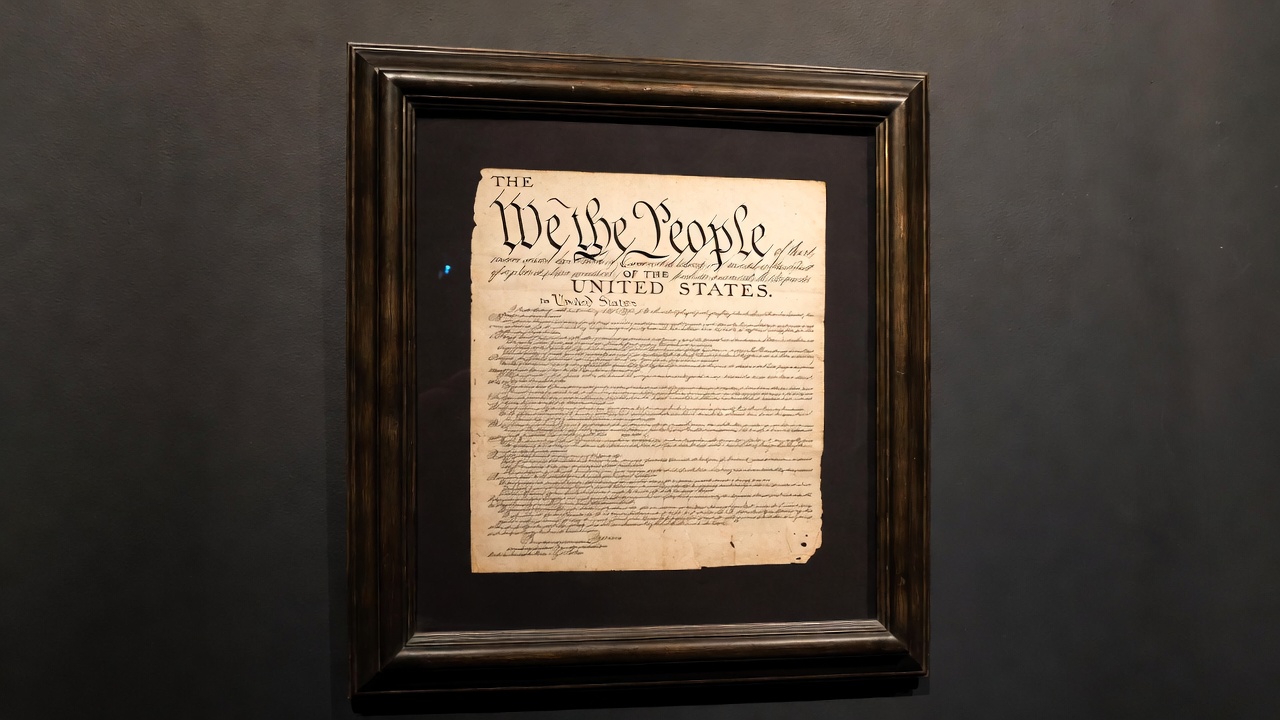
On September 17, 1787, inside the sweltering Assembly Room of the Pennsylvania State House — the building we now call Independence Hall — thirty-nine men dipped quills into the Syng inkstand and affixed their names to a four-page document that would reshape the entire trajectory of human governance. That document was the United States Constitution.
Nearly 239 years later, those signatures still carry weight. They still settle arguments in courtrooms. They still spark debates on cable news, in classrooms, and at kitchen tables across the country. And in 2026, a year when America celebrates the 250th anniversary of the Declaration of Independence, the Constitution has taken on renewed urgency as the nation grapples with fresh questions about executive power, voting rights, and the balance between federal and state authority.
This article tells the full story of that September day in Philadelphia. It names every signer and the state each man represented. It explains why some delegates refused to sign. And it traces a direct line from 1787 to the constitutional battles unfolding in the Supreme Court’s 2025–2026 term — because the signing of the Constitution was never just a historical event. It was a bet on the future. Our future.
Who Signed the US Constitution: The Complete List of 39 Signers
The original thirteen states — minus Rhode Island, which refused to send delegates — appointed 70 individuals to attend the Constitutional Convention. Many of those appointees declined or could not make the trip. Notable absentees included Thomas Jefferson (serving as minister to France), John Adams (minister to Great Britain), Patrick Henry (who famously declared he “smelt a rat”), and Samuel Adams.
Of the 55 delegates who did participate in the convention’s sessions, only 39 ultimately signed the finished document. The youngest signer was Jonathan Dayton of New Jersey, just 26 years old. The oldest was Benjamin Franklin of Pennsylvania, who at 81 was so frail that fellow delegates carried him to the hall in a sedan chair.
Below is the complete roster of signers, organized by the state they represented.
Complete Table of All 39 Signers of the US Constitution
| State | Signers |
|---|---|
| Delaware | George Read, Gunning Bedford Jr., John Dickinson, Richard Bassett, Jacob Broom |
| Maryland | James McHenry, Daniel of St. Thomas Jenifer, Daniel Carroll |
| Virginia | John Blair, James Madison Jr. |
| North Carolina | William Blount, Richard Dobbs Spaight, Hugh Williamson |
| South Carolina | John Rutledge, Charles Cotesworth Pinckney, Charles Pinckney, Pierce Butler |
| Georgia | William Few, Abraham Baldwin |
| New Hampshire | John Langdon, Nicholas Gilman |
| Massachusetts | Nathaniel Gorham, Rufus King |
| Connecticut | William Samuel Johnson, Roger Sherman |
| New York | Alexander Hamilton |
| New Jersey | William Livingston, David Brearley, William Paterson, Jonathan Dayton |
| Pennsylvania | Benjamin Franklin, Thomas Mifflin, Robert Morris, George Clymer, Thomas FitzSimons, Jared Ingersoll, James Wilson, Gouverneur Morris |
At the top of the document, separated from every other name, appears the signature of George Washington, who signed as “Presidt and deputy from Virginia.” Washington had presided over the entire convention. His signature lent the Constitution an authority that no other living American could have provided.
Why Did Only 39 of 55 Delegates Sign the Constitution?
Not every delegate who walked through the doors of Independence Hall in May 1787 was still there four months later. And not everyone who stayed agreed with the final product.
Thirteen delegates left before signing day. Some departed for personal reasons — illness in the family, financial pressures, or commitments back home. Others left because they fundamentally disagreed with the direction the convention had taken. The original mandate from Congress was simply to revise the Articles of Confederation, not to draft an entirely new framework of government. When it became clear that the delegates intended a wholesale replacement, several walked out in protest.
The Three Who Stayed but Refused to Sign
Three delegates remained in Philadelphia through the final session on September 17 and still chose not to sign. Their names deserve attention because their objections foreshadowed debates that continue to this day.
Edmund Randolph of Virginia had, ironically, been the one to introduce the Virginia Plan — the ambitious blueprint that formed the backbone of the Constitution. Yet by September, he worried the document gave too much power to the federal government without enough safeguards for individual liberty. He also objected to the lack of a bill of rights. Randolph later reversed his position and supported ratification at Virginia’s convention.
George Mason of Virginia was one of the most respected political thinkers of his era. He had authored the Virginia Declaration of Rights, a document that directly influenced the Declaration of Independence. Mason’s primary objection was clear and forceful: the Constitution contained no bill of rights. He feared that without explicit protections, the new government would inevitably trample individual freedoms. Mason never changed his mind.
Elbridge Gerry of Massachusetts shared Mason’s concern about the absence of a bill of rights. He also worried about the structure of Congress and the power granted to the executive branch. Gerry later served as vice president under James Madison, but he remained skeptical of concentrated federal authority for the rest of his life.
The concerns raised by these three men were not fringe objections. They reflected a genuine fear shared by millions of Americans — the fear that a powerful central government could become the very type of tyranny they had just fought a revolution to escape. That fear is precisely what led to the Bill of Rights, ratified in 1791, just four years after the signing.
What Happened at the Constitutional Convention in Philadelphia 1787
The story of the signing cannot be separated from the story of the convention itself. The four months of debate, argument, and compromise that preceded September 17 determined not only the content of the Constitution but the spirit in which it was signed.
The Call for a Convention
By the mid-1780s, the young American republic was in trouble. The Articles of Confederation, adopted in 1781, had created a national government so weak it could barely function. Congress could not levy taxes. It could not regulate trade between states. It had no power to enforce its own laws. Each state operated almost like an independent country, printing its own currency and imposing tariffs on goods from neighboring states.
The breaking point came in 1786 with Shays’ Rebellion, an armed uprising of debt-ridden farmers in western Massachusetts. The national government was powerless to respond. George Washington, watching from his estate at Mount Vernon, wrote that the country was “fast verging to anarchy and confusion.”
On February 21, 1787, Congress passed a resolution calling for a convention in Philadelphia “for the sole and express purpose of revising the Articles of Confederation.” The delegates who gathered that May had something far more radical in mind.
The Virginia Plan and the Great Compromise
When the convention opened on May 25, 1787, Edmund Randolph of Virginia presented what became known as the Virginia Plan. Drafted primarily by James Madison, it proposed scrapping the Articles entirely and replacing them with a new government featuring three branches: legislative, executive, and judicial. Crucially, the Virginia Plan called for representation in both chambers of the legislature to be based on population — a proposal that thrilled large states like Virginia and horrified small ones like Delaware.
The small states responded with the New Jersey Plan, introduced by William Paterson. This counter-proposal preserved the one-state, one-vote structure of the Articles. The standoff between large and small states threatened to destroy the convention before it could accomplish anything.
The solution came in the form of the Connecticut Compromise (also called the Great Compromise), brokered largely by Roger Sherman and Oliver Ellsworth of Connecticut. The deal was elegant in its simplicity: the House of Representatives would be apportioned by population, while the Senate would give each state two seats regardless of size. This dual structure remains the foundation of Congress in 2026.
The Three-Fifths Clause and the Stain of Slavery
No honest account of the Constitutional Convention can avoid the issue of slavery. Southern states wanted enslaved people counted in their population totals to increase their representation in the House. Northern states objected, arguing that if enslaved people were property (as Southern law insisted), they should not be counted as persons for political purposes.
The result was the Three-Fifths Compromise: each enslaved person would be counted as three-fifths of a free person for purposes of representation and taxation. This provision did not liberate a single human being. It did not grant enslaved people any rights. It simply gave slaveholding states extra political power.
The Constitution also included a clause prohibiting Congress from banning the international slave trade before 1808, and a fugitive slave clause requiring the return of escaped enslaved people. These provisions were the price of Southern participation in the Union. They were also a moral catastrophe whose consequences would take a civil war, a constitutional amendment, and generations of struggle to even begin to address.
The Day They Signed: September 17, 1787 and Benjamin Franklin’s Famous Speech
By early September 1787, the delegates had been working for nearly four months. The Committee of Style, chaired by Gouverneur Morris of Pennsylvania, had polished the final draft. Morris is credited with writing the famous Preamble — those stirring opening words, “We the People of the United States.”
On September 17, the delegates gathered for the last time. The mood was a mixture of exhaustion, relief, and lingering doubt. Many delegates had reservations about specific provisions. Some believed the document gave too much power to the national government. Others thought it gave too little.
It was Benjamin Franklin who set the tone for the day. Too weak to stand and deliver a speech himself, Franklin had his fellow Pennsylvania delegate James Wilson read his remarks aloud. The speech is one of the most remarkable statements in American political history.
Franklin acknowledged openly that he did not agree with everything in the Constitution. But he urged his fellow delegates to sign anyway, arguing that no group of imperfect human beings could ever produce a perfect document. He noted that the older he grew, “the more apt I am to doubt my own judgment, and to pay more respect to the judgment of others.”
Franklin then proposed a clever procedural move. Rather than asking delegates to sign as official representatives of their states — which would have required unanimous agreement within each state delegation — he suggested they sign simply as witnesses to the unanimous consent of the states present. This subtle distinction allowed delegates who harbored personal objections to sign without feeling they were endorsing every word.
Thirty-nine delegates signed. Three refused. And the document was sent to the Confederation Congress in New York, which forwarded it to the states for ratification.
How the US Constitution Was Ratified After the Signing
The signing was not the end of the process. It was barely the beginning. Under Article VII of the new Constitution, nine of the thirteen states had to ratify the document before it could take effect.
What followed was one of the most intense public debates in American history. Supporters of the Constitution called themselves Federalists. Opponents — including Patrick Henry, Samuel Adams, and the three non-signing delegates — became known as Anti-Federalists.
The Federalist Papers and the Ratification Debate
The most influential arguments in favor of ratification came in the form of The Federalist Papers, a series of 85 essays published in New York newspapers between October 1787 and August 1788. Written by Alexander Hamilton, James Madison, and John Jay under the pen name “Publius,” these essays laid out a comprehensive case for the new government.
Hamilton argued for a strong executive. Madison explained how the separation of powers would prevent tyranny. Jay made the case for a unified foreign policy. Together, the essays remain among the most important works of political philosophy ever produced in the United States.
The Anti-Federalists published their own essays and pamphlets, raising concerns that the Constitution lacked a bill of rights, that the president might become a king, and that the federal judiciary would eventually swallow state courts.
The Road to Nine States
Delaware was the first state to ratify, on December 7, 1787 — less than three months after the signing. Pennsylvania followed five days later. New Jersey, Georgia, and Connecticut ratified in January 1788.
The critical battles came in the large states. Massachusetts ratified in February 1788, but only after Federalists promised to support amendments — a bill of rights — once the new government was in operation. Virginia ratified on June 25, 1788, after a fierce debate between Madison and Henry. New York followed on July 26, tipped in part by Hamilton’s relentless advocacy.
New Hampshire provided the decisive ninth ratification on June 21, 1788, officially making the Constitution the law of the land. North Carolina and Rhode Island held out longer. Rhode Island, the lone holdout that had refused even to send delegates to the convention, did not ratify until May 29, 1790 — after the new government had already been operating for over a year.
Why the Bill of Rights Was Added to the Original Constitution
The promise made to skeptical ratifiers in Massachusetts, Virginia, and other states was kept. In 1789, the first Congress under the new Constitution took up the matter of amendments. James Madison, now serving as a Virginia representative in the House, drafted a series of proposed amendments drawn from suggestions submitted by state ratifying conventions.
Congress approved twelve amendments and sent them to the states. Ten were ratified by December 15, 1791. These ten amendments — the Bill of Rights — addressed nearly every concern raised by the Anti-Federalists and the three non-signing delegates.
The First Amendment protected freedom of speech, religion, press, assembly, and petition. The Second Amendment addressed the right to bear arms. The Fourth Amendment guarded against unreasonable searches and seizures. The Tenth Amendment reserved all powers not granted to the federal government to the states or the people.
The Bill of Rights transformed the Constitution from a blueprint for government into a charter of individual liberty. Without it, ratification might never have succeeded. Without it, the Constitution would be a fundamentally different — and far less durable — document.
How Many Amendments Have Been Made to the US Constitution
Since the ratification of the Bill of Rights in 1791, the Constitution has been amended seventeen additional times, bringing the total to 27 amendments. Some of these amendments corrected profound moral failures. Others refined the mechanics of governance.
Key Constitutional Amendments That Changed American History
| Amendment | Year Ratified | What It Did |
|---|---|---|
| 13th | 1865 | Abolished slavery |
| 14th | 1868 | Guaranteed equal protection and due process; defined citizenship |
| 15th | 1870 | Prohibited denying the vote based on race |
| 19th | 1920 | Guaranteed women the right to vote |
| 22nd | 1951 | Limited the president to two terms |
| 24th | 1964 | Abolished poll taxes in federal elections |
| 26th | 1971 | Lowered the voting age to 18 |
The amendment process is deliberately difficult. A proposed amendment must be approved by two-thirds of both chambers of Congress and then ratified by three-fourths of state legislatures (38 of the current 50 states). This high threshold ensures that the Constitution changes only when there is broad, sustained national consensus.
It is worth noting that in the 119th Congress (2025–2026), lawmakers have introduced proposals for new amendments. One example is H.J.Res.29, a resolution proposing a constitutional amendment to allow a president to be elected three times instead of the current two-term limit established by the 22nd Amendment. Whether this or any other amendment proposal gains traction remains to be seen.
Why the Signing of the US Constitution Still Matters in 2026
The year 2026 is a landmark for American democracy. On July 4, 2026, the nation will mark the 250th anniversary of the Declaration of Independence — an event known as America’s Semiquincentennial, or America250. The celebrations, coordinated by the U.S. Semiquincentennial Commission and supported by a White House Task Force, include museum exhibitions, naturalization ceremonies, volunteer initiatives, and cultural events stretching from coast to coast.
But 2026 is not just about looking back. It is also a year in which the Constitution faces some of its most consequential tests in modern memory.
The Supreme Court’s 2025–2026 Term and Constitutional Questions
The Supreme Court of the United States is hearing dozens of cases this term that go directly to the heart of the constitutional framework the Framers designed in 1787. Several of these cases deal with the separation of powers — the same principle that Roger Sherman, James Madison, and their fellow delegates debated in that Philadelphia summer.
Presidential tariff authority is one major area. In Learning Resources, Inc. v. Trump, the Court is weighing whether the president can impose sweeping tariffs under the International Emergency Economic Powers Act (IEEPA). The Constitution grants the power to regulate foreign commerce and impose tariffs to Congress, not the president. A federal appeals court ruled that the Constitution places this power “exclusively in the legislative branch.” The Supreme Court’s decision will determine how far executive authority can stretch in matters of trade.
The independence of federal agencies is another battleground. In Trump v. Slaughter, the Court is considering whether the president can fire a Federal Trade Commission commissioner at will — a question that traces back to a 90-year-old precedent, Humphrey’s Executor v. United States (1935). Similarly, in Trump v. Cook, the Court is examining whether the president can dismiss a member of the Federal Reserve Board of Governors outside the “for cause” standard established by the Federal Reserve Act.
Voting rights remain a constitutional flashpoint as well. In Louisiana v. Callais, the justices are considering whether a second majority-Black congressional district in Louisiana constitutes unconstitutional racial gerrymandering — a case with major implications for Section 2 of the Voting Rights Act and the 14th and 15th Amendments.
Each of these cases is, at its core, an argument about the meaning of the document those 39 men signed in 1787. The specific issues are modern. The underlying questions are as old as the Republic.
State Constitutions and Federalism in 2026
The Constitution’s influence extends far beyond the federal courts. In 2026, state-level constitutional debates are surging. Virginia’s General Assembly has approved four draft constitutional amendments for voters to consider, covering reproductive rights, voting rights restoration, marriage equality, and redistricting. If approved by voters, these amendments would enshrine new protections in Virginia’s state constitution.
Across the country, states are increasingly looking to their own constitutions to fill gaps in federal protections. As one legal analysis noted, Americans are “increasingly looking to state law to constrain abuses of power by the federal government.” States like Illinois have passed laws creating state-level remedies against federal officers who violate constitutional rights — a trend that legal scholars expect to accelerate in 2026.
This dynamic — the push and pull between federal and state authority — is exactly what the Framers debated in 1787. The Constitution created a system of federalism in which power is divided between the national government and the states. That division has never been static. It has shifted with every generation, and 2026 is proving to be a pivotal year in its evolution.
Where to See the Original US Constitution in 2026
If the story of the Constitution inspires you to see the document for yourself, 2026 offers extraordinary opportunities.
The National Archives in Washington, D.C.
The National Archives is the permanent home of the original Constitution. In a historic first, the Archives recently displayed the entire Constitution in its Rotunda — all four pages, plus the original Bill of Rights and all 17 subsequent amendments. This marked the first time in history the complete document was on public view.
The Archives is also a hub for the broader America250 celebrations. A new permanent exhibition space called The American Story and Discovery Center opened in late 2025. It is the first museum in Washington, D.C., to use artificial intelligence to create personalized journeys through American history for individual visitors.
The National Constitution Center in Philadelphia
The National Constitution Center in Philadelphia — located just steps from where the Constitution was actually debated and signed — is opening two new galleries in 2026 to mark the nation’s anniversary. A gallery on America’s founding opened in February 2026, and a gallery on the separation of powers is scheduled for May 2026.
Thanks to a $15 million gift from Kenneth C. Griffin, the Center is displaying one of the 14 known original printed copies of the U.S. Constitution, along with a rare first printing of the constitutional amendments that became the Bill of Rights. These documents will be on view throughout 2026.
The Center also features Signers’ Hall, where life-sized bronze statues of all 39 signers (plus the three who refused) allow visitors to literally walk among the Framers.
Independence Hall
And of course, there is Independence Hall itself — the building where it all happened. Managed by the National Park Service, Independence Hall is a UNESCO World Heritage Site and one of the most visited landmarks in the United States. The Assembly Room where the Constitution was debated and signed has been carefully preserved.
The Founding Fathers Who Signed the Constitution: Key Figures You Should Know
While all 39 signers played a role, several individuals stand out for the depth of their contributions.
George Washington — The Indispensable Presider
Washington’s decision to attend and preside over the convention gave it legitimacy. He was the most famous and respected man in America. His mere presence signaled that the convention was a serious endeavor, not a fringe gathering. Washington spoke little during the debates, but his quiet authority held the fractious delegates together. He signed first, as president of the convention.
James Madison — The Father of the Constitution
No single person contributed more to the intellectual framework of the Constitution than Madison. He arrived in Philadelphia with a detailed plan for a new government — the Virginia Plan — and kept meticulous notes throughout the convention. Those notes, not published until after his death in 1836, remain our most detailed record of the debates. Madison was also the last surviving signer to die.
Benjamin Franklin — The Elder Statesman
At 81, Franklin was a living legend. He had signed the Declaration of Independence, the Treaty of Alliance with France, and the Treaty of Paris that ended the Revolution. The Constitution made him one of only a handful of people to sign all of America’s most important founding documents. His final speech at the convention — urging compromise and humility — set the tone for the signing ceremony.
Alexander Hamilton — The Lone Voice from New York
Hamilton was the only New York delegate to sign. His two fellow delegates, Robert Yates and John Lansing Jr., had left the convention in July to protest its direction. Hamilton had argued passionately for an even stronger central government than the Constitution provided — he once suggested that the president and senators serve for life. He signed because, despite his reservations, he believed the Constitution was vastly superior to the failing Articles.
Roger Sherman — The Great Compromiser
Sherman of Connecticut is the only person in American history to have signed all four of the nation’s founding documents: the Articles of Association (1774), the Declaration of Independence (1776), the Articles of Confederation (1778), and the Constitution (1787). His role in crafting the Connecticut Compromise — the deal that resolved the standoff between large and small states — makes him one of the most consequential figures at the convention.
Gouverneur Morris — The Penman of the Constitution
Morris is often overlooked, but he arguably left a bigger mark on the Constitution’s text than anyone besides Madison. As head of the Committee of Style, he gave the document its final form. He is widely credited with crafting the Preamble. He also spoke more frequently than any other delegate during the debates — an estimated 173 times.
What Makes the US Constitution the Oldest Written National Constitution
The United States Constitution holds a remarkable distinction: it is the oldest written national constitution still in effect anywhere in the world. Drafted in 1787, ratified in 1788, and operational since 1789, it has endured for over 237 years.
This longevity is not an accident. Several design features contribute to the Constitution’s durability.
Brevity and flexibility are key. The original document contains roughly 4,543 words — shorter than many modern corporate contracts. The Framers dealt in broad principles rather than minute specifics, leaving room for interpretation as circumstances changed.
The amendment process allows the Constitution to evolve without being scrapped. The 27 amendments represent a running conversation between generations of Americans about what the founding principles mean in practice.
Judicial review — the power of courts to interpret the Constitution and strike down laws that violate it — was not explicitly stated in the document but was established by the Supreme Court in Marbury v. Madison (1803). This mechanism allows the Constitution to adapt to new challenges through interpretation rather than requiring constant rewriting.
The separation of powers and the system of checks and balances prevent any single branch of government from accumulating unchecked authority. The legislative branch makes laws. The executive branch enforces them. The judicial branch interprets them. Each branch can limit the others.
These features have allowed the Constitution to survive a civil war, two world wars, economic depressions, social revolutions, and the transition from an agrarian republic of four million people to a global superpower of over 330 million.
Constitution Day in the United States: How Americans Celebrate the Signing
Every year on September 17, the United States observes Constitution Day and Citizenship Day. The date commemorates the signing of the Constitution in 1787 and also celebrates all those who have become American citizens.
The holiday was officially established by federal law in 2004. Under this law, all publicly funded educational institutions are required to provide programming on the history of the Constitution on or around September 17. Federal agencies are also required to offer educational programs for their employees.
In 2026, Constitution Day will fall on a Thursday, and it will carry special weight. The National Constitution Center in Philadelphia has launched a decade-long campaign called “Our Story Continues” that runs from now through the Constitution’s own 250th anniversary in 2037. The initiative includes new digital resources, community events, and educational programs designed to engage Americans across the country.
For travelers, Constitution Day weekend in 2026 will be an especially compelling time to visit Philadelphia. The city is a hub for the broader America250 celebrations, and Independence Hall, the National Constitution Center, and the Liberty Bell Center will all be running special programming.
How the Constitutional Convention Shaped Modern American Democracy
The decisions made in that Philadelphia Assembly Room in 1787 continue to structure American life in ways both obvious and subtle.
The Electoral College, created by the Framers as a compromise between direct popular election and selection by Congress, remains the mechanism by which Americans choose their president — and remains one of the most debated features of the constitutional system.
The Senate’s equal representation gives Wyoming (population under 600,000) the same voting power as California (population nearly 39 million). This structural choice, born from the Great Compromise of 1787, shapes every piece of legislation that passes through Congress.
Judicial review allows the Supreme Court to serve as the final arbiter of constitutional meaning — a power that makes the Court’s composition one of the most consequential issues in American politics.
The First Amendment’s protections of speech, press, and religion set the United States apart from most other democracies and continue to generate passionate debate over their scope and limits.
Federalism — the division of power between national and state governments — means that Americans live under overlapping systems of law. Your rights can vary depending on which state you live in, a reality that the Framers built into the system by design.
Lessons from the Framers: What the Signing of the Constitution Teaches Us About Compromise
Perhaps the most important lesson of the Constitutional Convention is that the Constitution was born from compromise, not consensus. No delegate got everything he wanted. Every state had to accept provisions it disliked. The final document was not anyone’s ideal version of government.
Franklin captured this spirit perfectly in his September 17 speech. He accepted the Constitution not because he thought it was perfect, but because he doubted that any convention could produce a better one. He urged his fellow delegates to approach their own opinions with humility and to recognize that reasonable people can disagree.
This ethic of principled compromise has been tested in every era of American history. It is being tested in 2026 as the nation confronts deep divisions over the proper scope of executive power, the meaning of equal protection, and the relationship between state and federal authority.
The Constitution does not resolve these disputes. It provides a framework for resolving them — through legislation, litigation, amendment, and public debate. That framework is the Framers’ most enduring gift.
Visiting Philadelphia for the 250th Anniversary: A Traveler’s Guide to Constitutional History
Philadelphia in 2026 is a city transformed by celebration. The America250 festivities have turned the historic district into a living classroom of American history.
Start at Independence Hall, where both the Declaration of Independence and the Constitution were debated and signed. Timed-entry tickets are free but must be reserved in advance through the National Park Service, especially during the busy summer months around the July 4 celebrations.
Walk to the National Constitution Center, just a few blocks away on Arch Street. The new galleries, the rare original Constitution on display, and the immersive Signers’ Hall make this a must-visit. The Center is offering discounted admission in 2026 — $15 for adults and $11 for youth.
Visit the Liberty Bell Center on Chestnut Street. The bell, with its famous crack and its inscription from Leviticus — “Proclaim Liberty Throughout All the Land Unto All the Inhabitants Thereof” — has become a global symbol of freedom.
Explore the Museum of the American Revolution on South Third Street. Its collection of original artifacts from the Revolutionary era provides essential context for understanding why the Constitution was needed and what the Framers were trying to build.
For evening programming, check the National Constitution Center’s calendar. The Center hosts regular “America’s Town Hall” events featuring scholars, journalists, and public figures debating constitutional questions. In a year as consequential as 2026, these events are likely to be especially dynamic.
Frequently Asked Questions About the Signing of the US Constitution
When was the US Constitution signed? The Constitution was signed on September 17, 1787, at Independence Hall in Philadelphia, Pennsylvania.
How many people signed the US Constitution? 39 delegates signed the Constitution. They represented 12 of the 13 original states (Rhode Island did not participate).
Who was the oldest signer of the Constitution? Benjamin Franklin of Pennsylvania, who was 81 years old at the time of the signing.
Who was the youngest signer of the Constitution? Jonathan Dayton of New Jersey, who was 26 years old.
Why didn’t all 55 delegates sign the Constitution? Thirteen delegates left the convention early, and three delegates — Edmund Randolph, George Mason, and Elbridge Gerry — remained but refused to sign, primarily because the document lacked a bill of rights.
When was the Constitution ratified? The Constitution was officially ratified on June 21, 1788, when New Hampshire became the ninth state to approve it.
Where is the original Constitution kept? The original Constitution is housed at the National Archives in Washington, D.C., and is on permanent display in the Rotunda.
What is Constitution Day? Constitution Day is a federal observance held every year on September 17 to commemorate the signing of the Constitution and to celebrate American citizenship.
Final Thoughts: The Living Legacy of America’s Most Important Document
The 39 men who signed the Constitution on September 17, 1787, did not agree on everything. They had spent four months arguing over representation, slavery, executive power, and the rights of individuals versus the authority of the state. The document they produced was a bundle of compromises — some brilliant, some morally indefensible.
But they got the essential architecture right. Three branches of government. A system of checks and balances. A process for amendment. A framework flexible enough to govern a nation that has grown from four million souls hugging the Atlantic coast to over 330 million people spanning a continent and beyond.
In 2026, as the United States marks 250 years since the Declaration of Independence and looks ahead to the 250th anniversary of the Constitution in 2037, the founding document remains what it has always been: not a finished product but a work in progress. Every generation inherits it, interprets it, argues over it, and — at its best — improves it.
The Constitution belongs to all of us. That is what “We the People” means. And that is why, nearly two and a half centuries later, the signing still matters.
Want to learn more? Visit the National Archives for biographies of all the Framers, or explore the National Constitution Center’s Interactive Constitution for in-depth analysis of every clause and amendment.