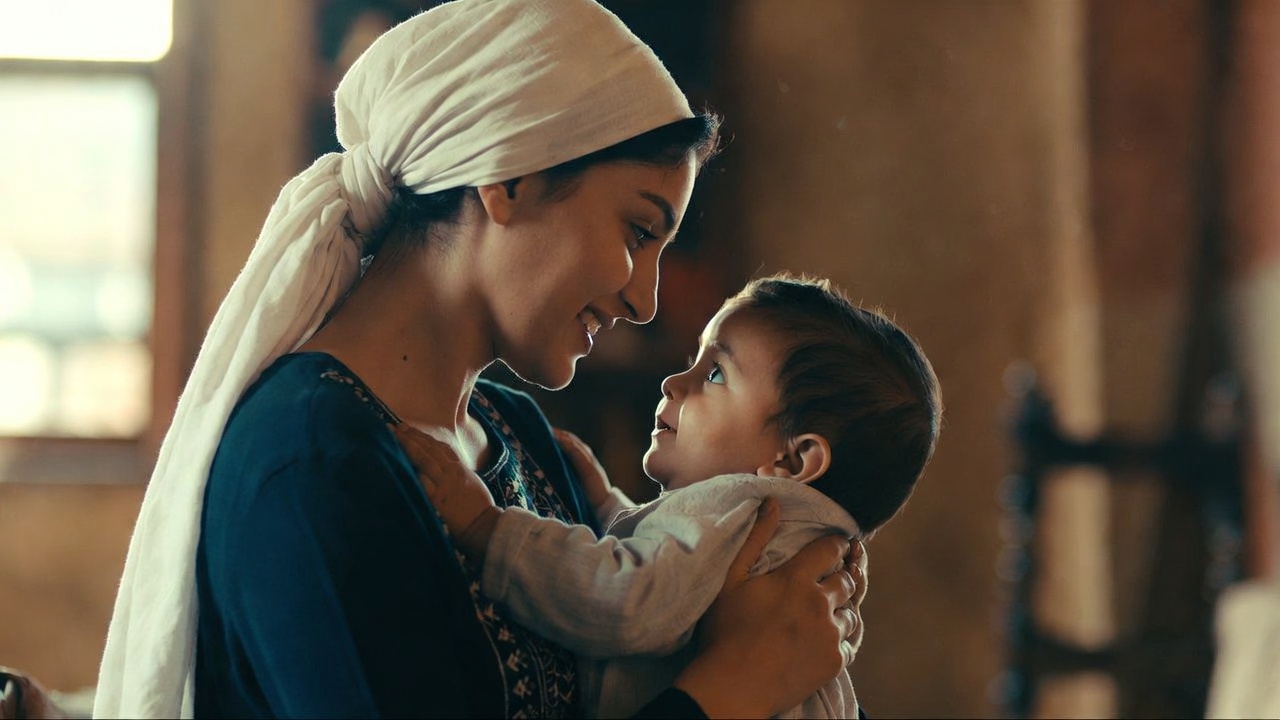
Discover how your native tongue shapes your child’s cognitive abilities, emotional intelligence, and academic success from the earliest stages of life.
Every word you whisper to your newborn carries extraordinary power. Your mother language is not just a communication tool—it’s a brain-building superpower. From the moment of birth, the sounds, rhythms, and patterns of your native tongue begin sculpting neural pathways that will influence your child’s cognitive abilities for a lifetime.
As a researcher who has traveled the globe studying cultural traditions and family customs, I’ve witnessed firsthand how communities preserve their heritage through language. From the storytelling traditions of West African griots to the lullabies sung in remote Himalayan villages, mother tongue transmission remains humanity’s most precious gift to the next generation.
This comprehensive guide explores the fascinating science behind mother language acquisition and brain development. You’ll discover why UNESCO celebrates International Mother Language Day, how bilingual brains develop differently, and practical strategies to nurture your child’s linguistic abilities from infancy through adolescence.
What Is Mother Language and Why Is It Important for Child Development?
Mother language—also called mother tongue, native language, or first language (L1)—refers to the language a child learns first from birth. It’s the language of lullabies, bedtime stories, and family conversations. More importantly, it’s the linguistic foundation upon which all future learning builds.
The importance of mother language extends far beyond simple communication:
| Aspect | Impact on Child Development |
|---|---|
| Cognitive Development | Enhances critical thinking, problem-solving, and abstract reasoning |
| Emotional Bond | Strengthens attachment between parent and child |
| Cultural Identity | Connects children to their heritage and community |
| Academic Success | Provides foundation for literacy and learning |
| Social Skills | Develops nuanced communication abilities |
Research from Harvard University’s Center on the Developing Child confirms that early language experiences directly shape brain architecture. The quality and quantity of language exposure in the first three years significantly predicts later cognitive abilities.
Key fact: Children hear an average of 30 million words by age three. However, this number varies dramatically based on socioeconomic factors and parental engagement. The landmark “30 Million Word Gap” study by Hart and Risley revealed that vocabulary differences emerging by age three persist into adulthood.
How Does Language Acquisition Affect Brain Development in Infants?
The human brain arrives wired for language. Newborns can distinguish between all 800+ phonemes used in human languages worldwide. This remarkable ability begins fading around six months as the brain specializes in native language sounds.
The Neuroscience of Early Language Learning
During the first year of life, several critical processes occur:
- Phonetic Learning — Babies tune their auditory systems to recognize native language sounds
- Statistical Learning — Infants identify word boundaries by detecting syllable patterns
- Social Learning — Face-to-face interaction activates language-processing regions
- Neural Pruning — Unused neural connections weaken while frequently used pathways strengthen
Dr. Patricia Kuhl’s groundbreaking research at the University of Washington Institute for Learning & Brain Sciences demonstrates that babies are “citizens of the world” at birth but become “culture-bound listeners” by their first birthday.
The implications are profound. Every conversation, song, and story in your mother language physically shapes your child’s brain. Neurons that fire together wire together—creating efficient pathways for language processing.
Brain Regions Activated During Mother Tongue Learning
| Brain Region | Function in Language Development |
|---|---|
| Broca’s Area | Speech production and grammar processing |
| Wernicke’s Area | Language comprehension and vocabulary |
| Angular Gyrus | Reading and writing abilities |
| Hippocampus | Memory formation for new words |
| Prefrontal Cortex | Executive function and complex language tasks |
Functional MRI studies reveal that mother language activates deeper emotional processing centers than languages learned later in life. This explains why we dream, count, and express strong emotions in our native tongue—even after decades of living abroad.
What Are the Critical Periods for Language Development in Children?
The concept of critical periods—specific windows when the brain is optimally receptive to certain types of learning—revolutionized our understanding of language acquisition.
Timeline of Language Development Milestones
0-6 Months: The Listening Phase
- Recognizes mother’s voice from birth
- Distinguishes native language from foreign languages
- Begins cooing and vocal play
- Shows preference for infant-directed speech (“parentese”)
6-12 Months: The Babbling Phase
- Produces consonant-vowel combinations
- Babbling reflects native language patterns
- Understands approximately 50 words
- Begins pointing and gesturing
12-18 Months: The First Words Phase
- Speaks first meaningful words
- Vocabulary reaches 50-100 words
- Understands more than can express
- Begins combining gestures with words
18-24 Months: The Vocabulary Explosion
- Learns 9+ new words daily
- Begins two-word combinations
- Vocabulary reaches 200-300 words
- Understands simple instructions
2-5 Years: The Grammar Mastery Phase
- Sentences become increasingly complex
- Masters most grammatical rules
- Vocabulary expands to thousands of words
- Develops narrative abilities
The window between birth and age five represents the most critical period for language development. While language learning remains possible throughout life, the ease and completeness of acquisition diminishes significantly after this window closes.
According to the National Institute on Deafness and Other Communication Disorders (NIDCD), early intervention for language delays produces significantly better outcomes than later intervention—highlighting the importance of the critical period.
Why Is Mother Tongue Education Important for Cognitive Development?
Mother tongue-based multilingual education has emerged as a gold standard in global educational policy. UNESCO advocates strongly for education that begins in the mother tongue before introducing additional languages.
Cognitive Benefits of Learning in Mother Language
Research consistently demonstrates that children educated in their mother tongue:
- Develop stronger literacy skills — Understanding concepts in a familiar language provides solid foundation
- Show better academic performance — Comprehension improves when instruction matches home language
- Demonstrate enhanced critical thinking — Abstract concepts transfer more easily
- Exhibit greater creativity — Comfort with language enables fuller expression
- Display improved memory retention — Information encoded in mother tongue persists longer
A landmark study published in the International Journal of Bilingualism found that children who maintain strong mother tongue skills while learning additional languages outperform monolingual peers on cognitive flexibility tasks.
The Transfer Hypothesis
Linguistic researcher Jim Cummins introduced the Common Underlying Proficiency (CUP) theory, which explains why mother tongue development enhances second language acquisition:
“Conceptual knowledge developed in one language helps to make input in the other language comprehensible.”
In practical terms, this means:
- A child who understands “photosynthesis” in their mother tongue can more easily learn the concept in a second language
- Reading skills developed in the first language transfer to subsequent languages
- Metalinguistic awareness (understanding how language works) applies across all languages
The implication is clear: investing in mother language development is not a detour from learning additional languages—it’s the foundation that makes multilingualism possible.
How Does Mother Language Impact Emotional Development in Children?
Beyond cognitive benefits, mother language profoundly shapes emotional development and psychological wellbeing. The intimate connection between language and emotion begins before birth.
The Emotional Power of Native Language
Fetuses recognize their mother’s voice and native language patterns during the third trimester. This prenatal exposure creates deep emotional associations that persist throughout life.
Consider these remarkable findings:
- Emotional vocabulary is richer in mother tongue — Speakers typically know more words for subtle emotional states in their first language
- Stress responses differ by language — People show stronger physiological reactions to emotional words in their mother tongue
- Dreams occur in native language — Even after years abroad, most people dream in their first language
- Self-talk uses mother tongue — Internal dialogue and self-soothing typically occur in L1
Parent-Child Bonding Through Language
The emotional bond between parent and child strengthens when communication occurs in the parent’s most comfortable language. When parents speak their mother tongue:
| Benefit | Explanation |
|---|---|
| More natural expression | Idioms, humor, and wordplay flow freely |
| Richer vocabulary | Precise emotional language available |
| Cultural transmission | Proverbs, stories, and values shared authentically |
| Confident parenting | Less cognitive load enables fuller presence |
| Deeper conversations | Complex topics discussed more easily |
Child psychologists emphasize that forcing parents to communicate in a non-native language can inadvertently create emotional distance. The parent’s discomfort and limited vocabulary may reduce the quality of interaction.
What Is the Connection Between Mother Language and Cultural Identity?
Language and culture are inseparable. Every language encodes unique worldviews, values, and ways of understanding reality. When children lose their mother tongue, they lose access to cultural knowledge accumulated over generations.
Language as Cultural Repository
Consider what exists within a language:
- Proverbs and wisdom sayings — Condensed life lessons passed through generations
- Folk tales and mythology — Stories that transmit values and explain the world
- Naming conventions — Meaningful connections to ancestors and nature
- Ceremonial language — Sacred expressions for rituals and celebrations
- Environmental knowledge — Indigenous vocabulary for local ecosystems
The Endangered Languages Project estimates that one language dies every two weeks. With each extinction, irreplaceable cultural knowledge disappears forever.
Identity Formation in Bilingual Children
For children growing up with multiple languages, mother tongue maintenance is crucial for healthy identity development. Research shows that children who maintain their heritage language:
- Report stronger ethnic identity and self-esteem
- Demonstrate better relationships with extended family
- Show greater appreciation for cultural diversity
- Experience less identity confusion during adolescence
- Maintain connections to ancestral communities
Conversely, language loss—especially when combined with pressure to assimilate—can create profound identity conflicts and intergenerational communication gaps.
How Does Bilingualism Affect Brain Development in Young Children?
The relationship between mother tongue and additional languages has generated extensive research. The overwhelming consensus: maintaining a strong mother tongue enhances—rather than hinders—second language acquisition.
Benefits of Bilingual Brain Development
Bilingual children who maintain their mother tongue while learning additional languages show:
- Greater cognitive flexibility — Ability to shift between tasks and perspectives
- Enhanced executive function — Improved attention control and working memory
- Delayed cognitive decline — Bilingualism may delay dementia onset by 4-5 years
- Superior metalinguistic awareness — Better understanding of language as a system
- Increased gray matter density — More neural connections in language-related areas
A study from Georgetown University Medical Center found that bilingual individuals use brain regions more efficiently than monolinguals during language tasks.
The Importance of Mother Tongue for Second Language Success
Many parents worry that emphasizing mother tongue will delay second language acquisition. Research proves the opposite:
| Concern | Reality |
|---|---|
| “Mother tongue will confuse my child” | Children easily separate languages by age 2-3 |
| “We should focus only on the majority language” | Strong L1 skills predict strong L2 skills |
| “Speaking mother tongue will cause accent issues” | Multilingual phonetic awareness often enhances pronunciation |
| “School language should dominate at home” | Home language exposure is crucial when school uses different language |
The most successful bilingual outcomes occur when families maintain rich, consistent mother tongue exposure while children naturally acquire additional languages through school and community.
What Are the Best Activities to Support Mother Language Development at Birth to Age Five?
Parents play the primary role in mother language development. The home environment during early childhood determines linguistic outcomes more than any other factor.
Evidence-Based Strategies for Language Development
For Infants (0-12 months):
- Narrate daily activities — Describe diaper changes, meals, and outings
- Sing traditional songs — Lullabies in mother tongue create lasting memories
- Read board books — Point to pictures and name objects
- Respond to babbling — Treat vocalizations as conversation
- Make eye contact — Face-to-face interaction activates language regions
For Toddlers (1-3 years):
- Expand utterances — When child says “milk,” respond “Yes, you want more milk!”
- Ask open-ended questions — “What do you see?” beats “Do you see the dog?”
- Tell family stories — Share narratives about relatives and traditions
- Play pretend games — Dramatic play builds narrative skills
- Limit screen time — Interactive conversation trumps passive viewing
For Preschoolers (3-5 years):
- Read chapter books — Graduate to longer narratives with complex vocabulary
- Teach traditional songs and rhymes — Rhyming builds phonological awareness
- Encourage storytelling — Have children create their own narratives
- Introduce writing — Let children see you write in mother tongue
- Connect with community — Arrange playdates with same-language children
Creating a Language-Rich Home Environment
The American Academy of Pediatrics recommends these environmental factors:
- Print materials in mother tongue — Books, magazines, labels, and posters
- Audio resources — Music, audiobooks, and podcasts in native language
- Video content (limited) — High-quality programming in mother tongue
- Regular routines — Consistent times for reading and conversation
- Extended family contact — Video calls with relatives who speak mother tongue
How Can Parents Maintain Mother Language in a Different Country?
Raising children in a country where the home language differs from the community language presents unique challenges. Heritage language maintenance requires intentional effort but produces lifelong benefits.
Strategies for Heritage Language Maintenance
The “One Parent, One Language” (OPOL) Approach:
- Each parent consistently speaks one language to the child
- Creates clear associations and consistent input
- Works best when both languages receive roughly equal exposure
The “Minority Language at Home” (mL@H) Approach:
- Entire family speaks heritage language at home
- School and community provide majority language exposure
- Often more effective for language maintenance than OPOL
Practical Tips for Heritage Language Success:
| Strategy | Implementation |
|---|---|
| Create need for language | Connect with monolingual grandparents via video call |
| Find community | Join cultural organizations and language playgroups |
| Visit homeland | Extended trips create immersive experiences |
| Hire native speakers | Babysitters and tutors who speak mother tongue |
| Establish traditions | Cultural celebrations conducted entirely in heritage language |
| Access media | Books, movies, and music in mother tongue |
Addressing Common Challenges
Challenge: Child refuses to speak mother tongue
- Solution: Create contexts where mother tongue is necessary and rewarding
- Never punish or shame; focus on positive associations
Challenge: Limited resources in mother tongue
- Solution: Connect with diaspora communities; order materials online
- Create your own resources; record family stories
Challenge: Partner speaks different language
- Solution: Ensure child receives sufficient exposure to each language
- Consider additional tutoring if one language receives less input
The key insight: children acquire languages they need and enjoy using. Parents must create environments where mother tongue feels essential and pleasurable.
What Role Does Mother Language Play in Academic Success and School Readiness?
Children who enter school with strong mother tongue skills—regardless of the language of instruction—demonstrate better academic outcomes. This counterintuitive finding has revolutionized educational policy worldwide.
The Foundation for Literacy
Reading and writing build on oral language foundations. Children need:
- Phonological awareness — Understanding that words contain smaller sound units
- Vocabulary knowledge — Knowing meanings of words
- Narrative skills — Ability to understand and create stories
- Print awareness — Understanding how written language works
- Background knowledge — Understanding of the world that makes texts meaningful
All of these skills develop first in mother tongue and then transfer to additional languages. A child with strong narrative skills in Spanish, for example, understands story structure—a skill that transfers when learning to read in English.
Research on Mother Tongue and Academic Achievement
Studies from diverse contexts consistently show:
- Indigenous children educated initially in mother tongue outperform peers — Research from Papua New Guinea, Guatemala, and elsewhere confirms this pattern
- Immigrant children maintaining heritage language show academic advantages — Contrary to assimilation assumptions
- Subtractive bilingualism (losing L1 while learning L2) harms achievement — Both languages suffer when mother tongue is abandoned
The World Bank now recommends mother tongue-based multilingual education as a key strategy for improving learning outcomes in developing nations.
Preparing Your Child for School Success
Before formal schooling begins, ensure your child has:
- Rich oral vocabulary in mother tongue — Thousands of words across many topics
- Experience with stories and books — Understanding of narrative structure
- Phonological awareness activities — Rhyming, syllable counting, sound games
- Concepts about print — Books have covers, pages turn, text goes left to right
- Fine motor development — Readiness for writing through drawing and manipulation
These skills transfer across languages and provide the foundation for academic success regardless of the language of instruction.
Why Do Experts Celebrate International Mother Language Day?
February 21st marks International Mother Language Day, established by UNESCO in 1999 to promote linguistic diversity and multilingual education worldwide.
The History Behind the Day
The date commemorates students who died in 1952 protesting for the right to use their mother tongue—Bengali—in East Pakistan (now Bangladesh). Their sacrifice reminds us that language rights are human rights.
Key Themes and Messages
International Mother Language Day emphasizes:
- Linguistic diversity as heritage — The world’s 7,000+ languages represent irreplaceable human knowledge
- Mother tongue education — Children learn best in familiar languages
- Multilingualism for understanding — Multiple languages promote intercultural dialogue
- Endangered language preservation — Urgent action needed to document and revitalize threatened languages
- Language rights — Access to education and services in mother tongue
How Families Can Celebrate
| Activity | Description |
|---|---|
| Share family stories | Tell tales from your cultural heritage |
| Cook traditional foods | Discuss recipes and ingredients in mother tongue |
| Learn about endangered languages | Explore linguistic diversity together |
| Create bilingual art | Make projects featuring both languages |
| Connect with community | Attend cultural events and celebrations |
What Does the Future Hold for Mother Language Education?
Global recognition of mother tongue importance continues growing. Educational policies increasingly embrace multilingual approaches that honor home languages while building additional linguistic competencies.
Emerging Trends
Technology for Language Preservation:
- Apps and digital tools for endangered language learning
- AI-powered translation and transcription
- Online communities connecting diaspora speakers
- Digital archives preserving oral traditions
Educational Innovation:
- Translanguaging pedagogies that honor all students’ languages
- Mother tongue-based multilingual education expansion
- Recognition of home languages in curriculum and assessment
- Teacher training in linguistically responsive practices
Research Advances:
- Brain imaging revealing bilingual advantages
- Longitudinal studies tracking heritage language outcomes
- Community-based participatory research on language revitalization
- Interdisciplinary collaboration between linguists, educators, and neuroscientists
Taking Action for Your Child’s Linguistic Future
Your choices today shape your child’s linguistic trajectory. Consider these principles:
- Value your mother tongue — It’s not an obstacle; it’s an asset
- Invest in language development — Time and resources devoted to mother tongue pay dividends
- Seek community — Connect with others who share your language
- Advocate for policies — Support mother tongue education in schools
- Document and preserve — Record stories, songs, and traditions for future generations
Conclusion: Embracing the Superpower of Your Mother Language
Your mother tongue is far more than a communication system—it’s a cognitive enhancer, emotional connector, cultural repository, and academic foundation all in one. The science is clear: children who develop strong mother language skills enjoy advantages that persist throughout life.
Whether you’re raising children in your homeland or navigating multilingualism abroad, prioritizing mother tongue development represents one of the most important investments you can make in your child’s future.
Every lullaby you sing, every story you tell, every conversation you share in your native language physically shapes your child’s developing brain. You are literally building neural architecture with your words.
The traditions, wisdom, and worldview encoded in your mother tongue deserve preservation and transmission. Your children deserve access to the full richness of their linguistic heritage.
As we’ve explored throughout this guide, mother language matters for:
- Brain development — Neural pathways optimized for language processing
- Cognitive abilities — Enhanced critical thinking and problem-solving
- Emotional wellbeing — Deeper parent-child bonds and identity formation
- Academic success — Foundation for literacy and learning
- Cultural connection — Access to ancestral knowledge and community
The superpower of words awaits. Embrace your mother language. Share it generously with your children. Watch their minds flourish.
Did you find this guide helpful? Share it with parents and educators who value the importance of mother language. Together, we can ensure every child receives the gift of their linguistic heritage.
Frequently Asked Questions About Mother Language and Brain Development
Q: At what age should I introduce a second language to my child? A: There’s no single “right” age. Ensure mother tongue remains strong while adding languages. Children can successfully acquire multiple languages simultaneously from birth if each receives consistent, quality exposure.
Q: Will my child be confused by hearing multiple languages? A: No. Research consistently shows that children differentiate languages easily. Temporary mixing (code-switching) is normal and indicates bilingual competence, not confusion.
Q: My child attends school in a different language. Should we speak that language at home? A: Generally, no. Your child will receive school language exposure at school. Home provides the primary (often only) opportunity for mother tongue development.
Q: What if my partner and I speak different mother tongues? A: This can be an advantage! Each parent can provide rich input in their native language. Consistency matters more than the specific approach chosen.
Q: Is it too late if my older child has lost interest in mother tongue? A: It’s never too late. Reconnecting with heritage language is possible at any age, though it may require different strategies than early childhood acquisition.