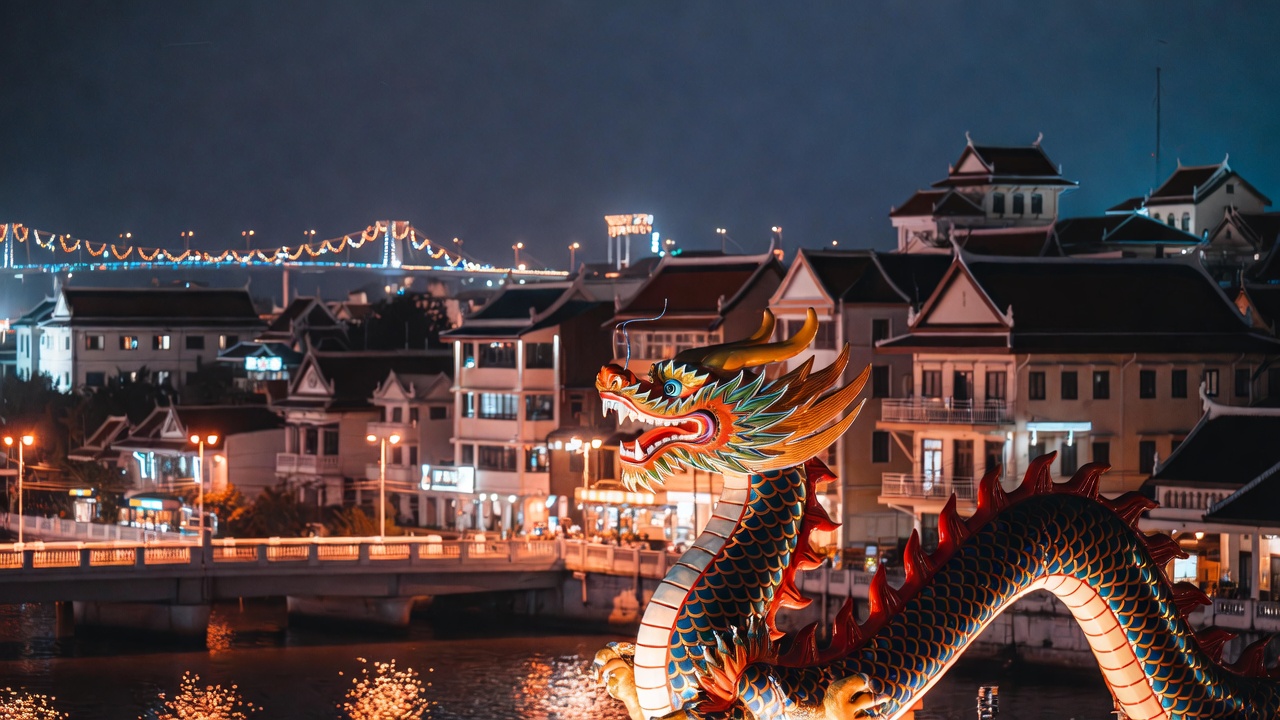
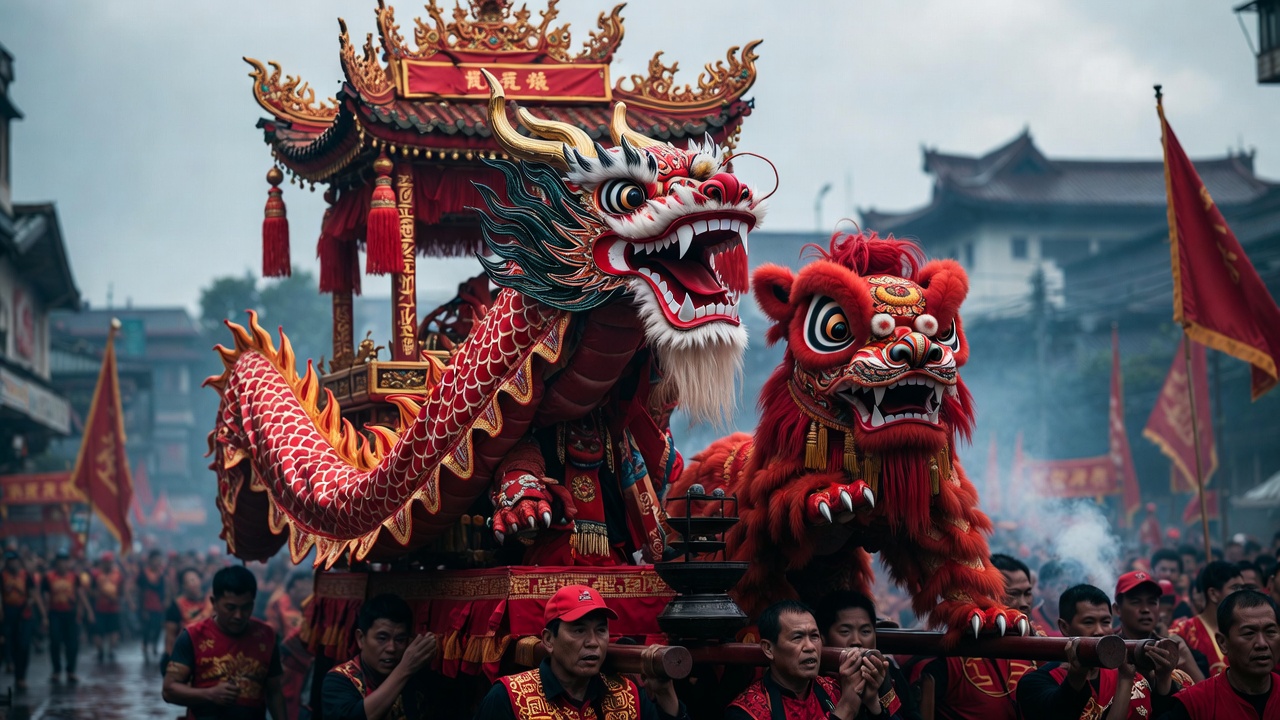
The air crackles with the thunderous rhythm of drums. Golden dragons weave through streets draped in crimson banners. The scent of incense mingles with sizzling street food. This is not Beijing, Hong Kong, or Singapore. This is Pak Nam Pho, Nakhon Sawan, Thailand—home to one of Southeast Asia’s most spectacular Chinese New Year celebrations and the largest dragon parade outside of Bangkok.
For over 110 years, this riverside city has transformed into a living canvas of Chinese-Thai heritage every Lunar New Year. While tourists flock to Bangkok’s Yaowarat district, seasoned travelers know that the real magic happens three hours north, where the Ping and Nan rivers merge to birth the mighty Chao Phraya. Here, tradition runs deeper, crowds feel more intimate, and the golden dragons dance with a spirit found nowhere else in Thailand.
What is Pak Nam Pho Chinese New Year Festival and Why Does It Matter?
The Pak Nam Pho Chinese New Year Festival stands as one of Thailand’s most significant cultural celebrations outside the capital. Dating back to 1914, this 12-day festival represents over a century of unbroken tradition passed down through generations of Thai-Chinese families.
The festival centers on the Chao Pho-Chao Mae Pak Nam Pho Procession, a sacred ritual honoring the deities enshrined at the historic Chao Pho Theparak-Chao Mae Thapthim Shrine. This shrine, built more than 150 years ago on the banks where four rivers converge, serves as the spiritual heart of Nakhon Sawan’s Chinese community.
What makes this celebration unique is its authenticity. Unlike commercialized festivals in major tourist destinations, Pak Nam Pho retains the genuine character of a community celebration. The Tourism Authority of Thailand describes it as “one of Thailand’s largest Chinese New Year celebrations outside Bangkok,” known for its multi-day format and signature day-and-night processions.
The Cultural Significance of Pak Nam Pho
The name “Pak Nam Pho” translates roughly to “the mouth of the Pho River.” This geographic designation marks the exact point where Thailand’s central lifeline, the Chao Phraya River, begins its journey southward to the Gulf of Thailand. For Chinese merchants who settled here in the 19th century, this location represented prosperity and opportunity.
Thai-Chinese communities form a vital part of Thailand’s cultural fabric. According to demographic studies, people of Chinese descent account for 11 to 14 percent of Thailand’s total population, making it the largest overseas Chinese community in the world. Unlike in some Southeast Asian nations, Thai-Chinese have integrated remarkably well into society while maintaining distinct cultural traditions.
The Pak Nam Pho celebration embodies this harmonious blending. You’ll witness Buddhist monks offering blessings alongside Taoist rituals. Thai street food vendors serve alongside traditional Chinese dim sum stalls. The festival belongs to everyone, regardless of ancestry.
When is Chinese New Year 2026 in Thailand? Complete Festival Dates
Chinese New Year 2026 falls on Tuesday, February 17, 2026, marking the beginning of the Year of the Horse according to the Chinese zodiac. However, celebrations in Thailand span multiple days, with the Pak Nam Pho festival traditionally running for 12 days and 12 nights.
Key Dates for Pak Nam Pho Chinese New Year Festival 2026
| Event | Expected Date | Time |
|---|---|---|
| Festival Opening | Early February 2026 | Evening |
| Night Parade (Chiew Sa) | Late January/Early February 2026 | Night |
| Day Parade (Chiew Si) | Following morning after night parade | Morning |
| Main Procession | Around Chinese New Year’s Day | All day |
| Festival Closing | Approximately 12 days after opening | Evening |
Note: Exact 2026 dates will be announced by local authorities closer to the event. Based on the 2025 festival schedule, expect activities from late January through mid-February 2026.
The Three Sacred Days of Chinese New Year in Thailand
Thai-Chinese families traditionally observe three specific days:
Pay Day (February 15, 2026): Families shop for food, fruits, and offerings for deities and ancestors. Markets bustle with activity as people purchase auspicious items.
Worship Day (February 16, 2026): This sacred day involves paying respects to gods, guardian spirits, and deceased ancestors. Elaborate meals are prepared as offerings.
Travel Day (February 17, 2026): The official first day of the new year when families visit relatives and travel together. Shops display red banners bearing messages of prosperity.
How to Experience Thailand’s Most Famous Golden Dragon Parade
The highlight of the Pak Nam Pho celebration is undoubtedly the Golden Dragon Parade. These processions represent far more than entertainment—they carry deep spiritual significance for the community.
Understanding the Night Parade (Chiew Sa)
The Chiew Sa (Night Parade) transforms Nakhon Sawan into a realm of wonder. Streets glow with thousands of lanterns. The rhythmic beating of drums and crashing cymbals announce the approach of magnificent golden dragons.
These dragons are not merely decorative. In Chinese culture, the dragon symbolizes wisdom, power, prosperity, and good fortune. Unlike the fire-breathing monsters of Western mythology, Chinese dragons are benevolent creatures associated with water, rain, and agricultural abundance. The serpentine movements of the parade dragons mimic imagined creatures flying through clouds and water.
What to expect during the Night Parade:
- Multiple dragon troupes performing in succession
- Lion dance performances with acrobatic pole-climbing
- Traditional Chinese opera performances
- Fireworks and firecrackers
- Processions of community leaders and devotees
- Sedan chairs carrying sacred deity statues
The Morning Procession (Chiew Si)
The Chiew Si (Day Parade) offers a different energy. Taking place early in the morning, this procession carries more solemn religious significance. Devotees dress in traditional attire to accompany the sacred statues of Chao Pho Theparak and Chao Mae Thapthim through the streets.
This morning procession represents the deities’ blessing upon the community. Locals line the streets, bowing in respect and making offerings as the procession passes. Participating in this parade is considered auspicious for the coming year.
Tips for Viewing the Dragon Parade
Arrive Early: Prime viewing spots fill quickly. Position yourself at least one hour before scheduled parade times.
Bring Cash: Street vendors do not accept cards. ATMs become crowded during the festival.
Wear Red: Dressing in red brings good luck and helps you blend with the celebratory atmosphere.
Protect Your Ears: Firecrackers and drums create significant noise. Consider bringing earplugs, especially for children.
Stay Hydrated: Despite cooler February temperatures, standing in crowds generates heat.
Where to Find the Best Chinese New Year Street Food in Nakhon Sawan
No festival experience is complete without sampling the extraordinary food. The Pak Nam Pho area transforms into a sprawling food paradise with over 100 stalls serving Thai-Chinese delicacies.
Traditional Festival Foods and Their Meanings
| Food Item | Thai-Chinese Name | Symbolic Meaning |
|---|---|---|
| Whole Steamed Chicken | Gai Tom | Prosperity, wholeness, family unity |
| Roasted Duck | Ped Yang | Happiness, fidelity |
| Mandarin Oranges | Som | Wealth and good fortune |
| Sticky Rice Cake | Nian Gao | Growth, advancement, success |
| Long Noodles | Ba Mee | Longevity |
| Fish | Pla | Abundance (surplus) |
| Dumplings | Jiao Zi | Wealth (shaped like gold ingots) |
Must-Try Street Food at Pak Nam Pho Festival
Dim Sum: Small steamed or fried dumplings filled with pork, shrimp, or vegetables. Festival vendors prepare these fresh throughout the day.
Hainan Chicken Rice: A Thai-Chinese classic featuring poached chicken over fragrant rice, served with ginger sauce, sweet soy, and chili.
Roasted Duck: Crispy-skinned duck glazed with honey and five-spice, a centerpiece of festival tables.
Chinese Pastries: Sweet and savory baked goods including pineapple cakes, wife cakes, and mooncake-style treats.
Ba Kut Teh: Pork rib soup with herbs—a warming dish perfect for cool February evenings.
Festival Zone Highlights for 2026
Based on recent festivals, expect these dedicated zones:
Wonder Food: A dedicated culinary paradise showcasing the best festival treats.
Wonder Faith: Spiritual activities, shrine worship, and blessing ceremonies.
Wonder Five: Celebrating the unity of Thailand’s five Chinese ethnic groups (Teochew, Hakka, Hainanese, Hokkien, and Cantonese).
Wonder Fun: Entertainment, games, and modern performances.
Wonder Festival: The main parade ground and cultural showcase area.
The Sacred Shrines of Pak Nam Pho: Spiritual Heart of the Festival
The Pak Nam Pho celebration draws its spiritual power from several historic Chinese shrines. Visiting these sacred sites offers deeper insight into the festival’s religious dimensions.
Chao Pho Theparak-Chao Mae Thapthim Shrine
This riverside shrine represents the spiritual nucleus of Nakhon Sawan’s Chinese community. According to historical records, a Chinese bronze bell inscribed with the date 1870 was discovered here, indicating the shrine existed during the reign of King Chulalongkorn (Rama V).
The shrine houses three primary deities:
Chao Pho Theparak (Pueng Thao Kong): The presiding deity, revered as a protector who grants wealth, success, and good fortune.
Goddess Thapthim (Mazu): The sea goddess worshipped by Hainanese communities, protector of sailors and those who travel by water.
Guan Yu: The god of war, loyalty, and righteousness, popular among business owners seeking protection.
Location: Nakhon Sawan-Chum Saeng Road, right bank of the Chao Phraya River
Architecture: Traditional half-timbered structure raised on high stilts, featuring red ceilings and pillars with modest Chinese-style decorations. The building was reconstructed in 1909 and incorporates elements of an earlier Guan Yu shrine.
Chao Mae Na Pha Shrine
Located on Kosi Road about 10 minutes from the main shrine, the Chao Mae Na Pha Shrine sits where a soaring cliff once rose above the Ping River. Local folklore tells of two grandparents in 1947 who dreamed that Chao Mae Na Pha floated down the river from Ayutthaya.
This shrine offers worship to Guan Yu, Chao Mae Sawan, and Chai Xing Ai (God of Fortune and Wealth).
Chao Pho Mangkon Thong Shrine
Situated on Sawan Withi Road, this shrine dedicated to the Golden Dragon Lord completes the trinity of major worship sites for festival pilgrims.
Shrine Etiquette for Visitors
Dress modestly: Avoid shorts, sleeveless tops, and revealing clothing.
Remove shoes: Most shrines require removing footwear before entering.
Ask permission before photographing: Some areas prohibit photography.
Light incense respectfully: If participating in offerings, handle materials with care.
Maintain quiet reverence: These are active places of worship, not museums.
How to Get to Nakhon Sawan from Bangkok for Chinese New Year
Nakhon Sawan lies approximately 250 kilometers (155 miles) north of Bangkok. Several transport options connect the two cities, each with distinct advantages.
Transportation Options Comparison
| Method | Duration | Cost (THB) | Comfort Level | Frequency |
|---|---|---|---|---|
| Bus | 3.5-4 hours | 180-350 | Moderate-High | Multiple daily |
| Train | 3.5-5.5 hours | 145-1,400 | Moderate-High | Every 4 hours |
| Minivan | 3 hours | ~180 | Basic | When full |
| Private Car | 2.5-3 hours | 3,000-6,000 | High | On demand |
| Drive Yourself | 2.5-3 hours | Varies | High | Flexible |
By Bus (Most Popular Option)
Buses depart from Mo Chit Bus Terminal (also called Chatuchak Bus Terminal or Mo Chit 2) in northern Bangkok. The station is accessible via:
- BTS Skytrain to Mo Chit Station (10-minute taxi ride from station)
- MRT subway to Chatuchak Park Station
Bus operators: Sombat Tour and Transport Co. operate comfortable air-conditioned buses with reclining seats.
Travel tip: Book tickets in advance during festival season through Thai Ticket Major or directly at the bus station.
By Train (Most Scenic Route)
Trains depart from Krung Thep Aphiwat Central Terminal (the new Grand Central Station that replaced Hua Lamphong for long-distance routes). The train arrives at Pak Nam Pho Station, conveniently located near the festival area.
Classes available:
- Third Class Seat (Fan): Affordable, basic seating
- Second Class Seat: Air-conditioned, comfortable
- Second Class Sleeper: For overnight journeys
- First Class Sleeper: Premium option
The train journey offers scenic views of the Central Plains and represents a quintessential Thai travel experience.
By Private Vehicle
For families or groups, hiring a private van or car provides maximum flexibility. Expect to pay 3,000-6,000 THB depending on vehicle type and negotiation.
Route: Take Highway 1 (Phahonyothin Road) north from Bangkok. The journey passes through Ayutthaya before reaching Nakhon Sawan.
Driving tip: During festival periods, traffic near Nakhon Sawan can be heavy. Allow extra time.
Best Hotels Near Pak Nam Pho for Chinese New Year Festival 2026
Accommodation fills rapidly during the festival. Booking 2-3 months in advance is essential for the best options.
Hotel Categories and Price Ranges
| Category | Price Range (THB/night) | Examples |
|---|---|---|
| Budget | 500-800 | Guesthouses, basic hotels |
| Mid-range | 800-2,000 | Modern hotels with amenities |
| Upper Mid-range | 2,000-3,500 | Business hotels, resorts |
| Premium | 3,500+ | Luxury options |
Recommended Hotels Near the Festival
Grand Vissanu Hotel: Located approximately 1 kilometer from the shrine area, this established hotel offers comfortable rooms and convenient access to festival activities.
B2 Nakhonsawan Premier Hotel: A modern property with good amenities, situated close to the city center.
P.A. Thani Hotel: Approximately 1.5 kilometers from the main festival grounds, offering reliable mid-range accommodation.
The Paradiso JK Design Hotel: A boutique option for travelers seeking contemporary design and comfort.
Beverly Hill Park Hotel: Offers resort-style amenities with slightly more distance from the city center.
Booking Tips
- Book directly with hotels for potential discounts
- Check cancellation policies carefully
- Confirm location relative to festival venues
- Arrange transport in advance for festival nights
- Consider staying two nights to experience both parade days
Complete Itinerary: 3 Days at Pak Nam Pho Chinese New Year Festival
This sample itinerary maximizes your festival experience while allowing time to explore Nakhon Sawan’s other attractions.
Day 1: Arrival and Evening Exploration
Morning/Afternoon:
- Depart Bangkok early (7:00 AM bus or train recommended)
- Arrive Nakhon Sawan by noon
- Check into hotel and rest
- Light lunch at a local restaurant
Late Afternoon (5:00 PM):
- Walk to Chao Pho Theparak-Chao Mae Thapthim Shrine
- Make offerings and observe worship rituals
- Photograph the riverside setting at golden hour
Evening (7:00 PM onwards):
- Explore the festival market stalls
- Sample street food from multiple vendors
- Watch Chinese opera performances
- Experience the festive atmosphere
Day 2: The Big Parade Day
Early Morning (6:00 AM):
- Wake early to secure position for morning procession
- Light breakfast from street vendors
- Participate in or observe the Day Parade (Chiew Si)
Mid-Morning:
- Visit additional shrines
- Photograph decorated streets and dragon sculptures
- Rest at hotel during midday heat
Afternoon (3:00 PM):
- Explore Dechatiwong Bridge with its iconic dragon lighting sculptures
- Visit the Pasan viewing platform at the origin of the Chao Phraya River
- Photography of the four-river confluence point
Evening (7:00 PM onwards):
- Secure prime position for Night Parade (Chiew Sa)
- Experience the full spectacle of golden dragons
- Enjoy fireworks and evening performances
- Late dinner at festival food stalls
Day 3: Cultural Exploration and Departure
Morning:
- Visit Bueng Boraphet, Thailand’s largest freshwater lake (30 minutes from city)
- Boat tour to observe wildlife
- Return to city for lunch
Early Afternoon:
- Final shopping for souvenirs and lucky charms
- Pack and check out of hotel
Late Afternoon:
- Depart for Bangkok
- Evening arrival in the capital
Cultural Etiquette: How to Respectfully Participate in Thai-Chinese New Year
Understanding local customs enhances your experience and shows respect for the community opening their celebration to visitors.
Color Symbolism and Dress Code
Red: The dominant color symbolizing luck, prosperity, and protection from evil spirits. Wearing red demonstrates participation in the festivities.
Gold: Represents wealth and imperial authority. Gold accessories and decorations complement red attire.
Colors to avoid: Black and white are traditionally associated with mourning. While not prohibited, they may seem out of place.
Gift-Giving Traditions
If invited into a local home or offered hospitality:
- Mandarin oranges: An appropriate and welcomed gift symbolizing wealth
- Red envelopes (Ang Pao): If given as gifts, use crisp new banknotes
- Avoid: Clocks (associated with death), sharp objects (cutting relationships), or gifts in sets of four (unlucky number)
Respectful Behavior at Shrines and Ceremonies
- Bow slightly when approaching deity statues
- Do not point feet toward sacred objects or people
- Accept offerings graciously if offered food or items from altars—refusing can be considered rude
- Reciprocate kindness—Thai-Chinese tradition expects reciprocal generosity
Photography Guidelines
- Ask permission before photographing people, especially during rituals
- Avoid flash photography inside shrines
- Do not photograph funeral processions that may coincide with celebrations
- Respect restricted areas marked by signs or ropes
The History of Chinese Migration to Nakhon Sawan and Thailand
Understanding the historical context deepens appreciation for the Pak Nam Pho celebration’s significance.
Early Chinese Settlement in Thailand
Chinese traders have connected with the region now known as Thailand since at least the 13th century during the Ayutthaya Kingdom period. However, large-scale migration began in earnest during the 19th century when waves of Chinese immigrants sought economic opportunities.
The Chinese population in Thailand grew from approximately 230,000 in 1825 to 792,000 by 1910. By 1932, ethnic Chinese comprised about 12.2 percent of Thailand’s total population.
Why Nakhon Sawan Became a Chinese Hub
Nakhon Sawan’s strategic location made it naturally attractive to Chinese merchants:
Geographic advantage: The city sits at the birthplace of the Chao Phraya River, where the Ping and Nan rivers merge. This confluence point served as a crucial commercial crossroads between northern and central Thailand.
Trading opportunities: Chinese merchants dominated river trade, transporting rice, teak, and other goods between regions.
Community support: Early arrivals helped subsequent migrants establish themselves, creating self-reinforcing community growth.
The Five Chinese Dialect Groups of Nakhon Sawan
The Thai-Chinese community comprises several dialect groups, each with distinct cultural traditions:
| Group | Percentage | Region of Origin | Notable Characteristics |
|---|---|---|---|
| Teochew | ~56% | Chaoshan, Guangdong | Largest group, dominant in commerce |
| Hakka | ~16% | Various provinces | Known for hardiness and frugality |
| Hainanese | ~12% | Hainan Island | Strong maritime traditions |
| Hokkien | ~7% | Fujian Province | Trading networks throughout Asia |
| Cantonese | ~7% | Guangdong Province | Culinary and artistic influences |
This diversity is celebrated in the festival’s Wonder Five zone, showcasing each group’s unique contributions.
Integration and Assimilation
Unlike some Southeast Asian countries where ethnic tensions persist, Thailand’s Chinese community has integrated remarkably well. Several factors contributed:
Royal patronage: King Taksin, who reunited Thailand after the fall of Ayutthaya in 1767, was himself the son of a Chinese immigrant. He actively encouraged Chinese settlement and trade.
Intermarriage: Early Chinese immigrants were predominantly male. Marriage with Thai women created generations of mixed-heritage families.
Adoption of Thai identity: In the 1920s-1950s, policies required Chinese residents to adopt Thai surnames to obtain citizenship. This administrative change accelerated cultural blending.
Today, Thai-Chinese individuals occupy positions at all levels of Thai society—business, politics, arts, and academia. Several former prime ministers have acknowledged Chinese ancestry.
Beyond the Festival: Other Attractions in Nakhon Sawan
Extend your visit to discover what else this “Heavenly City” offers.
Bueng Boraphet: Thailand’s Largest Freshwater Lake
Located approximately 6 kilometers east of the city center, this 224-square-kilometer lake and wetland supports diverse ecosystems. Activities include:
- Boat tours through lotus-filled waterways
- Bird watching (over 180 species recorded)
- Freshwater aquarium visit
- Floating restaurants serving local fish dishes
The Origin of the Chao Phraya River (Pasan)
In 2016, the Department of Tourism invested 117 million baht to construct a modern viewing platform at the exact point where the Ping, Wang, Yom, and Nan rivers meet. The structure offers:
- Panoramic views of the four-river confluence
- Historical displays about Nakhon Sawan
- Photo opportunities at a significant geographic landmark
- Cool breezes from the riverside setting
Wat Khiriwong (Golden Temple)
This hilltop temple offers spectacular city views and houses significant Buddhist relics. The climb up the temple stairs provides exercise and rewards visitors with panoramic vistas.
Nakhon Sawan Tower
For the best elevated perspective of the city and surrounding landscape, visit this observation tower. Particularly beautiful at sunset when the rivers shimmer with reflected light.
Local Markets
Pak Nam Pho Market: The historic trading center, still operating along classic shophouse-lined streets. Find silverware, traditional clothing, farm tools, and local cuisine.
Planning Your Trip: Practical Tips for Chinese New Year 2026
Best Time to Visit
The festival typically runs for 12 days, with the most spectacular events (parades) occurring in the final 2-3 days. For the complete experience:
Full immersion: Arrive at the festival’s midpoint to experience building excitement before parade days.
Weekend warriors: Time your visit to include at least one parade evening.
Photography focus: Consider arriving early in the festival when crowds are smaller for detailed shots of decorations.
Weather Considerations
February falls within Thailand’s cool and dry season. Expect:
- Daytime temperatures: 25-32°C (77-90°F)
- Evening temperatures: 18-24°C (64-75°F)
- Low humidity
- Minimal rainfall
Packing suggestions:
- Light layers for cool evenings
- Comfortable walking shoes
- Sun protection (hat, sunscreen)
- Small backpack for purchases
- Reusable water bottle
Budget Planning
| Expense Category | Budget Traveler | Mid-Range | Comfortable |
|---|---|---|---|
| Accommodation (per night) | 500-800 THB | 1,000-2,000 THB | 2,500-4,000 THB |
| Food (per day) | 300-500 THB | 500-1,000 THB | 1,000-2,000 THB |
| Transport from Bangkok | 180-350 THB | 350-500 THB | 2,000-5,000 THB |
| Activities/Shopping | 500-1,000 THB | 1,000-3,000 THB | 3,000+ THB |
| Total (3-day trip) | 3,500-5,500 THB | 7,000-12,000 THB | 15,000-30,000 THB |
Health and Safety
General safety: Nakhon Sawan is a relatively safe city, but standard precautions apply:
- Secure valuables in crowds
- Stay aware of pickpocket risks during busy events
- Keep copies of important documents
Health considerations:
- Stay hydrated despite cooler temperatures
- Pace yourself during parade-watching marathons
- Bring necessary medications as pharmacies may be closed during festival days
Communication
English availability: Limited in Nakhon Sawan compared to tourist centers. Consider:
- Translation apps on your phone
- Key phrases in Thai written down
- Hotel staff assistance for arrangements
Mobile connectivity: Thai SIM cards from major providers (AIS, DTAC, TrueMove) offer reliable coverage.
Frequently Asked Questions About Pak Nam Pho Chinese New Year
Is Pak Nam Pho Chinese New Year worth visiting instead of Bangkok?
Absolutely. The Pak Nam Pho celebration offers a more authentic, less commercialized experience than Bangkok’s Yaowarat district. You’ll witness genuine community traditions rather than tourist-oriented performances. The golden dragon parade in Nakhon Sawan is particularly renowned—some consider it to rival any dragon parade in Asia.
Can non-Chinese visitors participate in the celebrations?
Yes. Thai-Chinese communities warmly welcome visitors of all backgrounds. This openness reflects Thailand’s broader cultural hospitality. Wear red, show respect at shrines, and locals will often include you in their celebrations.
How crowded does the festival get?
The final parade days attract over 100,000 visitors. Prime viewing spots require early arrival, but the atmosphere remains festive rather than overwhelming. Outside parade times, exploring is comfortable.
Is the festival suitable for children?
Yes, with preparation. Children enjoy the colorful parades, street food, and festive atmosphere. However, bring ear protection for loud firecrackers and drums. Plan rest breaks during hot afternoon periods.
What if I visit outside the main parade days?
The festival runs for 12 days, with activities throughout. You’ll still experience decorated streets, market stalls, cultural performances, and shrine activities. Only the major processions are limited to specific days.
Do I need to speak Thai or Chinese to enjoy the festival?
No. Visual spectacle transcends language barriers. For deeper understanding, consider hiring a local guide or joining an organized tour. Many younger Thai-Chinese speak some English.
The Enduring Spirit of Pak Nam Pho: A Living Tradition
As fireworks illuminate the night sky and golden dragons disappear into the darkness, the Pak Nam Pho Chinese New Year Festival reminds us why such traditions matter. In a rapidly modernizing world, these celebrations preserve connections to ancestral wisdom, strengthen community bonds, and create shared memories across generations.
The Thai-Chinese community of Nakhon Sawan has maintained this tradition for over 110 years—through world wars, economic crises, and social transformations. Each year, descendants of 19th-century immigrants gather with neighbors, honoring the same deities their great-great-grandparents worshipped at this riverside shrine.
For travelers, witnessing this celebration offers something increasingly rare: authentic cultural immersion without the filter of tourism industry packaging. The golden dragons of Pak Nam Pho dance not for cameras but for community. The offerings at ancient shrines are not performances but genuine acts of devotion. The food in market stalls is what local families actually eat, not tourist menus.
As you plan your visit to the 2026 Pak Nam Pho Chinese New Year Festival, remember that you’re not simply attending an event. You’re participating in a living tradition that connects contemporary Thailand to centuries of Chinese-Thai heritage, geographic destiny, and human hope for prosperity, happiness, and good fortune in the year ahead.
Gong Xi Fa Cai! May your visit to Pak Nam Pho bring abundant blessings for the Year of the Horse.
Quick Reference: Essential Information
| Information | Details |
|---|---|
| Location | Nakhon Sawan Province, Thailand (250 km north of Bangkok) |
| Chinese New Year 2026 | February 17, 2026 |
| Festival Duration | Approximately 12 days |
| Main Shrine | Chao Pho Theparak-Chao Mae Thapthim Shrine |
| Getting There | Bus (3.5-4 hours), Train (3.5-5 hours), Car (2.5-3 hours) |
| Best Time to Visit | Final 3 days for parades; full festival for complete experience |
| Budget | 3,500-30,000 THB for 3-day trip depending on style |
| Language | Thai (limited English); translation apps recommended |
| Currency | Thai Baht (THB); cash preferred at festival |
The Art and Craft of Golden Dragon Making: Behind the Scenes
The magnificent golden dragons that steal the show at Pak Nam Pho are not mere props—they represent months of skilled craftsmanship and community collaboration.
Traditional Dragon Construction Methods
Creating a festival dragon requires the combined efforts of multiple artisans working with techniques passed down through generations.
The Frame: Dragon frames traditionally use lightweight bamboo, though modern versions may incorporate aluminum for durability. A typical parade dragon spans 25 to 50 meters in length, requiring careful engineering to ensure performers can manipulate it smoothly.
The Skin: Fabric coverings feature intricate embroidery and sequin work. The signature golden hue comes from metallic thread woven through silk or synthetic materials. Each scale is often individually attached by hand.
The Head: The dragon’s head receives the most detailed attention. Features include movable eyes, a hinged jaw, and elaborate whisker arrangements. Some heads weigh 30 kilograms or more, requiring substantial skill from the lead performer.
Symbolism in Dragon Design
Every element of dragon design carries meaning:
The Pearl: Dragons often chase a flaming pearl, representing wisdom, enlightenment, and the pursuit of perfection.
Number of Claws: Imperial Chinese dragons traditionally featured five claws, reserved for royalty. Common dragons display three or four claws.
Coloring: While gold dominates Pak Nam Pho dragons (symbolizing prosperity and imperial authority), other colors carry significance—green for good harvests, blue for serenity, red for good fortune.
Dragon Dance Performance Teams
Behind every dragon lies a dedicated performance troupe. Team members train year-round, developing the stamina and coordination required to bring the dragon to life.
A standard parade dragon requires:
- 1 lead performer: Controls the head and sets the pace
- 8-15 body performers: Support and undulate the dragon’s length
- Drum team: Provides rhythmic guidance
- Support crew: Manages route coordination and safety
Teams often compete informally, with audiences recognizing superior performances through crowd reactions and word-of-mouth reputation.
Lion Dance Traditions: The Dragon’s Companion Performance
While dragons steal headlines, lion dances form an equally important part of Pak Nam Pho celebrations. Understanding lion dance traditions enhances appreciation of the full festival experience.
Northern vs. Southern Lion Styles
Two major lion dance traditions exist:
Northern Lion (Bei Shi): Features more naturalistic, golden-furred lions often performed in pairs (male and female). Movements emphasize playfulness and athleticism.
Southern Lion (Nan Shi): The dominant style in Thai-Chinese communities. Features colorful, stylized lions with distinctive head shapes. Movements are more martial and acrobatic.
At Pak Nam Pho, you’ll primarily witness Southern Lion performances, reflecting the Cantonese, Hokkien, and Teochew heritage of local communities.
The Legendary Origins of Lion Dance
According to Chinese folklore, a fearsome beast called Nian terrorized villages during the New Year period. Villagers discovered that loud noises, fire, and the color red frightened the creature away. The lion dance evolved as a ritualized recreation of driving away Nian, bringing protection and good fortune.
Pole-Climbing Lion Performances
The most spectacular lion dance exhibitions involve plum blossom poles—elevated platforms of varying heights that performers leap between while maintaining the lion illusion. These acrobatic feats demonstrate:
- Exceptional balance and coordination
- Trust between the performer team (one operates the head, another the tail)
- Years of dedicated training
- Physical peak conditioning
Watch for pole performances during evening events when lighting effects enhance the drama.
How Lions Bless Businesses
During festival periods, lion dance troupes visit local businesses to perform blessing ceremonies. The ritual typically involves:
- The lion approaches with drums and cymbals
- Lettuce (cai, homophone for “fortune”) hangs above the entrance
- The lion “eats” the lettuce, spitting it out in blessed fragments
- A red envelope (ang pao) reward is offered
If you’re near the festival area during daytime, watch for these impromptu performances at shops and restaurants.
Photography Guide: Capturing the Magic of Pak Nam Pho Festival
The visual spectacle of Pak Nam Pho offers extraordinary photographic opportunities. Here’s how to maximize your captures.
Essential Gear Recommendations
Camera Body: Any camera works, but interchangeable lens systems offer most flexibility. Full-frame sensors excel in low-light parade conditions.
Lenses:
- Wide-angle (16-35mm): Crowd scenes, dragon lengths, shrine interiors
- Standard zoom (24-70mm): Versatile all-purpose coverage
- Telephoto (70-200mm): Detail shots from distance, performer expressions
Accessories:
- Spare batteries (cold nights drain power faster)
- Fast memory cards (burst shooting fills cards quickly)
- Lens cleaning cloth (dust and firework debris)
- Monopod (tripods impractical in crowds)
Best Photography Locations
Parade Route Intersections: Offer wider angles and multiple approach views.
Elevated Positions: Restaurant balconies, hotel windows with parade views, temple steps.
Shrine Entrances: Capture worshippers, incense smoke, and architectural details.
Bridge Viewpoints: Dechatiwong Bridge area provides iconic dragon sculpture backdrops.
Food Stall Areas: Colorful vendor scenes, food preparation, crowd interactions.
Low-Light Photography Tips
Most spectacular moments occur after dark. Prepare accordingly:
High ISO Capability: Don’t fear pushing ISO to 3200-6400 or higher on modern cameras.
Wide Apertures: Fast lenses (f/1.4-f/2.8) gather more light without sacrificing shutter speed.
Shutter Speed Priorities: For moving dragons, maintain at least 1/250 second to freeze action. Slower speeds create artistic motion blur.
Flash Ethics: Avoid disrupting performances and ceremonies. Natural light or ambient lighting produces more authentic results.
Timing Your Shots
Golden Hour: Late afternoon light bathes shrine architecture in warm tones.
Blue Hour: Just after sunset, lanterns illuminate against deepening blue skies.
Peak Action: Dragons move fastest at parade midpoints; prepare for rapid shooting.
Quiet Moments: Early morning shrine visits offer contemplative scenes without crowds.
Comparing Chinese New Year Destinations: Why Choose Pak Nam Pho?
Thailand offers multiple Chinese New Year celebration options. Understanding each helps travelers select the ideal destination.
Pak Nam Pho vs. Bangkok Yaowarat
| Factor | Pak Nam Pho | Bangkok Yaowarat |
|---|---|---|
| Crowd Size | Large but manageable | Extremely crowded |
| Authenticity | High (community celebration) | Moderate (tourist-oriented) |
| Dragon Parades | Spectacular, signature event | Present but smaller scale |
| Accessibility | 3+ hours from Bangkok | Central Bangkok |
| Accommodation Cost | Moderate | Higher |
| Local Character | Provincial Thai-Chinese | Urban Chinatown |
Note for 2026: The Yaowarat Chinese New Year Organising Committee announced cancellation of the 2026 Yaowarat celebration due to the national mourning period following the passing of Her Majesty Queen Sirikit, the Queen Mother. This makes regional celebrations like Pak Nam Pho even more significant for 2026 visitors.
Pak Nam Pho vs. Phuket Old Town
| Factor | Pak Nam Pho | Phuket Old Town |
|---|---|---|
| Heritage Style | Teochew/Chinese mainland | Peranakan/Sino-Portuguese |
| Architecture | Traditional shrines | Colonial shophouses |
| Climate | Cool (February) | Warm tropical |
| Other Attractions | River scenery, lakes | Beaches, islands |
| Festival Scale | Larger parades | Intimate cultural events |
Pak Nam Pho vs. Chiang Mai
| Factor | Pak Nam Pho | Chiang Mai |
|---|---|---|
| Celebration Style | Grand public spectacle | Quieter, family-focused |
| Chinese Population | Large concentration | Smaller community |
| Festival Features | Parades, performances | Temple visits, markets |
| Accessibility | 3 hours from Bangkok | Domestic flight/8+ hour drive |
| Combined Interests | River culture, history | Hill tribes, temples, nature |
Making Connections: How to Experience Thai-Chinese Hospitality
The warmest memories from Pak Nam Pho often come from personal interactions rather than spectacle viewing.
Engaging with Local Communities
Visit Morning Markets: Before tourist activities begin, explore neighborhood markets where locals shop for daily provisions. A friendly smile opens many conversations.
Accept Hospitality Graciously: If invited to share food or view family altars, accepting (even briefly) shows respect and often leads to memorable exchanges.
Learn Basic Phrases:
| Thai Phrase | Pronunciation | Meaning |
|---|---|---|
| สวัสดีปีใหม่ | Sawatdee Pii Mai | Happy New Year |
| ขอบคุณ | Khob Khun | Thank you |
| อร่อยมาก | Aroi Mak | Very delicious |
| สวยมาก | Suay Mak | Very beautiful |
| มังกร | Mang-gorn | Dragon |
Chinese New Year Greetings:
| Greeting | Romanization | Meaning |
|---|---|---|
| 恭喜发财 | Gong Xi Fa Cai | Congratulations and prosperity |
| 新年快乐 | Xin Nian Kuai Le | Happy New Year |
| 万事如意 | Wan Shi Ru Yi | May all your wishes come true |
Participating in Festival Activities
Beyond passive observation, consider active participation:
Release Fish for Merit: Shrine stalls sell live fish that devotees release into the river as an act of generating good karma.
Light Incense at Shrines: Follow local example in proper incense-lighting technique (typically three sticks held together).
Join Vegetarian Meals: Some shrine communities offer vegetarian food to visitors during festival periods.
Watch Craftspeople: Artisans creating paper offerings, lanterns, and decorations often welcome interested observers.