By a wanderer through American memory
There are places in this country that hold time like a cupped hand holds water—precious, trembling, liable to slip away if you’re not careful. Mount Vernon is one such place. Perched above the Potomac River in Virginia, where the morning fog rises like ghosts reluctant to leave, this estate tells a story far richer and more complicated than any bronze plaque could capture. I’ve walked those grounds in every season, and each visit peels back another layer of the American experiment, revealing both its grandeur and its wounds.
Why Mount Vernon Is George Washington’s Most Famous Home and Legacy
To understand Mount Vernon is to understand ambition married to restraint. George Washington didn’t merely inherit this land—he transformed it, expanded it, obsessed over it. The property came to him in 1761, a modest farmhouse on a bluff, and over the next four decades, he would enlarge it into a 21-room mansion that became the physical manifestation of his vision for himself and his young nation.
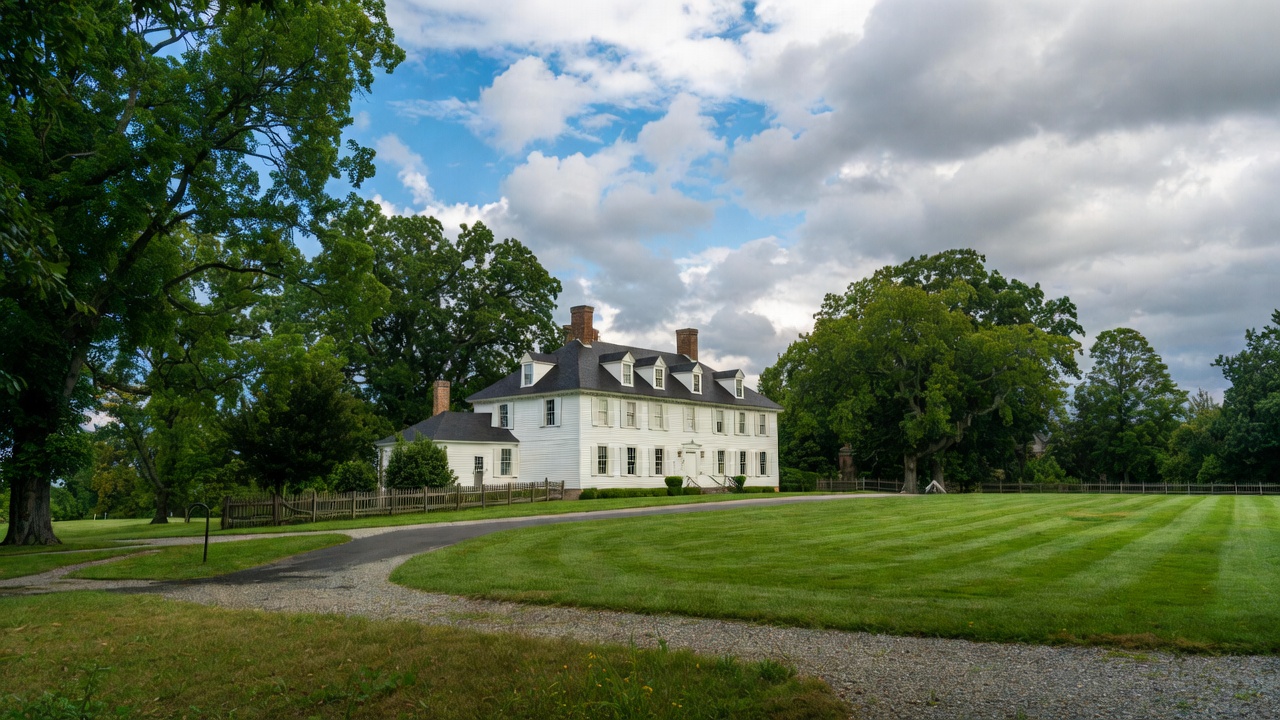
What strikes you first isn’t the house’s grandeur but its proportions. Washington was a surveyor before he was a soldier, and you can see that mathematical mind in every sightline, every carefully positioned dependency building. The mansion faces east toward the river, a view Washington called “the most beautiful in the world.” Stand on that piazza at dawn, and you’ll believe him.
But here’s what the history books often miss: Washington spent barely half his adult life at Mount Vernon. War and presidency kept pulling him away, yet his letters overflow with longing for this place. “I had rather be at Mount Vernon with a friend or two about me,” he wrote, “than to be attended at the seat of government by the officers of State and the representatives of every power in Europe.”
The Complete History of Mount Vernon Plantation From 1674 to Today
The land’s story begins long before Washington, in the ambitious dreams of his great-grandfather, John Washington, who arrived in Virginia in 1657. The property passed through generations like a promise waiting to be kept.
| Era | Key Events | Significance |
|---|---|---|
| 1674 | John Washington receives original land grant | Establishes family’s Virginia roots |
| 1726 | Augustine Washington (George’s father) acquires property | Names it after Admiral Edward Vernon |
| 1735 | Young George Washington is born | Future president’s origins |
| 1761 | George Washington inherits Mount Vernon | Begins major expansion period |
| 1774-1787 | Revolutionary War years | Estate managed by overseers during Washington’s absence |
| 1789-1797 | Presidential period | Washington returns when possible, continues improvements |
| 1799 | Washington dies at Mount Vernon | Buried on estate grounds |
| 1858 | Mount Vernon Ladies’ Association purchases estate | Becomes first historic preservation effort in America |
| Present | Over one million annual visitors | Nation’s most visited historic estate |
The Mount Vernon Ladies’ Association deserves particular attention. In 1853, a woman named Ann Pamela Cunningham looked at the crumbling estate and saw not decay but duty. She rallied women across America—North and South, in the years before a war that would tear the nation apart—to save Washington’s home. It was the first major historic preservation effort in American history, and it succeeded where government had failed.
How to Plan Your First Visit to Mount Vernon Estate in Virginia
Planning a visit requires the same strategic thinking Washington applied to his military campaigns—though the stakes, thankfully, are considerably lower.
The estate sprawls across 500 acres of the original 8,000-acre plantation. You cannot see everything in a single visit, so you must choose your battles.
Essential Experiences for First-Time Visitors:
- The Mansion Tour — The heart of any visit. Guides lead you through Washington’s study, where he planned military campaigns, and the bedroom where he died. The wallpaper in the dining room, a vivid green, was considered the height of fashion in 1797.
- The Tomb — Washington and Martha rest here, in a simple brick vault he designed himself. The silence at this spot has weight.
- The Pioneer Farm — A working demonstration of 18th-century agriculture, complete with heritage breed animals Washington himself might recognize.
- The Slave Memorial — Perhaps the most necessary stop. More on this shortly.
- The Museum and Education Center — Immersive exhibits and a theatrical experience that brings Washington’s world to life.
Practical Planning Details:
| Detail | Information |
|---|---|
| Location | 3200 Mount Vernon Memorial Highway, Mount Vernon, VA 22121 |
| Hours | Open daily, 9 AM – 5 PM (extended summer hours) |
| General Admission | Adults $28, Children (6-11) $15, Under 6 free |
| Best Time to Visit | Weekday mornings in spring or fall |
| Time Needed | 3-4 hours minimum; full day recommended |
| Parking | Free on-site |
What Did George Washington’s Daily Life at Mount Vernon Look Like
Washington rose before dawn. This was not affectation but necessity—the plantation demanded constant attention. In his own words, he was “a farmer by inclination” but a reluctant revolutionary by circumstance.
A typical day unfolded with military precision:
Morning (4-5 AM): Washington dressed, often without assistance, and retreated to his study to handle correspondence. The man wrote thousands of letters in his lifetime, and his penmanship deteriorated noticeably over the years.
Breakfast (7 AM): A modest affair. Hoecakes and honey were favorites. He ate alone or with family, rarely with guests at this early hour.
Morning Ride (8 AM – 1 PM): Washington personally inspected his five farms on horseback, covering 15-20 miles daily. He knew every field, every drainage ditch, every fence post in need of repair.
Dinner (3 PM): The main meal, often with guests. Mount Vernon was famously hospitable—perhaps too hospitable. Washington once complained that his home had become “a well-resorted tavern” because so many visitors arrived unannounced.
Evening: More correspondence, reading, and conversation. Washington retired early, usually by 9 PM.
This rhythm was interrupted constantly—by visitors, by crises, by the demands of nation-building. But the routine remained his ideal, the life he craved.
Exploring the Beautiful Gardens and Grounds of Mount Vernon
Washington fancied himself a gentleman farmer, but his ambitions reached far beyond corn and wheat. The gardens at Mount Vernon reveal a mind hungry for beauty, experimentation, and control over nature itself.
The Upper Garden served practical purposes—vegetables, fruits, and herbs for the household. But the Lower Garden was pure ornament, a boxwood-bordered showpiece designed to impress visitors approaching by land.
Notable Botanical Features:
- The Bowling Green — A sweeping lawn connecting the mansion to the outbuildings, creating a sense of spacious elegance.
- Fruit Garden and Nursery — Washington experimented obsessively with fruit trees, recording successes and failures in meticulous detail.
- The Vineyard — Washington dreamed of American wine but never quite achieved it. The vines survive as testament to his optimism.
- Boxwood Hedges — Some date to Washington’s era, gnarled living witnesses to centuries of history.
The landscape architecture follows English naturalistic principles Washington admired. Every vista, every curve of path, was calculated to create an impression of effortless beauty—though the effort behind it was immense.
The Difficult Truth: Slavery at George Washington’s Mount Vernon
Here is where the story darkens, where American memory must contend with American sin.
At any given time, over 300 enslaved people lived and labored at Mount Vernon. They built the mansion. They worked the fields. They cooked the meals, washed the clothes, tended the gardens. Without their forced labor, the elegant life Washington enjoyed would have been impossible.
We know some of their names now, recovered from records and painstaking research:
- William Lee — Washington’s personal valet throughout the Revolutionary War, the only enslaved person Washington freed immediately upon his death.
- Ona Judge — Martha Washington’s personal maid, who escaped to freedom in 1796 and lived in New Hampshire until her death in 1848.
- Hercules — The presidential chef, renowned for his culinary skill, who escaped on Washington’s birthday in 1797.
- Caroline Branham — A housemaid who remained at Mount Vernon for decades.
Washington’s relationship with slavery was one of evolution without resolution. As a young man, he bought and sold enslaved people without apparent moral discomfort. By his later years, he expressed private opposition to the institution but took no public stand against it. His will freed the 123 enslaved people he owned outright, but only upon Martha’s death—and Martha freed them a year later, reportedly fearing for her safety.
The estate today confronts this history directly. The Slave Memorial, dedicated in 1983, marks the burial ground of those whose labor built everything visitors admire. New research and exhibitions continue to recover their stories from historical silence.
Unique Artifacts and Treasures Inside the Mount Vernon Museum
The museum holds objects that collapse time, that make the distant past suddenly intimate.
Significant Items in the Collection:
| Artifact | Description | Significance |
|---|---|---|
| Washington’s Dentures | Made from human teeth, animal teeth, and ivory—not wood | Dispels a persistent myth |
| The Presidential China | French porcelain from the presidential household | Reveals Martha’s influence on domestic life |
| Military Trunk | Used throughout the Revolutionary War | Accompanied Washington through every major campaign |
| Fantail Hat | Worn during the Presidency | Only surviving piece of presidential clothing |
| Mount Vernon Keys | Given to Lafayette | Symbolized freedom; still displayed at Mount Vernon |
| Death Bed | The actual bed where Washington died | Powerfully intimate |
The key Washington sent to the Marquis de Lafayette, a key to the fallen Bastille, represents one of history’s most poignant friendships. That French revolutionary sent his American counterpart a symbol of European liberty, and Washington displayed it prominently.
Best Photo Spots and Instagram-Worthy Locations at Mount Vernon
For those who wish to capture their visit, certain locations offer particularly striking compositions.
Top Photography Locations:
- The East Lawn Piazza — The iconic river view, best at sunrise when mist rises from the Potomac.
- The West Front Approach — The classic mansion facade, framed by the bowling green.
- The Lower Garden — Boxwood hedges and seasonal blooms create timeless scenes.
- The Wharf — Looking back toward the mansion from the river’s edge.
- The Pioneer Farm — Rustic structures and heritage animals evoke the 18th century.
- The Tomb — Respectfully photographed, carries profound emotional weight.
Photography is welcomed throughout the grounds, though tripods require advance permission. Morning light, particularly in autumn, transforms the estate into something approaching the sublime.
How Mount Vernon Influenced American Architecture and Plantation Design
Washington was no trained architect, but his aesthetic choices rippled through American building for generations.
The mansion’s distinctive cupola, added in 1778, became a hallmark of Federal-era design. The covered piazza, running the full length of the east facade, influenced countless American homes seeking that same graceful relationship between interior and landscape.
Architectural Features Washington Pioneered or Popularized:
- Rusticated wooden siding — Pine boards beveled and sand-coated to resemble stone, an ingenious economy that fooled many visitors
- Palladian windows — The distinctive arched window in the upper hall
- Symmetrical dependencies — Matching outbuildings flanking the main house
- The connected colonnade — Covered walkways linking mansion to service buildings
Mount Vernon became a template for the American ideal of dignified domestic life, imitated from Maine to Mississippi. The very image of presidential retirement—the gentleman farmer, the classical portico, the river view—starts here.
Planning a Family Trip to Mount Vernon With Kids: Activities and Tips
Children often connect with history through tangible experience, and Mount Vernon offers abundant opportunities for young visitors.
Family-Friendly Highlights:
- Hands-On History Tent — Seasonal programming allows children to try 18th-century activities.
- Pioneer Farm — Working demonstrations of colonial agriculture captivate young imaginations.
- Archaeology Dig Site — Active excavations sometimes allow observation.
- Orientation Film — A brief theatrical experience that sets the historical stage.
- Junior Ranger Program — Self-guided activities with completion badges.
Tips for Visiting With Children:
- Arrive early — Energy flags after lunch; tackle the mansion tour first.
- Bring snacks — Food service exists but lines can be long.
- Rent a stroller — The grounds cover significant distance.
- Download the app — Interactive features engage tech-savvy kids.
- Visit the farm animals — Sheep, hogs, and oxen provide natural entertainment.
The estate thoughtfully balances historical integrity with accessibility. Children sense the gravity of the place even when they can’t articulate it.
Seasonal Events and Special Tours at Mount Vernon Throughout the Year
The estate transforms with the seasons, each offering distinct experiences.
| Season | Events and Programs |
|---|---|
| Spring | Garden tours with horticulturalists; sheep shearing demonstrations; Easter programming |
| Summer | Extended evening hours; National Treasure Tour (movie filming locations); Independence Day celebration |
| Fall | Fall Harvest Festival; wine festival; Halloween activities |
| Winter | Christmas illuminations; candlelight tours; Washington’s Birthday celebration |
The Christmas programming deserves special mention. The mansion is decorated as it would have been in the 18th century—with natural greenery, not the Victorian excess of later eras. Candlelit evening tours in December create an atmosphere impossible to replicate in daylight.
Washington’s Birthday, celebrated in February, brings military reenactors, wreath-laying ceremonies, and free admission—a fitting tribute and invariably crowded.
Why Mount Vernon Remains America’s Most Important Historic Estate
I return to Mount Vernon not because I need more facts about George Washington but because the place teaches lessons that facts alone cannot convey.
Standing on that piazza, watching the Potomac slide toward the sea, you understand something about American aspiration—its nobility and its blindness, its reach toward ideals and its complicity in cruelty. Washington wanted to be Cincinnatus, the Roman who left his plow to save the republic and then returned to his farm. He succeeded, more or less. But the plow was pulled by enslaved hands, and the farm was worked by people denied the liberty Washington proclaimed as humanity’s birthright.
Mount Vernon holds these contradictions without resolving them, which is perhaps the most honest thing a historic site can do. It asks us to reckon with the full complexity of the American story—the triumph and the tragedy, the vision and the violence, the mansion on the hill and the unmarked graves beyond it.
This is sacred ground, not because it is simple but because it is true.
If you visit, walk slowly. Listen to what the place wants to tell you. And when you leave, carry the questions with you. That’s what Mount Vernon is for.