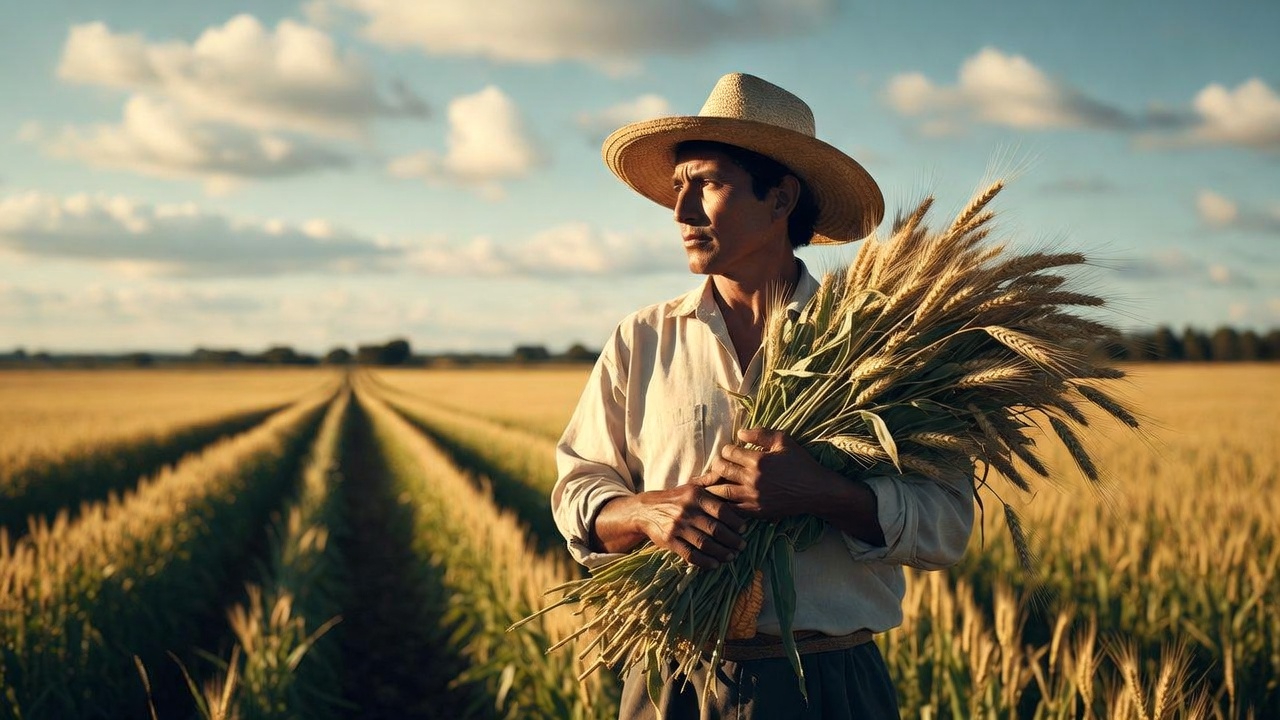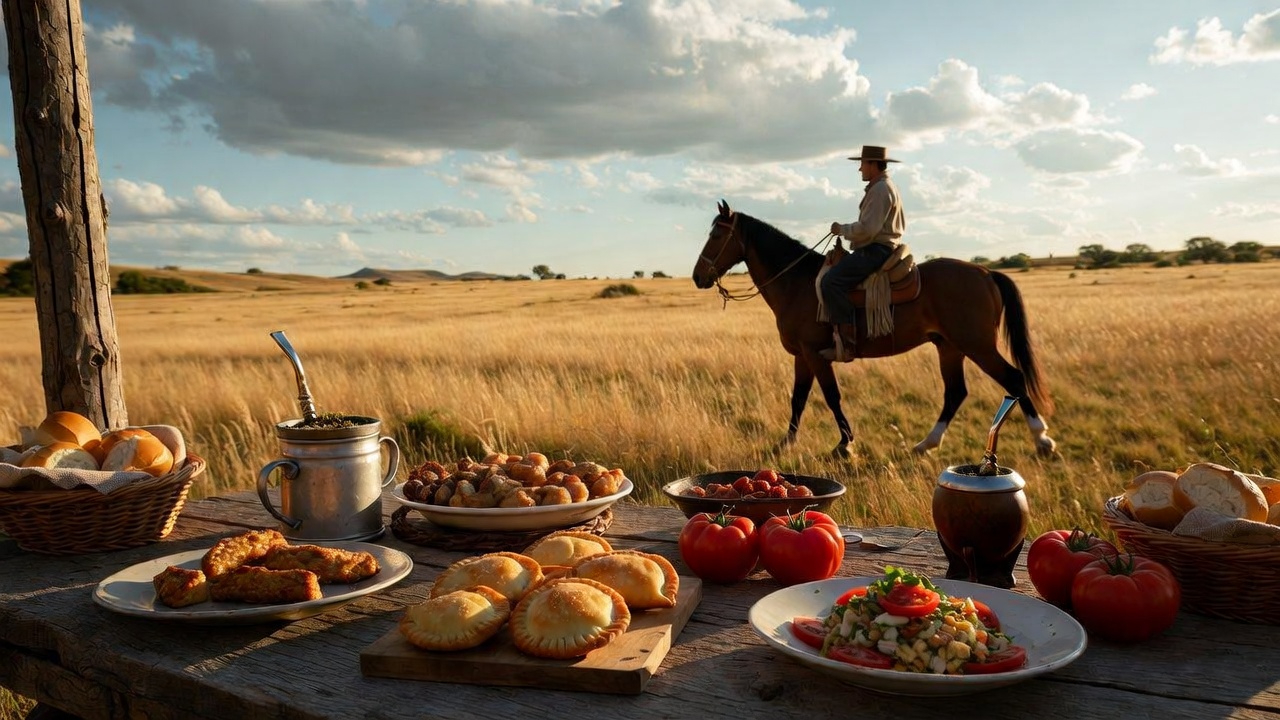
The sun rises over the Pampas like a slow exhale. Golden light stretches across an ocean of grain — wheat, soy, and corn rippling under a warm wind that smells of wet earth and green things growing. Somewhere near the town of Esperanza, in the province of Santa Fe, a farmer named Rubén checks the soil between his fingers. He is looking for moisture. He is always looking for moisture.
This is Argentina. A country where the land feeds the world, but the sky does not always cooperate. A country where farmers have battled droughts, floods, economic crises, and shifting policies for generations — and still manage to produce enough food to sustain more than 400 million people globally each year.
Every September 8, Argentina pauses to honor these people. It is Día del Agricultor y del Productor Agropecuario — the Day of the Farmer and Agricultural Producer. But the stories behind this date run far deeper than any single celebration. They reach into colonial history, touch the heart of gaucho culture, and now collide head-on with the defining challenge of our time: climate change.
This is the story of Argentina’s campesinos — the small farmers, the large-scale producers, the rural families, and the pioneers who refuse to surrender the soil.
Why Argentina Celebrates Día del Agricultor on September 8 Every Year
The roots of this celebration go back to 1856. On September 8 of that year, a group of 1,162 Swiss immigrants stepped off their ships and took possession of small land parcels near the Paraná River in what is now Esperanza, Santa Fe. This was Argentina’s first organized agricultural colony, founded under the vision of entrepreneur Aarón Castellanos during the governorship of José M. Cullen.
Those colonists planted wheat, corn, and other cereals. They built the blueprint for what would become one of the most powerful agricultural economies on Earth. Fifty-four years later, in 1910, the city of Esperanza honored their legacy with the Monumento a la Agricultura Nacional (Monument to National Agriculture) in the Plaza San Martín.
Then, on August 28, 1944, the Argentine government issued Decree No. 23,317. It declared September 8 as the official Day of Agriculture and the Agricultural Producer. The decree called the founding of Esperanza “a decisive date in the development of our agriculture.”
Today, the celebration extends well beyond Esperanza. Across the country — from the humid Pampas to the arid northwest, from the Patagonian steppe to the subtropical Chaco — farmers, agronomists, and rural communities mark the day with festivals, asados (traditional barbecues), and public recognition of the people who make their living from the land.
But there is also another date that resonates deeply with Argentina’s rural poor. On April 17, communities observe the Día Internacional de la Lucha Campesina (International Day of Peasant Struggle), a global observance organized by La Vía Campesina. In Argentina, this date has become a platform for smallholder farmers, indigenous communities, and rural workers to demand land reform, fair policies, and food sovereignty.
Together, these dates tell a dual story. September 8 celebrates the triumph of agricultural colonization. April 17 demands that the benefits of that triumph be shared more widely. Both are essential to understanding what it means to be a farmer in Argentina today.
How Argentine Agriculture Feeds the World: The Economic Powerhouse of the Pampas
Argentina is not just an agricultural country. It is an agricultural superpower. The numbers speak for themselves.
| Metric | Value |
|---|---|
| Total farmland | ~42 million hectares |
| Agriculture’s share of GDP | ~6% directly; ~10–18% including agro-industry |
| Share of total exports | Over 60% |
| Global ranking — soybean oil and meal exports | #1 in the world |
| Global ranking — corn exports | #3 in the world |
| 2025/26 wheat production | Record 27.5 million tonnes |
| 2025/26 corn production forecast | 58 million tonnes |
| Employment (direct and indirect) | ~30% of the national workforce |
Sources: USDA Foreign Agricultural Service, World Bank Argentina CCDR, FAO SCALA Argentina
The fertile Pampas region — covering parts of Buenos Aires, Santa Fe, Córdoba, and La Pampa provinces — is the engine of this production. Roughly 80% of Argentina’s wheat, corn, and soybean output comes from this core crop region. The soil is deep, the climate is temperate, and the flat terrain makes large-scale farming possible.
Argentina’s 2025/26 wheat harvest shattered all records. According to the Rosario Grain Exchange, production reached approximately 27.7 million tonnes — nearly 38% more than the previous year’s harvest of 20.1 million tonnes. The average yield of 4.1 tonnes per hectare was 35% higher than the prior season. Favorable winter rains and investment in seed technology drove this remarkable bounce-back.
But behind these headline numbers lies a volatile reality. Argentine farmers ride a roller coaster of weather extremes, currency devaluations, and policy shifts that can erase an entire season’s profits in a matter of weeks.
The Devastating Impact of Drought and Climate Change on Argentine Crop Production
If you want to understand the stakes for Argentine farmers, look at 2022–2023. It was the country’s worst drought in more than 60 years.
Three consecutive years of La Niña — a natural climate pattern that reduces rainfall across the southern Pampas — drained the soil of moisture. According to data from the Rosario Stock Exchange (BCR), Argentina’s agricultural heartland recorded a cumulative water deficit equal to an entire year’s rainfall between mid-2020 and 2023.
The consequences were catastrophic:
- Soybean production collapsed to 27 million tonnes — the lowest since the turn of the century.
- Farmers in the Pampas faced estimated losses of $14 billion, with production falling roughly 50 million tonnes short across soy, corn, and wheat combined.
- Total economic losses for the nation reached approximately $20 billion, or over 3% of GDP.
- Argentina experienced its warmest November-to-January on record and endured at least eight heat waves in the 2022–2023 season.
“We are facing an unprecedented climatic event,” Julio Calzada, head of economic research at the Rosario exchange, told Al Jazeera at the time.
Scientists from the World Weather Attribution initiative found that while La Niña was the primary driver, climate change increased temperatures in the region and likely reduced water availability. A ReliefWeb report noted that human-induced warming made extreme temperatures in December 2022 roughly 60 times more likely.
The World Bank’s Country Climate and Development Report paints an even longer-term picture. Annual asset losses from flooding alone total $1.4 billion. By 2050, drought-related losses could reach 4% of GDP.
And the trouble is not over. Climate forecasts from the Climate Impact Company projected worsening drought conditions across central Argentina during the 2025–26 summer growing season, tied to a developing weak La Niña and marine heatwaves off the Argentine coast.
For farmers, this is not an abstract policy discussion. It is the difference between feeding their families and losing everything.
How Small-Scale Campesino Farmers Survive Argentina’s Rural Crisis
Argentina’s agricultural landscape is deeply unequal. On one side stand massive agribusiness operations planting hundreds of thousands of hectares. On the other side stand the campesinos — smallholder farmers, indigenous communities, and family producers who grow food on tiny plots with limited resources.
The disparity is stark. According to a Tricontinental Institute analysis, 80% of Argentina’s family farmers occupy around 11% of demarcated agricultural land. Meanwhile, the largest 0.3% of landowners control nearly double that area.
The FAO’s Family Farming Knowledge Platform provides a detailed profile of this sector:
- 74% of family farmers engage in animal production
- 68% practice plant production
- 37% are located in the Pampas region
- 21% are in the northwest, another 21% in the northeast
- 15% in Cuyo, and 6% in Patagonia
These farmers produce a remarkable variety of goods — from livestock and grains to artisanal cheeses, wine, honey, yerba mate, and traditional crafts. Family farming contributes significantly to domestic food security. As Marina Cardelli, then Undersecretary of National Affairs at the Argentine Foreign Ministry, put it during a 2023 IICA event: family farming produces the majority of the world’s food, yet most smallholder farmers remain poor.
Rural depopulation is a growing threat. Miguel Ángel Gómez, president of the National Institute of Family, Peasant and Indigenous Farming (INAFCI), warned at the same event that Argentina has been “witnessing the departure of farmers from the most remote rural areas for 50 years.” He called for a “new rurality” — a vision where farming offers a dignified livelihood and rural communities are revitalized rather than abandoned.
In 2022, the UN’s International Fund for Agricultural Development (IFAD) launched PROSAF — a $36.1 million program to help Argentine smallholders transition to agroecology. The program targets northern Argentina, where rural poverty is deepest, and focuses on digital access, climate resilience, and youth employment.
The campesino movement in Argentina has deep roots. Organizations like the Movimiento Nacional Campesino Indígena (National Peasant and Indigenous Movement) and the Unión de Trabajadores y Trabajadoras Rurales Sin Tierra (Union of Landless Rural Workers) have spent decades fighting for land rights, fair markets, and respect for indigenous knowledge systems.
In April 2017 and subsequent years, these groups organized “Feriazos” — massive open-air markets in city centers — on the International Day of Peasant Struggle. They sold vegetables, bread, and artisanal goods at fair prices directly to urban consumers. The message was twofold: campesino farmers produce high-quality food, and they deserve the same policy support as industrial agriculture.
Agroecology — the practice of farming in harmony with natural ecosystems rather than against them — is gaining momentum among Argentina’s smallholders. Instead of relying on synthetic fertilizers and genetically modified seeds, agroecological farmers use crop rotation, composting, biological pest control, and polyculture (growing multiple crops together). Groups like Desvío a la Raíz in Córdoba province have built community farms that combine ancestral techniques with modern ecological science. Their annual Festivalazo Campesino draws families from across the region for collective planting, folk music, and conversations about food sovereignty.
For campesino families, climate change is not just an environmental problem. It is an existential one. Without access to irrigation, insurance, or credit, a single bad season can push them off the land for good. Many of these communities sit in marginal zones — the dry Chaco, the mountainous northwest, the windswept Patagonian steppe — where soils are fragile and rainfall is unreliable even in good years. When drought strikes the Pampas, it hits these regions even harder.
Argentina’s Drought-Resistant HB4 Wheat: A Breakthrough for Global Food Security
One of the most remarkable chapters in Argentina’s fight against climate odds began in a lab at the National Scientific and Technical Research Council (CONICET) in Rosario. Scientists discovered that the sunflower possesses a gene — HaHB4 — that allows it to endure prolonged periods without water. By isolating this gene and inserting it into wheat, they created a crop that could survive drought.
In October 2020, Argentina became the first country in the world to approve genetically engineered drought-tolerant wheat for cultivation and consumption. The technology, developed by Argentine biotech company Bioceres Crop Solutions, was branded EcoWheat® (HB4).
The results have been promising:
| Metric | Data |
|---|---|
| Average yield increase under drought | Up to 20% in field trials |
| Yield increase in severe drought (2022–23) | 51% more on average vs. non-HB4 varieties |
| Yield increase under moderate conditions | 12% |
| Area planted in Argentina (cumulative, 2019–2024) | Over 100,000 hectares |
| Current area in Argentina | ~120,000 acres |
| Potential GHG reduction (on 1/3 of wheat area) | 0.86 to 1.29 million tonnes CO₂e/year |
| Countries with cultivation approval | Argentina, Brazil, Paraguay, USA |
| Countries with import approval | Colombia, Indonesia, Nigeria, South Africa, Australia, New Zealand, Chile, Thailand |
Sources: ISAAA, The Breakthrough Institute, US Wheat Associates, ND Wheat Commission
Martin Mariani Ventura, global seeds and traits manager at Bioceres, has described HB4 wheat not as a replacement for traditional varieties, but as “an insurance policy” — stabilizing production in regions that face longer and more frequent droughts.
In August 2024, the U.S. Department of Agriculture deregulated HB4 wheat for cultivation in the United States. Peter Laudeman of US Wheat Associates called it a “really exciting step forward for the industry.” However, commercial planting in the U.S. is still several years away, pending field trials and additional export market approvals.
For Argentina’s farmers, HB4 wheat represents something more than a technological achievement. It is a lifeline. In a country where wheat is central to both domestic consumption (think: Buenos Aires’ famous medialunas and pan casero) and export revenue, keeping harvests stable during drought years is a matter of national economic survival.
No-Till Farming in Argentina: How Conservation Agriculture Protects the Soil
Argentina is a global leader in one of the most important agricultural innovations of the past fifty years: no-till farming (known locally as siembra directa).
The concept is simple but revolutionary. Instead of plowing the soil before planting — which exposes it to wind erosion, water runoff, and carbon loss — no-till farmers plant directly into the residue of the previous crop. A blanket of stubble protects the earth. The soil stays intact. Microorganisms thrive. Water is absorbed more efficiently.
Today, over 90% of Argentina’s farmland operates under no-till management. This makes Argentina the most no-till-intensive agricultural nation on the planet.
The transformation was led by AAPRESID — the Asociación Argentina de Productores en Siembra Directa (Argentine Association of No-Till Farmers). Founded in 1989 by a small group of forward-thinking producers in Santa Fe, AAPRESID now includes approximately 1,800 members managing over 11 million hectares across nine provinces.
The benefits documented by AAPRESID are significant:
- 25% more grain produced per millimeter of available water
- 60% reduction in fossil fuel use during field operations
- 200% increase in soil carbon sequestration
- 40% reduction in CO₂ emissions
- Estimated 700 million tonnes of soil loss avoided globally each year through conservation agriculture models
- 33% reduction in soil loss across Argentina
In 2017, AAPRESID received the Glinka World Soil Prize from the FAO — the highest international recognition for soil conservation. Pedro Vigneau, then president of AAPRESID, accepted the award in Rome, saying it honored “the Argentine farmers whose agriculture is 91% based on No Till.”
But no-till is not a perfect solution. As the system expanded, new challenges emerged. Herbicide-resistant weeds are a growing concern. A 2023 AAPRESID survey found that 54% of farms dealt with four or more species of resistant weeds. Some farmers have responded by increasing chemical applications; others have even returned to tillage — a troubling reversal.
AAPRESID is now pushing for the next evolution: regenerative agriculture. This means going beyond simply avoiding tillage. It includes expanding cover crop adoption (which grew from 4% in 2014–15 to 19% in 2021–22), improving crop rotation (from 33% to 48% in the same period), and using precision variable-rate input application (from 6% to 18%).
The goal is clear. Farming in Argentina must not only stop degrading the soil. It must actively rebuild it.
Export Tax Reform and Policy Changes Affecting Argentine Farmers in 2025 and 2026
For Argentine farmers, the challenge is not only weather. It is also policy. For over two decades, retenciones — export taxes on agricultural commodities — have been among the most contentious issues in national politics.
These taxes essentially take a percentage of every tonne of grain or oilseed that leaves the country. Farmers and agricultural groups have long argued that retenciones reduce competitiveness, suppress investment, and punish the sector that generates the majority of Argentina’s foreign exchange.
Under President Javier Milei, who took office in December 2023, significant changes have arrived. Here is how retenciones evolved during 2025:
| Product | Rate at Start of Milei’s Term | Rate After July 2025 Reduction | Rate After December 2025 Cut |
|---|---|---|---|
| Soybeans | 33% | 26% | 24% |
| Soybean byproducts | 31% | 24.5% | 22.5% |
| Wheat | 12% | 9.5% | 7.5% |
| Corn | 12% | 9.5% | 8.5% |
| Barley | — | 9.5% | 7.5% |
| Sunflower | — | 5.5% | 4.5% |
| Beef | 6.75% | 5% | — |
Sources: The Poultry Site/Reuters, USDA FAS Report, S&P Global
On July 27, 2025, at the 137th Expo La Rural in Buenos Aires — the country’s largest agricultural exhibition — President Milei announced that the reductions would be permanent for the duration of his administration. Economy Minister Luis Caputo called it “a new step on the path to tax relief for the agricultural sector.”
Then, in December 2025, the government went further. Additional cuts brought soybean taxes down to 24% and wheat taxes to 7.5%.
Gustavo Idiogras, president of the CIARA-CEC grain exporters’ chamber, told Reuters the decision was “highly valued” by the agricultural sector. Agronomist Javier Preciado Patiño explained to S&P Global that the lower soybean tax “will not impact FOB prices but will stimulate the export market.”
Still, the agricultural sector continues to push for total elimination of retenciones. Many producers argue that even reduced taxes leave Argentine grain less competitive than Brazilian or American exports. And since Milei’s changes are tied to his administration — not enshrined in law — a future government could reverse them.
For smallholder campesinos, the retenciones debate has different stakes. They export little directly. Their concerns are more immediate: access to credit, fair land prices, seed availability, and protection from the economic shocks that ripple through rural communities when commodity prices swing.
The Gaucho Spirit: How Rural Culture Shapes Argentina’s Farming Identity
You cannot understand Argentine farming without understanding the gaucho. This iconic figure — part cowboy, part philosopher, part rebel — is woven into the very DNA of rural Argentina.
The gaucho emerged in the 18th century as a mestizo horseman roaming the vast Pampas grasslands. Part Spanish, part Indigenous, sometimes African in heritage, the gaucho lived by his own rules. He herded cattle on open land. He drank mate under endless skies. He sang payadas (improvised folk songs) and settled disputes with a facón (long knife).
José Hernández immortalized the gaucho in his 1872 epic poem El gaucho Martín Fierro — a work so foundational that it is sometimes called Argentina’s national poem. Ricardo Güiraldes continued the tradition with his 1926 novel Don Segundo Sombra. Together, these works created a literary mythology that elevated the gaucho from working-class horseman to national symbol of freedom, resilience, and self-reliance.
By the late 19th century, the fencing of the Pampas and the arrival of railways transformed the gaucho from a free rider into a peon — a hired laborer on large estancias. But gaucho culture never disappeared. It adapted.
Today’s gaucho is a ranch hand, a horse trainer, a cattle manager, and increasingly a tourism ambassador. Across the Buenos Aires province, visitors flock to estancias for asado feasts, horseback rides, and demonstrations of traditional skills like sortija (ring-spearing on horseback) and doma (horse breaking).
More importantly, the gaucho spirit lives on in the values of rural Argentine life: hard work, connection to the land, hospitality, and a stubborn pride that refuses to yield to hardship. When farmers talk about surviving drought or pushing through an economic crisis, they are channeling a tradition that stretches back centuries.
Asado, Mate, and the Rituals of Rural Argentina
No exploration of Argentine farming culture is complete without understanding two sacred rituals: asado and mate.
Asado is far more than a barbecue. It is a social ceremony. A skilled asador (grill master) arranges cuts of beef — vacío (flank), asado de tira (short ribs), chorizo (sausage), morcilla (blood sausage) — over a wood or charcoal fire. The process takes hours. Families gather around the parrilla (grill), talking, laughing, and waiting patiently for the meat to reach perfection. In rural communities, asado marks every important occasion: births, harvests, holidays, and the simple joy of a Sunday with family.
Mate, meanwhile, is the daily heartbeat of Argentine life. This herbal infusion — brewed from the leaves of the yerba mate plant — is shared from a single gourd passed hand to hand in a circle. Refusing mate when offered is considered rude; accepting it is a gesture of trust and belonging. On farms across the Pampas, the workday begins and ends with mate. It is the thread that connects neighbors, generations, and communities.
These rituals are not merely cultural accessories. They are survival mechanisms. In a profession defined by isolation, physical labor, and uncertainty, the communal act of sharing food and drink builds the social bonds that hold rural Argentina together.
Cultural festivals like the Fiesta Nacional de la Agricultura in Esperanza, the Festivalazo Campesino in Córdoba, and countless provincial peñas (folk music gatherings) keep these traditions alive. They are places where the old world of bombacha trousers and gaucho knives meets the new world of precision agriculture and satellite monitoring — and neither feels out of place.
Precision Agriculture and Smart Farming Technology Transforming Argentina in 2026
While gaucho traditions ground Argentina’s farming culture in the past, technology is propelling it into the future.
By 2025, precision agriculture adoption rates exceeded 60% across Argentina’s major farming regions, according to Farmonaut’s Argentina agriculture overview. The country is now one of the global leaders in integrating data-driven tools into everyday farming operations.
Key technologies reshaping the sector include:
Satellite-based crop monitoring. High-resolution multispectral imagery allows farmers to track vegetation health, soil moisture, and nutrient deficiencies across thousands of hectares in near-real-time. Argentina’s vast, flat farmland is ideally suited to this approach.
Drone surveillance. Unmanned aerial vehicles provide detailed field maps, identify pest infestations early, and guide targeted spraying — reducing chemical use and costs.
AI-powered advisory systems. Platforms using artificial intelligence deliver customized recommendations on planting dates, fertilizer rates, irrigation timing, and pest management. These tools are increasingly accessible to medium-scale producers, not just large agribusinesses.
Variable-rate application. Instead of applying the same amount of fertilizer or herbicide across an entire field, sensors and GPS technology allow farmers to adjust application rates meter by meter. This cuts waste and boosts yields.
Blockchain traceability. For export-oriented producers, blockchain tools enable transparent tracking of grain from farm to port. This helps meet growing demands from international buyers for proof of sustainable sourcing.
Argentina’s public research infrastructure supports this transformation. INTA (Instituto Nacional de Tecnología Agropecuaria), with its network of 15 regional centers, 50 experimental stations, and over 330 extension units, remains the backbone of agricultural innovation in the country. Alongside INTA, farmer-led groups like AACREA (Argentine Association of Regional Consortiums for Agricultural Experimentation) and AAPRESID serve as bridges between research and practice.
For smallholder farmers, though, the technology gap remains wide. The World Bank has recommended “differentiated strategies” to ensure family farmers gain access to advisory services, affordable credit, and market data. Digital tools that work on basic smartphones — rather than expensive equipment — are key to bridging this divide.
What the Future Holds for Argentine Farmers Fighting Climate Change in 2026 and Beyond
The road ahead for Argentine agriculture is both promising and perilous.
On the positive side, the 2025/26 wheat harvest proved what is possible when good weather meets advanced technology. Record yields, record exports, and the first shipments of Argentine wheat to China in nearly three decades all signal that the sector’s potential is enormous. Corn production is projected at 58 million tonnes for the 2025/26 season — a strong rebound from drought-depressed years. Export tax reductions are giving producers some financial breathing room.
But the structural vulnerabilities have not gone away.
The VoxDev/PreventionWeb analysis on climate adaptation in Argentina identifies a core paradox: the country’s agricultural sector is technologically advanced and profit-driven, giving farmers clear incentives to adopt adaptive practices. Yet Argentina’s volatile macroeconomic and political environment — characterized by inflation, debt crises, and policy instability — makes it extremely difficult to commit to the long-term investments that climate adaptation demands.
Only 5% of Argentina’s 42 million hectares of farmland is irrigated. The government has a national plan to expand irrigation, but progress has been slow. Currently, Argentine agriculture remains overwhelmingly rain-fed — meaning it is at the mercy of whatever the sky delivers.
The FAO SCALA program is working with Argentina to strengthen the role of agriculture in the country’s updated climate commitments. The program is assessing agricultural risks in the Pampas, exploring index-based insurance systems, and partnering with AACREA and AAPRESID to promote low-carbon, climate-resilient farming.
Climate scientists expect growing volatility in the years ahead. El Niño and La Niña cycles will continue to swing between flood and drought. Rising temperatures will stress summer crops like soy and corn during their most vulnerable growth stages. The Andean glaciers that feed western river systems are shrinking. And global commodity markets — already turbulent — will face further disruption as climate shocks hit multiple breadbaskets simultaneously.
For Argentina’s campesinos and family farmers, the stakes are existential. The World Bank’s Argentina agricultural report calls for social protection programs, health services, education, and diversified work opportunities for subsistence producers. It also emphasizes promoting the role of women in the agricultural workforce — a long-overlooked dimension of rural development.
The Growing Role of Women in Argentine Agriculture
One dimension of Argentine farming that deserves far more attention is the role of women. Across the country, women manage farms, run cooperatives, lead agroecological projects, and serve as primary caretakers for the animals, gardens, and households that sustain rural communities. Yet their contributions are often invisible in official statistics and policy discussions.
In Buenos Aires province, women like Janina Garacoche in Chacabuco are running sustainable operations that responsibly manage agrochemical containers and reduce environmental impact. In the northwest, indigenous women preserve ancient knowledge about native crops — quinoa, amaranth, and local varieties of potato and corn — that may prove crucial as climate change alters what can grow where.
The World Bank has specifically recommended that Argentina promote the role of women in the sector’s workforce and support their technical capacities in production, management, and marketing. IFAD’s PROSAF program also targets women and youth in its agroecology transition efforts. These are encouraging signals, but progress on the ground remains slow. For Argentine agriculture to truly modernize, it must recognize that women are not just participants — they are leaders.
Climate-Smart Agriculture as a National Strategy
The message from researchers, policymakers, and farmers themselves is consistent: Argentina has the land, the talent, and the technology to be a global leader in climate-smart agriculture. What it needs is stability — political, economic, and environmental.
Argentina’s second Nationally Determined Contribution (NDC) to the Paris Agreement, submitted in 2020, committed to reducing total greenhouse gas emissions by 19% by 2030. Agriculture, livestock, and land use change together account for a significant share of national emissions — roughly 37% when combined. Meeting this target will require expanding no-till adoption beyond the Pampas, scaling up agroforestry in the Chaco, reducing deforestation, and investing in methane-reducing livestock management.
The country also needs to dramatically improve its agricultural insurance infrastructure. Currently, fewer than 20% of Argentine farmers hold crop insurance policies. Index-based insurance — where payouts are triggered automatically by measurable events like low rainfall — could provide a safety net for millions of producers who currently have none. The World Bank has specifically recommended this approach for Argentina’s drought-prone regions.
Water management is another frontier. Argentina’s national plan to expand sustainable irrigation aims to double the irrigated area from about 2 million hectares to roughly 4 million. But implementation depends on sustained investment, coordination between federal and provincial governments, and political will that extends beyond any single administration.
Practical Travel Tips for Experiencing Argentina’s Agricultural Festivals and Rural Culture
If this article has sparked your curiosity, there is no better way to understand Argentine farming than to experience it firsthand. Here are some practical suggestions for travelers:
Visit Esperanza during the Fiesta Nacional de la Agricultura. Held around September 8 each year, this festival features agricultural exhibits, folk music, traditional food, and community celebrations in the birthplace of Argentine farming. Esperanza is about 30 kilometers west of the city of Santa Fe.
Stay at a Pampas estancia. Dozens of working ranches across Buenos Aires province welcome visitors for day trips or overnight stays. You will ride horses, eat asado prepared over open coals, drink mate with gauchos, and witness a way of life that predates the Argentine Republic itself. Popular options are located within 90 minutes of Buenos Aires city.
Attend the Expo La Rural in Buenos Aires. Held annually in late July at the Predio Ferial de Palermo, this is Argentina’s most important agricultural exhibition. It features livestock competitions, machinery displays, gourmet food stalls, and often features major policy announcements (as President Milei did in 2025).
Explore the Cuyo wine region. In Mendoza and San Juan, family-run vineyards and olive oil producers offer tastings and tours that reveal the campesino traditions of western Argentina. The high-altitude vineyards of Mendoza produce some of the world’s best Malbec — and many are adopting sustainable farming practices.
Respect the culture. When visiting rural communities, dress modestly, greet people warmly, and accept the mate gourd when it is offered. Never refuse mate — it is a gesture of friendship and trust. Ask before photographing people or their homes. And remember that for the families you visit, farming is not a quaint attraction. It is their life.
Frequently Asked Questions About Argentine Farmers and Día del Campesino
What is Día del Agricultor in Argentina? It is celebrated on September 8 each year, marking the founding of the first agricultural colony in Esperanza, Santa Fe, in 1856. The day honors farmers and agricultural producers across the country.
What is Día de la Lucha Campesina? Observed on April 17, it is the International Day of Peasant Struggle, organized by La Vía Campesina. In Argentina, smallholder farmers and indigenous communities use this day to demand land reform and food sovereignty.
How bad was the 2022–2023 drought in Argentina? It was the worst in over 60 years. Losses exceeded $20 billion and soybean production fell to its lowest level since the early 2000s. Three consecutive years of La Niña, combined with climate change-driven heat, caused the crisis.
What is HB4 wheat? A genetically engineered drought-tolerant wheat variety developed in Argentina by Bioceres Crop Solutions. It contains a sunflower gene that helps the plant survive water stress, boosting yields by up to 20% during drought.
What are retenciones in Argentina? Export taxes on agricultural products. Under President Milei, these were reduced in 2025 — for example, soybean taxes dropped from 33% to 24%, and wheat taxes fell to 7.5%.
What percentage of Argentine farmland uses no-till farming? Over 90%, making Argentina the world leader in conservation agriculture. The practice reduces soil erosion, saves fuel, and increases carbon sequestration.
Final Thoughts: The Resilience That Grows from Argentine Soil
There is a phrase that Rubén Walter, director of agricultural estimates at the Santa Fe Stock Exchange, hears often when he visits farms across the Pampas. Farmers tell him: “El suelo va a aguantar” — “The soil will hold out.”
It is a phrase that captures both the confidence and the vulnerability of Argentine farming. The soil has held out, remarkably, through colonization and revolution, through boom years and financial collapses, through droughts that cracked the earth open and floods that turned fields into lakes.
But the soil cannot hold out alone. It needs no-till management to keep it intact. It needs HB4 wheat to survive when the rains fail. It needs smart technology to optimize every drop of water. It needs fair policies that do not punish the people who feed the nation. And it needs a world that recognizes what Argentine farmers — from the smallest campesino in Tucumán to the largest producer in Buenos Aires — contribute to global food security every single day.
The next time you bite into a piece of bread, pour soybean oil into a pan, or feed your livestock with Argentine corn, remember the hands that grew it. Remember the Pampas wind. Remember Esperanza. Remember the gauchos who came before, and the campesinos who carry on.
Their story is not just Argentina’s. It is ours.