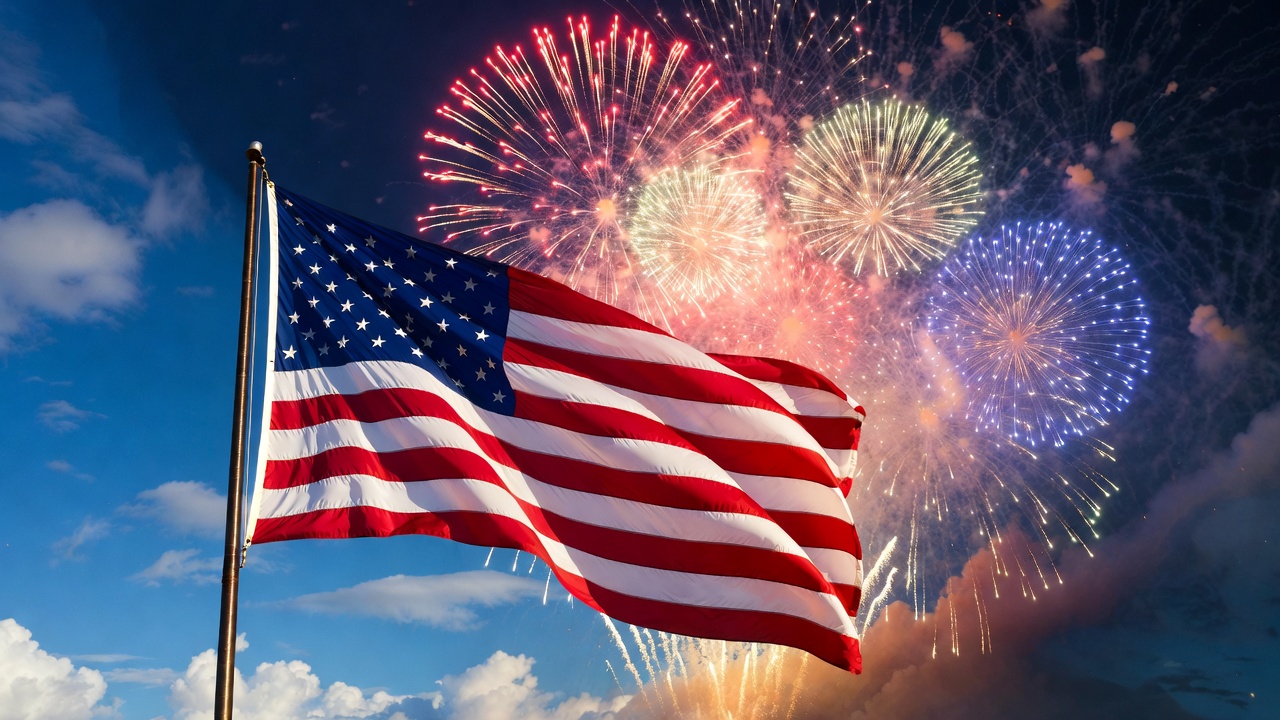
Every September, a quiet hum of anticipation builds in classrooms across the United States. Teachers pull out their pocket Constitutions, dust off their tri-corner hat props, and prepare to bring a 239-year-old document to life. September 17, 2026 — a Thursday — marks Constitution Day, the anniversary of that sweltering afternoon in Philadelphia when 39 delegates put quill to parchment and changed the course of human governance forever.
But this year is different. This year, Constitution Day falls right in the middle of America’s Semiquincentennial — the 250th anniversary of the Declaration of Independence. Schools from rural Alabama to downtown Manhattan are weaving founding-era education into their curricula with renewed energy. The U.S. Department of Education’s America 250 initiatives, including the brand-new Presidential 1776 Award scholarship competition, have turned 2026 into a landmark year for civics in the classroom.
Whether you teach first graders who are learning the word “amendment” for the very first time or AP Government seniors debating the Commerce Clause, this guide delivers 10 proven Constitution Day lesson plans ready for your classroom. Each plan includes grade-level adaptations, alignment with civics standards, and links to free resources from trusted organizations like the National Constitution Center, iCivics, the Library of Congress, and the Bill of Rights Institute.
Let’s get into it.
Why Constitution Day Matters: The Federal Mandate Every Teacher Should Know
Before we dive into lesson plans, let’s address the legal backdrop that makes Constitution Day more than a suggestion — it’s a federal requirement.
In 2004, Senator Robert Byrd of West Virginia attached an amendment to the Consolidated Appropriations Act (Public Law 108-447, Section 111). That clause requires every educational institution receiving federal funds to hold an educational program about the U.S. Constitution on September 17 each year. If that date falls on a weekend or holiday, the observance may be held during the preceding or following week.
Senator Byrd once explained his motivation simply. He believed that all citizens should understand their rights as outlined in the Constitution. That belief became law, and it applies to every public school district in the country — from preschools to universities.
The U.S. Department of Education does not dictate the specific format of the educational program. Schools have wide flexibility. But the expectation is clear: students must receive meaningful instruction about the Constitution on or around September 17.
In January 2025, the Department issued a Dear Colleague Letter reiterating the compliance requirement. The letter also noted that 2026 is especially significant because it leads into America’s 250th birthday celebration. Schools are encouraged to take a proactive, district-wide approach.
Key takeaway for teachers: You are not just encouraged to teach about the Constitution on September 17 — if your school receives federal funding, you are legally required to do so. The good news? The lesson plans below will make that requirement feel less like a box to check and more like the highlight of your September.
What the 2025 Annenberg Civics Survey Tells Us About Student Knowledge Gaps
Planning a great lesson starts with understanding where your students are. The annual Annenberg Constitution Day Civics Survey, conducted by the Annenberg Public Policy Center at the University of Pennsylvania, provides the most reliable snapshot of American civic knowledge.
Here are the headline findings from the 2025 survey:
| Civics Knowledge Metric | 2024 | 2025 | Change |
|---|---|---|---|
| Can name all three branches of government | 65% | 70% | +5 points |
| Can name freedom of speech as a First Amendment right | 74% | 79% | +5 points |
| Can name freedom of religion (First Amendment) | 39% | 48% | +9 points |
| Can name three or more First Amendment rights | 30% | 40% | +10 points |
| Incorrectly said Second Amendment is part of First Amendment | — | 21% | — |
The improvement is encouraging. But the gaps remain large. Fewer than half of American adults can name any First Amendment right beyond free speech. One in five mistakenly places the right to bear arms inside the First Amendment.
For classroom teachers, this data points to a specific instructional need: students need more than a surface-level overview of the Constitution. They need repeated, engaging encounters with its actual text, its history, and its relevance to their daily lives.
The lesson plans below are designed with that goal in mind.
Lesson Plan 1: Preamble Sing-Along and Scramble Activity for Elementary Students
Best for: Grades K–5 Time needed: 30–45 minutes Materials: Projector, printed Preamble strips, scissors, glue sticks
There is a reason every American over the age of 40 can recite the Preamble to the Constitution from memory. Three words: Schoolhouse Rock. The animated 1975 short film set the 52 words of the Preamble to a catchy melody that lodged itself permanently into millions of young brains.
That song still works. Pull it up on your classroom screen and watch your students’ eyes light up.
How to run this lesson:
- Watch the video together. Play the Schoolhouse Rock “Preamble” video (available on YouTube) twice. The first time, students just listen. The second time, they sing along.
- Discuss the big idea. Ask students: “Who is ‘We the People’?” Guide them toward the understanding that the Constitution was written by ordinary people — not kings, not dictators — who wanted to create fair rules for the country.
- Preamble Scramble. Give each student (or pair of students) a set of printed Preamble phrases cut into strips. Their job is to arrange the strips in the correct order. For younger students (K–2), use larger strips with just 4–5 key phrases. For older elementary students (3–5), use the full text.
- Illustrate the Preamble. Have students choose one phrase — “establish justice,” “insure domestic tranquility,” “promote the general welfare” — and draw a picture showing what it means in their life today.
Why it works: Music and physical activity (cutting, sorting, gluing) activate multiple learning pathways. The National Constitution Center offers a free Preamble Scramble game that pairs nicely with this hands-on version.
Tip for 2026: Connect the Preamble to the America 250 celebration. Ask students: “These words are almost 250 years old. Do they still matter?” You’ll be amazed at what even a second grader can say about fairness, safety, and freedom.
Lesson Plan 2: “To Sign or Not to Sign” — A Constitutional Convention Debate for All Grade Levels
Best for: Grades 3–12 (with differentiated materials) Time needed: 45–60 minutes Materials: Free PDF lesson plan from the National Constitution Center
The National Constitution Center designed this lesson specifically for Constitution Day, and it remains one of the most popular activities among civics teachers nationwide. The lesson asks a simple, powerful question: If you had been at the Constitutional Convention in 1787, would you have signed the Constitution?
For elementary and middle school (Grades 3–8):
The teacher guides students through a read-aloud play featuring two fictional delegates who disagree about whether to ratify the Constitution. One delegate worries about giving too much power to a central government. The other argues that the Articles of Confederation have failed and a stronger union is the only path forward.
After the read-aloud, students discuss: Which delegate made the stronger argument? What were the real risks on each side?
For high school (Grades 9–12):
Students review primary source materials — excerpts from the Federalist and Anti-Federalist papers, delegate speeches, and the text of the Constitution itself. They then hold a formal classroom debate: Should the delegates have signed? Students must use historical evidence to support their positions.
The lesson closes with a moment of personal reflection. Each student is given the chance to “sign” a printed copy of the Constitution — or to refuse to sign, just as three delegates (Edmund Randolph, George Mason, and Elbridge Gerry) actually did in 1787.
Why it works: This lesson transforms passive reading into active decision-making. Students don’t just learn about the Constitutional Convention — they step into it.
Download the free lesson plan: To Sign or Not to Sign — National Constitution Center (PDF)
Lesson Plan 3: Write a Classroom Bill of Rights — Teaching the First 10 Amendments Through Student Voice
Best for: Grades 3–8 Time needed: Two class periods (approximately 45 minutes each) Materials: Chart paper, markers, printed copy of the Bill of Rights
One of the most effective ways to help students understand the Bill of Rights is to have them create their own. This lesson, adapted from activities recommended by HMH (Houghton Mifflin Harcourt), brings the amendment process directly into your classroom.
Day 1: Introduction and Brainstorm
- Begin by reading a kid-friendly summary of the Bill of Rights aloud. For younger students, focus on the First, Fourth, and Sixth Amendments — freedom of speech, protection from unreasonable searches, and the right to a fair trial — because these relate most directly to children’s everyday experiences.
- Ask: “Why did people want these rights written down?” Discuss the idea that spoken promises can be broken, but written rules hold people accountable.
- Whole-class brainstorm. On chart paper, list every right and freedom students think should exist in their classroom. Anything goes at this stage: “the right to sharpen your pencil without asking,” “the right to a fair grade,” “the right to sit where you want at lunch.”
- Narrow the list to 10 amendments through class discussion and voting.
Day 2: Drafting, Ratifying, and Signing
- Working in small groups, students draft the language for each classroom amendment. Encourage them to use formal language: “Students shall have the right to…”
- Compile the drafts into a single document. Project it on the board.
- Ratification vote. Just like the real Constitution, the Classroom Bill of Rights must be ratified by three-fourths of the class. Hold a formal show-of-hands vote.
- Print the final version. Every student who agrees signs it. Hang it on the wall for the rest of the year.
Why it works: Students internalize constitutional concepts — rights, limits, ratification, compromise — by practicing them in a context they care about. When a classroom rule feels unfair in November, students can refer back to their Bill of Rights. That’s civic engagement in action.
Lesson Plan 4: iCivics Interactive Games — Digital Constitution Day Activities for All Ages
Best for: Grades 3–12 Time needed: 30–60 minutes (per game) Materials: Computers, tablets, or Chromebooks with internet access
If your students learn best through screens, iCivics is your greatest ally. Founded in 2009 by former Supreme Court Justice Sandra Day O’Connor, iCivics offers free, standards-aligned civics games and lesson plans used by over 200,000 teachers across all 50 states.
Here are the top iCivics games for Constitution Day:
| Game | Description | Best Grade Level |
|---|---|---|
| Do I Have a Right? | Run a law firm where clients walk in with constitutional questions. Match them with the correct right. Available in English and Spanish. | Grades 5–12 |
| Executive Command | Step into the Oval Office and manage the executive branch. | Grades 6–12 |
| Branches of Power | Build and balance all three branches of government. | Grades 5–10 |
| We the Jury | Serve on a jury and decide a case using evidence and constitutional principles. | Grades 7–12 |
| Ratify! | Debate and vote on whether to ratify the Constitution as a Federalist or Anti-Federalist. | Grades 6–12 |
How to use iCivics on Constitution Day:
- Option A (Quick play): Assign one game as a class activity and debrief afterward. “Do I Have a Right?” works beautifully as a single-period activity.
- Option B (Deep dive): Use the iCivics Constitution Day page to access a full sequence of lesson plans. The sequence walks students through the structure of the Constitution, the Bill of Rights, and how amendments are made.
- Option C (Game tournament): Set up a classroom tournament. Students compete in “Do I Have a Right?” and track who correctly identifies the most constitutional rights.
Why it works: iCivics games meet students where they are — on their devices. The platform’s research shows that students who play iCivics games demonstrate measurable improvements in civics knowledge and civic disposition. The games are rigorous enough for high school but accessible enough for upper elementary.
Bonus for 2026: iCivics has released updated Constitution Day resources and a new founding documents matching game. Check their Constitution Day hub for the latest materials.
Lesson Plan 5: Bill of Rights Bingo — An Engaging Civics Game for Middle and High School Classrooms
Best for: Grades 6–12 Time needed: 30–45 minutes Materials: Bingo boards (printable), Bill of Rights handout, candy or stickers for prizes
Few activities combine learning and fun as effectively as Bill of Rights Bingo. This game, offered in multiple versions by the National Constitution Center and C-SPAN Classroom, asks students to connect real-world situations to specific amendments.
How to play:
- Distribute the Bill of Rights. Give each student a printed summary of the first 10 amendments. Spend 10 minutes reviewing them together as a class.
- Create Bingo boards. Each student fills in a blank 4×4 or 5×5 Bingo board with amendment numbers (1st through 10th). Since the board has more squares than amendments, students must repeat some numbers — this is by design.
- Read scenarios aloud. The teacher reads real-life situations. For example: “A student is told she cannot wear a political T-shirt to school.” Students must identify which amendment applies (First Amendment — freedom of expression) and mark that square on their board.
- First student to complete a row wins!
Sample scenarios for Round 1 (straightforward):
- “A reporter writes an article criticizing the president.” → First Amendment (freedom of the press)
- “Police search a student’s backpack without permission or a warrant.” → Fourth Amendment (unreasonable search and seizure)
- “A man accused of robbery demands a lawyer.” → Sixth Amendment (right to counsel)
Sample scenarios for Round 2 (harder):
- “A judge sets bail at $5 million for a misdemeanor charge.” → Eighth Amendment (excessive bail)
- “A person is put on trial twice for the same crime after being found not guilty.” → Fifth Amendment (double jeopardy)
- “A state passes a law requiring all residents to house soldiers in their homes.” → Third Amendment (quartering of soldiers)
Why it works: Bingo transforms abstract legal concepts into concrete, debatable situations. The game format creates natural competition and peer discussion. Students don’t just memorize amendment numbers — they learn to apply constitutional principles to real scenarios, which is exactly the skill they need for informed citizenship.
Pro tip: Keep a bag of mini candy bars on hand. Nothing motivates a seventh grader to learn the Eighth Amendment quite like a Snickers.
Lesson Plan 6: Mock Constitutional Convention Simulation for High School Students
Best for: Grades 9–12 Time needed: 2–3 class periods Materials: Role cards, delegate biographies, printed excerpts from the Articles of Confederation and Virginia/New Jersey Plans
If you want your high school students to truly understand why the Constitution was written the way it was, put them in the delegates’ chairs. A mock Constitutional Convention is one of the most powerful teaching tools in a civics educator’s toolkit.
The Bill of Rights Institute offers free lesson plans and mini-documentaries that support this kind of simulation. Their resources include delegate biographies, primary source documents, and guided discussion questions.
How to set up the simulation:
Period 1 — Background and preparation:
- Assign each student (or pair of students) a delegate to represent. Include well-known figures like James Madison, Benjamin Franklin, and George Washington, but also lesser-known delegates like Gouverneur Morris, Roger Sherman, and William Paterson.
- Students research their delegate’s home state, economic interests, and position on key issues: representation in Congress, slavery, executive power, and the balance between state and federal authority.
- Distribute excerpts from the Articles of Confederation. Discuss its weaknesses: no power to tax, no national court system, no executive branch.
Period 2 — The Convention:
- Arrange desks in a horseshoe formation. Appoint one student as Convention president (Washington’s role).
- Present the Virginia Plan (large-state proposal) and the New Jersey Plan (small-state proposal). Each side argues for its preferred system of representation.
- Students negotiate, debate, and eventually work toward a compromise — ideally arriving at something resembling the Great Compromise (bicameral legislature with proportional representation in the House and equal representation in the Senate).
Period 3 — Ratification and reflection:
- Hold a ratification vote. Discuss: What would have happened if the Convention had failed?
- Connect to today: How does the Great Compromise still affect American politics? (Think about how Wyoming and California have the same number of senators despite massive population differences.)
Why it works: Simulation-based learning engages students who might otherwise tune out a lecture. By embodying a historical figure, students develop empathy for the complexity of the founding era. They also practice skills that serve them well beyond the classroom: negotiation, public speaking, evidence-based argumentation, and compromise.
Lesson Plan 7: Comparing Constitutions Around the World — A Global Civics Perspective for High Schoolers
Best for: Grades 9–12 Time needed: 45–60 minutes Materials: Printed or digital excerpts from 3–4 national constitutions, Venn diagram worksheet
The U.S. Constitution is the oldest written national constitution still in use. But it is not the only one. By the end of 2025, over 190 countries had written constitutions governing their citizens.
The National Endowment for the Humanities’ EDSITEment platform includes a “Comparing Constitutions” activity that asks students to examine how different nations protect fundamental rights. This lesson pushes students beyond the American context and into a global conversation about governance.
How to run this lesson:
- Select 3–4 constitutions for comparison. Good options include South Africa (1996), Japan (1947), Germany (1949), and India (1950). Each of these constitutions was written in the aftermath of war, oppression, or colonial rule — giving students rich historical context.
- Focus on a single theme. For Constitution Day, a natural focus is freedom of expression. How does each country’s constitution protect free speech? Are there limits? How do those limits differ from the First Amendment?
- Venn diagram activity. Students complete a Venn diagram comparing the U.S. Constitution’s approach to one or two other nations. What’s shared? What’s different? What does each approach reveal about the country’s values and history?
- Class discussion. Ask: “If you were writing a constitution for a brand-new country in 2026, which elements would you borrow from each of these documents?”
Sample comparison chart:
| Feature | United States (1787) | South Africa (1996) | Japan (1947) |
|---|---|---|---|
| Preamble mentions “We the People” | Yes | Yes | Yes (implicitly) |
| Explicit right to free speech | Yes (First Amendment) | Yes (Section 16) | Yes (Article 21) |
| Right to healthcare | No | Yes (Section 27) | Yes (Article 25) |
| Right to education | No (at federal level) | Yes (Section 29) | Yes (Article 26) |
| Explicit right to environment | No | Yes (Section 24) | No |
Why it works: Comparing constitutions makes the familiar unfamiliar. Students who take the U.S. Constitution for granted suddenly realize that its structure reflects specific historical choices — not universal truths. They also discover rights that other countries guarantee but the United States does not, which sparks robust classroom debate.
2026 connection: With America’s 250th anniversary front and center, this lesson invites students to ask: “What would the Founders think of the constitutions that came after theirs? And what might a 21st-century constitution look like?”
Lesson Plan 8: PBS NewsHour “What the Constitution Means to Me” — Civic Empowerment and Active Citizenship
Best for: Grades 8–12 Time needed: 45–60 minutes Materials: Internet-connected projector, student journals
The PBS NewsHour Classroom updated this lesson in September 2025. It centers on a simple but profound question: What does the Constitution actually mean to you, personally?
The lesson draws on video clips from constitutional scholars and excerpts from the acclaimed Broadway play What the Constitution Means to Me by Heidi Schreck. In the play, Schreck recounts how she won college scholarship money as a teenager by giving speeches about the Constitution — and how her understanding of the document deepened as she grew older.
How to run this lesson:
- Opening discussion. Ask students: “When was the last time the Constitution affected your daily life?” Most students will struggle to answer. That’s okay. The lesson is designed to change that.
- Watch the video clips. PBS provides curated clips of constitutional scholars explaining the document’s real-world impact on issues students care about: privacy, policing, free speech online, and equal protection.
- Journaling exercise. Students spend 10–15 minutes writing in response to one of these prompts:
- “Describe a time when a constitutional right protected you or someone you know.”
- “If you could add one amendment to the Constitution, what would it be and why?”
- “Which amendment do you think is most important for your generation? Explain.”
- Amendment proposal activity. In small groups, students draft a proposed 28th Amendment. They must write the text, explain its purpose, and present it to the class for a mock ratification vote.
Why it works: This lesson meets the developmental need of adolescents to see themselves reflected in what they study. It’s one thing to memorize the text of the 14th Amendment. It’s another thing entirely to write a personal essay about how equal protection has shaped your family’s life. The PBS NewsHour framing makes the Constitution feel alive, contested, and urgently relevant.
Lesson Plan 9: Library of Congress Primary Source Analysis — Teaching the Constitution with Original Documents
Best for: Grades 4–12 Time needed: 45–60 minutes Materials: Printed primary source documents (available free from the Library of Congress), magnifying glasses (optional but fun)
The Library of Congress maintains one of the richest collections of Constitution-related primary sources anywhere in the world. Their free teaching materials include high-resolution images of original drafts, delegate notes, newspaper editorials from the ratification debate, and political cartoons.
How to run this lesson:
For elementary students (Grades 4–5):
Use the Library of Congress’s Constitution Student Discovery Set, an interactive ebook that lets students zoom in on and annotate primary source documents from the Constitutional Convention. Students look at actual handwriting from 1787 and try to read the old-fashioned script. Guide them with questions like: “What words can you recognize?” and “Why do you think some words are crossed out?”
For middle school students (Grades 6–8):
Use the “Analyzing Primary Sources” framework from the Library of Congress:
- Observe: What do you notice first about this document? Describe what you see.
- Reflect: Who created this document? Why? Who was the intended audience?
- Question: What questions does this document raise for you?
Apply this framework to a specific artifact: George Washington’s letter transmitting the Constitution to Congress, or a newspaper editorial from a Pennsylvania Anti-Federalist arguing against ratification.
For high school students (Grades 9–12):
Analyze Amos Doolittle’s political cartoon The Looking Glass (1787), which depicts the Federalist vs. Anti-Federalist debate through visual symbolism. The Bill of Rights Institute offers a guided activity for this cartoon that asks students to use the VIEW method — Voice, Intent, Environment, and Who — to decode the image.
Why it works: Primary sources are not textbooks. They’re messy, incomplete, and full of personality. Students who handle (or digitally zoom into) a 239-year-old document develop a sense of connection to history that no summary paragraph can create. They also build critical analysis skills that serve them in every academic discipline.
Lesson Plan 10: America 250 Constitution Scavenger Hunt and Presidential 1776 Award Preparation
Best for: Grades 5–12 Time needed: 45–90 minutes Materials: Scavenger hunt worksheet, internet access, printed Constitution text
2026 is not an ordinary year for civics education. America’s 250th birthday has turned the entire school year into an extended civics lesson. The federal government, the Smithsonian, the National Archives, and dozens of nonprofits are offering special programs, competitions, and resources.
The most headline-grabbing is the Presidential 1776 Award, launched by the U.S. Department of Education. This nationwide competition challenges high school students in grades 9–12 to demonstrate their knowledge of America’s founding through a three-round scholarship competition:
| Round | Format | Timing |
|---|---|---|
| Round 1: “The Impossible Civics Test” | 90-minute online exam, multiple choice, electronically proctored | February 22–28, 2026 |
| Round 2: Regional Semifinals | In-person verbal examination | Spring 2026 |
| Round 3: National Finals | Verbal short-answer competition in Washington, D.C. | Late June 2026 |
Scholarships: First place receives $150,000, second place $75,000, and third place $25,000 — totaling $250,000 in prizes.
How to build a Constitution Day lesson around America 250:
- Constitution Scavenger Hunt. Create a worksheet with 20–30 questions that require students to search the actual text of the Constitution. Sample questions:
- “How old must a person be to serve as president?” (Article II, Section 1 — 35 years old)
- “Which amendment gave women the right to vote, and in what year was it ratified?” (19th Amendment, 1920)
- “How many amendments have been added to the Constitution since 1787?” (27)
- “Name one right protected by the Sixth Amendment.” (right to a speedy trial, right to counsel, etc.)
- Presidential 1776 Award prep session. For high schoolers, use Constitution Day as a launchpad. Introduce the competition, walk students through the free online Study Library, and have them take a practice quiz. Even students who don’t enter the competition will benefit from the structured review of founding documents.
- America’s Field Trip project. America250.org runs a student program called “America’s Field Trip,” which invites students in grades 3–12 to submit artwork, videos, and essays answering the question: “What does America mean to you?” Use Constitution Day as the starting point for this creative project.
Why it works: Connecting Constitution Day to the 250th anniversary celebration gives students a sense of occasion. They are not just learning about an old document. They are participating in a national moment — and for some, they could earn life-changing scholarship money in the process.
How to Choose the Right Constitution Day Lesson Plan for Your Grade Level
Not every lesson works for every classroom. Here’s a quick reference chart to help you match activities to your students:
| Lesson Plan | Grades K–2 | Grades 3–5 | Grades 6–8 | Grades 9–12 |
|---|---|---|---|---|
| 1. Preamble Sing-Along & Scramble | ✅ | ✅ | — | — |
| 2. “To Sign or Not to Sign” Debate | — | ✅ | ✅ | ✅ |
| 3. Classroom Bill of Rights | — | ✅ | ✅ | — |
| 4. iCivics Interactive Games | — | ✅ | ✅ | ✅ |
| 5. Bill of Rights Bingo | — | — | ✅ | ✅ |
| 6. Mock Constitutional Convention | — | — | — | ✅ |
| 7. Comparing Constitutions Globally | — | — | — | ✅ |
| 8. PBS NewsHour “What It Means to Me” | — | — | ✅ | ✅ |
| 9. Library of Congress Primary Sources | — | ✅ | ✅ | ✅ |
| 10. America 250 Scavenger Hunt & 1776 Award | — | ✅ | ✅ | ✅ |
A few general principles:
- For younger students (K–2), keep it physical and musical. Sing the Preamble. Color a flag. Talk about rules and fairness. Don’t try to explain federalism to a six-year-old.
- For upper elementary (3–5), focus on the idea of rights and the process of making rules. The Classroom Bill of Rights and primary source activities work well here.
- For middle school (6–8), lean into games and debate. This is the age when students love to argue. Give them something to argue about.
- For high school (9–12), push toward analysis, simulation, and real-world connection. These students can handle primary sources, global comparisons, and formal debate.
Free Constitution Day Teaching Resources and Websites for 2026
You don’t need to build your Constitution Day lesson from scratch. These organizations provide free, high-quality, vetted resources for teachers at every level:
Government resources:
- Library of Congress — Constitution Day Resources — Primary sources, lesson plans, interactive ebooks
- U.S. Department of Education — Constitution Day page — Official guidance and resource links
- National Archives — DocsTeach — Document-based activities using original records
- U.S. Courts — Constitution Day — Federal judge classroom visits and Civil Discourse program
Nonprofit and educational organizations:
- iCivics — Free games, lesson plans, and the Constitution EXPLAINED video series
- Bill of Rights Institute — Mini-documentaries, elementary-through-high-school lesson plans, and delegate biographies
- National Constitution Center — Bingo games, interactive timelines, and the “Constitution 101” curriculum
- Center for Civic Education — K–12 lesson plans aligned to the We the People curriculum
- NEH EDSITEment — A Day for the Constitution: modular lesson with comparing-constitutions activity
- PBS NewsHour Classroom — Video-based lessons on civic empowerment
- Annenberg Classroom — Award-winning short films on constitutional topics
- ConstitutionDayHub.org — One-stop shop for free, nonpartisan, age-appropriate lessons
2026-specific opportunities:
- Presidential 1776 Award — Scholarship competition for high schoolers (Round 1: February 22–28, 2026)
- America’s Field Trip — Student art/essay/video contest from America250
- Smithsonian “Our Shared Future: 250” — Museum resources, facilitator guides, and citizen science projects
Tips for Making Constitution Day Feel Authentic, Not Forced
Let’s be honest. Some students groan when they hear “Constitution Day.” They associate it with dry worksheets and monotone lectures about the year 1787. Here are a few strategies to change that perception:
Start with a story, not a date. Instead of opening with “Today is Constitution Day,” try: “In the summer of 1787, 55 men locked themselves inside a building in Philadelphia. The windows were nailed shut. Armed guards stood at the doors. Nobody was allowed to tell the press what was happening inside. What were they doing?” That’s a hook.
Let students disagree. The Founders certainly did. The Constitutional Convention was full of shouting, walkouts, and near-collapses. Give your students permission to disagree respectfully about constitutional questions. The best civics lessons are the ones where students leave the room still arguing.
Connect to what’s happening now. The Annenberg survey showed that civic knowledge increases during periods of intense political activity. Whatever is in the headlines on September 17, 2026, find a constitutional connection. Free speech on social media. Search and seizure of digital data. Executive power and its limits. The Constitution is not a museum artifact. It is a living, working, regularly contested framework for American governance.
Invite a guest. The U.S. Federal Courts participate in Constitution Day by offering educational programs in communities across the country. Their “Civil Discourse and the Constitution” program sends federal judges and volunteer lawyers into classrooms for 50-minute activities. Check whether your local federal courthouse has a program available for 2026.
Use food. This one is purely practical. If you’re celebrating Constitution Day with Bill of Rights Bingo, bring in cupcakes decorated with tiny American flags. Announce that the classroom will hold a “Constitutional Convention potluck.” Students who associate Constitution Day with good food will remember it kindly — and they’ll remember what they learned, too.
Constitution Day 2026: The Significance of the 239th Anniversary During America’s Semiquincentennial
This year’s Constitution Day holds a special place in American history. September 17, 2026, marks the 239th anniversary of the Constitution’s signing. More importantly, it arrives just 75 days after the nation celebrates the 250th anniversary of the Declaration of Independence on July 4, 2026.
The America250 Commission, the federally established body overseeing the Semiquincentennial, has made civic education a cornerstone of its programming. Schools across the country are integrating founding-era content throughout the 2025–2026 academic year, not just on Constitution Day.
The Smithsonian Institution is reopening the Smithsonian Castle with a new exhibition and the National Museum of American History is showcasing 250 collection objects in a special exhibit. The National Archives is sending original founding documents to presidential libraries across the country for the first time in history.
For teachers, this creates a once-in-a-career opportunity. Constitution Day 2026 is not a standalone lesson — it is the culmination of a year-long national civics conversation. Students who participated in the Presidential 1776 Award in February, studied the Declaration of Independence in July, and explored the Constitution in September will have experienced the founding era from multiple angles over the course of a single school year.
That kind of sustained, multi-touchpoint learning is what produces genuine civic understanding — the kind that lasts long after the test.
Final Thoughts: Why These Constitution Day Lesson Plans Matter More Than Ever
Teaching the Constitution is not about nostalgia. It is not about treating a 239-year-old document as sacred text beyond question. It is about equipping young people with the knowledge they need to participate meaningfully in self-governance.
The Annenberg Public Policy Center’s research confirms what experienced civics teachers already know: students who take civics courses in school demonstrate stronger knowledge of constitutional rights and government structure throughout their adult lives. That correlation holds across party lines and demographic groups.
Constitution Day — with its federal mandate, its wealth of free resources, and its natural connection to the American story — gives teachers an annual platform to do this work well. The 10 lesson plans in this guide are starting points, not endpoints. Adapt them. Combine them. Let your students’ questions take the lesson in unexpected directions.
Because when a student raises their hand and asks, “Wait — does the First Amendment protect what I post on TikTok?” — that is not a distraction from the lesson.
That is the lesson.
Have a Constitution Day lesson plan that worked brilliantly in your classroom? Share it in the comments below. And if you found this guide helpful, pass it along to a fellow teacher — September 17 will be here before we know it.
References and Further Reading
- U.S. Department of Education. “Constitution Day and Citizenship Day.” ed.gov.
- Annenberg Public Policy Center. “Americans’ Knowledge of Civics Increases, Annenberg Survey Finds.” September 11, 2025. annenbergpublicpolicycenter.org.
- National Constitution Center. “To Sign or Not to Sign: The Ultimate Constitution Day Lesson Plan.” constitutioncenter.org.
- iCivics. “Celebrating Constitution Day.” icivics.org.
- Bill of Rights Institute. “Constitution Day.” billofrightsinstitute.org.
- Library of Congress. “Constitution Day Resources.” loc.gov.
- PBS NewsHour Classroom. “Lesson Plan: Constitution Day and Active Citizenship.” September 16, 2025. pbs.org.
- NEH EDSITEment. “A Day for the Constitution.” edsitement.neh.gov.
- U.S. Department of Education. “Presidential 1776 Award.” presidential1776award.org.
- America250. “A Milestone in the Making.” america250.org.