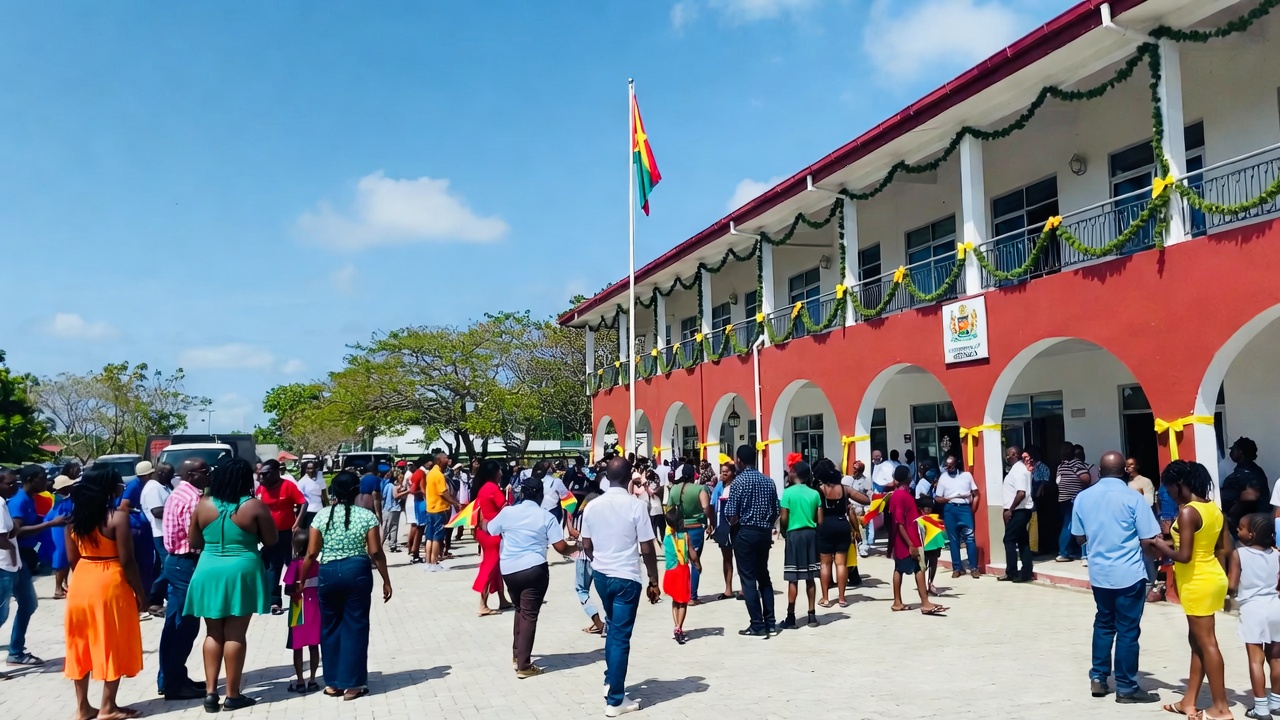
Every year on February 7, the Caribbean island nation of Grenada comes alive with vibrant parades, soulful calypso rhythms, and the rich aroma of nutmeg and coconut milk drifting through the streets. Grenada Independence Day is more than a public holiday. It is a celebration of freedom, resilience, and cultural identity for a nation that has weathered colonial rule, revolution, natural disasters, and foreign invasion.
In 2026, Grenada marks its 52nd anniversary of independence from the United Kingdom. This year the date falls on a Saturday, giving Grenadians an entire weekend to celebrate with family, food, music, and reflection. Whether you are planning a trip to this Caribbean gem or simply want to deepen your understanding of global festivals, here are the top 10 facts about Grenada Independence Day that every traveler and culture enthusiast should know.
1. When Is Grenada Independence Day and Why Is February 7 So Important?
Grenada Independence Day is observed every year on February 7. This date marks the moment Grenada officially became a sovereign nation, free from British colonial rule, in 1974. Unlike some national holidays that shift to a nearby Monday for a long weekend, Grenada celebrates on the fixed calendar date each year. If the holiday falls on a weekend, the following Monday is generally not observed as an additional day off, according to Office Holidays.
The date is also recognized as Grenada’s National Day. It is a full public holiday. Schools close. Banks shut their doors. Government offices go dark. Most private businesses follow suit. The day belongs entirely to the people.
Here is a quick reference table for upcoming Grenada Independence Day dates:
| Year | Day of the Week | Anniversary |
|---|---|---|
| 2024 | Wednesday | 50th |
| 2025 | Friday | 51st |
| 2026 | Saturday | 52nd |
| 2027 | Sunday | 53rd |
| 2028 | Monday | 54th |
For Grenadians, February 7 carries an emotional weight that goes far beyond a day off work. It is a moment to honor ancestors who fought for self-governance. It is a day to remember the sacrifices of those who resisted colonial oppression for more than two centuries. And it is an opportunity to look forward with pride and hope.
The timing of the holiday also matters in a practical sense for travelers and locals alike. February falls in the heart of Grenada’s dry season. The weather is warm but not oppressive. The trade winds keep the island comfortable. For visitors, it is one of the most pleasant times of year to experience the Caribbean — and the added layer of national celebration makes it even more rewarding.
Many Grenadians living abroad — in the diaspora communities of New York, London, Toronto, and Bridgetown — make a point to return home for Independence Day. Family reunions are common. Old friendships are rekindled. Communities that may be separated by thousands of miles of ocean are brought together by the shared meaning of this single date on the calendar.
2. The History Behind Grenada’s Journey to Independence from Britain
To understand why Grenada Independence Day matters so deeply, you need to trace the island’s long and layered colonial history.
Indigenous roots run deep. Long before Europeans arrived, the island was home to the Arawak and later the Carib peoples. Christopher Columbus first sighted the island in 1498 during his third voyage to the Americas, initially naming it “La Concepción.” But he never set foot on its shores. The Spanish showed little interest in settling.
France was the first European power to establish lasting control. In 1649, French colonists took full possession of the island. They built sugar plantations and brought enslaved Africans to work the fields. Grenada quickly became one of France’s wealthiest Caribbean colonies, thanks to its fertile volcanic soil and booming sugar trade.
British control came through war. Following France’s defeat in the Seven Years’ War, the Treaty of Paris in 1763 ceded Grenada to Great Britain. Despite a brief rebellion by pro-French forces, the British maintained colonial rule for more than 200 years.
The road to independence was gradual. During the 1950s, movements toward self-governance gained strength across the Caribbean. In March 1967, Grenada became an “Associated State” of the United Kingdom. This arrangement gave the island full control over its domestic affairs. Britain, however, retained authority over foreign policy and defense.
Full sovereignty came on February 7, 1974, when Grenada achieved complete independence. Sir Eric Gairy, who had led the Grenada United Labour Party, became the nation’s first Prime Minister. Independence was hard-won. It was the result of decades of organizing, negotiation, and a people’s unwavering desire to chart their own course.
The independence movement in Grenada was part of a broader wave of decolonization sweeping the Caribbean in the mid-twentieth century. Jamaica and Trinidad and Tobago gained independence in 1962. Barbados followed in 1966. Grenada’s path was slower, in part because of its smaller size and the cautious approach taken by the British government toward the smaller Windward and Leeward Islands.
The West Indies Federation, formed in 1958, was an early attempt to unite the British Caribbean territories into a single political entity. Grenada was a member. But tensions between the larger and smaller islands led to the federation’s collapse in 1962, and the smaller islands were left to negotiate independence individually.
Gairy had been a powerful labor organizer since the 1950s, championing the rights of agricultural workers and the poor. His popularity carried him into the role of Chief Minister and later Premier under the Associated State arrangement. But even at the time of independence, he was a polarizing figure. His supporters saw him as a champion of the working class. His critics pointed to authoritarian tendencies that would deepen in the years ahead.
Regardless of the politics surrounding the first leader, the achievement of February 7, 1974 remains sacred to Grenadians. The lowering of the Union Jack and the raising of the red, gold, and green national flag at midnight marked the birth of a sovereign nation. That moment — witnessed by a crowd that had gathered in the warm Caribbean night — is what Grenadians remember and celebrate every year.
3. How Do Grenadians Celebrate Independence Day with Parades and Festivals?
Grenada Independence Day is not a quiet, solemn affair. It is a full-bodied Caribbean celebration that engages every sense.
The centerpiece is the military parade. Held at the National Stadium in St. George’s, the capital, this formal ceremony features marching contingents from the Royal Grenada Police Force, the Grenada Cadet Corps, and other national organizations. Officials deliver speeches. The national anthem, “Hail! Grenada,” rings out across the stands. Flags in red, gold, and green ripple in the tropical breeze.
Beyond the formal events, the streets come alive with colorful community parades. Schoolchildren march in crisp uniforms. Cultural groups perform traditional dances. Community organizations showcase floats and banners. The atmosphere is joyous and inclusive.
Music is the heartbeat of the celebration. Calypso, soca, and steelpan performances fill the air from morning until well past sunset. Song competitions are a beloved tradition, with calypsonians composing lyrics that blend social commentary with humor and storytelling. Gospel concerts add a spiritual dimension to the festivities.
The celebration extends well beyond the capital. Across the tri-island state of Grenada, Carriacou, and Petite Martinique, communities hold their own local events. Cultural exhibitions, art displays, relay races, and triathlons are all part of the Independence Day calendar.
For the 51st anniversary in 2025, the OECS Commission noted that Grenada continued celebrations under the theme “Embracing a Future of Development, Transformation, and Unity,” building on the momentum of the landmark 50th anniversary in 2024. That golden jubilee featured year-long events, including the awarding of 50 citizens for their contributions to the nation.
4. What Is the Meaning Behind the Grenada National Flag and Its Symbols?
One of the most recognizable symbols during Independence Day celebrations is the national flag of Grenada, which was adopted on the very day of independence — February 7, 1974. The flag was designed by Anthony C. George of Soubise in the Parish of St. Andrew.
The flag’s design is striking and deeply symbolic. Here is what each element represents, according to the Government of Grenada’s official website:
| Element | Meaning |
|---|---|
| Red border | Courage, vitality, and dedication to harmony and unity |
| Gold (yellow) triangles | Wisdom, warmth, and the sun that shines over the islands |
| Green triangles | Fertility of the land, lush vegetation, and agriculture |
| Seven stars | The seven parishes (administrative divisions) of Grenada |
| Central star on red disc | Unity and the heart of the nation |
| Nutmeg on the hoist triangle | Grenada’s most important agricultural export |
The nutmeg symbol is perhaps the most distinctive feature. It connects the flag directly to Grenada’s identity as the “Isle of Spice” and was the one element preserved from the earlier pre-independence flag. As Britannica notes, the flag was officially raised for the first time at midnight on February 6/7, 1974, the precise moment independence took effect.
Some scholars have also observed that the red, gold, and green color scheme echoes the Pan-African colors, honoring the African heritage of the majority of Grenada’s population. Around 82 percent of Grenadians trace their ancestry to enslaved Africans brought to the island during the colonial era.
During Independence Day, the flag is everywhere — draped on buildings, worn as clothing, painted on faces, and waved by thousands of proud citizens. It is, as the government states, treated as a “sacred emblem of the nation.”
5. Why Is Grenada Called the “Island of Spice” and What Does Nutmeg Mean to Grenadians?
No fact about Grenada is more universally recognized than its connection to nutmeg. The country is the world’s second-largest producer of nutmeg, behind only Indonesia. This tiny island nation, with a population of roughly 117,000 people and a land area of just 344 square kilometers, produces approximately 20 percent of the world’s nutmeg supply, according to the Grenada Consulate in Miami.
The story of nutmeg in Grenada began in the nineteenth century, when the spice was introduced as a replacement crop as the sugar industry declined. The volcanic soil, warm tropical temperatures, and consistent rainfall created a perfect growing environment. By 1918, Grenada was producing roughly a third of global nutmeg exports. The island earned its enduring nickname: “The Isle of Spice.”
But nutmeg is just the beginning. Grenada also produces significant quantities of:
- Mace (the red, lace-like covering around the nutmeg seed)
- Cinnamon
- Cloves
- Ginger
- Turmeric
- Allspice
- Bay leaves
- Vanilla
- Cocoa
The nutmeg industry has faced severe challenges. Hurricane Ivan in 2004 devastated the island, destroying most of its nutmeg trees and collapsing the industry almost overnight. Recovery has been slow but steady. As the World Bank has documented, smallholder farmers — many cultivating five acres or less — have been replanting and innovating to restore production levels. More recently, Hurricane Beryl in July 2024 caused further damage, with estimated economic losses of approximately $218 million, roughly 16.5 percent of Grenada’s GDP.
During Independence Day, nutmeg takes center stage not just as an economic symbol but as a cultural icon. You will find it grated over nutmeg ice cream, stirred into rum punch, folded into baked goods, and infused into soaps and oils sold at local markets. The fragrance of freshly grated nutmeg is, for many Grenadians, the very smell of home.
Nutmeg also holds a place in folk medicine across the island. Rural farmers and families have long worn a nutmeg on a string around their necks or placed whole nuts in their mouths to ward off ailments and relieve aches. The essential oil derived from nutmeg is used topically for joint pain and is believed to have anti-inflammatory properties. Nutmeg syrup, nutmeg jam, and nutmeg-infused rum are sold at roadside stands and spice shops throughout the island.
There are roughly seven thousand nutmeg growers in Grenada, most of them smallholder farmers working plots of five acres or less. The Grenada Co-operative Nutmeg Association (GCNA) has historically managed the industry, consolidating production and setting prices to protect small farmers. In recent years, however, a new generation of entrepreneurs — young farmers who emphasize organic and regenerative practices — have begun exporting directly, bypassing the traditional consolidation system and commanding premium prices on the international market.
The connection between nutmeg and national identity is so strong that any visit to Grenada during Independence Day will inevitably bring you face to face with the spice. Spice tours at historic estates like Belmont Estate and Dougaldston Spice Estate are among the most popular activities for visitors. These tours walk you through the complete process of harvesting, drying, and grading nutmeg by hand — a process that has changed remarkably little in over a century.
6. What Is Oil Down, Grenada’s National Dish, and Why Is It Served on Independence Day?
If you attend a Grenada Independence Day celebration, someone will inevitably invite you to share a pot of Oil Down — the island’s beloved national dish. Pronounced locally as something close to “all-don,” this hearty one-pot meal is the ultimate comfort food and a symbol of Grenadian togetherness.
Oil Down is a rich stew that combines breadfruit, salted meat (often pigtail or salt fish), chicken, dumplings, callaloo greens, and a generous pour of coconut milk, seasoned with turmeric, thyme, garlic, and other local spices. The name refers to the cooking process: the coconut milk slowly reduces until all the liquid is absorbed, leaving a thick, fragrant coating of coconut oil over every ingredient.
What makes Oil Down special is the ritual of preparation. The pot is “packed,” not stirred. As NPR reported, breadfruit and meat go on the bottom, vegetables in the middle, and callaloo leaves with dumplings on top. The ingredients simmer together in this layered arrangement, and each scoop from the pot delivers a cross-section of the entire dish.
There is no single “correct” recipe for Oil Down. Every household and every parish has its own variation. Some families add conch or crab. Others include green bananas, yams, or dasheen. Vegetarian versions exist too. The variety is part of the beauty — Oil Down is as diverse as Grenada itself.
The dish carries deep historical significance. As food historians have noted, nearly every ingredient in Oil Down reflects a different thread of Grenada’s cultural history:
- Callaloo greens — cultivated by the island’s early Amerindian inhabitants
- Breadfruit — introduced to the Caribbean during the colonial era as food for enslaved people
- Turmeric (saffron) — brought by South Asian indentured workers in the nineteenth century
- Salted meat — a preservation technique essential in the tropical climate
- Coconut milk — a staple of Caribbean island cooking across cultures
On Independence Day, Oil Down is prepared in large pots at homes, restaurants, and community gatherings across the island. It is a meal meant to be shared, and sharing it is an act of national belonging.
7. How Did the 1979 Revolution and 1983 US Invasion Shape Grenada’s National Identity?
Grenada’s post-independence history is not a simple tale of unbroken progress. The years between independence and the mid-1980s were among the most turbulent in the nation’s story, and those events remain deeply woven into the fabric of Independence Day reflection.
Eric Gairy, the first Prime Minister, quickly became a controversial figure. His rule was marked by corruption, authoritarian tendencies, and the use of a paramilitary force called the “Mongoose Gang” to intimidate political opponents. Public dissatisfaction grew.
On March 13, 1979, while Gairy was out of the country, a socialist political organization called the New Jewel Movement (NJM) — short for Joint Endeavor for Welfare, Education, and Liberation — staged a bloodless coup. Maurice Bishop, a charismatic attorney, became Prime Minister and established the People’s Revolutionary Government (PRG).
Bishop’s government embarked on ambitious social and economic reforms. Literacy programs expanded. A new international airport was under construction at Point Salines. But the government also aligned closely with Cuba and the Soviet Union, which alarmed the United States during the height of the Cold War.
Internal tensions within the NJM proved fatal. In October 1983, a hard-line faction led by Deputy Prime Minister Bernard Coard placed Bishop under house arrest. When thousands of supporters freed him on October 19, soldiers loyal to Coard opened fire on the crowd and subsequently executed Bishop and several of his supporters. General Hudson Austin declared himself head of a Revolutionary Military Council. Grenada descended into chaos.
On October 25, 1983, the United States, along with a coalition from the Organization of Eastern Caribbean States and other Caribbean nations, launched Operation Urgent Fury. As Britannica documents, it was the largest American military action since the Vietnam War. The stated objectives were to evacuate approximately 600 American medical students on the island and to restore order.
The operation concluded within days. Free elections followed in December 1984, returning Grenada to democratic governance.
Today, the legacy of this period is complex. Maurice Bishop remains a complicated but revered figure. The international airport he championed was completed and eventually named Maurice Bishop International Airport. October 19 is now observed as National Heroes Day, and October 25 is marked as Thanksgiving Day — commemorating the intervention that restored democracy.
On Independence Day, Grenadians reflect on this history with honesty. The celebrations are not just about the moment of independence in 1974 but about the full journey — including the hard lessons of revolution, internal conflict, and recovery.
The emotional complexity of this period is visible in the way Grenadians honor multiple dates throughout the year. Independence Day on February 7 celebrates the birth of the nation. National Heroes Day on October 19 honors Bishop and those killed during the internal coup. Thanksgiving Day on October 25 acknowledges the intervention that restored democracy. Taken together, these dates paint a portrait of a nation that has grappled with difficult questions about power, ideology, and sovereignty.
For visitors attending Independence Day celebrations, it is worth understanding this context. The speeches delivered by politicians and community leaders often reference the full arc of Grenada’s post-independence history. They speak of lessons learned. They honor those who were lost. And they reaffirm a collective commitment to democratic governance and peaceful coexistence.
This history also explains why education is so deeply valued in Grenada. The government has consistently invested heavily in schools and literacy. According to recent data, Grenada’s literacy rate stands at approximately 98.6 percent, and the country has spent more than 10 percent of its national budget on education — one of the highest rates in the world. The presence of St. George’s University, a major international medical school founded in 1976, further underscores the island’s commitment to learning and development.
8. What Role Does Calypso and Steelpan Music Play in Grenada Independence Day Celebrations?
Music is not a backdrop to Grenada Independence Day. It is the celebration.
Two musical traditions dominate the festivities: calypso and steelpan. Both have deep roots in the Caribbean’s African heritage and in the creative resistance of enslaved peoples who used music to communicate, protest, and preserve their cultures.
Calypso is a genre defined by its sharp lyrics, infectious rhythms, and tradition of social commentary. In Grenada, calypsonians are regarded as storytellers and truth-tellers. During the Independence Day season, calypso competitions are a highlight. Performers compose original songs that address current events, politics, romance, and national pride. The best calypsonians achieve celebrity status, and winning the national competition is a tremendous honor.
Steelpan — the only acoustic musical instrument invented in the twentieth century — was born in Trinidad and Tobago and has become a cornerstone of Caribbean musical identity. In Grenada, steelpan orchestras perform at Independence Day ceremonies, street parades, and evening concerts. The bright, resonant sound of the pans carries a sense of joy and collective memory.
Soca, a faster, dance-oriented offshoot of calypso, also fills the streets. During Independence Day weekend, sound systems blast soca hits, and spontaneous dancing breaks out on corners and in parks.
The musical traditions are closely linked to Grenada’s famous Spicemas Carnival, held each August. While Independence Day and Carnival are separate events, they share a common cultural DNA. The artistic energy of calypso and steelpan flows through both, connecting the joy of carnival to the pride of national independence.
Gospel music also plays a significant role on Independence Day. Grenada is a deeply religious society — the national motto is “Ever Conscious of God, We Aspire, Build and Advance as One People.” Church services and gospel concerts are a standard part of the official program, blending spiritual gratitude with national celebration.
The connection between music and national identity in Grenada goes deeper than entertainment. During the colonial era, enslaved Africans on the island used music and dance as forms of cultural preservation and coded resistance. Drumming rhythms, call-and-response singing, and storytelling through song were all ways of maintaining African traditions and communicating in ways that overseers could not easily understand.
After emancipation, these traditions evolved into the calypso and folk music that define Grenadian culture today. The annual Soca Monarch competition and Calypso Monarch competition during the Spicemas Carnival season carry enormous prestige. Though they take place in August, the artistic energy of these competitions is always felt during Independence Day as well. Past monarchs often perform at Independence Day events, and their songs — many of which address social issues, national pride, and Caribbean solidarity — serve as unofficial anthems during the February celebrations.
For visitors, attending a steelpan performance during Independence Day is a transformative experience. The instrument, crafted from discarded oil drums, produces a sound that is at once bright and haunting, joyful and deeply soulful. When a full steelpan orchestra plays the Grenadian national anthem at an Independence Day ceremony, the effect is powerful enough to move even those hearing it for the first time.
9. Who Is Kirani James and Why Is He a Symbol of Grenadian Pride on Independence Day?
No conversation about modern Grenadian pride is complete without mentioning Sir Kirani James, the sprinter who became the most celebrated athlete in the nation’s history.
Born on September 1, 1992, in the small fishing village of Gouyave on Grenada’s northwest coast, James showed extraordinary talent from a young age. He ran the fastest 400-meter times ever recorded by a 14-year-old and a 15-year-old. He became the youngest 400m world champion in history at just 18 years old, winning gold at the 2011 World Championships in Daegu, South Korea.
But his crowning achievement came at the 2012 London Olympics. On August 6, 2012, James won the 400-meter gold medal in a time of 43.94 seconds — a national record. It was Grenada’s first-ever Olympic medal. He also became the first non-American runner to break the 44-second barrier in the event.
The impact on Grenada was profound. As Olympics.com records, James went on to win silver at the 2016 Rio Olympics and bronze at the 2020 Tokyo Olympics, making him the first man in history to earn the full set of three Olympic medals in the 400 meters.
Grenada showered him with honors:
- Lagoon Road in St. George’s was renamed Kirani James Boulevard
- The National Stadium was renamed Kirani James Athletic Stadium
- September 1 was declared Kirani James Day
- He received diplomatic passport privileges as a Sports/Tourism Ambassador
- In 2025, he was knighted to mark Grenada’s 51st independence anniversary, becoming Sir Kirani James
On Independence Day, James represents everything Grenadians aspire to: excellence against the odds, global recognition from humble beginnings, and unwavering love for home. His story is a reminder that a nation of just over 100,000 people can produce world-class greatness. School programs during Independence Day often feature his story as an inspiration for the next generation.
10. How Has Grenada Built Resilience After Hurricane Beryl and What Does Independence Mean in 2026?
The story of Grenada Independence Day in 2026 cannot be told without acknowledging the shadow — and the light — cast by Hurricane Beryl.
On July 1, 2024, Hurricane Beryl made direct landfall on the island of Carriacou as a high-end Category 4 storm, with maximum sustained winds of 150 miles per hour. It was the strongest hurricane to form so early in the Atlantic season in recorded history. The destruction was catastrophic.
As the United Nations reported, the entire island of Carriacou was “completely affected,” impacting 100 percent of the population. More than 95 percent of homes on Carriacou and Petite Martinique were damaged or destroyed. Agriculture was wiped out. The electrical grid collapsed. Communications were severed. Grenada’s Prime Minister Dickon Mitchell described the devastation as “almost Armageddon-like.”
Total economic damages were estimated at approximately $218 million — roughly 16.5 percent of Grenada’s 2023 GDP, according to the Global Facility for Disaster Reduction and Recovery.
Yet the response embodied the Grenadian spirit that Independence Day celebrates. Volunteers banded together to ship supplies to the stricken islands. Regional partners and international organizations mobilized rapidly. The Grenada Red Cross, CARICOM nations, the United Nations, and organizations like World Central Kitchen and Samaritan’s Purse all contributed to the relief effort.
By early 2025, recovery was well underway. Essential services were restored on Carriacou. Schools reopened. Businesses began welcoming visitors again. Nature itself began to heal — green shoots emerged from trees that had appeared completely dead just weeks earlier.
Independence Day 2026 carries special weight. It is the first full celebration after the community has had time to process, rebuild, and reflect on what Beryl revealed. The hurricane laid bare the vulnerability of small island nations to climate change. Rising ocean temperatures are making storms stronger and more unpredictable. For Grenada, building resilience is no longer an abstract policy goal — it is an urgent, lived reality.
Prime Minister Mitchell, in his “Vision 75” roadmap, has articulated ambitious goals for the nation’s development leading up to its 75th independence anniversary. The National Sustainable Development Plan 2020–2035 guides Grenada’s efforts to strengthen infrastructure, diversify the economy beyond tourism and spices, and build climate resilience.
On this Independence Day, the phrase “Because we have life, we have hope” — shared by the Prime Minister’s office in the aftermath of Beryl — resonates with particular power. Independence, for Grenada, is not just a memory of 1974. It is an ongoing project. It is the daily work of building a nation that can withstand whatever the future brings.
The recovery from Hurricane Beryl has also highlighted the importance of regional solidarity in the Caribbean. CARICOM nations rallied to support Grenada. Trinidad and Tobago, Guyana, and Barbados sent supplies and personnel. The Organization of Eastern Caribbean States coordinated regional responses. This spirit of mutual aid is deeply meaningful to Grenadians, who see themselves as part of a larger Caribbean family.
There is also a growing conversation about the intersection of climate justice and sovereignty. Small island developing states like Grenada contribute a negligible fraction of global greenhouse gas emissions. Yet they bear a disproportionate share of the consequences. Rising sea levels threaten coastal communities. Warmer ocean waters fuel stronger hurricanes. Coral reefs — essential to both the ecosystem and the tourism economy — are bleaching at accelerating rates.
For Grenada, independence in 2026 means not only celebrating the political freedom won in 1974 but also fighting for the right to a stable climate and a secure future. The island has become a vocal advocate in international climate negotiations, punching far above its weight in forums like the United Nations Framework Convention on Climate Change (UNFCCC).
Grenada’s Grenada Dove, the national bird and one of the most critically endangered doves in the world, serves as a poignant symbol of what is at stake. Found nowhere else on Earth, this small, fragile creature depends on the preservation of the island’s natural habitats. Protecting the Grenada Dove means protecting the island itself — its forests, its coastlines, its very identity.
As Grenadians gather on February 7, 2026, they will celebrate with the same energy and warmth that has defined every Independence Day before. The parades will march. The calypso will ring out. The Oil Down will simmer. The nutmeg will perfume the air. But beneath the celebration will be a deeper awareness — that independence is not a destination but a journey, and that the work of building and sustaining a free nation never ends.
Practical Travel Tips for Visiting Grenada During Independence Day Weekend
If this article has inspired you to experience Grenada Independence Day firsthand, here are some practical tips for planning your visit:
Best time to book flights: Grenada is served by Maurice Bishop International Airport (GND), with direct flights from cities including Miami, New York, Toronto, and London. Book early — February is peak tourist season in the Caribbean, and independence weekend is especially popular.
Where to stay: St. George’s, the capital, is the hub of official celebrations. The Grand Anse beach area on the southwest coast offers excellent hotels and is close to the action. For a quieter experience, consider Carriacou, which celebrates with its own community events.
What to eat: Oil Down is a must, but also try:
- Nutmeg ice cream — sweet and warmly spiced, sold at shops across the island
- Lambi — conch prepared in various styles
- Curried goat — a Caribbean staple with Grenadian flair
- Cocoa tea — a rich, chocolate-based hot drink flavored with nutmeg and cinnamon
- Rum punch — every Grenadian household has a secret recipe
What to wear: Grenadians dress up for Independence Day. Expect to see national colors everywhere. If you want to participate, wearing red, gold, and green is a respectful way to join the spirit.
Cultural etiquette: Grenada is a deeply welcoming society, but visitors should approach the celebrations with respect. Independence Day is not just a party — it is a meaningful national commemoration. Take time to listen to the speeches, watch the parade, and learn about the history.
Weather: February is one of the driest and most pleasant months in Grenada. Expect temperatures around 25–30°C (77–86°F) with low humidity and gentle trade winds. It is ideal beach and festival weather.
Getting around: Grenada is a small island — only about 21 miles long and 12 miles wide — so travel times are manageable. Local buses (actually colorful minivans) are affordable and frequent, running routes from St. George’s to towns like Grenville, Gouyave, and Sauteurs. Taxis are readily available but negotiate the fare before you get in, as meters are not commonly used. Renting a car gives you the most flexibility, but be prepared for narrow, winding mountain roads and driving on the left side of the road, a legacy of British colonial rule.
Things to do beyond the celebrations: If you extend your trip beyond Independence Day, Grenada offers an extraordinary range of experiences:
- Grand Etang National Park — over 20 miles of hiking trails through lush rainforest, with a volcanic crater lake at the center
- Molinere Bay Underwater Sculpture Park — a unique snorkeling and diving site with submerged sculptures designed by artist Jason deCaires Taylor
- Annandale Falls — a beautiful waterfall surrounded by tropical foliage, perfect for a cooling dip
- St. George’s Saturday Market — a bustling farmers’ market where vendors sell fresh produce, spices, handmade crafts, and prepared foods
- Belmont Estate — a 400-acre working plantation offering tours of cocoa, nutmeg, and organic farming operations
Currency and costs: Grenada uses the Eastern Caribbean Dollar (EC$), though US dollars are widely accepted. The island is moderately priced by Caribbean standards. A local meal at a modest restaurant might cost $15–25 USD, while a fine dining experience runs $40–80 USD. Accommodation ranges from budget guesthouses at $50–80 per night to luxury resorts at $300 or more.
Language: English is the official language, making communication easy for most international visitors. You will also hear Grenadian Creole, a French-influenced patois that reflects the island’s earlier colonial history. Place names like Gouyave, Sauteurs, and Grand Anse are reminders of the French period.
Why Grenada Independence Day Matters Beyond the Caribbean
Grenada’s independence story resonates far beyond its shores. It is a story shared by dozens of nations that emerged from European colonial rule in the twentieth century. It speaks to universal themes: the desire for self-determination, the complexity of building a new nation, and the resilience required to face both human-made and natural crises.
For the Grenadian diaspora — estimated to be as large or larger than the on-island population, with communities in the United States, United Kingdom, Canada, and across the Caribbean — Independence Day is a vital thread of connection to home. Diaspora communities organize their own celebrations, complete with Oil Down, calypso music, and the raising of the national flag.
In a world that often overlooks small island nations, Grenada Independence Day is a reminder that every nation, no matter its size, carries a story worth knowing. A country of barely 344 square kilometers has produced the world’s second-largest supply of nutmeg, an Olympic gold medalist, a rich literary and musical tradition, and a people whose warmth and resilience have earned Grenada the affectionate nickname “the Spice of the Caribbean.”
As Grenadians say on this day: “Ever conscious of God, we aspire, build and advance as one people.”