A Journey Through Centuries of Tradition, Spirituality, and Cultural Celebration on the Roof of the World
When the first rays of dawn break over the snow-capped peaks of the Himalayas in late winter, something extraordinary stirs across the Tibetan Plateau. Prayer flags flutter with renewed vigor. The aroma of butter tea and freshly fried khapse wafts through village streets. Monks in maroon robes chant ancient sutras that have echoed through monastery halls for over a millennium. Losar has arrived—the Tibetan New Year, a celebration that ranks among the most spiritually profound and culturally rich festivals in all of Asia.
For travelers, cultural enthusiasts, and those seeking to understand the depth of Tibetan heritage, Losar represents far more than a simple calendar transition. It is a portal into a civilization that has preserved its traditions against extraordinary odds, a window into Buddhist philosophy in practice, and a testament to human resilience and joy. In this comprehensive exploration, we will journey through ten remarkable facts about Losar that reveal why this ancient festival continues to captivate hearts around the world.
Whether you are planning to experience Losar firsthand in Lhasa, Dharamsala, or a Tibetan community near you, or simply wish to deepen your understanding of world cultures, this guide will illuminate the profound history, spiritual significance, and living traditions of the Tibetan New Year celebration.
1. What Is Losar and When Is Tibetan New Year Celebrated Each Year?
Losar (བོད་ཀྱི་ལོ་གསར་, pronounced “Lo-sar”) translates directly as “New Year” in Tibetan—lo meaning “year” and sar meaning “new.” However, this simple translation barely scratches the surface of what this celebration encompasses.
The Tibetan Lunisolar Calendar Explained
Unlike the Gregorian calendar used in most Western countries, Tibetans follow a lunisolar calendar that combines lunar months with solar observations. This sophisticated system was formalized in 1027 CE, though its roots extend much further back in Tibetan astronomical traditions.
The Tibetan calendar incorporates:
- Twelve lunar months of approximately 29.5 days each
- Intercalary adjustments to align with the solar year
- Astrological calculations based on classical Indian and Chinese influences
- Buddhist cosmological principles integrated with practical timekeeping
Because of this lunisolar system, Losar falls on a different date each year according to the Western calendar, typically landing somewhere between early February and early March. The celebration coincides roughly with the new moon nearest to the beginning of spring in the northern hemisphere.
| Western Year | Tibetan Year | Animal Sign | Element | Losar Start Date |
|---|---|---|---|---|
| 2024 | 2151 | Wood Dragon | Wood | February 10 |
| 2025 | 2152 | Wood Snake | Wood | February 28 |
| 2026 | 2153 | Fire Horse | Fire | February 17 |
| 2027 | 2154 | Fire Sheep | Fire | February 6 |
| 2028 | 2155 | Earth Monkey | Earth | January 26 |
The Three-Day Core Celebration
While preparations begin weeks in advance and festivities can extend for fifteen days or more, the core of Losar spans three days, each with distinct spiritual and social significance:
Day One (Lama Losar): Dedicated to religious observances and visiting monasteries. Families rise before dawn to offer the first butter lamp and incense of the new year.
Day Two (Gyalpo Losar): The “King’s Losar,” historically a day for political ceremonies. Today, it emphasizes community gatherings and visiting neighbors.
Day Three (Choekhor Losar): Focuses on preparing for the year ahead. Prayer flags are hung, and offerings are made at sacred sites.
The celebration embodies the Tibetan approach to time itself—cyclical rather than linear, spiritually charged rather than merely mechanical. Each new year is not simply a fresh start but a continuation of an eternal cosmic dance.
2. Ancient Origins of Losar: How Did Tibetan New Year Begin in Pre-Buddhist Tibet?
The history of Losar stretches back into the mists of pre-Buddhist Tibet, long before the dharma arrived on the plateau. Understanding these ancient origins reveals how Tibetan culture has always possessed a remarkable ability to adapt and evolve while preserving its essential character.
The Bon Religion and Early Winter Festivals
Before Buddhism reached Tibet in the 7th century CE, the indigenous Bon religion dominated spiritual life across the plateau. Bon practitioners held elaborate winter ceremonies that many scholars consider the precursors to Losar.
These early celebrations centered on:
- Appeasing local spirits and mountain deities
- Burning juniper incense (sang) to purify the environment
- Making offerings to ensure agricultural success
- Shamanic rituals to ward off negative forces
The timing of these festivals aligned with the agricultural cycle of the Tibetan highlands. Late winter, when stores from the previous harvest were being depleted but spring had not yet arrived, was a liminal period—dangerous yet full of potential. Rituals during this time sought to ensure safe passage into the growing season.
The Incense-Offering Legend
One of the most beloved origin stories of Losar involves an elderly woman named Belma who lived during Tibet’s pre-Buddhist era. According to tradition, Belma developed the practice of offering incense during the coldest winter months to appease the spirits and ensure favorable conditions for the coming year.
Her ritual eventually spread throughout Tibet, becoming institutionalized as the annual incense-offering ceremony (sangpo) that remains central to Losar observances today. In some remote Tibetan villages, Losar is still referred to as the “Incense-Offering Festival” in honor of this legendary origin.
The Bonpo Calendar Connection
The Bon tradition maintained its own calendar system, and scholars believe that certain features of the current Tibetan calendar—including some of the animal associations and elemental cycles—derive from pre-Buddhist Bonpo astronomy rather than later Indian or Chinese influences.
This means that when Tibetans celebrate Losar today, they are participating in a continuous cultural tradition spanning over 2,000 years, making it one of the oldest continuously observed new year celebrations in Asia.
3. How Buddhism Transformed the Tibetan New Year Celebration Forever
The arrival of Buddhism in Tibet represents one of history’s most dramatic cultural transformations. Over several centuries, Indian Buddhist teachings merged with indigenous Tibetan practices to create a unique spiritual civilization. Losar stands as perhaps the finest example of this synthesis.
The Buddhist Integration Period (7th-11th Centuries)
When King Songtsen Gampo welcomed Buddhism to Tibet in the 7th century CE, he initiated a process that would fundamentally reshape every aspect of Tibetan life—including how the new year was celebrated.
The transformation happened gradually:
- Buddhist monks began participating in traditional winter ceremonies
- Tantric rituals were incorporated alongside indigenous practices
- Indian astronomical systems merged with local calendrical traditions
- Dharma teachings gave new meaning to purification and renewal themes
By the time of King Trisong Detsen in the 8th century, who famously invited the great Indian master Padmasambhava (Guru Rinpoche) to Tibet, Buddhism had become inextricably woven into Losar observances.
The Miraculous Events at Samye
According to tradition, when Padmasambhava was establishing the first Buddhist monastery in Tibet at Samye around 779 CE, local spirits and demons attempted to obstruct the construction. Through his spiritual power, Padmasambhava subdued these forces and bound them as protectors of the dharma.
The annual celebration commemorating this victory became integrated with Losar festivities. This is why protective rituals and ceremonies to subdue negative forces remain central to Losar observances, particularly in the days leading up to the new year.
The Kalachakra Calendar System
The formal Tibetan calendar used today was established in 1027 CE with the introduction of the Kalachakra (Wheel of Time) teachings from India. This sophisticated system brought:
- The 60-year cycle combining twelve animals with five elements
- Complex astrological calculations for determining auspicious dates
- Integration of Buddhist cosmology with practical timekeeping
- Standardized ritual calendars across monasteries
The Kalachakra system transformed Losar from a folk festival into a cosmologically significant event marking not just the earth’s annual cycle but humanity’s place within vast Buddhist concepts of time and existence.
4. Discover the Sacred Rituals and Spiritual Practices of Losar Preparations
The magic of Losar begins not on New Year’s Day itself but in the weeks of meticulous preparation that precede it. These preparatory rituals reveal the Tibetan understanding that celebration requires intention, that joy must be cultivated through mindful action.
Gutor: The Grand Purification Ceremony
The most important pre-Losar ritual is Gutor, the “29th Day Ceremony” held on the final day of the old year. Gutor encompasses both outer cleaning—of homes, monasteries, and public spaces—and inner purification of mind and spirit.
Physical Cleaning Traditions:
- Whitewashing homes with fresh lime
- Scrubbing cooking vessels until they gleam
- Sweeping every corner to remove old dust and debris
- Replacing tattered prayer flags with new ones
Spiritual Purification Practices:
- Confession ceremonies (sojong) in monasteries
- Torma offerings to protector deities
- Meditation on impermanence and renewal
- Recitation of purification mantras
The climax of Gutor involves creating a special torma (ritual cake) called a “linga” that represents all the negativity, obstacles, and misfortunes of the old year. This torma is ceremonially expelled from the home or monastery, often burned in a great bonfire, symbolically casting out all that should not be carried into the new year.
The Monastery Night Ceremonies
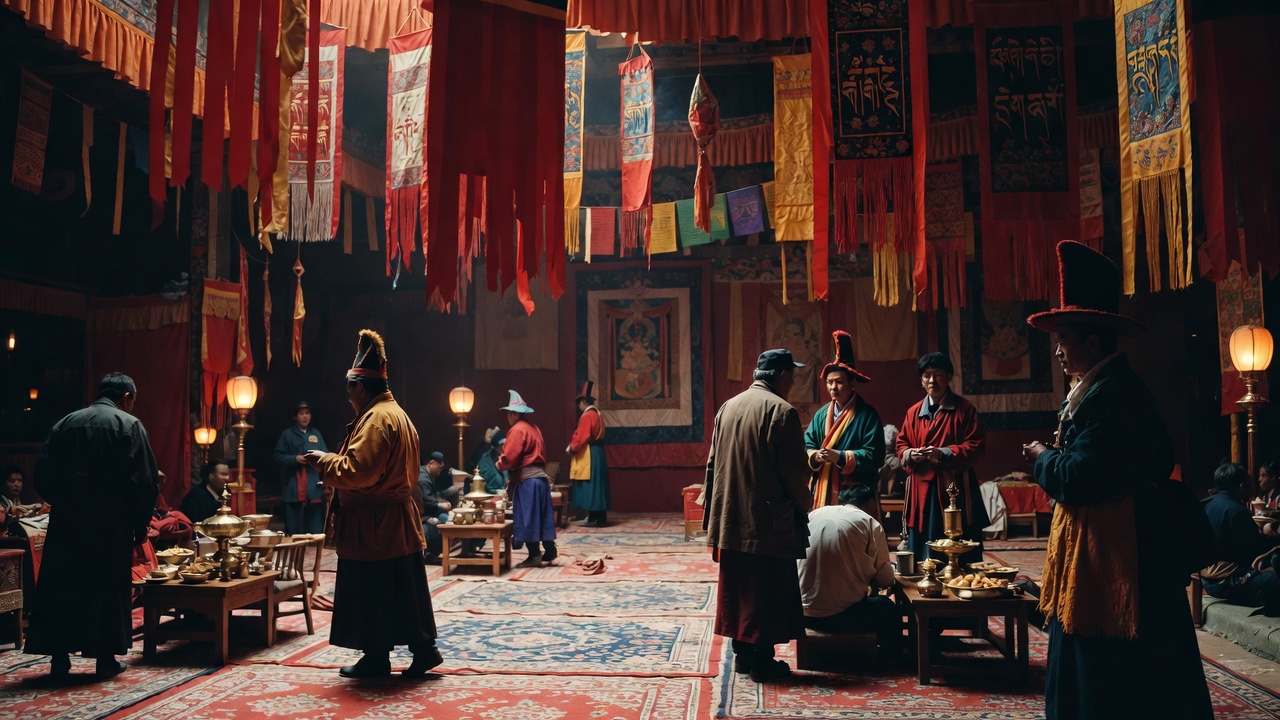
On the eve of Losar, major monasteries throughout the Tibetan world hold extraordinary all-night ceremonies. At the Potala Palace in Lhasa, Jokhang Temple, Drepung, Sera, and Ganden monasteries, thousands of monks historically gathered for these observances.
The ceremonies include:
| Time | Ceremony | Purpose |
|---|---|---|
| Sunset | Protective rituals | Sealing borders against negative forces |
| Evening | Dharma protector offerings | Invoking spiritual guardians |
| Midnight | Torma expulsion | Casting out obstacles |
| Pre-dawn | First offerings of new year | Beginning auspiciously |
| Sunrise | Welcoming ceremonies | Greeting deities and buddhas |
Household Altar Preparations
In every Tibetan home, the family altar becomes the focus of intense preparation. Fresh offerings are prepared:
- Water bowls (yon chab) filled with pure water
- Butter lamps (chöme) representing wisdom dispelling ignorance
- Fresh flowers when available, or artificial flowers in winter
- Incense (pö) purifying the atmosphere
- Food offerings (torma) to buddhas and protectors
- The Derga or Chemar box containing roasted barley and tsampa
The Chemar box is particularly significant—a two-compartment wooden container filled with tsampa (roasted barley flour) and dro (roasted barley grains), decorated with colored butter sculptures and topped with stalks of barley or wheat representing the harvest.
5. Traditional Tibetan New Year Food: What Do Tibetans Eat During Losar?
Food lies at the heart of Losar celebrations, serving not merely to nourish the body but to convey blessings, reinforce family bonds, and connect celebrants with their ancestors. The culinary traditions of Losar reveal deep cultural values around hospitality, prosperity, and spiritual practice.
Guthuk: The Auspicious New Year’s Eve Soup
No Losar food carries more significance than Guthuk (དགུ་ཐུག་), the special soup served on New Year’s Eve. The name translates as “nine ingredients soup,” though the actual number of ingredients may vary.
Traditional Guthuk Ingredients:
- Handmade wheat noodles
- Yak meat or mutton
- Dried cheese (chura)
- Radish or turnip
- Dried peas
- Wild herbs
- Butter
- Salt
- Sometimes dried fruits
The most enchanting aspect of Guthuk is the hidden dough balls placed in the soup, each containing a concealed object or symbol that prophesies the finder’s fortune for the coming year:
| Hidden Item | Prophecy |
|---|---|
| White wool | Purity of heart, good intentions |
| Coal or black stone | Black heart, need for self-reflection |
| Chili pepper | Sharp tongue, tendency to gossip |
| Salt | Laziness, sluggish energy |
| Sun or moon symbol | Great prosperity and success |
| Paper with holy text | Spiritual blessings, dharma connection |
| Pea or small bean | Stinginess, need for generosity |
Families laugh together as each person discovers their fortune, though even “negative” prophecies are taken lightheartedly. The meal creates a moment of joy and bonding as the old year ends.
Khapse: The Fried Festival Pastries
No Losar would be complete without mountains of Khapse (ཁ་ཟས་), the crispy fried pastries that appear on every Tibetan table during the celebration. These golden-brown treats require days of preparation and demonstrate a family’s hospitality and prosperity.
Khapse comes in numerous forms:
- Bugdil – ear-shaped twisted pastries
- Donkey ears (bongbu’i namchag) – large, flat rectangles
- Dro – twisted rope shapes
- Amchok – sweetened varieties with sugar coating
- Ceremonial khapse – elaborate multi-layered creations for altar offerings
The preparation of khapse is a communal activity bringing together family members, neighbors, and friends. In traditional households, women gather for several days before Losar to mix dough, shape pastries, and oversee the frying. The quantity produced reflects both the expected number of visitors and the family’s wish for abundance.
Chang and Butter Tea: Essential Beverages
Chang (བཅངས་), Tibetan barley beer, flows freely during Losar. This mildly alcoholic beverage with a slightly sour, yeasty flavor has been brewed in Tibet for thousands of years. During Losar, it serves as the drink of celebration and hospitality.
Butter tea (po cha or bo ja) remains essential throughout the festival period:
- Served to every guest
- Offered at altars
- Drunk throughout the day for warmth and energy
- Made with yak butter, salt, and black tea
The contrast between these beverages—butter tea for nourishment and everyday hospitality, chang for celebration—mirrors the Losar balance between spiritual observance and joyous festivity.
Symbolic Foods and Their Meanings
Every food served during Losar carries symbolic weight:
- Whole animals (lamb, yak) – Abundance and completeness
- Dried fruits and nuts – Sweetness in the coming year
- Candy and sweets – Joy and pleasant experiences
- Round dumplings (momo) – Wholeness, the cosmic wheel
- Long noodles – Long life
- Sheep’s head – Good fortune and prosperity
The sheep’s head (luk go) deserves special mention. A decorated sheep’s head, often made from butter or tsampa rather than actual bone, is displayed prominently during Losar. This connects to pastoral Tibetan life where sheep represented wealth and prosperity.
6. The Meaning Behind Tibetan New Year Decorations and Symbols
Walking into a Tibetan home during Losar is an experience of visual richness that speaks to centuries of symbolic tradition. Every decoration, every arrangement, every color carries meaning that transforms living spaces into sacred environments celebrating renewal, prosperity, and spiritual aspiration.
The Chemar Box: Heart of the Losar Altar
The Chemar (ཕྱེ་མར་) or Losar offering box stands as the centerpiece of every Tibetan home’s new year celebration. This ornate wooden container typically features two compartments:
Left compartment: Tsampa (roasted barley flour) representing the staple food that sustained Tibetan civilization for millennia
Right compartment: Dro (roasted barley grains) symbolizing seeds of future prosperity and abundance
Rising from the tsampa and dro are:
- Colored butter sculptures (tor) shaped as flowers, symbols, or auspicious signs
- Stalks of barley or wheat (dru gu) representing the harvest
- Multicolored decorations attracting positive energy
When guests arrive during Losar, they are invited to take a pinch from the Chemar box and toss it in the air as an offering, then taste a bit while saying “Tashi Delek” (བཀྲ་ཤིས་བདེ་ལེགས་ – “May all auspicious signs come to this!”).
Prayer Flags and Their Five Colors
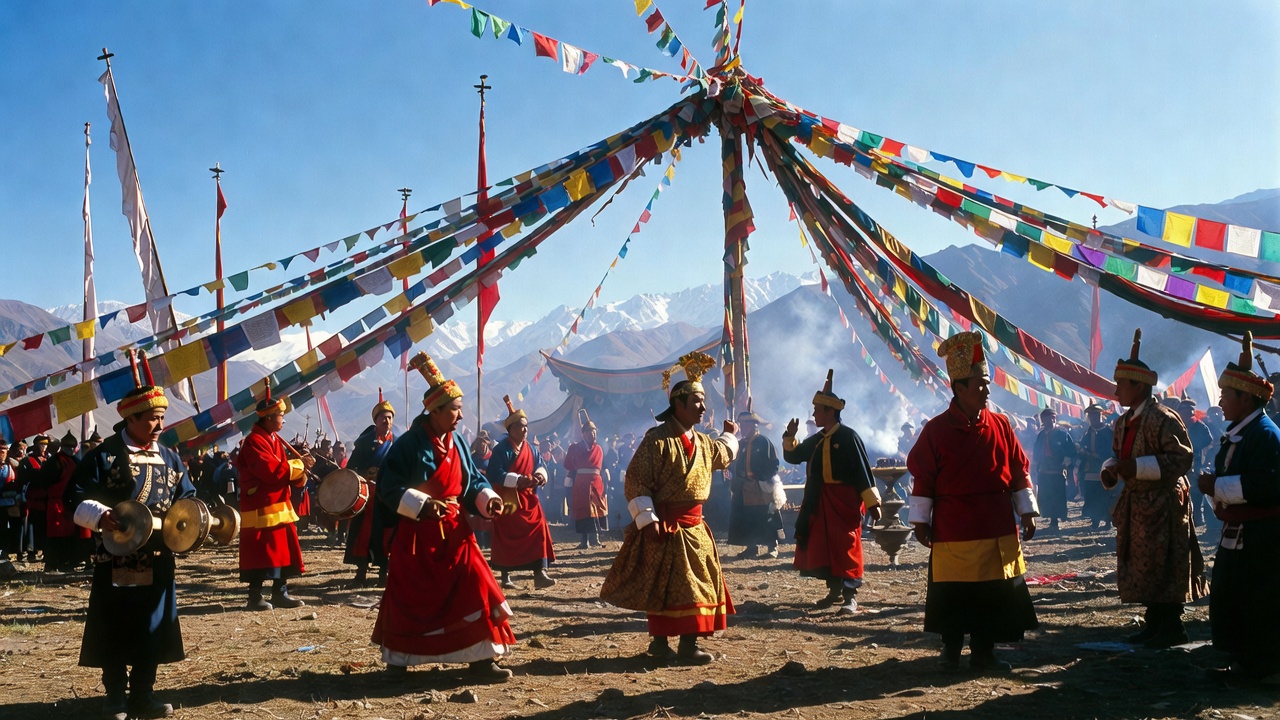
Lung ta (རླུང་རྟ་), the iconic Tibetan prayer flags, are renewed at Losar throughout the Tibetan world. These rectangular cloth flags, strung on mountain passes, rooftops, and sacred sites, spread blessings with every flutter in the wind.
The five colors of prayer flags correspond to the five elements:
| Color | Element | Symbolism | Direction |
|---|---|---|---|
| Blue | Sky/Space | Wisdom, healing | Center |
| White | Air/Wind | Learning, knowledge | West |
| Red | Fire | Vitality, life force | South |
| Green | Water | Balance, harmony | North |
| Yellow | Earth | Grounding, stability | East |
At Losar, old, faded prayer flags are ceremonially removed and new ones hung in their place. This is considered highly meritorious, as the prayers printed on the flags—typically mantras, sutras, and auspicious symbols—will be carried by the wind to benefit all sentient beings.
Auspicious Symbols Throughout the Home
Tibetan homes during Losar display an array of auspicious symbols (bkra shis rtags brgyad), the Eight Auspicious Signs of Buddhism:
- Parasol (gdugs) – Protection from suffering
- Golden fish pair (gser nya) – Freedom, good fortune
- Treasure vase (gter gyi bum pa) – Abundance, longevity
- Lotus (pad ma) – Purity, spiritual awakening
- Conch shell (dung) – Dharma teachings spreading
- Endless knot (dpal be’u) – Interconnection, eternal wisdom
- Victory banner (rgyal mtshan) – Triumph over obstacles
- Dharma wheel (‘khor lo) – Buddha’s teachings
These symbols appear in butter sculptures, wall hangings, embroidery, and painted decorations throughout Tibetan spaces during Losar.
The Derga or New Year’s Altar Arrangement
The home altar receives special attention during Losar. A proper Losar altar includes:
- Fresh water offerings in seven or more bowls
- Butter lamps lit throughout the celebration
- Incense burning continuously
- Torma (ritual cakes) in traditional shapes
- The Chemar box in a place of honor
- Khapse arranged decoratively
- Fresh fruit when available
- Images of buddhas and teachers
- Sacred texts wrapped in silk
The arrangement follows precise traditional patterns, with offerings placed in specific order representing the progressive stages of welcoming an honored guest—water for drinking, water for washing feet, flowers for beautification, incense for pleasing fragrance, light for illumination, perfume for anointing, and food for nourishment.
7. How Is Losar Celebrated Differently Across Tibet, Nepal, Bhutan, and India?
While Losar shares common elements throughout the Tibetan Buddhist world, regional variations reveal the rich diversity within this cultural sphere. Understanding these differences enhances appreciation for both the unity and distinctiveness of Tibetan communities across the Himalayas and beyond.
Losar in Central Tibet (U-Tsang Region)
The traditional heartland of Tibetan civilization, centered on Lhasa and the surrounding U-Tsang region, maintains what many consider the “classical” form of Losar celebration.
Distinctive features include:
- Great Prayer Festival (Monlam Chenmo) following Losar
- Grand ceremonies at Jokhang Temple and the Potala Palace
- Cham dances performed by monastery monks
- Butter sculpture festival with elaborate yak butter artworks
- Government ceremonials historically involving the Dalai Lama
The scale of celebration in Lhasa historically surpassed anywhere else, with tens of thousands gathering for public ceremonies. While political circumstances have affected observances since 1959, Lhasa remains a magnetic center for Losar celebration.
Losar Traditions in Amdo and Kham (Eastern Tibet)
The eastern Tibetan regions of Amdo and Kham have developed distinctive Losar traditions reflecting their pastoral and warrior cultures:
Amdo Region:
- Strong emphasis on horse festivals and equestrian displays
- Distinctive cuisine incorporating more Chinese influences
- Local deity worship blended with Buddhist observances
- Extended celebration periods sometimes lasting up to a month
Kham Region:
- Martial demonstrations and traditional sports
- Elaborate traditional costumes with regional variations
- Strong clan gatherings and family reunions
- Distinctive Khampa dance styles during celebrations
Nepali Losar: Celebrations in the Himalayas
The Tibetan communities of Nepal—including Sherpas, Tamangs, and Tibetan refugees—celebrate Losar with their own regional flavors:
| Community | Losar Name | Special Features |
|---|---|---|
| Sherpa | Losar | Strong monastery focus, mountaineering blessing |
| Tamang | Sonam Lhosar | Agricultural emphasis, Bon influences |
| Gurung | Tamu Losar | Follows different calendar, unique rituals |
| Tibetan refugees | Losar | Maintained classical traditions from homeland |
In Boudhanath and Swayambhunath (the great Buddhist stupas of Kathmandu Valley), Losar celebrations draw thousands of participants for circumambulation, butter lamp offerings, and community gatherings.
Bhutanese Losar Traditions
Bhutan presents an interesting case—while culturally Tibetan, the country celebrates its New Year differently:
- Official New Year follows the Bhutanese calendar (often different dates)
- Losar is observed but not the primary new year celebration
- Regional variations between eastern and western Bhutan
- Strong emphasis on archery and traditional sports
The Paro Tshechu and other major Bhutanese festivals, while not Losar per se, share many elements with Tibetan new year celebrations including masked dances, religious ceremonies, and community feasting.
Losar in Indian Himalayan Regions
Across the Indian Himalayas, from Ladakh to Arunachal Pradesh, Losar takes on local characteristics:
Ladakh:
- Called “Losar” but celebrated in December
- Strong Persian/Central Asian influences in some customs
- Pre-Buddhist elements particularly visible
Sikkim:
- Bhutia community maintains traditional practices
- Integration with other Sikkimese cultures
- Strong monastery involvement
Dharamsala:
- Home of the Dalai Lama and Tibetan government-in-exile
- Preserved classical traditions from pre-1959 Tibet
- Draws Tibetan pilgrims from worldwide diaspora
- Political dimensions of celebrating Tibetan identity
8. The Powerful Spiritual Significance of Losar in Tibetan Buddhist Practice
Beyond the feasting, decorations, and family gatherings, Losar holds profound spiritual meaning within Tibetan Buddhist practice. Understanding these deeper dimensions reveals why this celebration has maintained its vitality across centuries of change.
The Karma of Beginning
Tibetan Buddhist philosophy emphasizes that actions at the beginning of any cycle carry special weight in determining the quality of what follows. This principle, rooted in the doctrine of karma and dependent origination, makes the first moments, hours, and days of the new year extraordinarily significant.
What happens during Losar is believed to influence the entire year:
- First thoughts upon waking shape mental habits for months
- First words spoken set the tone for relationships
- First actions establish karmic patterns
- First offerings multiply in merit throughout the year
This explains the Tibetan insistence on rising before dawn on Losar morning, making offerings, speaking kind words, and maintaining positive thoughts—even if one feels tired or stressed from preparations.
The Great Prayer Festival (Monlam Chenmo)
Following Losar, the Monlam Chenmo (སྨོན་ལམ་ཆེན་མོ་) or Great Prayer Festival historically represented the spiritual climax of the new year season. Established by Je Tsongkhapa, founder of the Gelug school, in 1409 CE, this festival gathered monks from all traditions for collective prayer.
Key aspects of Monlam:
- Mass gatherings of up to 20,000 monks historically
- Collective prayers for world peace and all sentient beings
- Examination debates testing philosophical understanding
- Merit dedication to all living creatures
- Butter sculpture displays of astonishing artistry
While the original Monlam in Lhasa was disrupted after 1959, it has been revived in Dharamsala and other locations, maintaining this essential link between Losar and broader spiritual aspirations.
The Precious Human Life Teaching
Losar provides an opportunity for reflection on the Buddhist teaching of precious human rebirth (dal ‘byor). According to this doctrine, obtaining human life is extraordinarily rare and valuable—a chance to practice dharma and progress toward enlightenment that should not be wasted.
The turning of the year reminds practitioners:
- Time is passing; use it wisely
- Impermanence affects all phenomena
- This life is a precious opportunity
- Practice now; tomorrow is uncertain
Many Tibetans make new year resolutions focused on spiritual practice: more meditation, additional prostrations, recitation of mantras, or engagement with dharma teachings.
Protector Deity Invocations
Losar ceremonies prominently feature invocations of dharma protectors (chos skyong), powerful beings who guard the Buddhist teachings and practitioners. The transition between years is considered a liminal time when protective rituals are especially needed.
Principal protectors invoked include:
- Mahakala – Fierce protector of dharma
- Palden Lhamo – Protectress of Tibet and the Dalai Lamas
- Dorje Shugden – Controversial protector (sectarian associations)
- Local mountain deities – Regional protectors
- Household protectors – Family guardian spirits
These invocations involve elaborate rituals, special torma offerings, and specific mantras. Practitioners request protection not only for themselves but for all sentient beings in the coming year.
9. How Did Losar Become a Symbol of Tibetan Cultural Survival and Resilience?
The story of Losar in the modern era is inseparable from the broader narrative of Tibetan cultural survival amid tremendous political challenges. Understanding this context reveals why Losar has taken on meanings beyond its traditional religious and social functions.
The Disruption of 1959 and Its Aftermath
When the 1959 Tibetan uprising led to the Dalai Lama’s flight to India and the subsequent transformation of Tibetan society under Chinese governance, Losar faced an uncertain future. During the Cultural Revolution (1966-1976), traditional religious celebrations—including Losar—were severely restricted or banned outright.
Impacts on Losar during this period:
- Monastery closures eliminated monastic ceremonies
- Public celebrations were prohibited or controlled
- Religious elements were suppressed
- Traditional costumes could mark one as counter-revolutionary
- Private family observances continued secretly
This era forged a powerful connection between Losar and Tibetan identity. The very act of celebrating became an assertion of cultural survival.
Losar in the Tibetan Diaspora
Among the Tibetan refugee community—estimated at over 150,000 people across India, Nepal, Europe, and North America—Losar became a crucial mechanism for maintaining cultural identity and passing traditions to younger generations born far from Tibet.
Diaspora Losar observances emphasize:
- Educational components teaching history and traditions
- Community gathering strengthening social bonds
- Intergenerational transmission of language and customs
- Political dimensions affirming Tibetan nationhood
- Public visibility raising awareness of Tibet
The Central Tibetan Administration (the Tibetan government-in-exile based in Dharamsala) organizes major Losar events that serve both cultural and political functions, with the Dalai Lama’s Losar message broadcast worldwide.
Contemporary Losar in the Tibet Autonomous Region
Within the Tibet Autonomous Region (TAR) of China, Losar occupies a complex position. Official policies have shifted over decades:
- 1980s-1990s: Gradual relaxation allowed increased celebration
- 2000s: Tourism promotion featured Losar as cultural attraction
- 2008-present: Periods of restriction following political sensitivities
- Current era: Permitted with varying degrees of political oversight
Some Tibetans within the TAR have chosen to boycott or minimize Losar as political protest, instead observing smaller commemorations or dedicating the period to prayers for suffering communities. This evolution shows how profoundly Losar has become entangled with questions of cultural identity and political expression.
Global Losar: Spreading Worldwide
The twenty-first century has seen Losar observances spread globally far beyond traditionally Tibetan communities. Buddhist centers in cities from New York to São Paulo, Sydney to Berlin, now hold Losar celebrations that:
- Introduce Buddhist concepts to new audiences
- Build connections between Western practitioners and Tibetan traditions
- Provide gathering points for far-flung Tibetan communities
- Raise awareness of Tibetan culture and contemporary issues
This globalization represents both the resilience of Tibetan culture and its capacity to attract new participants while maintaining essential elements.
10. Experience Losar Yourself: Where and How to Celebrate Tibetan New Year Today
For travelers and cultural enthusiasts who wish to experience Losar firsthand, numerous opportunities exist across the globe. Planning your Losar experience requires understanding where to go, what to expect, and how to participate respectfully.
Celebrating Losar in Dharamsala, India
Dharamsala, home of the Dalai Lama and the Tibetan government-in-exile, offers the most accessible major Losar experience for international visitors:
What to expect:
- Teachings by His Holiness the Dalai Lama (schedule permitting)
- Ceremonies at Namgyal Monastery and Tsuglagkhang Temple
- Street celebrations in McLeod Ganj
- Traditional performances including opera and dance
- Friendly local families often welcoming visitors
Practical tips:
- Book accommodation months in advance—Dharamsala fills for Losar
- Dress warmly; February in the Himalayas is cold
- Learn basic Tibetan greetings: “Tashi Delek” and “Losar Tashi Delek”
- Bring offerings (khata scarves available locally) for temple visits
- Respect photography restrictions in religious settings
Losar in Nepal: Boudhanath and Beyond
Boudhanath Stupa in Kathmandu offers magnificent Losar celebrations:
- Circumambulation around the great stupa with thousands of devotees
- Butter lamp offerings illuminating the night
- Monastery ceremonies at surrounding Tibetan gompas
- Cultural performances in community centers
Nearby Swayambhunath (the “Monkey Temple”) and various Tibetan settlements also host observances. The atmosphere is more relaxed than in Dharamsala, with easier access during the festival period.
Losar Celebrations in Western Countries
Major cities with significant Tibetan communities now host public Losar events:
| City | Venue | Features |
|---|---|---|
| New York | Tibet House US | Cultural programs, teachings |
| London | Various venues | Community celebrations |
| Toronto | Tibetan Canadian Cultural Centre | Family-friendly events |
| San Francisco | Bay Area Tibetan community | Public ceremonies |
| Melbourne | Tibetan Buddhist societies | Dharma and cultural programs |
These events typically welcome non-Tibetans with open arms. They provide opportunities to experience Tibetan culture without international travel.
Cultural Etiquette for Losar Participation
Respectful participation in Losar requires understanding certain cultural norms:
Do:
- Dress modestly and appropriately for temple visits
- Remove shoes before entering sacred spaces
- Walk clockwise around stupas, mani stones, and monasteries
- Accept offerings of butter tea and khapse graciously
- Bring small gifts if visiting a family (fruit, candy, khata)
- Join in saying “Tashi Delek” when prompted
Don’t:
- Point with your finger at religious images (use open palm instead)
- Touch others’ heads (considered spiritually sensitive)
- Step over offerings, religious objects, or people
- Take photos without permission in monasteries
- Engage in political discussions unless invited
- Refuse hospitality outright (at least taste what’s offered)
Virtual and Online Losar Experiences
For those unable to travel, the digital age has made Losar accessible worldwide:
- Live-streamed teachings from Dharamsala and other centers
- Virtual butter lamp offerings through Buddhist organizations
- Online cooking classes for Losar foods
- Documentary films exploring Tibetan new year traditions
- Social media connections with Tibetan communities
While virtual participation cannot replace firsthand experience, it provides meaningful connection with Losar traditions from anywhere in the world.
The Living Heart of Tibetan New Year: Why Losar Matters in Today’s World
As we conclude this exploration of Losar, we return to the fundamental question: Why does this ancient festival matter in the contemporary world?
The answer lies in what Losar represents beyond its specific rituals and traditions. In an era of homogenizing global culture, rapid technological change, and widespread disconnection from traditional ways of living, Losar stands as a vibrant example of how ancient wisdom can remain relevant and alive.
Lessons from Losar for Everyone
The Tibetan New Year offers universal insights:
On Time and Renewal: Losar teaches that time is not merely linear progression but cyclical opportunity. Each new year is not “starting over” but continuing the eternal dance of existence with renewed intention. This perspective can help anyone approach transitions with greater wisdom.
On Purification and Letting Go: The elaborate cleaning and purification rituals of Losar remind us that fresh beginnings require releasing what no longer serves us. Physical cleaning reflects mental cleansing—a practice valuable in any cultural context.
On Community and Connection: In an increasingly isolated world, Losar demonstrates the power of gathering, feasting together, and renewing social bonds. The festival reminds us that celebration is not frivolous but essential to human flourishing.
On Spirituality and Daily Life: Losar shows how spiritual practice can be woven into every aspect of celebration—from cooking to decorating to greeting neighbors. The sacred and everyday are not separate but mutually enriching.
The Future of Losar
Looking ahead, Losar faces both challenges and opportunities:
Challenges:
- Political restrictions within the Tibet Autonomous Region
- Cultural dilution in diaspora communities
- Younger generations losing connection with traditions
- Commercialization pressures
- Climate changes affecting Himalayan environments
Opportunities:
- Growing global interest in Tibetan Buddhism
- Improved documentation and education resources
- International solidarity networks
- Digital tools for cultural transmission
- Interfaith dialogue and cultural exchange
The survival of Losar through two millennia—from pre-Buddhist shamanic rituals through Buddhist integration, colonial pressures, modern political upheavals, and globalization—testifies to the profound resilience of Tibetan culture and the universal human need for meaningful celebration.
Final Reflections: Tashi Delek for the Year Ahead
As prayer flags flutter across the Himalayan sky and butter lamps illuminate countless altars, Losar continues its ancient rhythm. Whether celebrated in a monastery high on the Tibetan Plateau, a refugee settlement in India, a community center in New York, or a living room anywhere in the world, this festival carries forward something precious.
Losar is not merely a Tibetan tradition—it is a gift to world heritage, demonstrating how communities can maintain identity through celebration, how spirituality can infuse everyday life, and how ancient wisdom remains relevant across centuries.
For those who have read this far, perhaps the greatest gift would be to carry a small piece of Losar’s spirit into your own life: the intention for renewal, the practice of purification, the joy of gathering with loved ones, and the aspiration that all beings might find happiness.
Losar Tashi Delek! (བོད་ལོ་གསར་པའི་བཀྲ་ཤིས་བདེ་ལེགས།)
May the new year bring auspiciousness and happiness to all.
Quick Reference: Essential Losar Facts
| Aspect | Information |
|---|---|
| Name | Losar (བོད་ཀྱི་ལོ་གསར་) |
| Meaning | “New Year” in Tibetan |
| Calendar | Tibetan lunisolar calendar |
| Typical Date | Between early February and early March |
| Duration | 3 days core celebration; up to 15 days extended |
| Origins | Pre-Buddhist Bon traditions, 2000+ years old |
| Key Foods | Guthuk soup, khapse pastries, butter tea, chang |
| Key Rituals | Gutor purification, altar offerings, Monlam prayers |
| Key Symbols | Chemar box, prayer flags, Eight Auspicious Signs |
| Main Locations | Tibet, Nepal, Bhutan, India, global diaspora |
This article was written with deep respect for Tibetan culture and draws on extensive research into historical sources, anthropological studies, and firsthand accounts of Losar celebrations across the Tibetan world. May it contribute to understanding and appreciation of this magnificent cultural tradition.