Every nation has a day when it pauses to honor the soul of its culture. For Slovenia, that day is February 8. Known as Prešeren Day — or Prešernov dan, slovenski kulturni praznik in Slovenian — this public holiday marks the anniversary of the death of France Prešeren (1800–1849), the poet whose verses shaped a nation’s identity. His poem Zdravljica (“A Toast”) became the words of Slovenia’s national anthem. His sonnets gave Slovenians a literary language at a time when their culture was under constant threat.
In 2026, Prešeren Day falls on a Sunday, February 8. This is significant for travelers. Because it lands on a weekend, many Slovenians will enjoy the day without the usual workday rush. Museums, galleries, and cultural venues across the country will open their doors — most of them free of charge. The streets of Ljubljana, Kranj, and towns across the nation will be filled with poetry readings, concerts, theater performances, and remembrance ceremonies. And this year, the timing overlaps with the early days of the 66th Kurentovanje carnival in Ptuj, one of the most spectacular folk festivals in all of Europe.
Whether you are a first-time visitor to Slovenia or a returning traveler eager to experience the country at its most culturally alive, this guide walks you through the top 10 things to do on Prešeren Day 2026. Every recommendation is grounded in real events, real places, and the living traditions that make this holiday so special.
1. Attend the Prešeren Award Ceremony on the Eve of Slovenian Culture Day
The most prestigious event of the entire Prešeren Day celebration happens not on February 8 itself but the evening before — Saturday, February 7, 2026. This is when the Prešeren Prizes and Prešeren Fund Prizes are awarded during a nationally televised ceremony.
These awards are the highest honors for artistic achievement in the Republic of Slovenia. According to the Slovenian Government’s official page on Prešeren Awards, up to two Prešeren Prizes and six Prešeren Fund Prizes may be given each year. The Prešeren Prize honors artists whose lifetime body of work has permanently enriched Slovenian cultural heritage. The Prešeren Fund Prize recognizes outstanding artistic achievements presented to the public within the preceding three years.
The ceremony typically takes place at Cankarjev dom, Ljubljana’s largest cultural and congress center, and is broadcast live on RTV Slovenija. The award tradition dates back to 1947, making it one of the longest-running arts prizes in Europe.
Practical tip: While the ceremony itself is an invitation-only state event, the broadcast is widely watched across Slovenia. Many bars and cafés in Ljubljana will have the ceremony playing on their screens. It is an experience that shows how deeply Slovenians value their artists — not just as entertainers but as guardians of the national spirit.
| Detail | Information |
|---|---|
| Date | Saturday, February 7, 2026 (evening) |
| Location | Cankarjev dom, Ljubljana (typical venue) |
| Broadcast | Live on RTV Slovenija |
| Awards given | Up to 2 Prešeren Prizes + up to 6 Prešeren Fund Prizes |
| Tradition since | 1947 |
2. Visit Free Museums and Galleries Across Slovenia on February 8
One of the most beloved traditions of Prešeren Day is this: all state and municipal museums and galleries offer free admission. This is not a limited promotion or a marketing gimmick. It is a deliberate cultural policy. The Slovenian government considers access to art and history a right — not a luxury — on this day.
As confirmed by the Visit Ljubljana tourism portal, the free admission policy applies to the vast majority of public cultural institutions. This includes heavyweights such as the National Gallery of Slovenia (Narodna galerija), the National Museum of Slovenia (Narodni muzej Slovenije), the Slovene Ethnographic Museum, the Museum of Modern Art, and the Museum of Contemporary Art Metelkova (MSUM).
Beyond Ljubljana, regional museums also open their doors. The Maribor Regional Museum offers free guided tours and special programming, including poetry readings by young people. In the coastal town of Koper, the Meduza Gallery hosts exhibitions tied to the cultural holiday. In 2026, a notable exhibition titled A Glimpse into the World of Kosovel – The Cloak of Imagination runs from February 6 to 28, marking the 100th anniversary of the death of poet Srečko Kosovel — another giant of Slovenian letters.
The Kosovel anniversary adds a special dimension to the 2026 celebrations. Srečko Kosovel (1904–1926) was a visionary poet whose work blended expressionism, constructivism, and fierce social critique. He died at just 22 years old, yet his literary output was so substantial and forward-looking that scholars continue to study it today. Several Slovenian museums and galleries have programmed special exhibitions and events around this centenary, making the 2026 Prešeren Day cultural landscape richer than most years.
In the town of Piran, the newly renovated Herman Pečarič Gallery reopens with an exhibition on February 6, 2026 — just two days before Prešeren Day. The gallery’s restoration was a joint effort between the Municipality of Piran, the Ministry of Culture, and the Institute for the Protection of Cultural Heritage. Its reopening for the cultural holiday weekend makes it a particularly exciting destination for art lovers visiting the Slovenian coast.
Meanwhile, in Maribor, the Maribor Art Gallery (Umetnostna galerija Maribor, or UGM) continues its major exhibition Spekter, marking the 70th anniversary of the gallery’s collection. This exhibition, which opened in late 2025 and runs well into 2026, offers a broad survey of Slovenian visual art across seven decades.
Why this matters for travelers: A single day of free museum access in a country this rich in heritage is an extraordinary opportunity. Slovenia has over 200 museums and galleries for a population of just over two million people. That is one of the highest per-capita ratios of cultural institutions anywhere in Europe.
Top Museums to Visit for Free on Prešeren Day 2026
- National Gallery of Slovenia — Slovenian art from the medieval period to the 20th century
- Slovene Ethnographic Museum — Daily and festive life traditions of the Slovenian people
- Ljubljana Castle exhibitions — Free guided tours and access to ongoing exhibitions
- National Museum of Slovenia — Archaeology, natural history, and cultural heritage
- Museum of Modern Art — 20th-century Slovenian visual art
- Maribor Regional Museum — Regional history with special cultural holiday programming
- Piran Coastal Galleries — Newly renovated Herman Pečarič Gallery opening on February 6
3. Explore Prešeren Square in Ljubljana: The Heart of Slovenian Identity
No visit on Prešeren Day is complete without standing in Prešeren Square (Prešernov trg), the symbolic center of Ljubljana and arguably the most emotionally charged public space in Slovenia. This is where the bronze statue of France Prešeren stands, gazing across the Ljubljanica River toward the church of Trnovo — the very church where the poet first laid eyes on Julija Primic, the great love of his life and the muse behind his masterwork Sonetni venec (“A Wreath of Sonnets”).
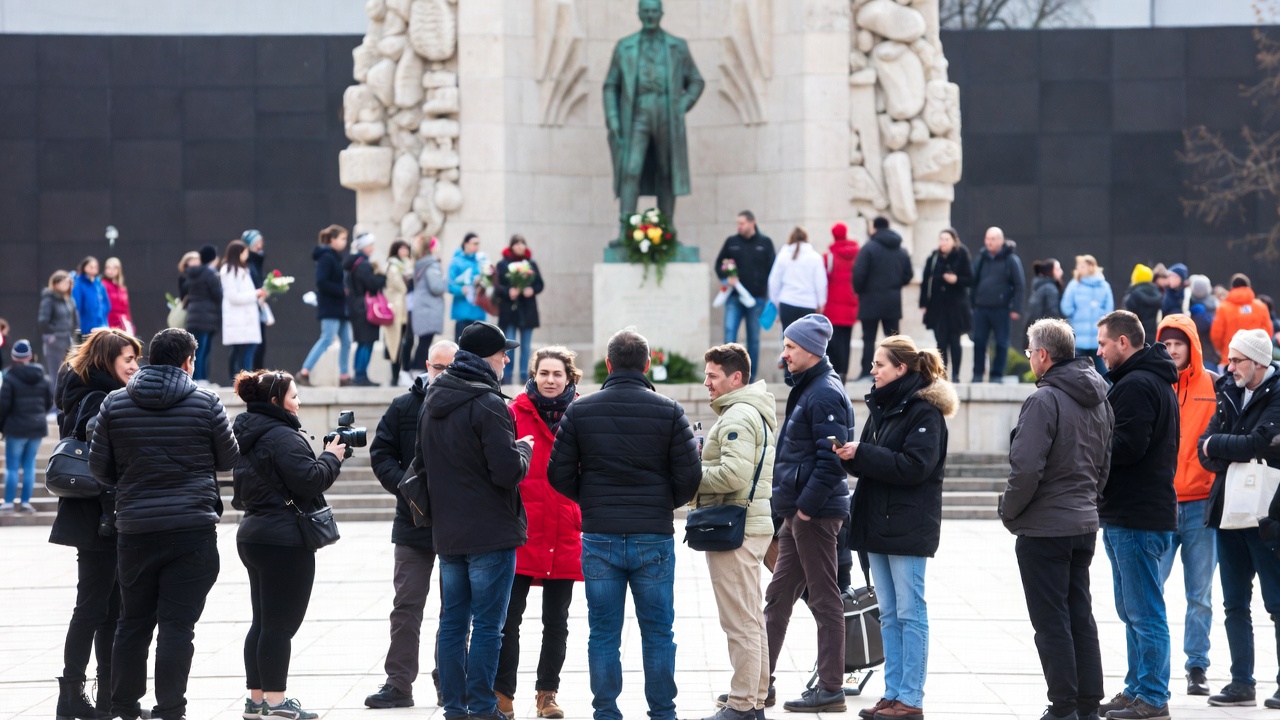
The square sits at the foot of the iconic Triple Bridge (Tromostovje), designed by the celebrated architect Jože Plečnik. On Prešeren Day, the square becomes a gathering point for locals who come to pay their respects, recite poetry, or simply soak in the atmosphere of a city honoring its greatest wordsmith.
What to look for: Above the statue of Prešeren, you will notice a figure of a woman holding a laurel branch. This is the muse of poetry — but locals often see Julija Primic in her form. Below the statue, the words from Zdravljica are inscribed. The seventh stanza of this poem serves as the Slovenian national anthem, a text remarkable for its message of friendship and peace among all nations.
From Prešeren Square, you can walk across the Triple Bridge into the Old Town, stroll along the Ljubljanica River embankment (also designed by Plečnik), or take the funicular up to Ljubljana Castle for panoramic views of the city.
The Trnovo Church connection: For those who want to follow the thread of Prešeren’s love story, walk south from the center to the Church of St. John the Baptist in Trnovo. This is where the poet first saw Julija Primic in 1833 and fell into an unrequited love that would fuel some of the finest lyric poetry in European Romanticism. The walk takes about 15 minutes from Prešeren Square and passes through one of Ljubljana’s most charming residential neighborhoods, where old willow trees line the Gradaščica canal. A small plaque on the church marks the site where literary history was made — not with a grand gesture, but with a single glance.
Prešeren’s chocolates: If you are looking for a tangible souvenir of the poet’s love story, several chocolate shops in Ljubljana’s old town sell Prešeren’s chocolate balls (Prešernove čokoladne kroglice) and Prešeren’s figs — sweet treats themed around the poet and his beloved Julija. They make ideal gifts and are available year-round, but they carry special meaning when purchased on the cultural holiday.
4. Tour the Prešeren House Memorial Museum in Kranj
If Ljubljana is where Prešeren’s spirit lives in public memory, Kranj is where his mortal life came to an end. The town of Kranj — often called the “capital of the Slovenian Alps” — is home to the Prešeren House (Prešernova hiša), a memorial museum located in the very building where the poet lived from 1846 until his death on February 8, 1849.
The Gorenjski Muzej (Upper Carniola Museum), which manages the site, has preserved two rooms with original furniture: the poet’s bedroom and his law office. The upper floor houses a permanent collection that traces Prešeren’s life — from his birth in the village of Vrba, through his studies in Vienna, his years as a struggling lawyer in Ljubljana, and his final days in Kranj.
Exhibits include a censored printer’s manuscript of Poezije (Poems) from 1847, an original copy of Krst pri Savici (“The Baptism at the Savica”), and personal correspondence. Portraits of his close friends Matija Čop and Andrej Smole hang in the rooms, alongside a portrait of the elusive Julija Primic.
On Prešeren Day, Kranj hosts the annual Prešeren Fair (Prešernov sejem), which transforms the old town center into a living history scene. Townspeople dress in 19th-century attire. Stalls sell cottage-industry products and traditional crafts. Horse-drawn carriage rides take visitors through the medieval streets. It is one of the most charming and intimate cultural celebrations in Slovenia.
While you are in Kranj, make sure to visit two additional sites. First, the Gallery of Prešeren Award Laureates at the Pavšlar House — a 16th-century building in the old town center that hosts rotating exhibitions of visual art by winners of Slovenia’s highest cultural prize. According to Visit Kranj’s tourism portal, this gallery provides the best overview of contemporary Slovenian art anywhere in the country.
Second, look for the large statue of Prešeren that stands in front of the Prešeren Theatre (Prešernovo gledališče). Every spring, this theater hosts the Week of Slovenian Drama — one of the most important theater festivals in the country. The proximity of the poet’s last home, the award laureates’ gallery, and the theater named in his honor makes Kranj’s old town a uniquely concentrated memorial landscape.
Kranj is also a rewarding destination beyond its Prešeren connections. The town sits above the dramatic Kokra Canyon, and the old town itself features well-preserved medieval architecture, including a section of the original city walls and a restored World War II tunnel system beneath the streets that is open to visitors.
| Detail | Information |
|---|---|
| Location | Prešernova ulica 7, 4000 Kranj |
| Opening hours | Tuesday–Sunday, 10:00–18:00 |
| Admission on Feb. 8 | Free |
| Managed by | Gorenjski Muzej (Upper Carniola Museum) |
| Special event | Prešeren Fair in the old town |
5. Make a Pilgrimage to France Prešeren’s Birth House in Vrba
About 40 kilometers northwest of Ljubljana, in the tiny village of Vrba na Gorenjskem (population roughly 200), stands the humble farmhouse where France Prešeren was born on December 3, 1800. This is the first house of a famous personality in Slovenia to be transformed into a museum, and it remains the most visited house museum of its kind in the country.
The house itself reflects the typical farmstead architecture of Upper Carniola in the early 19th century. Thick stone walls, low ceilings, and a black smoke kitchen give visitors a sense of the modest rural world that shaped the young poet. The museum was declared a monument of national importance in 2011.
Among the few original artifacts preserved in the house is Prešeren’s actual cradle — a simple wooden piece that has become one of the most symbolically resonant objects in Slovenian heritage.
One of Prešeren’s most famous poems is the sonnet O Vrba — a deeply nostalgic reflection on his childhood village and the life he might have led had he never left. The poem remains one of the most frequently recited texts in Slovenian schools.
Getting there: Buses run from Ljubljana’s main bus station to the Žirovnica area roughly every hour. From the nearest stop, the house is a three-minute walk along a road with views of Mount Stol and the Julian Alps.
The setting itself is part of the experience. Vrba sits at the edge of the Karavanke mountain range, and the village is surrounded by farmland, orchards, and meadows that look much as they must have in Prešeren’s time. On a clear February day, the Julian Alps form a white wall to the west, and the stillness of the village offers a powerful contrast to the bustle of Ljubljana. Visitors who come on Prešeren Day often report that the most moving part of the visit is not anything inside the museum — it is the moment of standing outside, looking at the mountains, and understanding the landscape that formed the poet’s imagination.
The Visit Žirovnica tourism organization also offers a 3D virtual tour of both Prešeren’s birth house and the nearby birth house of writer Fran Saleški Finžgar, allowing visitors to explore the interiors digitally before or after their physical visit.
6. Experience the Kurentovanje Carnival in Ptuj During the Cultural Holiday Weekend
Here is what makes February 2026 so exceptional for visitors to Slovenia: Prešeren Day coincides with the opening days of the 66th Kurentovanje carnival in Ptuj. The main program of this legendary carnival runs from February 7 to February 17, 2026, which means the cultural holiday weekend sits right at the start of one of Europe’s greatest folk festivals.
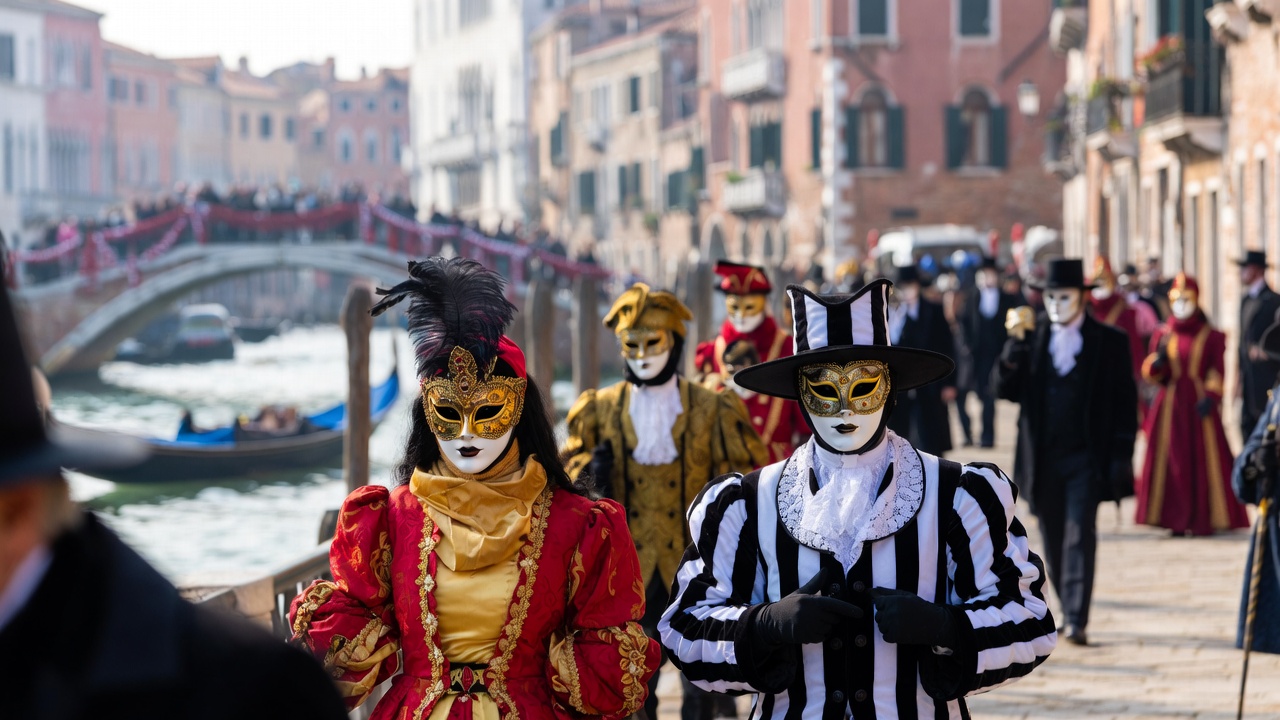
Lonely Planet has ranked Kurentovanje among the ten most fascinating carnivals in the world, placing it alongside the carnivals of Venice, Rio de Janeiro, and New Orleans. The festival draws over 100,000 visitors and features more than 10,000 costumed participants from across Europe.
The central figure is the Kurent (or Korant) — a mythical creature dressed in sheepskin, wearing a towering mask with a long red tongue, and adorned with massive cowbells around the waist. The Kurent’s purpose is to chase away winter and call forth spring. The tradition is so culturally significant that UNESCO added it to the Representative List of the Intangible Cultural Heritage of Humanity in 2017.
Key Kurentovanje 2026 Events Near Prešeren Day
| Date | Event | Time |
|---|---|---|
| Feb. 7 | Opening Ethno Procession | Morning |
| Feb. 8 | Prešeren Day — cultural holiday programming | All day |
| Feb. 11 | Day of Kurent and Korant Groups | 6:00 PM |
| Feb. 13 | Night Spectacle — fire and light show | 7:00 PM |
| Feb. 14 | Saturday Carnival Parade + Children’s Carnival | 11:00 AM / 3:00 PM |
| Feb. 15 | International Carnival Parade (highlight event) | 1:00 PM |
| Feb. 17 | Shrovetide Tuesday — carnival burial | 12:00 PM |
Ptuj itself is the oldest documented town in Slovenia, with a castle perched on a hill above the Drava River and a compact old town filled with Roman-era ruins, wine cellars, and thermal baths. A trip combining Prešeren Day in Ljubljana or Kranj with a few days of Kurentovanje in Ptuj is one of the finest cultural itineraries available in Central Europe during February.
The Kurent costume itself deserves closer attention. The traditional outfit consists of a sheepskin garment worn over the entire body, with massive cowbells (zvonci) strapped around the waist that create a thundering sound as the wearer moves. The mask is made from leather or felt, topped with horns or feathers, and features a characteristically long red tongue. Kurents also carry a wooden club wrapped in hedgehog skin called a ježevka. There are two main types: the “feathered” Kurent from the village of Markovci and the “horned” Kurent from the Haloze hills, each with distinct regional traditions.
The sound of Kurents approaching — the deep clanging of dozens of cowbells echoing through narrow medieval streets — is genuinely unforgettable. It is a sound that has been heard in the Drava Valley for centuries, though the organized carnival in its modern form dates to 1960, when local cultural historian Drago Hasl and his associates launched the first Kurentovanje event.
During the festival, local bakeries sell mountains of krofi (carnival doughnuts), and traditional dishes like obara (a thick meat stew) are served from charitable stalls in the town square. The arts program includes the International Art Award Ex-tempore, where artists paint the carnival atmosphere of Ptuj on canvas in real time.
7. Savor Traditional Slovenian Winter Food: Krofi, Potica, and Kranjska Klobasa
Prešeren Day falls in the heart of the Slovenian carnival season — a time when kitchens across the country come alive with the smells of fried dough, warm spices, and slow-cooked stews. Food is not separate from the cultural celebration. It is woven into it.
The star of the season is the krofi — Slovenia’s beloved carnival doughnut. These golden, pillowy pastries are made from rich leavened dough, fried until golden, and filled with apricot jam, pastry cream, or chocolate. As noted by Slovenian food experts at Will Fly for Food, krofi become available at street stalls, bakeries, and home kitchens across the country during the carnival period. The most legendary krofi come from Trojane, a roadside stop between Ljubljana and Celje, where oversized versions flavored with lemon peel have been a national obsession for decades.
Then there is potica — Slovenia’s crown jewel of baking. This rolled pastry of leavened dough, filled most traditionally with ground walnuts, has been documented in Slovenian culinary tradition since 1575. The walnut version is the wintertime classic. Potica holds protected status as a guaranteed traditional specialty in the European Union since 2021. There are over 80 documented filling varieties, but the walnut and the poppy seed remain the most iconic.
For something savory, seek out Kranjska klobasa — the Carniolan sausage — served with sauerkraut and mustard. This EU-protected sausage, made from at least 80% pork and 20% back fat, seasoned with salt from the Sečovlje salt pans, garlic, and black pepper, is the backbone of Slovenian hearty winter eating.
Must-Try Slovenian Foods During Prešeren Day Weekend
| Dish | Type | Where to Find It |
|---|---|---|
| Krofi | Sweet fried doughnut | Bakeries, street stalls, Trojane rest stop |
| Potica (walnut) | Rolled festive pastry | Potičnica on Bled Island, bakeries nationwide |
| Kranjska klobasa | Carniolan sausage | Gostilna restaurants, markets |
| Jota | Bean and sauerkraut soup | Traditional gostilna restaurants |
| Prekmurska gibanica | Layered cake (poppy, walnut, cheese, apple) | Eastern Slovenian specialty, available in Ljubljana |
| Kremna rezina | Bled cream cake | Bled lakeside cafés |
| Žganci | Buckwheat spoonbread | Alpine gostilna restaurants |
| Štruklji | Rolled dumplings (sweet or savory) | Found nationwide, many regional varieties |
Where to eat in Ljubljana on Prešeren Day: Many restaurants in the old town operate on a holiday schedule, so reservations are strongly recommended. Look for a traditional gostilna — the Slovenian equivalent of a countryside inn — where the cooking is hearty, seasonal, and based on local ingredients. Several gostilnas near the Central Market serve set menus that showcase the best of Slovenian winter cooking. If you want something more casual, the Open Kitchen (Odprta kuhna) street food market on Pogačarjev trg runs on Fridays during warmer months, but many of the same chefs have permanent restaurants nearby.
A note on Slovenian wine: February is deep in the season for red wines from the Karst region — especially the legendary Teran, a dark, mineral-rich red made from the Refosco grape. Pair it with Kranjska klobasa and sauerkraut for the definitive Slovenian winter meal. For white wine lovers, Rebula from the Goriška Brda wine region is an excellent choice that complements lighter dishes and potica beautifully.
8. Join the LUV Fest: Ljubljana’s Festival of Love, Art, and Wandering
Ljubljana does not let Prešeren Day end on February 8. The city extends the celebration into a month-long festival called LUV Fest — a festival of love, art, and wandering that runs from February 8 to March 12, 2026.
According to Visit Ljubljana’s official events page, LUV Fest begins on the day commemorating France Prešeren and continues through to March 12, the date when, by old Slovenian folk tradition, birds begin their courtship. The festival’s name plays on the word “love” and connects the themes of Prešeren’s romantic poetry with the broader idea of love for culture, heritage, and the Slovenian language.
Under the LUV Fest umbrella, Ljubljana presents concerts, theater performances, film screenings, art exhibitions, guided walks, and literary events across venues throughout the city. One of the festival’s signature elements is Ana Srčna, a magical light installation that invites visitors on an illuminated evening stroll through the city. The festival is designed to embrace all generations and all genres of art, making it one of the most inclusive cultural festivals in the region.
The timing is perfect for Valentine’s Day travelers as well. Prešeren Day on February 8, LUV Fest running through mid-March, and the traditional Slovenian celebration of Gregorjevo (a Slavic predecessor to Valentine’s Day, marking the day birds marry) on March 12 — together, they make Ljubljana one of the most romantically charged cities in Europe during the late winter.
What to expect at LUV Fest 2026: The festival program is divided across multiple venues. Expect poetry readings in candlelit library halls, contemporary dance performances in converted industrial spaces, jazz concerts in the intimate clubs along the Ljubljanica River, and outdoor light installations that transform the city’s bridges and parks after dark. Many events are free or very low-cost, reflecting the Slovenian commitment to making culture accessible. The full program is published on the Visit Ljubljana website each January, and printed guides are available at the Ljubljana Tourist Information Centre (TIC) on Adamič-Lundrovo nabrežje.
For families, LUV Fest includes dedicated children’s programming — puppet shows, creative workshops, and storytelling sessions in Slovenian that even non-Slovenian-speaking children can enjoy through the universal language of visual storytelling.
9. Explore Ljubljana Castle with Free Guided Tours on Prešeren Day
Sitting high above the city on a forested hill, Ljubljana Castle (Ljubljanski grad) is the most visited attraction in the Slovenian capital. On Prešeren Day 2026, the castle offers free guided tours, free access to exhibitions, and special activities in honor of the cultural holiday.
According to the castle’s official events page, current exhibitions running around the Prešeren Day period include a video mapping installation in the Casemate (running through January 2027) and a spatial installation in the Pentagonal Tower (opening January 15, 2026). The castle’s year-round exhibitions cover the history of Ljubljana from prehistoric times to the present, and the observation tower provides the best 360-degree panoramic view of the city, the Julian Alps, and the surrounding Slovenian countryside.
The best way to reach the castle is via the funicular railway, which departs from Krekov trg (Krek Square) near the Central Market. The ride takes about one minute and is an experience in itself, gliding over the city’s rooftops and treetops.
Insider tip: If the weather is clear — and February days in Ljubljana can surprise you with crisp blue skies — walk up the castle hill via the forested path from the old town. The walk takes roughly 15 minutes and passes through some of the most atmospheric green space in the city center. On Prešeren Day, you may encounter other walkers reciting poetry along the path. This is not staged. It is simply how Slovenians celebrate.
Once at the top, do not miss the Castle Chapel with its baroque frescoes, the permanent exhibition on Slovenian history from prehistory to independence, and the virtual castle experience that uses technology to reconstruct the fortress as it appeared in different centuries. The castle café offers coffee with panoramic views — a perfect way to warm up on a cold February afternoon.
For art lovers, the castle regularly hosts contemporary art exhibitions in its galleries. In early 2026, exhibitions running in the Pentagonal Tower and Casemate galleries include spatial installations and video mapping projects. The castle also has a regular program of evening concerts in its Rock Hall, which continues through the winter months.
10. Read Prešeren’s Poetry and Learn the Words of Slovenia’s National Anthem
This final recommendation is not about a location or an event. It is about preparation — the kind of preparation that transforms a tourist into a traveler who truly understands what they are witnessing.
Before you set foot in Slovenia on Prešeren Day, read the poetry of France Prešeren. His work is available in English translation, and even a few poems will change the way you experience the holiday. Here are the essential works:
- Zdravljica (“A Toast”) — The seventh stanza serves as the Slovenian national anthem. Its message of peace and brotherhood among nations is unique among European anthems for its complete absence of warfare or conquest imagery.
- Sonetni venec (“A Wreath of Sonnets”) — A virtuosic cycle of 15 interconnected sonnets, widely considered the pinnacle of Slovenian Romantic poetry. The final sonnet is formed by the first lines of the preceding fourteen.
- Krst pri Savici (“The Baptism at the Savica”) — An epic poem about love, faith, and cultural identity set against the backdrop of the Christianization of the Slovenian lands.
- O Vrba — A sonnet of longing for the poet’s childhood village, one of the most emotionally direct poems in the Slovenian language.
On Prešeren Day, Slovenians recite these works in schools, at public gatherings, in theaters, and at kitchen tables. If you learn even a single verse of Zdravljica in Slovenian — and share it with a local — the reaction will be unforgettable. Poetry is not an abstraction in Slovenia. It is the foundation on which the nation was built.
The Seventh Stanza of Zdravljica — Slovenia’s National Anthem
The stanza that serves as the anthem speaks of a day when all people in the world will be free, when every nation will live as neighbors, and when conflict between peoples will be nothing more than a distant memory. It is a text written in 1844 by a man who never saw his country become independent — yet whose words became the anthem of that independence 147 years later, in 1991.
What makes Zdravljica even more remarkable is its history of censorship. Prešeren wrote the poem in 1844, but the Austrian authorities censored it. The full, uncensored version was not published until 1848, just a year before the poet’s death. The poem survived suppression, survived two world wars, survived decades of socialist Yugoslavia, and emerged to become the anthem of a free European democracy. That story alone tells you something about the resilience of Slovenian culture.
Understanding Prešeren’s Life
A brief sketch of Prešeren’s life will deepen your experience on the holiday. Born in 1800 in the farming village of Vrba, he was raised in a family of modest means but received an exceptional education. His mother wanted him to become a priest, but he chose to study law in Vienna instead. After obtaining his law degree, he returned to Ljubljana, where he spent years working as an assistant in someone else’s law practice — unable to secure the license to open his own office.
His personal life was marked by unfulfilled longing. His devotion to Julija Primic, a woman of higher social standing, was never reciprocated. He eventually had children with Ana Jelovšek, but the relationship was complicated and unhappy. He drank heavily in his later years. When he finally received permission to open his own law practice in 1846, he moved to Kranj — but by then his health was failing. He died on February 8, 1849, at the age of 48.
Yet from this life of frustration and heartbreak came poetry of extraordinary beauty and power. Prešeren transformed personal pain into a national language of feeling. His command of form — he mastered the sonnet, the ballad, the ghazal, and the epic — was so complete that he elevated Slovenian into a language capable of standing beside German, Italian, and French as a vehicle for great literature.
Practical Travel Tips for Visiting Slovenia on Prešeren Day 2026
Is Everything Closed on Prešeren Day?
Prešeren Day is a public holiday in Slovenia, which means most shops, supermarkets, and commercial businesses will be closed. However, museums, galleries, and cultural venues are open — many with free admission. Restaurants, cafés, and hotel facilities typically operate on holiday or Sunday schedules. In 2026, since February 8 falls on a Sunday, the closure pattern aligns with the usual Sunday schedule for most businesses.
How to Get Around
- Ljubljana is compact and walkable. Most cultural sites are within a 20-minute walk of the city center.
- Public buses run on a holiday timetable. Check LPP (Ljubljana Public Transport) for schedules.
- Trains to Kranj run regularly from Ljubljana and take approximately 25 minutes.
- Buses to Vrba (Žirovnica) depart hourly from the Ljubljana bus station.
- Ptuj is reachable by train or bus from Ljubljana (approximately 2–2.5 hours). During Kurentovanje, some city bus routes in Ptuj are altered — check Arriva Slovenija for updates.
What to Wear
February in Slovenia is cold. Average temperatures in Ljubljana hover around 0–5°C (32–41°F). Dress in warm layers, and bring waterproof shoes if you plan to walk the castle hill or explore Vrba. If attending Kurentovanje in Ptuj, prepare for outdoor crowds and bring a warm hat, gloves, and scarf.
Language
Slovenian is the official language. English is widely spoken in Ljubljana, Bled, and major tourist areas. In smaller towns like Vrba or rural parts of the Ptuj area, some basic Slovenian phrases will go a long way.
A few useful words for the day:
| Slovenian | English | Pronunciation |
|---|---|---|
| Srečen kulturni praznik | Happy Cultural Holiday | SREH-chen kul-TOOR-nee PRAHZ-nik |
| Hvala | Thank you | HVAH-lah |
| Prosim | Please / You’re welcome | PRO-seem |
| Na zdravje | Cheers (lit. “to health”) | Nah ZDRAHV-yeh |
| Muzej | Museum | MOO-zay |
Why Prešeren Day Matters Beyond Slovenia’s Borders
Prešeren Day is not merely a national holiday. It is a statement about the role of culture in the survival of a people. During World War II, when Slovenian artists were repressed and forbidden from expressing themselves under occupation, the anniversary of Prešeren’s death became a focal point for cultural resistance. The proposal to officially celebrate February 8 as the Slovenian cultural holiday was first made in January 1945, in the liberated town of Črnomelj, by cultural worker Bogomil Gerlanc of the Slovene Liberation Front. The decree was formally issued on January 28, 1945, and published in the newspaper Slovenski poročevalec on February 1, 1945.
This means that Slovenia declared its cultural holiday before it declared its political independence. Culture came first. The nation followed.
The holiday continued through the era of the Socialist Republic of Slovenia within Yugoslavia. It was celebrated not only in Slovenia itself but also by Slovenian communities in Carinthia (Austria) and the Slovenian minority in Italy, demonstrating how cultural identity can persist across political borders. When Slovenia declared independence in 1991, Prešeren Day was reaffirmed as a work-free public holiday — a rare continuity of cultural tradition through multiple political systems.
Prešeren’s Legacy in the 21st Century
What makes Prešeren’s legacy so durable? Part of the answer lies in the universality of his themes. His poem Zdravljica does not glorify war or conquest. It calls for peace, friendship, and the free development of all peoples. In an era of rising nationalism across Europe, this vision feels almost radical in its generosity. The fact that a 19th-century poet’s words can still serve as a moral compass for a 21st-century nation is remarkable — and it is precisely why Prešeren Day resonates with visitors who take the time to understand what they are witnessing.
Prešeren was also a pioneering figure in linguistic self-determination. At a time when German was the dominant language of education, administration, and high culture in the Habsburg lands, Prešeren chose to write in Slovenian. By doing so, he demonstrated that the Slovenian language was capable of the highest forms of literary expression. This act of cultural defiance — writing poetry in a language that the ruling power considered inferior — laid the intellectual foundation for everything that followed, including Slovenian statehood.
That sequence tells you everything you need to know about what Prešeren Day means — and why, if you visit Slovenia on February 8, 2026, you will experience something far deeper than a day off from work. You will witness a country celebrating the very idea that art, language, and poetry are not decorations on the surface of a civilization. They are the civilization itself.
Frequently Asked Questions About Prešeren Day in Slovenia
What is Prešeren Day and when is it celebrated?
Prešeren Day is the Slovenian Cultural Holiday, celebrated every year on February 8. It honors the poet France Prešeren, who died on this date in 1849. The holiday has been observed since 1945 and became a work-free public holiday in 1991, the year Slovenia declared independence.
Are museums really free on Prešeren Day?
Yes. All state and municipal museums and galleries in Slovenia offer free admission on February 8. This includes major institutions in Ljubljana, Maribor, Kranj, Koper, and across the country.
What day of the week is Prešeren Day 2026?
In 2026, Prešeren Day falls on a Sunday, February 8. Most businesses follow Sunday or holiday opening hours. Cultural venues and restaurants are generally open.
Can tourists attend the Prešeren Award ceremony?
The ceremony itself is a state event with invited guests, but it is broadcast live on national television. Visitors can watch it in hotels, cafés, or via the RTV Slovenija livestream.
Is Kurentovanje happening at the same time as Prešeren Day 2026?
Yes. The 66th Kurentovanje carnival in Ptuj runs from February 7 to February 17, 2026, overlapping directly with Prešeren Day. This makes 2026 an especially rich year for cultural tourism in Slovenia.
What food should I try on Prešeren Day?
The carnival season means krofi (filled doughnuts) are everywhere. Also try potica (walnut-filled rolled pastry), Kranjska klobasa (Carniolan sausage with sauerkraut), and jota (a hearty bean and sauerkraut soup) — all traditional winter dishes.
Final Thoughts: A Nation That Celebrates Its Poet
There is a question that travelers rarely ask but should: What does a country celebrate on its most important cultural day? Some nations honor military victories. Others commemorate the signing of laws. Slovenia celebrates a poet.
That single fact reveals more about the Slovenian character than any tourism brochure ever could. It tells you that this is a country where language matters, where art is not separated from daily life, and where the memory of a man who died nearly two centuries ago still shapes how people think about their place in the world.
On February 8, 2026, stand in Prešeren Square. Listen to the verses. Taste the krofi. Walk the streets of Kranj. Visit the farmhouse in Vrba where it all began. And when someone wishes you “Srečen kulturni praznik” — Happy Cultural Holiday — know that they are not just being polite. They are inviting you into the story of a nation that was written, quite literally, in poetry.
Planning your trip? Visit the official Slovenian tourism website for updated event listings and travel information. For Ljubljana-specific events, check Visit Ljubljana. For Kurentovanje programming, see the official Kurentovanje website.