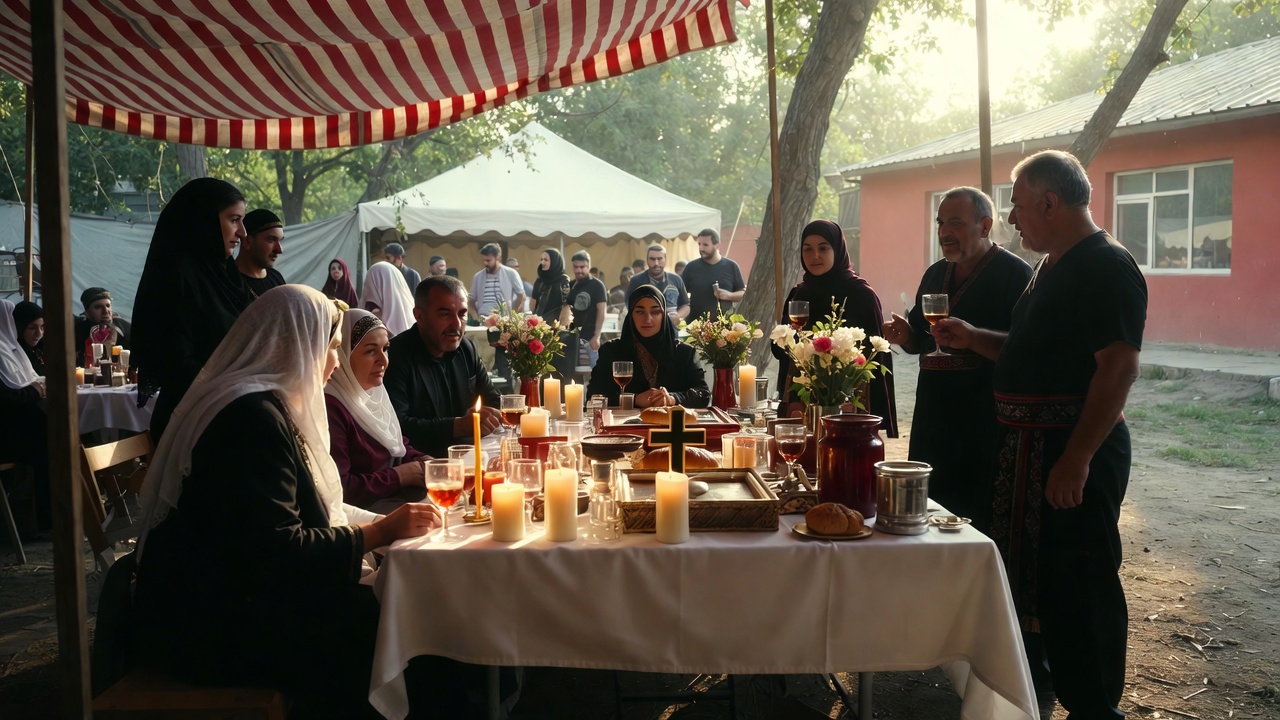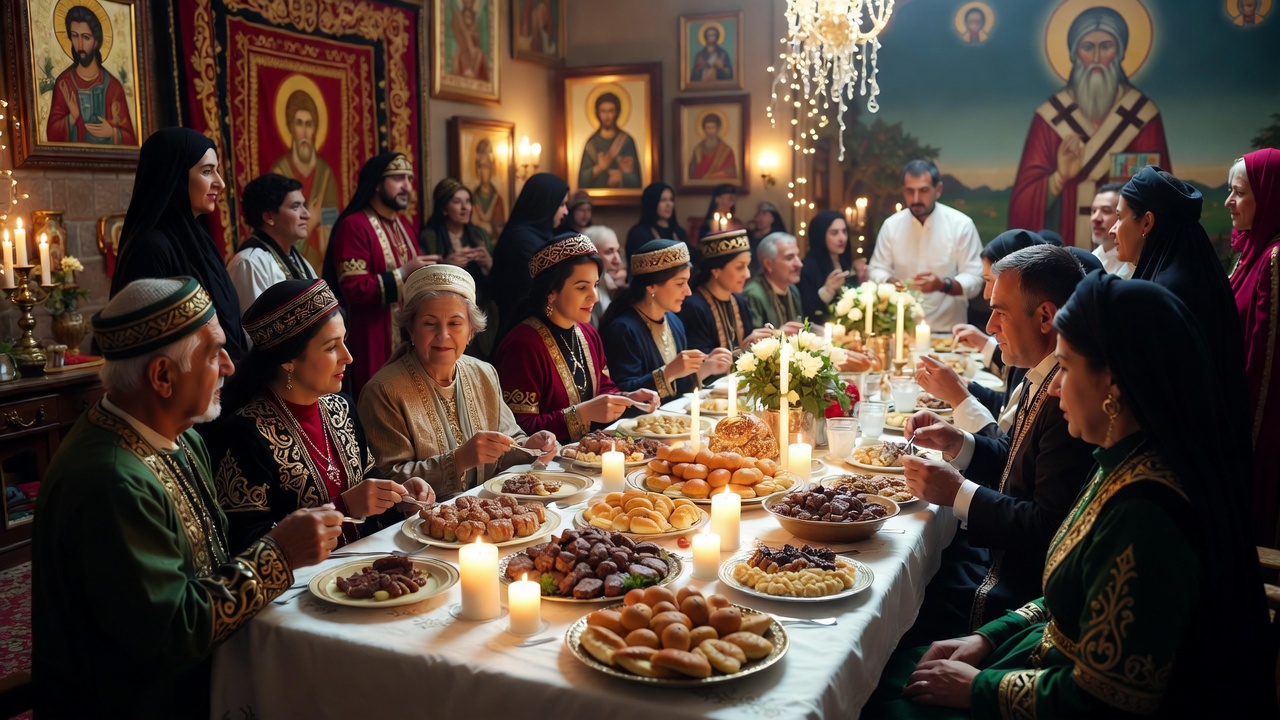
Every nation has its own way of celebrating love. In France, couples stroll along the Seine on Valentine’s Day. In Japan, women gift chocolate on February 14 and men return the favor a month later. But in Armenia, the celebration of love has roots far older and deeper than any modern holiday. It is called Saint Sarkis Day — or Surb Sarkis in Armenian — and it has been the beating heart of Armenian romantic tradition for more than 1,600 years.
In 2026, the Feast of Saint Sarkis falls on Saturday, January 31, as confirmed by the Armenian Apostolic Church calendar. The date shifts each year because it is a moveable feast, always observed on a Saturday exactly 63 days before Easter. It can land anywhere between January 11 and February 23.
If you ask a young Armenian when Valentine’s Day is, you will likely hear about Saint Sarkis before you hear about Saint Valentine. This is not a marketing campaign or a cultural rebranding. It is simply the way things have always been. Sarkis — a fearless 4th-century warrior and Christian general — became the patron saint of love and youth in the Armenian Apostolic Church. His feast day brings together sacred liturgy, salty cookies, rooftop flour trays, dream prophecies, and freshly made halva into one of the most charming and emotionally rich celebrations anywhere in the world.
This guide walks you through the top 10 traditions of Saint Sarkis Day in Armenia, drawn from firsthand accounts, church records, and the living folklore of Armenian communities. Whether you are planning a trip to Yerevan in late January 2026 or simply curious about how one of the world’s oldest Christian nations celebrates romance, these traditions will stay with you long after you finish reading.
1. Who Was Saint Sarkis? The Warrior Behind Armenia’s Patron Saint of Love
Before we explore the traditions, it is worth knowing the man they honor. Saint Sarkis (also spelled Sargis) was not a poet or a romantic. He was a soldier — a Greek from Cappadocia, in what is now central Turkey — who served as a general in the Roman army under Emperor Constantine the Great in the early 4th century.
According to the Armenian Apostolic Church, Sarkis used his rank to spread Christianity across the region. He tore down pagan temples and built churches in their place. When Emperor Julian the Apostate came to power and started persecuting Christians, Sarkis refused to renounce his faith. He left his title and fled with his only son, Mardiros (also called Martyros), to Armenia.
King Tiran of Armenia welcomed them. But as Julian’s armies pushed eastward, Tiran urged Sarkis to seek safety in the Sassanid Persian Empire. There, the Persian king Shapur II appointed Sarkis as a military commander. Sarkis continued to win battles and convert soldiers to Christianity. When Shapur discovered this, he demanded that Sarkis worship the Zoroastrian fire gods.
Sarkis refused. He knocked down the pagan idols in the king’s temple. In retaliation, Shapur killed Mardiros before his father’s eyes, then imprisoned Sarkis. The saint was eventually beheaded. His loyal Christian soldiers retrieved his body, but they too were killed for their devotion. Sarkis’s remains were later brought to Armenia in the 5th century by Saint Mesrop Mashtots — the creator of the Armenian alphabet — and buried in the village of Ushi, in the Aragatsotn Province.
So how did a warrior become the patron saint of love? Armenian folk legend tells us that after a great military victory, Sarkis and his 40 soldiers were celebrating at a feast. While they slept, the Persian ruler sent 40 women to kill them in their sleep. Thirty-nine women carried out the order. But the fortieth — the one assigned to kill Sarkis — fell in love with him and kissed him instead. Sarkis awoke, saw the slaughter, took the woman, and fled.
This story, passed down across generations, transformed Sarkis into a symbol of love that defies death and power. In the Armenian imagination, he became the saint who answers the prayers of lovers and the dreams of the young.
2. The Five-Day Fast of Catechumens Before Saint Sarkis Day in Armenia
Every year, just before the Feast of Saint Sarkis, the Armenian Apostolic Church observes a special period of fasting known as the Fast of Catechumens (Arajavor Bahk). This fast is unique to the Armenian Church and carries deep historical meaning.
According to the Diocese of the Armenian Apostolic Church in Georgia, the fast originated in the era of Saint Gregory the Illuminator, the founder of Armenian Christianity. When Gregory emerged from his 13-year imprisonment in the pit of Khor Virab, he baptized King Tiridates III and the Armenian nation. Before their baptism, Gregory ordered the people to fast for five days to cleanse themselves of pagan practices.
The Fast of Catechumens begins on the Monday before Saint Sarkis Day and traditionally lasts five days. In ancient times, people ate only bread and salt during this period. The Divine Liturgy was not even celebrated during those days. The symbolic purpose was the purification of the five human senses from spiritual impurity.
Today, many Armenian families observe a shortened three-day version of the fast. The fifth day — Friday — is the Remembrance of the Prophet Jonah, celebrating repentance and abstinence. The fast concludes on Saturday morning, when the Feast of Saint Sarkis begins with a special liturgy.
| Detail | Information |
|---|---|
| Name | Fast of Catechumens (Arajavor Bahk) |
| Duration | Originally 5 days (Monday–Friday); today often 3 days |
| Origin | Saint Gregory the Illuminator, 4th century |
| Purpose | Purification of the five human senses |
| Traditional diet | Bread and salt only |
| Ends | Saturday morning — the Feast of Saint Sarkis |
This fasting period sets the spiritual tone for everything that follows. It is a reminder that in Armenian culture, love is not just an emotion. It is a discipline, a devotion, and a sacrifice — much like the life of Saint Sarkis himself.
3. Eating the Salty Cookie (Aghablit): Armenia’s Most Famous Love Divination Ritual
Of all the traditions tied to Saint Sarkis Day, none is more beloved — or more talked about — than the aghablit (աghի բlit), also written as aghi blit. This small, intensely salty cookie is at the center of Armenia’s most famous love divination ritual.
Here is how it works. On the eve of Saint Sarkis Day — Friday night — young unmarried Armenians bake or purchase a small wafer or cookie made from flour and a generous amount of salt. They eat the aghablit before going to bed. The cookie is so salty that it creates an overwhelming thirst. But the rule is strict: you must not drink any water before falling asleep.
The belief is this: when you fall asleep thirsty, you will dream. In that dream, a person will appear and offer you water. That person, according to tradition, is your future spouse.
But the dream does not stop there. The details of how the water is offered contain further prophecies:
- A golden cup means your future partner will be wealthy.
- A silver cup indicates a partner of moderate means.
- A copper or clay cup suggests a partner of humble background.
- The amount of water in the cup predicts the length and strength of your future marriage.
As Ecokayan Dilijan Resort describes the tradition: the patty is so salty it makes you very thirsty, but you must not drink any water. The person who appears in your dream to quench your thirst is believed to be your future spouse.
The aghablit is simple to make. According to the Armenian Mirror-Spectator, the basic recipe calls for just 1¼ cups of flour mixed with several tablespoons of salt, combined with enough water to form a dough. The dough is rolled out, cut into shapes, and baked at 350°F (180°C) for 20 to 30 minutes.
What makes this tradition endure is its simplicity. No expensive gifts. No elaborate dinners. Just a salty cookie, a thirsty night, and a dream. In a world of dating apps and algorithm-driven matchmaking, there is something quietly radical about trusting your heart — and your sleep — to reveal the truth.
Many Armenians today still practice the aghablit tradition, even if they do so with a smile and a wink. Young women, in particular, look forward to the ritual each year. And remarkably, there are countless stories of people who dreamed of someone they later married — stories passed down through families as evidence that Saint Sarkis keeps his promises.
4. Placing Flour on the Rooftop to Find Saint Sarkis’s Horse’s Hoofprint
The second most iconic tradition of Saint Sarkis Day involves a tray of roasted wheat flour — called pokhindz or pokhints in Armenian — placed outside the home on Friday evening, the night before the feast.
The flour is carefully spread on a flat tray and set outside the front door, on a balcony, or on the rooftop of the house. Some families leave the main door open. The belief is that Saint Sarkis will ride past on his white horse during the night, and if the family is blessed, they will find the hoofprint of his horse pressed into the flour the next morning.
According to Armenia Travel, flour is left on rooftops in the hope of finding Saint Sarkis’s horse’s hoofprint — a sign that symbolizes blessings in love.
In Armenian folklore, Saint Sarkis is always depicted riding a powerful horse. The sound of his horse’s hooves was said to make the earth tremble. Snowstorms and blizzards would follow when he twirled his spear. This imagery connects to the winter setting of the feast itself — in late January or early February, when Armenia is often blanketed in snow.
Finding the hoofprint is considered a sign that:
- The family has received the saint’s blessing.
- An unmarried person in the household will marry soon.
- The coming year will bring love and good fortune.
The next morning, all family members rush to the tray to inspect the flour. Even today, in modern apartment buildings in Yerevan, you can see families balancing flour trays on their balcony railings — a beautiful collision of ancient faith and urban life.
This tradition is not just superstition. It is an act of hospitality extended to the divine. By leaving flour for the saint’s horse, families are symbolically welcoming the sacred into their home. In Armenian culture, where hospitality is a core value, this gesture carries deep emotional weight.
5. The Bird-Feeding Custom: How Armenian Youth Predict Where Love Will Come From
Among the lesser-known but deeply poetic traditions of Saint Sarkis Day is the bird-feeding custom. Early on the morning of the feast, young unmarried Armenians go outside and scatter crumbs of bread or lavash — sometimes rolled with khashil, a porridge made from roasted wheat flour — for the birds.
The tradition holds that the direction the bird flies after picking up the crumbs reveals where your future spouse will come from. If a bird flies north, your beloved may come from the northern regions. If it flies toward the east, your spouse will arrive from the east.
But there is a catch. According to Ecokayan, if the birds simply stay where the crumbs are and do not fly away, this was traditionally understood to mean that the person would not marry that year.
This custom is a beautiful reflection of how Armenian folk tradition weaves the natural world into spiritual life. Birds are messengers. The winter sky is a map. And love — like a bird — will come from wherever the wind carries it.
In some villages, particularly in the Aragatsotn and Lori provinces, this tradition is still practiced by grandmothers who wake before dawn to prepare the crumbs and guide their grandchildren through the ritual. It is a quiet, intimate moment — no crowds, no parade, just a young person standing in the cold morning air, watching a sparrow take flight.
6. Saint Sarkis Halva: The Traditional Armenian Sweet Served on the Feast Day
If the aghablit represents the salty trial of the night before, then Saint Sarkis Halva represents the sweet reward of the morning after. This traditional confection is one of the most cherished foods in the Armenian holiday calendar.
Saint Sarkis Halva is not the same as the tahini-based halva you might find in Middle Eastern grocery stores. It is a unique Armenian sweet — pale in color, chewy in texture, and embedded with sesame seeds and nuts. As described by Sarkis Pastry, its main ingredients are sugar, orange blossom water, sesame seeds, and marshmallow cream. The halva dough is stuffed with pistachios, walnuts, or garbanzo beans, or left plain.
Traditionally, the halva was made by whipping the reduced liquid from boiled dried soapwort roots (Saponaria), a plant whose natural foaming properties give the candy its distinctive airy texture. Today, many cooks use marshmallow cream as a practical shortcut, though purists still seek out soapwort root for the authentic taste.
Another traditional version uses mastic gum (mastika) — a resin from the mastic tree — instead of marshmallow. According to The Armenian Kitchen, this older recipe produces a halva with a more complex, aromatic flavor.
Other Traditional Foods of Saint Sarkis Day
Saint Sarkis Day is also known as Khashili Don (“Day of Khashil”) in some regions, because the main dish served at the feast is khashil — a warm, comforting porridge made from roasted and ground wheat, cooked with water until creamy, and served with melted butter and matsun (Armenian yogurt).
Additional traditional foods include:
- Kumba Cake: A spiced cake from the Musa Dagh tradition, made without eggs or dairy. It contains mahlab, cinnamon, and cloves, and is studded with nuts and raisins. A coin is traditionally hidden inside — whoever finds it is said to receive good luck.
- Klontrak: A small, ball-shaped halva made from ground toasted pearled wheat, melted butter, and mulberry syrup or honey.
| Traditional Food | Key Ingredients | Significance |
|---|---|---|
| Aghablit | Flour, salt, water | Love divination cookie eaten the night before |
| Saint Sarkis Halva | Sugar, sesame seeds, marshmallow, orange blossom water, nuts | Sweet treat for the feast morning |
| Khashil | Roasted wheat flour, water, butter, yogurt | Main dish of the feast day |
| Kumba Cake | Flour, sugar, spices, nuts, raisins | Lenten-friendly cake with a hidden coin |
| Klontrak | Toasted wheat, butter, mulberry syrup | Small halva balls for the celebration |
In the Armenian diaspora — from Los Angeles to Beirut to Paris — Saint Sarkis Halva is the unmistakable signal that the feast day has arrived. If you walk through an Armenian neighborhood in late January and spot a white, sesame-coated confection in the window of a pastry shop, you will know that Saint Sarkis is near.
7. The Blessing of Youth Ceremony at Armenian Apostolic Churches
Saint Sarkis Day is not only about folk customs and kitchen traditions. At its core, it is a religious feast — and the church plays a central role.
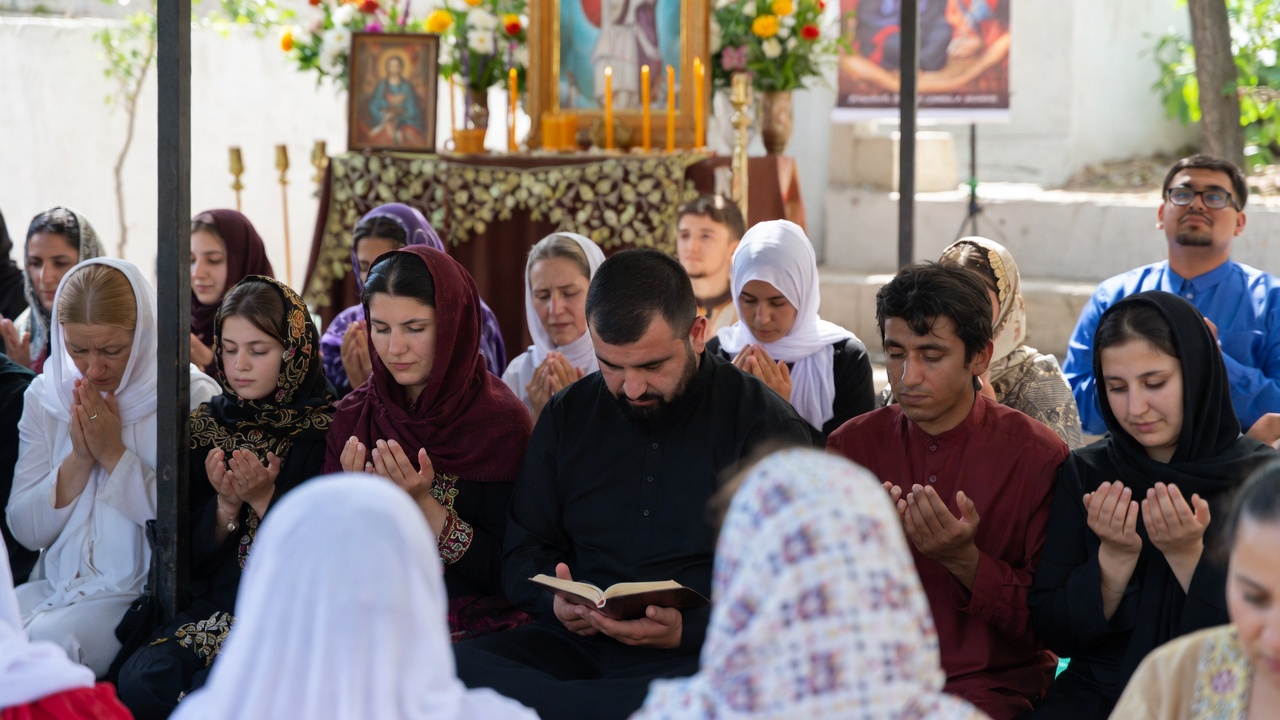
On the morning of Saint Sarkis Day, a special Divine Liturgy (Surb Patarag) is celebrated at all Armenian Apostolic churches, with particular solemnity at churches named after Saint Sarkis. At the end of the liturgy, a ceremony of blessing the youth takes place.
This blessing was formally established by His Holiness Karekin II, the Supreme Patriarch and Catholicos of All Armenians, who proclaimed the Feast of Saint Sarkis as the official Day of Blessing of the Youth in the Armenian Church. As noted by the Armenian Apostolic Church in Georgia, young people are invited to come closer to the altar after the liturgy, and a special blessing service is performed for them.
The scene is deeply moving. In churches across Armenia — from the Saint Sarkis Cathedral in Yerevan to the small village chapel in Ushi — young men and women gather before the altar. The priest recites prayers asking God to guide them toward love, faithfulness, and a blessed marriage. Many couples who are already engaged attend together, receiving the church’s blessing before their wedding.
This tradition matters because it places love within a spiritual framework. In a culture where the church remains a cornerstone of community life, the Blessing of Youth is a public declaration that love — romantic, hopeful, vulnerable — is worthy of sacred attention.
For visitors to Armenia during the feast, attending the liturgy at any Armenian church is a profound experience. The incense, the chanting, the ancient stone walls, and the faces of the young people — hopeful, reverent, a little nervous — create a moment of beauty that transcends language.
8. No Laundry Before the Feast: Superstitions and Customs of the Week Before Saint Sarkis Day
Armenian Saint Sarkis traditions are not confined to a single day. The entire week before the feast is governed by a set of folk customs and superstitions that show how deeply the holiday is woven into everyday life.
The most well-known of these customs is the prohibition against doing laundry during the week before Saint Sarkis Day. The reason? According to Armenian folk belief, if you wash clothes and leave soapy water on the ground, Saint Sarkis’s horse might slip when he rides past your home. Since no one wants to offend the saint — or deny themselves his blessing — families would avoid laundry entirely in the days leading up to the feast.
According to Ecokayan, people did their best to please Saint Sarkis, which often included doing no hard work during the week preceding the feast. In particular, they did no laundry, fearing that the saint’s horse would slip on soapy water.
Other customs of the pre-feast week include:
- Avoiding arguments and quarrels within the family, so as not to bring discord into the sacred period.
- Cleaning the home thoroughly before the week begins, so that the house is ready to welcome the saint.
- Preparing the ingredients for aghablit, halva, and khashil in advance.
- Children hanging socks or pouches on rooftops or in garrets on Saint Sarkis Day itself, hoping to receive gifts — a tradition that echoes Christmas stockings in Western cultures.
These small rituals create a rhythm of anticipation and care that gives the feast its emotional texture. It is not just about what happens on Saturday morning. It is about how you live the entire week — gently, hopefully, with your home and heart prepared for something sacred.
9. The Wedding Season After Saint Sarkis Day: Why Armenian Couples Rush to Marry
One of the most practical and joyful consequences of Saint Sarkis Day is the surge of weddings that follows the feast. This is not a coincidence. It is a matter of the Armenian church calendar.
After the Feast of Saint Sarkis, there is a brief window of approximately two weeks before the beginning of Great Lent (Medz Bahk). During Great Lent — which lasts seven weeks before Easter — the altar curtains in Armenian churches are closed, and no wedding ceremonies are performed.
This means that couples who wish to marry in the church face a choice: get married in the two weeks after Saint Sarkis Day, or wait 48 days until Lent ends.
As Ecokayan explains: with the start of the Great Lent, the curtains of the church altars are closed, and no wedding ceremonies take place. The couples who hurry to marry arrange their wedding during the feast of Saint Sarkis; otherwise, they have to wait for 48 days until the Great Lent ends.
The result is a burst of wedding celebrations across Armenia in late January and early February. Churches are booked. Reception halls fill up. Families gather. And the spirit of Saint Sarkis — the patron of love and youth — presides over it all.
This tradition gives the feast a wonderful sense of urgency and excitement. For couples who have been engaged, Saint Sarkis Day is not just a holiday. It is a deadline, a starting gun, the beginning of their married life. The saint who fell asleep surrounded by love becomes the saint who blesses the marriages of the young.
In Yerevan and other major Armenian cities, the wedding season after Saint Sarkis Day is one of the most festive periods of the year. Hotels, caterers, musicians, and florists all prepare for the rush. If you visit Armenia during this time, you will likely encounter at least one joyful wedding procession — car horns blaring, families cheering, and the newlyweds beaming in the winter sunlight.
10. Pilgrimage to the Saint Sarkis Monastery in Ushi, Aragatsotn Province
For the most devoted pilgrims, Saint Sarkis Day includes a journey to the place where the saint’s physical remains are interred: the Saint Sarkis Monastery (Surb Sarkis Vank) in the village of Ushi, in Armenia’s Aragatsotn Province.
This large monastic complex — measuring 45 by 54 meters — sits on a hilltop overlooking a settlement site that dates back to the 3rd to 1st millennia BC. According to Wikipedia, the monastery was founded after Saint Mesrop Mashtots brought the relics of Saint Sarkis to Armenia in the 5th century. The remains were first taken to the village of Karbi, near Ashtarak, and later moved to Ushi, where a chapel was built over the grave.
The monastery complex includes the 10th-century Saint Sarkis Chapel, the Surp Astvatsatsin Church (Church of the Holy Mother of God) from the 11th–12th centuries, a bell tower, a refectory, monastic housing, and a fortification wall built in 1654 with circular towers at three corners.
The monastery suffered severe damage in the earthquakes of 1679 and 1827. The only structure that survived intact was the single-nave vaulted chapel containing the grave of Saint Sarkis. Restoration work was carried out in 2003–2004, and archaeological excavations have continued in recent years.
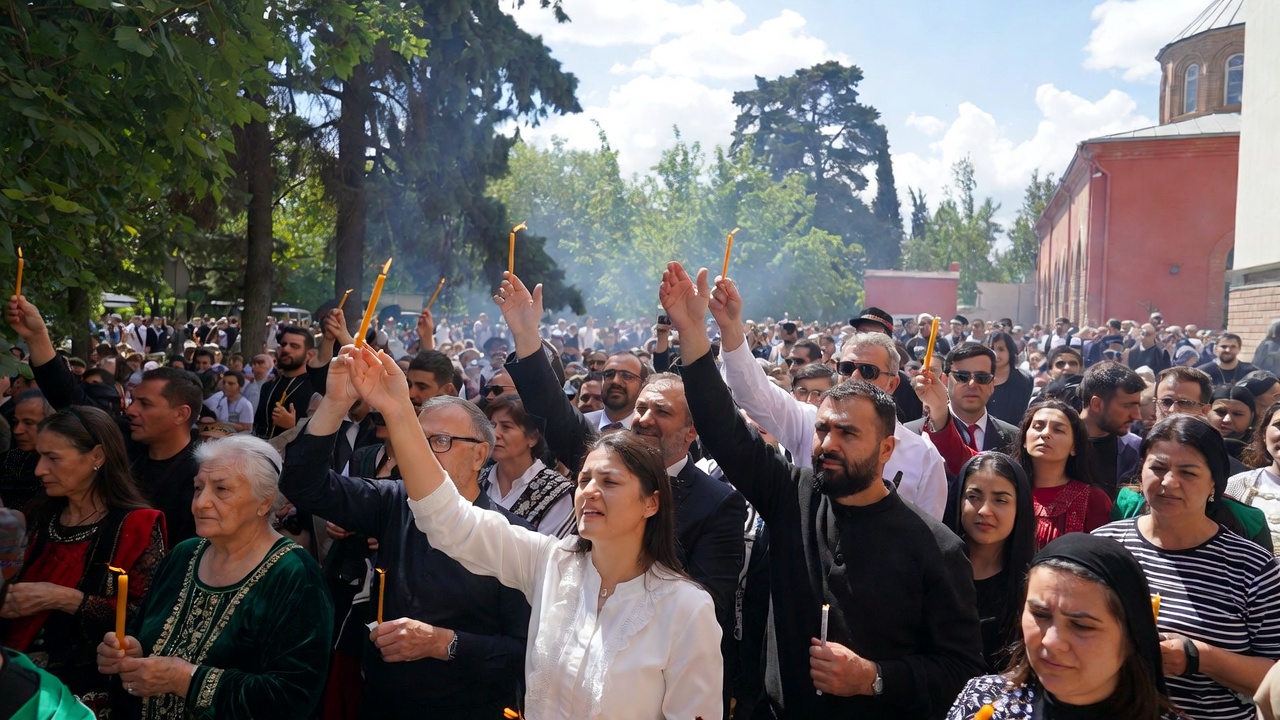
On the Feast of Saint Sarkis, the monastery fills with pilgrims from across Armenia — young couples seeking the saint’s blessing, elderly women lighting candles, families who have made the journey every year for decades. The winter landscape of Aragatsotn — snow-covered slopes, bare orchards, the distant peak of Mount Aragats — adds to the solemnity and beauty of the pilgrimage.
For travelers visiting Armenia, the Saint Sarkis Monastery is about 40 kilometers northwest of Yerevan, near the town of Ashtarak. It is accessible by car, and several tour operators offer excursions to the site, particularly around the feast day.
| Monastery Detail | Information |
|---|---|
| Full name | Saint Sarkis Monastery (Surb Sarkis Vank) |
| Location | Village of Ushi, Aragatsotn Province, Armenia |
| Distance from Yerevan | ~40 km northwest |
| Complex size | 45 × 54 meters |
| Founded | 5th century (relics brought by Saint Mesrop Mashtots) |
| Key structures | Saint Sarkis Chapel (10th c.), Surp Astvatsatsin Church (11th–12th c.), gavit, bell tower, fortification walls (1654) |
| Restoration | 2003–2004; ongoing archaeological work |
The pilgrimage to Ushi is the most tangible way to connect with the historical roots of the feast. Standing inside the small chapel, beside the grave of a 4th-century warrior who became a saint of love, you feel the weight of 16 centuries of devotion. The incense, the stone, the candlelight — it all comes together in a way that no description can fully capture.
How Saint Sarkis Day Compares to Valentine’s Day: Armenia’s Unique Approach to Celebrating Love
Many articles describe Saint Sarkis Day as the “Armenian Valentine’s Day,” and while the comparison is understandable, it does not tell the whole story.
Valentine’s Day, as celebrated in much of the Western world, is primarily a commercial holiday. It revolves around greeting cards, chocolate, roses, and restaurant reservations. Its religious origins — linked to one or more early Christian martyrs named Valentine — have largely been eclipsed by consumer culture.
Saint Sarkis Day is different in several key ways:
It is rooted in an unbroken religious tradition. The feast is still officially observed by the Armenian Apostolic Church, with a full liturgy and youth blessing ceremony. The church calendar, not the retail calendar, determines the date.
It includes a period of fasting. The Fast of Catechumens, which precedes the feast, means that the celebration begins with sacrifice and spiritual preparation — not with an impulse purchase at a gift shop.
Its love rituals are community-based, not couple-focused. The aghablit tradition is for unmarried young people. The flour on the rooftop blesses the whole family. The bird-feeding custom connects the individual to the natural world. Love, in the Armenian conception, is not a private transaction. It is a shared hope that involves family, faith, and community.
It has a direct connection to marriage. Because of the wedding season that follows the feast, Saint Sarkis Day is not just about romance in the abstract. It is about commitment, vows, and building a life together.
None of this means that modern Armenians do not also celebrate Valentine’s Day. Many do — especially younger, urban Armenians who enjoy the global holiday’s emphasis on gifts and date nights. But Saint Sarkis Day occupies a deeper place in the Armenian soul. It is the holiday that grandmothers remember, that churches celebrate, and that the culture claims as its own.
Practical Travel Tips for Experiencing Saint Sarkis Day in Armenia in 2026
If you are planning to visit Armenia around January 31, 2026, here are some practical tips for experiencing the feast firsthand:
Attend the liturgy. The most important public celebration takes place at Armenian Apostolic churches. In Yerevan, the Saint Sarkis Cathedral — located on Israyelyan Street in the Kentron district — is the best place to experience the full liturgy and youth blessing ceremony. Arrive early, as the church fills quickly.
Try the aghablit. Many bakeries and home cooks prepare aghablit in the days before the feast. Ask your hotel or guesthouse if they can help you find some. Be warned: it really is extremely salty. Eating it is more of a spiritual exercise than a culinary pleasure.
Buy Saint Sarkis Halva. Armenian bakeries and pastry shops across Yerevan stock halva in the days surrounding the feast. Look for the distinctive white, sesame-coated rolls in shop windows. The halva from long-established Armenian bakeries is worth seeking out.
Visit the Saint Sarkis Monastery in Ushi. If weather permits, the drive from Yerevan to Ushi takes about an hour. Roads in Aragatsotn Province can be snowy in late January, so arrange a car with a local driver who knows the routes. The pilgrimage atmosphere at the monastery on the feast day is unforgettable.
Watch for wedding processions. In the two weeks after the feast, weddings are everywhere. Do not be surprised if you encounter a cavalcade of honking cars decorated with ribbons and flowers. Armenian wedding processions are joyful, public events, and onlookers are welcome to smile and wave.
Respect the fast. If you are staying with an Armenian family or attending church events in the days before the feast, be mindful of the Fast of Catechumens. Avoid bringing non-fasting foods to shared meals during this period.
Dress warmly. Late January in Armenia means temperatures well below freezing, particularly in the mountains. Yerevan itself is cold but manageable. Layer up, especially if you plan to attend outdoor events or visit the monastery.
Why Saint Sarkis Day Matters: The Living Heart of Armenian Cultural Identity
Saint Sarkis Day is more than a holiday. It is a living artifact of Armenian civilization — a thread that connects the 4th-century martyrdom of a warrior to the 21st-century dreams of a teenager eating a salty cookie before bed.
Armenia is one of the oldest Christian nations on earth. The Armenian Apostolic Church was established in 301 AD, making Armenia the first country in history to adopt Christianity as its state religion. The traditions surrounding Saint Sarkis Day carry echoes of this ancient heritage. The Fast of Catechumens traces back to Saint Gregory the Illuminator. The veneration of Sarkis’s relics in Ushi connects to Saint Mesrop Mashtots. The youth blessing ceremony reflects the ongoing pastoral role of the church in Armenian life.
But these traditions also reveal something universal: the human need to believe that love is not random. That somewhere in the winter night, a saint on a white horse is riding past your door. That a dream can show you the face of the one you will love. That a salty cookie and a thirsty night can bring you closer to your future than any algorithm ever could.
In a world that grows more secular and digital by the year, these Armenian traditions remind us that romance has always been part of something larger — part of faith, family, community, and the turning of the seasons. Saint Sarkis Day does not ask you to buy anything. It asks you to fast, to dream, to hope, and to prepare your heart.
And that, perhaps, is the most radical love tradition of all.
Frequently Asked Questions About Saint Sarkis Day Traditions in Armenia
When is Saint Sarkis Day in 2026?
The Feast of Saint Sarkis falls on Saturday, January 31, 2026. The date changes each year because it is a moveable feast, always celebrated 63 days before Easter in the Armenian Apostolic Church calendar.
Is Saint Sarkis Day a public holiday in Armenia?
Saint Sarkis Day is not an official public holiday in Armenia. However, it is widely celebrated by Armenian families and communities. Churches hold special services, and many Armenians observe the traditions at home and at work.
What is aghablit and how do you make it?
Aghablit (aghi blit) is a very salty cookie eaten on the eve of Saint Sarkis Day. It is made from flour, a large amount of salt, and water. The dough is rolled out, cut into shapes, and baked until golden brown. Eating it makes you thirsty, and the person who offers you water in your dream is believed to be your future spouse.
What is Saint Sarkis Halva made of?
Traditional Saint Sarkis Halva is made from sugar, marshmallow cream (or soapwort root extract), orange blossom water, lemon juice, and sesame seeds, with pistachios or walnuts as filling. It is a chewy, pale-colored confection coated in sesame seeds.
Can non-Armenians participate in Saint Sarkis Day traditions?
Yes. Armenian culture is famously hospitable, and visitors are welcome to participate in the traditions. Attending the church liturgy, trying the aghablit, and visiting the Saint Sarkis Monastery in Ushi are all open to travelers of any background.
Where is the Saint Sarkis Monastery?
The Saint Sarkis Monastery is located near the village of Ushi in the Aragatsotn Province of Armenia, about 40 kilometers northwest of Yerevan. It is built over the burial site of Saint Sarkis and is a popular pilgrimage destination.
How does Saint Sarkis Day differ from Valentine’s Day?
While both holidays celebrate love, Saint Sarkis Day is rooted in religious tradition and community customs rather than commercial gift-giving. It includes fasting, dream divination, church blessings, and a direct connection to the Armenian wedding season.
Final Thoughts: Experience Saint Sarkis Day in Armenia Before It Changes
Like all living traditions, the customs of Saint Sarkis Day are evolving. Young Armenians in Yerevan increasingly celebrate both Saint Sarkis Day and Valentine’s Day, blending old and new expressions of love. Social media has added a modern layer — teenagers now post their aghablit experiences on Instagram and TikTok, sharing their dream stories with followers instead of just their families.
But the core traditions endure. The salty cookie. The flour on the rooftop. The halva in the morning. The church bells ringing across Yerevan on a cold Saturday in January. The elderly grandmother who tells her granddaughter to watch which way the bird flies.
If you have the chance to visit Armenia around the end of January 2026, do not miss this feast. It is one of those rare cultural experiences that is both deeply ancient and completely alive — a holiday that has not been sanitized for tourists or stripped of its meaning for commerce.
Saint Sarkis Day belongs to the Armenian people. But its message — that love is worth fasting for, dreaming about, and building a life around — belongs to everyone.
Surb Sarkis, the warrior and the lover, rides on.
Disclaimer: This article was researched and written with deep respect for Armenian culture, the Armenian Apostolic Church, and the living traditions of the Armenian people. All historical and cultural information is drawn from published church sources, academic references, and credible Armenian cultural organizations. The author encourages travelers to engage with these traditions respectfully and to support local Armenian communities when visiting.