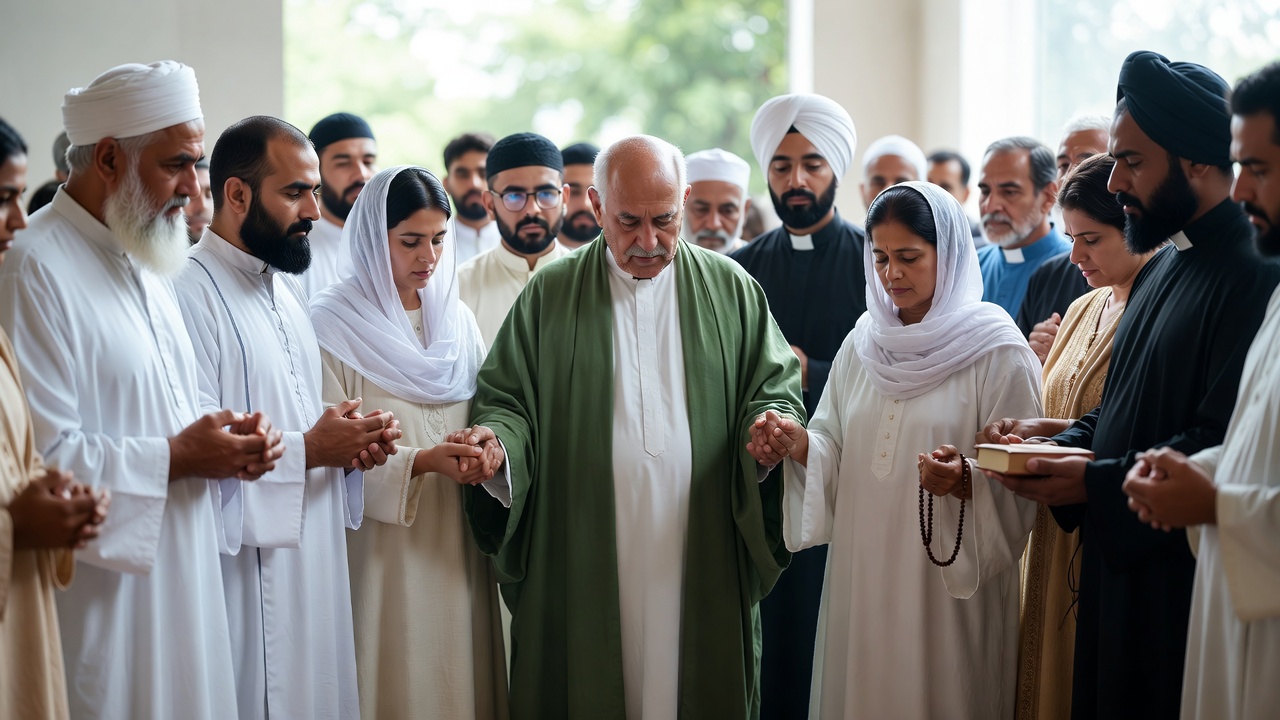
Discover powerful interfaith harmony quotes that celebrate religious tolerance, spiritual unity, and peaceful coexistence among all faiths.
What Is World Interfaith Harmony Week and Why Does It Matter?
World Interfaith Harmony Week is celebrated during the first week of February each year. The United Nations General Assembly established this observance in 2010. It promotes dialogue between all religions and spiritual traditions.
This global celebration encourages mutual understanding. It builds bridges across faith communities. It reminds us that peace requires respect for all beliefs.
Key Facts About World Interfaith Harmony Week:
| Aspect | Details |
|---|---|
| When | First week of February (annually) |
| Established | 2010 by UN General Assembly |
| Proposed By | King Abdullah II of Jordan |
| Purpose | Promote interfaith dialogue and peace |
| Theme | Love of God and love of neighbor |
Interfaith harmony quotes inspire action during this special week. They remind us of our shared humanity. They encourage religious tolerance and understanding.
Understanding the Importance of Interfaith Dialogue in Modern Society
Interfaith dialogue has never been more critical. Our world grows increasingly interconnected. Religious diversity is a reality in most communities.
Meaningful conversations between faiths reduce prejudice. They eliminate stereotypes. They create lasting peace.
Benefits of Interfaith Harmony:
- Reduces religious discrimination and hate crimes
- Builds stronger, more cohesive communities
- Encourages mutual respect and understanding
- Promotes peaceful conflict resolution
- Celebrates diversity while finding common ground
These interfaith harmony quotes for World Interfaith Harmony Week capture this spirit. They come from diverse spiritual leaders and traditions.
30 Powerful Interfaith Harmony Quotes to Inspire Unity
The following collection features inspirational quotes about religious tolerance. Each quote offers wisdom for building bridges between faiths.
Quotes 1-10: Foundations of Interfaith Understanding
These opening quotes establish the core principles of interfaith harmony.
Quote 1: The Dalai Lama on Human Religion
“My religion is very simple. My religion is kindness.”
The Dalai Lama reminds us that kindness transcends all religious boundaries. This simple truth unites every spiritual tradition.
Quote 2: Mahatma Gandhi on Religious Equality
“All religions are true, and all have some error in them.”
Gandhi’s humility teaches us that no single faith holds all answers. Every tradition offers valuable wisdom.
Quote 3: Rumi on Universal Worship
“I belong to no religion. My religion is love. Every heart is my temple.”
The Sufi poet Rumi captures the essence of spiritual universalism. Love serves as the ultimate religion.
Quote 4: Martin Luther King Jr. on Interconnection
“We may have all come on different ships, but we’re in the same boat now.”
Dr. King’s words apply perfectly to interfaith relations. Our different paths lead to shared destinies.
Quote 5: Mother Teresa on Service
“If you judge people, you have no time to love them.”
Mother Teresa reminds us that judgment divides. Love unites across all religious boundaries.
Quote 6: Thich Nhat Hanh on Understanding
“Understanding is love’s other name. If you don’t understand, you can’t love.”
This Buddhist teacher emphasizes learning about other faiths. Understanding creates genuine interfaith harmony.
Quote 7: Rabbi Abraham Joshua Heschel on Wonder
“Wonder, rather than doubt, is the root of all knowledge.”
Rabbi Heschel encourages approaching other faiths with wonder. Curiosity builds bridges. Doubt builds walls.
Quote 8: Swami Vivekananda on Religious Acceptance
“We believe not only in universal toleration but we accept all religions as true.”
Vivekananda’s message from the 1893 Parliament of Religions remains revolutionary. Acceptance goes beyond mere tolerance.
Quote 9: Desmond Tutu on Divine Love
“God is not a Christian. God is not a Jew, Muslim, Hindu, or Buddhist. All of those are human systems which humans have created.”
Archbishop Tutu’s insight challenges religious exclusivity. The divine transcends human categories.
Quote 10: Karen Armstrong on Compassion
“The one and only test of a valid religious idea… is that it must lead to practical compassion.”
Religious scholar Karen Armstrong identifies compassion as the universal measure. True faith produces kindness.
Summary Table: Quotes 1-10
| # | Speaker | Core Theme |
|---|---|---|
| 1 | Dalai Lama | Kindness as religion |
| 2 | Gandhi | Religious humility |
| 3 | Rumi | Universal love |
| 4 | MLK Jr. | Shared destiny |
| 5 | Mother Teresa | Love over judgment |
| 6 | Thich Nhat Hanh | Understanding |
| 7 | Rabbi Heschel | Wonder and curiosity |
| 8 | Vivekananda | Acceptance |
| 9 | Desmond Tutu | Transcendent God |
| 10 | Karen Armstrong | Compassion |
Quotes 11-20: Building Bridges Between Faiths
These quotes focus on practical interfaith cooperation and dialogue.
Quote 11: Pope Francis on Walking Together
“The Catholic Church holds in esteem the Muslims. We need to hold a sincere dialogue. We must journey together.”
Pope Francis emphasizes active partnership. Interfaith harmony requires walking side by side.
Quote 12: Khalil Gibran on Religious Unity
“I love you when you bow in your mosque, kneel in your temple, pray in your church. For you and I are sons of one religion, and it is the spirit.”
Lebanese poet Gibran celebrates diverse worship practices. The spirit underlying all prayer is one.
Quote 13: Baha’u’llah on One Religion
“The religion of God is for love and unity. Make it not the cause of enmity or dissension.”
The founder of the Bahá’í Faith warns against religious division. Faith should unite, never divide.
Quote 14: Hans Küng on World Peace
“There will be no peace among the nations without peace among the religions.”
Theologian Hans Küng identifies interfaith harmony as essential. Global peace depends on religious cooperation.
Quote 15: Guru Nanak on Seeing the Divine
“There is no Hindu, there is no Muslim. So whose path shall I follow? I shall follow the path of God.”
Sikhism’s founder transcended religious labels. The divine path welcomes all seekers.
Quote 16: Thomas Merton on Common Ground
“We are already one. But we imagine we are not. What we have to recover is our original unity.”
Christian mystic Merton reveals our fundamental connection. Unity already exists. We must remember it.
Quote 17: The Quran on Diversity (49:13)
“O mankind, indeed We have created you from male and female and made you peoples and tribes that you may know one another.”
Islamic scripture celebrates human diversity. Differences exist for mutual understanding and growth.
Quote 18: Chief Seattle on Shared Earth
“All things are connected. Whatever befalls the earth befalls the children of the earth.”
Indigenous wisdom reminds us of universal interconnection. Our spiritual destinies are linked.
Quote 19: Albert Einstein on Cosmic Religion
“A human being is part of the whole called by us universe. We experience ourselves as something separate, but that is an optical delusion.”
Einstein’s cosmic perspective dissolves religious boundaries. We are all part of one whole.
Quote 20: Anne Frank on Goodness
“In spite of everything I still believe that people are really good at heart.”
Anne Frank’s faith in human goodness crosses all religious lines. This belief unites humanity.
Summary Table: Quotes 11-20
| # | Speaker | Core Theme |
|---|---|---|
| 11 | Pope Francis | Walking together |
| 12 | Khalil Gibran | Unity in prayer |
| 13 | Baha’u’llah | Religion for unity |
| 14 | Hans Küng | Peace requires harmony |
| 15 | Guru Nanak | Beyond labels |
| 16 | Thomas Merton | Original unity |
| 17 | The Quran | Diversity for knowing |
| 18 | Chief Seattle | Interconnection |
| 19 | Einstein | Cosmic wholeness |
| 20 | Anne Frank | Human goodness |
Quotes 21-30: Living Interfaith Values Daily
These final quotes offer practical guidance for everyday interfaith harmony.
Quote 21: Elie Wiesel on Indifference
“The opposite of love is not hate, it’s indifference.”
Holocaust survivor Wiesel warns against apathy. Active engagement with other faiths matters deeply.
Quote 22: Sri Ramakrishna on Many Paths
“God can be realized through all paths. All religions are true. The important thing is to reach the roof.”
The Hindu mystic uses a beautiful metaphor. Many ladders lead to the same roof.
Quote 23: Cornel West on Justice
“Justice is what love looks like in public.”
Dr. West connects love to social action. Interfaith harmony must translate into public justice.
Quote 24: Buddhist Teaching on Non-Attachment
“Holding on to anger is like grasping a hot coal. You are the one who gets burned.”
This Buddhist wisdom applies to religious conflicts. Releasing resentment heals interfaith wounds.
Quote 25: Jimmy Carter on Shared Values
“We become not a melting pot but a beautiful mosaic. Different people, different beliefs, different yearnings, different hopes, different dreams.”
President Carter celebrates religious diversity. The mosaic is more beautiful than uniformity.
Quote 26: Hazrat Inayat Khan on Heart Religion
“There is one God, the eternal, the only being. None exists save God.”
Sufi teacher Hazrat Inayat Khan emphasizes divine unity. One God appears in many forms.
Quote 27: Black Elk on the Sacred Hoop
“The first peace… is that which comes within the souls of people when they realize their relationship with the universe.”
Lakota holy man Black Elk describes inner peace. This peace extends outward to all faiths.
Quote 28: Audre Lorde on Difference
“It is not our differences that divide us. It is our inability to recognize, accept, and celebrate those differences.”
Poet Audre Lorde identifies the real problem. Celebrating differences creates interfaith harmony.
Quote 29: Paramahansa Yogananda on Spiritual Unity
“The season of failure is the best time for sowing the seeds of success.”
Yogananda encourages persistence. When interfaith dialogue seems difficult, keep sowing seeds of peace.
Quote 30: Paulo Coelho on Personal Legend
“When we love, we always strive to become better than we are. When we strive to become better than we are, everything around us becomes better too.”
Coelho captures the transformative power of love. Personal growth improves all relationships, including interfaith ones.
Summary Table: Quotes 21-30
| # | Speaker | Core Theme |
|---|---|---|
| 21 | Elie Wiesel | Against indifference |
| 22 | Sri Ramakrishna | Many paths, one goal |
| 23 | Cornel West | Justice as love |
| 24 | Buddhist Teaching | Release resentment |
| 25 | Jimmy Carter | Beautiful mosaic |
| 26 | Hazrat Inayat Khan | Divine unity |
| 27 | Black Elk | Inner peace |
| 28 | Audre Lorde | Celebrate differences |
| 29 | Yogananda | Persistent hope |
| 30 | Paulo Coelho | Love transforms |
How to Use Interfaith Harmony Quotes in Your Daily Life
These inspirational interfaith quotes can transform your community. Here are practical applications.
Share on Social Media
Social media amplifies messages of religious tolerance. Post these quotes during World Interfaith Harmony Week. Use hashtags like #InterfaithHarmony and #WorldInterfaithHarmonyWeek.
Include in Educational Settings
Teachers can use these quotes for classroom discussions. They spark meaningful conversations about religious diversity. Students learn respect for all faith traditions.
Display in Community Spaces
Print these quotes for bulletin boards. Display them in libraries, community centers, and places of worship. Visual reminders encourage daily reflection.
Use in Interfaith Events
These quotes make perfect opening remarks. Use them for interfaith gatherings, panel discussions, and prayer services. They set a tone of mutual respect.
Quick Reference: Best Uses for Each Quote Category
| Quote Numbers | Best Use |
|---|---|
| 1-10 | Foundation-setting discussions |
| 11-20 | Bridge-building initiatives |
| 21-30 | Daily inspiration and action |
Planning Your World Interfaith Harmony Week Celebration
World Interfaith Harmony Week offers unique opportunities. Use these ideas to plan meaningful celebrations.
Ideas for Individual Participation
- Read one interfaith quote each morning
- Visit a different house of worship
- Learn about an unfamiliar religion
- Share interfaith content online
- Write gratitude letters to interfaith friends
Ideas for Community Events
- Host an interfaith panel discussion
- Organize a multi-faith prayer service
- Create a community interfaith art project
- Plan a potluck featuring religious cuisines
- Arrange interfaith book club discussions
Ideas for Organizations
- Partner with different faith communities
- Sponsor interfaith dialogue workshops
- Create educational materials about religious diversity
- Support interfaith charitable projects
- Develop ongoing interfaith partnerships
The Golden Rule Across World Religions
One theme unites all major religions: the Golden Rule. This principle appears in every spiritual tradition.
| Religion | Golden Rule Version |
|---|---|
| Christianity | “Do unto others as you would have them do unto you.” (Matthew 7:12) |
| Islam | “No one of you is a believer until he desires for his brother that which he desires for himself.” |
| Judaism | “What is hateful to you, do not do to your neighbor.” (Talmud) |
| Hinduism | “One should never do to another which one regards as injurious to one’s own self.” (Mahabharata) |
| Buddhism | “Hurt not others in ways that you yourself would find hurtful.” (Udana-Varga) |
| Sikhism | “As you deem yourself, deem others; then you will become a partner in heaven.” |
| Confucianism | “Do not do to others what you do not want done to yourself.” |
| Taoism | “Regard your neighbor’s gain as your own gain, and your neighbor’s loss as your own loss.” |
| Jainism | “A man should treat all creatures as he himself would be treated.” |
| Bahá’í | “Lay not on any soul a load that you would not wish to be laid upon you.” |
This universal ethic demonstrates our shared values. Different words express the same truth.
Creating Lasting Interfaith Connections Beyond the Week
World Interfaith Harmony Week is just the beginning. Lasting connections require ongoing effort.
Building Sustainable Relationships
Start Small
Begin with one connection. Befriend someone from a different faith. Genuine relationships grow slowly.
Practice Active Listening
Listen more than you speak. Ask respectful questions. Seek to understand before seeking to be understood.
Find Common Causes
Work together on shared concerns. Hunger, housing, and environment unite all faiths. Joint service builds lasting bonds.
Celebrate Together
Attend each other’s celebrations. Experience different traditions firsthand. Presence shows respect.
Maintain Regular Contact
Schedule regular interfaith gatherings. Consistency builds trust. Annual events become cherished traditions.
Common Misconceptions About Interfaith Dialogue
Some people misunderstand interfaith harmony. Let’s address common concerns.
Misconception 1: Interfaith Means Abandoning Your Faith
Reality: Interfaith dialogue strengthens personal faith. Learning about others deepens your own understanding.
Misconception 2: All Religions Are the Same
Reality: Interfaith harmony respects differences. It doesn’t require believing all paths are identical. It celebrates diversity.
Misconception 3: Interfaith Work Is Only for Religious Leaders
Reality: Everyone can participate. Ordinary people build bridges every day. You don’t need special training.
Misconception 4: Interfaith Dialogue Avoids Difficult Topics
Reality: Healthy dialogue addresses differences. It creates safe spaces for honest conversation. Avoiding hard topics prevents real understanding.
Resources for Deepening Your Interfaith Understanding
Continue your interfaith journey with these resources.
Books on Interfaith Harmony
- “The Faith Club” by Ranya Idliby, Suzanne Oliver, and Priscilla Warner
- “Interfaith Dialogue: A Guide for Muslims” by Muhammad Abu-Nimer
- “The Interfaith Alternative” by Steven Greenebaum
- “Getting to the Heart of Interfaith” by Don Mackenzie and Ted Falcon
- “Toward a True Kinship of Faiths” by the Dalai Lama
Organizations Promoting Interfaith Harmony
- Parliament of the World’s Religions
- United Religions Initiative
- Interfaith Youth Core
- Religions for Peace
- World Council of Churches
Online Platforms for Interfaith Learning
- Sacred Space International
- Interfaith America
- The Pluralism Project (Harvard University)
- Religious Literacy Project
- Tanenbaum Center for Interreligious Understanding
Frequently Asked Questions About Interfaith Harmony
What is the purpose of World Interfaith Harmony Week?
World Interfaith Harmony Week promotes dialogue between all religions. It encourages mutual respect and understanding. The week celebrates our common values while honoring differences.
How can I participate in World Interfaith Harmony Week?
Participation takes many forms. Share interfaith quotes on social media. Attend an interfaith event. Visit a different house of worship. Start conversations about religious diversity.
Why is interfaith harmony important today?
Our globalized world brings diverse faiths together. Interfaith harmony reduces conflict. It builds stronger communities. It promotes peace and understanding.
Can I practice interfaith dialogue while maintaining my own beliefs?
Absolutely. Interfaith dialogue doesn’t require changing your beliefs. It deepens your understanding of others. Many people report that interfaith work strengthens their own faith.
What is the best interfaith quote for beginners?
The Dalai Lama’s quote works wonderfully: “My religion is very simple. My religion is kindness.” It captures the essence of interfaith harmony in accessible terms.
Conclusion: Embracing Interfaith Harmony in Your Life
These thirty interfaith harmony quotes offer inspiration for World Interfaith Harmony Week. They represent wisdom from diverse spiritual traditions. They remind us of our shared humanity.
Interfaith harmony is not a destination. It is a journey. Each conversation builds bridges. Each act of understanding creates peace.
Start with one quote. Share it with someone from a different faith. Let it spark a conversation. Let that conversation build a relationship.
The world needs interfaith harmony now more than ever. Religious diversity is our reality. Mutual respect is our responsibility.
May these quotes inspire you throughout World Interfaith Harmony Week and beyond. May they guide your journey toward understanding. May they help you build bridges of peace.
Key Takeaways
- World Interfaith Harmony Week occurs during the first week of February
- Interfaith dialogue builds peace and reduces prejudice
- The Golden Rule appears in all major religions
- Interfaith harmony strengthens rather than weakens personal faith
- Small actions create lasting change
- These 30 quotes offer inspiration for building bridges between faiths
Share your favorite interfaith harmony quote in the comments below. How do you plan to celebrate World Interfaith Harmony Week this year?