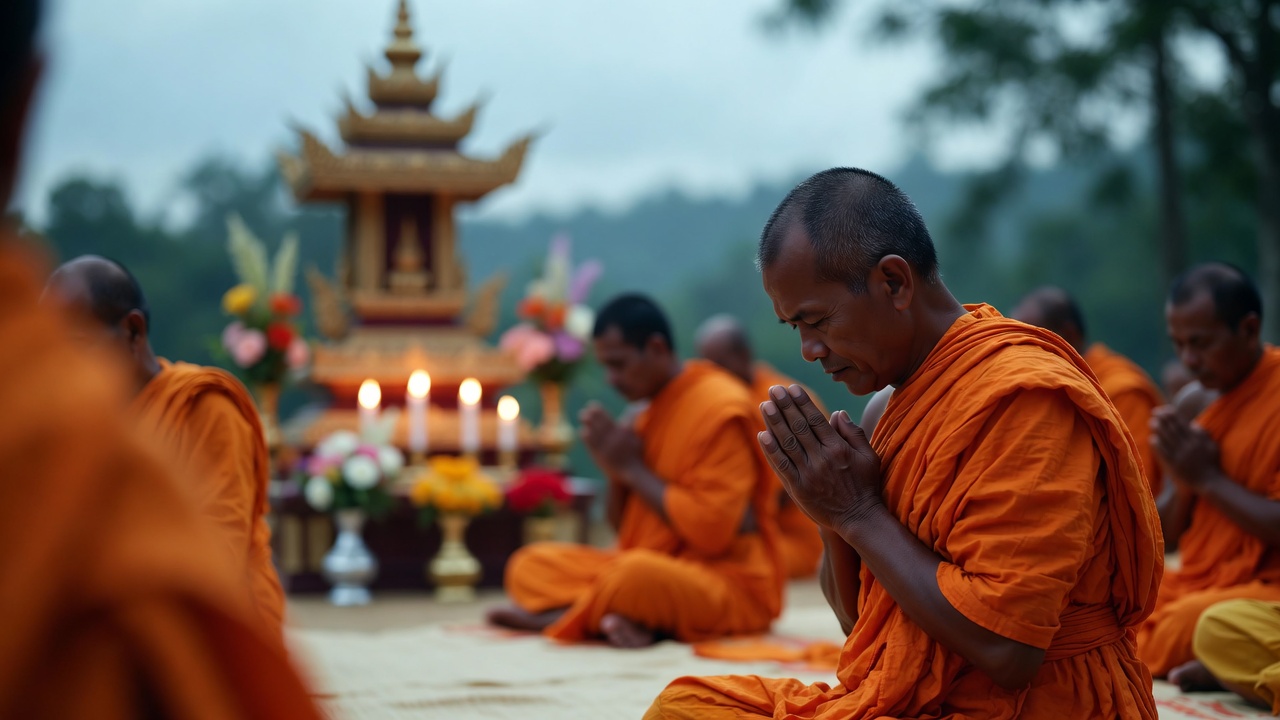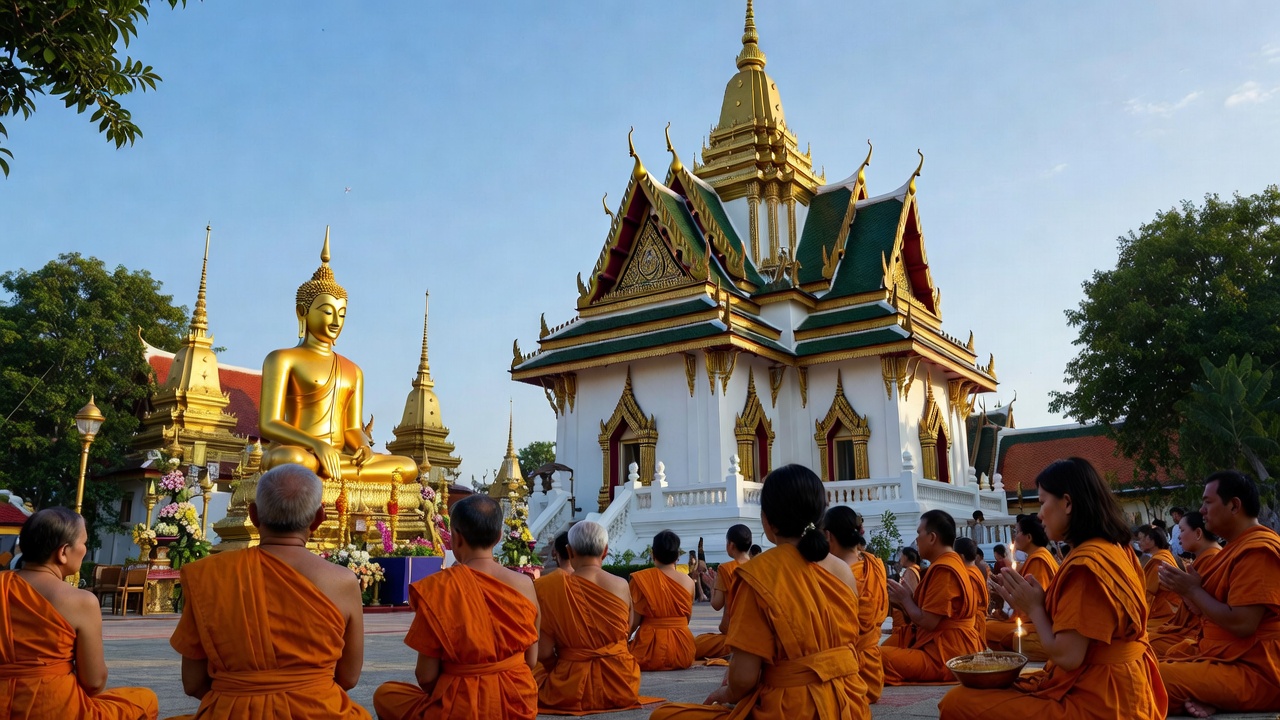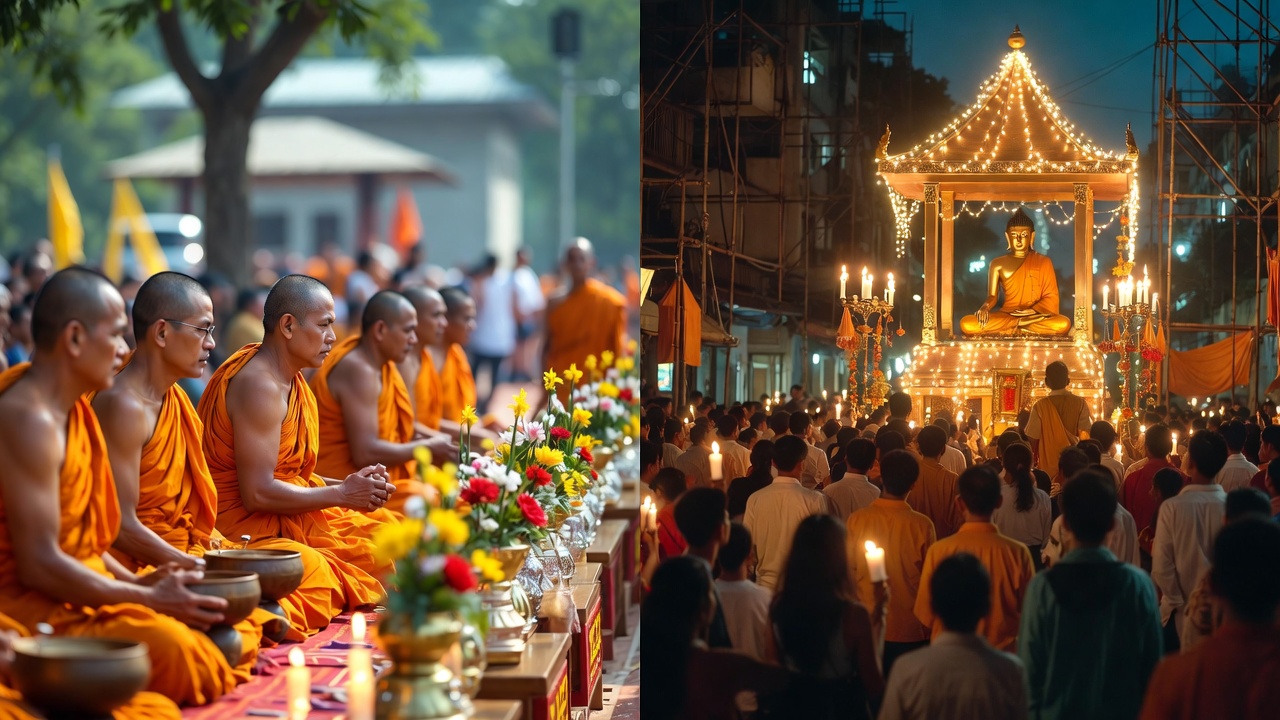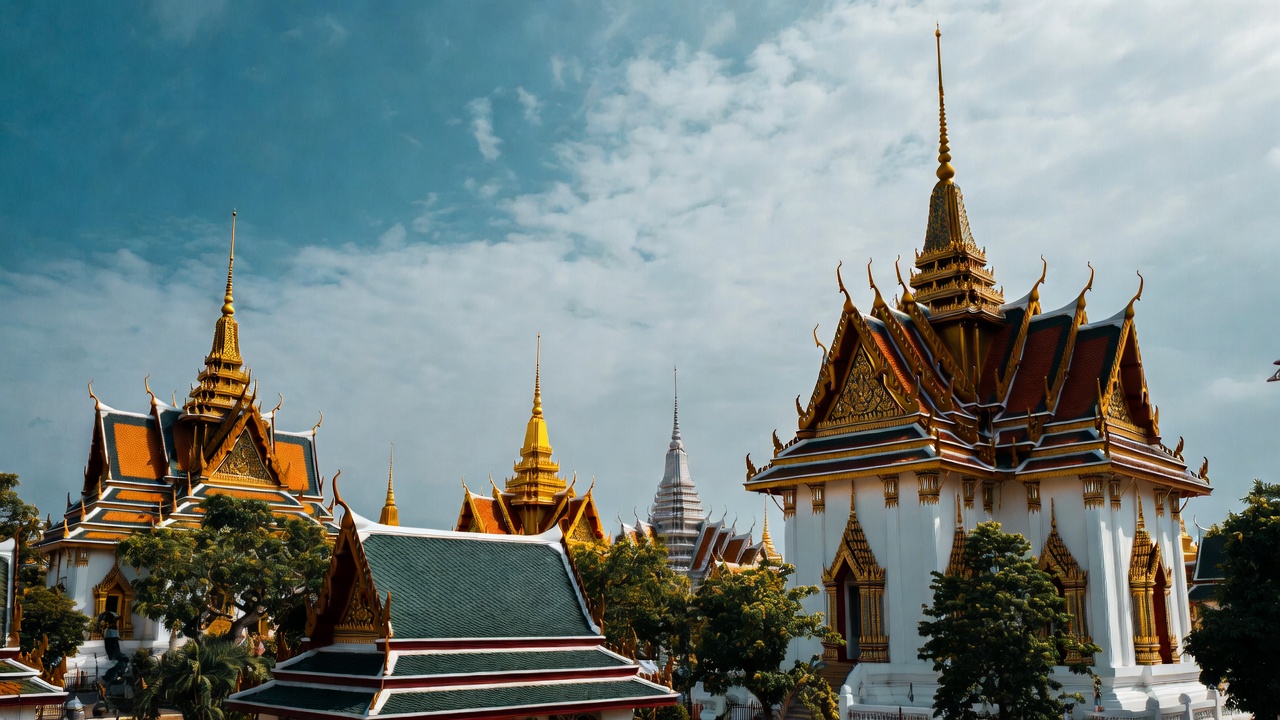
There is a night every year when Bangkok goes still. The neon dims along Sukhumvit. The rooftop bars fall silent. And across the city, thousands of flickering candles trace slow, golden circles around ordination halls that have stood for centuries. This is Makha Bucha Day — one of the most sacred dates on the Thai Buddhist calendar — and there is no better place on earth to witness it than Bangkok.
In 2026, Makha Bucha Day falls on Tuesday, March 3. It is a national public holiday. Schools close. Government offices shut their doors. And from dawn to well past midnight, the faithful gather at temples across the capital to give alms, listen to sermons, meditate, and join the evening wian thian — the candlelit walking procession that is the emotional heart of the celebration.
For travelers, Makha Bucha offers something rare: an invitation to step inside a living spiritual tradition rather than simply observe it from behind a velvet rope. But not every temple celebrates the day in the same way. Some host intimate neighborhood ceremonies. Others draw tens of thousands of devotees, creating a tide of lotus blossoms, incense smoke, and soft chanting that can leave even the most seasoned traveler deeply moved.
This guide focuses on the five best temples in Bangkok for Makha Bucha Day — chosen for their historical importance, the richness of their ceremonies, their accessibility to visitors, and the sheer power of the experience they offer on this holy night.
What Is Makha Bucha Day and Why Is It Celebrated in Thailand?
Before we step through any temple gate, it helps to understand what we are stepping into.
The word “Makha” comes from the Pali term Māgha, the name of the third lunar month. “Bucha” means to honor or worship. Together, they refer to a day of veneration held on the full moon of that month. In 2026, this corresponds to March 3 on the Gregorian calendar.
Makha Bucha commemorates a gathering that Buddhists consider one of the most remarkable events in the life of the Buddha. According to Theravada tradition, nine months after the Buddha attained enlightenment, 1,250 of his ordained followers appeared at the Veluwan temple in India — entirely of their own accord, without any prior arrangement. All 1,250 were arahants, meaning they had already reached the highest stage of spiritual attainment. And all had been personally ordained by the Buddha himself.
On that full moon night, the Buddha delivered what is known as the Ovada Patimokkha — the core principles of his teaching. These can be distilled into three directives: cease from evil, do good, and purify the mind. This sermon became the moral foundation of Buddhist monastic life.
The event is called the “Fourfold Assembly” (Cāturangsannipāta) because four extraordinary conditions converged at once:
| Condition | Significance |
|---|---|
| All 1,250 disciples arrived spontaneously | No meeting was announced or planned |
| All were arahants (enlightened beings) | The highest level of spiritual attainment |
| All had been ordained by the Buddha himself | A direct spiritual lineage |
| The gathering fell on the full moon of the third lunar month | An auspicious alignment in the Buddhist calendar |
The modern celebration of Makha Bucha in Thailand was formally established by King Rama IV in 1851. He first held the ceremony inside the Temple of the Emerald Buddha within the Grand Palace grounds. His successor, King Rama V, expanded the observance into a national celebration. By 1913, it was officially declared a public holiday, and it has been observed across the kingdom ever since.
How Thai Buddhists Observe Makha Bucha Day Rituals and Traditions
Makha Bucha is not a festival of floats and fireworks. It is a day of inner reflection, gratitude, and moral renewal. To understand what you will encounter at Bangkok’s temples on March 3, here is a brief outline of how Thai Buddhists typically observe the day.
Morning: Giving alms to monks. Many Thais wake before dawn to prepare offerings — rice, curry, fruit, lotus buds, incense, and small hygiene items — and present them to monks during their early morning alms rounds. At some temples, this tradition is reversed: the community comes to the temple rather than the monks walking through the neighborhood.
Afternoon: Temple visits and merit-making. Families travel to their local wat (temple) to make charitable donations, listen to Dharma sermons, and engage in group meditation. Many devotees also commit to strictly observing the five Buddhist precepts for the full day:
- Refrain from harming any living being
- Refrain from taking what is not given
- Refrain from sexual misconduct
- Refrain from false speech
- Refrain from consuming intoxicants
Evening: The wian thian (candlelit procession). This is the most visually powerful moment of Makha Bucha. After sunset, devotees gather at the temple’s ordination hall (ubosot) or its most important chedi (stupa). Each person carries a lit candle, three sticks of incense, and a lotus flower. Together, they walk clockwise three times around the sacred structure. Each circuit represents one of the Three Jewels of Buddhism: the Buddha, the Dharma (his teachings), and the Sangha (the monastic community).
The procession is usually silent or accompanied only by soft chanting. Under the full moon, with hundreds or thousands of tiny flames moving in unison, the effect is both deeply calming and quietly breathtaking.
Makha Bucha Day 2026 Bangkok Alcohol Ban: What Tourists Need to Know
Before we get to the temples, a practical note that catches many visitors off guard.
Alcohol sales are banned nationwide for 24 hours on Makha Bucha Day. This has been strictly enforced since 2015. Convenience stores lock their refrigerator doors. Bars close. Restaurants will politely decline to serve beer or cocktails. The ban typically runs from midnight to midnight on March 3.
There are limited exceptions. According to The Nation Thailand, regulations introduced in 2025 permit alcohol sales in licensed entertainment venues, hotels registered under the Hotel Act, and international airport terminals. However, the vast majority of street-level bars, restaurants, and shops will observe the ban.
Tips for travelers:
- Purchase any alcohol you want the day before. Drinking in the privacy of your hotel room is not prohibited — only selling is restricted.
- Respect the spirit of the day. Makha Bucha is a solemn occasion. Public drunkenness would be both illegal and deeply disrespectful.
- Plan your evening around the temples, not the bars. The wian thian procession is one of the most beautiful things you can experience in Bangkok. Lean into it.
1. Wat Saket (The Golden Mount): Best Temple in Bangkok for Makha Bucha Candlelight Procession
Why it ranks first: If you could choose only one temple in Bangkok for Makha Bucha, this is the one. Wat Saket — home to the famous Phu Khao Thong or Golden Mount — hosts what is widely considered the most spectacular candlelight procession in the city. On the evening of Makha Bucha, monks lead a slow, silent column of devotees up the 344 steps that spiral around the 80-meter artificial hill to the glittering golden chedi at the summit. The sight of that river of candlelight ascending the mount under the full moon is unforgettable.
History and Spiritual Significance of Wat Saket Temple
Wat Saket’s origins reach back to the Ayutthaya period (before 1767), when the temple was known as Wat Sakae. When Bangkok became the capital, King Rama I renovated the temple and gave it its present name, which translates to “washing the hair.” According to tradition, the king stopped here to bathe upon returning from battle before entering the inner city.
The Golden Mount itself has a dramatic history. King Rama III attempted to build an enormous chedi on the site, but the structure collapsed because Bangkok’s marshy soil could not support its weight. The rubble was left as an artificial hill. Later, King Rama IV revived the project, and King Rama V finally completed the golden chedi at the summit, which is believed to contain a sacred relic of the Buddha brought from Sri Lanka.
During the early Rattanakosin period, Wat Saket also served a grim function. Located outside the old city walls, it became a primary cremation ground. During the cholera epidemic of 1820, the temple received over 30,000 bodies — so many that vultures gathered in large flocks to feed, giving rise to the old Bangkok saying “raeng Wat Saket” (vultures of Wat Saket).
Today, that dark chapter is a distant echo. The Golden Mount stands as one of Bangkok’s most beloved landmarks and a place of pilgrimage during every major Buddhist holy day.
What to Expect at Wat Saket on Makha Bucha Night
The main Makha Bucha activity at Wat Saket takes place after sunset. Here is a rough timeline:
| Time | Activity |
|---|---|
| Late afternoon | Devotees begin arriving; offerings are made at shrines on the temple grounds |
| Around 5:00–6:00 PM | Monks gather and chanting begins at the base of the mount |
| After sunset (~6:30 PM) | The candlelit procession begins its ascent |
| 7:00–9:00 PM | Devotees circle the chedi three times at the summit; prayers and meditation continue |
The climb is gentle despite its length, with shaded rest stops and small shrines along the way. At the top, you are rewarded with a 360-degree panoramic view of Bangkok — the skyline, the river, and the temple spires of the old city spread out below you, all under the full moon.
Practical details:
- Address: 344 Chakkraphatdi Phong Road, Pom Prap Sattru Phai District
- Regular hours: 9:00 AM – 7:00 PM daily (extended during Makha Bucha)
- Admission: 100 Baht for foreigners to climb the Golden Mount
- Nearest transit: Sam Yot MRT station (approximately 800 meters walk) or Phan Fa Lilat pier on Saen Saep Canal
- Dress code: Shoulders and knees must be covered
Insider tip: Arrive early, ideally by 4:00 PM, to explore the temple grounds at a leisurely pace before the procession begins. Once the wian thian starts, the steps become very crowded.
2. Wat Benchamabophit (The Marble Temple): Bangkok’s Most Beautiful Temple for Buddhist Festival Celebrations
Why it ranks second: If Wat Saket offers the most dramatic procession, Wat Benchamabophit offers the most beautiful setting. Built from gleaming white Italian Carrara marble, this temple seems to glow from within under the light of hundreds of candles. On Makha Bucha night, the contrast of warm candlelight against cool white stone is nothing short of ethereal.
The Royal History of Wat Benchamabophit Dusitvanaram
Wat Benchamabophit holds one of the most distinguished titles in Thai Buddhism. It is one of only six temples in Bangkok — and only ten in all of Thailand — to hold the rank of Racha-Vora-Vihan, the highest grade of first-class royal temple.
The temple was commissioned by King Chulalongkorn (Rama V) in 1899, and its design was overseen by Prince Narisara Nuwattiwong, the king’s half-brother. The name means “the Monastery of the Fifth King near Dusit Palace,” placing it squarely within the orbit of the Thai monarchy.
What makes Wat Benchamabophit architecturally unique is its deliberate fusion of Thai, European, and Chinese design elements. The multi-tiered roofs and gilded pediments follow Thai convention. The colonnades and stained-glass windows echo Western church architecture. The result is a building that feels both familiar and startlingly original.
Inside the main ubosot (ordination hall) stands Phra Buddha Chinnarat, a Sukhothai-style bronze replica of one of Thailand’s most revered Buddha images. The original statue resides in Phitsanulok, but this replica — cast in 1901 from melted, decommissioned brass cannons — has its own profound significance. The ashes of King Chulalongkorn are enshrined beneath it.
The temple’s rear gallery contains 52 Buddha images in different mudras (hand positions), collected from across Asia by Prince Damrong Rajanubhab for the king. This open-air gallery is one of the finest introductions to Buddhist iconography anywhere in Thailand.
Why the Marble Temple Is Special on Makha Bucha Day
Wat Benchamabophit practices a distinctive form of morning alms that sets it apart from nearly every other temple in Bangkok. Rather than monks going out to collect alms in the neighborhood, the community comes to the monks. Each morning, devotees line up along the canal beside the ubosot to offer food and supplies directly to the resident monks. On Makha Bucha morning, this tradition is practiced with particular intensity.
In the evening, the wian thian procession takes place around the marble ordination hall. The scene is widely photographed — monks in saffron robes and lay devotees in white, all carrying candles, circling the luminous marble building under the full moon.
Practical details:
- Address: 69 Nakorn Pathom Road, Dusit District
- Hours: 6:00 AM – 6:00 PM daily (extended on Makha Bucha evening)
- Admission: 100 Baht
- Nearest transit: No direct BTS or MRT station; take a taxi from Phaya Thai BTS or Victory Monument BTS (approximately 10–15 minutes)
- Dress code: Modest clothing required; shoulders and knees covered
Insider tip: Come at 6:00 AM to watch the morning alms ceremony along the canal. You can purchase a pre-prepared offering basket from nearby vendors. This ritual gives you an intimate, personal encounter with Buddhist practice that is very different from the grand evening procession.
3. Wat Phra Kaew (Temple of the Emerald Buddha): Thailand’s Most Sacred Temple and the Birthplace of Modern Makha Bucha
Why it ranks third: Wat Phra Kaew is not the easiest temple to visit on Makha Bucha Day — in fact, the main chapel may be closed to tourists for royal ceremonies. But its historical importance to the holiday is unmatched. This is the exact place where the modern observance of Makha Bucha began, and understanding this temple is essential to understanding the holiday itself.
How Makha Bucha Day Started at the Temple of the Emerald Buddha
When King Rama IV instituted the first formal Makha Bucha ceremony in 1851, he held it within the walls of Wat Phra Kaew. As recorded in Buddhist historical accounts, on that first evening, 31 monks from the nearby Wat Bowonniwet Vihara and Wat Ratchapradit recited the Ovadapatimokkha text, lit lanterns around the ordination hall, and delivered sermons in both Pali and Thai.
For decades, Makha Bucha remained an exclusively royal ceremony. Only those who lived within the palace compound were permitted to attend. It was King Rama V who later broadened the celebration and opened it to the public, eventually establishing it as a national public holiday in 1913.
To this day, the Thai Royal Family participates in a merit-making ceremony at Wat Phra Kaew on Makha Bucha evening. In 2023, for example, The Nation Thailand reported that Their Majesties the King and Queen attended a religious ceremony at 5:26 PM at the Temple of the Emerald Buddha, during which they performed a gold-pouring ritual for a ceremonial umbrella.
Visiting Wat Phra Kaew and the Grand Palace on Makha Bucha Day
Here is the critical information: on Makha Bucha Day, the main chapel housing the Emerald Buddha is typically closed to tourists for royal and religious ceremonies. The wider temple grounds and Grand Palace complex may remain partially accessible, but closures can be announced on short notice.
According to BKK Tours, the Grand Palace and Wat Phra Kaew are normally open to tourists from 8:30 AM to 3:30 PM, with an entrance fee of 500 Baht for foreigners. However, March 3, 2026, is listed among the dates when portions of the complex may be restricted.
What you can still see: Even if the inner chapel is closed, the Wat Phra Kaew complex is spectacular. The exterior of the ubosot is covered in gilding and glass mosaic. The compound includes multiple chedi, libraries, and pavilions, all surrounded by a gallery of 178 mural panels depicting the Thai national epic, the Ramakien.
The Emerald Buddha itself — actually carved from jade, not emerald (the Thai word for “emerald” simply refers to a deep green color) — sits atop an 11-meter golden throne. It is only about 66 centimeters tall, but it is considered the palladium of the Thai nation. Its costume is changed three times a year to mark the seasons — hot, rainy, and cool — in a ceremony performed by the King himself. In early March, it typically wears its cool-season golden robe.
Practical details:
- Address: Na Phra Lan Road, Phra Borom Maha Ratchawang, Phra Nakhon District
- Hours: 8:30 AM – 3:30 PM (check for Makha Bucha closures)
- Admission: 500 Baht (includes entry to several halls)
- Nearest transit: Sanam Chai MRT station (approximately 600 meters walk); or Chao Phraya Express Boat to Tha Chang pier
- Dress code: Strictly enforced — long trousers, covered shoulders, closed-toe shoes recommended. Sarongs available for rent at the entrance.
Insider tip: If you want to see Wat Phra Kaew up close, visit in the morning of March 2 (the day before Makha Bucha). On the holiday itself, plan to observe from a respectful distance or focus on the other temples on this list, then return another day for a full visit.
4. Wat Pho (Temple of the Reclining Buddha): Bangkok’s Oldest Temple for Makha Bucha Day Merit-Making
Why it ranks fourth: Wat Pho is the oldest temple in Bangkok, a UNESCO Memory of the World site, and one of the most visited temples in the city year-round. On Makha Bucha Day, it becomes a powerful center of merit-making activity, drawing hundreds of local devotees alongside the usual stream of international visitors.
The Remarkable History of Wat Pho and Thailand’s First University
Wat Pho — officially Wat Phra Chetuphon Wimon Mangkhalaram — predates Bangkok itself. The temple existed during the Ayutthaya period and is believed to have been built or expanded during the reign of King Phetracha (1688–1703). When King Rama I established Bangkok as the new capital in 1782, he chose Wat Pho for extensive renovation, transforming it into one of the kingdom’s grandest religious compounds.
But it was King Rama III (1824–1851) who gave Wat Pho its most distinctive identity. Over a 16-year renovation, he turned the temple into what scholars often call Thailand’s first public university. He commissioned inscriptions on 1,431 marble slabs covering medicine, astronomy, literature, history, massage, and yoga. These inscriptions were placed throughout the temple grounds for anyone to study. In 2011, UNESCO recognized this collection as part of the Memory of the World Programme.
The temple’s most famous resident is the colossal Reclining Buddha — a gold-plated statue 46 meters long and 15 meters high, representing the Buddha’s entry into Nirvana. It fills nearly the entire interior of the Chapel of the Reclining Buddha, built by Rama III specifically to house it.
Wat Pho is also the birthplace of traditional Thai massage. The temple has operated a massage school for centuries. Today, the Wat Pho Thai Traditional Massage School remains one of the most respected in the country, and visitors can receive a massage on-site.
Experiencing Makha Bucha Day at Wat Pho Temple Bangkok
Wat Pho is a functioning monastery with a large resident monastic community. This means that Makha Bucha activities here feel more integrated into daily temple life than at some of the more tourist-oriented sites.
During the day, devotees come to make offerings, light incense at the various shrines, and listen to sermons in the preaching halls. The atmosphere is one of quiet, steady devotion — families kneeling together, elders chanting softly, children placing lotus flowers at the feet of Buddha statues.
In the evening, the wian thian procession takes place around the main ubosot — the ordination hall that houses the Ayutthaya-era Buddha image Phra Buddha Theva Patimakorn. The ubosot is surrounded by a double cloister containing 394 gilded Buddha images, creating a corridor of golden light during the procession.
As Arab News reported, Wat Pho was among the most frequented temples in Bangkok during Makha Bucha Day even in the pandemic years, with hundreds of devotees returning to the wian thian ritual as soon as restrictions eased.
Practical details:
- Address: 2 Sanam Chai Road, Phra Borom Maha Ratchawang, Phra Nakhon District
- Hours: 8:00 AM – 6:30 PM daily
- Admission: 100 Baht
- Nearest transit: Sanam Chai MRT station (approximately 350 meters); or Chao Phraya Express Boat to Tha Tien pier
- Dress code: Shoulders and knees covered
Insider tip: Combine your Wat Pho visit with a traditional Thai massage in the afternoon before the evening procession. Sessions run approximately one hour and cost around 260–620 Baht depending on the type. It is a wonderful way to rest your feet and center your mind before the spiritual intensity of the wian thian.
5. Wat Suthat and the Giant Swing: A Hidden Gem Temple for Makha Bucha Day Pilgrimage in Bangkok
Why it ranks fifth: While the previous four temples are on every tourist’s radar, Wat Suthat remains relatively under-visited — which is precisely what makes it special on Makha Bucha Day. Here, you will find yourself among mostly Thai families and local devotees, experiencing the holiday in a way that feels deeply authentic and unhurried.
Why Wat Suthat Is One of the Most Important Temples in Bangkok
Wat Suthat Thepwararam is classified as a first-class royal temple of the highest grade — one of only ten such temples in all of Thailand. Construction was begun by King Rama I in 1807, continued by King Rama II (who personally carved the teak doors of the main hall), and completed by King Rama III in 1847. Three kings, four decades, one temple. That kind of patient devotion shows.
The temple’s main hall (wiharn) houses Phra Si Sakyamuni, an 8-meter-tall bronze Buddha image in the Maravijaya (subduing Mara) posture. This statue was originally cast in the 13th century in Sukhothai and was transported by river to Bangkok on the orders of Rama I. Beneath it rest the ashes of King Ananda Mahidol (Rama VIII), enshrined in 1950.
The ubosot (ordination hall) is the longest in Thailand. Its interior walls are covered in mural paintings by court artists of the Rama III era, depicting the 28 previous incarnations of the Buddha. Outside, the courtyard contains Chinese stone sculptures, bronze horses, and 28 hexagonal pagodas — ballast goods from Chinese trade ships that were repurposed as temple decorations.
Standing directly in front of Wat Suthat is the Sao Ching Cha (Giant Swing), a 21-meter-tall red teak structure dating to 1784. It was originally used in Brahman harvest ceremonies during which men would swing to heights of over 20 meters, trying to grab a bag of gold coins with their teeth. The practice was discontinued in 1935 after fatal accidents. In 2005, Wat Suthat and the Giant Swing were jointly submitted to UNESCO as a candidate for World Heritage status.
Makha Bucha Day at Wat Suthat: A Quieter, More Local Experience
On holy days such as Makha Bucha, Wat Suthat draws large numbers of Thai pilgrims. The atmosphere is markedly different from the more tourist-heavy temples. Here, you will see multi-generational families arriving together, children learning the rituals from grandparents, and monks engaging in extended chanting sessions that fill the cavernous hall with resonant sound.
The evening wian thian takes place around the ubosot. Because the ordination hall is the longest in Thailand, the procession route itself is longer than at most other temples, creating a slow, meditative circuit that gives the ritual extra weight and gravity.
Practical details:
- Address: 146 Bamrung Muang Road, Phra Nakhon District
- Hours: 9:00 AM – 6:00 PM daily
- Admission: 100 Baht
- Nearest transit: Sam Yot MRT station (approximately 450 meters walk)
- Dress code: Modest attire required
Insider tip: After the evening procession, walk outside to see the Giant Swing illuminated against the night sky. The area in front of Wat Suthat is also home to a small Hindu shrine, the Devasathan, which is the seat of the Royal Brahman Office. Bangkok’s religious landscape has never been exclusively Buddhist, and this spot — where Hindu, Buddhist, and royal traditions physically converge — is a powerful reminder of that pluralism.
Complete Guide to Visiting Bangkok Temples on Makha Bucha Day 2026
Quick Comparison: Best Temples for Makha Bucha Day in Bangkok
| Temple | Best For | Makha Bucha Highlight | Admission | Nearest MRT/BTS |
|---|---|---|---|---|
| Wat Saket (Golden Mount) | Most dramatic procession | Candlelit climb to the summit | 100 THB | Sam Yot MRT |
| Wat Benchamabophit (Marble Temple) | Most beautiful setting | Wian thian around marble hall + morning alms | 100 THB | Taxi from Phaya Thai BTS |
| Wat Phra Kaew (Emerald Buddha) | Historical significance | Royal ceremony site; birthplace of modern Makha Bucha | 500 THB | Sanam Chai MRT |
| Wat Pho (Reclining Buddha) | Authentic merit-making | Community devotions + wian thian among 394 Buddha images | 100 THB | Sanam Chai MRT |
| Wat Suthat (Giant Swing) | Quiet, local experience | Longest procession route in Bangkok; mostly Thai devotees | 100 THB | Sam Yot MRT |
Temple Etiquette and Dress Code for Makha Bucha Day in Bangkok
Visiting a Thai temple on any day requires respect. On Makha Bucha Day, when the religious significance of the space is heightened, proper behavior matters even more. Here are the essential guidelines:
Clothing: Both men and women must cover their shoulders and knees. Men should wear long trousers and shirts with sleeves. Women should wear skirts or trousers that extend below the knee and tops that cover the shoulders. Avoid transparent or tight-fitting clothing. Some temples provide sarongs for rent or loan, but do not count on it.
Shoes: Remove your shoes before entering any prayer hall or ordination hall. Most temples have a designated area at the entrance.
Photography: Ask permission before photographing monks or devotees engaged in prayer. Many temples allow photography in outdoor areas but restrict it inside the main halls. Never use a flash inside a prayer hall.
Physical behavior: Never point your feet toward a Buddha image or a monk. When sitting on the floor, tuck your feet behind you. Never touch a monk — women in particular should not hand items directly to monks but should place them on a cloth the monk provides.
Noise: Speak softly. Do not laugh loudly or run. On Makha Bucha evening, the atmosphere is meditative. Match it.
Participating in the wian thian: Tourists are welcome to observe the candlelit procession at any of these temples. At most temples, visitors are also welcome to join the procession if they wish. You can purchase candles, incense, and lotus flowers from vendors near the temple entrance. Simply follow the flow of the crowd, walk slowly, and carry your candle with care.
Suggested Makha Bucha Day Itinerary for Visitors in Bangkok
Here is a sample itinerary that allows you to experience multiple temples in a single day:
6:00 AM — Wat Benchamabophit: Arrive early to witness the morning alms ceremony along the canal. Watch as devotees offer food and supplies to the resident monks. This intimate ritual sets the spiritual tone for the entire day.
8:30 AM — Wat Pho: Head to the Temple of the Reclining Buddha while the morning is still cool. Spend time exploring the main chapel, the reclining Buddha hall, and the quiet courtyards. Consider booking a Thai massage for late morning.
12:00 PM — Lunch in the Old City: Try the local food stalls near Tha Tien Market, adjacent to Wat Pho. Sample pad thai, som tam (green papaya salad), or khao man gai (chicken rice). Remember: no alcohol will be available.
1:30 PM — Wat Suthat and the Giant Swing: Walk or take a short taxi ride to Wat Suthat. Explore the murals, the courtyard sculptures, and the longest ordination hall in Thailand. Take photos with the iconic Giant Swing.
4:00 PM — Wat Saket (Golden Mount): Arrive early to climb the 344 steps at a relaxed pace. Explore the shrines along the route. Reach the summit and enjoy the panoramic views as the sun begins to set.
6:30 PM — Wian Thian at Wat Saket: As darkness falls, join the candlelit procession up the Golden Mount. This will be the emotional peak of your Makha Bucha experience.
8:30 PM — Return to your hotel. The city will be quiet, the full moon bright, and the memory of a thousand flickering candles fresh in your mind.
How to Get Around Bangkok on Makha Bucha Day Public Holiday 2026
Makha Bucha is a national holiday, which means lighter traffic in some areas but heavier foot traffic around temples. Here are your best transport options:
MRT (Subway): The most reliable option. The Sanam Chai station puts you within walking distance of both Wat Pho and Wat Phra Kaew. Sam Yot station is closest to both Wat Saket and Wat Suthat. Trains run on a holiday schedule but remain frequent.
Chao Phraya Express Boat: A scenic and efficient way to reach the Old City temples. Board at Sathorn Pier (connected to Saphan Taksin BTS station) and ride to Tha Tien Pier for Wat Pho or Tha Chang Pier for the Grand Palace area.
Taxis and ride-hailing apps (Grab, Bolt): Available throughout the day, but expect higher demand in the evening as devotees head to temples. Always insist on the meter or agree on a fare through the app.
Tuk-tuks: Fine for short hops between nearby temples (Wat Pho to Wat Suthat, for example). Negotiate the fare before boarding. A fair price for a short ride in the Old City is 60–100 Baht.
Walking: The temples on this list are concentrated in Bangkok’s Rattanakosin and Phra Nakhon districts. From Wat Pho, you can walk to Wat Phra Kaew in about 10 minutes, to Wat Suthat in about 20 minutes, and to Wat Saket in about 25 minutes. Comfortable shoes are essential.
Frequently Asked Questions About Makha Bucha Day in Bangkok 2026
When is Makha Bucha Day in 2026? Makha Bucha Day 2026 falls on Tuesday, March 3. The date changes each year because it follows the Thai lunar calendar, landing on the full moon of the third lunar month.
Is Makha Bucha Day a public holiday in Thailand? Yes. It is a national public holiday. Banks, government offices, and schools are closed. Most shopping malls, markets, and tourist attractions remain open, though some may operate on reduced hours.
Can tourists visit temples on Makha Bucha Day? Absolutely. Temples are open to visitors and tourists are welcome to observe — and in most cases participate in — the evening wian thian procession. Dress modestly, speak softly, and follow the lead of Thai devotees.
Is alcohol available on Makha Bucha Day in Bangkok? No. A 24-hour nationwide ban on alcohol sales is enforced. Some hotels may serve registered guests, and international airport duty-free shops are exempt. But bars, convenience stores, and most restaurants will not sell alcohol.
What should I wear to a temple on Makha Bucha Day? Cover your shoulders and knees. Both men and women should avoid sleeveless tops, shorts, or revealing clothing. White clothing is traditionally worn by Thai devotees on Buddhist holy days, but it is not required for visitors.
Do I need to be Buddhist to attend a Makha Bucha ceremony? No. Thai Buddhism is welcoming to observers of all faiths and none. Simply be respectful, quiet, and mindful. Many travelers describe the wian thian as a profoundly moving experience regardless of their personal beliefs.
Which temple has the best Makha Bucha celebration in Bangkok? Wat Saket (the Golden Mount) is widely regarded as the best location for the Makha Bucha evening procession in Bangkok, thanks to its dramatic hilltop setting and the unique experience of climbing the mount by candlelight.
Why Makha Bucha Day Matters: The Living Heart of Thai Buddhism
It would be easy to treat Makha Bucha as just another item on a Bangkok sightseeing checklist. But to do so would be to miss the point entirely.
Thailand is a country where approximately 93% of the population identifies as Buddhist. Buddhism is not merely a religion here. It is the fabric of daily life — woven into language, art, law, architecture, family relationships, and the rhythm of the calendar. Makha Bucha Day is one of the threads that holds that fabric taut.
When a Thai grandmother kneels at Wat Pho before dawn to offer rice to a monk, she is not performing a quaint tradition for tourists. She is renewing a commitment to moral conduct that she believes will echo through multiple lifetimes. When a young couple walks the wian thian at Wat Saket, carrying candles past the same golden chedi that has overlooked Bangkok for nearly two centuries, they are locating themselves within a spiritual lineage that connects them to the original 1,250 disciples who gathered before the Buddha.
As a visitor, the greatest gift you can offer on Makha Bucha Day is not money or offerings — it is attention. Walk slowly. Listen. Watch the flames. Feel the stillness. Let the full moon do its work.
Bangkok is a city of relentless energy. On Makha Bucha night, it pauses to breathe. If you are fortunate enough to be present for that breath, let yourself breathe with it.