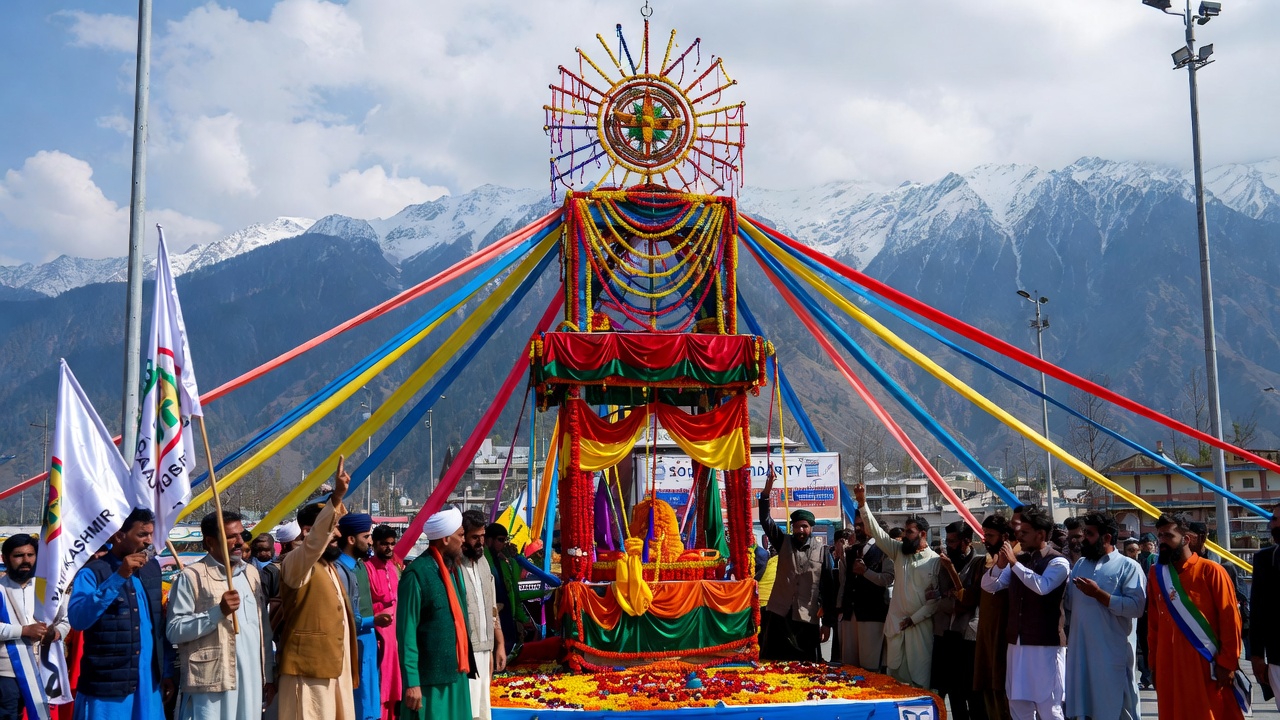
Every year on February 5, millions of people across Pakistan, Azad Jammu and Kashmir, and Kashmiri communities around the world pause to observe Kashmir Solidarity Day — known locally as Youm-e-Yakjehti-e-Kashmir. This is not a day of grand celebration. It is a day of remembrance, reflection, and renewed commitment to the cause of human dignity.
In 2026, the day arrives on a Thursday, and the federal government of Pakistan has once again declared it a nationwide public holiday. All public and private offices will remain closed. A one-minute silence at 10:00 a.m. will honor those who have lost their lives in the decades-long struggle for self-determination. From the streets of Karachi to the valleys of Muzaffarabad, rallies, seminars, and prayer gatherings will mark the occasion.
But beyond the processions and political speeches, words carry the day. Quotes, messages, poetry, and slogans shared among families, on social media, in classrooms, and at mosques form the emotional backbone of Kashmir Day. This post brings you 50 of the most powerful, inspiring, and heartfelt Kashmir Day quotes and messages — words that honor the resilience of the Kashmiri people and call for a peaceful future.
What Is Kashmir Solidarity Day and Why Is It Observed on February 5?
Before we explore the quotes, it helps to understand the roots of this observance.
Kashmir Solidarity Day was first observed in 1990. That year, Nawaz Sharif, then the Chief Minister of Punjab and opposition leader, called for a nationwide strike to protest the situation in Indian-administered Kashmir. The call was supported by Benazir Bhutto’s Pakistan People’s Party, which then formally declared February 5 a public holiday. The current structure of the day’s observance was further formalized by Pakistan’s Minister for Kashmir Affairs and Northern Areas in 2004.
The day serves three main purposes. First, it expresses solidarity with the people of Kashmir who have lived through decades of conflict. Second, it pays tribute to those who lost their lives. Third, it reaffirms Pakistan’s position that the Kashmir dispute should be resolved according to United Nations Security Council resolutions, particularly Resolution 47 of 1948, which called for a free and impartial plebiscite.
On this day, a human chain is traditionally formed along all major routes leading from Pakistan into Azad Jammu and Kashmir. People stand with clasped hands, stretching across highways and mountain roads. It is one of the most visually powerful demonstrations of unity anywhere in the world.
The History of Kashmir Day: How February 5 Became a Symbol of Solidarity
The story of Kashmir Day cannot be separated from the broader history of the region.
When the British withdrew from the Indian subcontinent in August 1947, the princely state of Jammu and Kashmir became the subject of an unresolved territorial dispute. The state was ruled by Maharaja Hari Singh, a Hindu monarch governing a predominantly Muslim population. As both India and Pakistan claimed the territory, armed conflict broke out in October 1947 — the first of several wars between the two nations over Kashmir.
India brought the matter to the United Nations Security Council on January 1, 1948. The UNSC subsequently passed several resolutions, the most notable being Resolution 47, adopted on April 21, 1948. This resolution called for a ceasefire, the withdrawal of forces, and a plebiscite to determine the will of the Kashmiri people. That plebiscite has never been held.
The decades that followed saw two more wars — in 1965 and 1999 — and continued unrest within the region. The Simla Agreement of 1972 between India and Pakistan attempted to establish a framework for bilateral resolution, but the fundamental question of self-determination remained unanswered.
Against this backdrop, February 5 became a day for Pakistanis and Kashmiris to remind the world that the issue is not forgotten.
Why Kashmir Day Quotes and Messages Matter in 2026
Words are not merely decorative on Kashmir Day. They serve a function.
In 2026, as the world grapples with shifting geopolitical realities, the Kashmir dispute remains one of the longest-unresolved conflicts on the global stage. The Pakistan Ministry of Foreign Affairs continues to highlight the day through its embassies and consulates worldwide. Quotes and messages shared on this day help ordinary people participate in a cause that might otherwise feel distant or overly political.
A well-chosen quote can do several things. It can educate someone unfamiliar with the history. It can comfort those who have suffered loss. It can inspire action — whether that is attending a rally, writing a letter to a representative, or simply learning more about the issue. And it can connect people across borders, languages, and cultures through shared values of justice and peace.
This is why every year, millions search for meaningful Kashmir Day quotes, messages, and poetry to share with friends, family, and colleagues. The words you share on February 5 become part of a collective voice.
Top 50 Inspiring Kashmir Day Quotes and Solidarity Messages
Below is a carefully curated collection of 50 quotes and messages organized into thematic categories. Some are original solidarity messages. Others draw on statements by leaders, poets, and thinkers who have spoken about Kashmir over the decades. All are written or paraphrased in the spirit of peace, dignity, and human rights.
Kashmir Day Quotes About Peace and Hope for the Future
These quotes focus on the aspiration for a peaceful resolution — the dream of a Kashmir where beauty is not overshadowed by conflict.
1. “Kashmir has always been more than a mere place. It has the quality of an experience, a state of mind, perhaps even an ideal. May that ideal one day be fully realized.”
2. “The mountains of Kashmir have stood for millennia. They do not bend. Neither does the spirit of a people who believe in their right to choose their own future.”
3. “Peace is not the absence of conflict in Kashmir. Peace is the presence of justice — a justice that has been promised but never delivered.”
4. “On this Kashmir Solidarity Day, we pray not for victory of one side over another, but for the triumph of compassion over cruelty, and dialogue over silence.”
5. “The rivers of Kashmir carry more than water. They carry the stories of generations who never stopped hoping for a tomorrow that belongs to them.”
6. “Every February 5 is a reminder that peace is not a gift given by the powerful. It is a right earned by those who refuse to forget.”
7. “The beauty of Kashmir is undeniable. But beauty without freedom is a garden behind bars. May the gates open in our lifetime.”
8. “There is no military solution to the Kashmir issue. The only path forward is one paved with dialogue, empathy, and respect for the will of the people.”
9. “Kashmir Day is not about anger. It is about hope — the stubborn, unshakable hope that the world will one day honor its promises.”
10. “May the children of Kashmir see a sunrise that is not clouded by fear. May they grow up knowing that the world stood with them.”
Emotional Kashmir Solidarity Day Messages to Share on Social Media
These shorter messages are ideal for sharing on WhatsApp, Facebook, Instagram, and X (formerly Twitter) on February 5, 2026.
11. “Standing with Kashmir today and every day. Solidarity is not seasonal — it is a permanent commitment. #KashmirSolidarityDay2026”
12. “Kashmir runs through the heart of every Pakistani. On this February 5, we renew our promise: you are not alone. #YoumEYakjehtiKashmir”
13. “One minute of silence at 10 a.m. One lifetime of support. Kashmir, we hear you. #KashmirDay2026”
14. “The beauty of Kashmir is matched only by the courage of its people. Sending strength and solidarity this February 5.”
15. “Freedom is not a privilege. It is a birthright. Kashmir Day reminds us of a promise the world has yet to keep.”
16. “No amount of barbed wire can contain the spirit of a people who dream of freedom. Kashmir, your day will come.”
17. “This February 5, let us not only speak for Kashmir — let us listen to Kashmir. Their voices deserve to be heard.”
18. “Solidarity means more than a hashtag. It means standing firm even when the world looks away. #KashmirDay”
19. “Kashmir Day 2026: A day to remember, reflect, and recommit to the cause of human dignity and self-determination.”
20. “Every prayer offered for Kashmir today is a brick in the bridge toward peace. Keep building.”
Powerful Kashmir Day Quotes from Leaders and Public Figures
Throughout history, political leaders, writers, and thinkers have spoken about Kashmir. The following quotes are paraphrased or attributed from statements made in public forums.
21. Pakistan’s founding father, Quaid-e-Azam Muhammad Ali Jinnah, is widely remembered for declaring that Kashmir is the jugular vein of Pakistan — a statement that has guided the country’s policy on the region for decades.
22. The Prime Minister’s Office of Pakistan has consistently reaffirmed the country’s position on Kashmir Day. In an official message, the PM’s office stated: “We will always stand by our Kashmiri brethren until the realization of their right to self-determination” (PMO Pakistan).
23. Allama Muhammad Iqbal, the poet-philosopher who envisioned Pakistan, held Kashmir close to his spiritual vision. He saw the region as inseparable from the broader Muslim identity of the subcontinent.
24. The renowned novelist Salman Rushdie once observed that he had never seen anywhere in the world as beautiful as Kashmir — noting the striking contrast between the tiny valley and the towering Himalayas that surround it.
25. At the United Nations in 1965, Pakistan’s Zulfikar Ali Bhutto delivered a historic address to the Security Council, declaring that the Kashmir issue could never be a “dead issue” and urging the Council to fulfill its moral responsibility by pursuing a lasting solution.
26. Nobel laureate Elie Wiesel’s famous words — urging that we must always take sides when facing injustice — have been quoted by Pakistani diplomats in reference to the Kashmir situation, reminding the world that neutrality in the face of oppression favors the oppressor.
27. “Kashmir is more than a dispute on a map. It is a test of the world’s conscience.” — A sentiment echoed by diplomats and civil society leaders across South Asia.
28. Former Pakistani President Mamnoon Hussain, speaking to Kashmiri leaders, reiterated that the Quaid-e-Azam’s view of Kashmir as Pakistan’s lifeline remains a guiding principle for the nation.
29. “The people of Kashmir have continued their courageous struggle for self-determination despite the immense challenges they face. Their resolve remains unbroken.” — A recurring theme in official Pakistani diplomatic statements.
30. The United Nations Security Council Resolution 47 (1948) itself stands as one of the most significant statements ever made about Kashmir — calling for a free and impartial plebiscite to allow the people to determine their own future.
Heartfelt Kashmir Day Wishes for Friends and Family Members
These warm, personal messages are suitable for sending to loved ones on February 5.
31. “On this Kashmir Solidarity Day, may we hold our loved ones a little closer and remember those in Kashmir who cannot do the same. Sending you warmth and prayers.”
32. “Wishing you a meaningful Kashmir Day. May our solidarity today plant seeds of peace that will bloom for generations to come.”
33. “To my family and friends: let us use this day to learn, to reflect, and to teach our children about the value of standing with those who need our voice.”
34. “Happy Kashmir Solidarity Day. May Allah grant ease to the people of Kashmir and unite all of us in the pursuit of justice and compassion.”
35. “This February 5, I send my love to Kashmir and to every person who carries its cause in their heart. Unity is our greatest strength.”
36. “Kashmir Day is a reminder that distance does not diminish responsibility. No matter where we are in the world, our hearts stand with Kashmir.”
37. “May the prayers we offer today reach every home in Kashmir. May they bring comfort, courage, and the promise of better days.”
38. “To my Kashmiri brothers and sisters: your strength inspires the world. On this day, know that you are loved and never forgotten.”
39. “Wishing everyone a reflective Kashmir Solidarity Day. Let our words today be the beginning of actions tomorrow.”
40. “On Kashmir Day 2026, I carry the memory of those who gave everything for freedom. Their sacrifice is not in vain. Ameen.”
Kashmir Day Quotes for Students, Teachers, and School Events
February 5 is an important day in educational institutions across Pakistan and AJK. Schools hold speech competitions, essay contests, and awareness sessions. These quotes are suitable for students and teachers.
41. “Every student who learns about the Kashmir struggle becomes a voice for justice. Education is the first step toward solidarity.”
42. “To the students of Pakistan: the pen you hold today is mightier than any weapon. Write for Kashmir. Speak for Kashmir. Stand for Kashmir.”
43. “Teachers shape the minds that will one day solve the problems of the world. On Kashmir Day, let us teach our students that peace and justice are worth fighting for — with words, with ideas, and with compassion.”
44. “The history of Kashmir is not just a chapter in a textbook. It is a living story. And every one of us has a role in writing its next page.”
45. “Young people are the ambassadors of tomorrow. On this Kashmir Solidarity Day, carry the message of peace wherever you go.”
Short and Meaningful Kashmir Day Slogans and One-Line Messages
These brief, punchy messages are perfect for posters, banners, WhatsApp statuses, and social media bios.
46. “Kashmir: Where heaven meets hope.”
47. “Solidarity is not silence. Speak for Kashmir.”
48. “February 5 — A day the world must not forget.”
49. “One voice. One cause. One Kashmir. United we stand.”
50. “The promise of 1948 still awaits fulfillment. Kashmir remembers. Do you?”
How to Observe Kashmir Solidarity Day 2026: Activities and Traditions
Kashmir Day is observed in a variety of ways. If you are participating for the first time — or if you wish to deepen your involvement — here are the most common traditions and activities.
The One-Minute Silence at 10:00 a.m.
The most universally observed tradition is the one-minute silence at 10:00 a.m. local time. This year, the Cabinet Division of Pakistan has officially mandated this observance across the country. The silence honors the memory of those who have died in the Kashmir conflict.
Human Chains Across Major Routes
One of the most iconic images of Kashmir Day is the human chain — long lines of people standing hand-in-hand along major roads leading from Pakistan into Azad Jammu and Kashmir. This tradition symbolizes unity and a shared commitment to the Kashmiri cause.
Rallies, Seminars, and Conferences
Political parties, religious organizations, civil society groups, and educational institutions organize events throughout the day. These include:
| Activity | Where It Happens | Who Participates |
|---|---|---|
| Political rallies | Major cities across Pakistan and AJK | Politicians, community leaders, citizens |
| Prayer gatherings | Mosques nationwide | Worshippers of all backgrounds |
| Academic seminars | Universities and colleges | Students, professors, researchers |
| Debate competitions | Schools and colleges | Students |
| Cultural programs | Community centers, media outlets | Artists, musicians, poets |
| Social media campaigns | Online platforms | Youth, activists, diaspora communities |
Media Coverage and Special Programming
Television and radio stations across Pakistan broadcast special programs dedicated to the Kashmir issue. Documentaries, panel discussions, poetry recitals, and dramas are aired throughout the day to raise awareness and keep the conversation alive.
The Significance of Kashmir in South Asian Culture and Identity
To truly understand why Kashmir Day resonates so deeply, one must appreciate the cultural and spiritual significance of the region.
Kashmir has long been called “heaven on earth” — a phrase attributed to Mughal Emperor Jahangir, who is said to have been so moved by the valley’s beauty that he declared it paradise. The region’s stunning landscapes — snow-capped peaks, emerald lakes, dense forests, and flower-filled meadows — have inspired poets, painters, and travelers for centuries.
But Kashmir’s significance extends beyond its physical beauty. The region sits at the crossroads of South Asian, Central Asian, and Tibetan cultures. Its people have a rich tradition of Sufi poetry, handloom weaving (particularly the famed Kashmiri Pashmina), woodcarving, and cuisine that reflects centuries of cultural exchange.
The beloved Kashmiri drink, noon chai (pink salt tea), and the traditional multi-course feast known as Wazwan are not just culinary traditions — they are expressions of identity. When people speak of Kashmir, they speak of a way of life that has endured despite immense hardship.
This cultural depth is why the Kashmir cause is not merely political. It is personal. For Pakistanis, the phrase “Kashmir banega Pakistan” (Kashmir will become part of Pakistan) is not just a slogan. It is a statement of emotional and cultural connection that runs generations deep.
Kashmir Day and International Awareness: A Global Perspective
Kashmir Solidarity Day is not observed only within Pakistan’s borders. Kashmiri diaspora communities in the United Kingdom, the United States, Canada, Europe, and the Gulf states also mark the occasion.
In 2021, the New York State Assembly passed a resolution recognizing a day for Kashmiri Americans — acknowledging the community’s presence and their advocacy for human rights. This was a significant moment in the internationalization of the Kashmir cause.
Pakistani embassies and consulates around the world organize events on February 5. The Pakistan Embassy in Doha, for instance, has hosted Kashmir Solidarity Day gatherings where diplomats and community members speak about the importance of continuing diplomatic efforts.
International human rights organizations have also weighed in on the Kashmir issue. The Office of the United Nations High Commissioner for Human Rights (OHCHR) published reports in 2018 and 2019 documenting conditions in the region — marking the first time the UN human rights office had produced such a report on Kashmir.
These developments show that while the political resolution of the Kashmir dispute remains elusive, the cause of the Kashmiri people has gained greater international visibility in recent years.
How to Write Your Own Kashmir Day Message: Tips and Examples
You do not need to be a poet or a politician to express solidarity on Kashmir Day. Here are some practical tips for writing your own meaningful message.
Be sincere. The most powerful messages come from the heart. You do not need complex language. A simple statement of support means more than an elaborate but hollow phrase.
Be respectful. Kashmir Day is a solemn occasion. Avoid language that is inflammatory or divisive. Focus on human rights, peace, and dignity rather than hatred or revenge.
Be specific. Instead of vague statements, reference something concrete — the one-minute silence, the human chain tradition, or the UN resolutions. This shows that you understand the significance of the day.
Be hopeful. While the Kashmir issue is marked by decades of pain, the messages that resonate most are those that look toward the future with hope and determination.
Here is an example of a well-crafted message:
“On this Kashmir Solidarity Day 2026, I stand with the people of Kashmir in their pursuit of dignity and self-determination. May the world honor the promises made in 1948 and work toward a peaceful resolution that respects the will of the Kashmiri people. You are not alone.”
Kashmir Day Quotes in Urdu: Connecting Through Language and Poetry
For many Pakistanis and Kashmiris, the most emotionally powerful expressions of solidarity come through Urdu and Kashmiri language poetry. The tradition of protest poetry runs deep in South Asian culture, and Kashmir Day is one of the occasions when this tradition comes alive most vividly.
While a full collection of Urdu poetry is beyond the scope of this English-language post, here are a few translated sentiments that capture the spirit of Urdu Kashmir Day poetry:
- “Kashmir is our soul; its freedom is our identity.”
- “The night of oppression may be long, but the dawn of freedom will surely come.”
- “Every tear shed in Kashmir is a demand for justice that the world cannot ignore.”
- “Use the power of your pen to write the rights of Kashmir.”
- “Every student is an ambassador for Kashmir.”
These themes — soul, dawn, tears, the pen, and ambassadorship — are central to the Urdu literary tradition around Kashmir. They reflect a worldview in which justice is not just a political goal but a spiritual obligation.
If you wish to share Urdu quotes, platforms like Hamariweb and other Urdu SMS message portals offer collections tailored for Kashmir Day sharing.
The Role of Social Media in Spreading Kashmir Day Awareness
Social media has transformed how Kashmir Day is observed. What was once limited to physical rallies and television broadcasts now reaches a global audience through platforms like X (formerly Twitter), Facebook, Instagram, TikTok, and WhatsApp.
Popular Hashtags for Kashmir Day 2026
If you plan to participate online, consider using these hashtags:
| Hashtag | Purpose |
|---|---|
| #KashmirSolidarityDay | General awareness |
| #KashmirDay2026 | Year-specific engagement |
| #YoumEYakjehtiKashmir | Urdu-language solidarity |
| #StandWithKashmir | Global advocacy |
| #5thFebruary | Date-specific posts |
| #KashmirBanegaPakistan | Cultural expression of support |
| #FredomForKashmir | Human rights focus |
Best Practices for Social Media Posts on Kashmir Day
When sharing Kashmir Day content online, keep these guidelines in mind:
- Pair quotes with visuals. A quote overlaid on a photograph of Kashmir’s landscape is more likely to be shared than plain text.
- Tag relevant accounts. Mention official pages of Pakistani embassies, human rights organizations, or Kashmiri advocacy groups to amplify your reach.
- Use stories and reels. Short-form video content on Instagram and TikTok can reach younger audiences who may not engage with long-form text.
- Engage respectfully. Kashmir is a sensitive topic. Avoid getting drawn into hostile arguments. Focus on sharing information and fostering understanding.
Frequently Asked Questions About Kashmir Solidarity Day 2026
When is Kashmir Day 2026?
Kashmir Solidarity Day 2026 falls on Thursday, February 5, 2026. It is a public holiday in Pakistan and Azad Jammu and Kashmir.
Is Kashmir Day a public holiday in Pakistan?
Yes. The federal government has declared February 5, 2026, a nationwide public holiday. All government offices, banks, educational institutions, and most businesses remain closed.
What happens at 10:00 a.m. on Kashmir Day?
A one-minute silence is observed across Pakistan at 10:00 a.m. to honor those who have lost their lives in the Kashmir conflict. This is mandated by the government and observed in schools, offices, and public spaces.
Who started Kashmir Day?
The idea of observing a day dedicated to Kashmir solidarity was first proposed by Qazi Hussain Ahmad of the Jamaat-e-Islami party in 1990. It was supported by Nawaz Sharif (then Chief Minister of Punjab) and formalized as a public holiday by the Pakistan People’s Party government under Benazir Bhutto.
Is Kashmir Day observed outside Pakistan?
Yes. Kashmiri diaspora communities and Pakistani embassies mark the day in countries including the United Kingdom, United States, Canada, Qatar, Germany, and others. In 2021, the New York State Assembly recognized a Kashmiri American day.
What is UNSC Resolution 47?
United Nations Security Council Resolution 47, passed on April 21, 1948, called for a ceasefire between India and Pakistan, the withdrawal of forces from Kashmir, and a free and impartial plebiscite to allow the Kashmiri people to determine whether to join India or Pakistan. The plebiscite has never been held.
How Kashmir Day 2026 Is Different: Long Weekend and Extended Observance
This year, Kashmir Day arrives with an unusual twist. In Punjab province, Chief Minister Maryam Nawaz announced additional holidays on February 6 and 7 in connection with Basant celebrations, effectively creating a long weekend. In Sindh, the government declared a holiday for educational institutions on February 4 for Shab-e-Barat, meaning students in the province enjoy a four-day break.
This convergence of holidays means that Kashmir Day 2026 will be observed within a broader atmosphere of community gatherings and family time. Many families will use the extended weekend to attend Kashmir Day events, visit relatives, and participate in communal prayers.
However, the festive atmosphere of Basant should not overshadow the solemnity of Kashmir Day. As many community leaders have emphasized, February 5 is first and foremost a day of reflection and solidarity.
Kashmir Day and the Broader Conversation About Human Rights
Kashmir Day does not exist in isolation. It is part of a global conversation about self-determination, human rights, and the responsibilities of the international community.
The United Nations Charter enshrines the principle that peoples have the right to determine their own political future. The Universal Declaration of Human Rights guarantees freedoms of expression, assembly, and movement. These are not abstract legal concepts — they are the daily aspirations of millions of people around the world, including in Kashmir.
When we share Kashmir Day quotes, we are participating in this broader conversation. We are affirming that the principles of the UN Charter apply equally to all peoples. We are reminding ourselves and others that the passage of time does not diminish the validity of a just cause.
Understanding the Kashmir Dispute: A Brief Timeline for New Readers
For those encountering the Kashmir issue for the first time, a brief timeline provides essential context. This is not a comprehensive history — entire libraries have been written on the subject — but it offers the key milestones that shape the conversation on Kashmir Day.
| Year | Event |
|---|---|
| 1846 | The Treaty of Amritsar establishes the princely state of Jammu and Kashmir under the Dogra dynasty during British rule. |
| 1947 | British India is partitioned. India and Pakistan become independent states. The Kashmir conflict begins as both nations claim the territory. |
| 1948 | India refers the Kashmir dispute to the United Nations. The UNSC passes Resolution 47, calling for a plebiscite. The UN establishes the United Nations Commission for India and Pakistan (UNCIP). |
| 1949 | A ceasefire line is established, later known as the Line of Control (LoC). The United Nations Military Observer Group in India and Pakistan (UNMOGIP) begins monitoring the ceasefire. |
| 1965 | The Second Kashmir War breaks out between India and Pakistan. It ends with the Tashkent Declaration, brokered by the Soviet Union. |
| 1972 | Following the 1971 war and the creation of Bangladesh, India and Pakistan sign the Simla Agreement, which redefines the ceasefire line as the Line of Control. |
| 1990 | Kashmir Solidarity Day is first observed in Pakistan. The Kashmir insurgency intensifies in Indian-administered Kashmir. |
| 2004 | Pakistan’s Minister for Kashmir Affairs formalizes the current structure of Kashmir Solidarity Day observance. |
| 2018–2019 | The Office of the UN High Commissioner for Human Rights publishes its first-ever reports documenting conditions in Kashmir. |
| 2019 | India revokes Article 370 of its constitution, which had granted special autonomous status to Jammu and Kashmir. The move draws widespread international attention and criticism from Pakistan and human rights organizations. |
| 2026 | Kashmir Solidarity Day continues to be observed as a public holiday in Pakistan on February 5. |
This timeline reveals why the Kashmir issue is often described as one of the world’s oldest unresolved disputes. Each date represents not just a political event but a turning point in the lives of millions of people.
What Makes a Great Kashmir Day Quote: The Art of Meaningful Solidarity
Not all solidarity messages carry the same weight. The most effective Kashmir Day quotes share certain qualities that set them apart from generic expressions of support.
Authenticity matters most. People can tell the difference between a message written from genuine concern and one copied without thought. The best quotes reflect personal understanding of the issue — even if that understanding is still developing.
Cultural sensitivity is essential. Kashmir Day is observed with deep emotion by people who have experienced loss. A message that trivializes their experience or reduces it to a political talking point will ring hollow. The best messages acknowledge the complexity of the situation while still expressing clear solidarity.
Specificity adds power. A quote that references the one-minute silence, the human chain tradition, or the UN resolutions carries more weight than one that simply says “we support Kashmir.” Specificity shows that the writer has taken the time to understand what the day means.
Hope must be present. Even on a day marked by remembrance of loss, the most resonant messages look forward. They speak of a future where the conflict is resolved, where children grow up in peace, and where the beauty of Kashmir is no longer overshadowed by pain.
Brevity can be powerful. While longer messages have their place, some of the most shared Kashmir Day content consists of single lines that capture a complex emotion in a few words. “February 5 — the world’s conscience on trial” says more in eight words than many paragraphs could.
How Kashmir Day Is Celebrated in Schools and Universities Across Pakistan
Education plays a central role in how Kashmir Day is observed. Across Pakistan and Azad Jammu and Kashmir, schools and universities organize a wide range of activities designed to educate young people about the history and significance of the Kashmir dispute.
Speech Competitions
One of the most common activities is the speech competition. Students prepare and deliver speeches about the history of Kashmir, the significance of February 5, and their vision for a peaceful resolution. These competitions take place in both Urdu and English. Many students memorize quotes from leaders like Quaid-e-Azam, Allama Iqbal, and contemporary political figures to strengthen their speeches.
Essay Writing Contests
Teachers assign essays on topics such as “Why Kashmir Day Matters” or “My Message to the People of Kashmir.” These assignments encourage students to research the issue, form their own opinions, and express them in writing. The best essays are often displayed on school bulletin boards or shared in school newsletters.
Art and Poster Competitions
Visual expression is another important component. Students create posters, paintings, and digital artwork that depict the beauty of Kashmir, the struggles of its people, and the hope for peace. Common imagery includes the Himalayan mountains, the Kashmiri flag, barbed wire (symbolizing oppression), and doves (symbolizing peace).
Debate Forums
At the university level, debate forums bring students together to discuss the Kashmir issue from multiple perspectives. These forums encourage critical thinking and help students understand the complexity of the dispute beyond the slogans and headlines.
Special Assemblies
Many schools begin the day with a special assembly that includes recitation from the Quran, the national anthem, speeches by teachers and students, and the observance of the one-minute silence at 10:00 a.m. These assemblies create a collective experience that reinforces the significance of the day.
The Kashmir Diaspora: How Overseas Communities Observe February 5
The Kashmir Solidarity Day observance extends far beyond the borders of Pakistan and Azad Jammu and Kashmir. A significant Kashmiri diaspora, particularly in the United Kingdom, has made February 5 a day of advocacy and awareness in Western capitals.
In London, Kashmiri community organizations have historically organized demonstrations near the Indian High Commission. These events draw attention to the human rights situation in Kashmir and call on the British government to use its diplomatic influence to support a peaceful resolution.
In North America, Kashmiri Americans and Pakistani Americans organize events in cities like New York, Washington D.C., Houston, and Toronto. These events range from prayer gatherings at mosques to formal seminars at community centers. The 2021 recognition by the New York State Assembly gave these efforts a significant boost, lending institutional legitimacy to the diaspora’s advocacy.
In the Gulf states, particularly the United Arab Emirates, Saudi Arabia, and Qatar, Pakistani embassies coordinate Kashmir Day events that bring together community members. These gatherings often feature addresses by ambassadors, prayer sessions, and cultural programs.
The diaspora’s role is crucial because it places the Kashmir issue in an international context. When a Kashmiri family in Birmingham or Brooklyn observes February 5, they are not only expressing personal solidarity — they are keeping the issue visible to policymakers, journalists, and the broader public in countries that have the power to influence the international conversation.
Final Thoughts: The Power of Words on Kashmir Solidarity Day
Words alone do not change borders or resolve disputes. But words shape consciousness. They build solidarity. They keep alive the memory of injustice and the hope for its resolution.
The 50 quotes and messages in this post are offered in that spirit. Whether you are a student preparing a speech, a parent explaining the day to a child, a social media user looking for the right words, or simply someone who wants to understand what Kashmir Day means — these words are for you.
On February 5, 2026, when the nation falls silent at 10:00 a.m. and the human chains stretch across the mountains, remember that your voice matters too. A shared quote, a thoughtful message, a sincere prayer — each one is a thread in the fabric of solidarity.
Kashmir Day is not about one country or one political position. It is about the belief that every people deserve the right to determine their own destiny. As long as that belief endures, the observance of February 5 will continue to carry meaning.