Last Updated: March 2026 | By a Global Folklore & Travel Correspondent
Mother’s Day sits squarely in the heart of spring — a season of renewal, blossoming gardens, and the ancient human impulse to honor the women who raised us. In the United States, this tradition dates back to 1908, when Anna Jarvis held the first official celebration in Grafton, West Virginia. More than a century later, the holiday has grown into one of the most commercially significant days on the American calendar.
But here’s the tension: much of what fills store shelves each May — the imported roses drenched in pesticides, the plastic-wrapped chocolate boxes, the fast-fashion scarves destined for the back of a drawer — sits uncomfortably with a growing number of shoppers. A rising wave of consumers now wants gifts that honor both the mother receiving them and the planet she lives on.
This guide is for those shoppers. Below, you’ll find a carefully researched collection of eco-friendly Mother’s Day gift ideas for 2026, organized by category, budget, and the kind of mom you’re shopping for. Every recommendation is grounded in real brands, verified certifications, and actual consumer data — not vague “green” marketing.
Why Sustainable Mother’s Day Gifts Matter More Than Ever in 2026
The numbers tell a striking story. According to the National Retail Federation (NRF), Americans spent $34.1 billion on Mother’s Day in 2025, with the average celebrant dropping $259.04 on gifts, cards, and outings. That made it the second-highest spending year on record — and the figure has climbed every year since 2018, even through the pandemic.
Yet the spending landscape is shifting beneath the surface. The NRF’s 2025 survey found that nearly half of gift-givers now prioritize finding something unique and meaningful over simply spending more. Younger consumers, especially, are gravitating toward experience-based gifts and products from small, mission-driven businesses. Shopping at local and small businesses rose to 24.8% of consumers in 2025 — a notable uptick.
Meanwhile, the sustainability movement itself is maturing. The Sustainable Consumer Research Report 2026 found that health and personal safety has surged as a purchase motivator, climbing from nearly zero to almost 70% of eco-conscious respondents in just two years. At the same time, distrust of greenwashing has grown fivefold since 2022, with 43% of respondents now citing it as a barrier to buying from sustainable brands.
What does this mean for Mother’s Day? It means that moms in 2026 don’t just appreciate a “green” label. They want gifts that are genuinely well-made, truly non-toxic, and produced by companies they can trust. The bar is higher — and that’s actually a good thing.
How to Spot Greenwashing: Certifications That Actually Mean Something
Before diving into specific gifts, a word about labels. Not all “eco-friendly” claims carry the same weight. Vague terms like “natural,” “green,” or “clean” are unregulated marketing language with no enforceable standard behind them. If you want to be confident a product meets genuine sustainability criteria, look for these third-party certifications:
| Certification | What It Verifies | Best For |
|---|---|---|
| B Corp | Entire business meets high standards for social and environmental performance, transparency, and accountability | Brands across all categories |
| Fair Trade Certified | Fair wages, safe conditions, and sustainable practices for farmers and workers | Coffee, chocolate, textiles, jewelry |
| GOTS (Global Organic Textile Standard) | Full textile supply chain is organic and free from toxic chemicals; strict labor standards | Clothing, bedding, towels |
| OEKO-TEX Standard 100 | Finished product tested for over 100 harmful substances (pesticides, heavy metals, formaldehyde) | Baby products, clothing, bedding |
| Leaping Bunny | Neither the product nor its ingredients were tested on animals; considered the gold standard for cruelty-free | Skincare, cosmetics, personal care |
| FSC (Forest Stewardship Council) | Wood and paper sourced from responsibly managed forests | Journals, packaging, home goods |
| Cradle to Cradle | Product assessed for material health, circularity, renewable energy, water stewardship, and social fairness | Broad product categories |
| 1% for the Planet | Company donates 1% of annual sales to environmental nonprofits | Any category |
When shopping for Mother’s Day, check the product page or packaging for these logos. A brand carrying multiple certifications — say, B Corp and Fair Trade — is generally a stronger bet than one relying solely on its own marketing copy.
Best Eco-Friendly Skincare and Beauty Gifts for Mom
Clean beauty is one of the fastest-growing segments in the sustainable gift market, and for good reason. Many mainstream personal care products contain synthetic fragrances, parabens, phthalates, and other ingredients linked to hormone disruption. For the mom who reads ingredient labels (or the one who should start), these are gifts that pamper without compromise.
Organic & Plant-Based Skincare Sets are a standout choice. Look for brands that use USDA Organic or COSMOS-certified ingredients and package their products in glass, aluminum, or compostable materials rather than single-use plastic. Several small brands now offer refillable containers, which dramatically cut packaging waste over time.
Shampoo and Conditioner Bars have moved well beyond the crunchy-granola stereotype. Today’s formulations rival salon-quality liquids in performance, and they eliminate plastic bottles entirely. A single bar typically lasts as long as two to three bottles of liquid shampoo. Brands like Ethique (a certified B Corp from New Zealand) have helped mainstream this category.
Non-Toxic Nail Polish is another thoughtful pick. Look for formulas labeled “10-free” or higher, meaning they exclude at least ten common toxic chemicals found in conventional nail lacquer. Brands like Ella+Mila and Kure Bazaar offer vibrant color ranges with clean formulas.
What to avoid: Products labeled simply “natural” or “clean” with no third-party verification. The term “clean beauty” is not regulated by the FDA, and many products using this label still contain ingredients of concern.
Sustainable Jewelry Gift Ideas for Mothers Who Love Timeless Style
Jewelry remains the single biggest spending category for Mother’s Day, with Americans projected to spend roughly $6.8 billion on it in 2025 alone, according to the NRF survey data. But the conventional jewelry industry carries significant environmental and ethical baggage — from destructive mining practices to exploitative labor conditions.
Fortunately, the ethical jewelry space has matured considerably. Here’s what to look for:
Recycled Gold and Silver. Several brands now craft fine jewelry exclusively from recycled precious metals, which eliminates the need for new mining. Brilliant Earth, for example, offers pieces made from recycled 14K and 18K gold alongside ethically sourced gemstones. The environmental savings are significant: recycled gold requires a fraction of the energy and produces a fraction of the carbon emissions compared to newly mined gold.
Lab-Grown Gemstones. Lab-created diamonds and gemstones are chemically and visually identical to mined stones, but they’re produced with dramatically less land disruption, water use, and carbon output. They also tend to cost 30–40% less than their mined equivalents, making them accessible to a wider range of budgets.
Fair Trade and Artisan-Made Pieces. For something with a story behind it, consider jewelry handmade by artisan cooperatives in developing countries. Brands that carry Fair Trade certification ensure that the workers who craft each piece receive a living wage and work in safe conditions. Resin flower earrings from artisans in Peru, hand-forged brass cuffs from Kenya, seed bead necklaces from Guatemala — these are gifts that carry cultural meaning as well as beauty.
A note on packaging: Even sustainable jewelry can arrive wrapped in excessive plastic. Look for brands that use recycled cardboard boxes, soy-based ink printing, and compostable filler material.
Zero-Waste Kitchen Gifts That Eco-Conscious Moms Will Actually Use
For the mom who loves to cook — or the one trying to reduce her household’s waste footprint — zero-waste kitchen gifts are practical, affordable, and genuinely useful. The key word here is daily use. The most sustainable gift is the one that gets used hundreds of times, replacing its disposable equivalent over and over again.
Beeswax or Plant-Based Food Wraps replace single-use plastic wrap. Made from organic cotton coated with beeswax (or a vegan alternative like soy or candelilla wax), these wraps mold around bowls, fruit, and sandwiches with the warmth of your hands. A set of three wraps typically lasts a full year of regular use and can be composted at end of life.
Reusable Swedish Dishcloths are one of the most effective zero-waste swaps available. A single cellulose dishcloth absorbs 15–20 times its weight in liquid and replaces an estimated 17 rolls of paper towels over its lifespan. When it’s worn out, it goes in the compost bin.
Stainless Steel or Glass Water Bottles remain a perennial favorite, but the category has evolved. Look for double-walled, vacuum-insulated designs made from recycled stainless steel. Brands like Klean Kanteen (a certified B Corp and 1% for the Planet member) and MIIR produce bottles that keep drinks cold for 24 hours or hot for 12 — far outperforming the disposable coffee cups they replace.
Herb Growing Kits make a charming gift that keeps giving. A countertop hydroponic system or a simple window-sill herb garden provides fresh basil, rosemary, and cilantro year-round. It cuts down on those little plastic clamshell herb packages from the grocery store, and there’s something undeniably satisfying about snipping fresh herbs directly into a pan.
Ethical Fashion and Accessories: Sustainable Clothing Gifts for Mom
The fast fashion industry is one of the world’s largest polluters, responsible for roughly 10% of global carbon emissions and enormous quantities of textile waste. Giving mom a piece of clothing from a sustainable brand sends a different message entirely.
Organic Cotton Basics are a surprisingly powerful gift. A beautifully made, organic cotton t-shirt or sweater from a brand like Pact, Kotn, or ABLE offers something that fast-fashion equivalents can’t: softness that improves with washing, construction that holds up for years, and the knowledge that the cotton was grown without synthetic pesticides or fertilizers. ABLE, notably, publishes its workers’ wages — a level of transparency that’s still rare in the industry.
Recycled Material Tote Bags solve a universal problem. Moms carry everything. A well-designed tote bag made from recycled ocean plastic, post-consumer PET bottles, or upcycled materials serves as both an everyday essential and a statement piece. Brands like Patagonia, BAGGU, and ChicoBag offer durable options that fold small and carry heavy.
Fair Trade Scarves and Wraps are another excellent choice, especially when sourced from women’s cooperatives in regions like Nepal, India, or Guatemala. These handwoven textiles carry the imprint of centuries-old craft traditions. Each one is unique. And fair trade certification ensures that the women who made them earned a dignified living from their work.
| Budget Range | Gift Idea | Why She’ll Love It |
|---|---|---|
| Under $30 | Organic cotton tee from a certified brand | Everyday comfort; pairs with anything |
| $30–$75 | Recycled material tote bag | Practical, stylish, and planet-friendly |
| $75–$150 | Fair trade handwoven scarf | One-of-a-kind artisan piece with a story |
| $150+ | Sustainable cashmere or wool sweater | Luxurious warmth from ethical supply chains |
Plant-Based and Eco-Friendly Home Gifts for the Nature-Loving Mom
The home goods category offers some of the most creative options for sustainable Mother’s Day gifting. These gifts transform daily routines — lighting a candle, making the bed, pouring a cup of tea — into small acts of environmental consciousness.
Non-Toxic Soy or Coconut Wax Candles are a staple of the eco-friendly gift guide for a reason. Conventional paraffin candles are petroleum-derived and release toluene and benzene when burned. Plant-based alternatives use soy, coconut, or rapeseed wax scented with essential oils and phthalate-free fragrance blends. Look for cotton or wooden wicks (no lead-core wicks) and glass jars that can be reused or recycled. Grow Fragrance, a North Carolina-based brand, makes certified 100% plant-based candles that are a crowd favorite.
Organic Bamboo Bedding has earned a devoted following. Bamboo fabric is naturally temperature-regulating, breathable, and antimicrobial. Brands like ettitude grow their bamboo with 100% rainwater and process it in a closed-loop system that recycles water up to 200 times. The result is bedding that’s softer than conventional cotton, kinder to sensitive skin, and significantly less resource-intensive to produce.
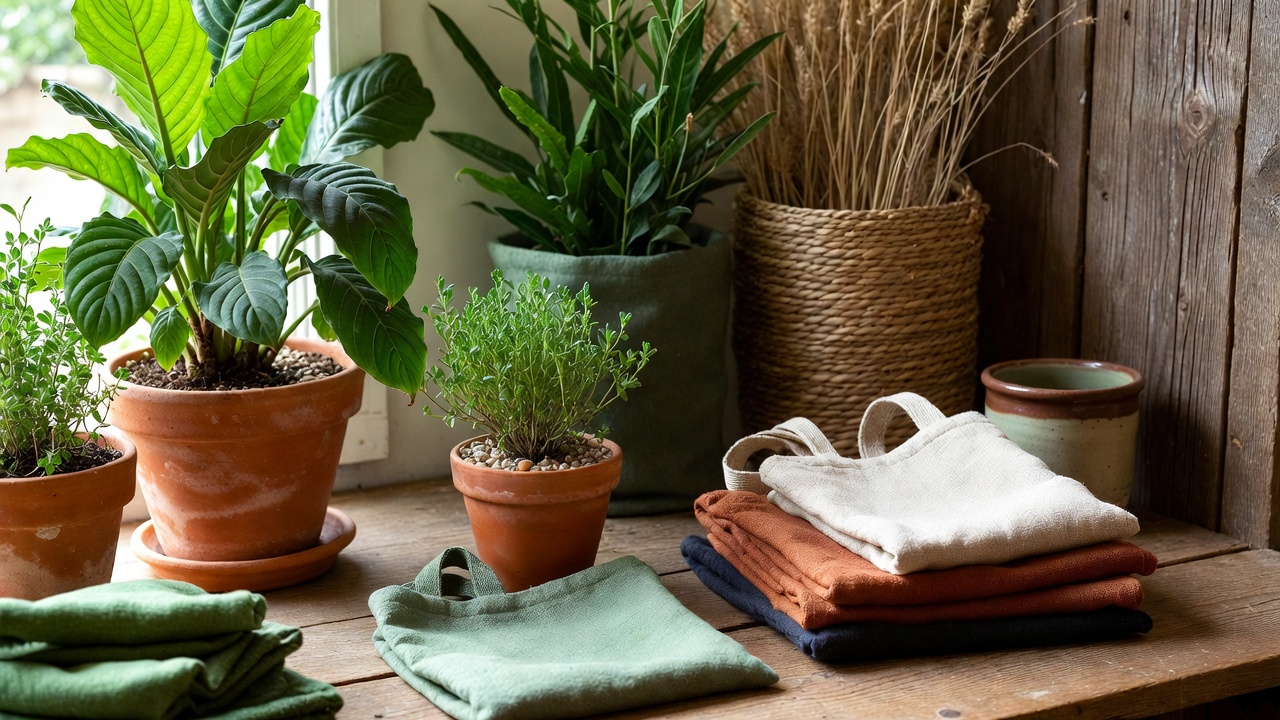
Potted Plants Instead of Cut Flowers is a simple but meaningful swap. Cut flower bouquets, while beautiful, are often flown in from South America or East Africa, racking up significant carbon miles. They also wilt within a week. A potted houseplant — a monstera, a fiddle-leaf fig, a string of pearls — lasts for years and actually improves indoor air quality. Studies have shown that houseplants reduce stress, boost mood, and even speed recovery from illness.
Indoor Composting Systems are a gift for the mom who’s ready to take her sustainability practice to the next level. Countertop electric composters can break down food scraps in as little as 24 hours, turning banana peels and coffee grounds into nutrient-rich soil amendment. They’re odorless, compact, and surprisingly elegant in design.
Experience-Based Sustainable Gift Ideas for Mother’s Day 2026
Sometimes the most sustainable gift is one that creates no physical waste at all. Experience gifts are growing rapidly in popularity. The NRF found that spending on special outings like brunch and dinner rose 4.8% in 2025, and 61% of celebrants planned to take the mother in their lives out for an experience.
Here are meaningful experiences to consider:
Local Farm-to-Table Dining. Skip the chain restaurant and book a table at a locally owned spot that sources ingredients from nearby farms. The meal tastes better. The carbon footprint is smaller. And you’re supporting your local food economy. Many farm-to-table restaurants now highlight their sourcing partners on the menu — a conversation starter in itself.
Artisan Workshops and Classes. Pottery, terrarium-building, natural dyeing, sourdough baking, flower arranging with locally grown blooms — the options are as varied as your mom’s interests. These experiences create lasting memories and teach new skills, all without adding anything to the landfill. Check local community centers, botanical gardens, and independent studios for offerings near you.
Tree Planting or Wildlife Adoption Donations. Organizations like One Tree Planted allow you to plant trees in your mom’s name for as little as one dollar per tree. You can choose the reforestation project by region — from Pacific Northwest forests to tropical rainforests in Indonesia. Similarly, wildlife conservation organizations offer symbolic “adoptions” of endangered species, complete with educational materials and a certificate.
Spa Days with Clean Products. Many spas and wellness centers now offer treatments using exclusively non-toxic, organic products. A gift certificate for a massage, facial, or aromatherapy session at a clean-beauty spa combines relaxation with the assurance that no harmful chemicals are touching her skin.
Budget-Friendly Eco-Friendly Mother’s Day Gifts Under $50
Sustainable doesn’t have to mean expensive. Some of the most thoughtful eco-friendly gifts sit well below the $259 average that Americans typically spend on Mother’s Day. Here are options that are kind to both the planet and your wallet:
- Handmade soap bars from a local artisan market ($8–$15). Cold-process, palm-oil-free soaps wrapped in compostable paper make a lovely small gift.
- Organic tea sampler from a Fair Trade brand ($15–$25). A box of loose-leaf teas in compostable pouches offers weeks of quiet afternoon moments.
- Seed paper greeting card ($5–$8). After she reads it, she can plant it. The card biodegrades in soil and sprouts into wildflowers.
- Reusable produce bags in organic cotton ($12–$18). A set of mesh drawstring bags replaces hundreds of single-use plastic produce bags over its lifetime.
- Beeswax food wraps ($15–$22). A three-pack in bright, botanical patterns is as beautiful as it is functional.
- Fair trade organic chocolate bar ($6–$12). Brands like Alter Eco and Tony’s Chocolonely deliver exceptional flavor alongside supply chain transparency.
- Essential oil room spray made with plant-based, biodegradable ingredients ($12–$20). A calming lavender or eucalyptus blend can freshen pillows and linens naturally.
The common thread? Each gift replaces something disposable, supports a small or ethical business, and carries a personal touch that mass-market gifts can’t match.
How to Wrap Sustainable Gifts Without Creating More Waste
You’ve chosen a beautiful, eco-friendly gift. Don’t undermine it with a mountain of plastic ribbon and metallic wrapping paper. Most conventional gift wrap is non-recyclable because of its plastic coating, glitter, or metallic foil. Here’s how to wrap sustainably:
Furoshiki (Japanese Fabric Wrapping). This centuries-old technique uses a single square of cloth to wrap gifts of any shape. The wrapping itself becomes part of the gift — a beautiful scarf, a linen napkin, a piece of vintage fabric. YouTube tutorials can walk you through the basic folds in under five minutes.
Recycled Kraft Paper. Plain brown kraft paper is fully recyclable and compostable. Dress it up with dried flowers, a sprig of rosemary, or a stamped design. It looks elegant and intentional — not cheap.
Newspaper or Old Maps. For a more casual, vintage feel, wrap gifts in broadsheet newspaper pages or old maps. This works especially well for books and boxed items.
Reusable Gift Bags. Invest in a few fabric gift bags in different sizes. They cycle through holidays and birthdays for years.
Skip the tape. Use cotton twine, washi tape (which is compostable), or tuck-and-fold techniques that require no adhesive at all.
Frequently Asked Questions About Eco-Friendly Mother’s Day Gifts
Are sustainable gifts more expensive than conventional ones? Not necessarily. Some categories, like ethical jewelry or organic cashmere, do carry a premium. But many eco-friendly everyday items — reusable wraps, organic tea, handmade soap — cost the same as or less than their conventional counterparts. The key difference is longevity: a $20 set of beeswax wraps that lasts a year is cheaper than buying plastic wrap every two weeks.
How do I know if a brand is truly sustainable or just greenwashing? Look for third-party certifications (B Corp, Fair Trade, GOTS, Leaping Bunny). Check whether the brand publishes specific data about its supply chain, materials sourcing, and labor practices. Be skeptical of vague language like “eco-conscious” or “inspired by nature” without concrete evidence behind it.
What’s the single most impactful eco-friendly gift I can give? If you’re looking for raw environmental impact, experience gifts produce zero physical waste. But among physical products, anything that replaces a frequently used disposable item — reusable water bottles, cloth produce bags, food wraps — delivers compounding benefits over time.
Do moms actually want eco-friendly gifts? The data strongly suggests yes. The NRF’s 2025 survey found that 47% of gift-givers are looking for unique, one-of-a-kind gifts, and 42% want gifts that create a special memory. Sustainable gifts tick both boxes. They’re distinctive, they carry a story, and they reflect care not just for the recipient but for the world she’ll pass on to her children.
When is Mother’s Day 2026? In the United States, Canada, Australia, and many other countries, Mother’s Day 2026 falls on Sunday, May 10th — the second Sunday of May. The UK celebrates Mothering Sunday earlier in the year, on March 15, 2026.
Final Thoughts: Honoring Mom and the Planet in the Same Breath
Mother’s Day started as a day of sentiment, not commerce. Anna Jarvis, who founded the holiday, actually spent the last years of her life fighting its commercialization — she was dismayed by the greeting card and candy industries that turned her creation into a spending spree.
Over a century later, we have a chance to reclaim some of that original spirit. An eco-friendly Mother’s Day gift isn’t just a product with a green label. It’s a statement of values. It says: I thought about this. I chose something that reflects who you are and what you care about. I want the world to be a little better because of what I gave you today.
That’s a message any mom would be proud to receive.
Sources: National Retail Federation / Prosper Insights & Analytics (2025); FinanceBuzz Mother’s Day Statistics (2026); Sustainable Consumer Research Report (2026); Medill Spiegel Research Center (2025); B Lab U.S. & Canada; One Tree Planted.