As the cold winter fades and the first blossoms of spring appear, millions of people across the globe prepare to welcome Nowruz—the ancient Persian New Year. Music has been at the heart of these celebrations for over 3,000 years. This guide brings you the ultimate playlist of Nowruz songs to make your spring celebration unforgettable.
What Is Nowruz and Why Does Music Play Such an Important Role?
Nowruz, which translates to “New Day” in Persian, marks the first day of spring and the beginning of the year in the Iranian calendar. This celebration falls on the vernal equinox, typically around March 20th or 21st, when day and night are nearly equal in length. The festival represents renewal, rebirth, and the triumph of light over darkness.
According to UNESCO, Nowruz was inscribed on the Representative List of the Intangible Cultural Heritage of Humanity in 2009. The United Nations General Assembly proclaimed March 21st as International Nowruz Day in 2010. Today, more than 300 million people celebrate this ancient festival across 13 countries, including Iran, Afghanistan, Tajikistan, Azerbaijan, Turkey, and parts of Central Asia.
Music serves as the emotional heartbeat of Nowruz celebrations. From traditional folk melodies passed down through generations to contemporary pop songs that capture modern Persian identity, Nowruz music connects families, communities, and diaspora communities around the world.
Traditional Persian Music Instruments Used in Nowruz Celebrations
Before diving into specific songs, understanding the instruments that create the enchanting sounds of Nowruz music enriches the listening experience. Persian classical and folk music relies on a distinctive set of instruments that have evolved over thousands of years.
The Santur: Cascading Melodies of Spring
The Santur is a trapezoidal hammered dulcimer with 72 strings arranged in groups of four. Musicians strike the strings with lightweight mallets called mezrab, producing shimmering, cascading notes that evoke the freshness of spring. The santur’s origins trace back to ancient Persia, with references appearing in texts from the 12th century.
The Tar and Setar: Soul of Persian Classical Music
The Tar is a long-necked lute with six strings and a distinctive double-bowl body covered in lambskin. Its deep, resonant tones carry emotional weight perfect for both celebratory and reflective Nowruz music.
The Setar, meaning “three strings” (though modern versions have four), produces a more intimate, delicate sound. This instrument holds special significance in Sufi music and spiritual gatherings. According to the Foundation for Iranian Studies, the setar descended from the ancient Khorasani tanbur, considered the ancestor of nearly all lutes in the East.
The Daf and Tonbak: Rhythmic Foundations
The Daf is a large frame drum adorned with metal rings that creates both deep bass tones and jingling sounds. It provides the rhythmic heartbeat for Nowruz celebrations, often accompanying dancers and singers.
The Tonbak (also called tombak or zarb) is a goblet-shaped drum carved from a single piece of hardwood. Players use fingers of both hands to produce an incredible range of sounds, from deep bass in the center to crisp highs near the rim.
The Ney: Voice of the Wind
The Ney is an ancient reed flute that produces hauntingly beautiful tones often compared to the human voice. Its breathy, melancholic sound evokes the gentle rustle of spring breezes across blooming meadows.
Best Classic Nowruz Songs That Have Stood the Test of Time
These timeless pieces form the foundation of any authentic Nowruz celebration playlist. Many have been beloved for decades, carrying the spirit of Persian New Year across generations.
“Ey Iran” – The Unofficial National Anthem
“Ey Iran” (O Iran) holds a special place in the hearts of Iranians worldwide. Composed by Ruhollah Khaleghi with lyrics by poet Hossein Gol-e-Golab in 1944, this powerful patriotic song first premiered at a military school in Tehran on October 27, 1944, with vocalist Gholam-Hossein Banan performing.
The song emerged during World War II when Allied forces occupied Iran. According to historical accounts, Gol-e-Golab was inspired to write the poem after witnessing foreign flags raised over an Iranian military barracks in Tehran. The lyrics invoke devotion to the homeland:
The song captures the enduring spirit of the Persian nation through imagery of jewels, mountains, and eternal love for the homeland.
“Ey Iran” transcends political systems and generations. It serves as a unifying anthem that connects Iranians regardless of where they live. During Nowruz celebrations, families often play this song to honor their cultural heritage.
| Song Details | Information |
|---|---|
| Composer | Ruhollah Khaleghi |
| Lyricist | Hossein Gol-e-Golab |
| Original Singer | Gholam-Hossein Banan |
| Year | 1944 |
| Significance | Considered de facto national anthem by many Iranians |
“Boye Eydi” by Farhad Mehrad
Farhad Mehrad (1944–2002) was a pioneering Iranian rock and folk musician who combined Western musical styles with Persian traditions. His song “Boye Eydi” (The Scent of Eydi) captures the excitement and anticipation of Nowruz.
The term Eydi refers to the traditional gifts—often money—that elders give to younger family members during Nowruz. The song evokes childhood memories of new clothes, family gatherings, and the unique energy that fills households during the New Year celebrations.
Farhad was among the first Iranian musicians to record original Western-style guitar ballads. Despite facing political restrictions after the 1979 revolution, his music continues to resonate with audiences.
“Sabzeh Norouz” – Traditional Folk Song
“Sabzeh Norouz” (New Year Greens) is a traditional folk song celebrating the sabzeh—the sprouted wheat, barley, or lentil greens that form a central element of the Haft-Seen table. The sabzeh symbolizes rebirth and new beginnings.
This song appears in various regional interpretations across Iran, Afghanistan, and Tajikistan. Its simple melody and lyrics make it easy for families to sing together while preparing for celebrations.
“Haft Seen” by Various Artists
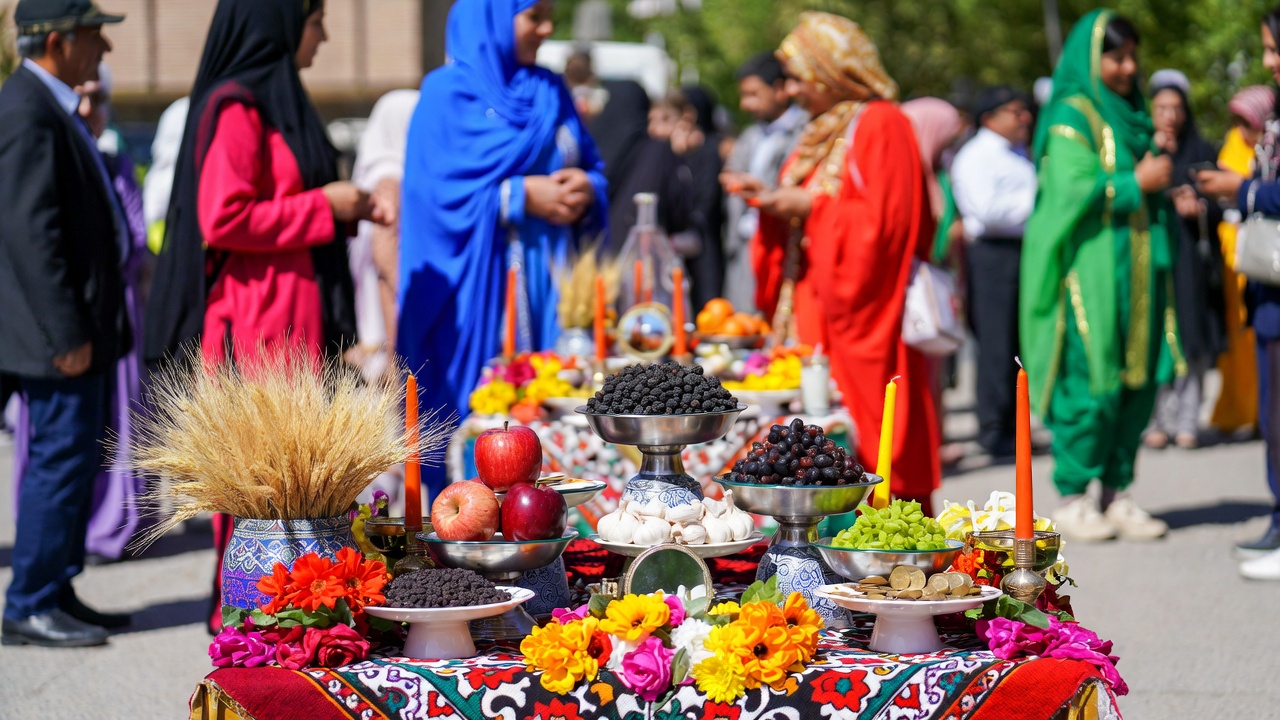
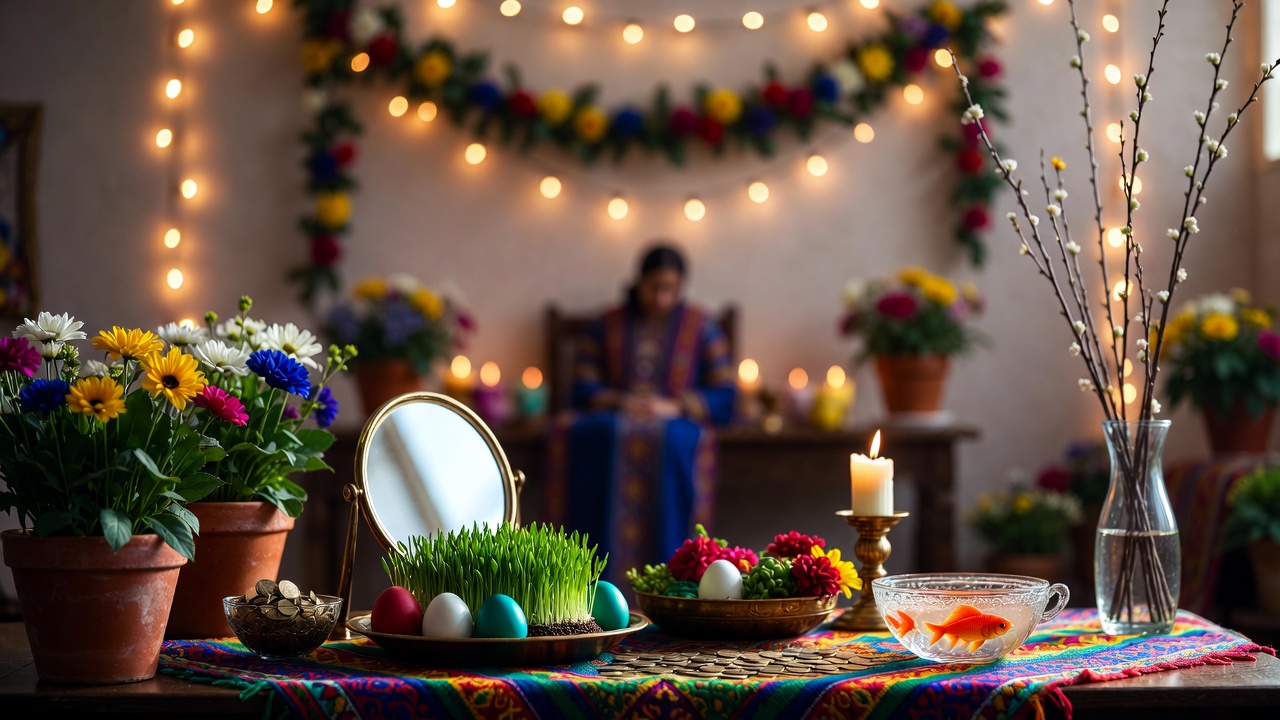
Multiple contemporary artists have recorded songs specifically about the Haft-Seen table—the ceremonial arrangement of seven symbolic items that begins with the Persian letter “س” (Seen). These songs describe each item and its meaning:
- Sabzeh (sprouts) – rebirth and growth
- Samanu (sweet pudding) – affluence and fertility
- Senjed (dried oleaster) – love and wisdom
- Serkeh (vinegar) – patience and age
- Seeb (apple) – beauty and health
- Seer (garlic) – protection and medicine
- Somaq (sumac) – sunrise and the spice of life
Essential Nowruz Songs by Legendary Persian Pop Artists
Persian pop music exploded in the 1960s and 1970s, producing artists whose music remains beloved today. These legendary voices continue to define Nowruz celebrations for millions.
Googoosh: The Queen of Persian Pop
Googoosh (born Faegheh Atashin in 1950) stands as the most iconic female pop singer in Persian music history. Her career spans six decades, beginning when she performed alongside her entertainer father as a child.
During the 1970s, Googoosh dominated Iran’s music scene. Women across the country copied her style, including her famous short haircut known as the “Googooshi.” After the 1979 revolution, she remained in Iran for 21 years without performing publicly.
Her comeback tour in 2000 became legendary. According to Wikipedia, her Dubai concert on the eve of Nowruz 2001 drew over 20,000 people, with approximately 70% having traveled from Iran across the Persian Gulf to see her.
Essential Googoosh songs for your Nowruz playlist:
| Song Title | English Translation | Theme |
|---|---|---|
| Man Aamadeh Am | I Have Come | Love, declaration |
| Hamsafar | Travel Companion | Nostalgia, partnership |
| Talagh | Divorce | Emotional ballad |
| Ayeneh | Mirror | Self-reflection |
Ebi: The Master of Voice
Ebrahim Hamedi, known as Ebi (born 1949), earned the title “Master of Voice” for his powerful, emotional vocals. He left Iran in 1977, two years before the revolution, and continued his career from Los Angeles.
Ebi’s songs often carry themes of love, nostalgia, and longing for homeland—sentiments that resonate deeply during Nowruz when families gather and diaspora communities feel the distance from their ancestral home.
Top Ebi songs for Nowruz:
- “Shekar” – Sweet romantic ballad
- “Ghesseye Eshgh” (The Love Story) – Released 1986
- “Persian Gulf” – Award-winning patriotic song from 1993
Dariush: Voice of the Persian Diaspora
Dariush Eghbali (born 1951) has recorded over 208 songs throughout his career. Known for his unique voice and emotionally powerful ballads, he became a defining voice of the Iranian exile experience.
His duet with Ebi, “Noon o Panir o Sabzi” (Bread, Cheese, and Herbs), captures the longing for simple pleasures of home—a perfect theme for Nowruz celebrations among diaspora communities.
Hayedeh: The Eternal Voice
Hayedeh (1942–1990) possessed one of the most distinctive voices in Persian music history. Though she passed away over three decades ago, her recordings remain essential to any Nowruz celebration.
Her song “Soghati” (Souvenir), released in 1977, expresses the sentiment: “You just come, and you will be my souvenir, you are my whole life.” This beautiful expression of love resonates during family reunions at Nowruz.
Regional Nowruz Songs From Countries That Celebrate the Festival
Nowruz celebrations vary across the 13 countries that officially observe the holiday. Each region contributes unique musical traditions to the broader tapestry of Nowruz music.
Afghan Nowruz Songs: The Gul-i-Surkh Festival
In Afghanistan, Nowruz coincides with the Gul-i-Surkh (Red Flower) festival, celebrating the red tulips that bloom in the green plains around Mazar-i-Sharif during the first 40 days of the year.
“Molla Mammad Jaan” is one of the most famous Afghan Nowruz songs. According to UNESCO’s Silk Roads Programme, this song originated in Mazar-i-Sharif but is also sung in Iran and Tajikistan, demonstrating how Nowruz music transcends national borders.
Afghan music blends Persian classical traditions with influences from India and Central Asia. Traditional instruments include the rubab (a short-necked lute that is Afghanistan’s national instrument) and the tabla (drums).
Tajik and Uzbek Nowruz Music: Shashmaqam Traditions
Shashmaqam represents the classical musical tradition of Tajikistan and Uzbekistan. This refined genre developed in the ancient Silk Road cities of Samarkand and Bukhara. Its lyrics derive from Sufi poems about divine love.
According to the Smithsonian’s National Museum of Asian Art, Shashmaqam repertory reflects Central Asia’s ethnic eclecticism, bringing together Uzbek, Tajik, Afghan, and Azerbaijani songs and melodies.
Traditional instruments in Central Asian Nowruz music include:
- Tar – long-necked lute
- Tanbur – similar to a bass fiddle
- Doira – frame drum with jingles
- Nagora – drums
In Uzbekistan, Nowruz songs are performed by traditional singers and storytellers called baxshi, shoirs, and dostonchi. These performers preserve oral traditions by improvising tales and songs about the New Year.
Azerbaijani Novruz Songs: The Four Tuesdays
In Azerbaijan, Novruz celebrations begin with four pre-Novruz Tuesdays, each dedicated to one of the natural elements: water, fire, earth, and wind.
The traditional Azerbaijani Khoncha display features green sprouting wheat (samani) and dyed eggs for each family member. Music accompanies each Tuesday celebration, building anticipation for the main Novruz day.
Azerbaijani Novruz music often features:
- Tar (registered with UNESCO under Azerbaijan)
- Saz – stringed instrument
- Balaban – wind instrument
- Traditional folk songs in Azerbaijani Turkish
Kurdish Newroz Songs: Fire and Freedom
For Kurdish communities across Turkey, Iraq, Iran, and Syria, Newroz carries additional significance as a symbol of cultural identity and resistance. The fire-jumping tradition holds particular importance.
Kurdish Newroz music features:
- Bonfires and fire rituals
- Traditional folk dances like the halay
- Songs celebrating spring and rebirth
- Music performed on tanbur and daf
Modern and Contemporary Nowruz Songs to Refresh Your Playlist
While traditional songs form the foundation of Nowruz celebrations, contemporary Persian artists continue creating new music that captures the spirit of the New Year for modern audiences.
Recent Nowruz Singles and Albums
Many Persian pop and rock artists release special singles each year around Nowruz. These songs blend traditional themes with contemporary production styles, appealing to younger generations while honoring cultural traditions.
Popular contemporary artists for Nowruz playlists:
| Artist | Style | Notable Nowruz Themes |
|---|---|---|
| Mohsen Chavoshi | Pop/Traditional Fusion | Spring renewal, homeland |
| Shadmehr Aghili | Pop Rock | Love, celebration |
| Moein | Pop | Family, tradition |
| Leila Forouhar | Pop | Dance, celebration |
| Siavash Ghomeyshi | Pop/Rock | Nostalgia, hope |
Fusion and World Music Incorporating Nowruz Themes
International artists and fusion ensembles have incorporated Nowruz themes into world music contexts. These recordings introduce Persian musical traditions to global audiences while offering fresh interpretations.
Mamak Khadem, formerly of the Persian-fusion band Axiom of Choice, performs songs inspired by melodies from Armenia, Kurdistan, Baluchistan, and Turkey. According to the Smithsonian’s National Museum of Asian Art, her ensemble performed at the Freer Gallery as part of Nowruz celebrations in 2009, featuring traditional instruments like the santur and daf alongside modern arrangements.
Chaharshanbe Suri Songs: Music for the Fire Festival
Chaharshanbe Suri (Scarlet Wednesday) is the fire-jumping festival celebrated on the eve of the last Wednesday before Nowruz. This ancient tradition, with roots in Zoroastrianism, marks the first festivity of the New Year season.
The Traditional Chaharshanbe Suri Chant
As people leap over bonfires, they chant the traditional phrase:
“Sorkhie to az man, zardie man az to”
(Give me your fiery red color, take away my sickly yellow pallor)
This chant symbolizes the exchange of sickness, weakness, and misfortune for the fire’s warmth, vitality, and health. While not a song in the traditional sense, this chant represents one of the most important musical elements of pre-Nowruz celebrations.
Music and Dance at Chaharshanbe Suri Gatherings
Chaharshanbe Suri celebrations feature:
- Drumming on daf and tonbak
- Traditional folk songs about fire and renewal
- Qashoq-zani (spoon banging) – children go door to door banging pots and pans
- Dance around bonfires
- Recitation of poetry from Hafez and other Persian poets
The Chaharshanbe Suri NYC Fire Festival has brought this tradition to New York City for over two decades, featuring Persian music, dance, and fire-jumping for Iranian-Americans and the broader community.
How to Create the Perfect Nowruz Playlist for Different Settings
Different Nowruz occasions call for different musical moods. Here’s how to curate the perfect playlist for various settings.
Family Gathering and Haft-Seen Table Setting
When families gather around the Haft-Seen table at the exact moment of the spring equinox, the music should create an atmosphere of joy, tradition, and reverence.
Recommended playlist flow:
- Begin with classical pieces – Santur or setar instrumentals
- Traditional folk songs – “Sabzeh Norouz” and regional favorites
- “Ey Iran” – at or near the moment of Saal Tahvil (New Year transition)
- Classic pop songs – Googoosh, Ebi, Dariush
- Upbeat celebration songs – transition to dancing
Sizdah Bedar Picnic Music (13th Day of Nowruz)
Sizdah Bedar (the 13th day) marks the end of Nowruz celebrations. Families gather outdoors for picnics and throw their sabzeh into running water to release negativity.
This day calls for:
- Upbeat, joyful songs
- Dance music with strong rhythms
- Nature-themed songs about spring, flowers, and renewal
- Folk songs appropriate for outdoor singing
Diaspora Community Celebrations
For Persian communities outside their homeland, Nowruz music serves an additional function—connecting generations and maintaining cultural identity.
Recommended elements:
- Mix of eras – songs from pre-revolution era through contemporary
- Regional representation – include songs from various Persian-speaking regions
- Nostalgic classics – songs that evoke homeland memories
- Contemporary songs – help younger generations connect with the culture
Where to Find and Stream the Best Nowruz Music Playlists
In the digital age, accessing Nowruz music has become easier than ever. Here are the best resources for building your celebration playlist.
Streaming Platforms With Curated Nowruz Playlists
Spotify features several curated Nowruz playlists, including:
- Nowruz Songs – Official Spotify playlist with over 45,000 saves
- Nowruz Songs – Persian New Year – Over 1,100 saves
Apple Music offers:
- “Norooz Songs – Persian New Year Songs” by Mehrtash (17 songs)
- Various artist compilations
Deezer features:
- “Nowruz! Music For The Persian New Year Celebrations” by Big Celebration
Traditional Music Archives
For authentic traditional recordings:
- Smithsonian Folkways – Academic-quality recordings of traditional music
- Foundation for Iranian Studies – Resources on classical Persian instruments and music
- Center for Traditional Music and Dance – Shashmaqam and Central Asian traditions
Radio and Broadcast Resources
Radio programs featuring Nowruz music:
- KCRW (Los Angeles) – Features Persian New Year programming
- Radio Javan – Popular Persian music streaming
- BBC Persian – Special Nowruz programming
Cultural Significance of Music in Nowruz Traditions
Music at Nowruz carries deep cultural and spiritual meaning beyond entertainment. Understanding this context enriches the listening experience.
The Ancient Connection Between Music and Spring Renewal
According to musicologist Mohammad Reza Darvishi, who documented 25 ceremonial Nowruz songs in his book Nowruzkhani, the tradition of Nowruz music (nowruzkhani) dates back to pre-Islamic Persia. During Nowruz festivals, special melodies were performed in front of Persian kings.
The Persian classical music system includes modes specifically named for Nowruz:
- Nowruz-e-Ajam (Persian Nowruz)
- Nowruz-e-Arab (Arabian Nowruz)
- Nowruz-e-Bayati (Bayati Nowruz)
- Nowruz-e-Khara
- Nowruz-e-Saba
Three Nowruz pieces have survived in the radif repertoire of Persian classical music: Nowruz-e-Arab, Nowruz-e-Khara, and Nowruz-e-Saba.
The Number Seven in Persian Musical Tradition
The number seven holds sacred significance in Zoroastrianism, representing the “Seven Eternal Laws” of Zarathushtra’s teachings. This sacred number appears in:
- The Haft-Seen (seven items starting with “S”)
- The seven Amesha Spentas (holy immortals)
- Traditional scales and modal systems
Persian music incorporated this sacred number into scales and performance practices, connecting musical expression with spiritual meaning.
Sumalak Cooking Songs: Communal Music Traditions
One of the most beautiful musical traditions involves the cooking of Samanu (or Sumalak in Central Asia)—a sweet wheat pudding that takes hours or sometimes all night to prepare.
According to Wikipedia’s Nowruz article, women and girls across Iran, Afghanistan, Tajikistan, Turkmenistan, and Uzbekistan cook Samanu in groups, singing memorable songs throughout the night as they stir the pot. This communal cooking ritual represents:
- Women’s gathering and bonding
- Passing traditions to younger generations
- Prayers and wishes for the New Year
- Celebration of patience and hard work
Teaching Children Nowruz Songs: Keeping Traditions Alive
For families raising children in diaspora communities or simply wanting to pass on traditions, teaching Nowruz songs serves as a powerful tool for cultural transmission.
Simple Nowruz Songs for Children
Recommended characteristics:
- Simple, repetitive melodies
- Lyrics about Haft-Seen items (easy to remember)
- Songs about spring, flowers, and nature
- Action songs with dancing or movements
Creating Family Singing Traditions
Tips for establishing musical traditions:
- Start two weeks before Nowruz – Begin playing Nowruz music during house cleaning
- Learn one new song each year – Build repertoire gradually
- Record family performances – Create memories and document traditions
- Explain the meaning – Help children understand why each song matters
- Include regional songs – Honor family’s specific heritage region
Conclusion: Building Your Ultimate Nowruz Songs Playlist
Creating the perfect Nowruz playlist means balancing tradition with personal taste, honoring the past while celebrating the present. Whether you’re preparing the Haft-Seen table with your family, hosting a community celebration, or simply marking the spring equinox with mindful listening, music transforms the experience.
Essential elements for your playlist:
| Category | Purpose | Examples |
|---|---|---|
| Traditional Classical | Set ceremonial mood | Santur/Setar instrumentals |
| Folk Songs | Connect with roots | “Sabzeh Norouz,” regional songs |
| Patriotic | Honor heritage | “Ey Iran” |
| Classic Pop | Celebrate with joy | Googoosh, Ebi, Dariush, Hayedeh |
| Contemporary | Engage all generations | Recent releases |
| Dance Music | Celebrate together | Upbeat Persian pop |
As you welcome Nowruz this year, let the music carry you—from the contemplative strains of the ney to the joyful rhythms of the daf, from the nostalgic vocals of beloved legends to the fresh sounds of contemporary artists.
Nowruz Mobarak! (Happy Nowruz!) May your New Year be filled with the sweet melodies of renewal, reunion, and hope.
Frequently Asked Questions About Nowruz Music
What is the most traditional Nowruz song?
The traditional Chaharshanbe Suri chant “Sorkhie to az man, zardie man az to” represents one of the oldest musical traditions. For formal songs, regional folk tunes like “Sabzeh Norouz” have been passed down for generations.
Can I find Nowruz playlists on Spotify?
Yes. Spotify offers several curated playlists including the official “Nowruz Songs” playlist with over 45,000 saves. Search “Nowruz” or “Norooz” to find various options.
What instruments are used in traditional Nowruz music?
Traditional instruments include the santur (hammered dulcimer), tar and setar (lutes), daf and tonbak (drums), and ney (reed flute).
Is “Ey Iran” the national anthem?
“Ey Iran” is considered the de facto national anthem by many Iranians due to its cultural significance, though it is not the official government anthem. It was composed in 1944.
How long do Nowruz celebrations last?
Nowruz celebrations span 13 days, beginning on the spring equinox and ending on Sizdah Bedar (the 13th day), when families traditionally picnic outdoors.
Do other countries celebrate Nowruz with music?
Yes. Afghanistan, Tajikistan, Uzbekistan, Azerbaijan, Turkey, and other countries each have their own regional Nowruz musical traditions, creating a rich tapestry of sounds across the Persian cultural sphere.
The History of Nowruz Music: From Ancient Persia to Today
The musical traditions of Nowruz stretch back more than three millennia. Understanding this history helps us appreciate why certain songs resonate so deeply during spring celebrations.
Music in the Achaemenid Empire (550-330 BCE)
Archaeological evidence from Persepolis, the ceremonial capital of the Achaemenid Empire, depicts musicians playing harps, drums, and wind instruments during royal celebrations. These depictions provide our earliest visual records of Persian musical performance.
The chang (ancient Persian harp) held a prominent position in court music. While the instrument eventually faded from mainstream Persian music, its spiritual successor—the santur—carries forward that tradition of floating, celestial melodies.
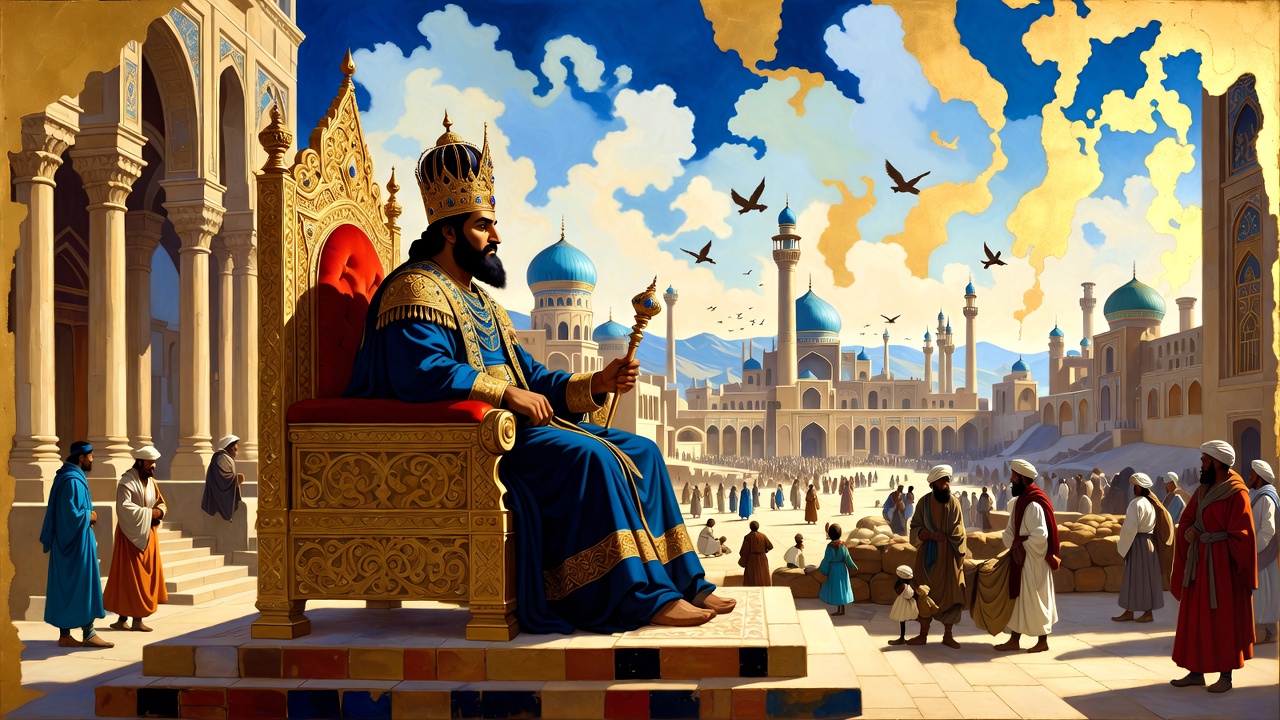
During this era, Nowruz had already established itself as the most important celebration of the year. Kings would receive dignitaries and subjects who brought tribute. Music accompanied every aspect of these ceremonial gatherings.
The Sassanid Era (224-651 CE): Golden Age of Persian Music
The Sassanid Empire represents a golden age for Persian music and Nowruz traditions. During this period:
- Musical modes (maqam) were codified and developed
- Professional court musicians held respected positions
- The Haft-Seen tradition began evolving
- Zoroastrian fire rituals accompanied by music flourished
According to Nasehpour’s research on Nowruz songs, one of the eight modes during the time of Bahram V (widely known as Bahram Gour) was specifically called “bahar” (spring). This demonstrates how deeply Nowruz and spring themes were embedded in the formal musical system.
The transition from “Haft-Shin” (seven items starting with “Sh”) to “Haft-Seen” (seven items starting with “S”) may have occurred during this period, though historians debate the exact timeline. Wine (sharab) was likely among the original items, later replaced by vinegar (serkeh) after Islam’s arrival.
Islamic Period Transformations
When Islam spread through Persia beginning in the 7th century, Persian musical traditions faced new challenges. Some religious authorities viewed music with suspicion. However, Persian musical traditions proved remarkably resilient.
Key developments during this period:
- Sufi orders embraced music as a path to spiritual enlightenment
- Persian classical music developed its distinctive radif system
- Poetry and music became inseparably linked through the ghazal form
- Nowruz persisted despite occasional official discouragement
The great Persian poets—Hafez, Rumi, Saadi, and Ferdowsi—wrote extensively about music and Nowruz. Their verses are still sung today, connecting modern celebrations with medieval poetic traditions.
Rumi, the 13th-century Sufi poet, wrote:
The breeze of Nowruz is sweet upon the face of the rose; The cheerful beauty’s face is pleasant in the garden of love.
Such verses became the basis for many traditional Nowruz songs still performed today.
The Constitutional Revolution and Modern Persian Music
The early 20th century brought dramatic changes to Persian music. The Constitutional Revolution (1905-1911) ushered in modernization efforts that affected all aspects of Iranian culture, including music.
Colonel Ali-Naqi Vaziri (1887-1979) played a crucial role in modernizing Persian music education. He established the first European-style music conservatory in Iran and worked to notate traditional repertoire that had previously been transmitted only orally.
This period saw the rise of:
- Radio broadcasting – spreading music to broader audiences
- Recording industry – preserving performances
- Music education – formalizing traditional practices
- Synthesis – blending Persian traditions with Western influences
The Pahlavi Era: Pop Music Emergence (1925-1979)
Under the Pahlavi dynasty, particularly during Mohammad Reza Shah’s reign (1941-1979), Persian pop music emerged as a powerful cultural force. This era produced many of the legendary artists whose Nowruz songs remain beloved today.
Key developments:
- Radio Tehran broadcast Nowruz programming nationally
- Golhay-e Rangarang (Colorful Flowers) radio program showcased traditional and pop music
- Film industry produced musicals featuring singing stars
- International influences blended with Persian sensibilities
Composer Ruhollah Khaleghi conducted the Golha Orchestra and composed many pieces including the beloved “Ey Iran.” His work bridged traditional Persian music with orchestral arrangements.
Post-Revolution Era: Diaspora and Digital Transformation
The 1979 Iranian Revolution dramatically transformed the Persian music landscape. Many prominent artists emigrated, establishing a vibrant diaspora music scene centered in Los Angeles (often called “Tehrangeles”), London, and other cities.
Significant changes included:
- Female singers banned from performing publicly in Iran
- Pop music restricted or banned
- Diaspora communities preserved and evolved traditions
- Underground music flourished despite restrictions
- Digital technology eventually enabled global distribution
The rise of satellite television in the 1990s and later internet streaming transformed how Persians accessed music. Today, fans worldwide can instantly access Nowruz playlists spanning decades of recorded music.
Detailed Guide to Spotify Nowruz Playlists and Digital Music Resources
In the digital era, accessing Nowruz music has become remarkably convenient. This section provides a comprehensive guide to finding the best digital resources.
Spotify’s Official Nowruz Playlist Analysis
Spotify’s curated “Nowruz Songs” playlist represents one of the most popular digital collections for Persian New Year music. With over 45,900 saves, it serves as a starting point for many celebrants worldwide.
Playlist characteristics:
| Feature | Details |
|---|---|
| Total Tracks | 31 songs |
| Artists | Mix of classic and contemporary |
| Duration | Approximately 2+ hours |
| Style Mix | Traditional, pop, contemporary |
| Languages | Primarily Persian/Farsi |
The playlist balances nostalgic classics with contemporary releases. It includes essential artists like Googoosh and Ebi alongside newer performers, making it suitable for multigenerational celebrations.
Building Custom Playlists by Theme
Different moments during Nowruz call for different musical moods. Here’s a guide to building themed playlists:
Morning of Nowruz (Saal Tahvil Moment):
- Duration: 1-2 hours
- Start with: Contemplative classical pieces
- Build toward: The moment of equinox
- Include: “Ey Iran” at the pivotal moment
- Transition to: Celebratory pop songs
Haft-Seen Table Gathering:
- Duration: 3-4 hours (background music)
- Emphasis: Traditional and classical
- Volume: Low to medium (allows conversation)
- Mix: 70% instrumental, 30% vocal
Nowruz Day Celebration:
- Duration: Full day playlist (8+ hours)
- Variety: All eras and styles
- Energy: Varied, with peaks for dancing
- Include: Songs for all generations present
Sizdah Bedar Picnic:
- Duration: 6+ hours (outdoor event)
- Emphasis: Upbeat, cheerful songs
- Style: Pop, folk songs for group singing
- Dancing: Include rhythmic songs
Apple Music and Other Platform Options
Apple Music offers several Nowruz collections:
- Search “Norooz” or “Nowruz” for curated playlists
- Individual artist albums with Nowruz themes
- “Norooz Songs – Persian New Year Songs” by Mehrtash – Classic 1989 album with 17 tracks
Amazon Music:
- Available through Prime membership
- Search terms: “Nowruz,” “Persian New Year,” “Iranian music”
YouTube Music:
- Extensive catalog including music videos
- Live performance recordings
- User-created compilations
Downloading Music for Offline Celebrations
Many Nowruz celebrations occur in settings without reliable internet access. Planning ahead ensures uninterrupted music.
Tips for offline preparation:
- Download playlists at least 48 hours before Nowruz
- Test downloads on your playback device
- Create backup copies on secondary devices
- Include extra songs beyond minimum needed
- Organize by mood for easy navigation
Complete Breakdown of Traditional Nowruz Folk Songs by Region
Each region celebrating Nowruz contributes unique folk songs reflecting local dialects, musical traditions, and cultural practices. This comprehensive guide covers major regional traditions.
Iranian Regional Variations
Tehran and Central Iran:
- Most influenced by classical Persian music traditions
- Strong presence of santur and tar in arrangements
- Lyrics often drawn from classical Persian poetry
Gilan and Mazandaran (Caspian Region):
- Distinctive folk music styles
- Local dialects in lyrics
- String instruments feature prominently
- Traditional songs about rice cultivation and spring planting
Khorasan (Eastern Iran):
- Influence from Central Asian musical traditions
- Unique regional instruments
- Songs about the Iranian plateau’s dramatic spring transformation
- Strong tradition of spiritual/Sufi music
Kurdistan (Western Iran):
- Kurdish-language Newroz songs
- Emphasis on fire rituals and freedom themes
- Distinctive daf drumming traditions
- Group dancing accompaniment
Isfahan:
- Renowned for classical music heritage
- Sophisticated arrangements
- Connection to historical court music traditions
- Traditional craftsmanship songs
Fars (Shiraz Region):
- Birthplace of Persian poetry
- Songs incorporating Hafez and Saadi verses
- Strong garden and flower imagery (reflecting Shiraz’s famous gardens)
- Wine references in historical songs (Shiraz wine tradition)
Afghan Nowruz Musical Traditions
Afghanistan’s musical landscape blends Persian, Indian, and Central Asian influences. Nowruz music reflects this unique position.
Kabul Traditions:
- Urban refined style
- Influence from Radio-Kaboul programming (established 1925)
- Mix of classical and popular music
- Persian (Dari) language dominates
Mazar-i-Sharif:
- Center of Gul-i-Surkh (Red Flower) festival
- Strong Uzbek influence in northern regions
- “Molla Mammad Jaan” song originated here
- Traditional group singing traditions
Herat:
- Historically Persian cultural center
- Classical music preservation
- Refined poetic traditions
- Connection to Sufi music heritage
Pashtun Regions:
- Rubab (national instrument) features prominently
- Pashto-language Nowruz songs
- Attan dance music
- Distinctive rhythmic patterns
According to Smithsonian Folkways Magazine, Afghan traditional instruments like the rubab were brought to prominence through Radio-Kaboul’s broadcasts, which unified the nation through shared musical experiences.
Tajik Nowruz Music
Tajikistan preserves ancient Persian musical traditions while developing distinctive Central Asian characteristics.
Dushanbe (Capital):
- Modern arrangements of traditional songs
- National orchestra performances
- State-sponsored Nowruz concerts
- Fusion of traditional and contemporary styles
Samarkand and Bukhara Traditions:
- Historical centers of Shashmaqam music
- Though now in Uzbekistan, share cultural heritage with Tajikistan
- Sophisticated classical traditions
- Sufi poetic texts
Mountain Communities:
- Pamiri Setor (larger than Iranian setar)
- Unique folk traditions
- Isolation preserved ancient practices
- Distinctive rhythmic traditions
Uzbek Navruz Musical Traditions
Uzbekistan celebrates Navruz with distinctive Turkic-influenced traditions while sharing elements with Persian neighbors.
Performance Traditions:
- Baxshi (traditional singers/storytellers)
- Shoirs (poets who recite)
- Dostonchi (epic storytellers)
- Akayn competitions (improvisational contests)
Traditional Instruments:
- Dutar (two-stringed lute)
- Chang (jaw harp)
- Doira (frame drum)
- Nay (flute)
Navruz Song Themes:
- Spring planting and agriculture
- Love and celebration
- Nature’s awakening
- Community and hospitality
How Nowruz Music Helps Diaspora Communities Maintain Cultural Identity
For the estimated four million Iranians living outside Iran and millions more from Afghanistan, Tajikistan, and other Nowruz-celebrating countries, music serves as a crucial link to cultural heritage.
The Psychology of Nostalgic Music
Research in music psychology demonstrates that songs learned in childhood create powerful emotional associations. For diaspora communities, Nowruz music triggers:
- Episodic memories – specific events and gatherings
- Sensory associations – foods, scents, textures of celebrations
- Identity reinforcement – connection to heritage
- Intergenerational bonding – shared experiences across ages
- Emotional regulation – managing homesickness and longing
Teaching Second-Generation Children
For children born outside their parents’ homeland, Nowruz music provides accessible entry into cultural heritage.
Effective approaches include:
- Start early – Introduce Nowruz music from infancy
- Make it fun – Choose upbeat songs children enjoy
- Explain meanings – Help children understand lyrics
- Create traditions – Establish annual musical rituals
- Include dancing – Physical movement aids memory
- Tell stories – Connect songs to family history
- Learn instruments – Consider lessons on traditional instruments
Community Celebrations and Musical Unity
Major diaspora communities organize annual Nowruz celebrations featuring live music. These events serve multiple functions:
Los Angeles (“Tehrangeles”):
- Largest Persian population outside Iran
- Multiple Nowruz concerts and festivals
- Celebrity performances by major artists
- Fusion of generations and musical styles
Toronto:
- Significant Persian community
- Annual Tirgan festival includes Nowruz programming
- Mix of traditional and contemporary performances
- Multicultural integration events
London:
- Historic Persian community
- Royal Albert Hall Nowruz concerts
- Integration with British Persian organizations
- Media production center (Manoto television)
New York:
- Annual Chaharshanbe Suri fire festival
- Cross-cultural celebrations
- Museum and cultural institution events
- Academic symposia on Persian culture
Expert Tips for Creating the Perfect Nowruz Celebration Atmosphere With Music
Professional event planners and Persian cultural experts share their insights on using music to enhance Nowruz celebrations.
Timing Your Playlist to the Celebration Schedule
Two weeks before Nowruz (house cleaning period):
- Begin playing Nowruz music during cleaning
- Choose energetic songs for motivation
- Include traditional songs about renewal and cleansing
Chaharshanbe Suri (Fire Festival):
- Drumming-heavy music
- Songs about fire and transformation
- Upbeat dance music
- Traditional chants
Nowruz Eve:
- Contemplative classical music
- Songs about anticipation and hope
- Family-centered ballads
Saal Tahvil (exact moment of equinox):
- Countdown music building to the moment
- “Ey Iran” or chosen patriotic song
- Immediate transition to celebration
First 13 days of Nowruz:
- Daily variation to maintain freshness
- Match music to each day’s activities
- Include guest requests when visiting
Sizdah Bedar (13th day):
- Outdoor-appropriate music
- Group singing songs
- Nature-themed selections
Technical Considerations for Perfect Sound
Indoor celebrations:
- Position speakers for even coverage
- Test volume levels before guests arrive
- Prepare for speeches/announcements (music fade)
- Have wired backup if Bluetooth fails
Outdoor celebrations:
- Weather-proof equipment
- Battery backup power
- Wind protection for speakers
- Volume appropriate for neighborhood
Multi-generational gatherings:
- Volume accessible for older guests
- Balance contemporary and classic selections
- Include songs from multiple decades
- Prepare for different musical preferences
Creating Custom Nowruz Mixtapes as Gifts
Personalized music collections make meaningful Nowruz gifts. Consider creating themed compilations for:
- Elderly relatives – Songs from their youth
- Children – Kid-friendly Nowruz songs
- New mothers – Lullabies and gentle songs
- Newlyweds – Love songs for first Nowruz together
- Non-Persian friends – Introduction to Persian music