Lihkku beivvin! — Happy Sámi National Day!
On Friday, February 6, 2026, the Norwegian capital will come alive with the sounds of joik, the flutter of the Sámi flag, and the aroma of slow-cooked reindeer stew. Sámi National Day — known as Sámi álbmotbeaivi in Northern Sámi and Samenes nasjonaldag in Norwegian — is the single most important day of cultural pride for Europe’s only recognized Indigenous people. And while the heart of Sápmi lies far north of the Arctic Circle, Oslo has become one of the most vibrant places to witness and participate in these celebrations.
This guide covers everything you need to know about celebrating Sámi National Day in Oslo in 2026 — from the flag-raising ceremony at Oslo City Hall to museum exhibitions, traditional food, live music, and responsible ways to engage with Sámi culture as a visitor. Whether you are a long-time resident, a curious traveler, or a diaspora Sámi reconnecting with your roots, this post is for you.
What Is Sámi National Day and Why Is It Celebrated on February 6?
Sámi National Day commemorates the first Sámi congress, held on February 6, 1917, in Trondheim, Norway. That meeting was groundbreaking. For the first time in modern history, Sámi people from Norway and Sweden crossed national borders to sit together and discuss their shared concerns — language loss, land rights, and cultural survival.
The idea of turning that date into a national day did not take hold for decades. It was at the 15th Sámi Conference in Helsinki, Finland, in 1992 that delegates formally resolved that February 6 should be celebrated as the national day for all Sámi people, regardless of which country they lived in. The resolution also declared that the Sámi flag should be flown and the Sámi anthem — “Sámi soga lávlla” — should be sung in the local Sámi language on this day.
The first official Sámi National Day celebration took place in 1993, the same year the United Nations proclaimed the International Year of Indigenous People in Jokkmokk, Sweden. Since then, the holiday has grown in significance every year.
Key facts about Sámi National Day:
| Detail | Information |
|---|---|
| Date | February 6 (annually) |
| Day of the week in 2026 | Friday |
| Official name (Northern Sámi) | Sámi álbmotbeaivi |
| Official name (Norwegian) | Samenes nasjonaldag |
| Origin | First Sámi congress, Trondheim, 1917 |
| Adopted as national day | 1992, Helsinki, Finland |
| First celebrated | 1993, Jokkmokk, Sweden |
| Flag day in Norway | Yes — all municipal buildings must fly the Norwegian flag; the Sámi flag is also encouraged |
Because February 6 falls on a Friday in 2026, many celebrations in Oslo and across Norway are expected to extend through the weekend. Schools typically dedicate the entire week leading up to the day to lessons about Sámi culture. For the Sámi community itself, this is a moment to affirm presence, pride, and ongoing rights.
Who Are the Sámi People? Understanding the Indigenous Culture of Northern Europe
Before diving into the Oslo celebrations, it helps to understand who the Sámi are and why this day matters so deeply.
The Sámi are a Finno-Ugric Indigenous people who have inhabited the northern reaches of Scandinavia and the Kola Peninsula for well over 2,000 years. Their homeland — called Sápmi — stretches across four modern nation-states: Norway, Sweden, Finland, and Russia. Sápmi is not a country. It is a cultural and geographical territory held together by shared language, traditions, and kinship ties rather than political borders.
Population estimates for the Sámi people vary, but the most commonly cited figure is approximately 80,000 across all four countries. Of those, roughly 50,000 to 55,000 live in Norway, making it by far the largest Sámi population. Sweden is home to around 20,000, Finland to 8,000, and Russia to an estimated 2,000.
The Sámi are best known around the world for reindeer herding, a livelihood that remains central to their cultural identity. However, only about 10 percent of the Sámi population still herds reindeer full-time. Fishing, hunting, handicrafts (known as duodji), and increasingly, modern professions in the arts, politics, and academia define Sámi life today.
There are approximately nine distinct Sámi languages, three of which remain in active daily use in Norway: Northern Sámi, Lule Sámi, and Southern Sámi. These languages are not mutually intelligible — they are as different from one another as, say, Spanish is from Italian. Language preservation is one of the most urgent priorities for Sámi communities today.
In Norway, the Sámi Parliament (Sámediggi) was established in 1989 and sits in Karasjok, Finnmark. It serves as the elected political body representing Sámi interests on issues including land use, resource management, language policy, and cultural heritage.
How Oslo Celebrates Sámi National Day: A City Embracing Its Indigenous Heritage
Oslo might sit hundreds of kilometers south of the traditional Sápmi heartland, but it is home to a significant and growing Sámi community. Many Sámi people have moved to the capital for education or work while maintaining deep connections to their northern roots.
The city has steadily expanded its Sámi National Day programming in recent decades. What was once a modest flag ceremony has grown into a multi-day cultural program involving the Mayor’s office, museums, concert venues, schools, and community organizations.
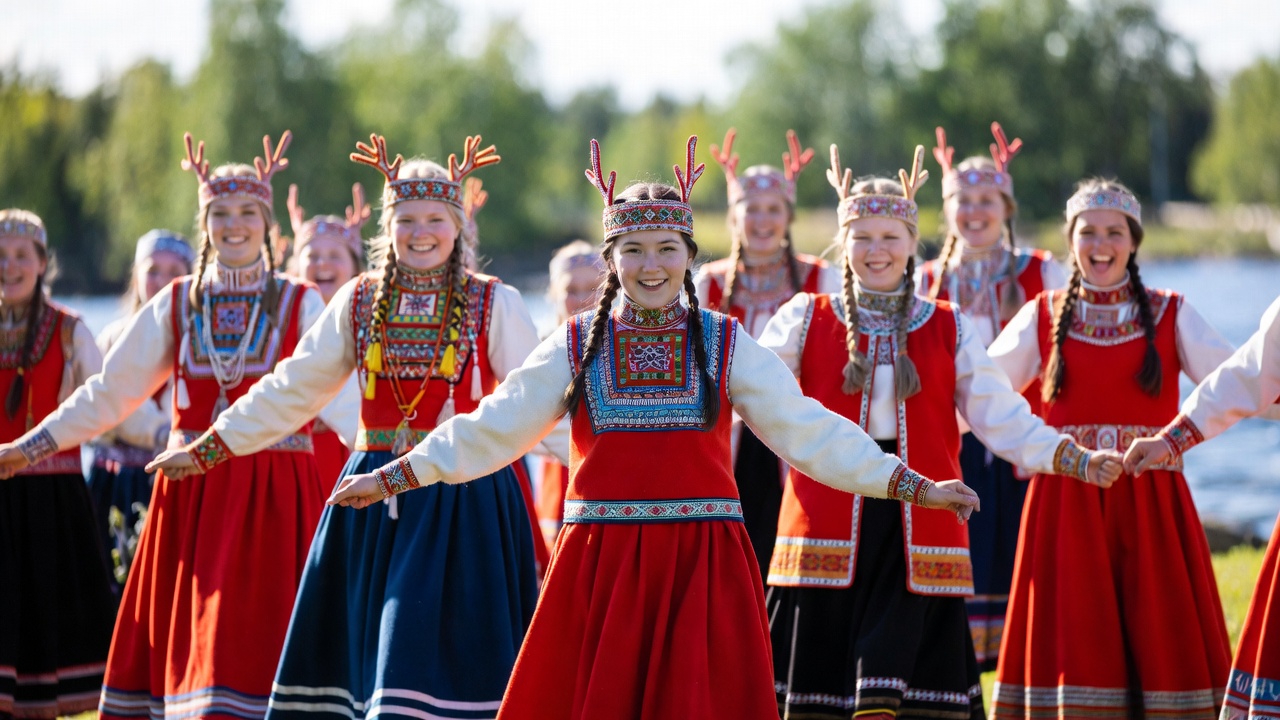
On this day, you will notice something striking as you walk through the streets of Oslo. People wearing the gákti — the traditional Sámi garment, known as kofte in Norwegian — move through the city with quiet pride. Each gákti tells a story. The colors, patterns, and accessories vary by region, family, and marital status. If you encounter someone wearing a gákti, the most respectful thing you can do is offer a simple greeting:
- Northern Sámi: Lihkku beivvin!
- Southern Sámi: Læhkoeh biejjine!
- Lule Sámi: Vuorbbe biejvijn!
Or, in Norwegian: Gratulerer med dagen!
The Flag-Raising Ceremony at Oslo City Hall on Sámi National Day 2026
The most iconic Sámi National Day event in Oslo takes place at Oslo rådhus (Oslo City Hall), the grand brick building overlooking the harbor that is best known as the venue for the Nobel Peace Prize ceremony.
Each year on February 6, the Mayor of Oslo invites Sámi residents from across the Oslo region to a special morning gathering. The ceremony typically includes a flag-raising, a communal breakfast, and speeches from city officials and Sámi leaders. The highlight of the morning comes when the bells in the highest tower of Oslo City Hall play the Sámi national anthem, “Sámi soga lávlla”, as the Sámi flag is raised alongside the Norwegian flag.
This tradition has been part of Oslo’s celebration since 2003. In past years, members of the Norwegian Royal Family — including Queen Sonja and Crown Prince Haakon — have attended, sitting among Sámi children, elders, and community members.
The Mayor has traditionally welcomed approximately 400 guests to the City Hall for the event. It is a moment of genuine civic recognition — a signal from Norway’s capital that the Sámi are not a relic of the past but a living, vital part of the nation’s present.
Practical details for the City Hall ceremony:
| Detail | Information |
|---|---|
| Location | Oslo City Hall (Oslo rådhus), Rådhusplassen 1 |
| Time | Morning (typically begins between 8:00 and 10:00 AM) |
| Admission | By invitation; the flag-raising outside is publicly visible |
| What to expect | Flag-raising, bells playing Sámi anthem, speeches, breakfast |
| Getting there | Tram or bus to Aker Brygge; short walk from National Theatre station |
Even if you are not among the invited guests, standing outside the City Hall during the flag ceremony is a moving experience. The sound of the Sámi anthem echoing from the tower bell across the harbor is something you will not forget.
Samisk Hus Oslo: The Cultural Heart of Sámi Life in the Capital
If there is one place in Oslo that serves as the year-round anchor of Sámi culture, it is Samisk Hus (Sámi House), located in the Kvadraturen neighborhood of central Oslo.
Samisk Hus is a cultural and social meeting place for all Sámi people in the Oslo region. Throughout the year, it hosts language courses in Northern Sámi, traditional craft workshops (such as knife-belt making and gákti pattern courses), cultural events, and community gatherings. But the programming around February 6 is especially rich.
In past years, Samisk Hus has organized a multi-day festival in the days surrounding Sámi National Day, typically running from February 6 through February 8 or beyond. Events often include:
- Joik performances by both established and emerging Sámi musicians
- Panel discussions on Sámi rights, language revitalization, and cultural identity
- Traditional food service, including reindeer stew and dried reindeer meat
- Film screenings featuring Sámi directors and stories
- Craft demonstrations and sales of duodji (Sámi handicrafts)
The atmosphere at Samisk Hus during this period is warm and welcoming. Visitors consistently praise the reindeer stew and the opportunity to sit among Sámi community members and hear their stories. The house is small but deeply personal — it feels less like a cultural institution and more like stepping into someone’s living room.
For the latest 2026 program details, check samiskhus.no directly, as schedules are often published in Norwegian and Sámi languages first.
Best Oslo Museums to Learn About Sámi History and Culture in February 2026
Oslo’s museums have increasingly embraced their responsibility to tell the full story of Norway — including the stories of its Indigenous people. Around Sámi National Day, several museums run special programming that makes February an ideal time to visit.
Norsk Folkemuseum: Norway’s Largest Sámi Collection
The Norsk Folkemuseum (Norwegian Museum of Cultural History) on the Bygdøy peninsula holds the largest Sámi collection in Norway, with approximately 4,300 objects and 4,500 photographs. Its permanent Sámi culture exhibition covers daily life in Sámi communities from the late 19th century through the mid-20th century, as well as more recent developments including the Alta controversy of the 1980s and the establishment of the Sámi Parliament in 1989.
The Sámi Department was formally established at the museum in 1951, making it one of the oldest institutional efforts to document and preserve Sámi material culture in a major Norwegian city. The museum also holds about 100 digitized audio tapes with linguistic material and joik recordings from the 1950s and 1960s.
Museum details:
| Detail | Information |
|---|---|
| Location | Museumsveien 10, Bygdøy, Oslo |
| Getting there | Bus 30 from the city center, or ferry from City Hall pier in summer |
| Highlights | Permanent Sámi culture exhibition, historical photographs, outdoor open-air museum |
| Tip | Free with Oslo Pass |
The Historical Museum: Children’s Sundays with Sámi Themes
The Historical Museum (Historisk museum), part of the University of Oslo’s Museum of Cultural History, is hosting dedicated Sámi culture programming for families in February 2026. Their events calendar lists:
- Children’s Sunday: Sami Culture — February 8, 2026
- Children’s Sunday: Sami Culture — February 15, 2026
- Winter Holiday at Historical Museum: Sami Culture — February 17, 2026
These events are designed to introduce young audiences to Sámi traditions through hands-on activities, storytelling, and educational workshops.
In preparation for Sámi National Day 2026, the Museum of Cultural History is also hosting a SENKU seminar featuring Harald Gaski, a former professor of Sámi literature and culture at UiT, Norway’s Arctic University. His talk will address Sámi spirituality and the relationship between Indigenous identity and land — a timely topic given recent political developments.
The National Museum: Sámi Art on the Global Stage
The National Museum (Nasjonalmuseet), which opened its monumental new building in 2022, has become an important venue for Sámi contemporary art. In 2024, the museum presented a major exhibition of the work of Britta Marakatt-Labba, one of the most celebrated textile artists in the Nordic region. Her 24-meter embroidered work Historjá, which depicts scenes from Sámi history and mythology, gained international recognition at documenta 14 in Kassel, Germany, in 2017.
While specific February 2026 programming has yet to be confirmed at the time of writing, the National Museum regularly features Sámi artists in its contemporary galleries. Check their website closer to the date for current exhibitions.
Traditional Sámi Food to Try in Oslo During Sámi National Day Weekend
Food is inseparable from Sámi culture. For the reindeer-herding Sámi, the animal provides far more than meat — it provides identity, livelihood, and spiritual connection. During Sámi National Day, food takes center stage in the celebrations.
What Is Bidos? The Sámi Wedding Stew
Bidos (sometimes spelled bidus) is the quintessential Sámi celebratory dish. It is a slow-cooked stew made from reindeer meat, carrots, and potatoes — with no seasoning beyond salt and pepper. The simplicity is the point. The rich, deep flavor comes entirely from the quality of the meat itself, which reflects the Arctic diet of the reindeer: lichen, heather, herbs, and wild berries.
Bidos is traditionally served at weddings and special occasions. In Sámi households, the stew may also include the reindeer heart. Nothing is wasted — the Sámi nose-to-tail philosophy predates any modern culinary trend by centuries.
Finnbiff: The Classic Norwegian Reindeer Stew
If bidos is the festive dish, finnbiff is the everyday comfort food. Thinly sliced frozen reindeer meat (the traditional Sámi method of preservation) is fried quickly and simmered in a cream sauce with juniper berries and mushrooms. It is served with lingonberry jam and mashed potatoes.
Where to Eat Reindeer in Oslo
During Sámi National Day, Samisk Hus in Oslo typically serves traditional Sámi food. Beyond that, several Oslo restaurants offer reindeer year-round:
| Restaurant | Location | What to Try |
|---|---|---|
| Helt Vilt | Mathallen Oslo food hall, Vulkan | Reindeer stew, wild game burgers |
| Kaffistova | Rosenkrantz gate, city center | Traditional Norwegian husmannskost, seasonal reindeer dishes |
| Maaemo | Schweigaards gate (three Michelin stars) | Sour cream porridge with grated reindeer heart — a signature dish |
| Samisk Hus | Akersgata, Kvadraturen | Traditional bidos and dried reindeer meat (during events) |
For a more immersive experience, Oslo Sápmi Reindeer operates just outside the city and offers 1- to 1.5-hour cultural gatherings. Visitors can taste traditional dried meat, hear joik performed around a campfire, try lasso throwing, and — from October through May — meet and feed live reindeer. The experience is priced at 995 NOK per person and must be booked at least 24 hours in advance.
Joik Music and Sámi Artists Performing in Oslo in February 2026
No Sámi National Day celebration is complete without joik — the ancient Sámi vocal tradition that is one of the oldest living music forms in Europe.
Joik is not singing about something. It is singing something. A joik dedicated to a person captures their essence — their personality, their spirit, their relationship to the land. A joik dedicated to a river captures the sound and movement of that river. It is deeply personal and intensely emotional. When you hear joik performed live, you are hearing a form of expression that connects directly to the Arctic landscape and thousands of years of oral tradition.
The Rise of Contemporary Sámi Music
In recent years, Sámi music has experienced a remarkable renaissance. Artists like Mari Boine, who has been a pioneer of Sámi music since the 1980s, paved the way for a new generation. Boine has performed at major venues including the Oslo Opera House and has been credited with bringing joik-influenced music to a global audience.
The younger generation has built on this foundation. Ella Marie Hætta Isaksen from Tana, Finnmark, won widespread fame as a champion on Norway’s popular television show Stjernekamp (Battle of the Stars). Artists like Sofia Jannok, Maxida Märak, and Jon Henrik Fjällgren have brought Sámi musical traditions into pop, electronic, and hip-hop genres.
In 2026, the Northern Lights Festival (Nordlysfestivalen) in Tromsø is hosting a special February 6 event called Sámi Guovssahasidja, featuring fashion shows, stand-up comedy by Åse Kathrin Vuolab and Isalill Kolpus, and electro-joik performances by Hildá Länsman and Tuomas Norvio. While this particular event is in Tromsø, Oslo typically hosts its own concert programming at venues like Rockefeller Music Hall, Samisk Hus, and various club stages around the city.
Check local listings at visitoslo.com for the most up-to-date event announcements in Oslo during Sámi week.
The Sámi Film Festival 2026: Celebrating Indigenous Storytelling on Screen
For film lovers, 2026 brings the 8th annual Sámi Film Festival, which takes place around Sámi National Day. While the primary in-person screenings are held at Scandinavia House in New York (February 5 and 7) and the National Nordic Museum in Seattle, the festival also offers virtual screenings available nationwide from February 6 through 13.
The 2026 program is curated by Elle Márjá Eira, the acclaimed Sámi director, writer, and composer whose directorial debut STOLEN reached the top 10 in 71 countries after its Netflix premiere in 2024. Her work spans television, classical opera, and documentary filmmaking.
For those in Oslo who cannot attend in person, the virtual screenings provide an excellent opportunity to engage with Sámi storytelling from anywhere.
It is also worth noting that films showcasing Sámi themes have gained increasing international attention. The Nordic film scene has embraced Indigenous narratives in ways that feel authentic rather than tokenistic — a development that owes much to Sámi filmmakers insisting on telling their own stories, in their own languages, on their own terms.
The Sámi Flag: Understanding the Powerful Symbol You Will See Across Oslo
On February 6, the Sámi flag will fly from buildings across Oslo — from City Hall to schools, from the Storting (Parliament) to private balconies. Understanding its symbolism adds meaning to the day.
The flag was officially approved at the 13th Nordic Sámi Conference in Åre, Sweden, in 1986. It was designed by the Sámi artist Astrid Båhl from Skibotn in Northern Norway. The design draws directly from a poem by the late South Sámi elder Anders Fjellner, who described the Sámi as the “sons and daughters of the Sun.”
Flag symbolism:
- The red half represents warmth, fire, and the sun
- The blue half represents coolness, water, and the moon
- The circle in the center is split: red on the blue side (the sun) and blue on the red side (the moon)
- The green and yellow stripes running vertically through the center represent growth and long-lasting life
- The colors reflect the traditional Sámi gákti and the northern landscape
In Norway, it is mandatory for municipal administrative buildings to fly the Norwegian flag on February 6. Flying the Sámi flag alongside it is strongly encouraged and has become increasingly common. The visual of these two flags flying side by side is a potent reminder of what the Norwegian government itself has acknowledged: Norway consists of two peoples on one territory.
Sámi Rights and the Fosen Wind Farm Ruling: Why This Matters in 2026
Sámi National Day in 2026 is not only a celebration. It is also an occasion for reflection on the ongoing struggle for Sámi land rights in Norway.
The most significant recent event in Sámi rights was the Fosen wind farm case. In October 2021, Norway’s Supreme Court unanimously ruled that two wind farms on the Fosen peninsula in central Norway violated the human rights of Sámi reindeer herders under Article 27 of the International Covenant on Civil and Political Rights (ICCPR). The court declared that the wind farms interfered with the herders’ right to enjoy their own culture.
Despite the ruling, the wind turbines continued to operate. This triggered massive protests in Oslo in February 2023, when Sámi youth and supporters blockaded government ministries and the offices of Statkraft, the state-owned energy company operating 80 of the turbines. The protests drew international attention and support.
A partial agreement was reached in March 2024. Under the deal, the 151 turbines remain in operation, but the south Fosen siida (reindeer-herding community) will receive 7 million Norwegian kroner per year for 25 years from Statkraft. The government also committed to securing new winter grazing areas by the winter of 2026. Crucially, the south Fosen siida gained a veto right over any future license renewals at the site.
However, the agreement only covers the south Fosen siida. At the time of writing, no settlement has been reached for the north Fosen siida, and the case remains a focal point of Sámi political advocacy.
This context is important because Sámi National Day has always carried a dual character. It is a celebration of culture and identity. But it is also an assertion of political presence and unresolved claims. When you see the Sámi flag flying over Oslo on February 6, 2026, know that it represents not only pride but also perseverance.
The Truth and Reconciliation Commission Report: Reckoning With Norway’s Past
Adding further weight to Sámi National Day 2026 is the ongoing process of national reckoning triggered by the Norwegian Truth and Reconciliation Commission (Sannhets- og forsoningskommisjonen). The commission published its extensive report — more than 800 pages — in June 2023.
The report documented the systematic Norwegianization policies (fornorsking) that the Norwegian state imposed on the Sámi people from the mid-19th century through the 1960s and beyond. During this period, Sámi children were forcibly sent to boarding schools where they were punished for speaking their own languages. Sámi land was appropriated. Cultural practices were suppressed. The psychological and cultural damage from these policies is still felt in communities today.
The commission’s findings have prompted calls for concrete action from the Sámi Parliament and civil society organizations. On Sámi National Day, these themes are often woven into speeches and panel discussions in Oslo and across the country.
Understanding this history is essential for visitors who want to engage respectfully with the celebration. Sámi National Day is joyful — but it is also rooted in a story of survival against deliberate efforts to erase an entire culture.
How to Celebrate Sámi National Day in Oslo as a Respectful Visitor
If you are visiting Oslo during Sámi National Day, you are warmly welcome to observe and participate in public events. The Sámi community has generally been open to sharing their culture with respectful visitors. Here are some guidelines to keep in mind.
Do:
- Listen first. This is first and foremost a day for the Sámi people. Your role as a visitor is to listen, learn, and appreciate.
- Greet people warmly. If you see someone wearing a gákti, congratulate them with Lihkku beivvin! or Gratulerer med dagen! They will likely appreciate the gesture.
- Try traditional food. Eating bidos or dried reindeer meat at Samisk Hus or a local restaurant is a wonderful way to connect with the culture.
- Visit a museum. The Norsk Folkemuseum and the Historical Museum both offer thoughtful, contextual introductions to Sámi history.
- Buy authentic Sámi duodji. If you want a souvenir, look for authentic Sámi handicrafts — items made by Sámi artisans using traditional techniques. Samisk Hus and museum shops are reliable sources.
- Educate yourself. Read about the Fosen case, the Truth and Reconciliation Commission, and Sámi political history before you visit.
Do not:
- Do not wear a gákti unless you are Sámi. The traditional garment carries deep personal and regional significance. Wearing one as a costume is considered deeply disrespectful.
- Do not treat Sámi culture as a curiosity. Avoid phrases like “exotic” or “primitive.” The Sámi are a modern, politically active people with a sophisticated culture.
- Do not assume all Sámi are reindeer herders. This is a common and reductive stereotype. Only about 10 percent of Sámi work in reindeer herding today.
- Do not take photographs without permission, especially of people in traditional dress. Always ask first.
Planning Your Trip to Oslo for Sámi National Day 2026: Practical Travel Tips
Oslo in early February is cold, dark, and beautiful. Here is what you need to know for your trip.
Weather in Oslo in February
Expect temperatures between -7°C and 1°C (19°F to 34°F). Snowfall is common. Days are short — you will get roughly 8 hours of daylight — but the low winter sun creates a golden light that is stunning against the snow-covered city.
What to pack:
- Warm, waterproof outer layers
- Thermal base layers (wool is king in Norway)
- Good winter boots with grip (Oslo sidewalks can be icy)
- A warm hat, gloves, and scarf
- Hand warmers for outdoor ceremonies
Getting Around Oslo
Oslo has an excellent public transport system operated by Ruter. The tram, bus, metro (T-bane), and ferry networks will take you everywhere you need to go. Consider purchasing an Oslo Pass, which includes unlimited public transport plus free entry to many museums.
To reach Oslo City Hall for the morning flag ceremony, take the tram to Aker Brygge or walk from the National Theatre metro station — it is about a 10-minute stroll through the city center. For the Norsk Folkemuseum on the Bygdøy peninsula, bus 30 departs from the city center regularly. In summer there is also a ferry option from the City Hall pier, but in February the bus is more reliable. Samisk Hus is centrally located in the Kvadraturen district, within easy walking distance of Karl Johans gate, the main pedestrian boulevard. The Historical Museum sits on Frederiks gate, just behind the Royal Palace gardens, also accessible by foot from most central hotels.
Accommodation
Book early. February is not peak tourist season in Oslo, but the combination of Sámi National Day and the winter holiday week (vinterferie) can increase demand. Hotels in the city center, Aker Brygge, and Grünerløkka neighborhoods all offer good access to Sámi National Day events.
Budget-conscious travelers should also consider staying in the Grønland or Tøyen neighborhoods, which offer more affordable options while remaining well-connected by metro. For those seeking a more boutique experience, hotels near Oslo Central Station combine elegant Scandinavian design with prime central locations. Most accommodations in Oslo are a short tram or metro ride from the key Sámi National Day venues.
Language Tips for Visitors
Norwegian is spoken throughout Oslo, and virtually everyone speaks excellent English. However, making an effort to use a few Norwegian or Sámi phrases will be appreciated. Beyond the Sámi greetings mentioned earlier, here are a few useful Norwegian phrases for your visit:
- Takk — Thank you
- Unnskyld — Excuse me
- Kan du hjelpe meg? — Can you help me?
- Skål! — Cheers! (for when you try that aquavit with your reindeer dinner)
Remember that tipping in Norway is not expected but appreciated. A 10 percent tip at restaurants for good service is considered generous. Most places accept card payments, including contactless — Norway is one of the most cashless societies in the world.
Full Calendar of Sámi National Day Events in Oslo 2026
While the complete program is typically finalized in late January, here is a summary of confirmed and expected events based on established annual traditions and 2026 announcements.
| Date | Event | Location | Notes |
|---|---|---|---|
| Feb 6 | Flag-raising ceremony and breakfast | Oslo City Hall | By invitation; flag ceremony publicly visible |
| Feb 6 | Sámi National Day events | Samisk Hus | Check samiskhus.no for full program |
| Feb 6–13 | Sámi Film Festival (virtual screenings) | Online | Curated by Elle Márjá Eira |
| Feb 8 | Children’s Sunday: Sami Culture | Historical Museum | Family-friendly activities |
| Feb 15 | Children’s Sunday: Sami Culture | Historical Museum | Family-friendly activities |
| Feb 17 | Winter Holiday: Sami Culture | Historical Museum | Winter break programming |
| Ongoing | Sámi culture permanent exhibition | Norsk Folkemuseum | Open year-round |
| Feb 6 (pre-event) | SENKU seminar with Harald Gaski | Museum of Cultural History | Sámi spirituality and land connection |
Note: This table reflects information available as of early February 2026. Always verify event details, times, and ticket requirements directly with the venues before attending.
Beyond Oslo: Other Sámi Celebrations Worth Knowing About in 2026
If your visit to Norway extends beyond Oslo, or if the celebrations inspire you to dig deeper into Sámi culture, there are several major events elsewhere in Norway and across Sápmi in 2026.
Tromsø Sámi Week takes place annually in the first or second week of February. It is one of the largest Sámi cultural festivals in Norway and includes the Norwegian Championships in Lasso Throwing and Reindeer Racing — a spectacular event where reindeer pull competitors on skis. The 2026 Northern Lights Festival in Tromsø is also hosting the Sámi Guovssahasidja party on February 6.
The Jokkmokk Winter Market in Sweden, which has been running for more than 400 years, typically takes place in the first week of February. It is a major gathering for Sámi artisans selling traditional duodji and a vibrant celebration of culture in the Swedish part of Sápmi.
Further ahead in the year, the 23rd Saami Conference will be held in Ohcejohka (Utsjoki), Finland, from June 18 to 21, 2026. This conference marks the 70th anniversary of the Saami Council and will be accompanied by the KulturSápmi Conference. It is the highest governing body of the Saami Council and meets every four years.
Why Sámi National Day in Oslo Matters More Than Ever in 2026
Sámi National Day has always been about more than flags and food. It is about visibility. It is about a people asserting their right to exist, to speak their languages, to herd their reindeer, and to shape their own future.
In 2026, that assertion carries particular weight. The Fosen case has shown that even in one of the world’s most progressive democracies, Indigenous rights can be subordinated to economic interests. The Truth and Reconciliation Commission has laid bare the scars of Norwegianization policies. And yet, the vibrancy of the celebrations in Oslo — the joik ringing out through Samisk Hus, the children learning Sámi crafts at the Historical Museum, the Sámi flag flying from City Hall — tells a story of resilience that inspires far beyond Norway’s borders.
For visitors, Sámi National Day in Oslo offers something rare: an opportunity to engage with a living Indigenous culture in the heart of a modern European capital. It is not a performance staged for tourists. It is a community celebrating itself — and you are welcome to bear witness.
Lihkku beivvin, Oslo. Happy Sámi National Day.