A Culinary Journey Through Vietnam’s Most Cherished Holiday Traditions
The aroma of slow-cooked pork wafting through narrow alleyways, the rhythmic pounding of glutinous rice in wooden mortars, the vibrant yellow of mai blossoms adorning every doorway—this is Tết Nguyên Đán, the Vietnamese Lunar New Year, a celebration where food becomes the language of love, luck, and legacy.
For over four thousand years, Vietnamese families have gathered around tables laden with dishes that carry profound meaning. Each ingredient tells a story. Each recipe connects generations. To understand Tết is to understand its food, and to share in these dishes is to touch the very heart of Vietnamese culture.
As someone who has spent decades documenting festival traditions across Southeast Asia, I can tell you that no celebration rivals Tết in its culinary complexity and emotional depth. The preparations begin weeks in advance, transforming ordinary kitchens into sanctuaries of tradition where grandmothers teach granddaughters the secrets of perfect bánh chưng, and fathers show sons how to select the finest cuts of thịt kho hột vịt.
This guide will take you deep into the world of traditional Vietnamese New Year food, exploring not just recipes but the stories, superstitions, and soul behind every dish. Whether you’re planning to host an authentic Tết celebration, curious about Vietnamese food culture, or searching for that perfect bánh tét recipe your Vietnamese friend mentioned, you’ve come to the right place.
What is Tết Nguyên Đán and Why Food Matters
Tết Nguyên Đán (commonly shortened to “Tết”) translates to “Feast of the First Morning of the First Day.” It marks the arrival of spring according to the lunisolar calendar, typically falling between late January and mid-February. Unlike Western New Year celebrations focused on countdowns and champagne, Tết is a deeply spiritual, family-centered observance spanning seven to nine days of rituals, reunions, and remarkable feasts.
Food occupies the sacred center of Tết for several interconnected reasons:
Ancestral Worship: Vietnamese families prepare elaborate offerings for deceased relatives, believing ancestors return during Tết to bless the living. The finest dishes are arranged on ancestral altars before being shared by the family.
Symbolism and Superstition: Every Tết dish carries meaning. Round shapes represent completeness. Certain colors invite prosperity. Specific ingredients ward off evil spirits. Eating the “wrong” food—or preparing dishes incorrectly—can bring bad luck for the entire year.
Family Bonding: The labor-intensive preparation of Tết dishes like bánh chưng requires multiple family members working together for hours, sometimes days. This collaborative cooking strengthens bonds and passes traditions to younger generations.
Prosperity and Abundance: A table overflowing with food demonstrates gratitude for the past year’s blessings and hopes for continued abundance. Empty tables or sparse offerings would signal poverty and attract misfortune.
According to the Vietnam National Administration of Tourism, Tết remains the most significant cultural event in Vietnamese society, with an estimated 95% of Vietnamese citizens participating in traditional food rituals regardless of their modern lifestyles or religious beliefs.
Traditional Vietnamese New Year Food: Understanding the Meaning Behind Each Dish
Before diving into specific recipes, let’s explore the symbolism that transforms ordinary ingredients into carriers of hope, health, and happiness. Understanding these meanings enriches your cooking experience and helps you participate respectfully in Vietnamese traditions.
The Five Elements in Vietnamese Cuisine
Traditional Vietnamese cooking follows the philosophy of ngũ hành (five elements), balancing wood, fire, earth, metal, and water. During Tết, this balance becomes even more critical:
| Element | Color | Flavor | Tết Representation |
|---|---|---|---|
| Wood | Green | Sour | Pickled vegetables, green banana |
| Fire | Red | Bitter | Watermelon, red envelopes |
| Earth | Yellow | Sweet | Bánh chưng, candied fruits |
| Metal | White | Spicy | Daikon, garlic, ginger |
| Water | Black | Salty | Braised pork, soy sauce dishes |
A properly prepared Tết meal incorporates all five elements, creating harmony believed to bring balance to the coming year.
Lucky and Unlucky Foods for Tết
Foods to Embrace:
- Whole chickens: Symbolize completeness and family unity
- Sticky rice: Represents cohesion and togetherness
- Round fruits: Signal perfection and fullness
- Pork: Prosperity and abundance
- Lotus seeds: Fertility and blessings for generations
Foods to Avoid:
- Duck: The word sounds similar to “misfortune” in Vietnamese
- Shrimp: Associated with backward movement (shrimp swim backward)
- Squid: Its name resembles words for “failure” or “loss”
- White foods alone: White symbolizes mourning; always pair with other colors
Bánh Chưng Recipe: The Iconic Square Sticky Rice Cake of Northern Vietnam
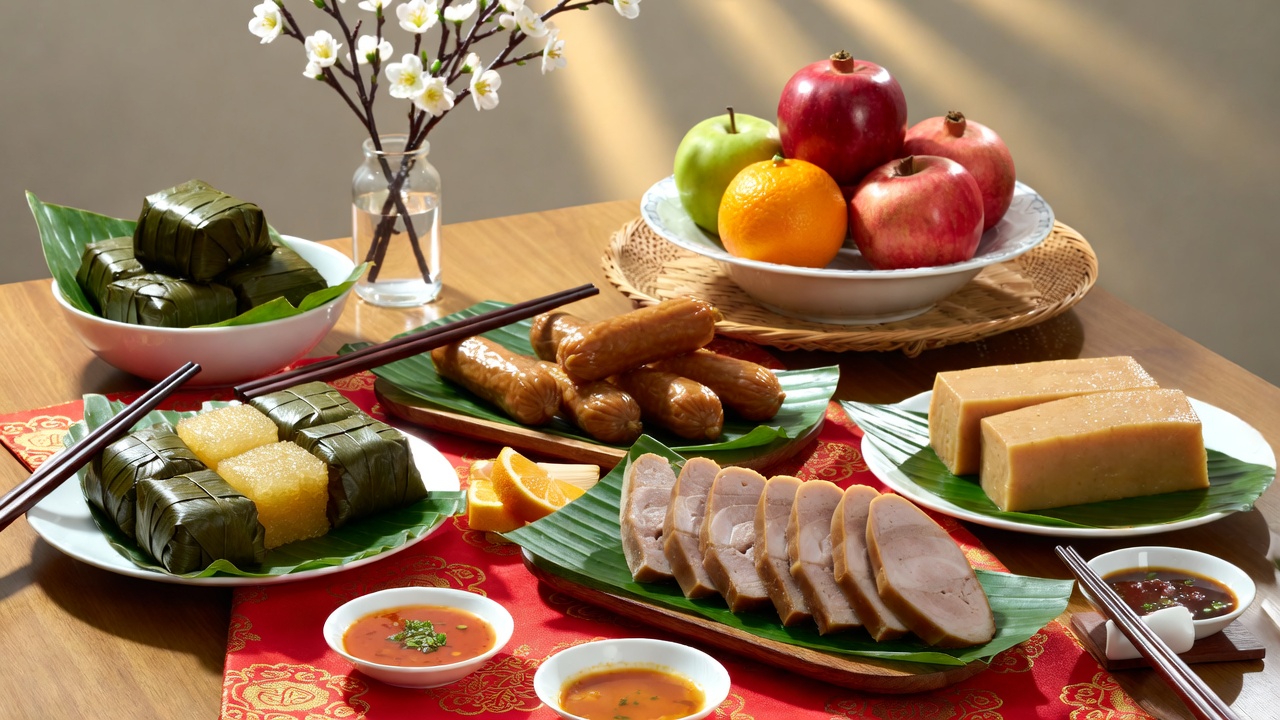
No discussion of Vietnamese Lunar New Year dishes can begin anywhere but with bánh chưng, the legendary square rice cake that has defined Tết celebrations for over three millennia. This iconic dish from Northern Vietnam tells the story of Lang Liêu, a prince who won his father’s throne by creating a humble cake representing Earth’s bounty.
The Legend Behind Bánh Chưng
According to Vietnamese folklore documented by the Vietnamese Studies Institute, Prince Lang Liêu was the poorest of King Hùng’s sons. While his brothers offered exotic foods and precious items to win the throne, Lang Liêu—guided by a dream—created bánh chưng using simple ingredients representing heaven, earth, and humanity. The square shape symbolized Earth, while the round bánh dày (its companion cake) represented Heaven. The king, moved by the dish’s profound meaning and delicious taste, named Lang Liêu his successor.
Authentic Bánh Chưng Ingredients
For 4-6 large bánh chưng:
| Ingredient | Quantity | Purpose |
|---|---|---|
| Glutinous rice (gạo nếp) | 2 kg | Main wrapper |
| Dried mung beans | 500g | Inner filling |
| Pork belly | 1 kg | Central meat layer |
| Dong leaves (lá dong) | 40-50 leaves | Wrapping |
| Bamboo strings | As needed | Tying |
| Salt | 2 tbsp | Seasoning |
| Black pepper | 1 tbsp | Pork seasoning |
| Shallots | 4-5, minced | Pork marinade |
| Fish sauce | 2 tbsp | Flavor enhancement |
Important: If dong leaves are unavailable outside Vietnam, banana leaves make an acceptable substitute, though purists argue the flavor differs significantly.
Step-by-Step Bánh Chưng Cooking Instructions
Day Before (Preparation):
- Soak the rice: Wash glutinous rice thoroughly until water runs clear. Soak in salted water (1 tbsp salt per liter) for 8-12 hours. This step is crucial—under-soaked rice produces dry, crumbly bánh chưng.
- Prepare mung beans: Rinse dried mung beans, then soak for 4-6 hours. Steam until soft (approximately 25 minutes), then mash while warm, adding a pinch of salt. Divide into portions matching your number of cakes.
- Marinate pork belly: Cut pork into thick slices (about 2cm). Season generously with minced shallots, black pepper, fish sauce, and salt. Refrigerate overnight for maximum flavor absorption.
- Clean dong leaves: Wipe each leaf carefully with a damp cloth. Remove the tough central spine by running a sharp knife along it. Stack leaves by size.
Assembly Day:
- Create the wrapping base: On a flat surface, arrange 4 dong leaves in a cross pattern, shiny side down. Place a square mold (approximately 20cm) in the center, or shape freehand if experienced.
- Layer ingredients:
- Spread 1 cup of soaked, drained rice evenly
- Add half a portion of mashed mung bean, pressed flat
- Place 2-3 slices of marinated pork belly
- Cover with remaining mung bean
- Top with another cup of rice, ensuring edges are sealed
- Wrap tightly: Fold dong leaves over the filling, creating a compact square package. The tighter the wrap, the better the final texture. Secure with bamboo strings, creating a grid pattern.
- Cook for 10-12 hours: Place wrapped bánh chưng in a large pot of boiling water. Maintain a gentle boil throughout, adding hot water as needed to keep cakes submerged. Traditionally, families stay awake through the night, tending the fire and sharing stories.
- Press and cool: Remove cooked bánh chưng and press under weights for 2-3 hours. This compacts the cake and improves slicing. Store at room temperature for up to one week, or refrigerate for longer preservation.
Tips for Perfect Bánh Chưng Every Time
- Rice consistency matters: The soaked rice should be firm but not hard. Test by pressing a grain between your fingers—it should give slightly without crumbling.
- Don’t skimp on cooking time: Undercooked bánh chưng has a gritty, unpleasant texture. Traditional recipes insist on 10-12 hours for good reason.
- Embrace imperfection: Your first bánh chưng may not be Instagram-worthy. The beauty lies in the making, not just the appearance.
- Make it communal: Invite friends or family to help. The conversation and connection are as valuable as the final product.
Bánh Tét Recipe: The Cylindrical Rice Cake of Southern Vietnam
While Northern Vietnamese families prepare bánh chưng, their Southern counterparts create bánh tét, a cylindrical cousin with similar ingredients but distinct character. The shape difference isn’t merely aesthetic—it reflects regional history, climate, and agricultural practices.
North vs. South: Understanding Regional Tết Food Differences
| Aspect | Bánh Chưng (North) | Bánh Tét (South) |
|---|---|---|
| Shape | Square | Cylindrical |
| Size | Large, flat | Long, rolled |
| Filling | Plain mung bean | Often includes banana or coconut |
| Symbolism | Earth and stability | Rolling fortune, continuous prosperity |
| Cooking time | 10-12 hours | 8-10 hours |
| Climate adaptation | Dense, hearty for cold weather | Lighter for tropical humidity |
Traditional Bánh Tét Ingredients
For 4-5 cylindrical cakes:
- 1.5 kg glutinous rice
- 400g dried mung beans (split, hulled)
- 600g pork belly
- 30-40 banana leaves
- Kitchen twine
- Salt, pepper, shallots, fish sauce (same ratios as bánh chưng)
Southern variation additions:
- 2 ripe bananas (for bánh tét chuối)
- 100g shredded coconut (for sweeter versions)
- Pandan leaves (for green-tinted rice)
Bánh Tét Assembly Technique
The rolling technique distinguishes bánh tét from its square northern counterpart:
- Prepare banana leaves: Soften by briefly passing over an open flame or blanching in hot water. This prevents cracking during rolling.
- Create a layered strip: Arrange 3-4 banana leaves overlapping lengthwise, creating a surface approximately 40cm x 30cm.
- Build the cylinder:
- Spread rice in a rectangle, leaving 5cm margins
- Create a central channel of mung bean
- Add pork strips (or banana for sweet version)
- Top with more mung bean
- Roll firmly: Using the leaf edges, roll tightly from one long side, creating a smooth cylinder. Twist and tie both ends securely.
- Boil for 8-10 hours: The cylindrical shape allows slightly faster cooking than square bánh chưng.
Thịt Kho Hột Vịt: The Beloved Braised Pork and Eggs Dish
If bánh chưng represents Tết’s ceremonial soul, thịt kho hột vịt (caramelized braised pork with duck eggs) embodies its everyday warmth. This Southern Vietnamese comfort food appears on virtually every Tết table, its rich, sweet-savory sauce representing the wish for a “sweet” new year.
Why Duck Eggs for Vietnamese New Year?
Duck eggs are chosen over chicken eggs for practical and symbolic reasons:
- Size: Larger eggs better absorb the flavorful braising liquid
- Texture: Duck egg whites become silkier when slow-cooked
- Tradition: Ducks historically thrived in Vietnam’s river deltas
- Color: The darker yolk creates more appetizing cross-sections
Authentic Thịt Kho Recipe
Ingredients for 6-8 servings:
| Ingredient | Amount | Notes |
|---|---|---|
| Pork belly | 1 kg | Cut into 5cm cubes |
| Duck eggs | 8-10 | Hard-boiled, peeled |
| Coconut water | 1 liter | Fresh or packaged |
| Fish sauce | 4 tbsp | High-quality recommended |
| Sugar | 4 tbsp | For caramel |
| Shallots | 4 large | Sliced thin |
| Garlic | 5 cloves | Minced |
| Black pepper | 1 tsp | Freshly ground |
| Water | As needed | For adjusting consistency |
Cooking Method:
- Make caramel: In a heavy-bottomed pot, heat sugar over medium heat without stirring. Swirl occasionally until deep amber. This step requires patience—rushing produces bitter caramel.
- Sear pork: Immediately add pork cubes to hot caramel (careful of splattering!). Stir to coat evenly. The caramel creates the dish’s signature mahogany color.
- Build aromatics: Add shallots and garlic. Sauté until fragrant, about 2 minutes.
- Braise slowly: Pour in coconut water, fish sauce, and enough regular water to cover meat. Bring to boil, then reduce to gentle simmer.
- Add eggs: After 45 minutes, add peeled hard-boiled eggs. The longer they simmer, the more flavor they absorb.
- Reduce and adjust: Continue simmering uncovered for another 45-60 minutes until sauce thickens and pork becomes tender. Taste and adjust seasoning.
- Rest before serving: Like many braised dishes, thịt kho tastes even better the next day after flavors meld.
Serving suggestion: Serve over steamed jasmine rice with pickled mustard greens (dưa món) to cut through the richness.
Dưa Món: The Essential Pickled Vegetables for Tết
No traditional Vietnamese Tết meal achieves proper balance without dưa món, the assortment of pickled vegetables that provides crucial contrast to rich meat dishes. This fermented condiment represents the “sour” element in Vietnamese culinary philosophy and aids digestion during days of heavy feasting.
What Vegetables Go in Dưa Món?
Traditional dưa món combines several vegetables, each contributing unique texture and flavor:
Essential components:
- Củ cải (daikon radish): Provides crisp base note
- Cà rốt (carrots): Adds sweetness and color
- Củ kiệu (Chinese leek bulbs): Sharp, oniony bite
- Dưa leo (cucumber): Refreshing crunch
- Đu đủ xanh (green papaya): Neutral filler with pleasant texture
Quick Dưa Món Recipe for Beginners
Brine solution:
- 1 liter water
- 200g sugar
- 60g salt
- 3 tbsp fish sauce
- Optional: 2 tbsp rice vinegar for faster fermentation
Method:
- Cut vegetables into uniform batons or rounds approximately 3cm long.
- Salt vegetables lightly and let sit for 2 hours to draw out moisture. Rinse and squeeze dry.
- Dissolve sugar and salt in warm water. Add fish sauce. Cool completely.
- Pack vegetables tightly into sterilized glass jars. Pour brine to cover completely.
- Cover loosely (fermentation produces gas) and keep at room temperature for 3-5 days.
- Once sufficiently sour, seal tightly and refrigerate. Properly made dưa món keeps for weeks.
Gà Luộc: The Art of Perfect Boiled Chicken for Ancestor Offerings
Gà luộc (boiled whole chicken) holds special significance during Tết as the centerpiece of ancestral altar offerings. The preparation seems deceptively simple, but achieving the ideal presentation—golden skin, moist meat, and dignified posture—requires technique passed down through generations.
Why Whole Chicken on Vietnamese New Year Altars?
The whole chicken symbolizes several important concepts:
- Completeness: Nothing missing, nothing broken
- Family unity: Head to tail, all parts together
- Respect for ancestors: Offering the entire animal shows generosity
- Prosperity: The rooster’s crow calls in good fortune
Selecting the Perfect Tết Chicken
Vietnamese families are extremely particular about their Tết chicken. Ideal characteristics include:
- Free-range heritage breeds: Factory chickens lack the firm texture and rich flavor
- Young roosters preferred: More tender meat, symbolic masculinity
- Weight: 1.5-2 kg provides good altar presentation
- Yellow skin and fat: Indicates healthy, well-raised bird
Gà Luộc Technique for Golden, Tender Results
Ingredients:
- 1 whole chicken (1.5-2 kg)
- Water to cover
- 2 tbsp salt
- 5 slices fresh ginger
- 3 green onion stalks
- 1 tbsp cooking oil or chicken fat
The Secret Three-Step Method:
Step 1 – The Cold Start: Place chicken in pot with cold salted water. Starting cold allows even cooking throughout. Add ginger and green onion for subtle flavor.
Step 2 – The Gentle Simmer: Bring to boil over medium heat, then immediately reduce to the barest simmer (water barely moving). Cover and cook approximately 25 minutes per kilogram. Never let water return to rolling boil—violent bubbling toughens the meat.
Step 3 – The Ice Bath: Remove chicken and plunge immediately into ice water for 5 minutes. This shock tightens the skin, creating the prized glossy, taut appearance. Rub with thin layer of oil while still warm.
Positioning for altar: The chicken should be arranged in a “sleeping” or “sitting” position, head tucked under wing, tail raised. Special stands called giá gà are often used.
Vietnamese Tết Candies and Sweets: Mứt Tết Traditions
The Tết celebration wouldn’t be complete without mứt, the array of candied fruits and seeds that fill decorative boxes on every coffee table. These sweet treats welcome visitors, please the gods, and give children cherished memories of the holiday.
Most Popular Mứt Varieties and Their Meanings
| Mứt Type | Main Ingredient | Symbolic Meaning |
|---|---|---|
| Mứt dừa | Coconut | Togetherness (coconut flesh clings together) |
| Mứt gừng | Ginger | Warmth, warding off evil |
| Mứt sen | Lotus seeds | Fertility, purity, blessings |
| Mứt me | Tamarind | Overcoming difficulties (sour to sweet) |
| Mứt bí | Winter melon | Abundance and growth |
| Mứt táo | Jujube dates | Prosperity and early success |
| Mứt hạt dưa | Watermelon seeds | Red color brings luck |
Homemade Mứt Dừa Recipe (Candied Coconut)
Mứt dừa remains the most popular Tết candy, its white or multicolored strips appearing in virtually every Vietnamese household.
Ingredients:
- 2 mature coconuts
- 400g sugar
- 1 tsp vanilla extract
- Pinch of salt
- Food coloring (optional): green (pandan), pink (beetroot), yellow (egg yolk)
Method:
- Prepare coconut: Crack coconuts, remove meat, and peel brown skin. Slice into thin strips approximately 5cm x 1cm x 3mm.
- First sugar coating: Mix coconut strips with sugar and let sit 4-6 hours or overnight. Sugar draws out moisture.
- Slow cooking: Transfer everything to a non-stick pan. Cook over low heat, stirring constantly. The sugar dissolves into liquid, then gradually crystalizes back onto coconut strips.
- The crucial moment: Continue stirring as sugar turns from glossy wet to dry crystalline coating. This takes 30-45 minutes and requires patience. Don’t rush or sugar will clump unevenly.
- Cool and store: Spread on parchment paper to cool completely. Store in airtight containers for up to one month.
Pro tip: For colored mứt dừa, divide coconut into batches and add different food colorings during the sugar-sitting stage.
Xôi Gấc: The Lucky Red Sticky Rice Dish
The striking crimson color of xôi gấc makes it one of the most visually dramatic dishes of Vietnamese Lunar New Year celebrations. Made with the fruit of the gấc plant (Momordica cochinchinensis), this sticky rice dish embodies wishes for luck, happiness, and prosperity.
Why Gấc Fruit is Called “Fruit From Heaven”
Gấc grows throughout Southeast Asia but holds special significance in Vietnam. Its intensely red flesh contains one of the highest concentrations of beta-carotene and lycopene found in nature—giving it both spiritual and health significance.
According to research published in the Journal of Food Composition and Analysis, gấc fruit contains up to 70 times more lycopene than tomatoes, making it a genuine superfood beyond its symbolic value.
Traditional Xôi Gấc Recipe
Ingredients:
- 500g glutinous rice
- 2 ripe gấc fruit (or 200g frozen gấc aril)
- 3 tbsp coconut cream
- 2 tbsp sugar
- 1 tsp salt
- Toasted sesame seeds for garnish
- Toasted shredded coconut for garnish
Preparation:
- Prepare rice: Soak glutinous rice for 6-8 hours or overnight. Drain well.
- Extract gấc: Cut gấc fruit in half, scoop out the red aril surrounding seeds. Mash thoroughly, mixing with a small amount of rice wine to help release color and oil.
- Combine: Mix soaked rice with gấc pulp, coconut cream, sugar, and salt. The mixture should be uniformly red-orange.
- Steam: Transfer to a cheesecloth-lined steamer. Steam for 30-40 minutes until rice is translucent and fully cooked.
- Garnish: Serve topped with toasted sesame seeds and shredded coconut.
Note: If fresh or frozen gấc is unavailable, some cooks substitute annatto seeds (hạt điều màu) for color, though the flavor differs significantly.
Chả Lụa and Giò Thủ: Vietnamese Charcuterie for Tết
Preserved meats play an essential role in traditional Vietnamese New Year food, providing protein that lasts throughout the holiday when markets close. Two varieties stand out: chả lụa (Vietnamese ham) and giò thủ (head cheese).
Chả Lụa: The Elegant Vietnamese Ham
Smooth, bouncy, and subtly seasoned, chả lụa demonstrates Vietnamese mastery of texture. Unlike Western hams cured with smoke, chả lụa is steamed, producing a distinctive springy consistency.
Simplified Chả Lụa Recipe:
Ingredients:
- 500g lean pork shoulder
- 3 tbsp fish sauce
- 1 tbsp sugar
- 1/2 tsp baking powder (creates bounce)
- 1 tbsp potato starch
- 2 tbsp ice water
- Banana leaves for wrapping
Method:
- Prepare meat: Cut pork into cubes, removing all connective tissue. Freeze for 30 minutes (cold meat processes better).
- Process extensively: Blend meat in food processor with fish sauce, sugar, baking powder, and potato starch. Process for 5-7 minutes until completely smooth, paste-like consistency. Add ice water gradually.
- The bounce test: Well-processed chả lụa paste should spring back when pressed. Under-processing produces crumbly results.
- Shape and wrap: Spread paste onto softened banana leaves, roll into tight cylinder. Wrap in plastic wrap, then aluminum foil.
- Steam: Steam for 45 minutes to 1 hour depending on thickness. Internal temperature should reach 75°C.
- Chill: Cool completely before unwrapping. Slice thinly to serve.
Giò Thủ: Vietnamese Head Cheese
More rustic than chả lụa, giò thủ combines pork ear, skin, and sometimes tongue in a jellied loaf. The gelatinous texture might challenge unfamiliar palates, but Vietnamese families consider it an essential Tết delicacy.
Canh Khổ Qua: Bitter Melon Soup for New Beginnings
In a celebration dominated by sweet, rich dishes, canh khổ qua (stuffed bitter melon soup) provides necessary balance. More importantly, the Vietnamese name creates a powerful pun: “khổ qua” sounds like “hardship passes,” making this soup a ritual wish that difficulties will soon end.
Symbolic Significance of Bitter Melon at Tết
Vietnamese families deliberately include bitter flavors during Tết, embodying the philosophy that:
- Life includes bitterness: Accepting difficulty leads to growth
- Contrast enhances sweetness: Without bitter, sweet loses meaning
- Health through balance: Bitter foods cool the body, countering rich meats
Traditional Canh Khổ Qua Recipe
Ingredients:
- 4 medium bitter melons
- 300g ground pork
- 50g glass noodles, soaked and chopped
- 3 dried wood ear mushrooms, soaked and minced
- 2 shallots, minced
- 1 egg
- Fish sauce, salt, pepper to taste
- 2 liters pork or chicken broth
Preparation:
- Prepare melons: Cut bitter melons into 4cm thick rounds. Scoop out seeds and pith, creating rings.
- Make filling: Combine ground pork, glass noodles, mushrooms, shallots, and egg. Season with fish sauce and pepper. Mix until sticky.
- Stuff melons: Pack filling firmly into each ring. The mixture should slightly overflow—it shrinks during cooking.
- Simmer in broth: Bring broth to boil, add stuffed melon rings carefully. Reduce heat and simmer 20-25 minutes until melon is tender and pork cooked through.
- Serve hot: Adjust seasoning with fish sauce. Garnish with fried shallots if desired.
Regional Variations: How Different Parts of Vietnam Celebrate Tết Through Food
Vietnam stretches over 1,600 kilometers from north to south, encompassing diverse climates, histories, and culinary traditions. Understanding regional Tết food differences enriches appreciation for Vietnamese culture’s complexity.
Northern Vietnam (Miền Bắc) Tết Specialties
The North, centered around Hanoi, maintains what many consider the most “traditional” Tết customs. Cold winter weather during Lunar New Year influences food choices:
Signature dishes:
- Bánh chưng (square rice cake)
- Giò lụa (smooth Vietnamese ham)
- Thịt đông (meat aspic—jellied pork that solidifies in cold weather)
- Canh bóng (dried pig skin soup)
- Nộm (banana flower salad)
Characteristics: Subtle seasoning, emphasis on technique over strong flavors, significant French colonial influence in presentation.
Central Vietnam (Miền Trung) Tết Traditions
The Central region, including Huế (former imperial capital), features the most elaborate and refined Tết cuisine, reflecting royal court heritage:
Signature dishes:
- Bánh tét (cylindrical, like the South, but often smaller)
- Nem chua (fermented pork sausage)
- Tôm chua (fermented shrimp paste)
- Bánh bột lọc (tapioca dumplings)
- Chả bò (beef sausage)
Characteristics: Intense flavors, liberal use of chili, intricate presentation, smaller portions emphasizing variety over quantity.
Southern Vietnam (Miền Nam) Tết Flavors
The South, with Ho Chi Minh City as its heart, embraces sweeter, bolder flavors influenced by proximity to Cambodia and Thailand:
Signature dishes:
- Bánh tét (often with banana or coconut)
- Thịt kho hột vịt (caramelized pork with eggs—originated here)
- Củ cải ngâm (pickled radish and carrot, sweeter style)
- Bánh tráng (rice paper, served with many dishes)
- Lạp xưởng (Chinese-style sausage, reflecting immigration history)
Characteristics: Generous use of sugar and coconut, fresh herbs in abundance, Chinese culinary influence prominent.
Preparing Your First Tết Feast: A Complete Menu Guide
Planning an authentic Vietnamese Lunar New Year dinner requires balancing symbolism, nutrition, and practical considerations. Here’s a suggested menu that honors tradition while remaining achievable for home cooks:
Complete Tết Menu for 8-10 Guests
Altar Offerings (Later Shared by Family):
- Gà luộc (whole boiled chicken)
- Bánh chưng or bánh tét (2-3 cakes)
- Xôi gấc (red sticky rice)
- Seasonal fruits (5 varieties traditional)
Main Dishes:
- Thịt kho hột vịt (braised pork and eggs)
- Chả lụa (Vietnamese ham, sliced)
- Giò thủ (head cheese, optional)
- Canh khổ qua (bitter melon soup)
Accompaniments:
- Dưa món (mixed pickled vegetables)
- Fresh herbs and lettuce
- Steamed jasmine rice
- Nước mắm pha (prepared dipping sauce)
Sweets:
- Mứt assortment (candied fruits)
- Hạt dưa (roasted watermelon seeds)
- Fresh fruit
- Trà (Vietnamese tea)
Tết Cooking Timeline
One Week Before:
- Order specialty ingredients (dong leaves, gấc fruit, duck eggs)
- Begin soaking ingredients for mứt
- Purchase chicken and pork
Three Days Before:
- Prepare dưa món (needs fermentation time)
- Make mứt varieties
- Cook and shape chả lụa
One Day Before:
- Prepare and cook bánh chưng/bánh tét (overnight)
- Hard boil duck eggs
- Marinate pork for thịt kho
Tết Eve:
- Complete thịt kho hột vịt
- Boil and arrange gà luộc
- Steam xôi gấc
- Prepare soup base
Tết Morning:
- Reheat dishes
- Arrange altar offerings
- Complete canh khổ qua
- Set table with fresh accompaniments
Modern Twists on Traditional Tết Recipes
Contemporary Vietnamese chefs honor tradition while adapting recipes for modern kitchens and dietary preferences. These innovations keep Tết cuisine relevant for younger generations.
Vegetarian Bánh Chưng
Buddhist practitioners and health-conscious cooks have developed delicious meatless versions:
Substitute fillings:
- Mung bean with coconut milk (no pork)
- Seasoned tofu and mushroom
- Taro and lotus seed combination
The cooking method remains identical; only fillings change.
Instant Pot Thịt Kho
Traditional 2-hour braising reduced to 45 minutes:
- Use sauté function for caramel and searing
- Pressure cook on high for 25 minutes
- Natural release 10 minutes
- Add eggs and simmer uncovered to reduce
Results are remarkably close to traditional methods for busy modern families.
Air Fryer Nem Chua Rán (Fried Fermented Pork)
This popular Tết snack adapts perfectly to air frying:
- Wrap nem chua in rice paper
- Spray lightly with oil
- Air fry at 180°C for 12-15 minutes
- Significantly less oil than deep frying
Where to Experience Authentic Tết Food Outside Vietnam
For those unable to travel to Vietnam during Lunar New Year, vibrant Vietnamese communities worldwide maintain traditions:
United States
Little Saigon, California: The largest Vietnamese community outside Vietnam. Restaurants along Bolsa Avenue serve comprehensive Tết menus.
Houston, Texas: Midtown’s Vietnamese district offers authentic ingredients and holiday celebrations.
Australia
Cabramatta, Sydney: Known as “Vietnamatta” for its concentrated Vietnamese population, especially vibrant during Tết.
Footscray, Melbourne: Historic Vietnamese neighborhood with traditional bakeries and restaurants.
France
Paris 13th Arrondissement: The Choisy Triangle hosts Europe’s largest Vietnamese community and impressive Tết festivities.
Conclusion: The Deeper Meaning of Vietnamese Lunar New Year Food
As I reflect on decades of documenting Tết celebrations across Vietnam and among Vietnamese diaspora communities, I’m struck by how food serves as an anchor for cultural identity. A young Vietnamese-American making bánh chưng in California connects across oceans and generations to ancestors who performed the same rituals centuries ago.
The dishes we’ve explored—from the legendary bánh chưng to the humble dưa món—are more than recipes. They’re edible prayers. Every ingredient carries intention. Every cooking technique preserves wisdom. Every shared meal strengthens bonds that transcend time and distance.
Whether you’re Vietnamese reconnecting with heritage, a curious food lover exploring new cuisines, or someone lucky enough to receive a Tết dinner invitation, I hope this guide enriches your understanding and appetite. The best way to honor these traditions is to participate in them—imperfectly, joyfully, and with genuine respect for their significance.
Chúc Mừng Năm Mới! May your new year be as rich, balanced, and nourishing as a perfect Tết feast.
Frequently Asked Questions About Vietnamese Tết Food
What is the most important food for Vietnamese New Year? Bánh chưng (North) or bánh tét (South) holds the highest symbolic importance, representing earth, heaven, and gratitude to ancestors. No Tết is complete without these rice cakes.
How far in advance should I prepare Tết food? Most families begin preparations 3-7 days before Tết. Bánh chưng and preserved items can be made earlier; fresh dishes like gà luộc should be prepared on Tết Eve.
Can I buy ready-made Tết foods? Yes, Vietnamese supermarkets and bakeries sell prepared bánh chưng, chả lụa, and other items. However, families often prefer homemade versions for their symbolic value.
What foods should I avoid giving as Tết gifts? Never give squid, duck, or predominantly white-colored foods. Avoid anything in quantities of four (sounds like “death”). Instead, give candied fruits, quality tea, or premium rice.
Is Tết food the same as Chinese New Year food? While both celebrations share the lunar calendar date and some dishes (like rice cakes), Vietnamese Tết food has distinct recipes, ingredients, and symbolic meanings developed over millennia of separate cultural evolution.
Have you experienced a Tết celebration or tried cooking these dishes? Share your stories in the comments below. For more Southeast Asian festival traditions and recipes, subscribe to our newsletter and follow our culinary adventures across Asia.