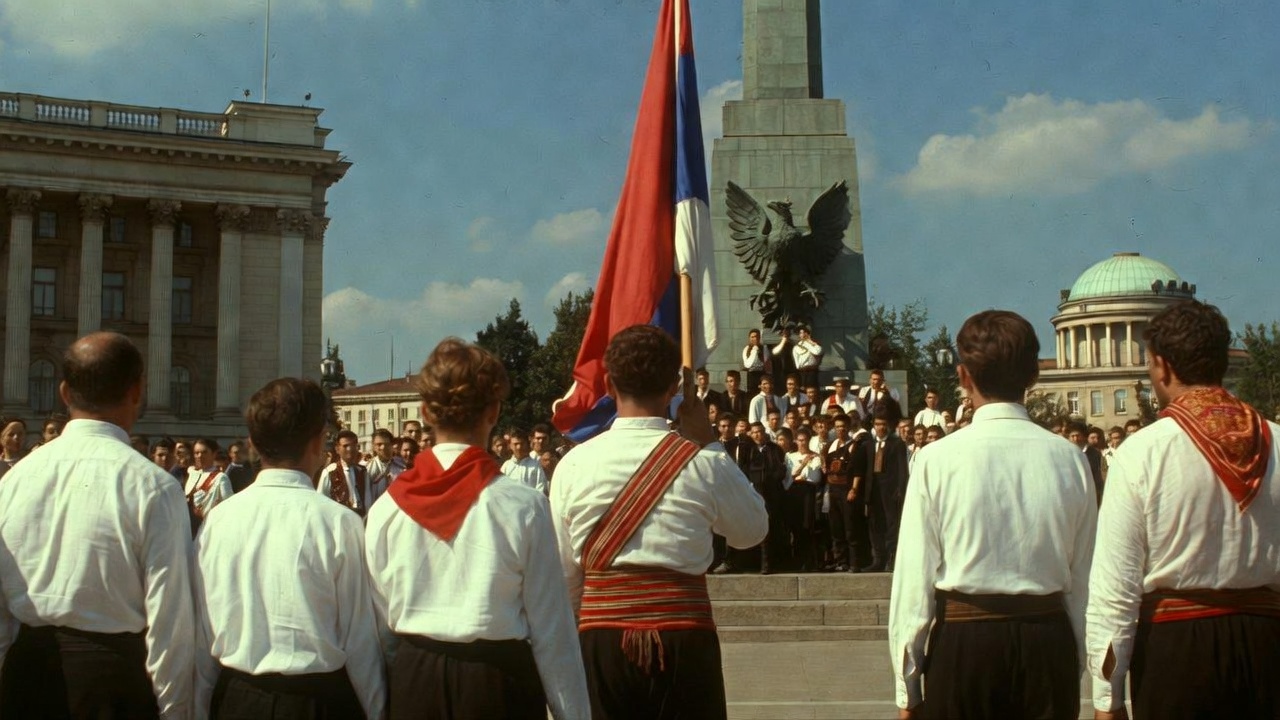
Serbia’s Statehood Day, known locally as Sretenje (Сретење) or Dan državnosti (Дан државности), falls on February 15 every year. It is the most important national holiday in the country. The celebrations last two days — February 15 and 16 — and in 2026, the holiday weekend stretches from Sunday, February 15 through Monday, February 17, giving locals and visitors alike a generous long weekend.
But Sretenje is far more than a day off work. It marks two defining moments in Serbian history: the start of the First Serbian Uprising against the Ottoman Empire in 1804 and the adoption of Serbia’s first modern constitution in 1835. For travelers, the holiday offers a rare window into the soul of the nation — a time when history, faith, and community converge in ceremonies, feasts, and spectacles you simply cannot experience on an ordinary visit.
This guide covers everything a tourist needs to know about celebrating Statehood Day in Serbia in 2026 — from official state ceremonies and Belgrade landmarks to regional day trips, traditional food, and practical travel tips.
What Is Sretenje and Why Is It Serbia’s National Day?
Understanding the holiday’s meaning enriches every experience you have during it. Two events share the same date, and Serbs consider them inseparable.
The First Serbian Uprising (February 15, 1804). In the village of Orašac, about 80 km south of Belgrade, over 300 Serbian leaders gathered in a ravine called Marićevića Jaruga. They were responding to the Slaughter of the Dukes — the mass execution of some 70 Serbian nobles by renegade Ottoman janissaries known as the Dahije. At that secret assembly, they elected Đorđe Petrović, better known as Karađorđe, to lead an armed rebellion. That decision launched the Serbian Revolution and the long road to independence.
The Sretenje Constitution (February 15, 1835). Exactly 31 years later, in the city of Kragujevac, Serbia adopted its first modern constitution. The document was remarkably progressive for its era. It abolished feudal relations, separated powers into executive, legislative, and judicial branches, and guaranteed personal freedoms. Although short-lived — pressured by both the Ottoman Empire and Russia — the constitution is remembered as the foundation of Serbian democratic statehood.
The word Sretenje itself comes from the Serbian Orthodox Church calendar. It marks the Feast of the Presentation of Jesus at the Temple (Candlemas), observed 40 days after Christmas. This religious layer adds depth to the celebrations, and many Serbs view the civic and religious dimensions as a single, unified holiday.
Quick Fact: Statehood Day was celebrated in the Kingdom of Serbia, abolished after World War I with the formation of Yugoslavia, and officially restored as a national holiday in 2001 by the Serbian Parliament.
How to Experience the Official Statehood Day Ceremonies in Belgrade
Belgrade, Serbia’s capital, is the heart of the national celebrations. On Statehood Day, the city buzzes with flag-raising events, wreath-laying ceremonies, military parades, and gun salutes. Attending even one of these events gives you a powerful sense of how deeply Serbs feel about their independence.
Wreath-Laying and State Ceremony at the Monument to the Unknown Hero
The Monument to the Unknown Hero sits atop Mount Avala, about 17 km south of central Belgrade. Designed by the legendary Croatian sculptor Ivan Meštrović in 1934, it is one of the most important war memorials in the Balkans. On Statehood Day, the President of Serbia traditionally lays a wreath here to honor all who fought for the nation’s sovereignty. The ceremony is solemn, guarded by military personnel, and open to the public from a respectful distance.
Getting there: Take a taxi or rent a car. There is limited public transport to Avala, so plan ahead. The mountain also offers pleasant hiking trails if you arrive early.
Gun Salutes and Military Parade in the City Center
As part of the formal celebrations, honorary artillery salutes are fired in Belgrade, Novi Sad, and Niš. The Serbian Armed Forces also stage a River Flotilla parade on the Sava and Danube rivers, a flyover by military aircraft, and — in some years — a display of weapons and military equipment. The promenade concert by the Guard’s Representative Orchestra and the Police Orchestra, held in central Belgrade in the evening, is one of the highlights. It is free, open-air, and genuinely moving.
Presidential Awards Ceremony
At the Palace of Serbia or the Presidency building, the President of Serbia presents state decorations to distinguished individuals and institutions. While this is a closed event, it is widely broadcast on Serbian television and gives visitors context for the national pride visible everywhere during the holiday.
Best Places to Visit in Belgrade During Statehood Day Weekend
With most businesses closed and the city in a festive mood, Statehood Day weekend is ideal for exploring Belgrade’s landmarks. Here are the top spots:
Kalemegdan Fortress and Park — The Best Panoramic Views in Belgrade
Kalemegdan is Belgrade’s crown jewel. This ancient fortress sits at the confluence of the Sava and Danube rivers, offering sweeping views of New Belgrade and the Pannonian Plain beyond. In February, the park is quieter than in summer, which means you can stroll along the ramparts, visit the Military Museum, and take in the views without the crowds.
The Military Museum, located within the fortress walls, houses a remarkable collection. Exhibits include ancient Greek and Roman weapons, medieval armor, Ottoman-era artifacts, and relics from the 1999 NATO bombing of Belgrade. Admission is affordable — typically around 300 RSD (roughly €2.50).
Belgrade Waterfront and Kula Belgrade — Laser Shows on Statehood Day
The Belgrade Waterfront development along the Sava River has become a symbol of modern Serbia. Its centerpiece is Kula Belgrade (Belgrade Tower), the tallest building in the region at nearly 170 meters. On Statehood Day, the tower becomes a canvas for national-themed projections and laser shows, displaying the Serbian flag and silhouettes of historic buildings.
According to the Belgrade Waterfront events page, the Statehood Day celebrations at Kula Belgrade have grown into one of the city’s most anticipated visual spectacles. The Sava Promenade below is a great spot to watch, with bars, restaurants, and cafés lining the 1.8 km-long waterfront walkway.
| Belgrade Waterfront Highlights | Details |
|---|---|
| Kula Belgrade Height | ~170 meters (tallest in the region) |
| Observation Deck | 41st floor; elevator ride takes 25 seconds |
| Statehood Day Special | Laser show & flag projection on the tower |
| Sava Promenade Length | 1.8 km |
| Dining & Shopping | Galerija Belgrade mall, waterfront restaurants |
Temple of Saint Sava — One of the Largest Orthodox Churches in the World
The Temple of Saint Sava dominates the Belgrade skyline with its massive white dome. It is one of the largest Orthodox churches on the planet. The interior, completed in recent years, features breathtaking mosaics covering over 15,000 square meters of surface area. On Sretenje, church services are held here, and the atmosphere is deeply reverent. Even if you are not Orthodox, the sheer artistic scale of the mosaics is worth the visit.
Skadarlija — The Bohemian Quarter for Live Music and Serbian Cuisine
Skadarlija (Скадарлија) is Belgrade’s answer to Montmartre. This cobblestoned pedestrian street, only about 400 meters long, has been the gathering place for Serbian writers, artists, and musicians for over a century. During the Statehood Day weekend, many of its traditional restaurants — called kafane — host live tamburica music performances. Restaurants like Tri Šešira (Three Hats) and Dva Jelena (Two Deer) serve hearty Serbian fare with a side of old-world atmosphere.
How to Visit Orašac and Attend the Central State Ceremony
The most historically significant Statehood Day ceremony takes place not in Belgrade, but in the small village of Orašac, in the Šumadija region of central Serbia. This is where the First Serbian Uprising was declared in 1804, and the site carries enormous emotional weight for the Serbian people.
What Happens at the Orašac Memorial Complex
Every February 15, the central state ceremony is held at the Karađorđe Monument in Orašac. The program typically includes:
- A memorial service for the uprising’s insurgents, led by Serbian Orthodox clergy
- Wreath-laying at the monument by the Prime Minister (or the President’s envoy) and other senior officials
- The national anthem “Bože Pravde” (“God of Justice”) performed by a military ensemble
- Speeches by government leaders reflecting on sovereignty, unity, and Serbia’s future
- Attendance by diplomats, clergy, military leaders, and hundreds of citizens
The atmosphere is patriotic and emotional. The sight of the honor guard, the sounds of the anthem echoing through the bare winter trees, and the knowledge that you are standing where an uprising against centuries of occupation was born — it is a profoundly memorable experience.
The Museum and Memorial School in Orašac
Adjacent to the monument is the Memorial School “The First Serbian Uprising”, an impressive building constructed in 1932 by order of King Aleksandar Karađorđević. Nearby is the Museum of the First Serbian Uprising, which houses paintings, documents, and artifacts from the revolt. One key exhibit is the painting “Meeting in Marićević Gully,” which depicts the fateful 1804 gathering. The white marble plaques at the Marićevića Jaruga site bear the inscription: “On this place on 15th February in 1804, the First Serbian Uprising was raised.”
How to Get to Orašac from Belgrade
| Transport Option | Travel Time | Notes |
|---|---|---|
| By car | ~70 minutes | Take the E75 highway south toward Niš, exit at Mladenovac, follow signs to Aranđelovac. Orašac is 6 km from Aranđelovac. |
| Organized tour | Varies | Several Belgrade tour operators offer Statehood Day packages that include Orašac, Topola, and Oplenac. |
| Public bus | ~2 hours | Buses run from Belgrade to Aranđelovac; from there, taxi or local transport to Orašac. |
Day Trip to Topola and Oplenac Royal Mausoleum on Statehood Day
Since Orašac is just a few kilometers from the town of Topola, combining both sites into a single day trip is the ideal plan. Topola and the Oplenac Royal Mausoleum are among Serbia’s most treasured heritage destinations, and visiting them on Statehood Day adds layers of meaning.
Saint George’s Church at Oplenac — A Mosaic Masterpiece
Perched atop Oplenac Hill, the Church of Saint George is the mausoleum of the Karađorđević royal dynasty. Founded by King Peter I and completed by his son King Alexander I, the church is clad in shining Venčac white marble and crowned with five domes in the Serbian-Byzantine style.
The interior is what takes your breath away. The walls and ceilings are covered with over 40 million glass mosaic tiles, reproducing frescoes from medieval Serbian monasteries. In the crypt below the church lie the tombs of six generations of the Karađorđević family, including Karađorđe himself — the very man who launched the uprising in Orašac. As noted by visitors on Tripadvisor, the crypt is “utterly beautiful and not to be missed.”
Wine Tasting at the Royal Winery
The Oplenac complex includes the King’s Royal Winery, where the Karađorđević family cultivated vineyards for generations. Today, visitors can tour the historic cellars, see the oldest preserved barrels dating from 1906, and sample local wines from the Šumadija wine region. The entry fee for wine tasting is typically around €2.50 — one of the best bargains in Serbian tourism.
Karađorđe’s Residence and the Topola Fortress
In the town of Topola itself, you can visit the remains of Karađorđe’s fortified residence. His three-story home, with thick walls and small defensive windows, now functions as a museum documenting his life and the uprising. Outside stands a monument to Karađorđe in a beautifully landscaped park, along with the Church of the Holy Mother, which he built as his personal endowment in 1811.
Traditional Serbian Food You Must Try on Statehood Day
Serbian cuisine reaches its best expression during holidays, when families and restaurants pull out all the stops. February is the heart of winter, so the dishes are warming, hearty, and richly flavored. Here is what to look for:
Winter Comfort Foods Perfect for February in Serbia
| Dish | Description |
|---|---|
| Sarma (сарма) | Minced meat, rice, and spices rolled in pickled cabbage leaves, slow-cooked for hours. The ultimate Serbian winter dish. |
| Ćevapi (ћевапи) | Small grilled rolls of minced beef and pork, served in somun (flatbread) with raw onions and kajmak. |
| Kajmak (кајмак) | A thick, creamy dairy spread — somewhere between clotted cream and cream cheese. Aged kajmak has a tangy, robust flavor. |
| Pasulj (пасуљ) | Serbian bean stew, often cooked with smoked pork ribs. A Sretenje favorite. |
| Ajvar (ајвар) | A roasted red pepper and eggplant spread. Homemade ajvar from the Zeleni Venac market is a prized souvenir. |
| Rakija (ракија) | Serbia’s national spirit, a fruit brandy distilled from plums (šljivovica), grapes, or apricots. Served as a welcome drink everywhere. |
Where to eat: In Belgrade, head to Skadarlija for a traditional kafana experience, or try the Zeleni Venac green market near Knez Mihailova street for fresh ajvar, kajmak, and local honey. In Topola, Karađorđev Vajat near the Orašac memorial complex serves authentic Šumadija-style dishes.
A Note on Rakija Etiquette
If a Serbian host offers you rakija, accept it. It is a gesture of welcome and friendship. Take small sips — homemade rakija can reach 60% alcohol by volume. Say “Živeli!” (Cheers!) and make eye contact while clinking glasses.
Unique Sretenje Traditions and Local Customs Tourists Should Know
Beyond the official ceremonies and sightseeing, Statehood Day is woven with customs that reveal the character of Serbian culture.
Miša the Bear — Serbia’s Groundhog Day Tradition at Belgrade Zoo
One of Serbia’s most charming Sretenje traditions centers on Miša the bear at the Belgrade Zoo. Much like the Groundhog Day tradition in North America, Serbians watch to see whether Miša emerges from his den and spots his shadow on February 15. According to Belgrade Beat, if Miša sees his shadow and retreats, expect six more weeks of winter. If he takes a pleasant stroll without noticing it, spring is on its way.
The event draws families, camera crews, and curious tourists. Belgrade Zoo is located within Kalemegdan Park, so you can easily combine a visit with your fortress exploration.
Family Gatherings and the Spirit of Togetherness
For many Serbs, Sretenje is above all a family holiday. People use the long weekend to visit relatives, share festive meals, and reflect on their heritage. If you are invited to a Serbian home during this period, expect generous hospitality. Meals are long, conversations are warm, and the table will never be empty. This is a culture that takes pride in feeding its guests until they physically cannot eat another bite.
Valentine’s Day Overlap
Because Statehood Day falls on February 15 — one day after Valentine’s Day — many Serbs celebrate both occasions over the same long weekend. You will find Belgrade restaurants offering both romantic dinners and patriotic feasts. The overlap creates a uniquely festive atmosphere: red roses share window displays with Serbian flags.
Exploring Belgrade’s Museums and Cultural Sites During the Statehood Day Holiday
With schools closed and many families out enjoying the city, Belgrade’s museums and cultural institutions often run special programming during the Statehood Day weekend.
Nikola Tesla Museum — A Tribute to Serbia’s Greatest Scientist
The Nikola Tesla Museum in Belgrade houses the personal effects, documents, and inventions of the Serbian-American inventor who changed the world. Interactive demonstrations of Tesla’s equipment — including a working Tesla coil — make this museum engaging for visitors of all ages. Book ahead, as the museum is small and popular.
National Museum of Serbia at Republic Square
Reopened in 2018 after a 15-year renovation, the National Museum at Republic Square (Trg Republike) contains over 400,000 artifacts. Its collections span archaeology, numismatics, and fine art. The building itself is a striking example of 19th-century Serbian architecture and sits alongside the National Theatre, which has been staging opera, ballet, and drama performances since 1869.
Museum of Yugoslav History and the House of Flowers
For travelers interested in the complex 20th-century history of the Balkans, the Museum of Yugoslav History — which includes Josip Broz Tito’s mausoleum, known as the House of Flowers — is essential. The museum provides context for understanding how modern Serbia emerged from the dissolution of Yugoslavia.
Practical Travel Tips for Visiting Serbia on Statehood Day 2026
Weather in Belgrade in February — What to Pack
February is one of Belgrade’s coldest months. Expect temperatures ranging from about -2°C to 7°C (28°F to 45°F). Pack warm layers, a good winter coat, waterproof shoes, and a scarf. Cold winds from the Pannonian Plain can make it feel even chillier, especially along the river promenades.
Public Transport and Getting Around
Belgrade’s public transport system runs on a reduced holiday schedule on February 15 and 16. Taxis are widely available and affordable — just make sure to use an app like Car:Go or insist the driver uses the meter to avoid tourist surcharges. The ride-hailing experience in Belgrade is smooth and reliable.
Currency and Payment
The official currency is the Serbian dinar (RSD). As of early 2026, 1 EUR ≈ 117 RSD. Credit cards are widely accepted in Belgrade, but smaller shops, markets, and kafane may be cash-only. ATMs are plentiful in the city center.
Language Tips for Tourists
Serbian is the official language. The script can be either Cyrillic or Latin — both are used interchangeably on signs and menus. English is widely spoken in Belgrade, especially by younger people and in the hospitality sector. Learning a few phrases goes a long way:
| English | Serbian | Pronunciation |
|---|---|---|
| Hello | Zdravo | ZDRAH-voh |
| Thank you | Hvala | HVAH-lah |
| Cheers! | Živeli! | zhee-VEH-lee |
| How much is this? | Koliko košta? | KOH-lee-koh KOSH-tah |
| Happy Statehood Day! | Srećan Dan državnosti! | SREH-chan Dahn dur-ZHAV-nos-tee |
Why 2026 Is a Special Year to Visit Serbia — EXPO 2027 Belgrade Preparations
There is an extra reason to visit Serbia in early 2026. The country is in the final stretch of preparations for Expo 2027 Belgrade, the first Specialised World Exposition ever held in the Western Balkans. Organized under the theme “Play for Humanity: Sport and Music for All,” the Expo is scheduled to run from May 15 to August 15, 2027, and is expected to welcome over 4 million visitors from more than 120 participating countries.
As you explore Belgrade in February 2026, you will notice the transformation underway. Infrastructure projects include a new National Stadium with a 52,000-seat capacity, an aquatic center, upgraded transport links including a high-speed rail connection to the airport, and the massive Expo complex along the Sava River. The energy and ambition are palpable — Serbia is preparing to introduce itself to the world on an unprecedented scale.
Visiting during Statehood Day gives you a preview of the country before the global spotlight arrives. You will experience the genuine warmth and national pride that no Expo pavilion can fully capture.
A Suggested Statehood Day Itinerary for Tourists (2 Days in Serbia)
| Day | Morning | Afternoon | Evening |
|---|---|---|---|
| Day 1 — Feb 15 (Belgrade) | Attend the wreath-laying at the Monument to the Unknown Hero on Mount Avala, or watch the gun salute and military events in central Belgrade. Visit the Belgrade Zoo to see Miša the Bear’s weather prediction. | Explore Kalemegdan Fortress, the Military Museum, and the confluence of the Danube and Sava rivers. Walk down Knez Mihailova street toward Republic Square. | Watch the laser show on Kula Belgrade at the Waterfront. Dinner in Skadarlija with live tamburica music. Try sarma and rakija. |
| Day 2 — Feb 16 (Day Trip) | Drive to Orašac (70 min from Belgrade). Visit the Marićevića Jaruga memorial site, the Karađorđe Monument, and the Museum of the First Serbian Uprising. | Continue to Topola. Tour the Saint George Church at Oplenac (the mosaic mausoleum) and the Royal Winery for a wine tasting. | Return to Belgrade. Dinner at a traditional restaurant in Dorćol or Vračar neighborhood. Reflect on two extraordinary days of Serbian history and hospitality. |
Final Thoughts — Why Statehood Day in Serbia Belongs on Every Traveler’s List
Serbia is not yet on every traveler’s radar, and that is precisely part of its appeal. Statehood Day — Sretenje — offers something that mass-tourism destinations rarely can: an authentic, deeply felt national celebration where visitors are welcomed, not merely tolerated.
On February 15, you will see a country pausing to remember the courage of ancestors who rose against an empire with little more than determination and faith. You will eat food prepared with love and pride. You will hear music that has survived centuries. And you will stand in the very places where Serbian statehood was born — from the ravine of Orašac to the mosaic-covered crypt of Oplenac.
Come for the history. Stay for the rakija and the warmth of the people. Serbia is ready to welcome you.