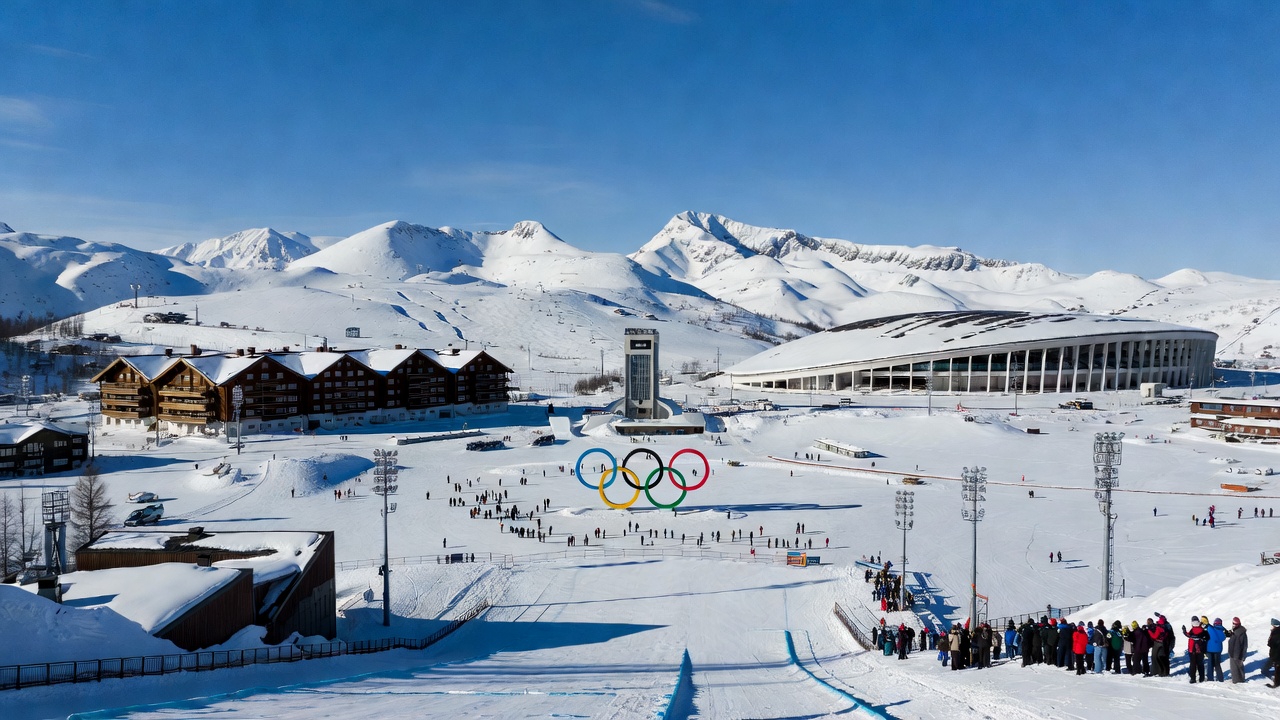
From the electric atmosphere of Milan’s legendary San Siro Stadium to the snow-capped peaks of the Dolomites, discover every venue where Olympic history will unfold in February 2026.
Overview: The Most Widespread Winter Olympics in History
The Milano Cortina 2026 Winter Olympics will make history as the most geographically expansive Olympic Games ever staged. Running from February 6 to 22, 2026, these Games span an impressive 8,495 square miles across northern Italy, connecting the cosmopolitan energy of Milan with the legendary alpine slopes that have shaped winter sports for generations.
For the first time in Olympic history, two cities officially co-host the Winter Games. Milan, Italy’s fashion and financial capital, handles the ice events with characteristic Italian stile. Meanwhile, Cortina d’Ampezzo—affectionately known as the “Queen of the Dolomites”—returns to the Olympic stage 70 years after hosting the memorable 1956 Winter Games.
What Makes Milano Cortina 2026 Unique for Spectators?
| Feature | Details |
|---|---|
| Dates | February 6–22, 2026 (Olympics) / March 6–15, 2026 (Paralympics) |
| Host Cities | Milan and Cortina d’Ampezzo |
| Total Venues | 15 competition venues across 8 locations |
| Geographic Spread | Over 8,495 square miles (22,000 km²) |
| Athletes Expected | Nearly 3,000 from 93+ countries |
| Sports | 16 disciplines, 116 medal events |
| New Sport | Ski mountaineering makes its Olympic debut |
Key Spectator Insight: Sarah Hirshland, CEO of the U.S. Olympic & Paralympic Committee, offers sage advice: “Pack your patience, because there will be some travel time.” The venues are spread across four main clusters, and traveling between them requires careful planning. However, this geographic diversity also means visitors can experience multiple facets of Italy—urban sophistication, alpine grandeur, and historic cities—all within a single Olympic journey.
Milan Cluster: Where Ice Sports Meet Italian Glamour
Milan serves as the beating heart of the 2026 Winter Olympics, hosting the spectacular Opening Ceremony and all major ice events. As Italy’s second-largest city and a global hub for fashion, design, and finance, Milan brings an unmistakable cosmopolitan flair to the Winter Games.
San Siro Olympic Stadium: Opening Ceremony Venue 2026
The iconic Stadio San Siro (officially Stadio Giuseppe Meazza) will host the Opening Ceremony on February 6, 2026. Known as the “Temple of Football” and home to both AC Milan and Inter Milan, this legendary venue celebrates its 100th anniversary in 2026—a fitting milestone for such a historic occasion.
Opening Ceremony Details:
- Date: February 6, 2026, starting at 8:30 PM local time
- Capacity: Approximately 77,000 spectators
- Theme: “Armonia” (Harmony)
- Featured Performers: Mariah Carey, Andrea Bocelli, and Laura Pausini
The ceremony, produced by Balich Wonder Studio under the creative direction of Marco Balich (who also worked on the Turin 2006 Opening Ceremony), promises a spectacular fusion of Italian culture, music, and the traditional Parade of Nations culminating in the lighting of the Olympic cauldron.
Getting to San Siro:
- Metro: Line M5 (Purple) to San Siro Stadio station, or Line M1 to Lotto station
- Tram: Line 16 directly to the stadium
- Tip: Public transport runs until 2:00 AM during the Games
Milano Ice Skating Arena: Figure Skating and Short Track Speed Skating Venue
The Mediolanum Forum in Assago, rebranded as the Milano Ice Skating Arena for the Games, hosts two of the most anticipated disciplines: figure skating and short track speed skating. This existing 11,500-seat venue has hosted countless concerts and sports events, but nothing quite like Olympic glory.
| Event | Dates |
|---|---|
| Figure Skating Team Event | February 7–9 |
| Ice Dance | February 8, 10 |
| Pairs | February 12–13 |
| Men’s Singles | February 14, 16 |
| Women’s Singles | February 18, 20 |
| Short Track Speed Skating | Various dates Feb. 8–16 |
Getting to Assago Forum:
- Metro: Line M2 (Green) to Assago Milanofiori Forum station (direct connection)
- The venue is less than 2 miles outside Milan’s city center
Milano Santagiulia Ice Hockey Arena: Where NHL Stars Return to Olympic Ice
The brand-new PalaItalia Santa Giulia Arena represents the most significant new construction for Milano Cortina 2026. Designed by the renowned architect David Chipperfield, this state-of-the-art 14,000-seat arena in Milan’s Santa Giulia district will host ice hockey semifinals and finals—including the eagerly anticipated men’s gold medal game.
Historic Significance: The 2026 Games mark the first time in 12 years that NHL players will compete in Olympic hockey, adding star power to an already electric atmosphere. The arena’s rink is built to international IIHF dimensions, which is three feet shorter than a standard NHL rink—a factor that could influence the style of play.
Post-Olympics Legacy: After the Games, this venue transforms into a multi-functional entertainment center, serving Milan’s cultural and sporting life for decades to come.
Getting to Santa Giulia:
- Metro: Line M3 to Milano Rogoredo station
- Shuttle: Dedicated Olympic shuttles cover the final 1–2 km to the arena
Milano Rho Ice Hockey Arena: Preliminary Hockey Matches
Located within the Fiera Milano Rho exhibition complex, this temporary arena hosts preliminary ice hockey matches. The same complex also houses the Milano Speed Skating Stadium, where the 400m oval hosts long-track speed skating events in converted exhibition pavilions.
Getting to Rho Fiera:
- Metro: Line M1 (Red) to Rho-Fieramilano station
- Train: Regional trains to Rho Fiera station
- Note: Both hockey and speed skating venues are within walking distance of each other
Best Accommodation Options Near Milan Olympic Venues
Milan offers accommodations for every budget, from historic five-star properties near the Duomo to boutique hotels in trendy Navigli district. During the Olympics, consider:
- Near Central Station: Convenient for train connections to mountain venues
- Porta Romana area: Close to the Santa Giulia Arena
- City Center: Walking distance to museums, the Duomo, and La Scala between events
- Budget Tip: Consider staying in nearby cities like Bergamo or Brescia, connected by regional trains
Cortina d’Ampezzo: The Queen of the Dolomites Returns to Olympic Glory
Cortina d’Ampezzo holds a special place in Olympic history. This glamorous alpine resort hosted the 1956 Winter Olympics—Italy’s first Winter Games—and returns to the global stage 70 years later. Nestled in the heart of the UNESCO World Heritage Dolomites, Cortina combines world-class skiing with Italian high fashion, creating an atmosphere unlike any other Olympic venue.
Tofane Alpine Skiing Centre: Women’s Alpine Skiing Events
The legendary Olimpia delle Tofane slope has witnessed countless skiing triumphs since joining the Women’s World Cup circuit in the early 1990s. For Milano Cortina 2026, it hosts all women’s Alpine skiing events, including downhill, super-G, giant slalom, slalom, and the alpine combined.
Course Specifications:
- Historic ski run that hosted the 2021 FIS Alpine World Ski Championships
- Known for dramatic Dolomite scenery and technical challenges
- Spectator capacity: 7,000
Events at Tofane:
| Event | Date |
|---|---|
| Women’s Downhill | February 8 |
| Women’s Super-G | February 9 |
| Women’s Giant Slalom | February 12 |
| Women’s Slalom | February 14 |
| Women’s Alpine Combined | February 17 |
| Team Alpine Combined | February 18 |
Spectator Access: From Cortina’s town center, spectators take a gondola lift to Socrepes, then continue by a second gondola and a 10-minute walk (approximately 450 meters) to the finish area. The spectacular aerial journey offers breathtaking views of the Dolomites—an experience unto itself.
Cortina Sliding Centre: Bobsled, Luge, and Skeleton Thrills
The newly rebuilt Cortina Sliding Centre (Eugenio Monti track) carries the legacy of Italian sliding sports legend Eugenio Monti, who won six Olympic medals. The original 1956 track has been completely modernized at a cost of approximately €120 million, featuring cutting-edge safety features and a dramatic mountain setting.
Events:
- Bobsled: Men’s and Women’s 2-person and 4-person events
- Luge: Men’s, Women’s, Doubles, Women’s Doubles (new event), Team Relay
- Skeleton: Men’s, Women’s, Mixed Team (new event)
Getting There: Spectators access the sliding center via shuttles and cable cars from Cortina village. No public parking is available at the venue—a common theme at mountain venues designed to minimize environmental impact.
Cortina Curling Olympic Stadium: Where Strategy Meets Precision
The historic Stadio Olimpico del Ghiaccio, originally built for the 1956 Games, hosts curling competitions in 2026. This indoor arena in Cortina’s town center offers an intimate atmosphere where spectators can experience the strategic intensity of the “roaring game” up close.
The stadium is easily accessible by foot from Cortina’s spectator shuttle terminal, making it convenient to combine with other Cortina events.
Why Cortina d’Ampezzo Captivates Olympic Visitors
Beyond the competitions, Cortina offers:
- Pedestrian-only village center with luxury boutiques and cafés
- Part of Dolomiti Superski, giving skiers access to 12 resorts and over 1,200 km of slopes with a single lift pass
- Rifugio Lagazuoi: Accessible by cable car, offering some of Europe’s most spectacular mountain dining
- Post-Olympics skiing: The surrounding Dolomites remain fully open during the Games (except competition slopes)
Accommodation in Cortina: Cortina’s hotels range from heritage 4-5 star properties to cozy pensioni (guesthouses). Due to high demand:
- Book well in advance—availability is extremely tight
- Consider nearby villages like San Vito di Cadore (12 km away, connected by shuttle), Dobbiaco, or Belluno for more affordable options
Valtellina Cluster: Bormio and Livigno Alpine Adventure Awaits
The Valtellina Valley in Lombardy, bordering Switzerland, hosts some of the Games’ most spectacular and adrenaline-pumping events. This region, famous for its skiing, artisan cheeses (Bitto and Valtellina Casera), and robust wines (Sforzato di Valtellina), delivers authentic alpine experiences.
Stelvio Ski Centre Bormio: Men’s Alpine Skiing and Ski Mountaineering Debut
The Stelvio slope in Bormio is legendary—one of the most technically challenging and thrilling courses in alpine skiing. At Milano Cortina 2026, it hosts all men’s Alpine skiing events plus the historic Olympic debut of ski mountaineering.
Course Statistics:
- Length: 3,442 meters
- Vertical Drop: 1,023 meters
- Maximum Gradient: 63%
- Top Speeds: Athletes exceed 140 km/h in certain sections
- Famous Section: San Pietro jump, where skiers soar over 40 meters
The Stelvio has hosted two Alpine World Championships (1985, 2005) and serves as an annual fixture on the Men’s World Cup circuit since 1993. Italian hero Dominik Paris, honorary citizen of Bormio, holds the record for most victories on this slope.
Men’s Alpine Skiing Schedule at Bormio:
| Event | Date |
|---|---|
| Men’s Downhill | February 7 |
| Men’s Super-G | February 9 |
| Men’s Giant Slalom | February 13 |
| Men’s Slalom | February 16 |
| Men’s Alpine Combined | February 18 |
Ski Mountaineering (Olympic Debut):
| Event | Date |
|---|---|
| Men’s & Women’s Sprint | February 19 |
| Mixed Relay | February 21 |
Ski mountaineering, or “skimo,” involves athletes racing up and down courses, alternating between skiing and climbing on foot—a true test of endurance and technique. Its addition reflects the IOC’s embrace of mountain sports deeply rooted in alpine communities.
Getting to Bormio:
- Train: Regional train to Tirano, then “Train & Ride” shuttle to Bormio Spectator Bus Terminal
- Car: Park & Ride facilities available (reservation required); driving into Bormio is restricted during the Games
Bormio Bonus: After cheering for your favorite alpine racers, relax in Bormio’s famous thermal baths (Bormio Terme or QC Terme), where natural hot springs have soothed muscles for centuries.
Livigno Snow Park and Aerials & Moguls Park: Freestyle and Snowboard Headquarters
If Bormio is classical and elegant, Livigno is youthful and wild. Known as “Little Tibet” for its high altitude (1,816 meters) and remote location near the Swiss border, Livigno hosts all freestyle skiing and snowboarding events at Milano Cortina 2026. The town’s tax-free status, legendary snow parks, and vibrant nightlife have long made it a mecca for freeskiers and snowboarders worldwide.
Livigno Snow Park Events (Mottolino Ski Area):
- Halfpipe (Snowboard & Freestyle)
- Slopestyle (Snowboard & Freestyle)
- Big Air (Snowboard & Freestyle)
- Ski Cross
- Snowboard Cross
- Parallel Giant Slalom (Snowboard)
The Livigno Snow Park features a unique design where five different competition areas converge into a single finish zone, allowing spectators to watch multiple events simultaneously—an unparalleled viewing experience.
Livigno Aerials & Moguls Park (Carosello 3000 Area):
- Aerials (Men’s & Women’s)
- Moguls (Men’s & Women’s)
- Dual Moguls (new event, Men’s & Women’s)
Both courses are positioned near the base of the slope, with a panoramic terrace accommodating approximately 3,000 spectators just meters from the finish area.
Spectator Tip: Livigno will be one of four venues involved in the Opening Ceremony broadcast on February 6, with LED walls showing live coverage and athlete parades from San Siro.
Getting to Livigno:
- Train + Shuttle: Train to Tirano, then shuttle (approximately 2-hour journey through stunning mountain scenery)
- Car: Park at Aquilone parking area (online reservation required), then take dedicated shuttles
Livigno After Dark: Unlike many alpine villages that quiet down by 10 PM, Livigno comes alive at night. Its remote history of smuggling and lawlessness has cultivated a party culture that persists today—expect lively bars and dancing well into the early hours.
Val di Fiemme: Nordic Skiing Paradise in Trentino
The Fiemme Valley in Trentino-Alto Adige has been a landmark for Nordic sports since hosting the Nordic World Ski Championships in 1991. For Milano Cortina 2026, the valley’s two main towns—Tesero and Predazzo—host cross-country skiing, ski jumping, and Nordic combined events.
Tesero Cross-Country Skiing Stadium: Endurance Athletes Shine
The Tesero Cross-Country Skiing Stadium features nearly 20 kilometers of trails winding through the picturesque valley, offering spectators an immersive experience in the heart of Nordic racing. With a spectator capacity of 15,000, this stadium creates an electric atmosphere during mass starts and sprint finishes.
Cross-Country Events at Tesero:
| Event | Date |
|---|---|
| Women’s Skiathlon | February 8 |
| Men’s Skiathlon | February 9 |
| Sprint (Men’s & Women’s) | February 11 |
| Team Sprint (Men’s & Women’s) | February 14 |
| Women’s 20km | February 16 |
| Men’s 50km | February 22 |
| Various Relay Events | Throughout Games |
The stadium also hosts the cross-country portion of Nordic combined and will serve as a venue for Para biathlon and Para cross-country skiing during the Paralympic Games.
Predazzo Ski Jumping Stadium: Flight and Precision
The Predazzo Ski Jumping Stadium features two main competition hills, three smaller training jumps, and a newly constructed judges’ tower. With a spectator capacity of 15,000, it’s one of the larger outdoor venues at these Games.
Ski Jumping Events at Predazzo:
| Event | Date |
|---|---|
| Women’s Normal Hill | February 8 |
| Men’s Normal Hill | February 9 |
| Men’s Large Hill | February 14 |
| Women’s Large Hill (new event) | February 15 |
| Men’s Team | February 16 |
| Mixed Team | February 10 |
Nordic Combined athletes complete the ski jumping portion at Predazzo before racing to Tesero for the cross-country segment.
Getting to Val di Fiemme:
- Train: Frecciarossa to Verona or Bologna, then FrecciaLink bus service
- Shuttle: Direct connections from major rail stations
- The valley is approximately 3.5 hours northeast of Milan by car
Val di Fiemme During the Games: Beyond competitions, the valley hosts a rich program of free events—concerts, exhibitions, DJ sets in town squares, and live competition broadcasts on big screens in Tesero, Cavalese, and Predazzo. It’s a true festa (celebration) atmosphere.
Anterselva Biathlon Arena: Where Precision Meets Endurance
Tucked in the Antholz Valley near the Austrian border, the Anterselva Biathlon Arena (also known as Antholz) holds the distinction of having the largest spectator capacity of any 2026 Olympic venue—accommodating up to 19,000 fans per session.
World-Class Biathlon Venue Makes Olympic Debut
While Anterselva has hosted six Biathlon World Championships (1975, 1976, 1983, 1995, 2007, 2020) and has been a permanent fixture on the World Cup circuit since 1978, Milano Cortina 2026 marks its first Olympic Games. This legendary arena, located at 1,600 meters elevation beside tranquil Lake Anterselva, offers a unique combination of sporting heritage and natural beauty.
Biathlon Schedule:
| Event | Date |
|---|---|
| Mixed Relay 4×6km | February 8 |
| Men’s 20km Individual | February 10 |
| Women’s 15km Individual | February 11 |
| Men’s 10km Sprint | February 13 |
| Women’s 7.5km Sprint | February 14 |
| Women’s 10km Pursuit | February 15 |
| Men’s 12.5km Pursuit | February 15 |
| Men’s 4×7.5km Relay | February 17 |
| Women’s 4×6km Relay | February 18 |
| Men’s 15km Mass Start | February 20 |
| Women’s 12.5km Mass Start | February 21 |
Venue Upgrades for 2026: A new section of track has been constructed above the shooting range, providing a dramatic final loop that brings athletes closer to spectators during the exciting finish.
Getting to Anterselva:
- Train: Take a train to Valdaora-Anterselva (Olang-Antholz) station, then use dedicated shuttle service
- Bus: Organized bus parking area available (reservation mandatory)
- Note: The arena is approximately 30 miles (50 km) north of Cortina and 5 hours from Milan by car
Spectator Tip: Biathlon fans are among the most passionate in winter sports. Expect singing, cowbells, and national flags throughout the stadium—especially when Nordic nations compete. Dress warmly; standing on snow at 1,600 meters for several hours requires serious layering.
Verona Arena: Ancient Roman Amphitheatre Hosts Olympic Closing Ceremony
In a breathtaking fusion of ancient history and modern sport, the Verona Arena—a 2,000-year-old Roman amphitheater—will host the Olympic Closing Ceremony on February 22, 2026, and the Paralympic Opening Ceremony on March 6, 2026.
Why Verona Was Chosen for the Olympic Closing Ceremony 2026
The Verona Arena, built in 30 AD (predating Rome’s Colosseum by decades), originally hosted gladiator battles. Today, it’s world-famous for its summer opera festival, drawing over 600,000 spectators annually to performances under the stars. For the Olympics, it welcomes approximately 12,000 spectators for each ceremony.
Closing Ceremony Details:
- Date: February 22, 2026
- Theme: “Beauty in Action”
- Producer: Filmmaster
- Features: Music, art, celebration of Paralympic values, and the formal handover to the French Alps (hosts of 2030)
Accessibility Improvements: In preparation for the Games, the arena has undergone an €18 million renovation focused on accessibility:
- New ramps blending with original Roman architecture
- Updated railings replacing temporary 1950s installations
- Renovated accessible bathrooms
- Post-Games installation of an elevator to the uppermost level
Getting to Verona for the Olympic Ceremonies
Verona is well-connected by Italy’s high-speed rail network:
- From Milan: Frecciarossa trains take approximately 1 hour 20 minutes
- From Bologna: Under 1.5 hours
- From Rome: Approximately 3.5 hours
The Verona Porta Nuova train station is just a 1.5 km walk from the Arena. For those arriving by car, parking near the venue will be extremely limited during ceremonies.
Exploring Verona Beyond the Olympics
Verona is perhaps best known as the setting for Shakespeare’s Romeo and Juliet. During your Olympic visit, explore:
- Juliet’s House (Casa di Giulietta): Complete with the famous balcony and the bronze Juliet statue
- Piazza delle Erbe: The city’s vibrant main square, surrounded by Renaissance palaces
- Castelvecchio: A 14th-century fortress housing an impressive art museum
- Local Cuisine: Don’t miss risotto all’Amarone (risotto with local red wine) and pastissada de caval (traditional horse meat stew)
How to Travel Between 2026 Winter Olympics Venues
Given the unprecedented geographic spread of Milano Cortina 2026, transportation planning is essential. The Italian government and organizing committee have invested heavily in enhanced rail services, shuttle systems, and a dedicated Transport Milano Cortina 2026 app for real-time journey planning.
Train Travel: The Backbone of Olympic Transport
Trenitalia (Italy’s national railway) and Trenord (Lombardy’s regional operator) are official mobility partners. Key services include:
| Route | Service | Frequency During Games |
|---|---|---|
| Milan–Verona | RE6 Regionale | Every hour |
| Milan–Tirano (for Valtellina) | RE8 Regionale | Every 30 minutes |
| Milan–Malpensa Airport | RE51 | Every 30 minutes (extended hours) |
| Major Cities–Cortina | Frecciarossa + FrecciaLink bus | 2 daily connections |
| Bologna/Verona–Predazzo | Frecciarossa + FrecciaLink | Multiple daily |
Special Ticketing: Purchase integrated Train + Bus tickets by selecting “Cortina 2026” as your destination on Trenitalia’s website or app—this automatically includes the connecting bus or shuttle.
Shuttle Services: Connecting Trains to Mountain Venues
Train & Ride: From key stations, dedicated shuttles transport spectators to venues:
- Ponte nelle Alpi-Polpet → Cortina (bus to Cortina Sud Spectator Terminal)
- Tirano → Bormio (shuttle to Bormio Spectator Bus Terminal)
- Tirano → Livigno (shuttle to Livigno venues)
- Valdaora-Anterselva → Anterselva Biathlon Arena (dedicated shuttle)
Park & Ride: For those driving:
- Private vehicles cannot access venue areas during competitions
- Park at designated Park & Ride lots (online reservation required)
- Continue by shuttle to venue
- Example locations: Dobbiaco, San Vito Longarone, Son dei Prade (for Cortina), Aquilone (for Livigno)
Milan’s Urban Transport During the Olympics
Milan’s excellent ATM public transport network—metro, trams, and buses—provides easy access to urban venues:
| Venue | Metro Line | Station |
|---|---|---|
| San Siro Stadium | M5 (Purple) | San Siro Stadio |
| Assago Forum (Ice Skating) | M2 (Green) | Assago Milanofiori Forum |
| Fiera Rho (Speed Skating, Hockey) | M1 (Red) | Rho-Fieramilano |
| Santa Giulia Hockey Arena | M3 | Rogoredo + shuttle |
Extended Hours: Public transport operates until 2:00 AM during the Games.
Driving: Proceed with Caution
While driving offers flexibility, expect:
- Olympic Limited Traffic Zones: Private vehicles banned from venue areas
- Mandatory permits: Residents and authorized personnel only
- Mountain road conditions: Snow and ice require winter tires; chains may be necessary
- Multi-hour travel times: Milan to Cortina is approximately 4-5 hours by car
Best Practice: Use Park & Ride facilities and embrace public transport and shuttles. It’s more relaxing, more sustainable, and you won’t miss events due to traffic delays.
Essential Travel Apps for Milano Cortina 2026
- Transport Milano Cortina 2026: Official app integrating trains, shuttles, metro, and real-time updates
- Trenitalia: Book trains and integrated Train + Bus tickets
- Trenord: Regional train schedules in Lombardy
- ATM Milano: Milan metro, tram, and bus navigation
2026 Winter Olympics Ticket Prices and How to Buy
Tickets for Milano Cortina 2026 are 100% digital and available exclusively through the official ticketing platform at tickets.milanocortina2026.org.
Ticket Price Ranges for 2026 Winter Olympics
| Event Category | Price Range |
|---|---|
| General Events | Starting from €30 |
| Alpine Skiing | €50–€200+ |
| Figure Skating | €100–€500+ (high demand) |
| Ice Hockey | Starting from €150 |
| Opening Ceremony | €700–€2,000+ |
| Closing Ceremony | €250–€800+ |
Key Statistic: According to organizers, more than half of all tickets cost less than €100.
How Ticket Purchasing Works
- Digital Only: All tickets are mobile-only, delivered through the Milano Cortina 2026 app
- QR Code Activation: QR codes activate 24 hours before the event
- Nominative Tickets: Tickets are linked to the holder’s name (ID may be checked)
- Purchase Limits: Up to 25 tickets per account; up to 10 per session (4 for ceremonies)
- Age Requirements: Purchasers must be 16+; children under 14 require adult supervision
Official Resale Platform
The official ticket resale site launched in December 2025, offering the only authorized channel for reselling tickets:
- Tickets sold at face value plus approximately 5% service fee
- Avoid third-party sites—unauthorized tickets may be denied entry
Hospitality Packages for Milano Cortina 2026
On Location, the official hospitality provider, offers premium packages including:
- Guaranteed tickets with premium seating
- Pre-event hospitality with food and beverages
- Travel and accommodation coordination
- Available at hospitality.milanocortina2026.org
Weather Conditions and What to Pack for the 2026 Winter Olympics
Expected Weather by Location
| Location | Average February Temperature | Conditions |
|---|---|---|
| Milan | 2°C–8°C (36°F–46°F) | Milder, occasional rain |
| Cortina d’Ampezzo | -6°C–4°C (21°F–39°F) | Cold, snowy |
| Bormio | -8°C–3°C (18°F–37°F) | Cold, frequent snow |
| Livigno | -10°C–2°C (14°F–36°F) | Very cold, excellent snow |
| Anterselva | -12°C–1°C (10°F–34°F) | Cold, snowy |
| Verona | 1°C–9°C (34°F–48°F) | Milder, possible rain |
Essential Packing List for Winter Olympics Spectators
For Mountain Venues:
- Insulated, waterproof winter jacket
- Thermal base layers (merino wool recommended)
- Insulated waterproof boots
- Warm hat covering ears
- Insulated gloves or mittens
- Hand and toe warmers (single-use heating packs)
- Sunglasses and sunscreen (high-altitude sun reflection off snow)
- Small cushion or stadium seat (for sitting on cold surfaces)
For Milan/Urban Venues:
- Layered clothing
- Comfortable walking shoes
- Light rain jacket or umbrella
- Scarf and gloves
Pro Tip: Download event schedules beforehand. Outdoor mountain events can be delayed or rescheduled due to weather—flexibility in your itinerary is valuable.
Cultural Experiences Beyond the Olympic Venues in Northern Italy
Milan: Fashion, Art, and Culinary Excellence
Between Olympic events, Milan offers world-class cultural attractions:
- Duomo di Milano: Climb to the rooftop for panoramic city views
- The Last Supper (L’Ultima Cena): Leonardo da Vinci’s masterpiece (advance booking essential)
- Galleria Vittorio Emanuele II: Historic shopping arcade with luxury boutiques
- Navigli District: Charming canals lined with restaurants and bars
- La Scala Opera House: If timing permits, catch a performance at one of the world’s most famous opera houses
Milanese Cuisine: Try cotoletta alla milanese (breaded veal cutlet), ossobuco (braised veal shank), and panettone (the traditional sweet bread, though traditionally a Christmas treat, available year-round).
The Dolomites: UNESCO World Heritage Natural Wonder
The Dolomite mountain range is a UNESCO World Heritage Site, celebrated for its exceptional natural beauty and geological significance. During your Olympic visit:
- Take scenic cable car rides for panoramic views
- Enjoy authentic alpine rifugio (mountain hut) dining
- Try local specialties like canederli (bread dumplings) and speck (smoked ham)
- Explore the unique Ladin culture, with its own language and traditions
Verona: Romeo and Juliet’s City of Love
Beyond the Closing Ceremony, Verona enchants visitors with:
- Piazza Bra and the Arena
- The atmospheric Old Town
- Local wines from Valpolicella and Soave regions
- Excellent risotto and pastissada dishes
Sustainability Initiatives at Milano Cortina 2026
The Milano Cortina 2026 Games are designed as a model for sustainable mega-events:
- 93% existing or temporary venues: Minimizing new construction
- Carbon reduction commitments: Focus on public transport and renewable energy
- Legacy planning: New venues serve long-term community needs
- Ecosystem protection: Competition venues respect UNESCO World Heritage Dolomites
As a spectator, you can contribute by:
- Using public transport and official shuttles
- Following waste separation guidelines at venues
- Respecting nature and wildlife in mountain areas
- Supporting local businesses and artisans
Practical Information: Visa Requirements and Safety for 2026 Olympics Visitors
Entry Requirements for Italy
As a Schengen Area country, Italy has the following entry requirements for most visitors:
- EU/EEA Citizens: No visa required
- US, UK, Canada, Australia, and many other nationalities: No visa required for stays up to 90 days
- Passport validity: Must be valid for at least 6 months beyond your planned departure (recommended through August 2026)
Check with the Italian Ministry of Foreign Affairs for country-specific requirements.
Safety and Security at Olympic Venues
- Emergency Number: 112 (universal European emergency number)
- Police: 113
- Security screening: Expect airport-style security at venue entrances
- Prohibited items: Large bags, weapons, drones, professional cameras with detachable lenses (check specific venue rules)
- Payment: Visa is the only card accepted at official Olympic stores and food venues (cash also accepted)
Complete 2026 Winter Olympics Venue Summary Table
| Venue | Location | Events | Spectator Capacity |
|---|---|---|---|
| San Siro Olympic Stadium | Milan | Opening Ceremony | 77,000 |
| Milano Ice Skating Arena (Assago) | Milan | Figure Skating, Short Track | 11,500 |
| Milano Santagiulia Ice Hockey Arena | Milan | Ice Hockey (Finals) | 14,000 |
| Milano Rho Ice Hockey Arena | Milan/Rho | Ice Hockey (Preliminary) | Temporary |
| Milano Speed Skating Stadium | Milan/Rho | Speed Skating | Temporary |
| Tofane Alpine Skiing Centre | Cortina | Women’s Alpine Skiing | 7,000 |
| Cortina Sliding Centre | Cortina | Bobsled, Luge, Skeleton | Varies |
| Cortina Curling Olympic Stadium | Cortina | Curling | Varies |
| Stelvio Ski Centre | Bormio | Men’s Alpine, Ski Mountaineering | 7,122 |
| Livigno Snow Park | Livigno | Freestyle Skiing, Snowboard | Varies |
| Livigno Aerials & Moguls Park | Livigno | Aerials, Moguls | 3,000 |
| Tesero Cross-Country Stadium | Val di Fiemme | Cross-Country, Nordic Combined | 15,000 |
| Predazzo Ski Jumping Stadium | Val di Fiemme | Ski Jumping, Nordic Combined | 15,000 |
| Anterselva Biathlon Arena | Anterselva | Biathlon | 19,000 |
| Verona Olympic Arena | Verona | Closing Ceremony | 12,000 |
Final Tips for the Best 2026 Winter Olympics Spectator Experience
- Plan Clusters, Not Cities: Group events within the same geographic cluster on the same day to minimize travel time.
- Book Accommodation Early: Hotels in Cortina and near Milan Olympic venues sell out quickly. Consider alternatives in nearby towns connected by shuttle.
- Download Official Apps: The Transport Milano Cortina 2026 app is essential for navigation and real-time updates.
- Arrive Early: Gate opening times are typically 2-3 hours before events. Factor in security screening and travel to your seat.
- Embrace Italian Culture: Take breaks between events to enjoy espresso in a piazza, sample regional cuisine, and explore local attractions. This is Italy—la dolce vita awaits.
- Dress in Layers: Weather can change rapidly in the mountains. Prepare for sun, snow, and cold—sometimes all in one day.
- Respect the Environment: The Dolomites are fragile. Stay on marked paths, dispose of waste properly, and appreciate the natural beauty.
- Bring Binoculars: For outdoor events like alpine skiing and ski jumping, binoculars enhance the experience.
- Learn Some Italian: A few words—grazie (thank you), per favore (please), buongiorno (good morning)—go a long way with locals.
- Soak It All In: The Olympic Games are a once-in-a-lifetime experience. Between cheering for your favorite athletes, take moments to appreciate the history, the spectacle, and the global community gathered in one of the world’s most beautiful regions.
Conclusion: Your Journey to Milano Cortina 2026 Begins Now
The 2026 Winter Olympics in Milan and Cortina d’Ampezzo promise an Olympic experience like no other. From the electric atmosphere of San Siro Stadium to the ancient grandeur of Verona’s Roman Arena, from the legendary slopes of Stelvio and Tofane to the adrenaline-charged snow parks of Livigno, these Games celebrate both athletic excellence and Italy’s incomparable cultural heritage.
As the Olympic Torch traverses all 110 provinces of Italy before arriving in Milan on February 6, 2026, the world’s attention will focus on northern Italy’s stunning landscapes and passionate communities. Whether you’re drawn by figure skating’s artistry, alpine skiing’s speed, or ice hockey’s intensity, Milano Cortina 2026 offers unforgettable experiences.
Start planning your Olympic journey today. Book your tickets through the official Milano Cortina 2026 ticketing platform, research accommodation options, and familiarize yourself with the transportation network. The most widespread Winter Olympics in history awaits—and the magic of Italy is ready to welcome you.
Forza atleti! (Go athletes!)