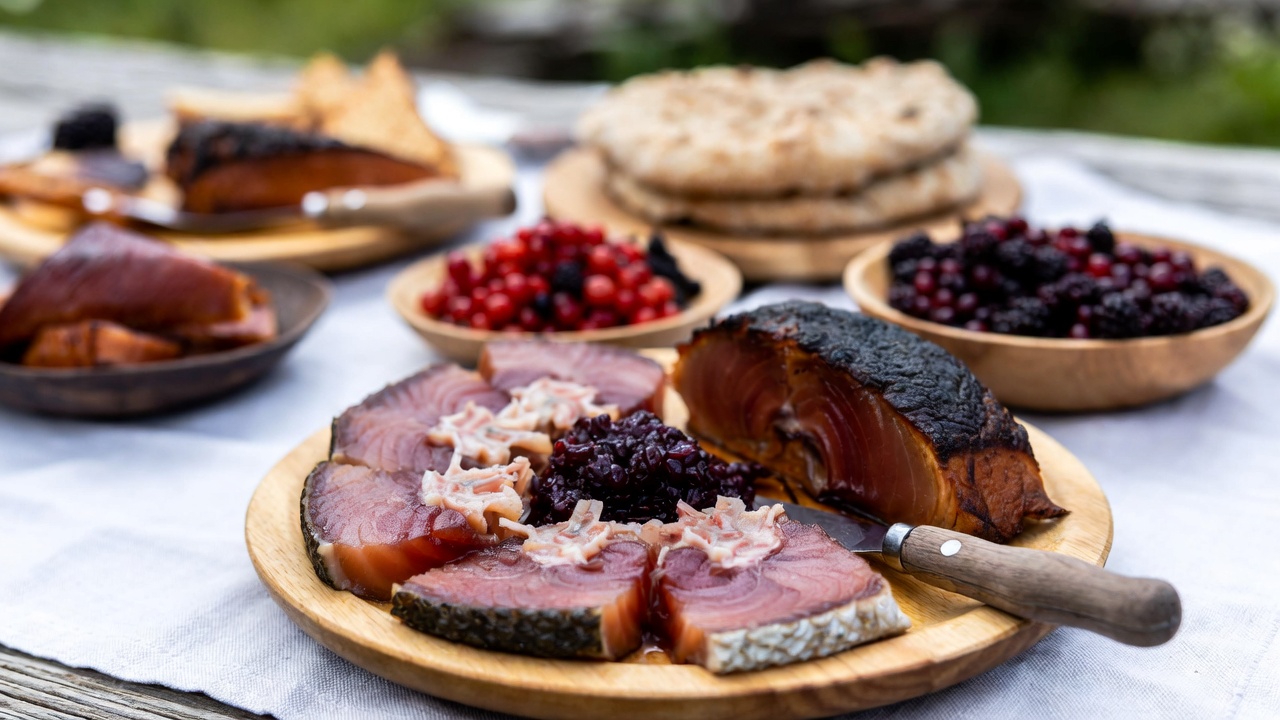
Lihkku Beivviin! — On February 6, across the snow-covered landscapes of Norway, Sweden, Finland, and the Kola Peninsula, the Sámi people raise their flag, sing their anthem, and gather around tables laden with centuries-old dishes. Here is everything you need to know about cooking traditional Sámi food for their most important day of the year.
Every year on February 6, something remarkable happens across the Arctic. From the fjords of northern Norway to the birch forests of Finnish Lapland, an indigenous nation that predates the modern borders of four countries comes together for a single day of pride, song, and food. This is Sámi National Day — Sámi álbmotbeaivi in Northern Sámi — and in 2026, it falls on a Friday, making the celebrations even more festive than usual.
The Sámi people are the only recognized indigenous people in the European Union. Their homeland, called Sápmi, stretches across the northern reaches of Norway, Sweden, Finland, and Russia’s Kola Peninsula. An estimated 80,000 Sámi live across these four countries today, with roughly half residing in Norway. Their culture, language, and way of life are deeply tied to the land — and nowhere is that connection more vivid than in their food.
Traditional Sámi cuisine is not about elaborate techniques or exotic spices. It is about respect for nature, seasonal ingredients, and the art of using every part of what the land provides. On Sámi National Day, food is not just sustenance. It is ceremony. It is memory. It is identity.
This guide will walk you through the most important traditional Sámi recipes for the February 6 celebration. Whether you are Sámi yourself, a visitor to Sápmi, or simply someone who wants to honor this remarkable culture from your own kitchen, these recipes connect you to one of Europe’s oldest living food traditions.
What Is Sámi National Day and Why Is Traditional Food Central to the Celebration?
Sámi National Day commemorates the first Sámi congress, held on February 6, 1917, in Trondheim (Tråante), Norway. That gathering was historic. For the first time, Norwegian and Swedish Sámi crossed national borders to address shared problems. It laid the groundwork for decades of advocacy and eventually led to the establishment of Sámi Parliaments in Norway (1989), Sweden (1993), and Finland (1996).
The date was formally adopted as Sámi National Day in 1992, at the 15th Sámi Conference in Helsinki. The first official celebration took place in 1993, coinciding with the United Nations’ International Year of Indigenous People. In 2026, the Sámi are marking the 33rd year of this tradition.
On this day, you will see the Sámi flag flying from government buildings across the Nordic countries. You will hear the Sámi anthem, Sámi soga lávlla, sung in local Sámi dialects. People don their traditional gákti clothing. Schools across Scandinavia dedicate the week to learning about Sámi culture. And everywhere — in lavvu tents, family kitchens, restaurants, and community halls — traditional food takes center stage.
Food is central because it carries the story of who the Sámi are. Their cuisine reflects thousands of years of life in one of Earth’s harshest environments. Every dish on the National Day table is a quiet statement: We are still here. Our ways endure.
The History of Sámi Cuisine: How Arctic Conditions Shaped Indigenous Food Traditions
To understand Sámi food, you must understand the landscape that created it. Sápmi is a land of extremes. Winters bring months of polar darkness and temperatures that plunge well below minus 30 degrees Celsius. Summers are brief but luminous, with the midnight sun fueling a short, intense burst of plant growth.
In this environment, the Sámi developed one of the most resource-efficient food cultures on the planet. According to Sámi cuisine traditions documented by scholars, the foundation of their diet rests on three pillars: reindeer, fish, and wild berries. Spices beyond salt are historically almost nonexistent. The flavors come from the ingredients themselves — from the animal’s diet, the smoking process, or the tartness of a freshly picked cloudberry.
The Sámi originally recognized eight seasons in their calendar, not four. Each season brought different food sources. The autumn slaughter provided reindeer meat that was dried, smoked, and salted for winter. Spring brought the harvest of birch sap. Summer offered berries, freshwater fish, and edible plants like mountain sorrel and garden angelica. This cyclical rhythm governed not just what people ate, but when and how they preserved it.
Preservation was survival. Smoking, drying, salting, and freezing in natural cold were the primary methods. A Sámi family traveling with their reindeer herd needed food that was portable, calorie-dense, and long-lasting. Dried reindeer meat, hard flatbread, and salted fish could sustain a family for weeks across the tundra.
The principle that defines Sámi food culture above all else is zero waste. As Sámi food culture expert Henry Huuva has explained in interviews, the most important rule is that nothing — whether fish, meat, or vegetables — should ever be wasted. Every part of the reindeer serves a purpose. The meat feeds the family. The hide becomes clothing. Sinews become sewing thread. Antlers become knife handles. Hooves are boiled for glue. Even the blood becomes pancakes.
What Are the Key Ingredients in Traditional Sámi Cooking for Beginners?
If you want to cook Sámi food, you need to know the core ingredients. Most of them are simple. The challenge is often sourcing them outside of Sápmi.
Reindeer Meat
Reindeer is the heart of Sámi cuisine. It appears in stews, dried strips, smoked slabs, sausages, and even pancakes (via blood). Research from the University of Tromsø has shown that reindeer meat contains only about 2% fat, making it one of the leanest red meats available. It is also remarkably rich in nutrients. One hundred grams of reindeer provides the daily recommended dose of both omega-3 and omega-6 fatty acids. Its vitamin B12 content is more than double that of beef or lamb.
If you cannot find reindeer meat, venison (deer meat) is the closest substitute. Moose or elk also work. Beef can stand in for stews, but the flavor will be notably different.
Arctic Fish
Freshwater fish like Arctic char, salmon, whitefish, and perch are staples in areas near rivers and lakes. Coastal Sámi communities rely on cod. Fish is prepared salted, smoked, dried, or simply cooked in broth.
Berries
The most treasured berry in Sápmi is the cloudberry (multebær in Norwegian, hjortron in Swedish). Golden and tangy, it is eaten fresh, as jam, or as a warm topping over ice cream. Lingonberries are equally important. Their sweet-tart jam accompanies nearly every savory Sámi dish. Bilberries (wild blueberries) and crowberries also feature in the diet.
Bread Ingredients
Sámi bread is typically made from wheat flour and rye flour, with dark syrup (such as golden syrup or malt syrup) for sweetness. Anise or fennel seeds give festive breads their distinctive aroma. Historically, the Sámi did not grow grain themselves. Flour entered their diet through trade with neighboring farming communities.
Other Ingredients
Salt is the primary seasoning. Butter or reindeer fat is used for cooking. Potatoes and carrots arrived relatively late but are now essential in stews. Garden angelica (kvann), a wild herb, adds a unique aromatic quality. Juniper berries occasionally appear in marinades and stews.
| Ingredient | Role in Sámi Cuisine | Substitute Outside Sápmi |
|---|---|---|
| Reindeer meat | Main protein source | Venison, elk, or lean beef |
| Arctic char | Primary freshwater fish | Trout or salmon |
| Cloudberries | Prized dessert berry | Apricot preserves (approximate) |
| Lingonberries | Accompaniment for savory dishes | Cranberry sauce |
| Rye flour | Bread making | Whole wheat flour |
| Dark syrup | Bread sweetener | Molasses or golden syrup |
| Reindeer blood | Pancakes and sausages | Pig’s blood (from butcher) |
| Garden angelica | Wild herb flavoring | Celery leaves (rough substitute) |
How to Make Bidos: The Traditional Sámi Reindeer Stew Recipe for National Day
If there is one dish that defines Sámi National Day, it is bidos (also spelled bidus or bierggojubttsa in some dialects). This is the celebratory stew — the dish served at weddings, confirmations, funerals, and the February 6 feast. As Visit Norway’s official recipe guide notes, bidos is traditionally served at all major Sámi gatherings.
What makes bidos special is its simplicity. There are no complex spice blends. No wine reductions. No cream. The flavor comes entirely from slowly simmered reindeer meat releasing its rich, deep broth into the water. Every family makes it slightly differently. As the old saying goes among Sámi cooks: the stew never tastes exactly the same twice.
Bidos — Sámi Reindeer Stew
Serves: 4–6 Prep time: 15 minutes Cook time: 1 hour 15 minutes
Ingredients:
- 800 g (1.75 lb) reindeer meat, cut into large chunks (bone-in adds richer flavor)
- 2 tablespoons butter
- 1 large onion, sliced
- 4 medium potatoes, peeled and cubed
- 3 large carrots, peeled and sliced
- 1 liter (4 cups) water
- Salt to taste
Instructions:
- Brown the meat. Melt butter in a large, heavy pot over medium-high heat. Add the onion slices and reindeer meat. Brown the meat evenly on all sides. This step builds the base flavor of the stew.
- Simmer the broth. Pour in the water. Bring the pot to a gentle simmer. Cook uncovered for 35 to 40 minutes, skimming any foam that rises to the surface. The broth should develop a rich, amber color.
- Add the vegetables. Add the potatoes and carrots. Season with salt. Continue to simmer gently for another 30 minutes, until the vegetables are tender and the broth is deeply flavored.
- Serve traditionally. Ladle the stew into bowls. Serve with gáhkko (Sámi flatbread) and a generous spoonful of lingonberry jam on the side.
Cook’s notes: Some families add a small amount of flour mixed with water to thicken the broth. Others include the heart or marrow bones. Before potatoes arrived in Sápmi in the 18th century, the stew was served with bread alone. If using bone-in meat, extend the initial simmering time to 50 minutes for a richer broth.
Gáhkko Recipe: How to Bake Traditional Sámi Flatbread at Home
No Sámi meal is complete without bread, and gáhkko (also written gáhkku) is the bread of celebrations. This thick, soft flatbread is lightly sweetened with syrup and flavored with anise or fennel seeds. It is traditionally cooked in a dry pan over an open fire — a method born from the nomadic life, where Sámi families carried dry ingredients and baked fresh bread at each campsite.
According to the Slow Food Foundation’s Ark of Taste, the original Sámi ember bread (called gaahkoe in Southern Sámi) was made with just flour, water, and salt. It was sometimes baked directly on the embers of a fire, or on a stone slab inside a traditional Sámi hut. Syrup was a later addition that helped keep the bread soft during long journeys.
Gáhkko — Sámi Festive Flatbread
Makes: 10–12 breads Prep time: 20 minutes (plus 1 hour rising) Cook time: 5 minutes per bread
Ingredients:
- 500 ml (2 cups) milk
- 100 g (3.5 oz) butter
- 2 tablespoons dark syrup (golden syrup or malt syrup)
- 2 teaspoons anise seeds (or fennel seeds)
- 25 g (1 oz) fresh yeast (or 7 g / 2.5 teaspoons active dry yeast)
- 1 teaspoon salt
- 300 g (2.5 cups) all-purpose flour
- 200 g (1.5 cups) rye flour
Instructions:
- Prepare the wet mixture. In a small saucepan, melt the butter with the syrup and anise seeds over medium heat. Add the milk and warm gently until the mixture reaches about 37°C (98°F) — warm to the touch, not hot.
- Activate the yeast. Pour the warm mixture into a large bowl. Crumble in the fresh yeast (or sprinkle in the dry yeast). Stir until dissolved. Let sit for 5 minutes until the yeast begins to foam.
- Form the dough. In a separate bowl, combine the flours and salt. Gradually add the dry ingredients to the yeast mixture. Knead for 6–7 minutes until you have a smooth, slightly tacky dough.
- Let it rise. Cover the bowl with a clean cloth. Allow the dough to rise in a warm place for 1 hour, until doubled in size.
- Shape and cook. Divide the dough into 10–12 equal pieces. Roll each piece into a ball, then flatten with a rolling pin to about 1 cm (½ inch) thick. Cook each bread in a dry, medium-hot frying pan for a few minutes on each side, until golden brown spots appear.
Cook’s notes: For an authentic experience, cook the bread on a griddle over an outdoor fire. The bread should be soft and slightly chewy inside, with a golden crust. It pairs beautifully with bidos, smoked reindeer, or simply butter and cheese. Store leftover gáhkko in a cloth bag to keep it soft.
Suovas: How to Prepare Authentic Smoked Reindeer Meat the Sámi Way
Suovas is perhaps the single most iconic Sámi food. It is salted reindeer meat that has been lightly cold-smoked, traditionally by hanging it inside a lavvu (Sámi tent) over a low wood fire. The result is deeply flavorful, slightly chewy, and rich with a clean, woodsy smoke character.
As Sharing Sweden describes, suovas is a staple of Sámi cuisine, often served simply with bread. The traditional preparation method is to roast slices over an open fire.
Making true suovas at home requires patience. The smoking process traditionally takes three to six days at low temperatures (no higher than 30°C / 86°F). Most home cooks will find it easier to purchase smoked reindeer from specialty retailers and then prepare it for serving. But if you have access to a cold smoker, the basic process is straightforward.
Pan-Fried Suovas — Quick Home Preparation
Serves: 4 as a starter Prep time: 5 minutes Cook time: 10 minutes
Ingredients:
- 400 g (14 oz) smoked reindeer meat (suovas), sliced thinly
- 2 tablespoons butter
- 1 small onion, sliced (optional)
Instructions:
- Heat the pan. Melt the butter in a skillet over medium heat.
- Cook the meat. Add the suovas slices and the optional onion. Fry gently for 8–10 minutes, turning occasionally, until the edges crisp slightly and the fat renders.
- Serve simply. Plate the suovas with gáhkko bread, lingonberry jam, and a few slices of raw onion.
Important note: Traditional suovas requires no additional seasoning. As Sámi cookbook author Per Huuva has noted, you should not mask the flavor of the meat itself. The quality of the ingredients speaks for itself.
Traditional Sámi Blood Pancakes Recipe: An Ancestral Dish You Should Try
This dish surprises many visitors to Sápmi, but it is one of the most authentic and ancient preparations in the Sámi kitchen. Blood pancakes (varra bánnnogáhkut in Northern Sámi) are made by mixing reindeer blood with flour to create a dark, protein-rich batter. They are traditionally served with suovas and lingonberry jam.
Blood pancakes reflect the Sámi principle of using every part of the reindeer. During the autumn slaughter, blood is collected and either used fresh or dried for later use. As Swedish Lapland food sources note, some Sámi families dry the blood in an inside-out reindeer stomach, then later reconstitute it for cooking.
The taste is milder than you might expect. Several food writers who have tried blood pancakes for the first time have reported that the flavor is gentler and more subtle than anticipated — more earthy than metallic.
Sámi Blood Pancakes
Serves: 4 Prep time: 10 minutes Cook time: 15 minutes
Ingredients:
- 200 ml (¾ cup + 1 tablespoon) reindeer blood (or pork blood, available from specialty butchers)
- 200 ml (¾ cup + 1 tablespoon) milk
- 150 g (1.25 cups) all-purpose flour
- ½ teaspoon salt
- Butter for frying
Accompaniments:
- Lingonberry jam
- Sliced suovas (smoked reindeer)
- Crème fraîche (optional, modern addition)
Instructions:
- Mix the batter. In a bowl, whisk together the blood and milk until smooth. Gradually add the flour and salt, whisking to prevent lumps. The batter should be similar in consistency to regular pancake batter.
- Cook the pancakes. Melt a small knob of butter in a frying pan over medium heat. Pour in a thin layer of batter. Cook for 2–3 minutes per side, until the pancake is set and lightly crisp at the edges.
- Serve warm. Stack the pancakes on a plate. Top with lingonberry jam and slices of suovas. A dollop of crème fraîche adds creaminess if desired.
Cultural context: Blood pancakes are not everyday food. They are tied to the slaughter season and to celebrations. Offering them on Sámi National Day connects the table to the deepest rhythms of the reindeer herding cycle.
Gurpi Sámi Reindeer Sausage: A Traditional Smoked Meat Preservation Recipe
Gurpi (also spelled gúrpi or guorppa) is one of the most resourceful dishes in the Sámi kitchen. It is a type of sausage made by wrapping salted, minced reindeer meat in reindeer tripe (the stomach lining), then cold-smoking the bundle. The word gurpi comes from the Sámi verb gurpat, meaning “to tie together.”
According to Swedish Lapland’s food documentation, gurpi was traditionally a travel food. The smoking and casing preserved the meat, making it easy to carry on long migrations with the reindeer herd. Today, gurpi has gained wider popularity. Sliced and pan-fried, it has become a favorite at markets and in restaurants across northern Scandinavia.
How Gurpi Is Traditionally Prepared
True gurpi requires access to reindeer tripe (the omentum or caul fat), which is difficult to find outside of Sápmi. The basic method is as follows:
- Prepare the filling. Mince leftover reindeer meat and mix with salt. Some recipes include a small amount of reindeer fat for moisture.
- Wrap in tripe. Lay out a clean piece of reindeer caul fat. Place the meat mixture in the center. Roll and tie it tightly.
- Cold-smoke. Hang the gurpi inside a lavvu or cold smoker. Smoke at a low temperature (below 30°C) for 3–5 days.
- Freeze or serve. The finished gurpi can be frozen for long-term storage. To serve, slice it thinly and fry in butter until the edges are golden and crispy.
Serving suggestion: Serve fried gurpi slices with mashed potatoes, raw lingonberries, and sliced onion. This is a classic Sámi combination that balances the smoky richness of the sausage with the tart sweetness of the berries.
How to Make Finnbiff (Renskav): The Classic Creamy Reindeer Stew from Sápmi
While bidos is the ceremonial stew, finnbiff (called renskav in Swedish) is the everyday comfort food of northern Scandinavia. It has roots in Sámi cooking traditions but has spread across Norway and Sweden to become a beloved national dish.
The key technique that sets finnbiff apart is that the reindeer meat is sliced very thinly while still frozen. This was originally a preservation method — by keeping the meat frozen and shaving off only what was needed, the Sámi could make their stores last through the long winter. Today, pre-sliced frozen reindeer meat (reinsdyrskav in Norwegian) is sold in supermarkets across the Nordic countries.
Finnbiff — Creamy Reindeer Stew
Serves: 4 Prep time: 10 minutes Cook time: 25 minutes
Ingredients:
- 400 g (14 oz) thinly sliced reindeer meat (frozen or semi-frozen)
- 2 tablespoons butter
- 1 small onion, finely diced
- 150 g (5 oz) mushrooms, sliced (chanterelles are ideal)
- 200 ml (¾ cup + 1 tablespoon) beef or game stock
- 150 ml (⅔ cup) heavy cream
- 1 tablespoon all-purpose flour (for thickening)
- Salt and black pepper to taste
- Juniper berries, lightly crushed (optional, 3–4 berries)
Accompaniments:
- Mashed potatoes
- Lingonberry jam
Instructions:
- Fry the mushrooms. Melt 1 tablespoon of butter in a large skillet over medium-high heat. Add the mushrooms and cook until golden. Remove and set aside.
- Brown the meat. Add the remaining butter to the pan. Working in batches, add the frozen or semi-frozen reindeer slices. Sear quickly at high heat for 2–3 minutes per batch. Do not overcrowd the pan.
- Build the sauce. Return all the meat and mushrooms to the pan. Add the diced onion. Stir in the flour. Pour in the stock and cream. Add juniper berries if using. Stir well.
- Simmer gently. Reduce the heat to low. Simmer for 10–15 minutes, stirring occasionally, until the sauce thickens and the flavors meld.
- Season and serve. Add salt and pepper to taste. Serve over creamy mashed potatoes with a generous side of lingonberry jam.
Cloudberry Dessert Recipes: The Golden Berry of Sámi Arctic Cuisine
The cloudberry (Rubus chamaemorus) is the crown jewel of Arctic berries. It grows wild in the boggy mountain meadows of Sápmi, ripening in late July and August. Each berry is handpicked — there is no commercial cultivation. This scarcity makes cloudberries precious. In Nordic countries, a jar of good cloudberry jam can cost several times more than other preserves.
For the Sámi, cloudberries were historically a critical source of vitamin C during the long winter. The berries are naturally high in this vitamin, as well as in vitamin E and ellagic acid. Today, they remain the most celebrated dessert ingredient of the far north.
Warm Cloudberries with Cream — Multekrem
Serves: 4 Prep time: 5 minutes Cook time: 5 minutes
This is the simplest and most popular cloudberry dessert in Norway and Sweden. It is pure luxury.
Ingredients:
- 300 g (10.5 oz) cloudberry jam (or whole cloudberries preserved in sugar)
- 300 ml (1.25 cups) heavy whipping cream
- 1 tablespoon sugar (optional, depending on jam sweetness)
Instructions:
- Warm the berries. Gently heat the cloudberry jam in a small saucepan over low heat until just warm. Do not boil.
- Whip the cream. In a chilled bowl, whip the cream until it holds soft peaks. Add sugar if desired.
- Assemble. Spoon the warm cloudberries into serving bowls. Top with a generous cloud of whipped cream. Serve immediately.
Variations: Some families fold the cloudberries directly into the whipped cream for a marbled effect. Others serve cloudberries warm over vanilla ice cream. Both are excellent.
Cloudberry Jam — Homemade Preserves
If you can source fresh or frozen cloudberries, making your own jam is straightforward.
Ingredients:
- 500 g (1.1 lb) fresh or frozen cloudberries
- 250 g (1.25 cups) sugar
- Juice of half a lemon
Instructions:
- Combine cloudberries and sugar in a heavy saucepan. Let stand for 30 minutes until the berries release their juice.
- Bring to a boil over medium heat, stirring often. Reduce heat and simmer for 15–20 minutes.
- Add lemon juice. Stir well.
- Pour into sterilized jars. Seal and store in a cool place.
Why Is Reindeer Meat So Healthy? Nutritional Benefits of Sámi Traditional Diet
The traditional Sámi diet has attracted growing attention from nutritional scientists, and for good reason. Research from the University of Tromsø has established that reindeer meat ranks among the healthiest animal proteins available.
Here are the key findings, based on a peer-reviewed study published in the International Journal of Circumpolar Health:
| Nutrient | Reindeer (per 100g) | Beef (per 100g) | Pork (per 100g) |
|---|---|---|---|
| Total fat | ~2% | ~9% | ~14% |
| Protein | 20–24 g | 18–20 g | 16–18 g |
| Vitamin B12 | Very high (2x beef) | Moderate | Moderate |
| Iron | High | Moderate | Moderate |
| Omega-3 fatty acids | Comparable to seafood | Low | Low |
The study’s lead researcher, Ammar Eltayeb Ali Hassan, noted that reindeer meat contains higher vitamin B12, iron, zinc, and selenium concentrations compared to Norwegian beef, lamb, and pork. He also found that the levels of certain essential fatty acids in reindeer were comparable to those in cod, crab, and mussels.
The reason for this nutritional richness is simple: reindeer eat what they find in the wild. Their diet of lichen, wild herbs, and Arctic grasses is naturally dense in nutrients. This transfers directly into the meat. The animals roam freely across vast distances, building lean muscle rather than fat. The result is a protein source that is low in fat, high in essential nutrients, and produced in one of the most sustainable ways imaginable.
Suovaskebab: How Modern Sámi Fusion Food Is Keeping Traditions Alive
Sámi food is not frozen in the past. It is a living tradition that continues to evolve. One of the best examples of this evolution is the suovaskebab — a playful fusion of traditional suovas (smoked reindeer meat) and the modern kebab format.
According to the Wikipedia entry on Sámi cuisine, the suovaskebab consists of sliced smoked reindeer meat, cucumber, salad, and garlic dressing served in a pita bread. It has become a popular street food at festivals and fairs across northern Scandinavia. You will find it at the Jokkmokk Winter Market in Sweden, at Sámi Week in Tromsø, and at cultural events throughout Sápmi.
How to Make a Suovaskebab at Home
Serves: 4 Prep time: 10 minutes Cook time: 10 minutes
Ingredients:
- 300 g (10.5 oz) suovas (smoked reindeer meat), thinly sliced
- 4 pita breads or soft flatbreads
- 1 small cucumber, sliced
- 1 cup mixed salad greens
- 4 tablespoons garlic dressing or yogurt sauce
- 1 small red onion, thinly sliced
Instructions:
- Warm the suovas slices in a dry skillet over medium heat for 3–4 minutes until lightly crisped.
- Warm the pita breads briefly in the oven or on a dry pan.
- Fill each pita with suovas, cucumber, salad, and red onion.
- Drizzle with garlic dressing.
- Serve immediately.
This is the perfect dish for introducing Sámi flavors to friends and family who may be unfamiliar with Arctic cuisine. It is approachable, delicious, and sparks conversation about a food tradition that deserves wider recognition.
Where to Buy Reindeer Meat and Sámi Ingredients Outside of Scandinavia
One of the biggest challenges for anyone wanting to cook Sámi food outside the Nordic countries is sourcing ingredients. Here are some practical tips.
Reindeer meat is rarely exported in large quantities. In Scandinavia, you can find it fresh and frozen at supermarkets throughout Norway, Sweden, and Finland. Outside of Scandinavia, look for:
- Online specialty retailers that ship frozen game meats internationally. Companies based in Finland and Norway, such as Pokka Reindeer Meat in Rovaniemi, offer international shipping.
- Scandinavian specialty food shops in major cities like London, New York, and Berlin sometimes carry smoked reindeer products.
- Venison as a substitute. In the United States, United Kingdom, and Australia, venison (deer meat) is widely available and makes a good stand-in for reindeer in stews and roasts.
Cloudberry jam is available from IKEA stores in many countries. Nordic food websites also ship it internationally.
Lingonberry jam is one of the easiest Sámi-adjacent ingredients to find. IKEA sells it worldwide, and it is also available at many supermarkets.
Rye flour, anise seeds, and dark syrup are available at any well-stocked grocery store.
How to Set a Traditional Sámi Table for February 6 National Day Dinner
Setting a Sámi National Day table is about warmth, simplicity, and community. There is no need for elaborate decorations. The focus is on the food and the people sharing it.
Here is how to create an authentic atmosphere:
The meal structure. A traditional Sámi National Day dinner might include:
- Starter: Sliced suovas with gáhkko bread and lingonberry jam
- Main course: Bidos (reindeer stew) with additional gáhkko on the side
- Dessert: Warm cloudberries with cream (multekrem)
- Drinks: Hot coffee served in a traditional kuksa (wooden cup), possibly with a piece of cheese placed in the bottom of the cup — a Sámi tradition
Table setting tips:
- Use natural materials: wood, wool, leather, and linen
- Place lingonberry jam in a small bowl at the center of the table — it accompanies almost everything
- If you have access to birch bark or juniper branches, they make beautiful natural table decorations
- Light candles — in February, Sápmi is still deep in the polar night, and candlelight is essential
Music. Play traditional joik music in the background. Joik is the ancient vocal tradition of the Sámi people, one of the oldest folk music forms in Europe. Many Sámi artists have brought joik into contemporary music. Listening to it during dinner creates an atmosphere that no amount of decoration can match.
Sámi Food Etiquette: How to Respectfully Engage with Indigenous Arctic Cuisine
As interest in Sámi culture grows, it is important to approach their food traditions with respect. Here are some principles to keep in mind.
Give credit. When you cook Sámi food, say so. Name the dishes in Sámi. Acknowledge where the recipes come from. This is not just “Nordic” or “Scandinavian” food — it is the cuisine of a specific indigenous people with their own identity, language, and history.
Do not romanticize. The Sámi are not a relic of the past. They are a living, modern people who use smartphones, attend universities, and participate in global conversations. Their food tradition is both ancient and evolving. Respect that complexity.
Support Sámi producers. When possible, buy reindeer meat and other ingredients from Sámi-owned businesses. This supports the continuation of reindeer herding and the economic independence of Sámi communities.
Listen and learn. If you have the chance to visit Sápmi, attend cultural events, and eat with Sámi families, approach with humility. Ask questions. Listen to their stories. The best way to understand Sámi food is to hear it described by the people who have cooked it for generations.
Understand the broader context. The Sámi faced centuries of forced assimilation, land dispossession, and cultural suppression. Their food traditions survived despite these pressures. Cooking and sharing these recipes today is a small act of honoring that resilience.
Planning a Trip to Sápmi for Sámi National Day 2026: Food Experiences You Should Not Miss
If you are considering traveling to Sápmi around February 6, 2026, you are in for a remarkable experience. Here are some of the best destinations for food-focused celebrations.
Tromsø, Norway — The “Gateway to the Arctic” hosts Sámi Week (Samisk uke) around the National Day, with traditional food tastings, cultural performances, and markets.
Jokkmokk, Sweden — The famous Jokkmokk Winter Market has been held since 1605. It takes place in early February and features traditional Sámi food, handicrafts, and reindeer herding demonstrations. This is where you will find some of the finest suovas, gurpi, and gáhkko available anywhere.
Karasjok, Norway — Home to the Norwegian Sámi Parliament, Karasjok offers authentic cultural experiences year-round, with Sámi-run restaurants and guided food tours.
Inari, Finland — The Sámi cultural center Sajos in Inari hosts National Day events. Finnish Lapland offers a slightly different Sámi food tradition, with greater emphasis on freshwater fish and local dairy.
Skansen, Stockholm — For those who cannot travel to the far north, Skansen open-air museum in Stockholm collaborates with the Stockholm Sámi Association to host National Day celebrations with food, handicrafts, and joik performances. In 2026, the events run from February 6 to 8.
Frequently Asked Questions About Traditional Sámi Food and National Day Recipes
What is the national dish of the Sámi people? Bidos (reindeer stew) is widely regarded as the Sámi national dish. It is a slow-cooked stew of reindeer meat, potatoes, and carrots, served with flatbread and lingonberry jam.
Can I make Sámi food without reindeer meat? Yes. Venison (deer meat) is the closest substitute. For stews, lean beef or elk also work. The flavor will differ, but the cooking method remains the same.
Is reindeer meat legal to buy outside of Scandinavia? Yes. Reindeer meat is legal in most countries. Availability varies. Look for specialty game meat retailers online or visit Scandinavian food shops in major cities.
What is the most important Sámi bread? Gáhkko (also called gáhkku) is the most important bread for celebrations. It is a soft, lightly sweetened flatbread flavored with anise or fennel, cooked in a dry pan.
What berries are used in Sámi cooking? Cloudberries, lingonberries, bilberries (wild blueberries), and crowberries are all used. Cloudberries are the most prized and are often served as dessert.
When is Sámi National Day 2026? Sámi National Day is celebrated every year on February 6. In 2026, this falls on a Friday, which means celebrations in many communities will extend through the weekend.
Is it okay for non-Sámi people to cook these recipes? Absolutely. The Sámi people generally welcome respectful interest in their culture and food. The key is to give proper credit, learn about the cultural context, and support Sámi producers when possible.
Final Thoughts: Why Cooking Traditional Sámi Food Matters Beyond the Recipes
There is something quietly profound about cooking a dish that has sustained a people for centuries. When you brown reindeer meat for bidos and watch the broth slowly darken in the pot, you are participating in a tradition that long predates the borders of modern Europe. When you shape gáhkko dough in your hands, you are repeating the same motions that Sámi mothers performed inside lavvu tents while their families’ reindeer grazed outside.
Sámi food is not trendy. It is not trying to impress. It is honest, practical, and deeply connected to a specific place and way of life. In a world where food trends come and go faster than Arctic seasons, that steadiness is something worth celebrating.
On February 6, 2026, whether you are in Tromsø or Tokyo, Jokkmokk or Johannesburg, you can set a pot of bidos on the stove, warm some gáhkko, open a jar of lingonberry jam, and raise a cup of coffee in honor of the Sámi.
Lihkku Beivviin. Congratulations on the day.