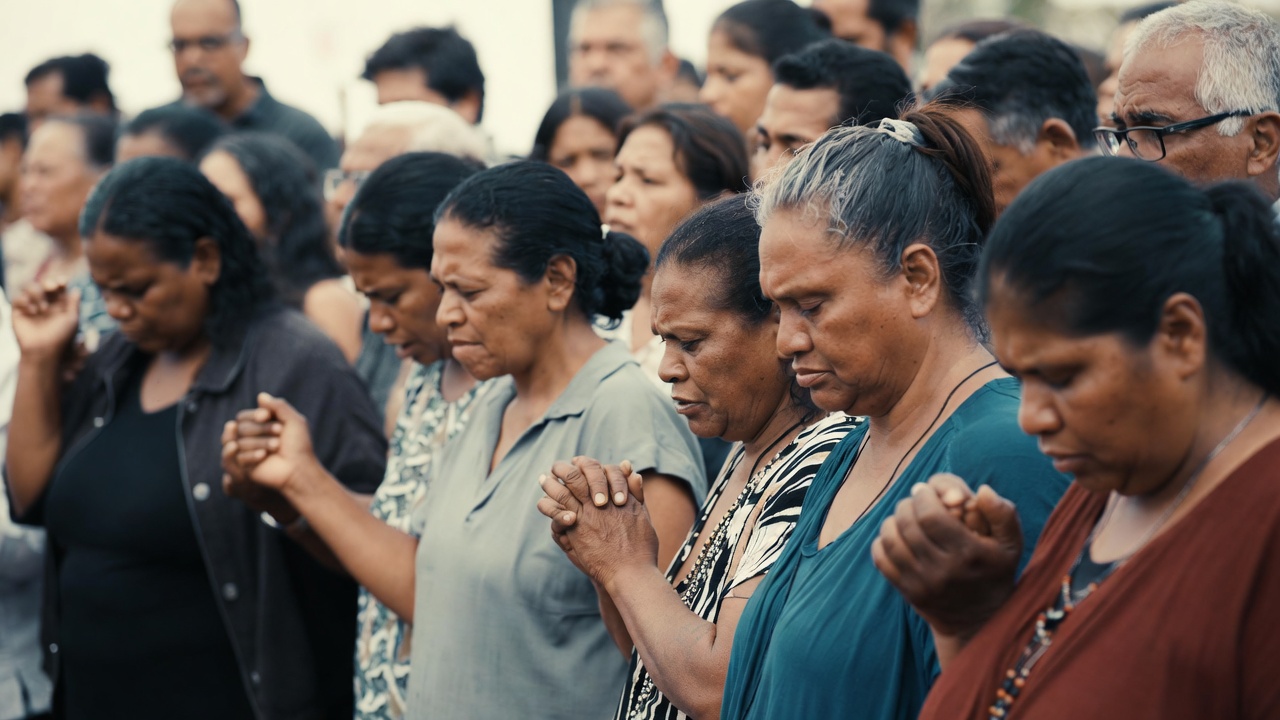
Every year on 26 May, Australians pause to remember one of the most painful chapters in their nation’s history. National Sorry Day is not a public holiday. There are no fireworks or feasts. Instead, it is a day of quiet reckoning — a day when an entire country sits with the truth of what was done to its First Peoples.
What Is National Sorry Day in Australia and Why Does It Matter?
National Sorry Day — officially known as the National Day of Healing since 2005 — is an annual observance held across Australia on 26 May. It is a day to acknowledge the suffering of the Stolen Generations: Aboriginal and Torres Strait Islander children who were forcibly removed from their families by government agencies and church missions between the mid-1800s and the 1970s.
The day is not just about looking back. It is about listening to survivors, honouring their strength, and reflecting on what all Australians can do to support the ongoing healing process. For non-Indigenous Australians, it is a chance to learn. For survivors and their descendants, it is a moment of recognition that carries deep emotional weight.
In 2026, National Sorry Day falls on Tuesday, 26 May. It also marks the beginning of National Reconciliation Week (27 May – 3 June), a broader period dedicated to strengthening the relationship between Indigenous and non-Indigenous Australians.
The observance carries additional significance because 26 May is also the anniversary of the Uluru Statement from the Heart, the landmark declaration tabled in 2017 by over 250 Aboriginal and Torres Strait Islander leaders calling for Voice, Treaty, and Truth.
The History of the Stolen Generations: How Aboriginal Children Were Forcibly Removed
To understand National Sorry Day, you first need to understand who the Stolen Generations are — and the government policies that created them.
Race-Based Removal Policies
From the late 1800s through to the 1970s, Australian federal and state governments implemented a series of “assimilation” and “protection” policies that authorised the removal of Aboriginal and Torres Strait Islander children from their families. The stated aim was to absorb Indigenous children into white Australian society. In practice, it meant tearing families apart on the basis of race.
Children were taken from their mothers, often by force. They were placed in government-run institutions, church-run missions, or non-Indigenous foster families. Many were forbidden from speaking their languages, practising their cultural traditions, or even knowing their birth names. Siblings were frequently separated. Some children were told their parents were dead when they were not.
These policies were not isolated incidents carried out by rogue officials. They were systematic and legally sanctioned. As the Healing Foundation explains, the Stolen Generations are Aboriginal and Torres Strait Islander people who were forcibly removed as children through race-based policies established by both state and federal governments from 1910 to the 1970s.
The Scale of Removal
Estimates of the exact number of children removed vary, but scholars and government reports suggest that between one in three and one in ten Indigenous children were taken from their families during the peak decades of removal. Entire communities lost a generation of children. The trauma rippled outward — affecting parents, grandparents, aunts, uncles, and future generations who grew up without their culture, their language, or their kin.
The Long Shadow of Assimilation
The effects of forced removal did not end when the policies were officially discontinued. Many survivors spent their lives searching for family members. Others struggled with profound grief, identity loss, and the psychological scars of institutional abuse. The trauma was not contained to one generation. Research by the Australian Institute of Health and Welfare (AIHW) has shown that Stolen Generations survivors are more likely to experience poorer health, higher rates of disability, and worse economic outcomes than other Indigenous Australians of the same age. Their children and grandchildren also face measurable disadvantage — a phenomenon researchers call intergenerational trauma.
The Bringing Them Home Report: How Truth-Telling Began in Australia
The story of National Sorry Day starts with a single, groundbreaking document.
What Was the Bringing Them Home Report?
In 1995, the Australian government established a National Inquiry into the Separation of Aboriginal and Torres Strait Islander Children from Their Families, conducted by the Human Rights and Equal Opportunity Commission (now the Australian Human Rights Commission). The inquiry was led by Sir Ronald Wilson, then president of the commission, and Mick Dodson, the Aboriginal and Torres Strait Islander Social Justice Commissioner.
Over two years, the inquiry gathered testimony from more than 500 Aboriginal and Torres Strait Islander people who had been forcibly removed from their families. Many had never told their stories before. Their accounts were harrowing — stories of children ripped from their mothers’ arms, of abuse in institutions, of identities erased.
The resulting report, titled Bringing Them Home, was tabled in the Australian Parliament on 26 May 1997. It remains one of the most significant documents in Australian social history.
What Did the Report Recommend?
The Bringing Them Home report made 54 recommendations across a wide range of areas. These included:
| Category | Key Recommendations |
|---|---|
| Formal Apologies | A national apology from the federal government, as well as apologies from state and territory governments, police, and churches |
| Reparations | Financial compensation and support for survivors |
| Reunion Services | Funding for family tracing and reunion programs |
| Health & Wellbeing | Dedicated mental health and healing services for survivors and their families |
| Records Access | Improved access to personal and family records |
| Education | Inclusion of Stolen Generations history in school curricula |
| Monitoring | Establishment of a national mechanism to track implementation |
The report provided what the Healing Foundation describes as “a basis for genuine reconciliation, and for addressing issues of identity, trust and the experience of racism.”
How Many Recommendations Have Been Implemented?
This is where the story takes a deeply troubling turn.
In February 2025, the Healing Foundation released a landmark follow-up report titled “Are You Waiting for Us to Die?”: The Unfinished Business of Bringing Them Home. Drawing on commissioned research from the University of Canberra, the report found that nearly three decades after the original recommendations were made, the progress has been woefully inadequate.
Here are the findings:
| Implementation Status | Number of Recommendations | Percentage |
|---|---|---|
| Clearly implemented | 5 | 6% |
| Qualified pass | 11 | 13% |
| Partial failure | 10 | 12% |
| Not implemented | 45 | 54% |
| Unclear | 10 | 12% |
| No longer applicable | 1 | 1% |
Only 6% of the 83 recommendations have been clearly implemented. More than half — 54% — have not been implemented at all.
As the Healing Foundation’s CEO Shannan Dodson, a Yawuru woman, stated: “We have already lost too many survivors, even in the last few weeks. Immediate and prioritised action is needed.”
The report’s title — Are You Waiting for Us to Die? — is not a rhetorical question. It reflects a real and urgent fear among ageing survivors that they will pass away before seeing justice.
The First National Sorry Day: How May 26 Became a Day of Healing
The first National Sorry Day was held on 26 May 1998 — exactly one year after the Bringing Them Home report was tabled. It was organised by a coalition of Australian community groups, driven in large part by the efforts of the National Sorry Day Committee.
Sorry Books and Public Acts of Solidarity
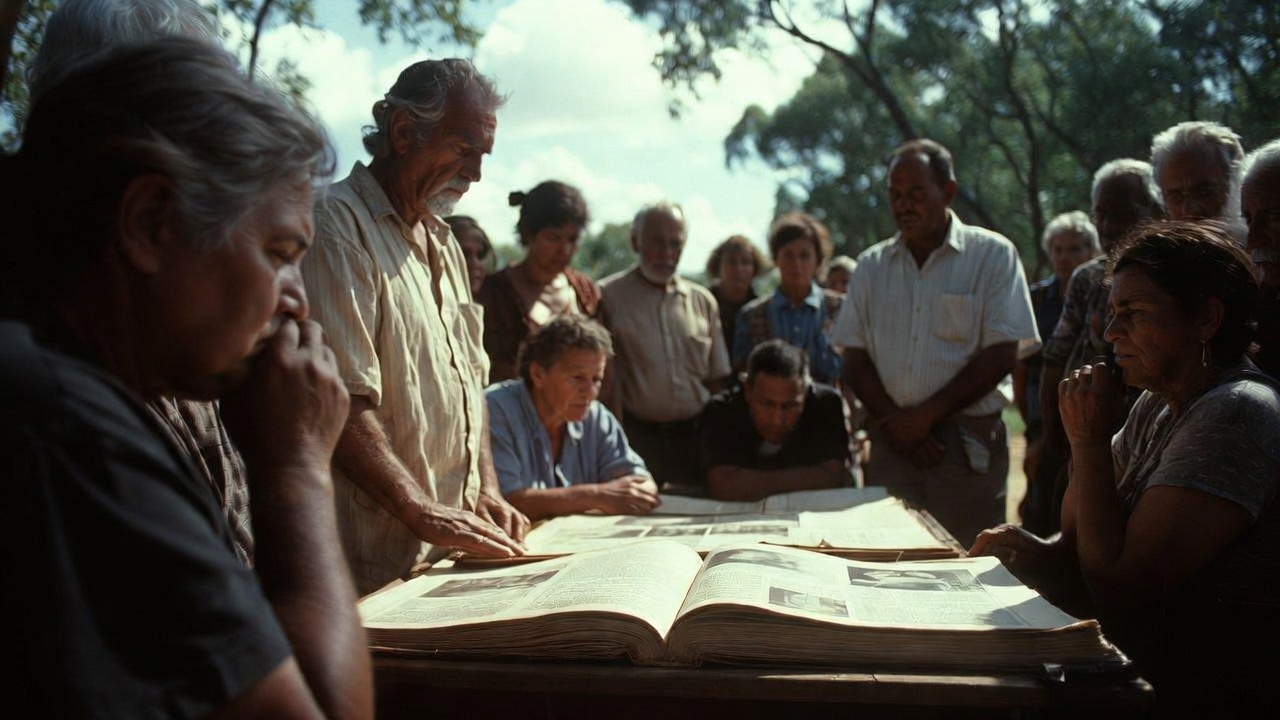
In the months following the release of the report, thousands of Australians signed “sorry books” — handwritten messages expressing regret and support for reconciliation. These books became a powerful symbol of grassroots empathy. They showed that ordinary Australians, regardless of background, wanted to acknowledge the hurt that had been done.
The first Sorry Day featured ceremonies, speeches by Indigenous Elders, and community gatherings. Among those who performed at the 1998 commemoration was “Uncle Bob” Randall, a Yankunytjatjara Elder and acclaimed musician, alongside his daughter Dorothea.
The Sydney Harbour Bridge Walk of 2000
One of the most iconic moments in Australia’s reconciliation movement took place on 28 May 2000. More than 250,000 people — both Indigenous and non-Indigenous — walked across the Sydney Harbour Bridge in a massive demonstration of support for reconciliation. The walk was organised by the Council for Aboriginal Reconciliation and remains one of the largest public gatherings in Australian history.
The image of hundreds of thousands of Australians walking together, the Aboriginal flag and Australian flag flying side by side, became a defining visual of the reconciliation movement.
From Sorry Day to National Day of Healing
In 2005, the National Sorry Day Committee renamed the observance the National Day of Healing. The motion was tabled in Parliament by Senator Aden Ridgeway, a Gumbaynggirr man who was the second Aboriginal person to serve in the Australian Senate. In his words, the day would “focus on the healing needed throughout Australian society if we are to achieve reconciliation.”
Despite the official name change, many Australians continue to use the term “National Sorry Day.” Both names are widely accepted.
Kevin Rudd’s National Apology to the Stolen Generations in 2008
For more than a decade after the Bringing Them Home report, the Australian federal government refused to issue a formal apology to the Stolen Generations. This refusal became one of the most divisive issues in Australian public life.
The Howard Government’s Refusal to Apologise
Prime Minister John Howard, who was in office when the report was released, declined to offer a formal apology. In 1999, his government passed a Motion of Reconciliation expressing “deep and sincere regret” — but it stopped short of accepting responsibility. Howard’s administration argued that the current government should not be held accountable for the actions of past governments, and that a formal apology could expose the government to compensation claims.
For many Indigenous Australians and reconciliation advocates, this position was deeply hurtful. The refusal to say “sorry” felt like a continuation of the silence and denial that had characterised government policy for generations.
The 2008 National Apology
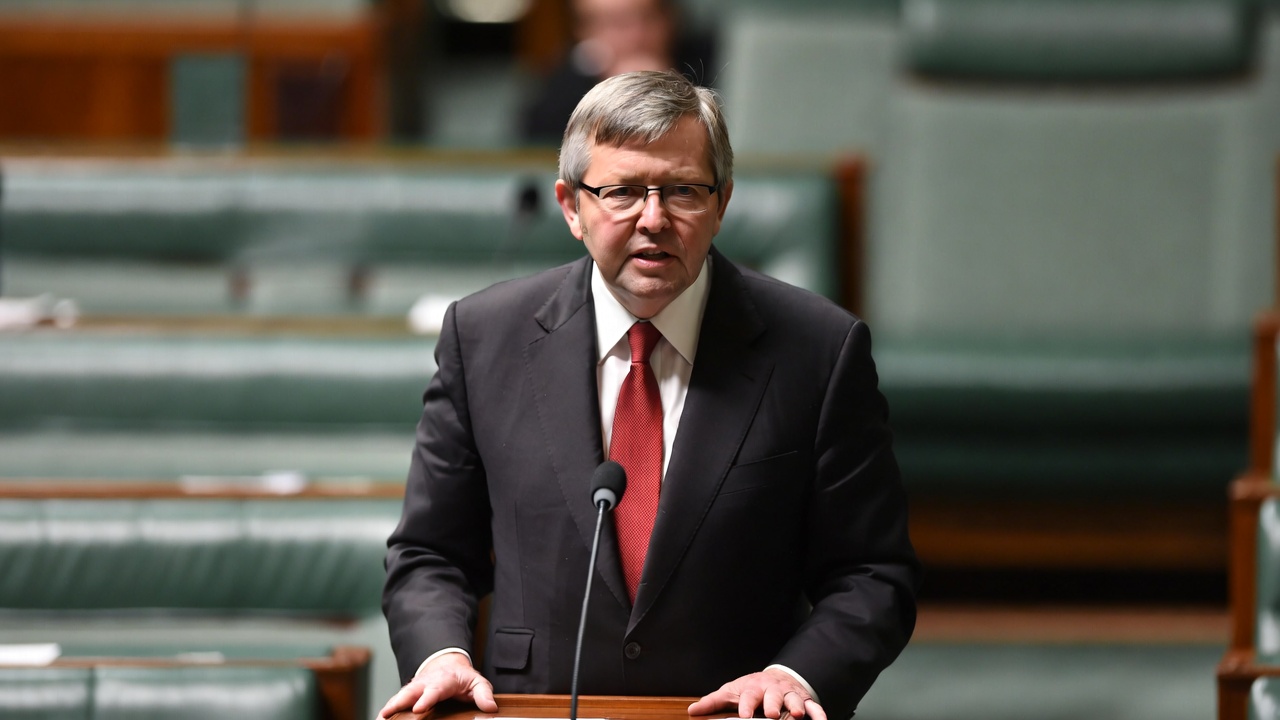
When Kevin Rudd became Prime Minister following the 2007 federal election, he made the apology a priority. On 13 February 2008, Rudd stood in the Australian Parliament and delivered a formal apology to the Stolen Generations on behalf of the Australian government.
The speech was broadcast live across the nation. Public screenings were set up in parks, town halls, and community centres. In Canberra, thousands gathered outside Parliament House. Across the country, people wept openly — survivors, their families, and non-Indigenous Australians alike.
Rudd’s words included a direct acknowledgement of the harm done:
“We apologise for the laws and policies of successive parliaments and governments that have inflicted profound grief, suffering and loss on these our fellow Australians.”
The apology was a watershed moment. It was the first time an Australian Prime Minister had formally acknowledged the government’s role in the forced removal of Indigenous children and directly apologised for it.
What Happened After the Apology?
The national apology gave rise to renewed momentum for reconciliation. Rudd’s government adopted the goals of the Closing the Gap framework, which set specific targets to reduce disparities between Indigenous and non-Indigenous Australians in areas such as life expectancy, education, employment, and child mortality.
However, many advocates were disappointed that the apology was not accompanied by a national reparation scheme or a comprehensive plan to implement the Bringing Them Home recommendations. In the years since, criticism has intensified.
Since the 2008 apology, Stolen Generations survivors have testified at more than 20 inquiries, including royal commissions examining institutional child sexual abuse, aged care, and disability.
How Is National Sorry Day Observed Across Australia in 2026?
National Sorry Day is observed in communities across every state and territory. While it is not a public holiday — businesses remain open and schools operate as usual — the day is marked by a wide range of events and activities.
Common National Sorry Day Events and Activities
- Reconciliation walks and street marches — community members walk together as a symbol of unity and shared commitment to healing
- Sorry Day flag-raising ceremonies — the Aboriginal flag and Torres Strait Islander flag are raised in civic spaces, schools, and workplaces
- Morning teas and community lunches — gatherings where people share food, stories, and conversation
- Speeches by Indigenous Elders and community leaders — survivors and community figures speak about their experiences and their hopes for the future
- Sorry books and pledge signing — people write messages of support and commitment to reconciliation
- School programs — students participate in essay competitions, film screenings, and educational workshops about the Stolen Generations
- Art exhibitions and cultural performances — showcasing Indigenous art, music, and storytelling
- Candle-lighting ceremonies — honouring those who were taken and those who did not survive
The Aboriginal and Torres Strait Islander Flags
Two flags hold special significance on National Sorry Day.
The Aboriginal flag, designed by Harold Thomas and first flown on 12 July 1971 at Victoria Square in Adelaide, features a black top half (representing Aboriginal people), a red bottom half (representing the earth and ochre used in ceremonies), and a yellow circle (representing the sun).
The Torres Strait Islander flag represents the unity and identity of Torres Strait Islander peoples. It features green and blue horizontal stripes separated by thin black lines, with a white dhari (a traditional headdress) and a five-pointed star at its centre.
Both flags are widely displayed on Sorry Day, symbolising remembrance, resilience, and the aspiration for reconciliation.
The Uluru Statement from the Heart and Its Connection to National Sorry Day
National Sorry Day and the Uluru Statement from the Heart share more than a date. They share a purpose: confronting Australia’s colonial history and building a more just future.
What Is the Uluru Statement from the Heart?
The Uluru Statement was issued on 26 May 2017 — the 20th anniversary of the Bringing Them Home report. It emerged from a series of regional dialogues and consultations with Aboriginal and Torres Strait Islander communities across Australia, culminating in a gathering of over 250 First Nations leaders at Uluru in the Northern Territory.
The Statement called for three forms of structural reform:
- Voice — a constitutionally enshrined representative body to advise Parliament on matters affecting Indigenous peoples
- Treaty (Makarrata) — a process of agreement-making between Indigenous peoples and the Australian state
- Truth — a formal truth-telling process about Australia’s colonial history and its ongoing impacts
The 2023 Voice Referendum and Its Aftermath
On 14 October 2023, Australians voted on a referendum to establish a First Nations Voice to Parliament — the first element of the Uluru Statement. The proposed constitutional amendment was rejected by 60% of voters, with only the Australian Capital Territory recording a majority “Yes” vote.
The result was devastating for many Indigenous Australians. In a statement released after the vote, leaders who had supported the Voice called for a “Week of Silence” to grieve the outcome. They lowered Aboriginal and Torres Strait Islander flags to half-mast.
The referendum’s failure did not end the conversation. But it did change its trajectory. In 2025, Prime Minister Anthony Albanese indicated his government would go in “another direction” and focus on “economic empowerment” rather than pursuing the Treaty and Truth-telling elements of the Uluru Statement.
Why Truth-Telling Remains Essential
Despite the political setback, grassroots truth-telling efforts have continued. In May 2025, the Uluru Dialogue — the academic and advocacy group that helped create the Statement — launched a truth-telling project called “Towards Truth”, beginning with an exhibition at Hurstville Library in Sydney that illustrated the significance of Salt Pan Creek in Aboriginal history.
For advocates of reconciliation, truth-telling is not optional. It is the foundation on which everything else — apology, healing, justice — must be built. National Sorry Day is, at its core, a truth-telling exercise. Every speech by a survivor, every story shared in a classroom, every flag raised in a civic square is an act of truth.
The Ongoing Crisis: Why Aboriginal Children Are Still Being Removed from Their Families
One of the most confronting aspects of National Sorry Day is the reality that the forced removal of Aboriginal children has not stopped. It has changed in form — but not in outcome.
Out-of-Home Care Statistics in 2024–2025
Data from the Australian Institute of Health and Welfare (AIHW) tells a stark story:
| Indicator | Statistic |
|---|---|
| Indigenous children in out-of-home care (June 2024) | ~25,000 |
| Rate of Indigenous children in care vs. non-Indigenous | Nearly 10 times higher |
| Growth in Indigenous children in care since 2008 | Approximately doubled (from ~9,070 to ~25,000) |
| Reunification rate for Indigenous children | Only 7.3% (compared to 10.1% for non-Indigenous children) |
| Indigenous infants in care compared to non-Indigenous | 8.9 times more likely |
These figures are not improving. The Closing the Gap Target 12 — which aims for a 45% reduction in the over-representation of Indigenous children in out-of-home care by 2031 — is not on track to be met.
Systemic Factors Driving Removal
The over-representation of Aboriginal and Torres Strait Islander children in the child protection system is driven by several interrelated factors:
- Intergenerational trauma from colonisation and forced removal
- Systemic racism within child protection agencies
- Inequality across social determinants — housing, health, education, income
- Under-investment in family support — a 2025 SNAICC Family Matters report found that only about 6% of total child protection spending goes to family support services
- Poverty and housing instability — a 2025 Human Rights Watch investigation documented how Western Australian authorities removed children from Aboriginal mothers fleeing domestic violence rather than providing appropriate support
A Western Australian coroner’s finding in June 2024 concluded that the state’s child protection system was plagued by systemic racism, following the death of a 17-year-old Wemba Wemba girl whose repeated requests to reconnect with her culture had been ignored.
The Parallel to the Stolen Generations
Sorry Day protesters and advocacy groups argue that the current system represents a continuation of the Stolen Generations by other means. While the language has changed — from “assimilation” to “child protection” — the outcome for many families is the same: children separated from their parents, their communities, and their culture.
As the Healing Foundation has stated, there is a direct link between out-of-home care, involvement in the juvenile justice system, and the over-incarceration of Aboriginal adults. The cycle continues.
Closing the Gap: Australia’s Framework for Indigenous Equality
Any discussion of National Sorry Day leads inevitably to the question of what Australia is doing to address the systemic disadvantage faced by Aboriginal and Torres Strait Islander peoples. The answer, in large part, is the Closing the Gap framework.
What Is Closing the Gap?
Closing the Gap is a strategy launched in 2008 by Australian federal, state, and territory governments. Its aim is to reduce disparities between Indigenous and non-Indigenous Australians across key targets including life expectancy, child mortality, early childhood education, school attendance, literacy, employment, and incarceration.
The framework was significantly revised in 2020 with the signing of a new National Agreement on Closing the Gap. This agreement, signed jointly by all Australian governments and the Coalition of Peaks (a body representing over 80 Aboriginal and Torres Strait Islander community-controlled organisations), introduced 19 socio-economic targets and, critically, a new emphasis on shared decision-making and Indigenous-led solutions.
How Is Closing the Gap Progressing in 2025–2026?
The results are mixed — and in some areas, deeply concerning.
The Productivity Commission’s July 2025 Annual Data Compilation Report found that of the 19 national targets, only 4 are on track to be met. While 10 out of 15 targets with available data show some improvement, progress is too slow in most areas, and outcomes are worsening in several critical domains:
| Area | Status |
|---|---|
| Adult incarceration | Worsening |
| Children in out-of-home care | Worsening |
| Suicide | Worsening |
| Youth detention | No change from baseline; worsening since 2022 |
| Preschool enrolment | On track |
| Land and sea rights | On track |
Commissioner Selwyn Button noted that “outcomes can’t easily be reduced to a number” and stressed that results reflect “the limited progress of governments in collectively acting on the Priority Reforms.”
Stolen Generations and the “Gap Within the Gap”
The Healing Foundation has long argued that Stolen Generations survivors represent a “gap within the gap” — a population whose outcomes are worse than those of other Indigenous Australians due to the specific trauma of forced removal. In its 2025 election statement, the Foundation called on the re-elected Albanese Government to urgently enact a National Healing Package that would address:
- Equitable redress for survivors in all states and territories (Queensland still has no redress scheme)
- Culturally safe aged care — most survivors are now aged 50 or older and face complex health needs
- Access to personal and family records — many survivors still cannot obtain their own records
- Sustained funding for Stolen Generations organisations, many of which are volunteer-run or rely on short-term project funding
The 2025 Closing the Gap Independent Review, conducted by the Jumbunna Institute, recommended stronger recognition of Stolen Generations survivors within the National Agreement framework — a step that had been missing for the first 17 years of Closing the Gap’s existence.
National Reconciliation Week: How Sorry Day Connects to a Broader Movement
National Sorry Day does not stand alone. It is the opening act of National Reconciliation Week (NRW), which runs from 27 May to 3 June each year.
The Significance of the Dates
The dates of Reconciliation Week mark two pivotal moments in Australian history:
- 27 May — the anniversary of the 1967 referendum, in which more than 90% of Australians voted to amend the Constitution to allow Aboriginal and Torres Strait Islander peoples to be counted in the national census and to enable the federal government to make laws for them
- 3 June — the anniversary of the 1992 High Court Mabo decision, which recognised that Aboriginal and Torres Strait Islander peoples had a form of native title to their lands. The ruling overturned the legal fiction of terra nullius — the idea that Australia was “nobody’s land” before British colonisation
How Reconciliation Week Is Observed
During NRW, workplaces, schools, and community organisations across Australia participate in activities designed to foster understanding between Indigenous and non-Indigenous Australians. These include:
- Reconciliation walks and community events
- Workplace morning teas with invited Indigenous speakers
- Educational workshops on Aboriginal and Torres Strait Islander history and culture
- Film screenings and reading groups focused on Indigenous stories
- Reconciliation Action Plan (RAP) reviews and launches
Reconciliation Australia, the national body promoting reconciliation, coordinates much of NRW’s programming. Many organisations use the week to review and strengthen their Reconciliation Action Plans — formal commitments to advancing reconciliation through practical actions.
How to Participate in National Sorry Day: A Guide for Australians and Visitors
Whether you live in Australia or are visiting during late May, there are meaningful ways to engage with National Sorry Day.
Attend a Local Event
Community organisations, councils, schools, and cultural centres host Sorry Day events across the country. Check local council websites or the Reconciliation Australia website for listings. Events may include flag-raising ceremonies, community walks, storytelling sessions, and morning teas.
Learn About the Stolen Generations
Education is one of the most powerful acts of reconciliation. Consider:
- Reading the Bringing Them Home report (available online through the Australian Human Rights Commission)
- Watching documentaries such as Rabbit-Proof Fence (2002) or Lousy Little Sixpence (1983)
- Reading books by Stolen Generations survivors, such as Follow the Rabbit-Proof Fence by Doris Pilkington Garimara or Uncle Bob’s Red Flannel Shirt by Bob Randall
- Visiting the National Museum of Australia in Canberra, which has permanent exhibitions on the Stolen Generations
Support Indigenous-Led Organisations
Organisations such as the Healing Foundation, SNAICC — National Voice for Our Children, ANTaR (Australians for Native Title and Reconciliation), and Reconciliation Australia do vital work year-round. Donations, volunteering, and sharing their resources on social media are all ways to show support.
Reflect and Listen
Perhaps the most important thing any person can do on Sorry Day is to listen. Listen to survivors’ stories. Listen to Indigenous Elders. Sit with the discomfort that truth-telling can bring. Healing cannot begin without honesty — and honesty requires a willingness to hear difficult truths.
The Role of Truth-Telling in National Healing and Reconciliation
At its heart, National Sorry Day is about truth. Not the sanitised version of Australian history that was taught in schools for generations, but the full, uncomfortable, necessary truth about what happened to Aboriginal and Torres Strait Islander peoples.
Why Truth-Telling Is the Foundation of Reconciliation
Reconciliation cannot be built on denial. Around the world, societies that have confronted historical injustices — from South Africa’s Truth and Reconciliation Commission to Canada’s Truth and Reconciliation Commission on residential schools — have recognised that truth must come before healing.
In Australia, truth-telling means:
- Acknowledging that the land was taken without consent
- Recognising that government policies deliberately targeted Indigenous families for destruction
- Understanding that the effects of those policies are not “historical” — they are alive in the data, in the health outcomes, in the child protection statistics, and in the daily lives of Aboriginal and Torres Strait Islander peoples today
- Accepting that the work of repair is far from done
The Political Landscape of Truth-Telling in 2026
Following the defeat of the Voice referendum in 2023, the political landscape for truth-telling and treaty in Australia has shifted. Several state and territory governments have withdrawn or paused treaty processes. Support for truth-telling commissions has declined in public polling, with one November 2023 survey finding support for a truth-telling commission at just 35%.
Yet the need for truth-telling has not diminished. If anything, the referendum result — and the misinformation, racism, and division that surrounded it — has underscored how much work remains to be done.
Grassroots truth-telling continues. The Uluru Dialogue’s “Towards Truth” project, launched in May 2025, is working to build public understanding of First Nations history from the ground up. State-level truth-telling initiatives, such as the Yoorrook Justice Commission in Victoria (Australia’s first formal truth-telling process into injustices against Aboriginal peoples), are producing detailed findings and recommendations.
Sorry Day as an Annual Act of Truth
National Sorry Day is, in a sense, Australia’s annual truth-telling exercise. It is a day when the nation is invited to remember what happened, to hear from those who lived it, and to recommit to the work of repair.
It is not a day of blame. It is not a day of guilt. It is a day of honesty — and from that honesty, the possibility of genuine healing.
What Does Healing Look Like for Stolen Generations Survivors in 2026?
For the Stolen Generations, healing is not an abstract concept. It is deeply personal and urgently practical.
The Ageing Crisis
Most Stolen Generations survivors are now aged 50 or older. Many are in their 70s, 80s, and 90s. They are entering — or have long since entered — the age at which they need aged care services. But the aged care system, as the Healing Foundation has documented, often re-triggers the trauma of institutionalisation for people who spent their childhoods in government-run homes.
The Healing Foundation’s 2025 report found that survivors face an aged care system that is frequently:
- Culturally unsafe — lacking staff who understand the specific trauma of forced removal
- Unaffordable — many survivors were denied opportunities for wealth creation and cannot afford co-contributions
- Re-traumatising — institutional settings can mirror the environments in which survivors were abused as children
What Survivors Are Calling For
Through the Healing Foundation’s Stolen Generations Reference Group and years of consultation with survivors and their organisations, a clear set of priorities has emerged:
- A National Healing Package funded by federal, state, and territory governments
- Equitable redress schemes in all jurisdictions — particularly Queensland, which still has not introduced one
- Culturally safe, trauma-informed aged care with mandatory cultural safety training for providers
- Unrestricted access to personal and family records held by government agencies, churches, and other institutions
- Sustained, long-term funding for Stolen Generations organisations — not short-term project grants
- Recognition within the Closing the Gap framework so that survivor-specific data can be collected and tracked
As Healing Foundation Chair Professor Steve Larkin has stated: “Time is of the essence: survivors are dying, many without seeing justice for themselves or their children.”
National Sorry Day Around the World: How Australia Compares to Other Countries
Australia is not the only country grappling with the legacy of forced child removal from Indigenous communities. Similar histories exist in Canada, the United States, New Zealand, and Scandinavian countries with Indigenous populations.
Canada’s National Day for Truth and Reconciliation
Canada established its National Day for Truth and Reconciliation on 30 September, beginning in 2021. Like Australia’s Sorry Day, it commemorates children who were forcibly placed in residential schools — a system that operated from the 1870s to the 1990s. Canada’s Truth and Reconciliation Commission (2008–2015) made 94 Calls to Action, many of which remain unimplemented.
Lessons and Differences
| Element | Australia | Canada |
|---|---|---|
| Name of observance | National Sorry Day / National Day of Healing | National Day for Truth and Reconciliation |
| Date | 26 May | 30 September |
| Status | Not a public holiday | Federal statutory holiday (since 2021) |
| Formal government apology | 2008 (Rudd) | 2008 (Harper) |
| Truth commission | No national commission (state-level in Victoria) | National Truth and Reconciliation Commission (2008–2015) |
| Constitutional recognition | Rejected at referendum (2023) | Section 35 recognises Aboriginal and treaty rights |
A key difference is that Canada’s day is a statutory holiday for federal employees and federally regulated workplaces. Australia’s Sorry Day remains a voluntary observance. Advocates have periodically called for it to be made a public holiday, arguing that this would give the day greater visibility and ensure more Australians have the opportunity to participate.
Frequently Asked Questions About National Sorry Day in Australia
When is National Sorry Day 2026?
National Sorry Day 2026 is on Tuesday, 26 May 2026.
Is National Sorry Day a public holiday in Australia?
No. National Sorry Day is not a public holiday. Businesses, schools, and government offices operate as normal. However, many workplaces and schools hold commemorative events.
What is the difference between National Sorry Day and National Apology Day?
National Sorry Day (26 May) marks the anniversary of the tabling of the Bringing Them Home report in 1997. National Apology Day (13 February) marks the anniversary of Prime Minister Kevin Rudd’s formal apology to the Stolen Generations in 2008. Both days honour the Stolen Generations but commemorate different milestones.
What is the difference between National Sorry Day and National Reconciliation Week?
National Sorry Day (26 May) is a separate observance that directly precedes National Reconciliation Week (27 May – 3 June). Sorry Day focuses specifically on the Stolen Generations. Reconciliation Week has a broader focus on strengthening relationships between all Indigenous and non-Indigenous Australians.
Who are the Stolen Generations?
The Stolen Generations are Aboriginal and Torres Strait Islander people who were forcibly removed from their families as children under government assimilation and “protection” policies from the mid-1800s through to the 1970s.
Can non-Indigenous Australians participate in National Sorry Day?
Yes. National Sorry Day is for all Australians. Non-Indigenous people are encouraged to attend events, learn about the Stolen Generations, listen to survivors, and reflect on the role they can play in reconciliation.
Looking Forward: The Future of National Sorry Day and Reconciliation in Australia
As 2026 unfolds, National Sorry Day stands at a crossroads. The rejection of the Voice referendum, the slow progress on Closing the Gap, and the rapid ageing and passing of Stolen Generations survivors all create a sense of urgency.
But there are also reasons for cautious hope.
Community-led solutions are working. The 2025 Close the Gap Campaign report highlighted case studies where First Nations leadership and community-controlled approaches delivered real gains in health, education, and wellbeing. Aboriginal Community Controlled Organisations (ACCOs) continue to demonstrate that when Indigenous people lead the design and delivery of services, outcomes improve.
State-level truth-telling is progressing. Victoria’s Yoorrook Justice Commission is producing significant findings. New South Wales has committed $5 million to a treaty consultation process. The Uluru Dialogue’s grassroots “Towards Truth” project is building community-level engagement with First Nations history.
Young Indigenous leaders are stepping up. Spokespeople for the Uluru Dialogue, such as Allira Davis and Bridget Cama, have spoken publicly about the determination of a new generation to continue the work of structural reform. The Uluru Statement, they insist, is “still intact.”
National Sorry Day will continue to be observed on 26 May 2026 and beyond — because the truth it holds has not yet been fully heard, and the healing it calls for has not yet been achieved.
The day asks a simple but profound question of every Australian: Are you willing to listen?
Key Resources for National Sorry Day 2026
For those who want to deepen their understanding of National Sorry Day, the Stolen Generations, and reconciliation in Australia, the following resources are essential:
| Resource | Organisation | Link |
|---|---|---|
| Healing Foundation – National Sorry Day | The Healing Foundation | healingfoundation.org.au |
| “Are You Waiting for Us to Die?” Report | The Healing Foundation | Report page |
| Bringing Them Home Report | Australian Human Rights Commission | humanrights.gov.au |
| Closing the Gap Dashboard | Productivity Commission | pc.gov.au |
| Reconciliation Australia | Reconciliation Australia | reconciliation.org.au |
| SNAICC – Family Matters Report | SNAICC | snaicc.org.au |
| Uluru Statement from the Heart | Uluru Dialogue | ulurustatement.org |
National Sorry Day reminds us that reconciliation is not a destination. It is a practice — renewed each year, each day, with every conversation that chooses truth over silence. On 26 May 2026, take a moment to listen. Take a moment to learn. And take a moment to consider what role you might play in the long, unfinished work of healing.