A Comprehensive Guide to Celebrating the Jewish New Year of Trees Through Eco-Conscious Living
The scent of almonds lingers in the Galilean air. Pomegranate seeds burst with crimson sweetness. Across the world, Jewish communities gather to celebrate Tu Bishvat—a holiday that has evolved from an ancient agricultural tax deadline into what many now call the original Earth Day.
Long before environmental movements captured global attention, Jewish wisdom embedded ecological consciousness into sacred tradition. Today, Tu Bishvat offers a powerful framework for sustainable living, rooted in the concept of Tikkun Olam—repairing the world.
What Is Tu Bishvat and Why Is It Called the Jewish Earth Day?
Tu Bishvat (ט״ו בִּשְׁבָט) falls on the 15th day of the Hebrew month of Shevat. The name derives from Hebrew numerology: “Tu” represents the letters Tet (9) and Vav (6), totaling 15. Known as Rosh HaShanah La’Ilanot—literally “New Year of the Trees”—this minor holiday appears in the Mishnah’s Tractate Rosh Hashanah as one of four new years in the Jewish calendar.
Originally, Tu Bishvat served practical purposes:
- Calculating the age of fruit trees for agricultural laws
- Determining tithe obligations for farmers
- Establishing when orlah restrictions end (the prohibition against eating fruit from trees under three years old)
The holiday’s transformation began in the 16th century when Kabbalists in Safed created the Tu Bishvat Seder. This mystical ritual reimagined the day as an opportunity for spiritual repair through mindful eating and blessing.
| Tu Bishvat 2025-2028 Dates | Begins (Evening) | Ends (Evening) |
|---|---|---|
| 2025 | February 12 | February 13 |
| 2026 | February 1 | February 2 |
| 2027 | February 20 | February 21 |
| 2028 | February 9 | February 10 |
In the 1980s, North American Jewish communities began treating Tu Bishvat as the Jewish equivalent of Earth Day. This wasn’t merely cultural borrowing. The holiday’s deep roots in land stewardship, gratitude for nature, and long-term thinking made it a natural anchor for environmental consciousness.
Understanding Tikkun Olam: The Jewish Concept of Repairing the World
Tikkun Olam (תיקון עולם) translates as “repair of the world.” According to Chabad.org, the concept encompasses any activity that improves the world, bringing it closer to the harmonious state for which it was created.
The principle emerges from several sources:
- Kabbalistic mysticism: The teaching that divine sparks became scattered throughout creation and require human action to reunite them
- The Aleinu prayer: Which includes the phrase le-taken olam be-malchut Shaddai (“to repair the world under the sovereignty of the Almighty”)
- Prophetic tradition: Emphasizing justice, compassion, and care for the vulnerable
Environmental Tikkun Olam extends this responsibility to the natural world. The American Academy of Arts and Sciences notes that Jewish environmental activists have successfully extended the ideal of Tikkun Olam to encompass protecting humans and other species from environmental degradation.
“When God created the first human, He took him and showed him all the trees of the Garden of Eden and said: ‘Look at My works, how beautiful and praiseworthy they are! And everything that I created, I created it for you. Pay attention that you do not spoil and destroy My world—for if you do, there will be no one after you to repair it.'”
— Kohelet Rabbah 7:13
This ancient Midrash reveals that environmental stewardship isn’t a modern addition to Jewish thought. It’s woven into the tradition’s foundational narratives.
Bal Tashchit: The Ancient Jewish Law Against Waste and Destruction
Perhaps no principle better illustrates Judaism’s environmental ethics than Bal Tashchit (בל תשחית)—”do not destroy.”
This commandment originates in Deuteronomy 20:19-20:
“When you besiege a city for many days… you shall not destroy its trees by wielding an ax against them, for you may eat from them, but you shall not cut them down. Is the tree of the field a person, to come before you in the siege?”
The Talmudic sages expanded this wartime prohibition into a comprehensive principle. According to My Jewish Learning, Maimonides codified the broader application:
“Whoever breaks vessels, tears clothing, destroys a building, stops fountains, or wastes food in a destructive manner, transgresses the commandment of Bal Tashchit.”
— Mishneh Torah, Laws of Kings 6:10
Modern Applications of Bal Tashchit
| Category | Traditional Application | Modern Sustainable Practice |
|---|---|---|
| Food | Not wasting edible produce | Meal planning, composting, reducing food waste |
| Energy | Not burning excess lamp oil | Energy-efficient appliances, solar power |
| Water | Not clogging wells | Fixing leaks, water conservation |
| Clothing | Not tearing garments needlessly | Sustainable fashion, mending, donating |
| Resources | Not destroying useful objects | Recycling, upcycling, reducing consumption |
According to Chabad’s guide on Bal Tashchit, even wasting electricity or overconsumption of any resource falls under this prohibition. The principle transforms everyday choices into sacred acts.
How to Celebrate Tu Bishvat With Sustainable Practices
The Tu Bishvat Seder: A Mystical Eco-Celebration
The Tu Bishvat Seder emerged from 16th-century Kabbalistic practice in Safed, Israel. Rabbi Yitzchak Luria and his disciples created a ceremony paralleling the Passover Seder. The ritual appears in the text Pri Etz Hadar (“Fruit of the Beautiful Tree”), published in 1753.
The Four Cups of Wine represent seasonal transitions and spiritual worlds:
| Cup | Wine Color | Season | Spiritual World (Olam) |
|---|---|---|---|
| 1st | White | Winter | Assiyah (Action/Physical) |
| 2nd | White with red | Early Spring | Yetzirah (Formation) |
| 3rd | Red with white | Late Spring | Beriah (Creation) |
| 4th | Red | Summer | Atzilut (Emanation/Spiritual) |
The Three Categories of Fruit symbolize different spiritual levels:
- Fruits with inedible shells (walnuts, pomegranates, coconuts): The protective exterior represents barriers we must break through to reach inner holiness
- Fruits with inedible pits (dates, olives, peaches): The edible exterior surrounds a seed of potential—future growth protected within
- Entirely edible fruits (figs, grapes, berries): Representing the highest spiritual level with no barrier between inside and outside
The Seven Species of Israel: Tu Bishvat Traditional Foods
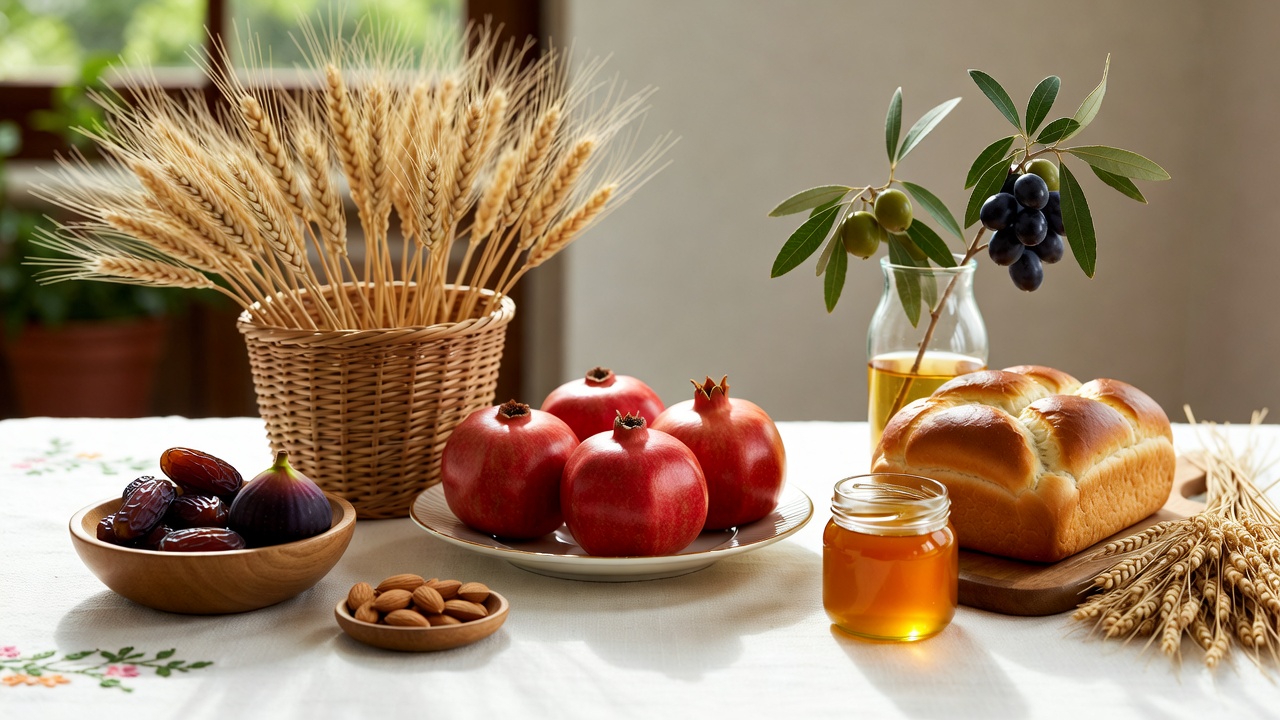
Deuteronomy 8:8 describes the Land of Israel through its bounty. These Shivat Haminim (Seven Species) form the centerpiece of Tu Bishvat celebrations:
| Species | Hebrew | Environmental Connection |
|---|---|---|
| Wheat | Chitah | Sustainable grain farming |
| Barley | Se’orah | Crop rotation, soil health |
| Grapes | Gefen | Vineyards as ecosystems |
| Figs | Te’enah | Pollinator support |
| Pomegranates | Rimon | Drought-resistant cultivation |
| Olives | Zayit | Ancient trees, carbon sequestration |
| Dates | Tamar | Desert agriculture, oasis ecosystems |
To celebrate sustainably, source locally grown or organic versions of these foods when possible. Consider:
- Organic Israeli dates from cooperatives
- Local honey as a substitute for date honey
- Wine from sustainable vineyards
- Seasonal fruits from farmers’ markets
Practical Tu Bishvat Environmental Activities for Families
Tu Bishvat offers meaningful opportunities for intergenerational environmental education. Here are evidence-based activities that combine Jewish tradition with ecological action:
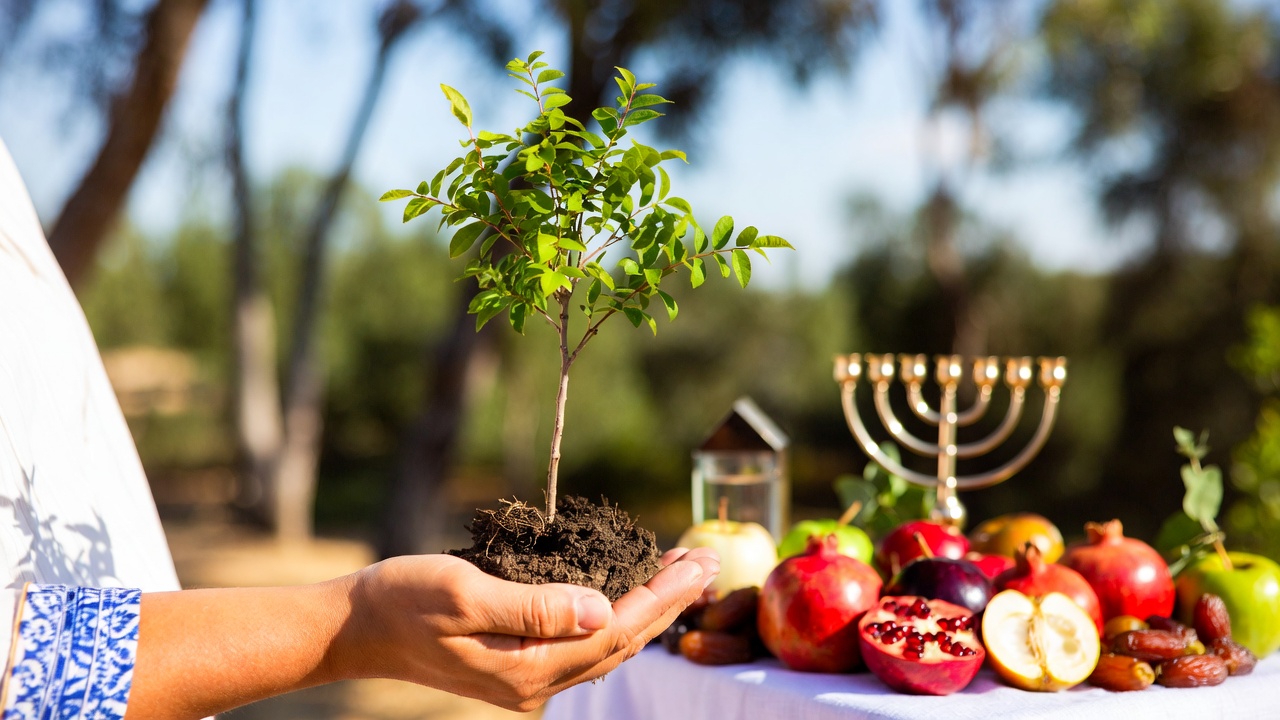
1. Plant Trees—Locally and in Israel
The Jewish National Fund (JNF) has planted over 265 million trees in Israel since its founding. You can participate by:
- Sponsoring a tree in Israel through JNF
- Planting native species in your yard or community
- Joining local reforestation projects
- Participating in JTree initiatives through organizations like Adamah
Pro tip: If winter weather prevents outdoor planting, start parsley seeds indoors. They’ll be ready for your Passover Seder plate by spring—connecting two holidays through growing cycles.
2. Host an Eco-Themed Tu Bishvat Seder
Transform the traditional Seder with environmental intention:
- Use reusable dishes and cloth napkins
- Serve organic, fair-trade wines
- Include readings about climate change and Jewish responsibility
- Discuss Bal Tashchit and personal commitments to reduce waste
- Calculate and offset the carbon footprint of your gathering
3. Conduct a Household Sustainability Audit
Tu Bishvat marks an excellent time for environmental self-reflection:
- Energy audit: Identify phantom loads, inefficient appliances
- Water usage review: Check for leaks, install low-flow fixtures
- Waste assessment: Track garbage for one week, identify reduction opportunities
- Food inventory: Reduce refrigerator waste, plan meals mindfully
4. Organize Community Environmental Action
- Neighborhood cleanup of parks and waterways
- Electronic recycling drive at your synagogue
- Community garden planting (even indoor herb gardens work)
- Documentary screening followed by action planning
Jewish Environmental Organizations Leading Sustainable Change
The Jewish environmental movement has grown substantially since the 1970s. Here are key organizations advancing eco-Judaism:
Adamah (formerly Hazon)
Adamah describes itself as the largest faith-based environmental organization in the United States. Founded in 2000, it operates programs including:
- Jewish Outdoor, Food, Farming & Environmental Education (JOFEE)
- Tuv Ha’Aretz Community Supported Agriculture networks
- Isabella Freedman Jewish Retreat Center
- The Seal of Sustainability for Jewish institutions
According to the Jewish Women’s Archive, the organization’s Jewish Greening Fellowship engaged 55 Jewish organizations in sustainability initiatives between 2009 and 2014.
Dayenu: A Jewish Call to Climate Action
Dayenu mobilizes Jewish communities specifically around climate change policy. The organization’s name—meaning “it would have been enough”—echoes the Passover song while emphasizing that enough is enough regarding climate inaction.
Coalition on the Environment and Jewish Life (COEJL)
COEJL brings together Jewish denominations for environmental advocacy. Their work spans:
- Environmental education curriculum development
- Policy advocacy in Washington, D.C.
- Community organizing for climate justice
Jewish Climate Leadership Coalition
This network connects over 500 congregations committed to climate action, demonstrating how religious communities can drive environmental change.
Torah Teachings on Environmental Stewardship and Sustainability
Jewish environmental ethics draw from multiple textual traditions:
Genesis 2:15 — The Mandate of Stewardship
“And the Lord God took the human and placed him in the Garden of Eden l’ovdah u’l’shomrah—to work it and to guard it.”
Rabbi Jonathan Sacks interpreted this passage as the definitive statement of human environmental responsibility. We are both workers (ovdim) and guardians (shomrim) of creation.
Shabbat as Environmental Practice
The weekly Sabbath models sustainable rest cycles:
- Cessation from production counters endless consumption
- Technology unplugging reduces energy use
- Walking instead of driving to synagogue
- Appreciation of creation without manipulation
Shmita — The Sabbatical Year
Every seven years, the Torah commands agricultural land to rest (Leviticus 25:1-7). This ancient practice:
- Restores soil fertility through fallow periods
- Releases debts, promoting economic sustainability
- Equalizes access to wild-growing produce
- Models long-term thinking over short-term profit
Modern applications include seven-year sustainability plans developed by organizations like the Heschel Center for Sustainability in Israel.
The Midrashic Warning
The passage from Kohelet Rabbah 7:13 remains urgently relevant:
“See to it that you do not spoil and destroy My world—for if you do, there will be no one after you to repair it.”
This text appears remarkably prescient about climate change. The rabbis understood that environmental destruction could reach a point of irreversibility.
Sustainable Habits Inspired by Jewish Tradition: A Year-Round Guide
Tu Bishvat consciousness shouldn’t end when the holiday concludes. Here’s how to integrate Jewish environmental ethics into daily life:
Daily Practices
| Time | Practice | Jewish Connection |
|---|---|---|
| Morning | Gratitude meditation for nature | Modeh Ani (morning blessing) |
| Meals | Mindful eating, reducing waste | Brachot (blessings), Bal Tashchit |
| Shopping | Ethical consumption choices | Oshek (honest dealings) |
| Evening | Energy conservation | Shabbat preparation mindset |
Weekly Commitments
- Meatless Monday: Reducing animal agriculture’s environmental impact aligns with tza’ar ba’alei chayim (preventing animal suffering)
- Shabbat unplugging: Natural energy conservation
- Farmers market visits: Supporting local agriculture
- Nature walks: Cultivating yirat Hashem (awe of the Divine) through creation
Seasonal Actions
| Jewish Season | Environmental Focus |
|---|---|
| Tishrei (Fall) | Harvest gratitude, food preservation |
| Kislev-Tevet (Winter) | Energy conservation, indoor gardening |
| Shevat (Tu Bishvat) | Tree planting, sustainability commitments |
| Nisan (Spring) | Garden preparation, cleaning without toxic chemicals |
| Iyar-Sivan (Late Spring) | Shavuot agricultural celebration, local eating |
| Tammuz-Av (Summer) | Water conservation, outdoor appreciation |
| Elul (Pre-High Holidays) | Environmental teshuvah (repentance/return) |
The Jewish Home as Eco-Sanctuary
Transform your living space into a model of sustainable Jewish living:
- Mezuzah placement reminder: Each doorway marks a threshold between sacred interior and outside world—both require protection
- Shabbat candles: Use beeswax or soy candles
- Kosher kitchen: Emphasize plant-based meals, ethical sourcing
- Tzedakah practice: Include environmental organizations in charitable giving
Climate Change and Jewish Responsibility: Why Tu Bishvat Matters Now
The climate crisis demands urgent response. Jewish tradition offers both ethical framework and communal infrastructure for action.
Scientific Consensus Meets Ancient Wisdom
According to the IPCC, limiting global warming requires rapid, far-reaching transitions in energy, land use, and infrastructure. Jewish environmental thought anticipates this need:
- Long-term thinking: The Talmudic story of Honi the Circle-Maker planting carob trees for future generations
- Collective responsibility: The concept that kol Yisrael arevim zeh bazeh (all Israel is responsible for one another) extends to future generations
- Prophetic urgency: Speaking truth to power about systemic failures
Concrete Jewish Climate Actions
- Synagogue solar installations: The Joan and Alan Bernikow JCC on Staten Island installed 312 solar panels, generating 125,578 kilowatts annually and reducing carbon footprint by 168,274 pounds per year, according to the Times of Israel.
- Divestment campaigns: Jewish institutional investors have joined movements to divest from fossil fuels, aligning portfolios with values.
- Advocacy networks: Organizations like Jewish Earth Alliance mobilize constituents for climate policy advocacy.
- Educational transformation: Day schools incorporating environmental curricula rooted in Jewish texts.
Conclusion: Planting Seeds for Future Generations
Tu Bishvat invites us to see the world through ancient eyes while acting with urgent modernity. When we plant a tree, we perform an act of faith—trusting that future generations will enjoy its shade and fruit.
The holiday teaches that environmental responsibility isn’t merely ethical. It’s sacred. Every sustainable choice becomes an act of Tikkun Olam, a repair of the broken world.
This Tu Bishvat, consider:
- What seeds are you planting—literally and metaphorically?
- How does Bal Tashchit challenge your consumption habits?
- What does stewardship (shmirah) mean in the climate crisis?
- How can your community organize for environmental change?
The almond trees are blooming in Israel—the first sign of approaching spring. Across hemispheres, Jewish communities will gather to eat fruit, drink wine, and remember their connection to the earth.
May this Tu Bishvat mark not just a celebration, but a commitment. May we truly become the guardians our traditions call us to be.
Chag Tu Bishvat Sameach! 🌳
Additional Resources for Jewish Environmental Learning
Books
- “The Way Into Judaism and the Environment” by Jeremy Benstein (Jewish Lights Publishing)
- “Torah of the Earth” edited by Arthur Waskow
- “Trees, Earth, and Torah: A Tu B’Shvat Anthology” (Jewish Publication Society)
Online Resources
Organizations
- Adamah — Jewish environmental leadership
- Dayenu — Jewish climate action
- Jewish National Fund — Tree planting in Israel