
What Is Tu Bishvat and Why Does It Matter for Modern Workplaces?
Tu Bishvat (also written as Tu BiShvat or Tu B’Shevat) is a minor Jewish holiday that carries major significance for anyone passionate about environmental stewardship and sustainability. The name comes from the Hebrew date—the 15th day of the month of Shevat. In 2026, Tu Bishvat begins at sundown on Sunday, February 1st and ends at sundown on Monday, February 2nd.
Known as the “New Year of the Trees” or Rosh HaShanah La’Ilanot, this ancient agricultural festival has transformed into what many call the Jewish Earth Day. Organizations like the Jewish National Fund have helped establish Tu Bishvat as a major tree-planting celebration, with over a million Israelis participating in planting activities each year.
For modern workplaces seeking meaningful ways to engage employees in sustainability initiatives, Tu Bishvat offers a perfect framework. The holiday’s core themes—honoring nature, planting for the future, and celebrating the earth’s bounty—align seamlessly with corporate environmental, social, and governance (ESG) goals.
Why Workplace Sustainability Celebrations Boost Employee Engagement
Before diving into specific Tu Bishvat celebration ideas, it’s essential to understand why sustainability-focused events matter for your team.
The Business Case for Green Workplace Initiatives
Recent research paints a compelling picture of why environmental programs deserve attention in corporate settings:
| Statistic | Source |
|---|---|
| Nearly 50% of companies cite lack of employee engagement as their biggest challenge in achieving sustainability goals | World Economic Forum |
| 69% of employees want their companies to invest in sustainability efforts | Deloitte Consumer Survey |
| 27% of job seekers consider a potential employer’s position on sustainability before accepting a job | Deloitte ConsumerSignals |
| U.S. employee engagement dropped to 31% in 2024—a 10-year low | Gallup |
| 88% of employees consider CSR factors when making job choices | Various industry research |
These numbers reveal a significant opportunity. Employees want purpose-driven work, and sustainability celebrations like Tu Bishvat provide exactly that. When team members feel their organization genuinely cares about environmental responsibility, engagement, loyalty, and job satisfaction naturally increase.
How Environmental Team Building Events Foster Corporate Culture
Tree planting and sustainability activities serve as powerful team-building catalysts. Unlike traditional corporate bonding exercises, environmental initiatives create:
- Shared purpose beyond profit metrics
- Tangible outcomes that employees can see and touch
- Cross-departmental collaboration on meaningful projects
- Lasting memories tied to positive environmental impact
- Pride in company values that extend into employees’ personal lives
As noted by workplace researchers, when people work together for social or environmental good, they bond more deeply than through conventional team activities.
Understanding the Seven Species of Israel for Workplace Celebrations
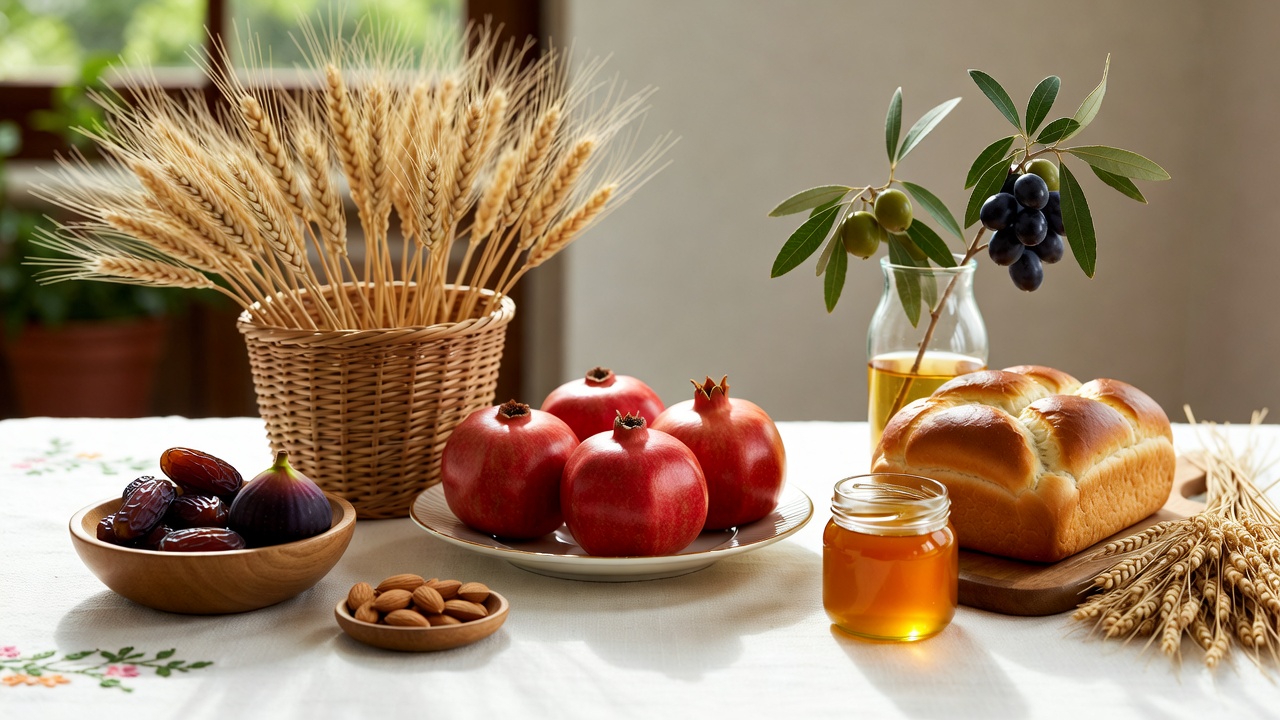
A cornerstone of Tu Bishvat tradition involves the Seven Species (Shivat HaMinim)—sacred fruits and grains mentioned in the Torah as special products of the Land of Israel. According to Deuteronomy 8:8, these species represent the land’s bounty and spiritual significance.
The Complete List of Seven Species for Tu Bishvat
| Species | Hebrew Name | Traditional Significance | Workplace Serving Ideas |
|---|---|---|---|
| Wheat | חיטה (Chitah) | Symbolizes sustenance and kindness | Whole wheat bread, crackers, pastries |
| Barley | שעורה (Se’orah) | Represents discipline and strength | Barley salads, soups, grain bowls |
| Grapes | גפן (Gefen) | Signifies joy and celebration | Fresh grapes, raisins, grape juice, wine |
| Figs | תאנה (Te’enah) | Represents wisdom and learning | Fresh or dried figs, fig bars |
| Pomegranates | רימון (Rimon) | Symbolizes abundance and righteousness | Fresh pomegranate seeds, juice |
| Olives | זית (Zayit) | Represents peace and light | Olive oil, marinated olives |
| Dates | תמר (Tamar) | Signifies sweetness and prosperity | Fresh or dried dates, date honey |
The Reform Judaism movement notes that these species helped ancient Israelites maintain connection to their homeland even in exile. Today, they offer workplace teams a tangible way to connect with sustainability themes while enjoying delicious, healthy foods.
Additional Traditional Foods for Office Celebrations
Beyond the Seven Species, Tu Bishvat celebrations traditionally feature:
- Almonds – The first trees to blossom in Israel
- Carob (bokser) – Also called St. John’s bread
- Dried fruits – Figs, dates, raisins, apricots
- Various nuts – Walnuts, pistachios, hazelnuts
- Citrus fruits – Especially etrog (citron) preserved from Sukkot
Idea #1: Host a Corporate Tu Bishvat Seder for Team Bonding
What Is a Tu Bishvat Seder and How to Organize One at Work?
A Tu Bishvat seder is a ceremonial meal created by 16th-century Kabbalists in Safed, Israel. Similar to a Passover seder, it follows a specific order (seder means “order” in Hebrew) of eating symbolic fruits and drinking wine or grape juice.
Rabbi Yitzchak Luria and his disciples developed this ritual around the concept of the Four Worlds of Kabbalah, using different categories of fruits to represent spiritual journeys from the physical to the divine.
Step-by-Step Guide to Planning a Workplace Seder
1. Choose Your Format
You can organize your corporate Tu Bishvat celebration as:
- A full seder with readings and structured activities (60-90 minutes)
- An abbreviated version focusing on key elements (30-45 minutes)
- A casual fruit tasting with educational components (15-30 minutes)
2. Prepare the Four Types of Fruits
Traditional seders categorize fruits by their edibility:
| Category | Description | Examples | Symbolic Meaning |
|---|---|---|---|
| Level 1 | Hard exterior, soft interior | Oranges, bananas, walnuts, pomegranates, coconuts | Physical world – external protection |
| Level 2 | Soft exterior, hard pit inside | Dates, olives, peaches, plums, cherries | Emotional world – hidden strength |
| Level 3 | Completely edible | Figs, grapes, berries, apples | Intellectual world – total accessibility |
| Level 4 | Fragrance only | Cinnamon, cloves, fragrant herbs | Spiritual world – intangible essence |
3. Set Up Four Cups of Wine or Grape Juice
The seder traditionally includes four cups, each with different proportions of white and red wine/juice:
- First Cup: All white – representing winter
- Second Cup: Mostly white with a little red – hints of spring
- Third Cup: Half white, half red – early spring
- Fourth Cup: All red – full bloom of spring and summer
4. Incorporate Environmental Readings and Discussions
Modern Tu Bishvat seders often include:
- Passages about environmental stewardship
- Discussions about corporate sustainability goals
- Reflections on personal eco-friendly practices
- Commitments to workplace green initiatives
5. Add Interactive Elements for Employee Engagement
Consider incorporating:
- Tree trivia games about forests and environmental facts
- Sustainability pledge cards for employees to sign
- Discussion questions about reducing workplace waste
- Photo opportunities with Seven Species displays
Free Resources for Corporate Tu Bishvat Seders
Several organizations offer downloadable haggadot (guidebooks) that can be adapted for workplace use:
- Hazon Tu B’Shvat Haggadah – Environmental focus
- Reform Judaism RAC-NFTY Seder – Modern approach
- 18Doors Tu Bishvat Guide – Accessible format
Idea #2: Organize a Corporate Tree Planting Event for Team Building
Why Tree Planting Activities Improve Workplace Morale
Corporate tree planting has emerged as one of the most impactful CSR activities available to organizations of all sizes. These events combine environmental stewardship with team building in ways that resonate deeply with employees.
According to research from environmental organizations, tree planting activities create:
- Tangible accomplishments – Employees can see immediate results
- Collaborative experiences – Team members work together toward shared goals
- Physical activity – Gets employees outdoors and moving
- Long-term impact – Trees continue growing for decades
- Story-worthy moments – Creates content for internal and external communications
How to Plan a Successful Corporate Tree Planting Day
Step 1: Partner with Established Organizations
Several reputable nonprofits facilitate corporate tree planting programs:
| Organization | Minimum Partnership | Services Offered |
|---|---|---|
| National Forest Foundation | $25,000 | Planting on U.S. National Forests |
| One Tree Planted | Various levels | Global reforestation projects |
| Jewish National Fund | $18 per tree | Tree planting in Israel |
| Local nonprofits | Varies | Community-based projects |
Step 2: Choose Between Virtual and In-Person Options
Not every team can gather for physical tree planting. Consider:
In-Person Events:
- Partner with local parks or schools
- Schedule 2-4 hours for meaningful participation
- Provide proper tools, gloves, and training
- Include refreshments and celebration components
Virtual or Donation-Based Programs:
- Contribute to reforestation organizations
- Receive certificates for trees planted
- Share satellite imagery or project updates
- Host virtual celebrations when trees are planted
Step 3: Time Your Event Around Tu Bishvat
While Tu Bishvat falls in February (when many Northern Hemisphere locations are frozen), you can:
- Plant indoor seedlings that employees take home
- Schedule spring planting events as a “Tu Bishvat continuation”
- Partner with organizations in Southern Hemisphere locations
- Focus on tree care rather than planting if weather prohibits
Step 4: Document and Celebrate
Maximize impact by:
- Photographing the event for company newsletters
- Creating before-and-after comparisons over time
- Sharing on social media with relevant hashtags
- Recognizing participating employees in company communications
- Returning to the site annually to observe growth
Budget Considerations for Corporate Tree Planting Programs
| Budget Level | Activities | Expected Impact |
|---|---|---|
| $500-$2,000 | Donation to tree-planting nonprofit, virtual participation | 50-200 trees planted |
| $2,000-$10,000 | Local community planting event, partnership with regional nonprofit | 100-500 trees, 20-50 employees engaged |
| $10,000-$25,000 | Full-day team building event with professional facilitation | 200-1,000 trees, company-wide participation |
| $25,000+ | Multi-year partnership with national organization | Thousands of trees, ongoing engagement program |
Idea #3: Create an Eco-Friendly Office Potluck Featuring Sustainable Foods
Planning a Green Team Lunch for Tu Bishvat
A sustainable food celebration offers an accessible, budget-friendly way to observe Tu Bishvat while reinforcing environmental values. This approach works for teams of any size and can accommodate remote, hybrid, and in-office arrangements.
Guidelines for an Environmentally Conscious Office Potluck
1. Establish Sustainability Ground Rules
Communicate expectations clearly before the event:
| Category | Sustainable Choice | Why It Matters |
|---|---|---|
| Containers | Reusable or compostable dishes | Reduces single-use plastic waste |
| Utensils | Real silverware or bamboo alternatives | Eliminates plastic cutlery |
| Napkins | Cloth or unbleached paper | Reduces bleaching chemicals and waste |
| Decorations | Natural materials, potted plants | Avoids synthetic disposables |
| Leftovers | Provide containers for employees to take home | Prevents food waste |
2. Feature the Seven Species and Tree Fruits
Encourage dishes highlighting Tu Bishvat foods:
Appetizers:
- Marinated olive assortment
- Fig and goat cheese crostini
- Pomegranate hummus with whole wheat pita
Main Dishes:
- Barley grain bowls with roasted vegetables
- Date-glazed chicken or tofu
- Grape leaf wraps (dolmas)
Desserts:
- Fresh fruit platters featuring Seven Species
- Date-walnut energy balls
- Fig and almond tart
Beverages:
- Grape juice (organic when possible)
- Pomegranate spritzers
- Herbal teas
3. Incorporate Educational Elements
Transform your potluck into a learning experience:
- Label each dish with its connection to Tu Bishvat
- Display information cards about the Seven Species
- Share sustainability statistics related to food choices
- Discuss food waste reduction strategies
4. Make It Hybrid-Friendly
For distributed teams:
- Send ingredient boxes to remote employees
- Host a virtual cooking session before the event
- Share recipes via company communication channels
- Use video conferencing to include remote participants in the celebration
Sample Tu Bishvat Potluck Sign-Up Categories
| Category | Suggested Items | Notes |
|---|---|---|
| Wheat-Based | Whole grain breads, crackers, pastries | Focus on whole grains |
| Barley Dishes | Salads, soups, side dishes | Hearty and filling |
| Grape Items | Fresh grapes, raisins, juice, wine | Various preparations |
| Fig Contributions | Fresh, dried, baked goods | Sweet and savory options |
| Pomegranate Foods | Seeds, juice, glazes, salads | Vibrant red color |
| Olive Offerings | Marinated olives, olive oil dishes | Mediterranean flavors |
| Date Delights | Stuffed dates, date bars, date honey | Natural sweetness |
| Other Tree Fruits | Apples, oranges, almonds, other nuts | Seasonal variety |
Idea #4: Launch a Workplace Green Initiative Challenge
How to Design Sustainability Challenges That Drive Participation
A Tu Bishvat sustainability challenge creates lasting behavior change while celebrating the holiday’s environmental themes. Unlike one-day events, challenges extend engagement over weeks, building habits and community.
Framework for a Successful Green Team Challenge
Phase 1: Design (2-4 weeks before Tu Bishvat)
Define your challenge structure:
| Element | Options | Recommendation |
|---|---|---|
| Duration | 1 week, 2 weeks, 1 month | 2-4 weeks for meaningful impact |
| Team vs. Individual | Personal goals, department competitions, company-wide | Mix of both for maximum engagement |
| Tracking Method | App-based, spreadsheet, honor system | Digital platform for ease |
| Rewards | Prizes, recognition, charitable donations | Align with sustainability values |
Phase 2: Challenge Categories
Create diverse activities so every employee can participate:
Category 1: Reduce Waste
- Bring reusable water bottles daily
- Use cloth napkins instead of paper
- Eliminate single-use plastics from lunches
- Properly recycle at designated stations
Category 2: Save Energy
- Turn off monitors when leaving desk
- Use natural light when possible
- Unplug chargers when not in use
- Enable power-saving modes on devices
Category 3: Green Commuting
- Carpool with colleagues
- Use public transportation
- Bike or walk to work
- Work from home to reduce travel
Category 4: Plant-Based Actions
- Eat meatless meals during the challenge
- Bring plant-based lunches
- Purchase organic or locally-sourced foods
- Start or tend office plants
Category 5: Learning and Advocacy
- Attend sustainability webinars
- Share environmental tips with colleagues
- Read articles about climate action
- Propose green ideas for the workplace
Phase 3: Gamification Elements
Make participation engaging:
- Points system for completed activities
- Leaderboards visible to all participants
- Badges or achievements for milestones
- Weekly updates celebrating progress
- Team challenges fostering friendly competition
Phase 4: Connection to Tu Bishvat Themes
Tie activities back to the holiday:
- Frame the challenge as “Growing Our Green Roots”
- Create a virtual tree that grows as points accumulate
- Plant real trees based on company-wide achievement
- Host a Tu Bishvat celebration as the challenge finale
Sample Point Structure for Sustainability Challenges
| Activity | Points | Frequency |
|---|---|---|
| Bring reusable water bottle | 5 | Daily |
| Meatless lunch | 10 | Per meal |
| Carpool to work | 15 | Per trip |
| Bike/walk to work | 20 | Per trip |
| Turn off unused lights | 5 | Daily |
| Share environmental tip | 10 | Weekly |
| Attend sustainability session | 25 | Per event |
| Propose new green initiative | 50 | One-time |
| Plant a tree or seedling | 100 | One-time |
Idea #5: Establish a Company Forest or Tree Sponsorship Program
Creating Lasting Environmental Impact Through Corporate Reforestation
For organizations ready to make a significant, long-term commitment to sustainability, establishing a company forest or ongoing tree sponsorship program provides exceptional benefits. This approach transforms a single Tu Bishvat celebration into an evergreen company initiative.
Models for Corporate Forest Programs
Option A: Direct Land Partnership
Work with conservation organizations to dedicate a specific area for your company’s trees:
| Partner Type | Benefits | Considerations |
|---|---|---|
| National forests | Publicly accessible, well-maintained | Requires significant investment |
| Local parks | Community visibility, employee access | Permitting may be complex |
| Private land trusts | Customization options, naming rights | Ongoing relationship management |
| International projects | Carbon offset potential, global impact | Less direct employee connection |
Option B: Tree Sponsorship Programs
Support reforestation without managing land directly:
- One Tree Planted: $1 plants one tree in chosen regions
- Jewish National Fund: Plant trees in Israel with certificates
- Arbor Day Foundation: Corporate partnerships at various levels
- Local urban forestry programs: Support community greening
Option C: Office-Based Living Programs
Bring nature into the workplace:
- Living walls or vertical gardens
- Desktop plant programs for employees
- Office herb gardens for common areas
- Rooftop gardens where facilities permit
Connecting Your Forest Program to Tu Bishvat Annually
Transform your reforestation program into an annual celebration:
Year 1: Launch
- Announce program on Tu Bishvat
- Make initial tree planting commitment
- Engage employees in naming or dedicating trees
- Document the establishment with photos/video
Year 2 and Beyond: Growth
- Share updates on tree growth and health
- Add new trees each Tu Bishvat
- Visit the site if accessible
- Celebrate milestones (100 trees, 1,000 trees, etc.)
Ongoing: Integration
- Tie employee milestones to tree plantings (work anniversaries, promotions)
- Offer tree dedications as recognition rewards
- Include forest updates in company communications
- Use the program in recruitment and brand messaging
Financial Structures for Corporate Forest Programs
| Program Level | Annual Investment | Impact | Recognition |
|---|---|---|---|
| Seedling | $500-$2,500 | 50-250 trees planted | Certificate, social media mention |
| Sapling | $2,500-$10,000 | 250-1,000 trees planted | Custom impact report, logo use |
| Grove | $10,000-$50,000 | 1,000-5,000 trees planted | Dedicated planting area, site visits |
| Forest | $50,000+ | 5,000+ trees planted | Named forest, ongoing partnership |
Best Practices for Inclusive and Accessible Workplace Sustainability Events
Ensuring All Employees Can Participate in Tu Bishvat Celebrations
Creating truly inclusive celebrations requires thoughtful planning. Consider these factors when organizing your workplace Tu Bishvat events:
Religious and Cultural Sensitivity
Tu Bishvat is a Jewish holiday, but its environmental themes resonate universally. To ensure everyone feels welcome:
- Frame the event around sustainability rather than religious observance
- Explain the cultural context without requiring participation in religious elements
- Offer secular participation options alongside traditional activities
- Respect that some employees may have deeper religious connections to the holiday
- Avoid scheduling conflicts with other cultural or religious observances
Dietary Accommodations
Tu Bishvat foods naturally lend themselves to inclusion, but confirm:
| Dietary Need | Accommodation Strategy |
|---|---|
| Kosher | Source certified products, separate serving utensils |
| Vegan/Vegetarian | Most traditional foods qualify; label clearly |
| Gluten-free | Offer alternatives to wheat and barley dishes |
| Nut allergies | Clearly label all nut-containing items; provide nut-free zone |
| Other allergies | Request ingredient lists from potluck contributors |
Physical Accessibility
For outdoor events like tree planting:
- Choose accessible locations with paved paths
- Provide seating options for those who cannot stand long
- Offer alternative activities for those unable to plant
- Ensure transportation is accessible
- Consider weather accommodations (shade, shelter)
Remote and Hybrid Inclusion
With distributed workforces common, plan for virtual participation:
- Live-stream in-person celebrations
- Send care packages with Seven Species samples
- Create digital participation options for challenges
- Schedule video calls at times convenient for multiple time zones
- Record and share event highlights for those who cannot attend live
Measuring the Impact of Your Tu Bishvat Workplace Sustainability Program
Key Performance Indicators for Green Team Initiatives
To demonstrate value and improve future events, track meaningful metrics:
Participation Metrics
| Metric | How to Track | Benchmark Goal |
|---|---|---|
| Employee participation rate | Sign-ups, attendance | 25-50% of workforce |
| Cross-department representation | Track by team | All departments represented |
| Volunteer hours contributed | Time tracking | 2-4 hours per participant |
| Repeat participation | Year-over-year comparison | 60%+ return rate |
Environmental Impact Metrics
| Metric | How to Track | Reporting Period |
|---|---|---|
| Trees planted or sponsored | Organization reports | Annual |
| Carbon offset potential | Calculator tools | Annual |
| Waste diverted | Waste audit data | Per event |
| Energy saved | Challenge tracking | Per campaign |
Engagement and Satisfaction Metrics
| Metric | How to Track | Target |
|---|---|---|
| Post-event survey scores | Digital surveys | 4.0+/5.0 rating |
| Net Promoter Score | Would you recommend? | 50+ NPS |
| Qualitative feedback | Open-ended responses | Thematic analysis |
| Social media engagement | Shares, comments, posts | Benchmark against other events |
Business Impact Metrics
| Metric | How to Track | Connection to Tu Bishvat |
|---|---|---|
| Employee retention | HR data | Long-term engagement indicator |
| Recruitment mentions | Interview feedback | Brand perception |
| Customer perception | External surveys | CSR reputation |
| Media coverage | Press monitoring | Public relations value |
Sample Tu Bishvat Workplace Celebration Timeline
Complete Planning Guide from Start to Finish
8-12 Weeks Before (December)
- [ ] Secure leadership support and budget approval
- [ ] Form planning committee with cross-functional representation
- [ ] Choose celebration format(s) from the five ideas
- [ ] Research and contact partner organizations
- [ ] Reserve spaces and necessary equipment
6-8 Weeks Before (Early January)
- [ ] Finalize event details and logistics
- [ ] Create communication plan
- [ ] Design registration systems
- [ ] Order supplies and materials
- [ ] Recruit volunteers for event support
4-6 Weeks Before (Mid-January)
- [ ] Launch announcement and registration
- [ ] Begin sustainability challenge (if applicable)
- [ ] Send remote employee packages (if applicable)
- [ ] Confirm all vendor and partner arrangements
- [ ] Prepare educational materials
2-4 Weeks Before (Late January)
- [ ] Send reminder communications
- [ ] Finalize catering and food arrangements
- [ ] Complete accessibility accommodations
- [ ] Brief facilitators and speakers
- [ ] Test technology for virtual components
Week of Tu Bishvat
- [ ] Set up event spaces
- [ ] Conduct final logistics check
- [ ] Execute celebrations
- [ ] Document with photos and video
- [ ] Share real-time updates on internal channels
After Tu Bishvat
- [ ] Send thank-you communications
- [ ] Distribute surveys
- [ ] Calculate and share impact metrics
- [ ] Debrief with planning committee
- [ ] Archive materials for next year
- [ ] Begin planning ongoing green initiatives
Frequently Asked Questions About Tu Bishvat Workplace Celebrations
Common Questions About Planning Corporate Sustainability Events
Q: Can non-Jewish employees participate in Tu Bishvat celebrations?
Absolutely. While Tu Bishvat is a Jewish holiday, its themes of environmental stewardship, honoring nature, and planting for the future are universal values. Many organizations frame their celebrations around sustainability while acknowledging the cultural roots of the tradition.
Q: What if our Tu Bishvat celebration falls during winter when we can’t plant trees outdoors?
Several alternatives exist:
- Plant indoor seedlings or start herb gardens
- Sponsor trees through organizations that plant in appropriate climates
- Schedule spring planting events as an extension of Tu Bishvat
- Focus on tree care or pruning activities rather than new planting
- Organize virtual tree dedications with reforestation partners
Q: How can small businesses with limited budgets celebrate Tu Bishvat?
Budget-friendly options include:
- Organizing a potluck with employees bringing Seven Species dishes
- Hosting a lunch-and-learn about sustainability topics
- Starting an office plant program with inexpensive seedlings
- Launching a green challenge that costs nothing but engagement
- Making small donations to tree-planting organizations ($1-$5 per employee)
Q: How do we make Tu Bishvat celebrations meaningful for remote teams?
Strategies for distributed workforces:
- Send care packages with Seven Species samples and educational materials
- Host virtual cooking sessions featuring traditional recipes
- Create digital sustainability challenges with online tracking
- Organize regional in-person gatherings for employees in the same area
- Plant trees in employees’ honor with personalized certificates
Q: What’s the connection between Tu Bishvat and corporate ESG goals?
Tu Bishvat celebrations directly support ESG objectives by:
- Environmental: Tree planting, waste reduction, sustainability education
- Social: Employee engagement, team building, community involvement
- Governance: Demonstrating values alignment, transparent impact reporting
Conclusion: Growing a Culture of Sustainability Through Tu Bishvat Traditions
Tu Bishvat offers more than a single day of celebration—it provides a framework for year-round environmental consciousness in the workplace. By thoughtfully implementing one or more of these five ideas, organizations can:
✅ Boost employee engagement through meaningful, purpose-driven activities
✅ Strengthen team bonds via collaborative environmental action
✅ Demonstrate ESG commitment with measurable sustainability outcomes
✅ Connect diverse employees around universal environmental values
✅ Create lasting traditions that grow richer each year
As the ancient Jewish sages recognized, “Man is a tree of the field” (Deuteronomy 20:19). Just as trees require nurturing, consistent care, and time to flourish, so too does a workplace culture of sustainability. Tu Bishvat reminds us that the seeds we plant today—whether literal trees or metaphorical investments in green practices—will bear fruit for generations to come.
Whether you host an elaborate Tu Bishvat seder, organize a company-wide tree planting event, or simply share a meal featuring the Seven Species, you’ll be participating in a tradition that has connected people to the earth for thousands of years. In doing so, you’ll create a more engaged workforce, a healthier planet, and a workplace culture that truly values both people and nature.
Chag Tu Bishvat Sameach! Happy Tu Bishvat, and may your sustainability initiatives take root and flourish.
Additional Resources for Workplace Sustainability Programs
Organizations and Tools
- Hazon – Jewish environmental organization with Tu Bishvat resources
- Jewish National Fund – Tree planting in Israel
- One Tree Planted – Global reforestation partnerships
- National Forest Foundation – U.S. forest restoration
- Society for the Protection of Nature in Israel – Israeli conservation
Recommended Reading
- “A Person is Like a Tree: A Sourcebook for Tu BeShvat” by Yitzhak Buxbaum
- “The Tu BiShvat Seder” by Adam Fisher
- Tu Bishvat haggadot from various Jewish denominations
Hashtags for Social Media Sharing
Use these when sharing your workplace celebrations:
- #TuBishvat
- #TuBShvat
- #NewYearOfTheTrees
- #JewishEarthDay
- #WorkplaceSustainability
- #GreenTeam
- #CorporateCSR
- #TreePlanting
- #SevenSpecies
This guide was created to help organizations of all sizes and backgrounds celebrate Tu Bishvat in meaningful, inclusive ways. We encourage you to adapt these ideas to fit your unique workplace culture and sustainability goals.