A Journey Into Vietnam’s Most Sacred Holiday—Where Family, Food, and Fortune Come Together
There is a moment in Vietnam when time seems to stand still. It arrives in the final days of the lunar calendar, when the aroma of slow-simmering bánh chưng fills kitchens from Hanoi to Hồ Chí Minh City, when pink peach blossoms appear in northern windows and golden hoa mai adorns southern doorways. This is Tết Nguyên Đán—the Vietnamese Lunar New Year—and it remains the most treasured celebration in Vietnamese culture.
For the nearly 100 million people living in Vietnam and millions more in the global Vietnamese diaspora, Tết is far more than a holiday. It is the heartbeat of a nation, a time when the past meets the present, when ancestors are honored, and when families reunite to wash away the troubles of yesterday and welcome tomorrow with open arms.
Whether you are planning your first visit to Vietnam during Tết, curious about Vietnamese customs, or simply looking to deepen your understanding of this magnificent celebration, this guide will walk you through everything you need to know. From ancient legends and sacred rituals to modern celebrations and practical travel advice, consider this your invitation into the soul of Vietnamese culture.
What Is Tết Nguyên Đán and Why Is It Vietnam’s Most Important Festival?
Tết Nguyên Đán, commonly shortened to simply “Tết,” translates to “Feast of the First Day.” It marks the arrival of spring according to the Vietnamese lunisolar calendar and typically falls between late January and mid-February on the Gregorian calendar. In 2025, Tết began on January 29th, ushering in the Year of the Wood Snake.
The roots of Tết stretch back thousands of years, long before Vietnam’s documented history. According to research cited by the Vietnamese government, the celebration has origins in the earliest Vietnamese settlements in the Red River Delta, where Tết marked the beginning of a new cycle of wet rice cultivation. The agricultural connection remains embedded in the holiday’s DNA—Tết quite literally means the arrival of a new growing season, a fresh start, a rebirth.
But Tết has evolved far beyond its farming roots. Today, it encompasses:
- Spiritual renewal — A chance to cleanse bad luck and welcome good fortune
- Family reunion — The most important time for Vietnamese families to gather
- Ancestral veneration — Honoring those who came before through offerings and prayers
- Community celebration — Fireworks, festivals, and flower markets across the nation
- Cultural identity — A celebration that defines what it means to be Vietnamese
Unlike the Western New Year, which often centers on parties and resolutions, Tết is deeply introspective. Vietnamese families spend weeks preparing their homes, cooking traditional foods, visiting ancestral graves, and creating the perfect environment to receive blessings for the year ahead.
The History and Origins of Vietnamese Lunar New Year Celebrations
Understanding Tết requires a journey through centuries of Vietnamese history. While the holiday shares similarities with Chinese New Year—a result of more than a thousand years of Chinese rule beginning in 111 BC—Vietnam has cultivated its own distinct traditions that reflect its unique cultural identity.
Ancient Roots in Wet Rice Civilization
The Vietnamese relationship with Tết is inseparable from the land itself. As one of the world’s oldest rice-cultivating civilizations, the Vietnamese people developed celebrations tied to agricultural cycles. The first day of the lunar new year marked not just a new calendar date but the moment when farmers prepared for planting season. Prayers for rain, fertile soil, and abundant harvests were central to early Tết observances.
The Legend of Bánh Chưng and Bánh Giầy
One of the most enduring stories connected to Tết involves Prince Lang Liêu of the Sixth Hùng Dynasty, dating approximately to 1712–1632 BC. According to the tale preserved in the 14th-century text Lĩnh Nam chích quái (Extraordinary Stories of Lĩnh Nam), the aging king held a competition among his sons to determine his successor. Each prince was tasked with presenting the most meaningful dish for the ancestral altar.
While his brothers sought exotic delicacies from mountains and seas, Lang Liêu—the poorest of the princes—could only afford humble rice, mung beans, and pork. Guided by a divine vision, he created two cakes: bánh chưng (square, representing the earth) and bánh giầy (round, representing the sky). The king was so moved by the cakes’ simplicity and profound symbolism that he named Lang Liêu his successor.
To this day, bánh chưng remains the most sacred food of Tết—a reminder that true wealth lies not in extravagance but in gratitude, family, and connection to the land.
Vietnamese vs. Chinese New Year: Key Differences
While Tết occurs on the same date as Chinese New Year, several distinctions set Vietnamese celebrations apart:
| Feature | Vietnamese Tết | Chinese New Year |
|---|---|---|
| Zodiac Animals | Cat, Buffalo, Goat | Rabbit, Ox, Sheep |
| Signature Dishes | Bánh chưng, bánh tét | Jiaozi (dumplings), nian gao |
| Northern Flower | Pink peach blossoms (hoa đào) | Plum blossoms, orchids |
| Southern Flower | Yellow apricot blossoms (hoa mai) | Red plum blossoms |
| Lucky Money Name | Lì xì (South) / Mừng tuổi (North) | Hóng bāo |
| First Visitor Custom | Xông đất (extremely significant) | Important but less emphasized |
The Vietnamese zodiac notably features the Cat rather than the Rabbit—a distinction that has sparked considerable academic debate. Some scholars believe Vietnamese farmers simply preferred the cat for its role in protecting rice stores from mice, while others suggest a linguistic evolution from the Chinese word for rabbit.
When Is Vietnamese New Year 2025, 2026, and Beyond?
Because Tết follows the lunisolar calendar, the date shifts each year on the Gregorian calendar. Here are the upcoming Tết dates:
| Year | Gregorian Date | Vietnamese Zodiac Animal |
|---|---|---|
| 2025 | January 29 | Wood Snake (Ất Tỵ) |
| 2026 | February 17 | Fire Horse (Bính Ngọ) |
| 2027 | February 6 | Fire Goat (Đinh Mùi) |
| 2028 | January 26 | Earth Monkey (Mậu Thân) |
| 2029 | February 13 | Earth Rooster (Kỷ Dậu) |
The official public holiday typically spans seven to nine days, though preparations begin weeks earlier and celebrations can extend through the 15th day of the new lunar month, culminating in the Tết Nguyên Tiêu (First Full Moon Festival or Lantern Festival).
The 12 Days of Tết: A Complete Day-by-Day Guide to Vietnamese New Year Traditions
Vietnamese New Year traditions unfold across approximately 12 days, each carrying specific customs and meanings. Understanding this timeline reveals the deep spiritual structure underlying the celebration.
Day 1: Praying to the Kitchen Gods (Lễ Ông Công Ông Táo)
23rd day of the 12th lunar month
Tết officially begins with the ceremony honoring Ông Táo, the Kitchen Gods. Vietnamese folklore holds that every home has three guardian deities who watch over the family throughout the year. On this day, they ascend to heaven riding upon a carp to deliver their annual report to the Jade Emperor.
How families observe this day:
- Thoroughly clean the family altar
- Prepare offerings of fruit, delicacies, and fresh flowers
- Provide paper caps, clothes, and a symbolic carp (either a live fish released into a river or a paper representation)
- Burn incense and make prayers for a favorable report
The release of the carp has become one of Tết’s most poignant images—families gather at rivers and lakes across Vietnam to free their fish, symbolically sending their kitchen gods on their heavenly journey.
Days 2–6: Home Preparation and the Great Cleaning
24th–28th of the 12th lunar month
These days are dedicated to preparing the home and heart for the new year. The Vietnamese believe that everything during Tết must be fresh and new, symbolizing a clean slate.
Essential preparations include:
- Deep Cleaning (Dọn Dẹp Đón Tết)
- Scrubbing every corner of the home
- Washing vehicles, including the beloved motorbikes
- Discarding broken or unnecessary items (believed to harbor bad luck)
- Home Decoration
- Hanging red and gold banners with auspicious phrases
- Displaying Chúc Mừng Năm Mới (Happy New Year) signs
- Setting up the ancestral altar with the Mâm Ngũ Quả (Five-Fruit Tray)
- Shopping and Food Preparation
- Purchasing new clothes for every family member
- Buying flowers and ornamental plants
- Beginning the multi-day process of cooking Tết foods
- Stocking mứt (candied fruits) and other treats for guests
- Visiting Ancestral Graves
- Cleaning and tending to burial sites
- Inviting the spirits of ancestors to “ăn Tết” (eat Tết) with the family
Day 7: Flower Market Day and Bringing Home Blossoms
26th of the 12th lunar month
One of the most magical moments of pre-Tết preparations is visiting the flower markets. Across Vietnam, markets burst into color with peach blossoms, apricot flowers, kumquat trees, and countless other plants. Families carefully select their flowers—a significant investment that represents their hopes for the coming year.
The tradition of bringing home blossoming trees reflects ancient beliefs about fertility, prosperity, and spiritual protection. A well-chosen tree with perfectly timed blooms on New Year’s Day is considered exceptionally auspicious.
Days 8–10: Final Preparations and Bánh Chưng Making
27th–29th of the 12th lunar month
These are the most intense days of preparation. Families who make their own bánh chưng gather for what is often an all-night cooking session. The cakes must boil for 10 to 12 hours, during which family members take turns tending the fire, sharing stories, and enjoying each other’s company.
The bánh chưng preparation process:
- Soaking glutinous rice overnight
- Preparing mung bean paste and marinated pork
- Washing lá dong (phrynium leaves) for wrapping
- Assembling the cakes with the help of multiple family members
- Boiling through the night while gathered around the fire
This communal cooking experience has become one of Tết’s most cherished traditions—a time when grandparents teach grandchildren, when family recipes are passed down, and when the meaning of Tết is absorbed through shared labor and love.
Day 11: New Year’s Eve (Giao Thừa)
30th of the 12th lunar month (or 29th in short months)
Giao Thừa is the most sacred moment of Tết. At midnight, the old year officially ends and the new year begins. Families perform the Trừ Tịch ceremony, setting up two altars—one for ancestors and one for heaven and earth—to symbolically cast away past misfortunes and welcome new blessings.
Giao Thừa traditions:
- Preparing a midnight feast with all traditional dishes
- Lighting incense at the ancestral altar
- Gathering the family for prayers
- Watching fireworks displays in major cities (Hanoi, Hồ Chí Minh City, Đà Nẵng)
- The careful selection and welcoming of the first visitor (xông đất)
Until 1995, firecrackers were an essential part of Giao Thừa celebrations in individual homes. However, due to numerous accidents, the Vietnamese government banned their production and personal use. Today, professional fireworks displays have replaced private firecrackers, lighting up the sky over major cities.
Day 12: Vietnamese New Year’s Day (Mùng Một Tết)
1st of the 1st lunar month
The first day of Tết is the most important day of the entire year. According to Vietnamese belief, everything that happens on this day sets the tone for the following twelve months. For this reason, families follow strict customs to ensure only positive energy enters the home.
Sacred customs of Mùng Một:
- Xông Đất (First Footing)
- The first person to enter the home determines the family’s fortune
- Families carefully select someone with good character, health, morality, and success
- Some families pre-arrange for an auspicious person to visit immediately after midnight
- No one enters a home uninvited on this day
- The First Family Meal
- The entire family gathers around the table
- Traditional dishes are served: bánh chưng, boiled chicken, pickled onions, giò (Vietnamese sausage)
- The meal honors both living family members and ancestors
- Giving and Receiving Lucky Money (Lì Xì / Mừng Tuổi)
- Children present Tết greetings to elders
- Elders give red envelopes containing money
- The exchange represents blessings being passed between generations
- Wearing New Clothes
- Red is the preferred color, symbolizing luck and happiness
- Everyone, especially children, wears their finest new outfits
- Things to Avoid on New Year’s Day
- No sweeping or cleaning (believed to sweep away good luck)
- No arguments or negative words
- No breaking dishes (symbolizes broken relationships)
- No crying (associated with a year of sorrow)
- No lending money (may lead to financial loss all year)
Traditional Vietnamese New Year Food: What to Eat During Tết
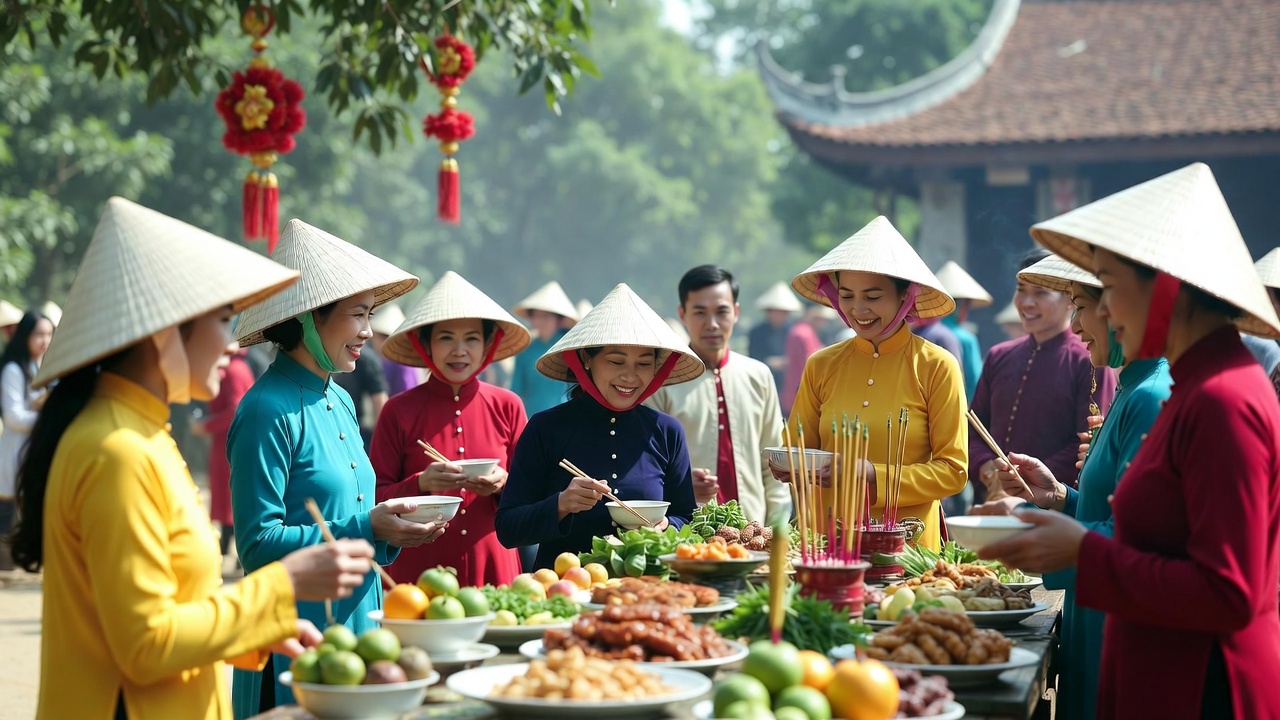
Food is so central to Tết that Vietnamese people call the celebration “ăn Tết”—literally “eating Tết.” Every dish carries symbolic meaning, connecting the present moment to centuries of tradition.
Bánh Chưng and Bánh Tét: The Sacred Tết Cakes
Bánh Chưng (Northern Vietnam) and Bánh Tét (Southern Vietnam) are the undisputed stars of the Tết table. Both are made from glutinous rice, mung beans, and pork, wrapped in leaves and boiled for hours, but they differ in shape and regional significance.
| Feature | Bánh Chưng (North) | Bánh Tét (South) |
|---|---|---|
| Shape | Square | Cylindrical |
| Symbolism | The Earth | Convergence of Heaven and Earth |
| Wrapping | Lá dong (phrynium leaves) | Banana leaves |
| Variations | Primarily savory | Both savory and sweet versions |
Why these cakes matter: Beyond their delicious taste, making bánh chưng and bánh tét is a family ritual. The process of gathering ingredients, wrapping cakes, and tending the boiling pot through the night creates memories that bind generations together.
Thịt Kho Hột Vịt: Caramelized Pork with Eggs
This hearty dish of pork belly and duck eggs braised in coconut water is essential to Southern Tết meals. The rich, caramelized sauce develops deeper flavors with each reheating—and Southern families traditionally make a large pot several days before Tết, enjoying it throughout the holiday.
Gà Luộc: Whole Boiled Chicken
Boiled chicken holds profound significance during Tết. The whole bird—including head and feet—symbolizes completeness and family unity. It is first offered at the ancestral altar before being served at the family table, often accompanied by salt-pepper-lime dipping sauce.
Dưa Hành: Pickled Onions and Vegetables
No Tết meal is complete without dưa hành (pickled onions) or dưa món (pickled vegetables). These tangy accompaniments serve a practical purpose—cutting through the richness of fatty pork and sticky rice cakes—while also symbolizing patience and preservation.
Xôi Gấc: Red Sticky Rice for Good Fortune
The striking red color of xôi gấc makes it one of the most auspicious Tết dishes. Colored naturally by gấc fruit (Momordica cochinchinensis), this sticky rice represents luck, happiness, and good fortune. Vietnamese families often eat it before important events throughout the year, not just during Tết.
Giò Lụa (Giò) and Chả Lụa: Vietnamese Pork Sausage
Giò lụa is a smooth, silky pork sausage wrapped in banana leaves and steamed or boiled. It appears at virtually every Tết feast and is also a popular gift between families.
Nem Rán / Chả Giò: Vietnamese Spring Rolls
Fried spring rolls are a beloved Tết appetizer, especially in Northern Vietnam. Families often spend hours wrapping hundreds of these crispy treats—filled with pork, mushrooms, glass noodles, and vegetables—for the holiday feast.
Canh Khổ Qua: Bitter Melon Soup
In Southern Vietnam, canh khổ qua (bitter melon stuffed with pork and mushrooms, served in broth) is a Tết staple. The name carries special meaning: “khổ qua” sounds similar to the phrase for “hardship passing away,” making this soup a symbol of leaving troubles behind.
Mứt Tết: Candied Fruits and Sweets
Every Tết home features a tray of mứt—colorful candied fruits, coconut ribbons, ginger, lotus seeds, and more. These sweets are offered to every guest and represent the sweetness of life in the coming year.
The Five-Fruit Tray (Mâm Ngũ Quả)
The Mâm Ngũ Quả is not meant for eating—it is a sacred offering placed on the ancestral altar. The five fruits represent the five elements of Eastern philosophy and vary by region:
Northern Vietnam typical selection:
- Bananas (green, representing blessings)
- Pomelos (prosperity)
- Peaches (longevity)
- Persimmons (success)
- Kumquats (wealth)
Southern Vietnam typical selection:
- Mango (mãng cầu = “wishing for enough”)
- Fig (sung = “abundance”)
- Coconut (dừa = “just enough”)
- Papaya (đu đủ = “sufficiency”)
- Watermelon (good luck, often displayed cut to show red flesh)
Vietnamese New Year Flowers and Decorations: Meaning and Symbolism
Walk through any Vietnamese city in the days before Tết and you will witness an explosion of color. Flower markets overflow with blossoms, and motorbikes weave through traffic bearing improbably large trees strapped to their frames. Understanding the symbolism behind these decorations reveals the spiritual depth of the holiday.
Hoa Đào: Peach Blossoms in Northern Vietnam
In the north, pink peach blossoms (hoa đào) are the quintessential symbol of Tết. The delicate flowers represent:
- Vitality and renewal (as one of the first spring blooms)
- Protection against evil spirits (an ancient belief)
- Prosperity and happiness for the family
- Feminine grace and beauty
The most prized peach blossoms come from Nhật Tân Flower Village in Hanoi, where families have cultivated these trees for generations. A beautiful branch with just the right balance of blooms and buds can cost millions of đồng—a significant investment that families make gladly.
Hoa Mai: Yellow Apricot Blossoms in Southern Vietnam
Southern Vietnam celebrates with the brilliant yellow apricot blossoms (hoa mai). These golden flowers carry their own rich symbolism:
- Prosperity and wealth (the color of gold)
- Nobility and royalty
- Hope and new beginnings
- Protection against evil spirits
According to legend, hoa mai honors a brave young woman named Mai who sacrificed her life fighting a serpent to protect her village. The heavens transformed her into the beautiful golden flower that now blooms each spring.
An important tradition: Southern families carefully remove leaves from their mai trees about two weeks before Tết, timing the process so flowers will bloom precisely on New Year’s Day.
Cây Quất: The Kumquat Tree
The kumquat tree is beloved across Vietnam, especially in the north and central regions. A small tree laden with orange fruit symbolizes:
- Fertility and fruitfulness
- Prosperity and wealth (fruit resembles gold coins)
- Good health for the family
- Success in business (often placed at shop entrances)
Choosing the perfect kumquat tree: Vietnamese families look for trees with many fruits of similar size (both ripe and green), big shiny leaves, and a well-shaped trunk. The more fruit, the more luck.
Other Tết Flowers and Plants
| Flower/Plant | Vietnamese Name | Symbolism |
|---|---|---|
| Chrysanthemum | Hoa cúc | Longevity, health |
| Marigold | Vạn thọ | Longevity (literally “ten thousand years”) |
| Orchid | Hoa lan | Nobility, refinement |
| Narcissus | Thủy tiên | Elegance, good fortune (Hanoi elite) |
| Cockscomb | Mào gà | Good luck (Southern Vietnam) |
| Bougainvillea | Hoa giấy | Joy, happiness |
| Money Plant | Cây tiền | Wealth, prosperity |
Lucky Money Traditions: Understanding Lì Xì During Vietnamese New Year
One of the most beloved Tết traditions is the exchange of lucky money—known as lì xì in Southern Vietnam and mừng tuổi (“congratulations on your age”) in the north. This practice carries deep cultural significance far beyond the monetary value of the gift.
The Meaning Behind Red Envelopes
The red color of the envelopes is essential. Red represents luck, happiness, and positive energy in Vietnamese culture. The envelope itself is believed to carry blessings from the giver to the recipient—the money is almost secondary to the well-wishes it represents.
Who Gives and Receives Lucky Money?
The tradition follows a specific social hierarchy:
Recipients typically include:
- Children (the primary recipients)
- Unmarried young adults
- Elderly family members (as a sign of respect)
- Employees (from business owners/managers)
Givers typically include:
- Parents and grandparents
- Aunts, uncles, and older relatives
- Married adults
- Employers and business owners
The Ritual of Giving Lì Xì
The exchange of lucky money follows a beautiful ritual:
- Children wear their new clothes and approach elder relatives
- They offer the traditional greeting: “Chúc Mừng Năm Mới” (Happy New Year), followed by specific wishes for the elder’s health, prosperity, or longevity
- Elders respond with blessings for the child’s studies, behavior, and growth
- The red envelope is given with both hands (a sign of respect)
- The recipient accepts with both hands and thanks the giver
How Much Money Should Be in a Lì Xì?
The amount varies widely based on relationship and financial circumstances. However, the number matters more than the amount:
- Even numbers are preferred (symbolizing pairs and completion)
- Amounts ending in 8 are especially lucky (8 sounds like “prosperity”)
- Avoid 4 (sounds like “death” in Chinese-Vietnamese)
- New, crisp bills are preferred
Common amounts range from:
- 20,000–50,000 VND for neighbors’ children
- 100,000–200,000 VND for nieces/nephews
- 500,000+ VND for one’s own children or grandchildren
- Symbolic amounts for elderly relatives
When Vietnamese Young Adults Stop Receiving Lì Xì
There is a bittersweet milestone in Vietnamese life: the year when you stop receiving lucky money and begin giving it instead. This transition typically occurs when someone:
- Gets married
- Begins working full-time
- Is considered a full adult (varies by family)
As one Vietnamese saying goes, “The day you start giving lì xì is the day you truly become an adult.”
The Sacred Custom of Xông Đất: First Footing on Vietnamese New Year
Perhaps no Tết tradition carries as much weight as xông đất—the custom of the first visitor. Vietnamese families believe that the first person to enter their home on New Year’s Day will determine the family’s fortune for the entire year.
What Makes a Good Xông Đất Person?
Families seek someone with the following qualities:
- Good character and reputation
- Good health and vitality
- Success in their career or business
- A compatible zodiac sign with the family
- A pleasant, optimistic disposition
How Families Prepare for Xông Đất
Many families do not leave this crucial moment to chance. They may:
- Pre-arrange for an auspicious person to visit immediately after midnight
- Consult fortune tellers to determine compatible zodiac signs
- Send family members outside just before midnight so they can be the first to enter
- Specifically invite a successful, well-liked friend or relative
What Happens During the First Visit
The xông đất person:
- Enters the home with warm greetings
- Offers wishes for health, prosperity, and happiness
- May bring symbolic gifts (fruit, candy, or other auspicious items)
- Often receives a warm meal and red envelope from the family
Who Should NOT Be the First Visitor
Certain people are traditionally avoided for xông đất:
- Those who have experienced recent misfortune
- People with incompatible zodiac signs
- Those who are frequently ill
- Individuals with negative reputations
- Pregnant women (in some regions)
- People in mourning
This is why Vietnamese people never enter any home uninvited on New Year’s Day. Showing up unexpectedly could be seen as bringing bad luck, regardless of your intentions.
Visiting Family and Friends: The Social Calendar of Vietnamese Tết
Tết follows a carefully structured social calendar that reflects Vietnamese values of family hierarchy and respect.
The Traditional Visiting Schedule
Day 1 (Mùng Một): Reserved exclusively for the nuclear family and paternal relatives
- Children visit grandparents on the father’s side
- The family shares meals and exchanges greetings
Day 2 (Mùng Hai): Dedicated to maternal relatives
- The family visits grandparents on the mother’s side
- A separate round of gift-giving and feasting
Day 3 (Mùng Ba): Reserved for teachers and mentors
- Students visit their teachers to show respect
- This tradition reflects the Vietnamese saying: “Respect your teacher as you respect your father”
Days 4–7: Extended visits to friends, neighbors, and colleagues
- More casual socializing and celebration
- Visiting pagodas and temples for prayers
What to Bring When Visiting
When visiting during Tết, guests typically bring:
- Fruit (especially pomelos or oranges)
- Bánh chưng or bánh tét
- Boxes of mứt (candied fruits)
- Tea or wine (for adult gatherings)
- Red envelopes with lucky money for children in the household
Proper Etiquette for Tết Visits
- Dress nicely (preferably in new clothes with red accents)
- Arrive with a positive attitude (no complaining or sad topics)
- Accept all food and drink offered (refusing is considered rude)
- Stay for the appropriate amount of time (neither too short nor overly long)
- Offer sincere wishes for the host family’s health and prosperity
Regional Differences: How Tết Is Celebrated Across Vietnam
Vietnam stretches over 1,600 kilometers from north to south, and each region has developed distinct Tết traditions reflecting local culture, climate, and history.
Tết in Northern Vietnam (Miền Bắc)
Characteristics of Northern Tết:
- Cooler weather creates a cozy atmosphere perfect for family gatherings
- Peach blossoms (hoa đào) dominate decorations
- Bánh chưng is the essential ceremonial cake
- Nem rán (fried spring rolls) appear at every feast
- Pickled onions (dưa hành) are the classic accompaniment
Hanoi’s famous Tết experiences:
- Visiting the Quảng Bá Flower Market near West Lake
- Watching fireworks over Hoàn Kiếm Lake
- Exploring the Old Quarter on New Year’s Eve
- Buying bánh chưng from Quốc Hương Shop on Hàng Bông Street (operating for 200 years)
Tết in Central Vietnam (Miền Trung)
Characteristics of Central Tết:
- Both bánh chưng and bánh tét are prepared
- Unique regional dishes like grilled nem chua and bò kho mật mía
- Smaller, less filling bánh chưng than in the north
- Superstition against giving bánh tét as gifts (sounds like “đòn roi” or “whip”)
Huế’s Tết traditions:
- The Cây Nêu (Tết Pole) raising ceremony at the Imperial Palace
- Historical processions in the Citadel
- Traditional costumed parades at Cổ Loa Citadel
Tết in Southern Vietnam (Miền Nam)
Characteristics of Southern Tết:
- Warmer weather allows for more outdoor celebrations
- Yellow apricot blossoms (hoa mai) are the signature flower
- Bánh tét replaces bánh chưng as the ceremonial cake
- Thịt kho hột vịt (caramelized pork and eggs) is essential
- Canh khổ qua (bitter melon soup) symbolizes hardship passing
Hồ Chí Minh City’s Tết highlights:
- The spectacular Nguyễn Huệ Flower Street in District 1
- Fireworks over Thủ Thiêm Tunnel
- Bustling flower markets at Bến Bình Đông
- Street food vendors throughout the city
Practical Tips for Traveling to Vietnam During Tết
Experiencing Tết in Vietnam is unforgettable—but it requires careful planning. The holiday presents both extraordinary opportunities and significant challenges for travelers.
What to Expect During the Tết Holiday Period
Advantages of visiting during Tết:
- Witness Vietnam’s most important cultural celebration
- Experience stunning flower markets and decorations
- Enjoy fireworks in major cities
- See traditional customs performed authentically
- Experience Vietnamese hospitality at its warmest
Challenges to prepare for:
- Many businesses, restaurants, and tourist sites close for 3–7 days
- Domestic travel is extremely busy (millions of Vietnamese travel home)
- Prices for accommodation and transport increase significantly
- Banking and postal services may be unavailable
- Markets may have limited stock
Best Practices for Tết Travel
Book everything well in advance:
- Flights and trains sell out weeks ahead
- Hotels increase prices and fill quickly
- Tourist services require advance booking
Plan your itinerary around the closures:
- The first three days see the most closures
- By day 4 or 5, more businesses reopen
- International tourist areas (Hội An, Phú Quốc) maintain more services
Bring sufficient cash:
- ATMs may run out of money
- Many businesses only accept cash
- Banks are closed during the holiday
Embrace the local experience:
- Attend a public fireworks display on New Year’s Eve
- Visit flower markets in the days before Tết
- Accept invitations to celebrate with local families
- Try traditional Tết foods whenever offered
Tết Etiquette for Foreign Visitors
If you are fortunate enough to be invited into a Vietnamese home during Tết:
- Dress neatly and modestly (avoid black or white, which are funeral colors)
- Bring a small gift such as fruit, sweets, or flowers
- Remove your shoes before entering the home
- Accept food and drink graciously
- Avoid negative or sad conversation topics
- Be mindful of the ancestral altar (do not sit with your back to it)
- Use both hands when giving or receiving gifts and red envelopes
Modern Tết Celebrations: How Vietnamese New Year Is Evolving
While Tết remains deeply rooted in tradition, the celebration has evolved significantly in recent decades—particularly in urban areas and among younger generations.
Changes in Contemporary Tết
Food preparation:
- Many families now purchase bánh chưng rather than making it themselves
- Restaurant Tết meals are becoming more common
- Modern fusion dishes appear alongside traditional foods
Decorations:
- Artificial flowers and trees are increasingly popular in cities
- LED lights and modern decorations supplement traditional items
- Social media has introduced new trends in Tết aesthetics
Celebrations:
- Travel during Tết has expanded (both domestic tourism and international vacations)
- Virtual celebrations connect diaspora communities worldwide
- Environmental concerns have led to more eco-friendly practices
The Vietnamese Diaspora and Tết Abroad
The 3–4 million Vietnamese living overseas have maintained and adapted Tết traditions in their new homes:
Major Tết celebrations outside Vietnam:
- Little Saigon, California (Westminster/Orange County) hosts one of the largest Tết festivals outside Vietnam
- Paris celebrates at venues like Pavillon Baltard
- Sydney, London, Berlin and other cities host community events
- Vietnamese temples worldwide hold special ceremonies
These communities keep Vietnamese culture alive across generations, often combining traditional practices with elements from their adopted countries.
Common Vietnamese New Year Greetings and Phrases
Learning a few Vietnamese phrases will enrich your Tết experience immensely. Vietnamese people deeply appreciate foreigners who make the effort to speak their language.
Essential Tết Greetings
| Vietnamese | Pronunciation | Meaning |
|---|---|---|
| Chúc Mừng Năm Mới | Chook Muhng Nahm Moy | Happy New Year |
| Cung chúc tân xuân | Coong Chook Tahn Swan | Congratulations on the new spring |
| An khang thịnh vượng | Ahn Kahng Tinh Vuong | Wishing you peace and prosperity |
| Vạn sự như ý | Vahn Suh Nyoo Ee | May all your wishes come true |
| Sức khỏe dồi dào | Sook Kweh Doy Dao | Wishing you abundant health |
| Phát tài phát lộc | Faht Tie Faht Lock | Wishing you wealth and fortune |
Greetings for Specific People
To elders:
- “Chúc ông/bà sống lâu trăm tuổi” — Wishing you to live 100 years
To children:
- “Chúc con học giỏi, ngoan ngoãn” — Wishing you success in studies and good behavior
To business owners:
- “Chúc làm ăn phát đạt” — Wishing your business prosperity
The Spiritual Significance: Ancestor Worship During Vietnamese Tết
At its core, Tết is a spiritual celebration centered on ancestor veneration—the belief that deceased family members continue to exist and interact with the living. This practice reflects the Vietnamese worldview that family bonds transcend death.
The Ancestral Altar (Bàn Thờ Gia Tiên)
Every Vietnamese home features an ancestral altar, which becomes the focal point of Tết celebrations. In the weeks before Tết, families:
- Clean and refresh the altar thoroughly
- Place fresh flowers and fruit offerings
- Add photographs of deceased relatives
- Arrange incense holders and candles
- Set the Mâm Ngũ Quả (Five-Fruit Tray)
Inviting Ancestors to “Eat Tết”
Vietnamese families believe that ancestors’ spirits can return to celebrate with the living. Special offerings are prepared:
- Traditional foods (bánh chưng, boiled chicken, rice)
- Fresh fruit and flowers
- Incense (lit throughout the celebration)
- Paper offerings (representing money, clothes, and other items for the afterlife)
- Wine or tea
Visiting Ancestral Graves
Before Tết begins, many families visit the graves of their ancestors to:
- Clean and weed the burial sites
- Make repairs as needed
- Offer prayers and incense
- Invite the spirits to return home for Tết
This practice reinforces the Vietnamese belief that caring for ancestors ensures their blessings and protection in the coming year.
Conclusion: Embracing the Spirit of Vietnamese Tết
To truly understand Vietnam is to understand Tết. This celebration encapsulates everything meaningful in Vietnamese culture: the reverence for ancestors, the centrality of family, the connection to the land, and the eternal hope for a better tomorrow.
Whether you experience Tết in the bustling streets of Hồ Chí Minh City, the historic Old Quarter of Hanoi, or through the warm invitation of a Vietnamese family, you will witness something profound—a nation unified in celebration, carrying forward traditions that have endured for millennia.
As the fireworks fade and the flowers bloom, as families gather around tables laden with bánh chưng and lì xì exchanges bring joy to children’s faces, the true meaning of Tết reveals itself. It is not merely about starting fresh or celebrating another year. It is about connection—to those who came before, those who stand beside us, and those yet to come.
And perhaps that is the greatest gift Tết offers to all who experience it: the reminder that despite all our differences, the human desire for family, fortune, and fresh beginnings is universal.
Chúc Mừng Năm Mới — Happy New Year!
Frequently Asked Questions About Vietnamese Tết
What is the difference between Tết and Chinese New Year? While both occur on the same date (with rare exceptions), Tết has developed unique Vietnamese traditions, foods, flowers, and customs. The Vietnamese zodiac also differs, featuring the Cat instead of the Rabbit.
How long does Tết last? The official public holiday is typically 7–9 days, but preparations begin 2–3 weeks earlier and celebrations can extend through the first full moon (15th day of the lunar month).
Is Vietnam a good place to visit during Tết? It can be wonderful but requires planning. Many businesses close, and domestic travel is extremely busy. However, experiencing Tết firsthand is an unforgettable cultural experience.
What gifts should I bring when visiting a Vietnamese family during Tết? Fruit, sweets (mứt), flowers, tea, or wine are all appropriate. Avoid gifts in sets of four or gifts that are white or black (funeral colors).
What is lì xì? Lì xì (or mừng tuổi in the north) is the tradition of giving lucky money in red envelopes. Elders give to children, and the practice symbolizes the passing of blessings between generations.
This guide was written with deep respect for Vietnamese culture and traditions. Special thanks to the Vietnamese communities worldwide who keep these beautiful customs alive for future generations.