Everything you need to know about Korean Lunar New Year 2026, the Year of the Fire Horse
The crisp winter air carries the scent of steaming tteokguk as families across Korea prepare for one of the most cherished holidays in Korean culture. Seollal 2026 marks the beginning of the Year of the Fire Horse, bringing with it ancient traditions, mouthwatering cuisine, and heartwarming family gatherings. Whether you’re planning to experience this magnificent celebration firsthand in South Korea or simply want to understand the rich cultural tapestry of Korean Lunar New Year, this comprehensive guide will illuminate every aspect of this remarkable festival.
When is Korean Lunar New Year 2026? Exact Dates and Holiday Period
Seollal 2026 falls on Tuesday, February 17, 2026, marking the first day of the lunar calendar. However, the celebration extends far beyond a single day. The official public holiday period spans three days: February 16 to February 18, 2026 (Monday through Wednesday).
| Event | Date | Day of Week |
|---|---|---|
| Seollal Eve | February 16, 2026 | Monday |
| Seollal Day | February 17, 2026 | Tuesday |
| Seollal Holiday | February 18, 2026 | Wednesday |
This extended holiday allows Korean families adequate time to:
- Travel to their hometowns
- Prepare elaborate ancestral ceremonies
- Share meals with extended family
- Participate in traditional games and activities
Important travel note: The Seollal travel period for KTX/Korail tickets extends from February 13 to 18, 2026. According to South Korea Hallyu, tickets go on general sale to foreigners from 3pm on January 21, 2026 (KST/local time).
Year of the Fire Horse 2026: What Does the Korean Zodiac Mean for the New Year?
2026 heralds the Year of the Fire Horse (Byeong-o year), a powerful combination that occurs only once every 60 years. The last Year of the Fire Horse was 1966, making this a particularly significant and auspicious year in the East Asian zodiac cycle.
Understanding the Fire Horse Symbolism in Korean Culture
In Korean tradition, known as 말띠 (maldi), the Horse is the seventh animal in the 12-year zodiac cycle. Throughout Korean history, horses represented:
- Military power and national strength
- Transportation and communication
- Speed and decisive action
- Leadership and nobility
When combined with the Fire element, these characteristics intensify dramatically. According to The Korea Times, this combination symbolizes energy, ambition, and transformation.
Fire Horse Personality Traits and Characteristics
People born in Horse years (1942, 1954, 1966, 1978, 1990, 2002, 2014, 2026) are believed to possess:
| Positive Traits | Challenging Traits |
|---|---|
| Confidence and charisma | Impulsiveness |
| Intelligence and quick thinking | Impatience |
| Independence and freedom-loving | Stubbornness |
| Energetic and enthusiastic | Restlessness |
| Natural leadership abilities | Difficulty being reined in |
Famous Koreans born in the Year of the Horse include figure skater Kim Yuna, singer IU, actor Park Seo-joon, and beloved MC Yoo Jae-suk.
What the Fire Horse Year Means for 2026
The Fire element adds intensity to the Horse’s natural dynamism. According to Chinese New Year traditions, Fire represents:
- Passion and enthusiasm
- Innovation and transformation
- Brightness and clarity
- Assertiveness and leadership
This makes 2026 a year predicted to bring rapid progress, heightened activity, and potentially transformative changes across all aspects of life.
What is Seollal? Understanding Korean Lunar New Year History and Significance
Seollal (설날) is far more than just a new year celebration. It is one of Korea’s most important traditional holidays, second only to Chuseok (Korean Thanksgiving). The word itself carries profound meaning: “Seol” (설) derives from Middle Korean and means “year of age,” while “Nal” (날) means “day.”
The Ancient Origins of Korean New Year Celebrations
The earliest records of Seollal celebrations appear in 7th-century Chinese historical texts, including the Book of Sui and the Old Book of Tang. According to Wikipedia’s comprehensive entry on Korean New Year, the oldest surviving Korean records can be found in the Samguk Yusa, compiled in the 13th century.
The customs and ceremonies for Seollal have been passed down through:
- The Silla Kingdom (57 BCE – 935 CE)
- The Goryeo Dynasty (918-1392)
- The Joseon Dynasty (1392-1910)
- Modern-day North and South Korea
By the 13th century, Korean New Year was recognized as one of the nine major national festivals of Goryeo.
Seollal vs. Chinese New Year: Key Differences Between Lunar New Year Celebrations
While Seollal shares its date with Chinese New Year (both follow the lunar calendar), the celebrations have distinct characteristics:
| Aspect | Korean Seollal | Chinese New Year |
|---|---|---|
| Holiday Length | 3 days | About 1 week |
| Key Ritual | Charye (ancestral worship) | Lion/dragon dances |
| Main Dish | Tteokguk (rice cake soup) | Various regional dishes |
| Traditional Dress | Hanbok | Qipao/Changshan |
| Gift Giving | Sebaedon in silk pouches | Red envelopes (hongbao) |
| Fireworks | Minimal | Extensive |
Essential Seollal Traditions: How Koreans Celebrate Lunar New Year
Korean Lunar New Year traditions are deeply rooted in Confucian values of respect for elders and ancestors. Understanding these customs provides insight into Korean culture and helps visitors participate respectfully.
House Cleaning Before Korean New Year: Welcoming Good Fortune
Preparation for Seollal begins well before the holiday itself. Korean families engage in thorough house cleaning, symbolically:
- Sweeping away bad luck from the previous year
- Creating space for good fortune to enter
- Purifying the home for ancestral spirits
- Starting fresh with a clean environment
This practice reflects the Korean belief that cleanliness invites prosperity and positive energy into the home.
Wearing Hanbok During Seollal: Traditional Korean Clothing Customs
One of the most visually striking aspects of Seollal is seeing families dressed in hanbok (한복), Korea’s elegant traditional clothing. While younger generations increasingly opt for modern attire, wearing hanbok remains a cherished tradition, especially for:
- Performing ancestral rites
- Giving and receiving sebae
- Taking family photographs
- Visiting palaces and cultural sites
Travel tip: Visitors who wear hanbok receive free admission to royal palaces in Seoul during Seollal. Many rental shops near Gyeongbokgung Palace and Bukchon Hanok Village offer hanbok for daily rental.
Charye: The Korean Ancestral Memorial Service Explained
Charye (차례) is perhaps the most solemn and significant Seollal tradition. This ancestral worship ceremony typically takes place on the morning of Seollal Day and involves:
- Setting up the ancestral table (charye sang) with carefully arranged food offerings
- Displaying ancestor portraits or memorial tablets
- Performing deep bows to honor deceased family members
- Offering food and drinks to ancestral spirits
- Burning incense as a spiritual connection
The food arrangement follows specific rules based on traditional beliefs about directions and symbolism. Fruits, rice cakes, meat, fish, and vegetables are positioned according to ancient customs.
Sebae: The Traditional Korean New Year Bow to Elders
Sebae (세배) is the heartwarming tradition of performing a deep bow to living elders. This ritual demonstrates respect and gratitude while strengthening family bonds.
How to perform Sebae:
- Kneel on a mat or cushion
- Place hands together neatly
- Bow deeply, touching forehead to hands
- Say: “새해 복 많이 받으세요” (Saehae bok mani badeuseyo) – “May you receive many blessings in the New Year”
- Remain bowed while receiving elder’s blessing
In return for sebae, elders offer:
- Words of wisdom and blessing (Deokdam)
- New Year’s money (Sebaedon) in colorful envelopes or silk pouches called bokjumeoni
- Encouragement for the year ahead
Traditional Korean New Year Food: What to Eat During Seollal 2026
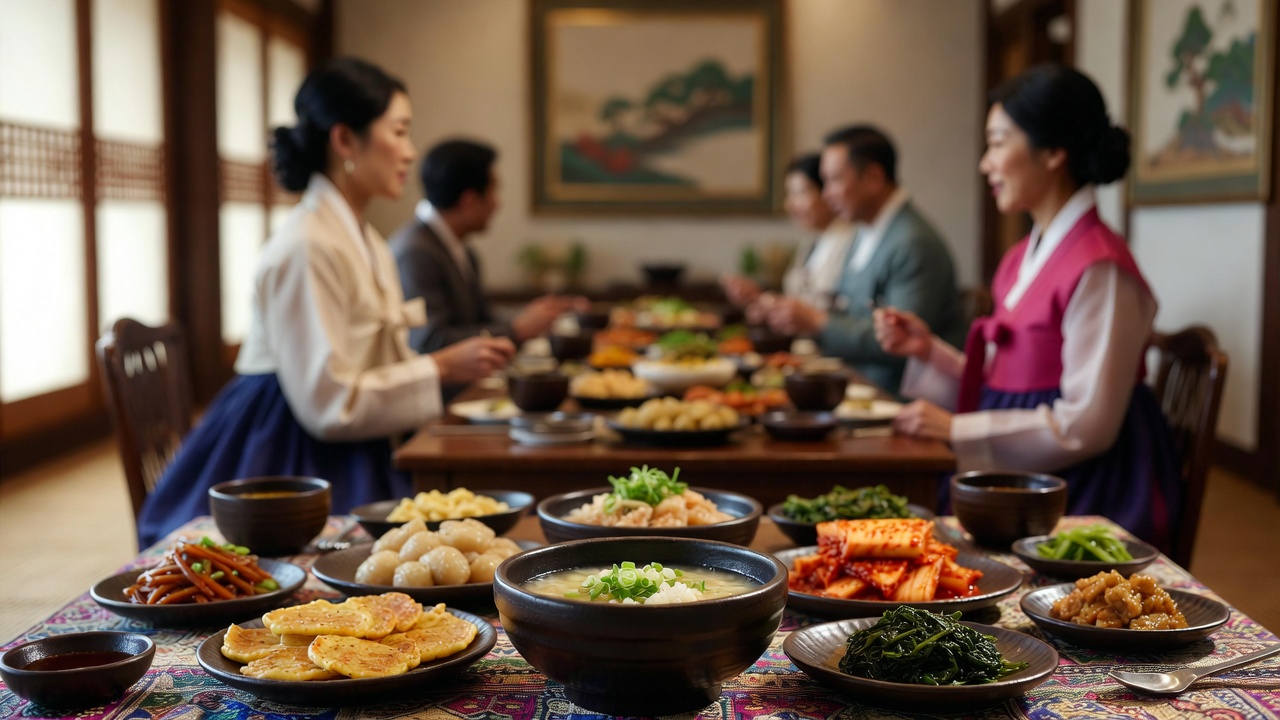
Food plays a central role in Seollal celebrations, with each dish carrying symbolic meaning for the new year. The feast is both an offering to ancestors and a celebration of family togetherness.
Tteokguk Recipe and Meaning: Korean Rice Cake Soup Tradition
Tteokguk (떡국) is the quintessential Seollal dish. This comforting soup features thin, oval-shaped rice cakes in a clear, savory broth. According to Maangchi’s recipe, a renowned Korean cooking authority, eating tteokguk on New Year’s Day symbolizes:
- Adding one year to your age (traditionally, everyone aged up on Seollal)
- A clean, fresh start (represented by the white rice cakes)
- Wealth and prosperity (the coin-shaped rice cakes resemble ancient Korean currency, yeopjeon)
Basic Tteokguk Ingredients:
| Ingredient | Korean Name | Purpose |
|---|---|---|
| Rice cake slices | 떡 (tteok) | Main ingredient |
| Beef brisket or shank | 소고기 (sogogi) | Broth base |
| Green onions | 파 (pa) | Garnish |
| Garlic | 마늘 (maneul) | Flavor |
| Egg | 계란 (gyeran) | Garnish (jidan) |
| Dried seaweed | 김 (gim) | Topping |
| Soy sauce | 간장 (ganjang) | Seasoning |
Traditional saying: Koreans often ask, “몇 그릇 드셨어요?” (How many bowls of tteokguk have you eaten?) as a playful way of asking someone’s age.
Jeon: Korean Savory Pancakes for Lunar New Year Celebrations
Jeon (전) are savory Korean pancakes that appear on nearly every Seollal table. These crispy, pan-fried delights come in numerous varieties:
- Yukjeon (육전) – Shredded beef
- Guljeon (굴전) – Oysters
- Kimchijeon (김치전) – Kimchi
- Pajeon (파전) – Green onion
- Dongtaejon (동태전) – Pollack fish
Jeon is traditionally served with a dipping sauce made from soy sauce, vinegar, and gochugaru (Korean chili flakes).
Japchae: Sweet Potato Noodles for Special Occasions
Japchae (잡채) is a beloved dish of glass noodles (made from sweet potato starch) stir-fried with colorful vegetables and often beef. According to Wikipedia, this dish was originally created for King Gwangaegun and contained no noodles at all.
Modern japchae includes:
- Clear sweet potato noodles
- Spinach and carrots
- Mushrooms
- Bell peppers
- Sesame oil and soy sauce
Galbi Jjim: Korean Braised Short Ribs for Holiday Feasts
Galbi jjim (갈비찜) is a show-stopping centerpiece for Seollal feasts. These braised short ribs are cooked until meltingly tender in a rich, sweet-savory sauce featuring:
- Soy sauce
- Garlic and ginger
- Sesame oil
- Korean pear (for natural sweetness and tenderizing)
- Honey or sugar
This dish represents abundance and celebration, making it perfect for the new year.
Complete List of Traditional Seollal Foods
According to My Korean Kitchen, a comprehensive Seollal table might include:
| Category | Dishes |
|---|---|
| Soups | Tteokguk, Manduguk, Tteok-manduguk |
| Pancakes | Various jeon (vegetable, meat, seafood) |
| Main dishes | Bulgogi, Galbi jjim, Japchae |
| Dumplings | Mandu (various fillings) |
| Side dishes | Kimchi, Namul (seasoned vegetables) |
| Rice cakes | Songpyeon, various tteok |
| Fruits | Persimmons, apples, pears |
Traditional Korean New Year Games: Fun Activities for Seollal 2026
Seollal isn’t just about food and rituals. It’s also a time for traditional games that bring families together with laughter and friendly competition. Many of these games gained international recognition after appearing in the Netflix hit series “Squid Game.”
Yutnori: How to Play Korea’s Most Popular Traditional Board Game
Yutnori (윷놀이) is the quintessential Seollal game, enjoyed by Koreans of all ages. This traditional board game uses four wooden sticks instead of dice.
How to Play Yutnori:
- Divide into teams (typically 2-4)
- Take turns throwing four wooden sticks (yut)
- Count how many sticks land face-up to determine movement
- Move game pieces around the board accordingly
- First team to move all pieces around the board wins
Yut Stick Results:
| Face Up | Name | Spaces Moved |
|---|---|---|
| 1 | Do (도) | 1 |
| 2 | Gae (개) | 2 |
| 3 | Geol (걸) | 3 |
| 4 | Yut (윷) | 4 + extra turn |
| 0 (all face down) | Mo (모) | 5 + extra turn |
Jegichagi: Korean Hacky Sack Game History and Rules
Jegichagi (제기차기) is similar to hacky sack. Players kick a small shuttlecock-like object (jegi) made from paper and coins, trying to keep it in the air as long as possible.
Traditional jegi was made by:
- Wrapping a coin in paper or cloth
- Creating a tassel-like top
- Allowing for controlled kicks
This game improves balance, coordination, and is perfect for all ages.
Neolttwigi: Traditional Korean Seesaw Jumping
Neolttwigi (널뛰기) is a uniquely Korean take on the seesaw. Instead of sitting, participants stand on opposite ends and take turns jumping, propelling each other into the air.
According to legend, this game originated so that women in traditional households could catch glimpses over the walls of their compounds.
Tuho: Arrow Throwing Game for Korean Celebrations
Tuho (투호) is an elegant game where players throw arrows into a narrow-necked vase from a distance. This game tests precision and was historically popular among royalty and nobility.
Yeon-nalligi: Korean Kite Flying Traditions
Kite flying (연날리기) is especially popular during Seollal. Korean kites feature distinctive rectangular designs with a central hole. The tradition includes:
- Flying kites on New Year’s Day
- Writing wishes or troubles on kites
- Cutting the string to let kites fly away, symbolically releasing bad luck
Best Places to Celebrate Seollal in South Korea 2026
While many Koreans spend Seollal with family in their hometowns, visitors can experience authentic celebrations at numerous cultural sites throughout the country.
Seoul Palaces During Korean New Year: Free Admission and Special Events
Seoul’s royal palaces offer free admission during Seollal and host special programs throughout the holiday period.
Gyeongbokgung Palace (경복궁)
The largest and most famous of Seoul’s palaces, Gyeongbokgung hosts:
- Royal Guard Changing Ceremony
- Traditional folk games
- Cultural performances
- Special Seollal exhibitions
Other palaces with free Seollal admission:
- Changdeokgung Palace (including Secret Garden with separate ticket)
- Changgyeonggung Palace
- Deoksugung Palace
- Jongmyo Shrine (normally requires reservation)
- Joseon Royal Tombs
Namsangol Hanok Village: Experiencing Traditional Korean New Year in Seoul
Located at the base of Namsan Mountain, Namsangol Hanok Village hosts one of Seoul’s most dedicated Seollal festivals. According to Travel-Stained, activities run from 10 AM to 5 PM on February 16-17, 2026 (TBC).
What to expect:
- Traditional performances (music, dance, martial arts)
- Hands-on craft activities (hanji paper crafts, traditional games)
- Folk game demonstrations
- Photo opportunities with N Seoul Tower backdrop
- Cultural workshops
Location: Near Chungmuro Station, walking distance from Myeongdong
Korean Folk Village in Yongin: Living Museum of Korean Heritage
The Korean Folk Village in Yongin offers an immersive step back in time. This living museum features:
- Reconstructed traditional homes from various regions
- Artisan demonstrations
- Traditional performances (tightrope walking, farmer’s music)
- Horseback riding
- Traditional food experiences
Getting there: Free shuttle bus from Suwon Station (Exit 4) at 10:30 AM, 12:30 PM, and 2:30 PM.
Jeonju Hanok Village: Korea’s Cultural Capital During Seollal
Jeonju Hanok Village is Korea’s largest traditional hanok village with over 700 preserved traditional houses. It’s particularly beautiful during Seollal when:
- Visitors wear hanbok through cobbled streets
- Cultural centers host workshops and performances
- Traditional markets buzz with holiday preparations
- Local restaurants serve famous Jeonju Bibimbap
According to Stripes Korea, the village becomes particularly festive from the weekend before Seollal.
Suwon Hwaseong Fortress: UNESCO World Heritage Seollal Celebration
Suwon’s Hwaseong Fortress, a UNESCO World Heritage Site, offers a unique New Year experience:
- Sunrise viewing from the fortress walls
- Folk games at Hwaseong Haenggung Palace
- Cultural performances
- Less crowded than Seoul attractions
National Folk Museum of Korea: Special Seollal Exhibitions
Located within Gyeongbokgung Palace grounds, the National Folk Museum of Korea hosts special Seollal programming:
- Year of the Horse exhibition (through March 2, 2026)
- Traditional games in the outdoor plaza
- Hands-on craft activities
- Children’s Museum programs
Seollal Travel Tips: How to Plan Your Korean Lunar New Year Trip
Visiting Korea during Seollal requires careful planning. The holiday brings both unique opportunities and challenges for travelers.
Transportation During Korean Lunar New Year: Trains, Buses, and Flights
Book early. Seollal creates one of Korea’s busiest travel periods as millions of Koreans return to their hometowns.
KTX/Korail Trains:
- Priority booking for Korean citizens during Seollal period
- Foreign visitors can book from January 21, 2026 (3 PM KST)
- Consider SRT (privately-owned high-speed rail) as an alternative
- Book online at Korail or SRT
Buses:
- Express buses fill up quickly
- Book through Kobus in advance
- Terminal locations vary by destination
Flights:
- Domestic flights to Jeju Island see significant price increases
- International flights may have reduced schedules
- Book well in advance
Driving:
- Avoid driving on the first and last days of the holiday
- Traffic jams can extend travel times dramatically
- Use real-time traffic apps
What’s Open and Closed During Seollal in Korea
Understanding business hours during Seollal helps avoid disappointment:
Typically OPEN:
| Venue Type | Notes |
|---|---|
| Major tourist districts | Myeongdong, Hongdae, Gangnam |
| Franchise cafes | Starbucks, Ediya, etc. |
| Convenience stores | 24-hour operation |
| Movie theaters | Regular schedule |
| Royal palaces | Free admission |
| National museums | Special programs |
| Theme parks | Lotte World, Everland |
Often CLOSED or LIMITED:
| Venue Type | Notes |
|---|---|
| Family-run restaurants | May close all 3 days |
| Traditional markets | Often closed on Seollal Day |
| Small shops | Variable |
| Banks | Closed |
| Government offices | Closed |
Seoul Weather in February: What to Pack for Seollal 2026
February in Korea brings cold winter weather. The average temperature during Seollal ranges from -2°C to 5°C (28°F to 41°F).
Essential packing list:
- Layered clothing
- Warm winter coat
- Thick socks
- Anti-slip shoes/boots
- Heat patches (hotpack)
- Gloves and hat
- Moisturizing products (dry air)
- Sunglasses (for snow glare)
- Glasses defogger (for moving between indoors/outdoors)
Accommodation During Korean New Year: Booking Tips and Costs
Expect hotel prices to increase 10-30% during the Seollal period. However, Seoul actually becomes quieter as locals travel to their hometowns.
Best areas to stay:
| Area | Advantages |
|---|---|
| Myeongdong | Central location, easy palace access |
| Insadong | Traditional atmosphere, cultural sites |
| Hongdae | Entertainment, dining options |
| Jongno | Historic district, multiple palaces |
How to Say Happy New Year in Korean: Essential Seollal Phrases
Learning a few Korean phrases will enhance your Seollal experience and delight locals.
Korean New Year Greetings and Expressions
| Korean | Romanization | Meaning |
|---|---|---|
| 새해 복 많이 받으세요 | Saehae bok mani badeuseyo | May you receive many blessings in the New Year |
| 복 많이 받으세요 | Bok mani badeuseyo | Receive many blessings (shorter version) |
| 새해 복 많이 받아 | Saehae bok mani bada | Happy New Year (casual, to friends) |
| 행복한 새해 되세요 | Haengbokan saehae doeseyo | Have a happy New Year |
Useful Seollal Vocabulary
| Korean | Romanization | Meaning |
|---|---|---|
| 설날 | Seollal | Lunar New Year |
| 떡국 | Tteokguk | Rice cake soup |
| 세배 | Sebae | New Year’s bow |
| 세뱃돈 | Sebaedon | New Year’s money |
| 한복 | Hanbok | Traditional Korean clothing |
| 차례 | Charye | Ancestral rites |
| 윷놀이 | Yutnori | Traditional board game |
| 말띠 | Maldi | Year of the Horse |
Seollal for Foreigners: How Tourists Can Experience Korean Lunar New Year
Even without a Korean family to celebrate with, visitors can fully immerse themselves in Seollal traditions.
Participating in Public Seollal Events and Festivals
Many cultural sites welcome tourists to participate in Seollal activities:
- Visit Namsangol Hanok Village for hands-on traditional activities
- Explore palaces during free admission periods
- Join folk game sessions at the National Folk Museum
- Watch cultural performances at various venues
- Take a Korean cooking class to learn Seollal dishes
Seollal Events at Korean Cultural Centers Worldwide
Korean Cultural Centers in over 20 countries host Seollal celebrations. According to The Korea Herald, 2025/2026 events include:
- Tteokguk tasting experiences
- Sebae demonstrations
- Traditional game activities
- Hanbok try-on sessions
- K-pop performances
Check your local Korean Cultural Center for specific 2026 programming.
Tips for Respectful Participation
When participating in Seollal traditions:
- Show genuine interest and respect
- Ask permission before photographing ceremonies
- Follow local customs when bowing or entering traditional spaces
- Dress appropriately (hanbok or neat casual wear)
- Be patient with crowds and language barriers
- Express gratitude to those sharing their traditions
The Spiritual Side of Seollal: Fortune Telling and New Year Rituals
Seollal holds deep spiritual significance beyond family gatherings and feasting.
Jeomsul: Korean Fortune Telling During New Year
Jeomsul (점술) or fortune-telling is popular during Seollal. Many Koreans visit fortune tellers to receive predictions for the coming year, including insights about:
- Career and finances
- Relationships and marriage
- Health
- Lucky and unlucky directions
- Auspicious dates for major decisions
Temple Visits and Bell Ringing Ceremonies
While more associated with Solar New Year (January 1), some Koreans visit temples during Seollal for:
- Bell-ringing ceremonies (jeya-jong)
- Prayers for the new year
- Meditation and reflection
- Temple stays for deeper spiritual experience
Popular temples include:
- Bongeunsa Temple (Seoul)
- Jogyesa Temple (Seoul)
- Haedong Yonggungsa (Busan)
Modern Seollal: How Korean New Year Celebrations Have Evolved
While rooted in tradition, Seollal continues to evolve with modern Korean society.
Contemporary Seollal Gift-Giving Trends
Traditional gift sets remain popular, but modern preferences have shifted. According to Korea Stripes, popular Seollal gifts now include:
Traditional:
- Fruit gift sets
- Korean beef (hanwoo)
- Spam gift sets (uniquely Korean!)
- Health supplements
- Honey
Modern:
- Gift certificates
- Premium skincare sets
- Cash in decorative envelopes
- Experience gifts (spa, travel)
- Practical household items
Seollal in the Digital Age: Virtual Celebrations
The COVID-19 pandemic accelerated changes that continue today:
- Video calls replace some family visits
- Online sebae to distant relatives
- Digital sebaedon transfers
- Virtual traditional game tournaments
- Social media sharing of celebrations
Age Calculation Changes in Korea
Until 2023, Korea used a unique age calculation system where everyone turned one year older on Seollal. This meant babies were considered “one year old” at birth and gained another year on the first Seollal after their birth.
However, South Korea officially adopted the international age system in 2023. While this doesn’t diminish Seollal’s importance, it has changed the literal interpretation of “eating tteokguk makes you one year older.”
Seollal in North Korea vs. South Korea: Comparing Celebrations
Seollal holds significance across the entire Korean Peninsula, though celebrations differ between North and South.
How North Koreans Celebrate Lunar New Year
According to Liberty in North Korea, North Korean Seollal celebrations include:
- State-encouraged folk traditions to emphasize Korean heritage
- Family gatherings and home-cooked meals
- Traditional games like Yutnori
- Television broadcasts of historical programs
- Mandatory activities organized by local authorities
Key differences:
- Less emphasis on individual ancestral rites
- State-organized community events
- Different regional food variations (manduguk, dwejigukbap)
- Political messaging incorporated into celebrations
Planning Your Perfect Seollal 2026 Itinerary
Sample 5-Day Seollal Seoul Itinerary
Day 1: February 15 (Sunday) – Arrival and Pre-Seollal Atmosphere
- Arrive in Seoul
- Explore Myeongdong or Hongdae
- Visit traditional markets (Gwangjang or Namdaemun)
- Experience pre-holiday buzz
Day 2: February 16 (Monday) – Seollal Eve
- Morning: Bukchon Hanok Village
- Afternoon: Rent hanbok, visit Gyeongbokgung Palace
- Evening: Traditional Korean dinner
Day 3: February 17 (Tuesday) – Seollal Day
- Morning: Namsangol Hanok Village festival
- Afternoon: National Folk Museum programs
- Evening: Quiet Seoul exploration
Day 4: February 18 (Wednesday) – Cultural Immersion
- Day trip to Korean Folk Village
- OR Suwon Hwaseong Fortress
- Evening: Return to Seoul
Day 5: February 19 (Thursday) – Departure
- Morning: Last-minute shopping
- Visit remaining attractions
- Departure
Conclusion: Embracing the Spirit of Seollal 2026
Seollal 2026 offers a magnificent opportunity to experience one of Korea’s most treasured traditions. As the Year of the Fire Horse gallops in, bringing energy, transformation, and dynamic change, the ancient customs of Korean Lunar New Year remind us of the enduring values that connect generations.
Whether you’re:
- Savoring your first bowl of tteokguk
- Learning to play yutnori with new friends
- Marveling at hanbok-clad families at palace gates
- Receiving wisdom from Korean elders
- Simply soaking in the festive atmosphere
Seollal provides a window into the Korean soul—one that honors ancestors, celebrates family, and welcomes the future with open arms.
Mark your calendars for February 17, 2026, and prepare to be swept into the warmth, tradition, and joy of Korean Lunar New Year. 새해 복 많이 받으세요!
Frequently Asked Questions About Seollal 2026
Q: When is Seollal 2026? A: Seollal 2026 falls on Tuesday, February 17, 2026. The official three-day holiday period is February 16-18, 2026.
Q: What year is 2026 in the Korean zodiac? A: 2026 is the Year of the Fire Horse (Byeong-o year), which occurs only once every 60 years.
Q: Is Seollal the same as Chinese New Year? A: Seollal falls on the same date as Chinese New Year (first day of the lunar calendar), but Korean celebrations have distinct traditions, foods, and customs.
Q: What do Koreans eat on Seollal? A: The most important dish is tteokguk (rice cake soup). Other traditional foods include jeon (savory pancakes), japchae (glass noodles), galbi jjim (braised short ribs), and various mandu (dumplings).
Q: Are attractions open during Seollal in Korea? A: Yes, major tourist attractions, palaces (with free admission), and museums remain open. Many franchise restaurants and convenience stores operate normally. Small, family-run businesses may close.
Q: How should I greet Koreans during Seollal? A: Say “새해 복 많이 받으세요” (Saehae bok mani badeuseyo), which means “May you receive many blessings in the New Year.”
Q: Is Seollal a good time to visit Korea? A: Yes! While transportation can be crowded, major cities become quieter as locals visit hometowns. Palaces offer free admission, and cultural events abound.
Seollal Shopping Guide: Best Markets and Gift Ideas
Traditional Markets to Visit Before Korean Lunar New Year
The days leading up to Seollal transform Korea’s traditional markets into bustling hubs of activity. These markets offer authentic experiences and excellent gift-buying opportunities.
Gwangjang Market (광장시장) – Seoul
Korea’s oldest and largest traditional market bursts with energy before Seollal:
- Fresh ingredients for holiday cooking
- Traditional snacks and street food
- Hanbok and traditional accessories
- Vintage and antique items
- Famous bindaetteok (mung bean pancakes)
Location: Near Jongno 5-ga Station
Namdaemun Market (남대문시장) – Seoul
One of the largest traditional markets in Korea:
- Affordable hanbok options
- Traditional gift sets
- Kitchenware for Seollal cooking
- Imported goods and clothing
- Open late into the evening
Jagalchi Market (자갈치시장) – Busan
Korea’s largest seafood market is essential for those celebrating in the south:
- Fresh seafood for holiday tables
- Unique Busan specialties
- Authentic local atmosphere
Seollal Gift Set Shopping: Where to Buy Traditional Korean Gifts
Department stores and supermarkets create elaborate gift set displays during the Seollal season:
Popular gift set categories:
| Category | Price Range (KRW) | Best For |
|---|---|---|
| Premium beef (hanwoo) | 100,000-500,000+ | Parents, in-laws |
| Fruit gift sets | 50,000-200,000 | Family, colleagues |
| Ginseng/health products | 50,000-300,000 | Elderly relatives |
| Spam gift sets | 30,000-80,000 | Practical gifts |
| Premium snack sets | 30,000-100,000 | Friends, casual |
| Skincare sets | 50,000-200,000+ | Female relatives |
Where to shop:
- Lotte Department Store
- Shinsegae Department Store
- Hyundai Department Store
- E-Mart, Homeplus (for value options)
- Traditional markets (for unique items)
Photography Tips for Seollal 2026: Capturing Korean New Year Memories
Best Photo Spots During Korean Lunar New Year
Seollal provides exceptional photography opportunities throughout Korea:
Gyeongbokgung Palace
- Royal guards in ceremonial dress
- Hanbok-clad visitors against traditional architecture
- Snow-covered palace grounds (weather permitting)
- Best light: Early morning or golden hour
Bukchon Hanok Village
- Traditional rooftops with city backdrop
- Narrow alleyways with hanbok visitors
- “Instagram-famous” viewpoints
- Note: Be respectful of residents
Namsangol Hanok Village
- N Seoul Tower backdrop
- Traditional performances
- Fewer crowds than Bukchon
- Free entry
Jeonju Hanok Village
- Largest concentration of hanbok rentals
- Beautiful lantern displays
- Traditional architecture
- Famous “hanok wave” viewpoint
Seollal Photography Etiquette
Do:
- Ask permission before photographing individuals
- Respect private ceremonies (charye)
- Capture the joyful atmosphere
- Share your experiences respectfully
Don’t:
- Interrupt ancestral rites for photos
- Block pathways at crowded venues
- Use flash during performances
- Photograph without consent
Korean New Year Superstitions and Beliefs
Lucky and Unlucky Activities During Seollal
Korean folklore associates certain activities with good or bad fortune during the new year period:
Considered Lucky:
- Eating tteokguk on New Year’s morning
- Wearing new clothes (especially underwear)
- Cleaning the house before (not during) the holiday
- Receiving the first visitor with kindness
- Dreaming of pigs (wealth) or dragons (power)
Traditionally Avoided:
- Sweeping on New Year’s Day (sweeps away luck)
- Cutting hair during Seollal (cutting fortune)
- Lending money on the first day (losing wealth)
- Crying on New Year’s Day
- Saying negative words
The First Visitor Tradition
Many Koreans believe the first person to visit their home on New Year’s Day will influence the family’s fortune for the entire year. This belief leads to:
- Carefully chosen first visitors
- Preference for people born in “compatible” zodiac years
- Extra hospitality for the first guest
- Avoidance of inauspicious visitors
Seollal for Families: Kid-Friendly Activities in Korea
Best Seollal Activities for Children in Seoul
Traveling with children during Seollal? These activities cater specifically to young visitors:
Children’s Museum at National Folk Museum
- Interactive exhibits
- Hands-on traditional activities
- Age-appropriate cultural education
- Free admission during Seollal
Lotte World
- Less crowded during Seollal
- Indoor and outdoor attractions
- Special holiday events
- Accessible year-round
Everland
- Winter festivals and activities
- Animal encounters
- Sledding areas
- Traditional games zone during Seollal
Korean Folk Village (Yongin)
- Traditional Korean playground equipment
- Animal encounters
- Live performances
- Educational and entertaining
Making Seollal Meaningful for Kids
Help children appreciate Seollal traditions:
- Practice sebae – Teach the proper bow and greeting
- Make bokjumeoni – Craft traditional luck pouches
- Play yutnori – Learn the rules together
- Cook tteokguk – Involve kids in simple preparation
- Wear hanbok – Choose comfortable children’s versions
- Tell folk stories – Share Korean legends and tales
Seollal Health and Wellness: Traditional Korean New Year Practices
Korean New Year Health Traditions
Seollal incorporates numerous health-conscious practices:
Tteokguk health benefits:
- Easily digestible rice
- Warming broth for cold weather
- Protein from beef and eggs
- Comfort food for wellbeing
Traditional health gifts:
- Korean ginseng (immune support)
- Honey (natural energy)
- Deer antler extract (traditional medicine)
- Mushroom supplements
Staying Healthy During Your Seollal Visit
Cold weather tips:
- Layer clothing appropriately
- Stay hydrated (dry winter air)
- Use hand warmers (hotpacks)
- Protect skin with moisturizer
Food safety:
- Eat at established restaurants
- Stay hydrated between meals
- Pace yourself at feasts
- Note potential allergens
The Economics of Seollal: Understanding Korea’s Biggest Holiday Season
Seollal’s Economic Impact on Korea
Seollal drives significant economic activity across multiple sectors:
Retail sector:
- Gift set sales surge
- Department store promotions
- Traditional market activity
- Online shopping increases
Transportation:
- KTX and bus tickets sell out
- Domestic flights increase prices
- Toll revenue spikes
- Gas station sales rise
Hospitality:
- Hotel prices fluctuate
- Restaurant reservations fill
- Tourism spending increases
- Service industry adapts
According to The Korea Herald, 2026 is being branded as a “year of blessing for employees” due to the favorable alignment of holidays with weekends, creating eight periods of three or more consecutive days off.
Sebaedon Economics: How Much Money Do Koreans Give?
New Year’s money (sebaedon) amounts vary by relationship and region:
| Relationship | Typical Amount (KRW) |
|---|---|
| Grandparents to grandchildren | 50,000-100,000 |
| Parents to children | 50,000-200,000 |
| Aunts/Uncles to nieces/nephews | 30,000-50,000 |
| Older siblings | 20,000-50,000 |
| Family friends | 10,000-30,000 |
Note: Amounts vary significantly by family circumstances and regional customs.
Beyond Seoul: Regional Seollal Celebrations Across Korea
Busan Seollal Celebrations and Attractions
Korea’s second-largest city offers unique Seollal experiences:
Gamcheon Culture Village
- Colorful hillside village
- Art installations
- Quieter during Seollal
- Excellent photography
Haedong Yonggungsa Temple
- Seaside temple setting
- Sunrise viewing
- New Year prayers
- Unique coastal atmosphere
Jagalchi Market
- Fresh seafood
- Local specialties
- May have limited hours during Seollal
Jeju Island During Korean Lunar New Year
Seongsan Ilchulbong Peak
- Famous sunrise viewpoint
- New Year sunrise tradition
- UNESCO World Heritage Site
- Moderate hiking required
Hallasan Mountain
- Korea’s highest peak
- Snow hiking opportunities
- Natural beauty
- Advance preparation needed
Unique Jeju Seollal foods:
- Gon tteokguk (Jeju-style rice cake soup)
- Jeju black pork dishes
- Local tangerine specialties
Gyeongju: Ancient Capital Seollal Experience
Bulguksa Temple
- UNESCO World Heritage Site
- Peaceful Seollal atmosphere
- Buddhist traditions
- Historic architecture
Tumuli Park
- Ancient royal tombs
- Serene walking paths
- Historical reflection
- Free entry
Seollal 2027 and Beyond: Future Korean Lunar New Year Dates
Planning ahead? Here are upcoming Seollal dates:
| Year | Seollal Date | Zodiac Animal |
|---|---|---|
| 2026 | February 17 | Fire Horse |
| 2027 | February 7 | Fire Goat |
| 2028 | January 27 | Earth Monkey |
| 2029 | February 13 | Earth Rooster |
| 2030 | February 3 | Metal Dog |
Final Thoughts: Why Seollal Matters in Modern Korea
Despite rapid modernization, Seollal remains central to Korean identity. The holiday represents:
Cultural continuity – Connecting generations through shared traditions Family values – Prioritizing relationships over work Ancestral respect – Honoring those who came before Community bonds – Strengthening social connections National identity – Celebrating uniquely Korean heritage
For visitors, Seollal offers an unparalleled window into the Korean heart—a chance to witness how one of the world’s most dynamic societies maintains its connection to ancient traditions while racing toward the future.
As the Year of the Fire Horse charges forward, may it bring you the energy, passion, and transformation that this powerful zodiac symbol represents.
새해 복 많이 받으세요! May you receive abundant blessings in the New Year!
This guide is intended for informational purposes. Always verify dates, opening hours, and event schedules closer to your travel dates, as they may change.