A young man in the Sahel leaves his village before dawn. He is not heading to school. He is not heading to work. There is no school. There is no work. By nightfall, he sits in a makeshift camp, listening to a recruiter promise him purpose, pay, and belonging. This is not a rare story. It is the story of thousands — and it is the story the United Nations has spent the last decade trying to rewrite.
The UN Plan of Action to Prevent Violent Extremism (PVE), first presented to the General Assembly on 15 January 2016, remains the most ambitious global blueprint for stopping radicalization before it starts. Now, in 2026 — the 10th anniversary of that plan and the 20th anniversary of the UN Global Counter-Terrorism Strategy — the world is revisiting these strategies with fresh urgency. This year, the ninth review of the Global Counter-Terrorism Strategy is scheduled for mid-2026, presenting a once-in-a-generation opportunity to assess what has worked, what has not, and what must change.
This article breaks down the core strategies, priority areas, and recent developments in the UN’s approach to preventing violent extremism. It explores why prevention matters more than ever, what the latest research tells us about radicalization, and how communities from West Africa to Southeast Asia are putting these ideas into practice.
What Is the UN Plan of Action to Prevent Violent Extremism?
The UN Plan of Action to Prevent Violent Extremism is a framework developed by then-Secretary-General Ban Ki-moon and presented to the General Assembly in January 2016. It contains more than 70 recommendations directed at Member States and the United Nations system. The Plan was adopted by General Assembly resolution on 12 February 2016.
At its heart, the Plan makes one central argument: security measures alone are not enough. Military operations and law enforcement can disrupt terrorist cells, but they cannot address why people are drawn to extremism in the first place. The Plan calls for a comprehensive approach that combines counter-terrorism with systematic preventive steps. These steps target the underlying conditions that push individuals toward radicalization — things like poverty, poor governance, human rights abuses, and social exclusion.
The Plan acknowledges a frank reality. As the Center on International Cooperation at New York University noted in its analysis, the document makes a striking admission: over the past decade, counter-terrorism efforts had mostly overlooked two of the four pillars of the 2006 Global Counter-Terrorism Strategy — namely, addressing the conditions conducive to terrorism and ensuring respect for human rights.
This was a turning point. For the first time at the highest level, the UN formally recognized that a heavy-handed, security-only approach could actually make things worse.
Why Preventing Violent Extremism Matters More Than Ever in 2026
The numbers tell a sobering story. The Global Terrorism Index 2025, published by the Institute for Economics and Peace, reported that the Islamic State expanded its operations to 22 countries and remained the deadliest terrorist organization, responsible for 1,805 deaths. The Tehrik-e-Taliban Pakistan (TTP) saw a 90 percent increase in attributed deaths, making it the fastest-growing terrorist group. Meanwhile, terrorist attacks in the West jumped by 63 percent, with attacks in Europe doubling to 67 incidents.
Perhaps most alarming is a demographic shift. In 2024, several Western countries reported that one in five terror suspects was under the age of 18. Teenagers accounted for most Islamic State-linked arrests in Europe. This points to a disturbing truth: violent extremism is reaching younger and younger populations, and the digital tools that fuel radicalization are growing more sophisticated by the day.
Sub-Saharan Africa continues to bear a heavy burden. UNDP research found that the region has become a global epicenter of violent extremism. Groups like ISIL (Da’esh) and its affiliates, along with Jama’at Nusrat al-Islam wal-Muslimin (JNIM), continue to exploit instability in the Sahel and beyond. The UNDP’s 2023 “Journey to Extremism” report — based on interviews with nearly 2,200 people across eight countries — found that one-quarter of voluntary recruits cited job opportunities as their primary reason for joining extremist groups, a 92 percent increase from 2017 findings.
Against this backdrop, the UN General Assembly is conducting its ninth review of the Global Counter-Terrorism Strategy during the eightieth session (September 2025–September 2026). The Fourth Counter-Terrorism Week is scheduled for 26 June to 2 July 2026 at UN Headquarters in New York. It will include the Fourth High-Level Conference of Heads of Counter-Terrorism Agencies and approximately 20 side events. The theme: “A Future Free from Terrorism.”
The Seven Priority Areas of the UN Plan of Action for Preventing Violent Extremism
The Plan identifies seven priority areas that form the backbone of effective prevention. Each addresses a different dimension of the problem. Together, they represent a whole-of-society approach.
| Priority Area | Core Focus |
|---|---|
| 1. Dialogue and Conflict Prevention | Mediation, peacebuilding, and early warning systems |
| 2. Good Governance, Rule of Law, and Human Rights | Anti-corruption, judicial reform, and rights protection |
| 3. Engaging Communities | Local participation, interfaith dialogue, and community resilience |
| 4. Empowering Youth | Youth councils, mentoring, civic engagement, and sports programs |
| 5. Gender Equality and Empowering Women | Women’s leadership in peacebuilding and PVE efforts |
| 6. Education, Skills Development, and Employment | Vocational training, quality education, and job creation |
| 7. Strategic Communications, Internet, and Social Media | Counter-narratives, media literacy, and regulation of online spaces |
Each of these areas deserves close examination. The sections below explore the current state of play in each one, drawing on the latest data and case studies from around the world.
How Dialogue and Conflict Prevention Address Root Causes of Radicalization
Dialogue is the first line of defense. The UN Plan of Action places it at the top of the priority list for good reason. Violent extremism does not emerge in a vacuum. It grows in environments marked by unresolved conflict, deep grievances, and broken trust between communities and governments.
The Plan calls on Member States to invest in mediation, early warning systems, and conflict resolution mechanisms at the local, national, and regional levels. This means engaging with communities before tensions escalate — not after a crisis has already unfolded.
Consider the experience of Somalia. Since 2017, the UN Assistance Mission in Somalia (UNSOM) has maintained a mandate to advise and assist the Federal Government on implementing its National Strategy and Action Plan for Preventing and Countering Violent Extremism. Under the Comprehensive Approach to Security (CAS), Strand 4 specifically focuses on ensuring that conflicts are addressed politically rather than through violence. UNDP has supported networks of religious scholars across 16 districts to serve as mediators and peacebuilders.
In practice, dialogue-based approaches have shown measurable results in some contexts. Communities that have regular, structured contact between different ethnic, religious, or political groups tend to be more resilient against extremist recruitment. The challenge, of course, is scaling these efforts. Dialogue programs are labor-intensive, culturally specific, and difficult to replicate across borders. But they remain essential — particularly in regions where government presence is weak and trust is fragile.
Strengthening Good Governance and Rule of Law to Counter Violent Extremism
If dialogue is the first line of defense, governance is the foundation. Poor governance is one of the most consistent predictors of violent extremism. When governments are corrupt, services are absent, and the justice system is perceived as unfair, people lose faith in the state. That loss of faith creates an opening for extremist groups, which often position themselves as providers of order, justice, and basic services.
The UN Plan of Action calls on Member States to strengthen the rule of law, repeal discriminatory legislation, and implement policies that combat marginalization and exclusion. It emphasizes that all counter-terrorism measures must be grounded in respect for human rights and international law.
This is not just a philosophical point. It is backed by hard data. UNDP’s landmark “Journey to Extremism in Africa” study found that 71 percent of voluntary recruits cited some form of government action — particularly the killing or arrest of a family member or friend — as the “tipping point” that triggered their final decision to join an extremist group. When security forces operate outside the bounds of law, they do not suppress extremism — they fuel it.
The UN Office of the High Commissioner for Human Rights (OHCHR) has called for a renewed focus on human rights ahead of the ninth review of the Global Counter-Terrorism Strategy. The OHCHR describes the current moment as a “global polycrisis,” in which terrorism and counter-terrorism intersect with the rise of authoritarianism, transnational repression, the climate crisis, and a broader geopolitical crisis for multilateralism.
Countries like Finland offer one model of how governance reforms can be integrated into PVE efforts. Finland’s National Action Plan for the Prevention and Combating of Violent Radicalisation and Violent Extremism 2024–2027 includes 43 specific actions divided across national, regional, local, and individual levels. It brings together law enforcement, social service providers, educators, and civil society in a coordinated framework.
The Critical Role of Community Engagement in Preventing Violent Extremism
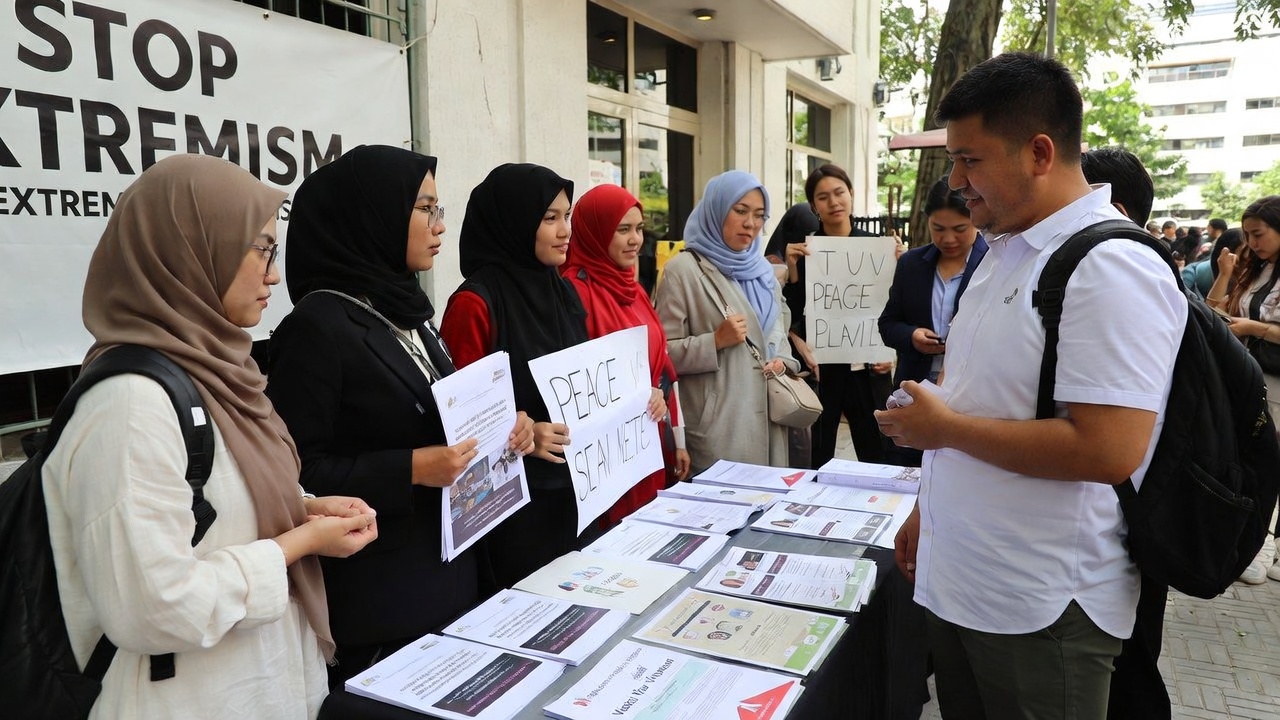
Top-down strategies can only go so far. The Plan of Action recognizes that communities are both the first targets and the first responders in the fight against violent extremism. Engaging communities means giving ordinary people — teachers, parents, religious leaders, local business owners — the tools and resources to identify early signs of radicalization and to intervene before it is too late.
This is not about turning neighbors into informants. It is about building community resilience: the collective ability of a group to resist, absorb, and recover from the influence of violent extremist ideologies.
The ASEAN Regional Plan of Action on Preventing Violent Extremism offers an instructive example. Supported by UNOCT’s PVE Plans of Action Programme, the Bali Workplan emerged as the initiative with the greatest number of ASEAN sectoral groups involved. The Plan enabled cross-sectoral cooperation within the regional organization — linking education, youth, social welfare, and security agencies in a shared framework.
In West Africa, the UNDP “Preventing and Responding to Violent Extremism in the Atlantic Corridor” project is strengthening community resilience across Benin, Burkina Faso, Côte d’Ivoire, Ghana, and Togo. It works directly with local leaders and civil society organizations to address the specific grievances and vulnerabilities that extremist groups exploit.
Community engagement is also about interfaith dialogue. In Iraq, UNDP supported a first-of-its-kind gathering of women faith-based peacebuilders from over seven faith backgrounds. In Somalia, networks of religious scholars have been supported across 16 districts for their role in peacebuilding and mediation.
The key insight here is localization. A community engagement strategy that works in Lagos will not necessarily work in Lahore. Effective prevention must be tailored to the specific social, cultural, and political context in which it operates.
How Empowering Youth Can Stop Radicalization and Extremist Recruitment
Young people are disproportionately both the victims and the perpetrators of violent extremism. The UN Plan of Action dedicates an entire priority area to youth empowerment — and for good reason.
The demographics are stark. In many of the countries most affected by violent extremism, the median age is under 20. In sub-Saharan Africa, over 60 percent of the population is under the age of 25. When young people lack access to education, employment, and political participation, they become vulnerable to recruitment by groups that promise all three.
The Plan calls on Member States to:
- Invest in activities aimed at preventing violent extremism by creating safe spaces for youth participation
- Integrate young women and men into decision-making processes at local and national levels
- Establish youth councils and similar mechanisms that give young people a platform for civic engagement
The Global Terrorism Index 2025 sounded a particular alarm about the youth recruitment pipeline. The report noted that in 2024, several Western countries found one in five terror suspects to be under the age of 18. This represents a shift in the threat landscape. Traditional counter-terrorism tools — surveillance, prosecution, incarceration — are poorly suited for dealing with radicalized minors.
UNOCT’s Young Leaders for Online Preventing and Countering Violent Extremism (PCVE) in Southeast Asia project, which ran from 2023 to 2024 with Australian funding, trained young people from Indonesia, Malaysia, the Philippines, and Thailand in strategic communications. An internal evaluation found that the project achieved its intended outcomes and provided six recommendations for future projects.
Sports programs have also gained traction as a PVE tool. UNOCT has highlighted the transformative power of sports in building community cohesion and resilience. At the same time, it has cautioned that major sporting events remain potential terrorist targets and require robust security.
The fundamental principle here is straightforward: give young people something worth living for, and they are far less likely to be drawn to something worth dying for.
Why Gender Equality and Women’s Empowerment Are Essential to Preventing Extremism
The UN Plan of Action states it plainly: “Women’s empowerment is a critical force for sustainable peace.” It notes that societies with higher gender equality indicators are less vulnerable to violent extremism. This is not a coincidence. It is a pattern confirmed by research across multiple continents and conflict zones.
Women play multiple roles in relation to violent extremism. Some are victims. Some are recruited — willingly or by force. But most importantly, women are powerful agents of prevention. As mothers, teachers, community leaders, and religious figures, women often occupy positions of trust that allow them to detect early signs of radicalization and to intervene in ways that others cannot.
The 2023 UNDP “Journey to Extremism” study included a significantly higher number of female interviewees — 552 women — compared to the original 2017 study. The gender-disaggregated findings shed light on women’s and men’s divergent pathways to recruitment. Women were more often forcibly recruited, and their motivations and experiences within extremist groups differed in important ways from those of men.
In practice, gender-responsive PVE programming takes many forms. In Morocco, UNDP and the Mohammed VI Foundation have supported women returnees and families of returnees or detainees convicted under anti-terrorism laws. In Uzbekistan, an innovative UNDP experiment on the use of behavioral science found that female role models, religious leaders, and community leaders can play a crucial role in shifting attitudes toward women, including their right to work and participate in politics.
The Plan of Action explicitly calls for mainstreaming gender across all PVE efforts — not just in dedicated women’s programs, but in every aspect of prevention, from education to governance to strategic communications.
Education and Employment as Tools for Countering Violent Extremism Globally
If there is one finding that has reshaped the conversation about violent extremism in recent years, it is this: hope of finding work has overtaken religious ideology as the primary driver of recruitment in sub-Saharan Africa.
The 2023 UNDP report found that among nearly 2,200 interviewees, one-quarter of voluntary recruits cited job opportunities as their primary reason for joining. This represented a 92 percent increase from the 2017 study’s findings. Religion, by contrast, was cited by only 17 percent — a 57 percent decrease from 2017. A majority of recruits who cited religion as a motivation admitted to having limited knowledge of religious texts.
These findings have profound implications for policy. They suggest that investing in education, vocational training, and employment creation is not just a development goal — it is a security imperative.
The Plan of Action calls on Member States to:
- Provide quality education that promotes tolerance, critical thinking, and respect for diversity
- Develop vocational training programs targeted at at-risk youth
- Create employment opportunities in areas vulnerable to extremist recruitment
- Foster entrepreneurship and private sector engagement in conflict-affected regions
In Ghana, a UNDP vulnerability assessment of northern regions found that youth unemployment is the most common driver of vulnerability to violent extremism. The national youth unemployment rate for 15-to-24-year-olds is about 32.8 percent, but in some northern regions, rates climb as high as 39 percent in Upper East and 38.2 percent in Savannah Region. The report recommended youth empowerment, border security management, and operationalization of Ghana’s counter-terrorism framework.
Education also plays a critical role in building media literacy — the ability to critically evaluate information, recognize propaganda, and resist manipulation. UNESCO has published guidance for policy-makers on how education systems can be redesigned to prevent violent extremism from taking root in schools and universities.
Strategic Communications and Social Media in the Fight Against Online Radicalization
The seventh priority area of the Plan — strategic communications, the Internet, and social media — has arguably become the most urgent since the Plan was first adopted in 2016.
In the decade since the Plan was released, the digital landscape has transformed. Social media algorithms amplify extreme content. Encrypted messaging apps allow recruiters to operate in private channels. Artificial intelligence tools can generate propaganda at scale. And the age of those being targeted online continues to drop.
At a January 2026 Security Council briefing, Acting Under-Secretary-General Alexandre Zouev warned that AI and other technologies are increasingly being used to fuel radicalization and recruitment, particularly targeting youth and children. He noted that Da’esh and its affiliates continue to adapt and demonstrate resilience despite sustained counter-terrorism pressure. Commercial satellite communications and emerging technologies have expanded the tools available to terrorist actors.
The Plan calls on Member States and the private sector to:
- Develop and implement counter-narrative strategies that provide alternatives to extremist messaging
- Build media literacy programs in schools and communities
- Work with technology companies to detect and remove terrorist content while respecting freedom of expression
- Invest in research on the nexus between emerging technologies and violent extremism
UNOCT has conducted pilot research on the connection between video games and violent extremism — an emerging area of concern as extremist groups use gaming platforms for recruitment and radicalization. The findings of this pilot study are informing future programming.
In Southeast Asia, the Young Leaders for Online PCVE project trained young people to create their own counter-narrative content — videos, social media campaigns, and digital storytelling — that speaks in the language of their peers. The evaluation found that peer-to-peer communication was more effective than top-down government messaging in reaching at-risk youth.
The challenge in this space is balancing security with rights. Counter-terrorism measures that censor legitimate speech, suppress civil society, or expand state surveillance can themselves become drivers of radicalization. The OHCHR’s Special Rapporteur on counter-terrorism and human rights has repeatedly emphasized that online counter-terrorism efforts must comply with international human rights law.
How National Action Plans Help Countries Implement the UN PVE Strategy
One of the Plan’s most consequential recommendations is that each Member State develop its own National Plan of Action to prevent violent extremism. These national plans are intended to set local priorities, address specific drivers of radicalization, and complement existing counter-terrorism strategies.
The General Assembly, in resolution 70/291 of the Fifth Review of the Global Counter-Terrorism Strategy, invited Member States and regional organizations to develop such plans. The UN Office of Counter-Terrorism (UNOCT) was designated as the main focal point for coordinating the UN system’s support for these efforts.
The Plan provides guidance on what national action plans should include:
- Multidisciplinary design involving law enforcement, social services, education ministries, religious affairs, civil society, youth, women, media, and the private sector
- Analysis of local and national drivers of violent extremism as a starting point
- Human rights safeguards to ensure that PVE measures do not violate civil liberties
- Monitoring and evaluation mechanisms to track progress and adapt strategies over time
As of the mid-2020s, dozens of countries and several regional organizations have developed or are developing such plans. Finland’s 2024–2027 plan is among the most recent. In Asia, the ASEAN Regional Plan of Action and its Bali Workplan represent a regional approach. In Africa, Somalia, Nigeria, and countries in the Sahel have all worked with UNOCT on national and regional plans.
The UNOCT published a Reference Guide on developing national and regional PVE action plans. It recommends a whole-of-government and whole-of-society approach and stresses that plans should address all seven priority areas in a balanced way, without favoring one at the expense of others.
A critical challenge remains: implementation gaps. Many countries have adopted national plans on paper but struggle to implement them in practice due to limited resources, weak institutional capacity, and competing political priorities. The ninth review of the Global Counter-Terrorism Strategy in 2026 will offer an opportunity to address these gaps.
The Pact for the Future and Global Commitments to a World Free from Terrorism
In September 2024, world leaders at the Summit of the Future adopted the Pact for the Future, along with its annexes — the Global Digital Compact and the Declaration on Future Generations. This landmark agreement renewed and expanded global commitments to preventing violent extremism.
Action 23 of the Pact includes a commitment to “pursue a future free from terrorism.” It calls for measures to:
- Prevent and address the conditions conducive to the spread of terrorism
- Build States’ capacities to prevent and combat terrorism
- Promote and protect international law, respect for human rights, and the rule of law
- Implement whole-of-government and whole-of-society approaches
- Address the threats posed by the misuse of new and emerging technologies
- Enhance coordination of United Nations counter-terrorism efforts
The Pact represents what UNOCT describes as a “transformative global commitment” to addressing the drivers of terrorism and violent extremism. It signals that the international community is moving beyond rhetoric toward concrete, measurable action.
The International Day for the Prevention of Violent Extremism as and when Conducive to Terrorism — observed annually on 12 February — has become an important platform for raising awareness and renewing commitments. The fourth observance will take place in February 2026, coinciding with the milestone year for the Global Counter-Terrorism Strategy.
Key Lessons from UNDP Research on What Drives People to Join Extremist Groups
The evidence base for PVE has grown significantly since 2016. The most important body of research comes from UNDP’s “Journey to Extremism in Africa” series, which has produced two major studies (2017 and 2023) based on direct interviews with former recruits and at-risk individuals.
Here are the key findings that should shape PVE policy in 2026 and beyond:
1. Employment, not ideology, is the top driver of recruitment. One-quarter of voluntary recruits in the 2023 study cited job opportunities as their primary reason for joining. This was a 92 percent increase from 2017.
2. Religion is declining as a motivating factor. Only 17 percent of recruits cited religion — a 57 percent decrease from 2017. A majority of those who did cite religion admitted to having limited understanding of religious texts.
3. Government abuse is the most common “tipping point.” Seventy-one percent of recruits pointed to human rights abuse — often by state security forces — as the event that finally pushed them to join an extremist group.
4. Women’s pathways differ from men’s. Women were more often forcibly recruited. Their experiences within and exit from extremist groups followed distinct patterns that require gender-specific responses.
5. Disengagement is possible — and cost-effective. Recruits who disengage from extremist groups are less likely to re-join and recruit others. Unmet financial expectations and loss of trust in leadership were the most common reasons for leaving.
These findings challenge some deeply held assumptions. They suggest that the most effective PVE strategies are not military or ideological — they are developmental. Jobs, education, good governance, and respect for human rights do more to prevent recruitment than surveillance or propaganda alone.
Emerging Threats: AI, Technology, and the Evolution of Violent Extremism in 2026
The threat landscape is evolving fast. Violent extremism in 2026 does not look the same as it did in 2016, and the tools of prevention must evolve accordingly.
At the Security Council briefing in early 2026, Acting Under-Secretary-General Zouev outlined several emerging trends:
Artificial Intelligence and Radicalization. AI is being used to generate and distribute extremist propaganda at scale. Automated translation tools allow content to cross linguistic boundaries. Deepfake technology can create convincing but fabricated messages attributed to leaders or authority figures.
Youth and Children as Targets. The targeting of minors for radicalization — both online and offline — is accelerating. In Europe, teenagers now account for the majority of ISIL-linked arrests.
The Lone Wolf Phenomenon. In the West, 93 percent of fatal terrorist attacks over the last five years have been carried out by lone actors. These individuals are often radicalized online and operate outside traditional terrorist networks, making them extremely difficult to detect.
Territorial Expansion in Africa. Da’esh and its affiliates continue to strengthen their presence in parts of Africa, particularly the Sahel and the Lake Chad Basin. ISIL-Khorasan (ISIL-K) remains a major threat in Afghanistan and the broader region.
The Nexus between Terrorism and Organized Crime. The Global Parliamentary Conference on Counter-Terrorism, held in Istanbul, addressed the growing overlap between terrorist networks and organized crime groups, particularly in areas of arms trafficking, drug smuggling, and human trafficking.
The UNOCT’s Global Programme on Preventing and Countering Violent Extremism has identified several emerging research areas: the nexus between violent extremism and video games, the role of artificial intelligence, the impact of climate change on radicalization, and the intersection of mental health with extremism. These represent the frontier of PVE work — areas where policy is still catching up to reality.
The Ninth Review of the Global Counter-Terrorism Strategy: What to Expect in 2026
The year 2026 is a watershed moment for global counter-terrorism and PVE efforts. The ninth review of the UN Global Counter-Terrorism Strategy — scheduled for 1-2 July 2026 — coincides with the 20th anniversary of the Strategy’s original adoption in 2006.
The review will take stock of progress since the eighth review in 2023. The Secretary-General has been requested to submit a report on implementation progress by February 2026. Member States, international organizations, civil society, think tanks, and the private sector have all been invited to contribute their views.
The Fourth Counter-Terrorism Week (26 June – 2 July 2026) will include:
- The Fourth UN High-Level Conference of Heads of Counter-Terrorism Agencies (29–30 June)
- The General Assembly Plenary Meeting for the ninth review (1–2 July)
- Approximately 20 side events organized by Member States and partners
The overarching theme — “A Future Free from Terrorism: Consolidating the Global Commitment to Multi-Stakeholder Approaches” — reflects a growing consensus that counter-terrorism cannot succeed without the involvement of civil society, the private sector, academia, and communities at every level.
Key issues expected to feature prominently in the ninth review include:
- Emerging technology threats, particularly AI-driven radicalization
- Youth radicalization and age-appropriate prevention strategies
- Human rights compliance in counter-terrorism operations
- Climate change as a driver of instability and radicalization
- Gender-responsive approaches to PVE
- Sustainable financing for prevention programs
The review also represents an opportunity to address persistent implementation gaps in national and regional action plans. Many countries have adopted plans on paper but lack the resources, institutions, or political will to carry them out.
Practical Steps for Building National Resilience Against Violent Extremism
For policy-makers, practitioners, and community leaders looking to translate the UN Plan of Action into real-world impact, the evidence points to several practical priorities:
Invest in local economies. The link between unemployment and recruitment is well documented. Programs that create jobs and provide vocational training in at-risk areas are among the most cost-effective PVE interventions.
Reform security forces. When security forces violate human rights, they become a driver of radicalization. Training, accountability mechanisms, and civilian oversight are essential.
Support education. Quality education that teaches critical thinking, tolerance, and media literacy builds long-term resilience against extremist narratives.
Empower women and girls. Gender-responsive PVE programming is not optional. Societies with higher gender equality are demonstrably more resilient against violent extremism.
Engage youth as partners, not problems. Youth councils, mentoring programs, sports initiatives, and digital literacy training can channel young people’s energy toward constructive ends.
Build interfaith and intercultural dialogue. Trust between communities is a shield against extremist recruitment. Regular, structured dialogue mechanisms help build and maintain that trust.
Regulate — but do not censor — online spaces. Counter-narrative programs, media literacy education, and partnerships with technology companies are more effective than blanket censorship, which often backfires.
Monitor, evaluate, and adapt. PVE is an evolving field. National action plans should include built-in mechanisms for measuring impact and adjusting strategies based on evidence.
The Role of International Cooperation in Global Efforts to Prevent Violent Extremism
Violent extremism does not respect borders. A radicalization network that begins in one country may recruit in another and carry out attacks in a third. This makes international cooperation not just useful but essential.
The UN’s “All-of-UN” approach, laid out in the Plan of Action, calls for coordinated action across the entire UN system. The Counter-Terrorism Coordination Compact now includes more than 40 entities working together on prevention, capacity building, and response.
Regional organizations play a critical role. The African Union, ASEAN, the European Union, and the Organization of Islamic Cooperation have all developed regional strategies and action plans. The EU Knowledge Hub on the Prevention of Radicalisation, for example, serves as a clearinghouse for best practices across European member states.
Funding remains a challenge. Norway and the Republic of Korea have been key donors to UNOCT’s PVE Plans of Action Programme. But prevention continues to receive a fraction of the resources allocated to military and law enforcement responses. UNDP has called repeatedly for a rebalancing of investment from security-driven approaches toward development-based prevention.
The 2024 Pact for the Future and the upcoming ninth review of the Global Counter-Terrorism Strategy provide an opportunity to lock in new commitments — and to hold governments accountable for delivering on them.
Looking Ahead: The Future of Preventing Violent Extremism Beyond 2026
The UN Plan of Action to Prevent Violent Extremism has been in place for a decade. In that time, the world has learned a great deal about what drives people to extremism and what can be done to stop it. The evidence is clear: prevention works — when it is properly resourced, locally adapted, and grounded in human rights.
But the challenge is also evolving. AI, climate change, demographic pressures, and political polarization are creating new vectors of radicalization that the original 2016 Plan could not have foreseen. The ninth review of the Global Counter-Terrorism Strategy must grapple with these new realities.
The story of the young man in the Sahel — the one who left his village before dawn — does not have to end in a recruitment camp. It can end in a classroom, a workshop, a community meeting, or a small business. It can end with a future worth choosing.
That is the promise of prevention. And that is why the UN Plan of Action, for all its imperfections, remains one of the most important global frameworks of our time. The question for 2026 is not whether prevention matters. The question is whether the world will finally invest in it at the scale the evidence demands.
Frequently Asked Questions About the UN Plan to Prevent Violent Extremism
What is the UN Plan of Action to Prevent Violent Extremism? It is a framework presented by the UN Secretary-General to the General Assembly in January 2016. It contains more than 70 recommendations for Member States and the UN system to prevent violent extremism through a comprehensive approach that goes beyond security measures.
What are the seven priority areas of the UN PVE Plan? The seven areas are: dialogue and conflict prevention; good governance, rule of law, and human rights; engaging communities; empowering youth; gender equality and empowering women; education, skills development, and employment facilitation; and strategic communications, the Internet, and social media.
Why is 2026 important for counter-terrorism efforts? The UN General Assembly is conducting its ninth review of the Global Counter-Terrorism Strategy in 2026, marking the 20th anniversary of the Strategy’s adoption. The Fourth Counter-Terrorism Week is scheduled for late June to early July 2026 at UN Headquarters.
What does the latest research say about why people join extremist groups? UNDP’s 2023 “Journey to Extremism” study found that employment opportunities have overtaken religious ideology as the primary driver of recruitment in sub-Saharan Africa. Government abuse of human rights remains the most common “tipping point” that triggers the final decision to join.
How many countries have developed national PVE action plans? Dozens of countries and several regional organizations have developed or are in the process of developing national and regional PVE action plans, with technical support from UNOCT. Implementation varies widely.
What role does AI play in violent extremism? AI and emerging technologies are increasingly used by terrorist groups for propaganda production, recruitment, and operational planning. Addressing AI-driven radicalization is expected to be a major focus of the 2026 ninth review.
This article draws on official UN documentation, UNDP research publications, and reporting from the Institute for Economics and Peace. All claims are based on publicly available data and official sources. For further reading, visit the UN Office of Counter-Terrorism and the UNDP Preventing Violent Extremism portal.