Updated for February 2026 — A complete guide to Myanmar’s most patriotic national holiday, with practical travel advice, cultural insights, and safety tips for international visitors.
Every nation has a day that defines its soul. For Myanmar, that day is February 12 — Union Day. It is a celebration born not from military triumph, but from a handshake. From an agreement signed in a small hill town in 1947, where leaders of different ethnic groups chose unity over division. In 2026, Myanmar marks the 79th anniversary of the Panglong Agreement, the document that brought Shan, Kachin, Chin, and Bamar leaders together under one national vision.
But Union Day in 2026 carries more weight than a typical anniversary. Myanmar remains a country navigating extraordinary challenges — political upheaval following the 2021 military coup, the aftermath of the devastating 7.7-magnitude earthquake of March 2025, and an economy under pressure. Yet through it all, the Burmese people continue to honor this day with pride, parades, and an unshakable belief in the idea of togetherness.
For visitors who choose to travel to Myanmar during this period, Union Day offers a rare window into the country’s heart. You will see flag relays that cross entire states. You will hear schoolchildren recite patriotic poetry. You will taste lahpet thohk (fermented tea leaf salad) at roadside stalls near golden pagodas. And you will understand why, despite everything, the people of Myanmar still gather each February to say: we chose to walk together.
This guide is written for travelers who want to experience Union Day 2026 responsibly and respectfully. It covers history, celebrations, safety, visas, money, cultural etiquette, and everything else you need to plan your visit.
What Is Union Day in Myanmar and Why Is It a Public Holiday
Union Day is a national public holiday observed across the Republic of the Union of Myanmar on February 12 every year. In 2026, it falls on a Thursday, which means many Burmese workers and families may enjoy a long weekend by taking Friday off.
The holiday commemorates the signing of the Panglong Agreement on February 12, 1947. This agreement was the political foundation for Myanmar’s independence from British colonial rule, which was formally achieved on January 4, 1948. More importantly, it represented the first time that the major ethnic groups of Burma’s frontier areas agreed to join the Bamar-majority lowlands in forming a single, unified nation.
During Union Day, government offices, banks, schools, and most businesses close. Some retail shops may open for half the day in urban areas like Yangon, but visitors should not count on it. The holiday is a genuine day of rest and reflection for the Burmese people.
Key facts about Union Day 2026:
| Detail | Information |
|---|---|
| Official Name | Union Day (ပြည်ထောင်စုနေ့) |
| Date in 2026 | Thursday, February 12 |
| Anniversary | 79th anniversary of the Panglong Agreement |
| Type | National public holiday |
| Offices Closed | Government, banks, schools, most businesses |
| Substitute Day | No — if it falls on a weekend, there is no substitute workday off |
Unlike some Asian countries where a public holiday falling on a weekend triggers a substitute day off, Myanmar does not follow this practice. Fortunately, the Thursday placement in 2026 is favorable for both locals and visitors.
The History of the Panglong Agreement and Myanmar’s Path to Unity
To understand Union Day, you must understand the Panglong Agreement. And to understand the agreement, you must understand the country it tried to unite.
A Land of Many Peoples
When the British completed their annexation of Burma in 1886, they did not conquer a single country. Central Burma — known as “Burma Proper” or “Ministerial Burma” — was home to the Bamar ethnic majority. But the surrounding highlands and frontier areas were populated by dozens of distinct ethnic groups, each with its own language, customs, and political structures. The Shan had their own hereditary rulers called Saophas. The Kachin, Chin, Karen, Mon, Karenni, and Rakhine peoples each governed their own territories.
The British governed these two zones differently. Burma Proper was administered directly. The frontier areas were managed with a lighter touch, often through local leaders. This “divide and rule” approach deepened existing ethnic divisions and created new ones.
The Road to Panglong
After World War II, the drive for independence gained unstoppable momentum. General Aung San, leader of the Anti-Fascist People’s Freedom League (AFPFL) and head of the interim government, traveled to London in January 1947. He negotiated the Aung San–Attlee Agreement, in which Britain acknowledged that the frontier areas would be part of an independent Burma — but only with the “free consent” of their peoples.
Aung San knew that independence would be incomplete without unity. He needed the ethnic leaders to agree. A first conference had already been held in Panglong in March 1946, organized by the Shan Saophas. But it was the second Panglong Conference, held from February 6 to 12, 1947, that changed history.
The Agreement That Built a Nation
The conference was not easy. The Shan leaders worried about losing their autonomy. The Kachin representatives demanded the creation of a Kachin State, which did not yet exist. The Chin leaders sought guarantees for the rights of non-Bamar groups. General Aung San listened, negotiated, and made pledges.
On February 12, 1947, the agreement was signed. Its signatories included General Aung San and representatives from the Shan States, Kachin Hills, and Chin Hills. The agreement accepted the principle of “full autonomy in internal administration for Frontier Areas” while committing all parties to seek independence together.
Not all ethnic groups signed the document. The Karen, Mon, Rakhine, and Karenni were not formal signatories — some because they were already represented in the interim government, others because their regions were considered part of mainland Burma. The Karenni attended as observers. Despite these gaps, the agreement represented a groundbreaking moment of voluntary political unity.
Tragically, General Aung San did not live to see independence. He was assassinated on July 19, 1947, just five months after Panglong. Burma became independent on January 4, 1948, but without the leader who had brought its peoples together. The promises of Panglong — equality, autonomy, and the right to self-determination — were never fully realized. A military coup in 1962 ushered in decades of authoritarian rule, and the country was renamed Myanmar in 1989 by the military government.
Today, Union Day remains a reminder of what was promised — and what is still hoped for. The “Spirit of Panglong” continues to resonate with ethnic communities across Myanmar, even as the country grapples with its present difficulties.
How Do People in Myanmar Celebrate Union Day 2026
Union Day celebrations are among the most visually striking patriotic events in Southeast Asia. The preparations begin months before February 12, building in scale and energy as the date approaches.
The Union Flag Relay
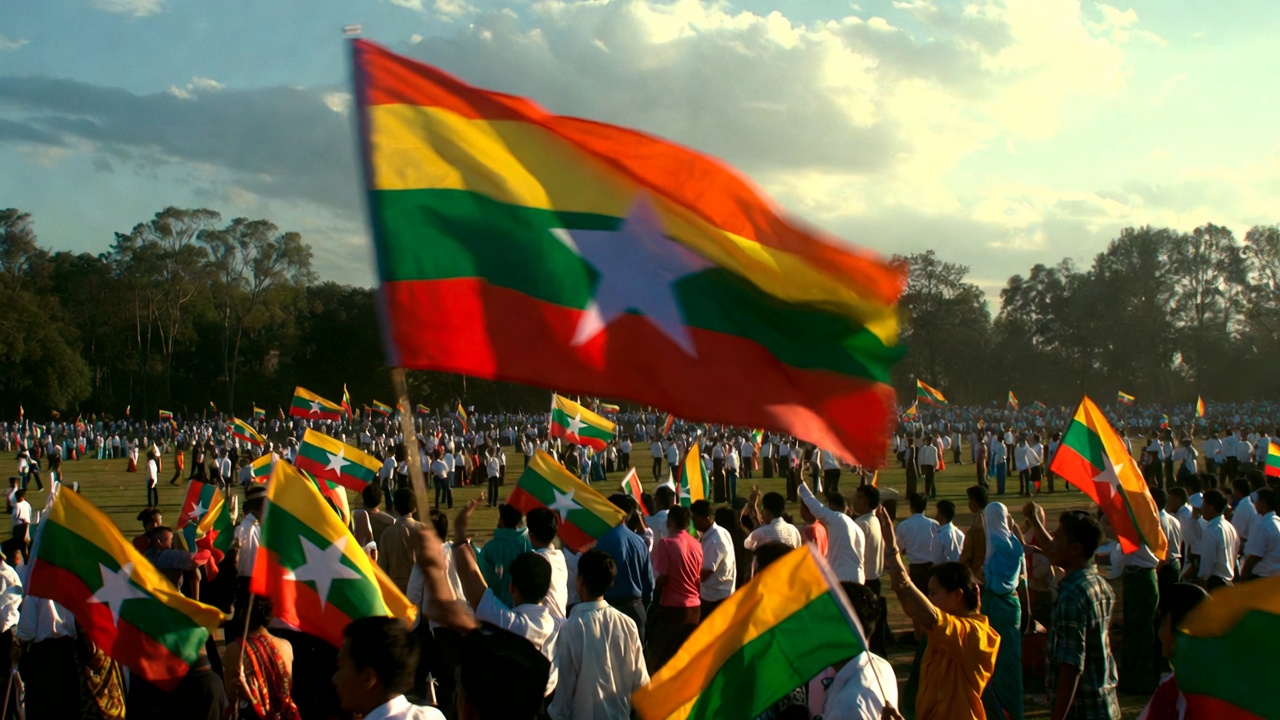
The centerpiece of Union Day is the relay of the Union Flag. Roughly two months before February 12, the national flag begins a journey through the capital cities of Myanmar’s states and regions. At each stop, local communities host parades, cultural performances, and entertainment. The flag is received with ceremony and pride.
About five days before Union Day, the flag moves through 45 different townships in a final relay. The concluding ceremony traditionally takes place at the People’s Square on Pyay Road in Yangon, where officials and citizens gather for the formal celebration.
Events in Naypyidaw, the Capital
Since 2005, Myanmar’s capital has been Naypyidaw, a purpose-built city in the center of the country. The government holds the main Union Day concert here, featuring ethnic traditional dancing, music, and other festive activities. Government officials deliver speeches emphasizing national unity and the legacy of the Panglong Agreement.
Celebrations Across the Country
Throughout Myanmar, Union Day is marked by a range of activities:
- Schoolchildren write patriotic poems and essays in the weeks leading up to the holiday
- Speeches on national unity are delivered at schools, community halls, and religious sites
- Cultural performances showcase the traditions of Myanmar’s diverse ethnic groups — Shan sword dances, Chin traditional music, Kachin manau festival elements, and Bamar classical dance
- Community feasts bring families together, often featuring traditional dishes
- Buddhist ceremonies at pagodas and monasteries, where devotees offer prayers for peace and unity
What Visitors Can Expect
If you are in Myanmar during Union Day, you will find a country in a festive but reflective mood. In Yangon, expect to see flag decorations on major streets, cultural events at public venues, and a general holiday atmosphere. In Bagan and other tourist areas, the mood is quieter but still noticeable. Hotels and guesthouses may display the national flag, and staff may share stories about what the day means to them.
Be aware that some services may be reduced or unavailable. Banks will be closed. Government offices will not be open. Some restaurants and shops, especially outside major tourist zones, may close for the day. Plan ahead and make sure you have enough local currency on hand.
Is Myanmar Safe to Visit During Union Day in February 2026
This is the most important question for any visitor, and it deserves an honest answer.
What Governments Say
As of early 2026, several major governments maintain high-level travel advisories for Myanmar:
- The United States classifies Myanmar as Level 4: Do Not Travel, citing armed conflict, civil unrest, arbitrary enforcement of local laws, poor health infrastructure, landmines, and wrongful detentions (U.S. State Department Travel Advisory)
- Australia advises “Do not travel” to Myanmar, noting violence, explosions, and the risk of arbitrary detention (Smartraveller)
- The United Kingdom provides a more detailed assessment, with a color-coded map. Yangon is marked green (not any riskier than usual). Bagan, Mandalay, and Inle Lake fall within the orange zone (advise against all but essential travel). Conflict-affected areas in the north and east are marked red (UK FCDO)
The Reality on the Ground
The situation in Myanmar is more nuanced than a single travel advisory level can capture. The active armed conflict is primarily concentrated in border regions and northern states — Kachin State, northern Shan State, Chin State, Kayin State, Kayah State, and parts of Sagaing Region. These areas are not only dangerous but also legally restricted for foreign tourists.
The major tourist destinations — often referred to as the “Tourist Kite” (Yangon, Bagan, Mandalay, and Inle Lake, forming a diamond shape on the map) — remain relatively safe for visitors who exercise normal caution. Yangon, in particular, continues to function as a major city with hotels, restaurants, transport, and daily life proceeding largely as normal.
Specific Concerns for Union Day
Union Day is a politically significant date. The Australian government specifically warns travelers to “minimise movement, especially on anniversaries and days of national significance.” While large-scale protests are unlikely given the security environment, visitors should:
- Avoid all demonstrations and large gatherings — even peaceful ones can escalate
- Stay in well-trafficked tourist areas
- Do not discuss politics publicly — this is not just a safety tip, it is essential for protecting the Burmese people you speak with
- Keep a low profile on social media regarding Myanmar’s political situation while in the country
- Register with your embassy before traveling
The March 2025 Earthquake Factor
On March 28, 2025, a catastrophic 7.7-magnitude earthquake struck central Myanmar along the Sagaing Fault. The epicenter was close to Mandalay, the country’s second-largest city. According to the U.S. Geological Survey, the rupture extended approximately 500 kilometers along the fault.
The human toll was devastating. Reports indicate over 5,000 people killed and thousands more injured. The World Bank estimated direct damages at US$11 billion, equivalent to 14 percent of GDP.
Major tourist attractions suffered damage:
| Site | Damage Reported |
|---|---|
| Bagan Archaeological Zone (UNESCO) | Several ancient temples partially collapsed or structurally weakened |
| Mandalay Palace | Parts of wooden structures collapsed; watchtowers destroyed |
| U Bein Bridge (Amarapura) | Wooden planks cracked; temporarily closed for inspection |
| Kuthodaw Pagoda (Mandalay) | Marble slabs cracked or displaced |
| Shwezigon Pagoda (Bagan) | Structural damage reported |
| Inle Lake | Floating structures damaged; some businesses temporarily closed |
| Sule Pagoda (Yangon) | Minor cracks on golden stupa |
By February 2026, restoration work is underway at many sites, and the main tourist destinations have largely reopened to visitors. However, some structures may still be under repair or closed. Check with your hotel or tour operator for the latest information before visiting specific temples or monuments.
The Bottom Line on Safety
If you choose to visit Myanmar during Union Day 2026, stick to the Tourist Kite. Fly between destinations rather than taking overland routes when possible. Use reputable tour operators. Do not travel to restricted areas. And carry comprehensive travel insurance with medical evacuation coverage — Myanmar’s healthcare system is severely limited, with less than 3 percent of the national budget allocated to healthcare.
How to Get a Myanmar Tourist Visa for Union Day 2026
Myanmar requires most foreign nationals to obtain a visa before entry. The good news is that the eVisa system makes this process relatively straightforward.
The Myanmar eVisa
Myanmar launched its eVisa system on September 1, 2014, and it remains the most convenient way for tourists to obtain entry permission. Here is what you need to know:
| Requirement | Details |
|---|---|
| Visa Type | Tourist eVisa |
| Cost | US$50 (government fee) |
| Processing Time | 1–3 business days (express); up to 7 working days (standard) |
| Validity | 90 days from date of issue |
| Length of Stay | Up to 28 days from date of arrival |
| Entries | Single entry only |
| Application | Online at evisa.moip.gov.mm |
Requirements for application:
- Passport valid for at least 6 months from arrival date
- Recent color photograph (4.6 cm × 3.8 cm, taken within the last 3 months)
- Passport bio-data page (uploaded as a scan)
- Proof of return or onward ticket
- Proof of hotel booking (tourists must stay in registered hotels, motels, inns, or guesthouses)
- Visa, Mastercard, or JCB credit card for payment
Important warning: Be cautious of unofficial websites that mimic the government eVisa portal. The only official site is evisa.moip.gov.mm. Fraudulent sites may charge higher fees or steal personal information.
Visa-Free Entry
Citizens of eight countries can enter Myanmar without a visa for tourism visits, though only through designated entry points. These include travelers from several ASEAN member states. Passport holders from Japan, Hong Kong, South Korea, and Macau can enjoy visa-free stays of up to 28 days.
Visa on Arrival
Indian and Chinese passport holders can apply for a visa on arrival at Myanmar’s international airports. Business travelers from 52 countries can also obtain a visa on arrival at Yangon, Mandalay, or Naypyidaw airports with proper documentation.
Ports of Entry for eVisa Holders
If you hold a tourist eVisa, you can enter Myanmar through:
- Yangon International Airport
- Mandalay International Airport
- Naypyidaw International Airport
- Tachileik Land Border Checkpoint (Thailand border)
- Myawaddy Land Border Checkpoint (Thailand border)
- Kawthaung Land Border Checkpoint (Thailand border)
- Tamu Land Border (India border)
- Rih Khaw Dar Land Border (India border)
Note that the Chinese land border crossing at Ruili-Muse is currently restricted due to the security situation.
Dual Nationality Warning
Myanmar law forbids its citizens from holding dual nationality. Anyone entering Myanmar who has a claim to Burmese citizenship — regardless of any other passport held — may be subject to local laws, including the People’s Military Service Law enacted in February 2024. This law requires military service for male citizens aged 18–35 and female citizens aged 18–27. Dual nationals should carefully consider this risk before traveling.
Best Places to Visit in Myanmar During the Union Day Holiday
February is one of the best months to visit Myanmar. The weather is dry and mild, with temperatures ranging from comfortable to warm across most of the country. Here are the destinations within the Tourist Kite that reward visitors during this time.
Yangon: The Heart of Union Day Celebrations
Yangon (formerly Rangoon) is Myanmar’s largest city and its commercial capital. During Union Day, it is the epicenter of celebrations, with the Union Flag relay concluding at People’s Square.
Must-see sites:
- Shwedagon Pagoda — Myanmar’s most sacred Buddhist site. This 99-meter golden stupa sits atop Singuttara Hill and is said to enshrine eight strands of the Buddha’s hair. It is covered in genuine gold plates and crowned with over 4,500 diamonds. The pagoda is open from 4:00 AM to 10:00 PM daily, and the entry fee is approximately 10,000 MMK (about US$8). Sunset is the most magical time to visit.
- Sule Pagoda — Located in the center of downtown Yangon, this 2,000-year-old octagonal pagoda anchors the city’s street grid. It sustained minor damage in the March 2025 earthquake but remains open.
- Bogyoke Aung San Market (Scott Market) — A colonial-era market hall where you can find traditional crafts, gemstones, textiles, and lacquerware. Also a reliable place to exchange money on weekends. Open daily except Monday and public holidays.
- Kandawgyi Lake — A scenic artificial lake near Shwedagon Pagoda, offering beautiful views of the golden stupa reflected in the water.
- Chinatown (19th–24th Streets) — A lively area for street food, especially in the evening. Try the grilled skewers and noodle soups at the night market.
Bagan: Ancient Temples in the Dry Season
Bagan, the UNESCO World Heritage Site, is home to over 2,200 ancient temples and stupas built between the 11th and 13th centuries. February offers clear skies, low humidity, and comfortable temperatures — ideal conditions for temple exploration.
The March 2025 earthquake damaged several structures in the Archaeological Zone, but restoration efforts are ongoing. Many major temples have reopened, though some may have scaffolding or restricted access. The Shwezigon Pagoda and Ananda Temple are among the most significant sites.
Tips for Bagan in February:
- Hire an e-bike (electric scooter) to explore the temple plains at your own pace — rental costs are approximately 8,000–10,000 MMK per day
- Watch the sunrise from one of the designated viewing platforms (climbing on temples is now restricted to protect the structures)
- Visit the Bagan Archaeological Museum for context on the temples’ history
- Take a boat ride on the Irrawaddy River at sunset
Mandalay: Cultural Capital with Post-Earthquake Resilience
Mandalay was heavily affected by the March 2025 earthquake, with significant damage to Mandalay Palace, U Bein Bridge, and Kuthodaw Pagoda. Recovery efforts have been underway, and the city continues to welcome visitors, though some sites may have limited access.
What to see:
- Mandalay Hill — A 236-meter hill offering panoramic views of the city and surrounding plains
- Mahamuni Pagoda — Home to one of Myanmar’s most revered Buddha images, covered in layers of gold leaf applied by devotees over centuries
- Amarapura — The former capital, famous for U Bein Bridge (check current repair status before visiting)
- Inwa (Ava) — Another former capital, accessible by boat and horse cart
Travel note: Flying between Yangon and Mandalay is strongly recommended over overland travel due to military checkpoints and security concerns along the highway.
Inle Lake: Serenity Among the Hills
Inle Lake in Shan State offers a completely different experience from Myanmar’s cities. Famous for its leg-rowing fishermen, floating gardens, and stilt-house villages, the lake is a place of extraordinary calm.
February brings cool mornings (temperatures can drop to 10°C at dawn) and clear days — perfect for boat tours. The floating markets, silk weaving workshops, and Phaung Daw Oo Pagoda are all accessible.
Getting there: Fly from Yangon or Mandalay to Heho Airport, then transfer by car to Nyaungshwe, the gateway town to Inle Lake. The drive takes about one hour.
Money and Currency Tips for Tourists Visiting Myanmar in 2026
Managing money in Myanmar requires more planning than in most Southeast Asian countries. The financial system is under strain from sanctions, inflation, and political instability.
The Myanmar Kyat (MMK)
The official currency is the Myanmar Kyat, pronounced “Jet” despite its spelling. The ISO currency code is MMK, and it is symbolized as K or Ks (plural).
Banknotes in circulation include K50, K100, K200, K500, K1,000, K5,000, K10,000, and K20,000 denominations. Coins are not used. The most commonly seen note is the K10,000, which is worth roughly US$2 at unofficial exchange rates.
The Two Exchange Rates
Myanmar effectively operates with two exchange rates, which can be confusing for visitors:
| Rate Type | Approximate Value (early 2026) | Where It Applies |
|---|---|---|
| Official Rate | ~2,100 MMK per US$1 | ATM withdrawals, card payments, airport exchanges |
| Unofficial (Market) Rate | ~4,500–5,000+ MMK per US$1 | Street exchanges, some shops and hotels |
The gap between these rates is significant. Exchanging money at the official rate means you receive roughly half the value compared to the market rate.
Practical Money Tips
Bring US dollars in cash. This remains the most practical approach for visitors. Bring a mix of denominations: $100 and $50 bills for exchanging to Kyat (larger bills get better rates), and $10, $5, and $1 bills for direct payments at hotels and tourist sites.
Your dollar bills must be in perfect condition. This is not an exaggeration. Myanmar’s money changers and businesses may reject bills that are creased, marked, folded, torn, or stained. Bills with serial numbers starting with AB or CB may also be refused, as may bills printed before 2006. Carry your dollars in a flat folder, not crumpled in a wallet.
ATMs exist but have limitations. KBZ Bank and CB Bank have the widest ATM networks, found in Yangon, Mandalay, Bagan, and Inle Lake. Most accept Visa and Mastercard. The maximum withdrawal is typically K300,000 per transaction with a K5,000 fee. ATMs dispense Kyat at the official rate. Due to international sanctions, some foreign cards may not work.
Credit cards are rarely accepted outside upscale hotels and restaurants in Yangon and Mandalay. Do not rely on cards as your primary payment method.
Exchange only what you need. The Kyat has no value outside Myanmar. Exchange small amounts at the airport for immediate transport needs, then seek better rates in the city.
Euros are also accepted for exchange and do not need to be in the same pristine condition as US dollars.
What to Eat in Myanmar During the Union Day Holiday Season
Food is central to every celebration in Myanmar, and Union Day is no exception. February is a wonderful time to explore Burmese cuisine, which draws influences from Indian, Chinese, and Southeast Asian cooking traditions while maintaining its own distinct identity.
Dishes You Must Try
Lahpet Thohk (Fermented Tea Leaf Salad) — Myanmar’s national dish. Fermented tea leaves are mixed with roasted peanuts, sesame seeds, dried shrimp, garlic chips, tomatoes, and a squeeze of lime. It is served at nearly every gathering and is considered a symbol of hospitality. You will find it at street stalls, restaurants, and family homes alike.
Mohinga — Often described as Myanmar’s breakfast dish, this fish-based noodle soup is rich, warming, and deeply flavorful. Rice noodles sit in a thick broth made from catfish, banana stem, lemongrass, and chickpea flour. Every region has its own variation.
Shan Noodles — From the Shan State highlands, these rice noodles come in a soup or dry version with a tomato-based meat sauce. Light, fresh, and delicious. A staple at Inle Lake.
Htamin Jin (Rice Salad) — Balls of rice mixed with fish paste, turmeric, and fried onions. A popular street snack and picnic food.
Myanmar Curry — Unlike Thai or Indian curries, Burmese curries are typically milder, with a base of onions, garlic, ginger, and turmeric cooked slowly in oil. Chicken, pork, and fish curries are most common. They are served with rice and a spread of small side dishes — soups, vegetables, pickles, and dipping sauces.
Myanmar Tea — Tea culture runs deep in Myanmar. Tea shops (la-phet-yei-zain) are social gathering places where people sit for hours over cups of sweet milky tea. During Union Day, these shops are full of conversation and community.
Dining Tips for Visitors
- Eat where the locals eat. The busiest street stalls often have the freshest and safest food.
- Wash your hands before eating. Many Burmese dishes are traditionally eaten with the right hand.
- Vegetarian options are widely available due to Buddhist dietary practices.
- Drinking water: Stick to bottled or purified water. Avoid ice in drinks at street stalls.
Cultural Etiquette and Dress Code for Visitors in Myanmar
Myanmar is a deeply Buddhist country where respect for religious customs is not optional — it is expected. Visitors who show genuine respect for local culture will find the Burmese people among the warmest and most welcoming in the world.
Dress Code at Pagodas and Temples
This is the single most important etiquette rule for visitors. At every Buddhist site in Myanmar — from the grand Shwedagon Pagoda to the smallest village monastery — you must dress modestly:
- Lower body: Wear long trousers, a longyi (sarong), or a skirt that extends below the knee. Shorts are not permitted.
- Upper body: Cover your shoulders. T-shirts with at least elbow-length sleeves are expected. Tank tops and sleeveless shirts are not acceptable.
- Footwear: You must remove shoes and socks before entering any pagoda or temple platform. This applies everywhere — not just at the main entrance. Carry a bag for your shoes.
If you arrive without proper clothing, most major pagodas (including Shwedagon) offer longyi rentals for approximately K3,000–5,000 at the entrance gates.
General Cultural Guidelines
Show respect for Buddha images. Never sit with your feet pointing toward a Buddha statue. Do not touch or climb on religious monuments. Using the image of the Buddha as a decorative motif — including tattoos — is considered deeply offensive and has led to the arrest and deportation of foreign tourists in the past.
Remove your hat and sunglasses inside temples. This is a sign of respect that Myanmar takes very seriously.
Avoid touching people on the head. The head is considered the most sacred part of the body in Burmese culture.
Use your right hand for giving and receiving. When handing money, food, or objects to someone, use your right hand or both hands.
Do not discuss politics. This cannot be stressed enough. Most Burmese people have strong feelings about the current political situation, but discussing it openly can put them at serious risk. Plainclothes informants operate in public spaces. A casual conversation with a friendly stranger could have consequences for them long after you leave.
Getting the attention of a waiter. In Myanmar, it is common to make a kissing sound (“choo choo”) to call a waiter’s attention. This is not considered rude — it is simply how it is done.
Dress modestly even outside temples. While casual clothing is fine in hotels and tourist areas, Myanmar is a conservative society. Modest dress shows respect and makes for smoother interactions.
Where to Stay in Yangon During Union Day 2026
Yangon offers accommodation for every budget, from luxury hotels to basic guesthouses. During Union Day, hotels in popular areas may be busier than usual, so booking in advance is recommended.
Accommodation Areas
Downtown Yangon — The most convenient area for sightseeing, with Sule Pagoda, Bogyoke Aung San Market, Chinatown, and the waterfront within walking distance. A wide range of hotels and guesthouses are clustered here.
Near Shwedagon Pagoda — Several mid-range and upscale hotels are located along Inya Road and University Avenue, within easy reach of the pagoda.
Kandawgyi / Inya Lake area — A quieter neighborhood with higher-end hotels and pleasant green surroundings.
Budget Considerations
Due to inflation and currency instability, prices for tourists have increased compared to pre-2021 levels. Budget travelers should expect to pay US$15–30 per night for basic guesthouse rooms in Yangon. Mid-range hotels run US$40–80, while luxury hotels charge US$100 and above.
Many hotels quote prices in US dollars. Some may also accept payment in Kyat, but often at a less favorable rate. Always confirm the payment currency and rate at check-in.
Myanmar Weather in February: What to Pack for Union Day
February is part of Myanmar’s cool, dry season, making it one of the most pleasant months to visit. Here is what to expect across the main tourist destinations:
| Destination | Average High | Average Low | Rainfall | Conditions |
|---|---|---|---|---|
| Yangon | 35°C (95°F) | 18°C (64°F) | Minimal | Hot days, cool evenings |
| Bagan | 33°C (91°F) | 15°C (59°F) | Very low | Dry and dusty |
| Mandalay | 33°C (91°F) | 14°C (57°F) | Very low | Dry, warm days |
| Inle Lake | 27°C (81°F) | 8°C (46°F) | Minimal | Cool mornings, mild days |
Packing Essentials
- Lightweight, modest clothing that covers shoulders and knees (for temple visits)
- A light jacket or sweater for cool mornings at Inle Lake and Bagan
- Comfortable, easy-to-remove shoes (you will be taking them off constantly at temples)
- A shoe bag or plastic bag to carry footwear
- Sunscreen and a wide-brimmed hat for temple explorations
- A reusable water bottle — staying hydrated in the heat is essential
- A small first-aid kit with any personal medications — pharmacies in Myanmar may not stock Western medications
- Insect repellent — mosquito-borne diseases are a risk, especially outside urban areas
- A money belt or secure pouch for carrying cash (you will be carrying more cash than usual)
- Photocopies of your passport and eVisa — keep separate from originals
Getting Around Myanmar During the Union Day Holiday Period
Transport in Myanmar requires flexibility and patience, especially during a public holiday.
Domestic Flights
Flying is the safest and fastest way to travel between major destinations. Airlines operating domestic routes include Myanmar National Airlines, Air KBZ, Mann Yadanarpon Airlines, and others. Routes connect Yangon to Mandalay, Bagan (Nyaung-U Airport), Heho (for Inle Lake), and Naypyidaw.
During Union Day, some flights may operate on a reduced holiday schedule. Book in advance and confirm your flights the day before departure.
Buses
Long-distance buses connect major cities and are affordable but slow. The journey from Yangon to Bagan takes approximately 9–10 hours by bus. Night buses are available but carry higher accident risk. Expect to pass through military checkpoints where soldiers may check passengers’ identification.
Taxis and Ride-Hailing
In Yangon, taxis are plentiful and inexpensive. Most do not use meters — negotiate the fare before getting in. The ride-hailing app Grab operates in Yangon and can provide a more predictable pricing experience.
Trains
Myanmar’s rail network is extensive but slow, with aging infrastructure. The Yangon Circular Railway is a popular experience for visitors — a three-hour loop through Yangon’s suburbs and markets. Long-distance trains between Yangon and Mandalay run overnight but are slower and less comfortable than buses or planes.
Responsible Travel Tips for Visiting Myanmar in 2026
Traveling to Myanmar carries ethical considerations that go beyond personal safety. Here are some principles for visiting responsibly:
Support local businesses. Eat at family-run restaurants. Buy handicrafts directly from artisans. Choose locally owned guesthouses over international chains when possible. Your spending directly supports Burmese families.
Be mindful of where your money goes. Some businesses have connections to the military establishment. Tour operators with local knowledge can help you make informed choices.
Respect the resilience of the people. Myanmar’s people have endured extraordinary hardships — colonial rule, military dictatorship, natural disasters, and ongoing conflict. They do not want pity. They want their country to be seen and appreciated. Engage with genuine curiosity and humility.
Photograph respectfully. Always ask permission before photographing people, especially monks and children. Do not photograph military installations, checkpoints, or security personnel.
Learn a few words of Burmese. Even basic greetings will delight local people:
| English | Burmese | Pronunciation |
|---|---|---|
| Hello | မင်္ဂလာပါ | Min-ga-la-ba |
| Thank you | ကျေးဇူးတင်ပါတယ် | Kyay-zu-tin-ba-deh |
| Delicious | အရသာရှိတယ် | A-ya-tha-shi-deh |
| How much? | ဘယ်လောက်လဲ | Beh-lout-leh |
| Goodbye | သွားတော့မယ် | Thwa-daw-meh |
Frequently Asked Questions About Union Day 2026 in Myanmar
Is Union Day 2026 on a weekday or weekend? Union Day 2026 falls on Thursday, February 12. This is favorable for visitors, as it creates an opportunity for a long weekend.
Are tourist attractions open on Union Day? Major pagodas and temples, including Shwedagon Pagoda, are generally open on public holidays — in fact, they are often busier, as local families visit on their day off. However, museums, banks, and government offices will be closed.
Can I watch Union Day celebrations as a tourist? Yes, visitors are welcome to observe public celebrations, flag relays, and cultural performances. Be respectful, avoid blocking participants, and ask before photographing people.
Should I book tours in advance for Union Day? Yes, especially if you want guided tours in Yangon or Bagan. Some tour operators may have limited availability during the holiday period.
Is it safe to travel between cities on Union Day? Domestic flights operate on Union Day, though schedules may be reduced. Road travel involves military checkpoints regardless of the date. Flying is always recommended over overland travel between major destinations.
What is the best way to get from the airport to downtown Yangon? Taxis are available at Yangon International Airport. The ride to downtown takes approximately 30–45 minutes depending on traffic. Agree on a fare before departing — expect to pay approximately K10,000–15,000 or US$8–10.
Do I need travel insurance for Myanmar? Absolutely. Medical facilities in Myanmar are extremely limited. Travel insurance with medical evacuation coverage is essential. Verify that your policy covers Myanmar specifically, as some insurers exclude the country due to the conflict.
Can I use my mobile phone in Myanmar? Local SIM cards are available and inexpensive. However, internet disruptions are common, as the military regime periodically restricts access to various platforms and services. Do not rely on the internet for essential communications.
Final Thoughts: Why Union Day Still Matters
Union Day is more than a holiday. It is a statement of belief — that people of different languages, different faiths, and different histories can choose to build something together. When General Aung San and the ethnic leaders signed the Panglong Agreement in 1947, they were not naive. They knew the road ahead would be difficult. But they chose to walk it together.
Nearly eight decades later, that choice echoes through every flag relay, every schoolchild’s poem, and every prayer offered at Shwedagon Pagoda on February 12. The promise of Panglong has not been fully kept. The equality and autonomy that were pledged remain aspirational in many ways. But the Spirit of Panglong — the belief that unity is possible through respect, not force — remains alive in the hearts of the Myanmar people.
If you visit Myanmar during Union Day 2026, you will witness a country that is bruised but unbroken. You will see beauty in its golden pagodas, warmth in its people, and hope in its youngest generation. Travel carefully. Travel respectfully. And carry the stories you hear back into the world — because Myanmar’s story deserves to be told.
Disclaimer: This article is intended for informational purposes only. Travel to Myanmar carries significant risks. Always consult your government’s official travel advisory before making travel plans. The author and publisher accept no responsibility for any consequences arising from travel decisions based on this content.