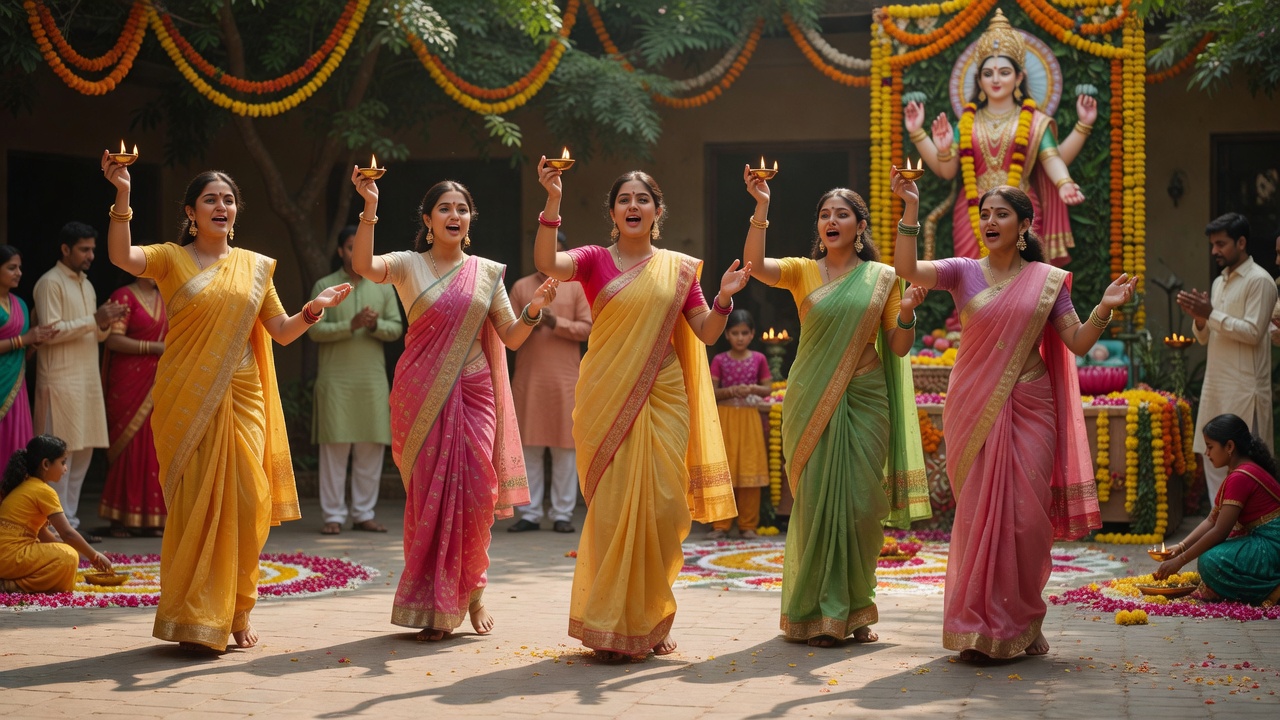
When the first golden blooms of mustard break through the winter chill and the air softens with the promise of warmer days, India knows spring is near. Vasant Panchami 2026 falls on Friday, January 23, and with it comes one of the most culturally rich and spiritually uplifting festivals on the Hindu calendar. This is the day when millions of devotees across the subcontinent dress in yellow, honour Goddess Saraswati, and celebrate the arrival of Vasant Ritu — the season of renewal, knowledge, and creativity.
Whether you are a student seeking blessings for exams, a parent planning your child’s Vidyarambham (first education ceremony), or a couple considering a wedding on this auspicious day, this guide covers everything you need to know. From exact tithi timings and puja muhurats to regional traditions and step-by-step rituals, read on for the most detailed and culturally respectful resource on Vasant Panchami 2026.
What Is Vasant Panchami and Why Is It Celebrated?
Vasant Panchami (also spelled Basant Panchami) is a Hindu festival that marks the preparation for the arrival of spring. The word “Vasant” means spring in Sanskrit, and “Panchami” refers to the fifth day. The festival is observed on the fifth day of the bright fortnight (Shukla Paksha) of the Hindu lunar month of Magha, which falls in late January or February on the Gregorian calendar.
At its heart, this festival is dedicated to Goddess Saraswati — the Hindu deity of knowledge, wisdom, music, arts, and learning. According to ancient Puranic texts, Saraswati Devi manifested from Lord Brahma on this very day to fill the silent world with sound, rhythm, speech, and creativity. This is why devotees also call the occasion Saraswati Puja or Shri Panchami.
But Vasant Panchami is more than a religious observance. It is a seasonal turning point. Forty days after this festival, Holi arrives — meaning Vasant Panchami effectively kicks off the countdown to one of India’s most beloved celebrations. The mustard fields of Punjab and Haryana reach full bloom during this period, painting the landscape in vivid yellows. The colour yellow, in fact, becomes the defining visual motif of the entire festival.
Vasant Panchami 2026 Date and Panchami Tithi Timings
For 2026, the confirmed date for Vasant Panchami is Friday, January 23. Here are the key timings according to the Hindu Panchang:
| Detail | Timing (IST) |
|---|---|
| Vasant Panchami Date | Friday, January 23, 2026 |
| Panchami Tithi Begins | 02:28 AM on January 23, 2026 |
| Panchami Tithi Ends | 01:46 AM on January 24, 2026 |
| Total Tithi Duration | Approximately 23 hours and 18 minutes |
The Panchami Tithi stretches across nearly the full day, which is significant. Hindu festivals are determined by the sunrise tithi — meaning the tithi prevailing at sunrise decides the day of observance. Since the Panchami Tithi begins well before dawn on January 23 and extends into the following night, the date is unambiguous across all major Panchang systems, including the Telugu Panchangam and North Indian calendars.
Saraswati Puja Muhurat 2026: Best Time for Worship
While Vasant Panchami is considered an Abujha Muhurat — a rare day when the entire period is deemed auspicious without specific doshas (flaws) — traditional practice still emphasises performing Saraswati Puja during the Purvahna Kala, the window between sunrise and midday.
Recommended Puja Muhurat (General Timing)
| Puja Window | Timing |
|---|---|
| Saraswati Puja Muhurat | 07:15 AM to 12:50 PM (IST) |
| Muhurat Duration | Approximately 5 hours and 36 minutes |
| Madhyahna (Midday) Moment | 12:50 PM |
Saraswati Puja Muhurat 2026 for Major Indian Cities
Since India spans a wide geographical range, sunrise and midday times differ across cities. Here are city-specific muhurats as provided by DrikPanchang:
| City | Puja Muhurat |
|---|---|
| New Delhi | 07:13 AM to 12:33 PM |
| Mumbai | 07:15 AM to 12:50 PM |
| Kolkata | 06:18 AM to 11:48 AM |
| Chennai | 06:36 AM to 12:21 PM |
| Bengaluru | 06:46 AM to 12:32 PM |
| Hyderabad | 06:50 AM to 12:28 PM |
| Ahmedabad | 07:22 AM to 12:52 PM |
| Jaipur | 07:16 AM to 12:39 PM |
| Chandigarh | 07:19 AM to 12:35 PM |
| Noida | 07:12 AM to 12:32 PM |
Note: Lunar tithi and muhurat can vary slightly by location. Always cross-check with your local Panchang or consult a family priest before finalising your puja schedule.
Why Is Vasant Panchami 2026 Considered an Abujha Muhurat?
One of the most remarkable features of Vasant Panchami is its status as an Abujha (अबूझ) Muhurat. In Vedic astrology, this term means the day is free from all planetary defects. You do not need to consult an astrologer or calculate a separate auspicious window. The entire day is considered favourable for beginning any positive activity.
This makes Vasant Panchami one of only a handful of days on the Hindu calendar that carries this distinction. According to Outlook India, the belief is rooted in the idea that Goddess Saraswati’s presence on this day removes ignorance and confusion, offering clarity for success in all endeavours.
Activities considered especially auspicious on this day include:
- Vidyarambham / Akshar Abhyasam — initiating a child’s first education
- Griha Pravesh — moving into a new home
- Wedding ceremonies — Vasant Panchami is believed to be the day Lord Rama married Sita
- Starting a new business — launching offices, signing contracts, or inaugurating ventures
- Annaprasana — a child’s first solid food ceremony
- Beginning music or arts training — placing instruments before the Goddess for blessings
The Mythology Behind Vasant Panchami: Origin Stories
Goddess Saraswati’s Manifestation
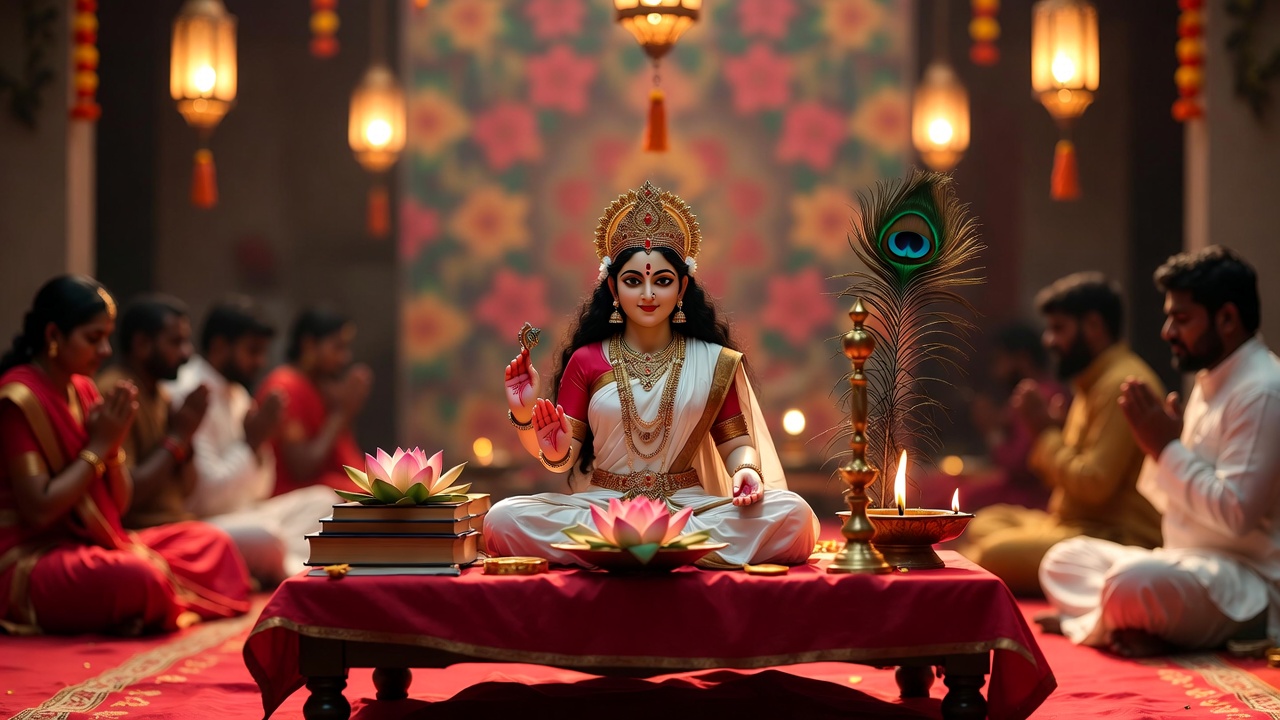
The most widely known legend ties Vasant Panchami to the origin of Goddess Saraswati herself. According to Hindu scriptures, Lord Brahma — the creator — looked upon his creation and felt it was incomplete. The world existed but lacked sound, speech, emotion, and beauty. Brahma then invoked his creative energy, and from his divine essence emerged Saraswati, dressed in white, seated on a lotus, holding a veena (a stringed instrument). As she began to play, sound and music entered the universe. Rivers began to flow. Language was born. This is why Saraswati is worshipped as the mother of the Vedas and the source of all knowledge.
Kamadeva and the Awakening of Shiva
A second popular narrative involves Kamadeva, the Hindu god of love. After the death of his first wife Sati, Lord Shiva withdrew into deep meditation on Mount Kailash, abandoning all worldly engagement. When Goddess Parvati (Sati’s reincarnation) performed years of penance to win Shiva’s love, she finally sought Kamadeva’s help. Kamadeva shot Shiva with a flower-tipped arrow to awaken desire in him. Though Shiva was furious and reduced Kamadeva to ashes with his third eye, Kamadeva’s wife Rati pleaded with Shiva, who eventually restored Kamadeva to life. This story symbolises the return of love, warmth, and passion — themes that mirror the arrival of spring itself.
Kalidasa’s Transformation
A beloved folk legend holds that the great Sanskrit poet Kalidasa was originally an uneducated woodcutter. After being tricked into an embarrassing marriage with a learned princess, he prayed desperately to Goddess Saraswati. Moved by his devotion, the Goddess blessed him with extraordinary wisdom and literary talent. Kalidasa went on to compose some of the most celebrated works in Sanskrit literature. Devotees remember this story on Vasant Panchami as proof that Saraswati’s grace can transform anyone, regardless of background.
How to Perform Saraswati Puja at Home: Step-by-Step Ritual Guide
Performing Saraswati Puja during Vasant Panchami does not require elaborate arrangements. Many families carry out the puja at home with simple yet sincere devotion. Here is a traditional step-by-step guide:
Items You Will Need (Puja Samagri)
- An idol or image of Goddess Saraswati
- A clean yellow or white cloth for the altar
- Fresh yellow flowers (marigolds, mustard flowers, or chrysanthemums)
- Yellow sweets such as kesar halwa or boondi laddoos
- Fruits, incense sticks, a diya (oil lamp), and camphor
- A puja kalash (sacred pot) filled with water
- Sandalwood paste (chandan), turmeric, and vermillion (kumkum)
- Books, notebooks, pens, musical instruments, or learning tools
Step-by-Step Puja Vidhi
1. Prepare the Altar. Clean the puja area and spread a yellow or white cloth. Place the Saraswati idol or image on an elevated platform facing east.
2. Invoke Lord Ganesha. As with all Hindu rituals, begin by praying to Lord Ganesha to remove obstacles. Offer a small prayer or chant “Om Gan Ganapataye Namah.”
3. Establish the Puja Kalash. Fill the sacred pot with clean water and place mango leaves and a coconut on top. Position it in front of the idol.
4. Offer Yellow Flowers and Garlands. Adorn the Goddess with yellow flower garlands. You may also dress the idol in a yellow or white saree.
5. Light the Diya and Incense. Light a ghee or oil lamp and incense sticks. The flame represents the dispelling of ignorance.
6. Chant Saraswati Mantras. Recite the Saraswati Vandana or other sacred mantras. The most well-known is:
“Ya Kundendu Tushara Hara Dhavala, Ya Shubhra Vastravrita…”
A simpler mantra for daily recitation is: Om Saraswatyai Namah.
7. Place Books and Instruments Before the Idol. This is a cherished part of the ritual. Students place textbooks, notebooks, and pens near the Goddess. Musicians offer instruments. Writers offer their manuscripts. This act symbolises surrendering one’s tools of knowledge to the divine source.
8. Offer Prasad. Present yellow sweets — kesar halwa, saffron rice, or boondi laddoos — as prasad.
9. Perform Aarti. Conclude the puja with Saraswati Aarti. The popular aarti begins with “Om Jai Saraswati Mata…”
10. Distribute Prasad. Share the blessed offerings with family, friends, and neighbours.
Vasant Panchami Food Traditions: What to Cook and Eat
Food is central to every Indian festival, and Vasant Panchami is no exception. The theme, as with everything on this day, is yellow. The colour represents the golden mustard fields that bloom across North India during this season, and it symbolises energy, prosperity, and knowledge.
Traditional dishes include:
- Kesar Halwa (Saffron Halwa) — Made with semolina or flour, sugar, ghee, and saffron strands. The saffron gives the dish its vibrant colour and mild fragrance.
- Meethe Chawal (Sweet Yellow Rice) — Basmati rice cooked with saffron, sugar, cardamom, and dry fruits. A staple in North Indian households.
- Boondi Laddoo — Golden laddoos made from deep-fried chickpea flour droplets, soaked in sugar syrup.
- Makke ki Roti with Sarson ka Saag — A beloved Punjabi combination of cornmeal flatbread and mustard greens, deeply tied to the season.
- Kesari Bhaat — A South Indian version of saffron rice, often prepared in Karnataka during this festival.
- Yellow Pulao or Khichdi — Simple rice and lentil preparations flavoured with turmeric and ghee.
Beyond taste, these dishes carry symbolic weight. The yellow colour connects the food to the mustard flowers outside, to the robes of Goddess Saraswati, and to the solar energy of the returning spring.
How Is Vasant Panchami Celebrated Across Different States of India?
India’s cultural diversity means Vasant Panchami carries different flavours in different regions, even as the core devotion to Goddess Saraswati remains universal. Here is a look at how this festival unfolds across the country.
West Bengal, Assam, and Eastern India: Saraswati Pujo
In West Bengal, Vasant Panchami is known as Saraswati Pujo and is arguably the biggest student festival of the year. Schools, colleges, and neighbourhood pandals set up elaborate Saraswati idols decorated with flowers and lights. Students dress in yellow sarees and kurtas. An interesting custom in Bengal is that students abstain from reading and writing on this day as a mark of respect — all books and instruments are placed at the feet of the Goddess. The clay idols are immersed in water the following day. In Assam and Tripura, similar traditions are observed with equal enthusiasm.
Uttar Pradesh, Bihar, and North India: Temple Worship and Kite Flying
In Uttar Pradesh and Bihar, families visit local temples and perform Saraswati Puja both at home and in community gatherings. The temples of Mathura and Vrindavan hold special significance. At Vrindavan’s famous Shri Banke Bihari Temple, the priests start early Holi celebrations on this day by throwing abeer and gulal on devotees. This is because Vasant Panchami begins the 40-day countdown to Holi, and the Brij region treats it as the first day of the Holi season. Kite flying is also a popular tradition, especially among children.
Punjab and Haryana: Mustard Fields and the Basant Festival of Kites
Punjab and Haryana celebrate Vasant Panchami with deep seasonal joy. The mustard fields (sarson ke khet) are at their golden peak, making the landscape itself a celebration. Families prepare traditional dishes like Makke ki Roti and Sarson ka Saag. Kite flying is a festive sport, with rooftops alive with colourful kites and competitive enthusiasm. The festival is observed across religious lines as a seasonal celebration.
Maharashtra: Newlywed Traditions
In Maharashtra, a unique custom requires newly married couples to visit a temple and offer prayers on the first Vasant Panchami after their wedding. They wear yellow attire and seek blessings for a harmonious married life.
South India: Vidyarambham and Temple Rituals
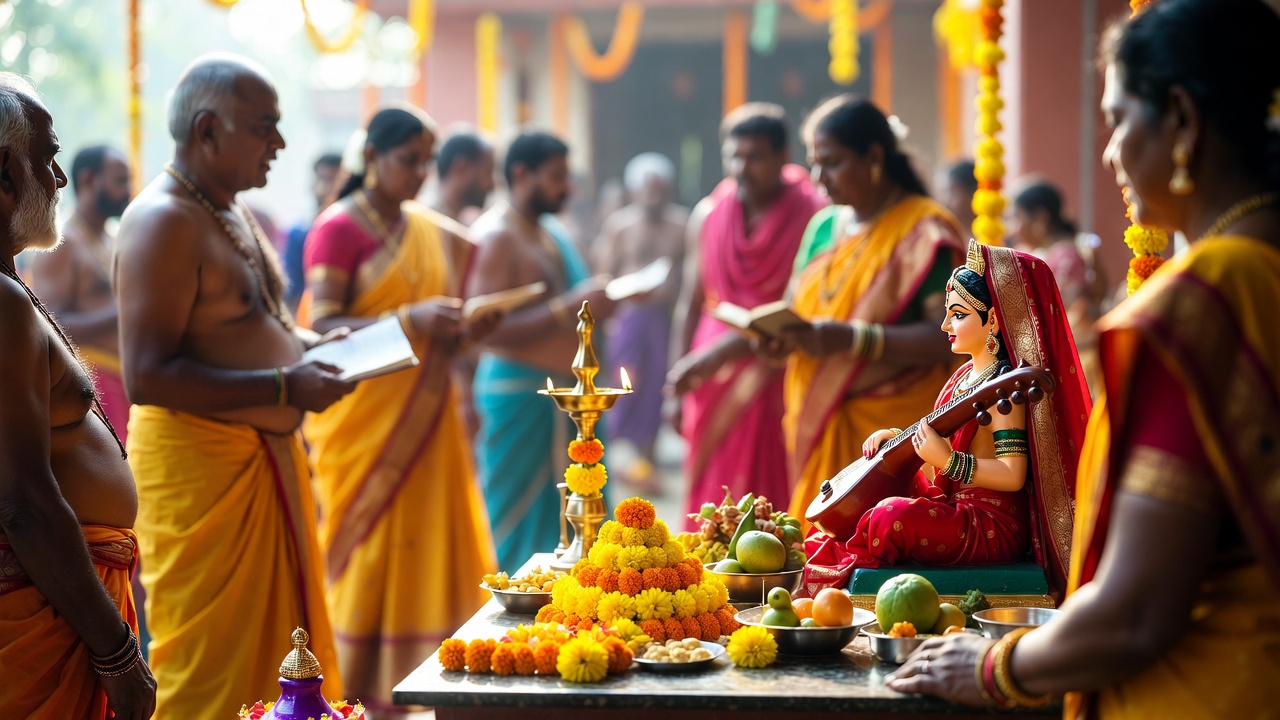
While grand Vasant Panchami celebrations are more common in northern and eastern India, South Indian communities observe the day with deep reverence for education. The Vidyarambham (or Akshar Abhyasam) ceremony — where young children between the ages of three and five are guided to write their first letters — is a major tradition. The Sri Gnana Saraswathi Temple at Basar, Telangana draws thousands of devotees on this day, making it one of the most important pilgrimage sites during Vasant Panchami.
Uttarakhand: Worship of Shiva and Parvati
In Uttarakhand, devotees worship not only Goddess Saraswati but also Lord Shiva and Goddess Parvati as the divine parents of the earth. People eat yellow rice, wear yellow, and celebrate the agricultural significance of the approaching spring.
Nepal: Haate Khori Ceremony
Across the border in Nepal, Vasant Panchami is celebrated with great enthusiasm in schools and temples. The Haate Khori ceremony — where children are taught to write their first letters — is a national tradition, and the day is treated as a festival of learning and literacy.
Bali, Indonesia: Hari Raya Saraswati
Even beyond South Asia, the festival finds expression. On the island of Bali, Indonesia, the Hindu community celebrates Hari Raya Saraswati (Great Day of Saraswati) on this same occasion. It also marks the beginning of the 210-day Balinese Pawukon calendar, linking the worship of knowledge to the very rhythm of time.
Is Vasant Panchami 2026 Auspicious for Marriage?
Yes. Vasant Panchami is considered one of the most auspicious days of the year for weddings. According to Hindu tradition, this is believed to be the day on which Lord Rama married Sita Devi. The Abujha Muhurat status means that couples do not need to consult an astrologer for a separate wedding muhurat — the entire day is favourable.
Thousands of weddings take place across India on Vasant Panchami every year. For couples planning a January 2026 wedding, Friday, January 23 is an ideal choice. The symbolism of beginning a marriage on a day dedicated to wisdom, learning, and the beauty of spring is deeply meaningful in Indian culture.
Why Is Yellow the Colour of Vasant Panchami?
Yellow is everywhere on Vasant Panchami — in clothing, flowers, food, and decorations. But why this specific colour?
The symbolism is layered:
- Agricultural: During this season, mustard fields bloom across the Indo-Gangetic plains. The landscape turns golden, and yellow becomes the natural colour of the moment.
- Spiritual: Yellow represents knowledge, learning, and intellectual energy in Hindu iconography. It is the colour associated with both Goddess Saraswati and Lord Vishnu.
- Seasonal: Yellow is the colour of warmth and sunlight — the very things that return with the spring after months of cold and grey.
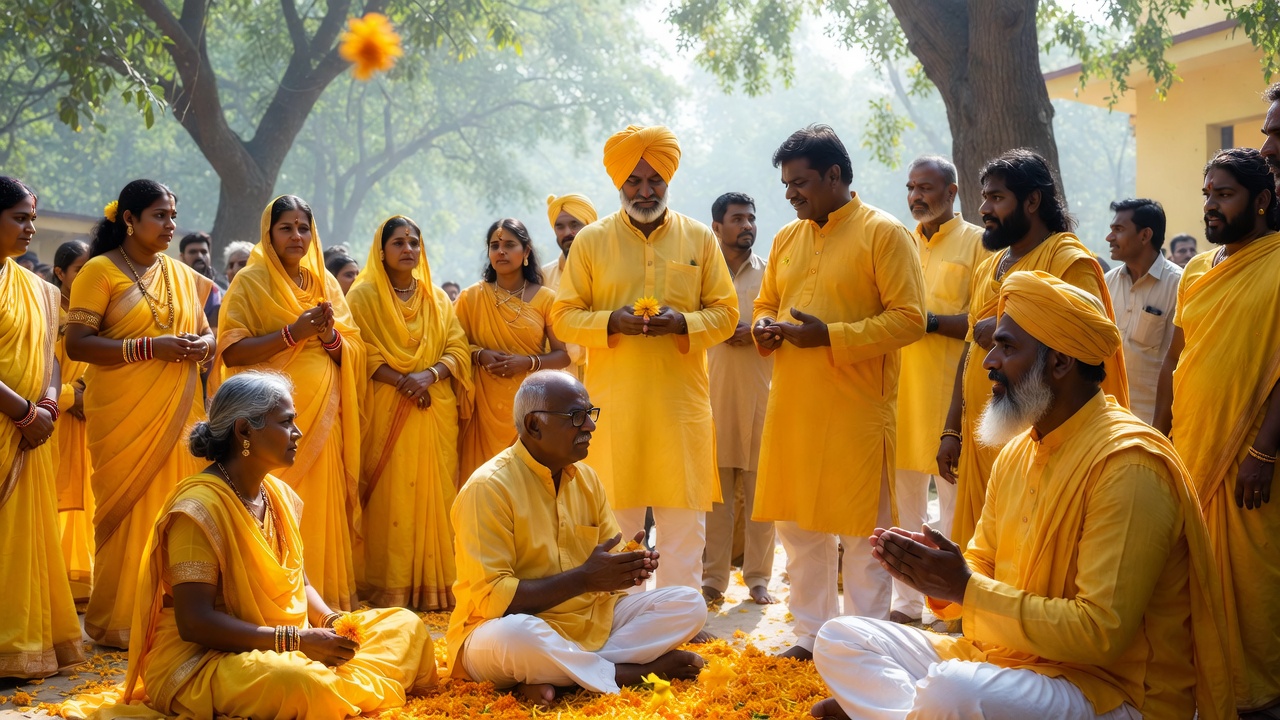
- Festive: Wearing yellow on this day is considered a way to invite positive energy, prosperity, and divine blessings into one’s life.
Devotees wear yellow sarees, kurtas, and dhotis. They offer yellow marigolds and mustard flowers at temples. Even the prasad — saffron halwa, yellow rice — reflects this golden theme.
Vasant Panchami 2026: Important Things to Keep in Mind
Here are some practical dos and don’ts for devotees observing Vasant Panchami:
Do:
- Wake early, bathe, and wear yellow or white clothes before puja
- Place all learning materials (books, laptops, pens, instruments) before the Goddess
- Perform puja during the Purvahna Kala (morning to midday) for maximum auspiciousness
- Prepare and share yellow-themed prasad with family and neighbours
- Begin any new learning, venture, or ceremony you have been planning
Avoid:
- Eating non-vegetarian food on this day
- Harsh or negative speech — the day celebrates the purity of words and wisdom
- Ignoring the local Panchang — while general muhurats are listed above, always confirm with regional sources
Famous Saraswati Temples to Visit on Vasant Panchami 2026
If you are planning a pilgrimage or cultural trip around Vasant Panchami, these temples hold special significance:
| Temple | Location | Significance |
|---|---|---|
| Sri Gnana Saraswathi Temple | Basar, Telangana | One of only two temples in India dedicated solely to Saraswati. Major site for Akshar Abhyasam. |
| Saraswati Temple, Pushkar | Pushkar, Rajasthan | One of the few temples dedicated to Saraswati in Rajasthan. Linked to the sacred Saraswati river. |
| Shringeri Sharada Temple | Shringeri, Karnataka | Established by Adi Shankaracharya in the 8th century. A revered seat of learning and spiritual wisdom. |
| Sri Vidya Saraswathi Temple | Warangal, Telangana | Managed by the Kanchi Shankar Mutt. An important centre of worship for students. |
| Maa Saraswati Temple | Pilani, Rajasthan | Popular among students, especially those at BITS Pilani. |
Vasant Panchami and the Countdown to Holi 2026
Vasant Panchami is not just a standalone festival — it officially marks the beginning of Holi preparations. Exactly 40 days after this day, Holika Dahan and Holi take place. In the Brij region (Mathura, Vrindavan), communities dig pits and install the Holi Danda (a ceremonial wooden stick) on this day, beginning to collect dried wood and cow dung cakes for the Holika pyre over the following weeks. This 40-day window represents the transition period during which winter fully gives way to spring.
For 2026, with Vasant Panchami on January 23, Holi is expected in early March, giving communities ample time to prepare for the vibrant festival of colours.
Frequently Asked Questions About Vasant Panchami 2026
When is Vasant Panchami in 2026? Vasant Panchami 2026 is on Friday, January 23, 2026.
What time does Panchami Tithi begin and end? The Panchami Tithi begins at 02:28 AM on January 23 and ends at 01:46 AM on January 24, 2026.
What is the best time for Saraswati Puja in 2026? The most auspicious puja window is between 07:15 AM and 12:50 PM IST, though this varies by city. Check the city-specific table above for precise timings.
Is Vasant Panchami a public holiday in India? Vasant Panchami is classified as an optional (restricted) holiday in India. Government offices, schools, and colleges may close in many states, but private offices generally remain open. The status varies by state.
Can Saraswati Puja be performed at home? Yes. Saraswati Puja can be performed at home with simple offerings, a Saraswati idol or image, and sincere devotion. No elaborate arrangements are required.
Why do people avoid studying on Vasant Panchami in Bengal? In West Bengal, students place their books and instruments at the feet of Goddess Saraswati as a mark of respect. They abstain from reading and writing on this day, symbolising the surrender of knowledge to its divine source.
Is Vasant Panchami 2026 good for marriage? Yes. It is considered one of the most auspicious days for weddings. As an Abujha Muhurat, the entire day is suitable for marriage ceremonies without needing a separate astrological consultation.
Final Thoughts: Celebrating Knowledge, Spring, and Renewal
Vasant Panchami is one of those rare festivals where nature, faith, and culture converge in perfect harmony. The yellow of the mustard fields mirrors the gold of Saraswati’s blessings. The warmth creeping back into the air echoes the warmth of new beginnings — whether that means a child writing their first letter, a couple beginning their married life, or a student praying for success in their exams.
In 2026, as the Panchami Tithi begins in the quiet pre-dawn hours of January 23 and stretches through the day, millions across India, Nepal, and beyond will pause to honour what truly matters: wisdom, creativity, and the courage to begin again. That is the enduring gift of Vasant Panchami — not just a festival, but a philosophy of renewal that has inspired generations.
Wishing you and your family a blessed and joyful Vasant Panchami 2026. Om Saraswatyai Namah. 🙏