The mustard fields are turning gold, marigolds are blooming in every courtyard, and the winter chill is loosening its grip across the Indian subcontinent. Vasant Panchami 2026 falls on Friday, January 23 — the fifth day of the bright half (Shukla Paksha) of the Hindu month of Magha. For millions of families, this festival is far more than a date on the calendar. It is the day children are dressed in sunshine-yellow clothes, books are placed at the feet of Goddess Saraswati, and homes fill with the fragrance of saffron sweets and freshly strung flower garlands.
Whether you are a parent in Delhi looking for hands-on craft ideas, a teacher in Kolkata planning a classroom Saraswati Puja, or part of a diaspora family in London or New Jersey hoping to pass down traditions to your little ones, this guide is written for you. Below, you will find age-appropriate activities, easy-to-follow craft tutorials, traditional recipes, and cultural context — all rooted in the real customs practiced across India and Nepal.
What Is Vasant Panchami and Why Do Families Celebrate It?
Vasant Panchami (also spelled Basant Panchami) marks the beginning of preparations for the spring season in the Hindu tradition. The word vasant means spring, and panchami refers to the fifth day of the lunar fortnight. According to Wikipedia, the festival also signals the start of a 40-day countdown to Holi, the festival of colours.
At its heart, Vasant Panchami is a celebration of Goddess Saraswati — the deity of knowledge, wisdom, music, and the arts. She is depicted seated on a white lotus, dressed in white, holding a veena (a stringed instrument), sacred scriptures, a mala (rosary), and a pot of water. Her four hands represent ego, intellect, alertness, and the mind. Her white swan symbolises the ability to tell good from bad.
For families, the festival carries a special emotional weight. It is considered one of the most auspicious days to begin a child’s education. Parents across eastern and southern India choose this day for Akshar Abhyasam (also called Vidyarambham), a sacred ceremony in which toddlers write their first letters — often on a plate of rice grains or on a slate — under the guidance of elders or priests. This tradition, practiced for centuries in states like West Bengal, Kerala, Karnataka, and Telangana, transforms a simple act of writing into a spiritual milestone.
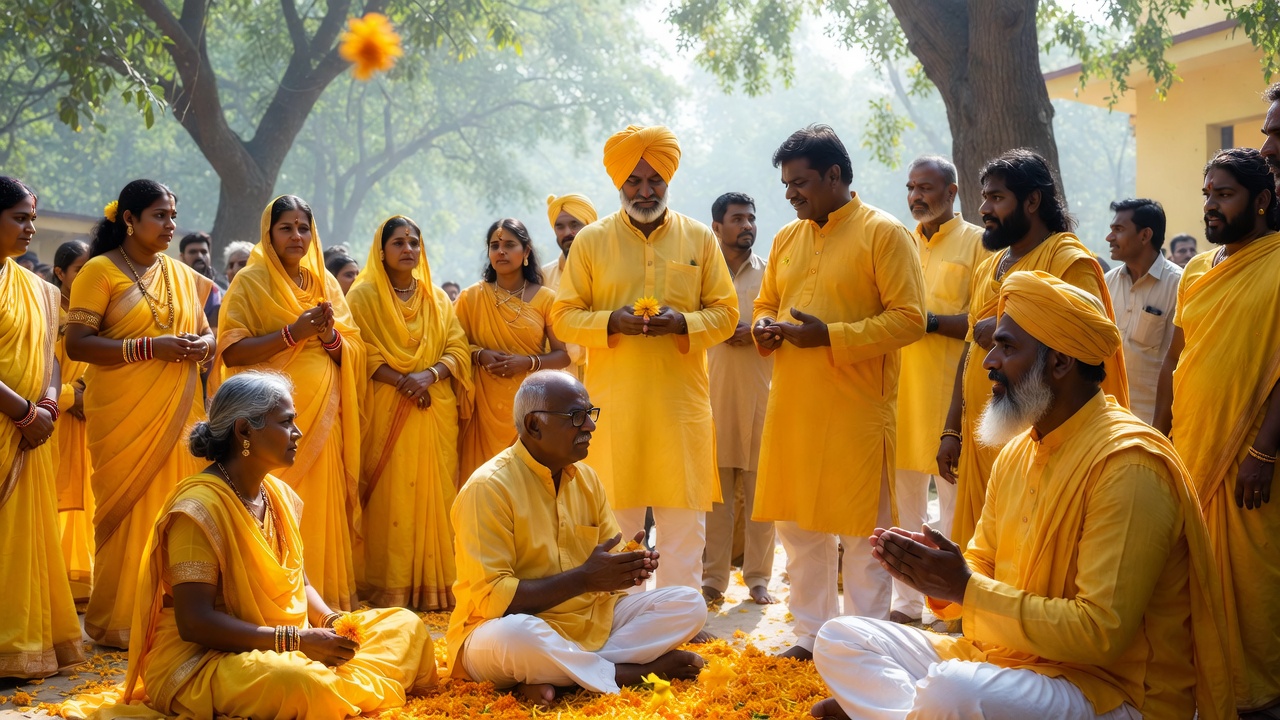
The colour yellow dominates every aspect of the day. Yellow represents the ripening mustard crops, the warmth of the returning sun, and the vibrancy of new beginnings. People wear yellow clothes, cook yellow-tinted food, offer yellow flowers, and decorate their homes in golden hues.
How to Celebrate Vasant Panchami at Home with Kids in 2026
Celebrating Vasant Panchami at home does not require an elaborate setup. It calls for warmth, intention, and a few simple traditions that children can take part in. Here is how families across India typically spend the day — and how you can adapt these customs whether you live in Jaipur or Jakarta.
1. Set Up a Home Saraswati Puja Altar
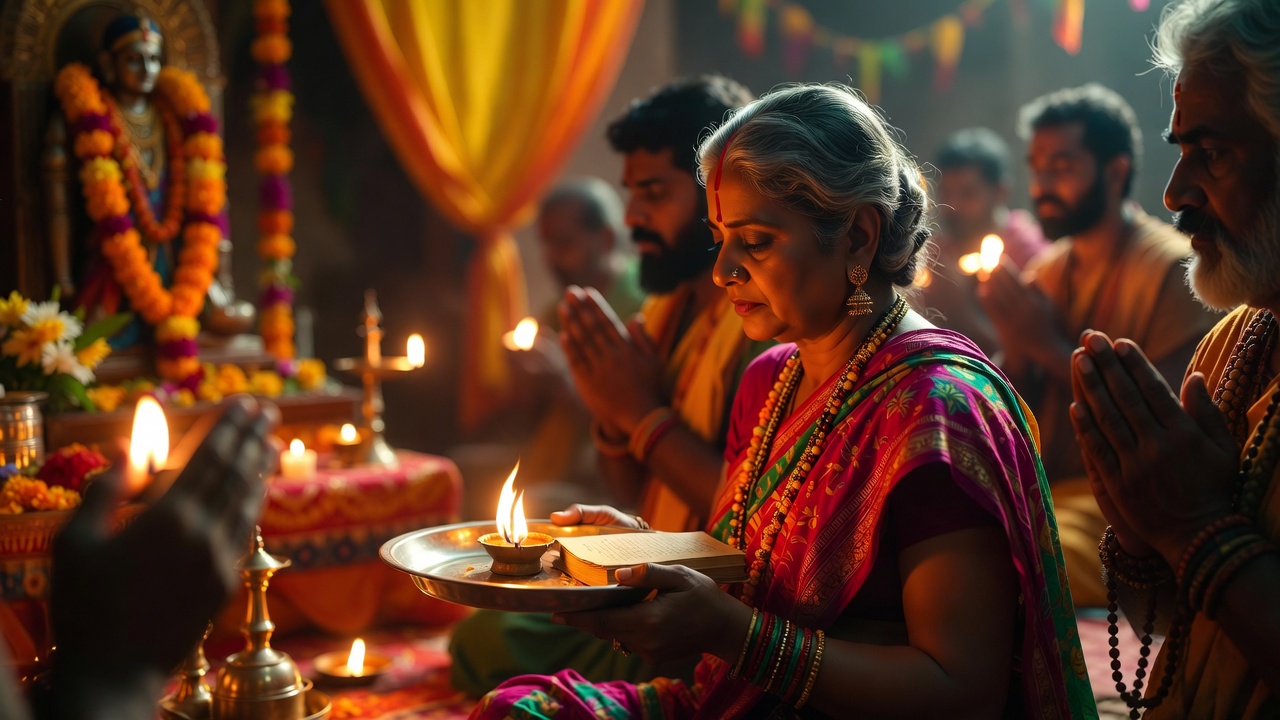
Place a small idol or printed image of Goddess Saraswati on a clean, elevated surface. Drape a yellow or white cloth beneath her. Arrange fresh flowers (marigolds work beautifully), a diya (oil lamp), incense sticks, fruits, and a plate of yellow sweets. Encourage children to place their books, notebooks, pencils, and musical instruments at the altar. In West Bengal, it is customary to refrain from reading or studying during the puja hours — a gesture of surrender to the goddess before asking for her blessings.
2. Dress in Yellow
This is the simplest and most joyful way to involve even the youngest family members. A yellow kurta, a marigold dupatta, a saffron hair ribbon — anything in the golden-yellow family counts. Explain to your children that the colour mirrors the blooming mustard fields and represents knowledge and positivity.
3. Perform the First-Writing Ceremony (Akshar Abhyasam)
If you have a toddler between two and five years old, Vasant Panchami is a beautiful day to introduce them to letters. Fill a brass plate with raw rice grains. Guide the child’s finger to trace the syllable “Om” or “A” (the first letter of their script). This practice is not about penmanship — it is about blessing a new beginning.
4. Cook Yellow Foods Together
Invite the kids into the kitchen. Prepare simple yellow-themed dishes like kesar halwa (saffron semolina pudding), meethe chawal (sweet saffron rice), or boondi laddoo. Even spreading turmeric on roti or mixing saffron into warm milk counts. Cooking together turns a recipe into a memory.
5. Fly Kites as a Family
In Punjab, Haryana, and parts of Uttar Pradesh, kite-flying is a beloved Vasant Panchami tradition. The sight of colourful kites against a clear winter sky captures the spirit of the festival perfectly. If you have outdoor space, make it an afternoon activity.
Easy Vasant Panchami Crafts for Toddlers and Preschoolers
Young children learn through their hands. The crafts below are designed for ages two to five and use basic, safe materials found in most homes.
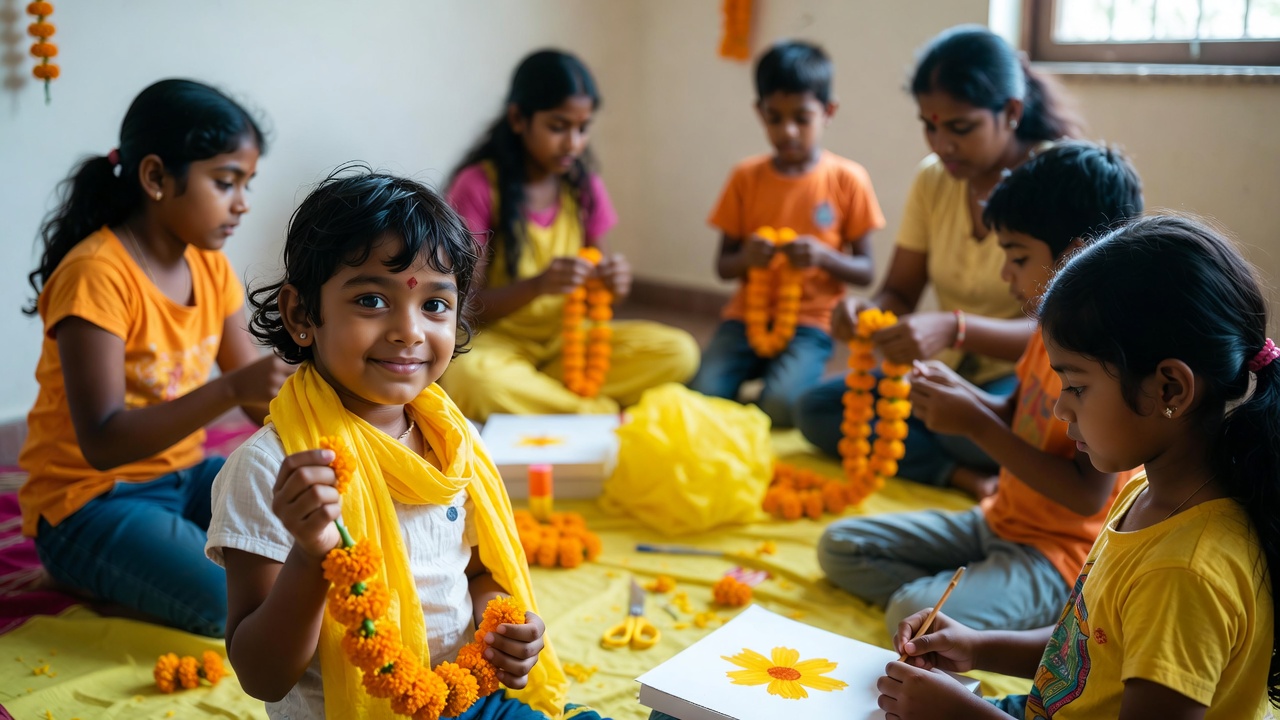
Yellow Paper Flower Garlands
Materials: Yellow tissue paper or crepe paper, green pipe cleaners, child-safe scissors, glue stick.
Steps:
- Cut the yellow paper into circles (about 8 cm wide). Pre-cut them for very young children.
- Show the child how to scrunch each circle into a loose ball, then open it slightly to create a “flower” shape.
- Thread the paper flowers onto a green pipe cleaner or string.
- Hang the garland on the puja altar, above a doorway, or around a window frame.
Why it matters: Flower garlands (mala) are part of every Saraswati Puja. This craft connects small hands to a living tradition.
Handprint Lotus Art
Goddess Saraswati sits on a lotus. Let children create their own lotus using handprints.
Materials: White and yellow washable paint, thick paper or card stock, a sponge.
Steps:
- Paint the child’s palm white and press it onto the centre of the paper — fingers spread wide. Repeat in a circle to form petals.
- Add yellow paint to the centre of the flower using a sponge or fingertip.
- Once dry, draw a simple green stem and leaf below the lotus.
This craft doubles as a lovely keepsake. Write the child’s name and the year (2026) on the back.
Playdough Saraswati Veena
Materials: Yellow playdough (homemade with turmeric for colour), a wooden craft stick.
Steps:
- Roll a ball of yellow dough for the body of the veena.
- Shape a long neck from the dough and press it onto the craft stick.
- Use a toothpick to gently score “strings” along the neck.
This is a wonderful tactile way to introduce the veena — Saraswati’s signature instrument — to a toddler.
Vasant Panchami Art Projects and Craft Ideas for School-Age Children
Older children (ages six to twelve) can handle more detailed projects. These crafts build on the festival’s core themes: spring, knowledge, creativity, and Goddess Saraswati.
How to Make a Handmade Kite for Basant Panchami
Kite-making is one of the most popular Vasant Panchami activities in schools across northern India.
Materials: A sheet of lightweight paper or a plastic bag, two thin bamboo sticks (or wooden dowels), string, tape, scissors, markers or paint.
Steps:
- Cross the two sticks to form a “t” shape (one vertical, one horizontal about a third of the way down). Tie them tightly at the centre with string.
- Stretch string around the four tips to form a diamond frame.
- Lay the frame on the paper and cut around it, leaving a 2 cm margin.
- Fold the margins over the string frame and tape or glue them down.
- Attach a long tail made of ribbon or fabric strips to the bottom point.
- Decorate with yellow paint, marigold stickers, or drawings of the sun and flowers.
Kite-flying is more than play. In Vasant Panchami tradition, the kite soaring high represents dreams and aspirations reaching toward the sky.
Paper Plate Goddess Saraswati Craft
Materials: One white paper plate, yellow and white paint, markers, cotton balls, craft feathers (white), glue, sequins or beads.
Steps:
- Paint the top half of the paper plate white (Saraswati’s complexion). Let it dry.
- Draw simple eyes, a bindi, and a gentle smile.
- Glue cotton balls at the top for a cloud-like hairstyle or use white yarn.
- Cut a small crescent from yellow paper for a crown. Decorate with sequins.
- Attach white craft feathers on either side of the plate as peacock or swan motifs.
- At the bottom, glue a small hand-drawn veena cut from card stock.
Display these on the classroom wall or at home around the puja space.
Rangoli Designs with Flower Petals and Coloured Powder
Rangoli is a timeless Indian art form, and Vasant Panchami is the perfect occasion to teach it to children.
Materials: Marigold petals, rice flour, yellow and orange rangoli powder (or chalk dust), a flat floor space or a tray.
Steps:
- Start with a simple symmetrical shape — a lotus, a sun, or a peacock.
- Draw the outline lightly with chalk or white powder.
- Fill sections with yellow rangoli powder or marigold petals.
- For indoor spaces, use a large metal tray and coloured sand.
Tip: Turn this into a friendly family competition. Each member creates one rangoli and everyone votes for their favourite.
Traditional Vasant Panchami Recipes to Cook with Kids
Food is the thread that ties every Indian festival together. On Vasant Panchami, the kitchen turns golden. The recipes below are kid-friendly, simple to follow, and deeply rooted in tradition.
Kesar Sooji Halwa (Saffron Semolina Pudding)
This is the single most important Vasant Panchami sweet in most North Indian households. It is offered as bhog (sacred food offering) to Goddess Saraswati and then shared as prasad.
| Ingredient | Quantity |
|---|---|
| Semolina (sooji/rava) | 1 cup |
| Ghee (clarified butter) | ½ cup |
| Sugar | ¾ cup |
| Water | 2 cups |
| Saffron strands (kesar) | 10–12, soaked in 2 tbsp warm milk |
| Cardamom powder | ½ tsp |
| Cashews and raisins | A handful |
Steps:
- Heat ghee in a heavy-bottomed pan. Fry the cashews until golden. Remove and set aside.
- Add the semolina to the same ghee. Roast on a low flame, stirring constantly, until it turns golden and fragrant (about five minutes).
- In a separate pot, bring water and sugar to a boil. Add the saffron milk and cardamom.
- Slowly pour the hot sugar water into the roasted semolina. Stir carefully — it will splutter.
- Cook on low heat until the mixture thickens and pulls away from the sides of the pan.
- Garnish with fried cashews and raisins. Serve warm.
Kid-friendly task: Children can soak the saffron, count cashews, and stir the semolina under supervision.
Meethe Chawal (Sweet Yellow Rice)
| Ingredient | Quantity |
|---|---|
| Basmati rice | 1 cup |
| Sugar or jaggery | ½ cup |
| Saffron strands | 8–10, soaked in warm water |
| Ghee | 2 tbsp |
| Cardamom pods | 3–4, crushed |
| Raisins, cashews, almonds | For garnish |
Steps:
- Wash and soak the rice for 30 minutes. Drain.
- Cook the rice until it is 80% done. Drain any extra water.
- In a separate pan, melt ghee and lightly fry the nuts and raisins.
- Add sugar or jaggery to the pan with a splash of water. Let it dissolve.
- Mix in the saffron water and cardamom.
- Gently fold the partially cooked rice into this mixture. Cook on the lowest flame for 10 minutes.
- Fluff with a fork and serve.
Kid-friendly task: Little ones can wash the rice, pick out raisins (and taste-test a few), and help plate the dish.
Fun Outdoor Vasant Panchami Games and Activities for the Whole Family
The festival falls at the cusp of winter and spring — a time when the weather in much of India is pleasant, cool, and ideal for outdoor play.
Kite-Flying Competitions
Organise a neighbourhood kite-flying event. Give each family team a basic kite kit and 30 minutes to decorate before flying. Award prizes for the most creative design, the highest flight, and the best teamwork.
Vasant Panchami Nature Walk and Scavenger Hunt
Create a checklist of spring-themed items for children to spot during a park walk:
- A yellow flower
- A butterfly or bee
- A bird singing
- A new leaf bud on a tree
- A mustard plant (if you are in rural North India)
- Something that feels warm from the sun
This activity builds observation skills and connects children to Vasant Panchami’s core message — the renewal of nature.
Musical Instrument Jam Session
Since Saraswati is the goddess of music, dedicate an hour to music-making. Pull out any instruments at home — a harmonium, a pair of tablas, a tambourine, or even pots and spoons. Sing a Saraswati Vandana together or let children improvise rhythms. The goal is not perfection. It is joy.
Family Picnic with Yellow-Themed Snacks
Pack a picnic basket with yellow foods — banana chips, mango lassi, kesar peda, and turmeric popcorn. Spread a yellow sheet in the park. Read a picture book about Saraswati or tell the story of how the goddess brought sound, rhythm, and creativity to a silent universe.
Vasant Panchami Storytelling Ideas for Kids: The Legend Behind the Festival
Children absorb culture through stories. Here are two central tales you can share, adapted for young listeners.
The Story of Goddess Saraswati and the Silent World
Long ago, Lord Brahma created the world. He made mountains, rivers, trees, and animals. But something was missing. The world was completely silent. There was no music, no speech, no laughter. Brahma felt sad. So he created Saraswati — a goddess dressed in white, seated on a lotus, holding a veena. The moment she plucked the strings of her instrument, sound filled the universe. Rivers began to gurgle. Birds learned to sing. People started to speak, write poems, and share stories. That is why we honour Saraswati on Vasant Panchami — to thank her for the gift of knowledge, language, and music.
The Story of Kamadeva and the Arrival of Spring
Another legend linked to Vasant Panchami involves Kamadeva, the Hindu deity of love. When Lord Shiva was in deep meditation after losing his wife Sati, the world grew cold and lifeless. Goddess Parvati wanted Shiva to notice her, so the sages asked Kamadeva for help. Kamadeva shot a flower arrow at Shiva to awaken him. Shiva, disturbed, opened his third eye and reduced Kamadeva to ashes. But in that moment, spring arrived — warmth returned to the earth, flowers bloomed, and love stirred once more. This is why Vasant Panchami also celebrates the awakening of nature and emotion after a long winter.
Tip: Use picture books, puppets, or simple drawings to bring these stories to life for younger children.
How Schools and Communities Celebrate Saraswati Puja on Vasant Panchami
Vasant Panchami is one of the most widely observed school festivals in eastern and northern India. In West Bengal, the celebration is known as Saraswati Pujo, and it is among the most beloved religious events for students. Schools set up elaborate pandals (temporary shrines) with clay idols of the goddess. Students offer pens, books, musical instruments, and even electronic gadgets at her feet. It is customary to refrain from reading or writing during the puja hours — a respectful pause before asking for the blessing of knowledge.
In Varanasi, temples along the Ganga ghats hold elaborate puja ceremonies. The Banaras Hindu University (BHU) becomes a centre for worship, music recitals, and poetry readings.
In the southern state of Telangana, thousands of families visit the Sri Gnana Saraswathi Temple at Basar for the Akshar Abhyasam ceremony. Children as young as three write their first letters here, surrounded by chanting and the scent of camphor.
In Punjab and Haryana, the sky turns into a canvas of colourful kites. Women prepare sarson ka saag and makki ki roti alongside sweet yellow dishes, and the festival carries a warm, community-driven energy.
For schools outside India, here are activities that work well in a multicultural classroom:
| Activity | Age Group | Time Needed | Materials |
|---|---|---|---|
| Yellow Colour Day (dress code + crafts) | 3–6 years | Half-day | Yellow clothes, paper, crayons |
| Kite-making workshop | 6–12 years | 1 hour | Paper, sticks, string, markers |
| Saraswati drawing competition | 5–12 years | 45 minutes | Sketch pads, yellow/gold crayons |
| Seed planting ceremony | All ages | 30 minutes | Small pots, soil, marigold seeds |
| Storytelling circle | 3–8 years | 20 minutes | Picture book or felt-board figures |
| Music and dance programme | All ages | 1 hour | Instruments, speakers, open space |
Vasant Panchami Decoration Ideas to Brighten Your Home
Decorating for Vasant Panchami is about bringing the warmth of yellow and the freshness of spring into your living space. You do not need to spend heavily. Nature and a little creativity are your best resources.
- Marigold door toran: String fresh marigolds with mango leaves and hang them above your main entrance. This is a classic Indian welcome garland.
- Yellow balloon and streamer clusters: Quick, festive, and loved by children. Tie them around the puja space.
- Rice rangoli at the entrance: Fill a flat tray or the doorstep with a simple rangoli made from yellow-dyed rice or lentils.
- Book display: Create a small “knowledge corner” with your child’s favourite books arranged around a photo of Saraswati.
- Spring flower vase: A brass pot with sunflowers, marigolds, or yellow chrysanthemums placed on the dining table.
- Handmade paper bunting: Cut triangle flags from yellow, white, and gold paper. String them across a wall or across the puja room.
Frequently Asked Questions About Vasant Panchami for Families
When is Vasant Panchami in 2026? Vasant Panchami 2026 falls on Friday, January 23, 2026. The Panchami Tithi begins at 2:28 AM on January 23 and ends at 1:46 AM on January 24. The most auspicious window for Saraswati Puja is generally 7:15 AM to 12:50 PM, though timings may vary slightly by city.
What is the meaning of wearing yellow on Vasant Panchami? Yellow mirrors the colour of blooming mustard fields, the warmth of sunlight, and the energy of spring. It is Goddess Saraswati’s favourite colour and represents knowledge, prosperity, and positivity. Even wearing a small yellow accessory — a scarf, a bracelet, a ribbon — honours the tradition.
Is Vasant Panchami a good day to start a child’s education? Yes. Vasant Panchami is considered one of the most auspicious days for Vidyarambham (initiation of learning). Many families guide their children to write their first letters on this day, seeking Saraswati’s blessings for lifelong wisdom. According to the Deccan Chronicle, the day is widely regarded as a Sarva Siddhi Muhurta — universally auspicious for starting important new endeavours.
Can families outside India celebrate Vasant Panchami? Absolutely. Diaspora communities in the United States, United Kingdom, Canada, Australia, and Southeast Asia hold Saraswati Puja events in temples, cultural centres, and homes. The crafts, recipes, and storytelling ideas in this guide require no special location — only a willingness to share the spirit of the festival with the next generation.
What foods are traditionally prepared for Vasant Panchami? The festival’s food is simple, sattvic (pure), and yellow-themed. Popular dishes include kesar halwa (saffron pudding), meethe chawal (sweet yellow rice), boondi laddoo, kesar kheer (saffron rice pudding), and khichdi. In Punjab, families also prepare sarson ka saag with makki ki roti. In Bengal, the bhog (food offering) often includes khichuri (lentil-rice dish), labra (mixed vegetables), and sweets like sondesh and rajbhog.
Making Vasant Panchami Memories That Last a Lifetime
Festivals are not preserved in rituals alone. They live on in the small, sensory details a child carries into adulthood — the scent of saffron soaking in warm milk, the feel of rice grains under a tiny finger tracing the letter “A,” the thrill of a yellow kite catching the wind for the first time.
Vasant Panchami offers something rare in our fast-paced world: a full day dedicated to the wonder of learning and creativity. It asks us to pause, place our books at the feet of wisdom, and remember that knowledge — like spring — is a force of renewal.
Whether you spend the day making paper kites with your five-year-old, teaching your teenager to cook halwa, or simply sitting together in yellow clothes while reading a story about Saraswati, you are weaving a thread between generations. That thread is stronger than any single celebration. It becomes part of who your children are.
Happy Vasant Panchami 2026. May the goddess of wisdom bless every home with the light of knowledge, the melody of music, and the courage to begin something new.