The ultimate travel guide to experiencing the Carnevale di Venezia – from official dates and iconic events to masquerade balls, traditional masks, and insider tips for an unforgettable adventure in La Serenissima.
What Are the Official Venice Carnival 2026 Dates?
The Venice Carnival 2026 will officially run from Saturday, January 31 to Tuesday, February 17, 2026. This gives visitors an impressive 18 days of magical festivities in one of the world’s most enchanting cities.
Mark these dates on your calendar. The carnival follows the Christian liturgical calendar and always ends on Shrove Tuesday (Martedì Grasso), the day before Ash Wednesday and the start of Lent. In 2026, Easter falls on April 5, making the carnival season earlier than some years.
| Key Dates | Event | Significance |
|---|---|---|
| January 31 | Opening Day | Grand Opening Parade begins the festivities |
| February 1 | Festa Veneziana sull’Acqua | Water Parade on the Grand Canal |
| February 7 | Festa delle Marie | Historic parade honoring Venetian brides |
| February 8 | Volo dell’Angelo | Flight of the Angel from St. Mark’s Campanile |
| February 12 | Giovedì Grasso | Fat Thursday – major celebration day |
| February 14 | Valentine’s Day | Il Ballo del Doge and romantic events |
| February 17 | Martedì Grasso | Grand Finale and Volo del Leon |
The peak period runs from February 7 to February 17, 2026. This is when the most spectacular events occur. If you can only visit for a few days, aim for the final weekend. Expect massive crowds during this time, especially in Piazza San Marco.
The carnival is divided into distinct phases. The first week features opening ceremonies and smaller events. The second week brings the major attractions. Everyday brings street performances, masked figures, and spontaneous celebrations throughout Venice’s narrow calli and picturesque campielli.
2026 Venice Carnival Theme: Olympus – At the Origins of the Game
The official theme for Venice Carnival 2026 is “Olympus – At the Origins of the Game” (Olympus – Alle origini del gioco). This magnificent theme celebrates the Olympic spirit in homage to the 2026 Milan-Cortina Winter Olympics.
The theme weaves together mythology, art, and sport. It pays tribute to the universal power of play and challenge. Expect to see Greek gods and goddesses alongside traditional Venetian characters. Mythological figures will blend with classic carnival masks.
This Olympic-inspired theme reflects Venice’s historical connection to competition and creativity. The city has always embraced spectacle and theatrical performance. The 2026 edition will transform Piazza San Marco and the Arsenale into stages where myth meets motion.
What this means for visitors:
- Costumes inspired by Greek mythology – think Apollo, Athena, Zeus, and Dionysus
- Traditional masks like the Bauta and Medico della Peste alongside mythological creatures
- Special performances celebrating the harmony between body and mind
- Acrobatic shows and athletic-themed events
- Artistic installations connecting ancient Olympia to Venice
The theme influences everything from official events to private masquerade balls. If you’re planning to rent a costume, consider incorporating Olympic or mythological elements for a truly authentic 2026 experience.
History of the Venice Carnival: A Tradition Spanning Centuries
The Venice Carnival is one of the oldest and most famous festivals in the world. Its roots stretch back nearly a millennium. Understanding this rich history enhances every moment spent in the masked streets of Venice.
Origins Dating Back to 1094
The first documented mention of the Venice Carnival dates to 1094 during the reign of Doge Vitale Falier. The celebration began as a public festival honoring the days before Lent. It marked a time when Venetians could indulge before the religious fasting period.
Initially, the carnival ran from the first Sunday of October through Shrove Tuesday – nearly six months of festivities! The Republic of Venice recognized the celebration’s importance for social cohesion and public morale.
The Golden Age of Venetian Carnival
The 18th century marked the carnival’s peak. Venice became the entertainment capital of Europe. Nobility from across the continent flocked to participate. The celebrations attracted 20,000 to 30,000 foreign visitors annually – an enormous number for that era.
During this golden age, masks became essential to Venetian society. They allowed people to transcend social boundaries. Nobles could mingle with commoners. Illicit romances flourished. Political intrigue unfolded behind anonymous faces.
The famous mask-makers, known as mascherari, gained official recognition in 1436 with their own guild. Their artistry became synonymous with Venetian identity. Masks weren’t just carnival accessories – they were worn throughout the year for various purposes.
Suppression and Revival
In 1797, Napoleon’s conquest of Venice brought the carnival to an abrupt end. The new rulers banned masks and public celebrations. They viewed these traditions as symbols of the decadent republic they had overthrown.
The carnival remained dormant for nearly two centuries. Venetians kept their traditions alive in private gatherings, but the grand public spectacle disappeared.
The modern Venice Carnival was officially revived in 1979. A group of civic organizations and former Academy of Fine Arts students worked to restore the festival. The first modern mask shop opened in Venice in 1978, signaling the tradition’s rebirth.
Since then, the carnival has grown exponentially. Today, it attracts approximately 3 million visitors annually. It has reclaimed its place among the world’s most prestigious cultural events while honoring centuries of Venetian heritage.
Significance Today
The Venice Carnival represents more than tourism. It connects modern visitors to centuries of tradition. The masks, costumes, and rituals carry profound cultural meaning. Each element tells a story of Venetian society, art, and identity.
Must-See Venice Carnival Events and Parades
The Venice Carnival offers an extraordinary range of events. From free street performances to exclusive palace balls, there’s something for every visitor. Here are the must-see events for 2026.
Festa Veneziana sull’Acqua (Water Parade)
Date: Sunday, February 1, 2026
The carnival’s “people’s opening” takes place on the water. An ornately decorated ship sails through the Grand Canal to the Cannaregio district. This floating parade marks the true beginning of festivities for most Venetians.
The Water Parade features:
- Decorated boats and gondolas
- Musicians performing from the water
- Historical costumes displayed along the canal
- Evening light shows reflecting off the lagoon
Best viewing spots: Rialto Bridge, Fondamenta della Misericordia, and any traghetto crossing point along the Grand Canal.
Festa delle Marie (Festival of the Maries)
Date: Saturday, February 7, 2026
One of the carnival’s oldest traditions commemorates a legendary event from 943 AD. According to tradition, Istrian pirates kidnapped twelve Venetian brides during a mass wedding ceremony. The Doge organized their rescue, and the festival celebrates this victory.
Twelve young women dressed in elaborate Renaissance gowns parade through Venice. The procession travels from San Pietro di Castello along Riva degli Schiavoni to Piazza San Marco. A grand reception crowns the most beautiful “Maria” – who will become the following year’s Angel.
Venice Carnival Street Show
Throughout the carnival period
Daily street performances animate the calli and piazze of Venice. Professional actors, acrobats, musicians, and storytellers perform across the historic center. Free shows occur in:
- Campo Santo Stefano
- Campo Santa Margherita
- Campo Geremia
- Campo San Polo
- The streets of Mestre and lagoon islands
Shows typically run between 11:30 AM and 4:00 PM. No tickets required – simply walk the streets and discover performances.
Best Mask Contest (Concorso della Maschera più Bella)
Daily in Piazza San Marco
Every day during carnival, a public contest celebrates the most elaborate costumes. Participants from around the world showcase extraordinary handmade masks and period attire. A jury selects winners in various categories.
The grand finale takes place on the last day of carnival. Winners receive prestigious recognition and extensive media coverage. Even if you’re not competing, watching this contest offers incredible photo opportunities and costume inspiration.
Arsenale Water Show
Nightly during peak carnival period
The historic Arsenale transforms into a spectacular nighttime stage. This immersive experience blends water, light, music, and dance. Choreographed fountains create reflections while acrobatic performers tell stories of myth and humanity.
The 2026 show will feature the Olympus theme. Expect mythological storytelling through cutting-edge light displays. Tickets are required and sell out quickly – book through the official Venice Carnival website.
Official Carnival Dinner Show
Various dates throughout carnival
Held at historic venues like Ca’ Vendramin Calergi Palace, these elegant evenings combine gourmet dining with theatrical performances. Live entertainment, period dancing, and costumed guests create an atmosphere straight from Venice’s golden age.
Prices typically start around €400-600 including dinner, entertainment, and costume rental options.
The Flight of the Angel (Volo dell’Angelo): Venice’s Most Spectacular Event
The Volo dell’Angelo is the symbolic heart of Venice Carnival. This breathtaking ceremony officially opens the main celebrations in Piazza San Marco. If you witness only one event, make it this one.
What Is the Flight of the Angel?
A costumed figure descends on a cable from the 98-meter Campanile di San Marco (St. Mark’s Bell Tower) to the center of the piazza below. The “Angel” glides slowly above thousands of spectators, scattering confetti and symbolic tokens. The entire descent takes approximately 3-4 minutes, but the anticipation and surrounding festivities make it an all-day event.
History of the Flight of the Angel
The tradition dates to the mid-16th century. A Turkish acrobat amazed Venetians by walking a rope from a boat in Riva degli Schiavoni to the top of the Campanile, then descending to the Doge’s Palace balcony as tribute to the Doge.
This act evolved into “The Flight of the Turk,” performed annually by professional acrobats. Eventually, a performer dressed with angel wings and suspended by rope replaced the tightrope walker. The Doge himself would present a gift to the angel impersonator.
In 1759, tragedy struck. The acrobat fell into the horrified crowd. Subsequently, a wooden dove replaced the human performer – earning the name “Volo della Colombina” (Flight of the Dove).
The human flight returned in 2001, reintroducing the original ritual of paying homage to the Doge. Today’s “Angel” is typically the previous year’s Maria winner from the Festa delle Marie competition.
When Is the Flight of the Angel 2026?
Expected date: Sunday, February 8, 2026, around noon
The event traditionally occurs on the first Sunday of the main carnival period. Exact timing is confirmed in January through official channels. The Municipality of Venice publishes final details closer to the event date.
Important note: In recent years, restoration work on St. Mark’s Square and the Campanile has occasionally required modifications. If the traditional aerial descent cannot proceed safely, organizers stage an alternative show called “L’Angelo a Terra” with ground-level performances and digital scenography.
How to Watch the Flight of the Angel
The event is free and open to the public. However, the piazza fills rapidly. Here’s how to secure a good viewing spot:
| Strategy | Details |
|---|---|
| Arrive early | 9:00 AM or earlier for front positions |
| Best locations | In front of St. Mark’s Basilica or near the Campanile base |
| Reserved seating | Some tour operators offer paid balcony access |
| Alternative views | Rooftop terraces of surrounding hotels (book in advance) |
Practical tips:
- Wear comfortable shoes – you’ll be standing for hours
- Bring water and snacks
- Protect cameras from confetti
- Keep belongings secure in the dense crowd
- Consider staying nearby to walk to the square
Other Flight Events
Two additional “flights” complement the Angel:
Volo dell’Aquila (Flight of the Eagle): A second dramatic descent featuring a celebrity, athlete, or public figure. This event generates excitement and prestige.
Volo del Leon (Flight of the Lion): Symbolically closes the carnival on Martedì Grasso. The Venetian Lion – symbol of the city – descends over the piazza in a final celebration before Lent begins.
Venice Carnival Masquerade Balls and Private Parties
The masquerade balls are what make Venice Carnival truly legendary. These aren’t ordinary parties – they’re immersive journeys into the glamorous world of 18th-century Venice. Held in historic palaces along the Grand Canal, they represent the pinnacle of carnival celebration.
Il Ballo del Doge (The Doge’s Ball)
Date: Saturday, February 14, 2026 (Valentine’s Day) Venue: Scuola Grande della Misericordia Price: €2,500 – €5,000
This is the most exclusive and expensive event of Venice Carnival. Created in 1994 by renowned stylist Antonia Sautter, Il Ballo del Doge has been called “the most sumptuous and exclusive, famous and coveted social event in the world” by Vanity Fair.
The 2026 edition marks the 33rd anniversary of this legendary masquerade. The theme for 2026 is “MOREAMORE” – celebrating carnival couture and historic fashion icons like Marie Antoinette and Louis XIV.
What’s included:
- Opulent banquet with gourmet multi-course meal
- World-class theatrical performances
- Live orchestras and period dancing
- Interaction with international celebrities and high society
- After-party with DJ sets and open bar
Dress code is strictly enforced. Museum-quality period costumes are mandatory. Antonia Sautter’s atelier offers over 1,500 sartorial creations for rental. The costume fitting itself becomes a memorable experience.
Book through the official Il Ballo del Doge website months in advance – tickets sell out quickly despite the high price.
Tiepolo Ball
Date: Saturday, February 14, 2026 Venue: Salone del Ridotto at Palazzo Dandolo Price: €850 – €1,200
This elegant masquerade celebrates its 27th edition in 2026. The historic Ridotto – once Venice’s most famous gambling hall and entertainment venue – provides an authentic 18th-century setting.
The evening includes:
- Aperitif in the theatre foyer
- Gala dinner with seafood specialties
- Opera singers and dancer performances
- Period ball with dancing instructions
- Dessert buffet and Prosecco
Costume rental (Standard or Superior category) is available with ticket packages. The Silver and Gold ticket options include increasingly elaborate costumes.
Ball of Dreams
Date: Saturday, February 7, 2026 Venue: Palazzo Ca’ Zen ai Frari Price: Various packages available
Held in a magnificent 15th-century palace still owned by the noble Zeno family, this ball offers an authentic Venetian aristocratic experience. The San Polo location near the Frari Basilica provides easy access.
Packages include:
- Dream Package: Side room with optional costume
- Deluxe Dream Package: Central hall with included costume
- Royal Dream Package: Premium experience with finest attire
The Ball of Dreams attracts international guests seeking once-in-a-lifetime experiences. Live performances, candlelit atmospheres, and intriguing encounters continue until dawn.
Other Notable Balls and Parties
| Event | Date | Price Range | Highlight |
|---|---|---|---|
| Carnival in Love | February 14 | €400-600 | Romantic Valentine’s celebration |
| Minuetto Ball | Various dates | €400-430 | Period dances and 1800s music |
| Dalle Rose Ball | February 14 | €500+ | Intimate palace setting |
| Legend of Casanova | February 14 | €600+ | Theatrical seduction theme |
| Opening Ball | January 31 | €340+ | First dance of the carnival |
Tips for Attending Venice Carnival Balls
Book early: The most prestigious balls sell out 6-8 months in advance. Valentine’s Day events are especially popular.
Budget for costumes: Rental costs range from €100-1,100 depending on quality and elaboration. Factor this into your total expense.
Understand dress codes: Most balls require full period costumes. A simple mask won’t suffice for palace events.
Consider package deals: Many organizers offer all-inclusive options with costume, dinner, and entertainment.
Arrive in costume: Hotels can arrange styling services, or change at the atelier before the event.
Traditional Venetian Carnival Masks: Types and Meaning
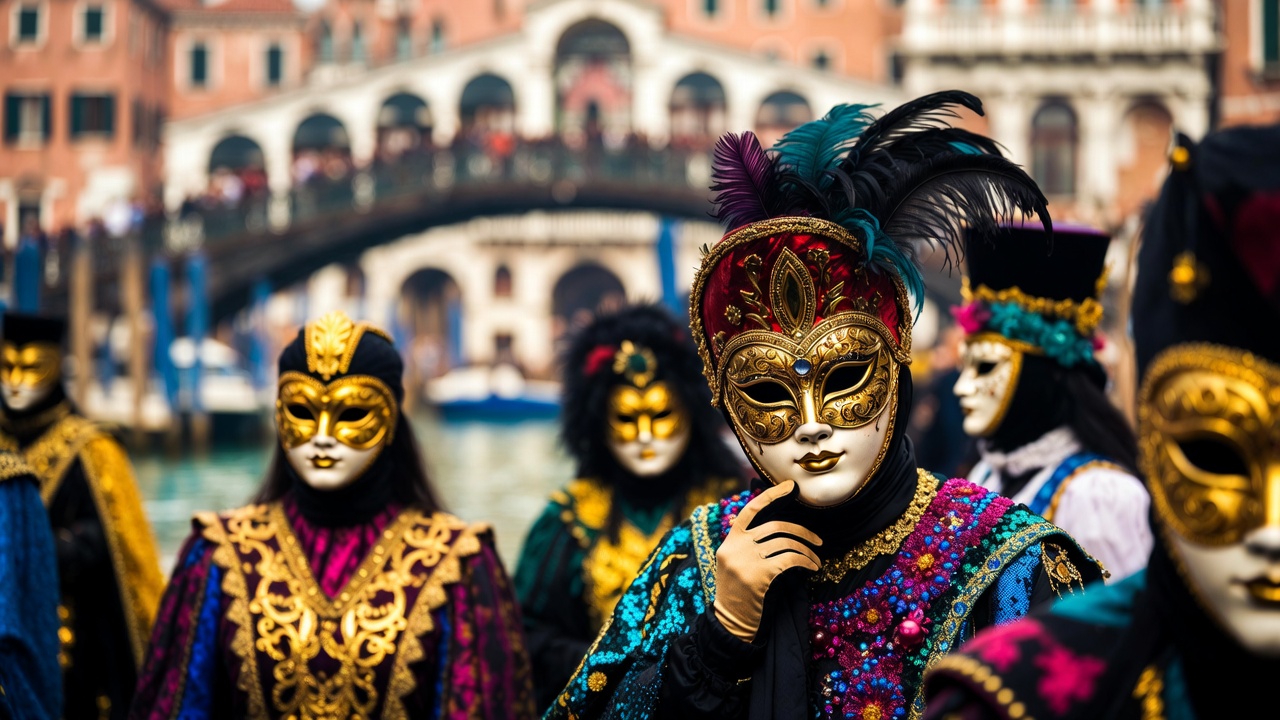
Venetian masks are far more than decorative accessories. Each style carries centuries of history, social significance, and artistic tradition. Understanding these masks deepens your carnival experience and helps you choose the perfect disguise.
Bauta: The Classic Venetian Mask
The Bauta is the quintessential Venice Carnival mask. This white mask with a square jawline that projects over the mouth has been worn since the 13th century. The oldest document mentioning Venetian mask-makers (mascherari) dates to 1271.
Key characteristics:
- Projects forward at the chin, allowing eating and drinking
- Distorts the wearer’s voice for added anonymity
- Originally stark white, now often gilded or decorated
- Typically worn with a black tricorn hat (tricorno) and zendale (hood)
- The complete ensemble is called “Bauta” – including cloak and hat
The Bauta served practical purposes beyond carnival. It allowed citizens to conduct business anonymously, pursue romantic encounters, and cross social boundaries. Both men and women wore this mask throughout the year during the Republic.
Medico della Peste (Plague Doctor)
Perhaps the most recognizable Venetian mask to modern visitors, the Plague Doctor features a distinctive long, curved beak. Unlike other carnival masks, this one has dark historical origins.
Historical background:
- Invented by French physician Charles de Lorme in the 17th century
- The hollow beak contained aromatic herbs believed to purify plague-infected air
- Worn with ankle-length black coat, waxed fabric, and protective gloves
- Doctors used a staff to examine patients without physical contact
Venice suffered devastating plague outbreaks between 1361 and 1680. The 1630 epidemic killed nearly a third of the population. The plague doctor costume evolved from medical necessity into a powerful symbol of the city’s dark history transformed into art.
Today’s Medico della Peste masks are often elaborately decorated in white or gold. They’re typically worn with the full doctor costume – hat, cloak, and staff – creating a walking memento mori during celebrations.
Colombina: The Half Mask
Named after a character from the Commedia dell’Arte, the Colombina is traditionally a half mask adorned with jewels, feathers, and elaborate fabrics. Often painted gold or silver, it covers only the eyes and nose.
Characteristics:
- Held in place by ribbon or decorative stick
- Considered the female version of the Bauta
- Associated with the character Colombina – a clever maidservant
- Allows for eating, drinking, and conversation
- Modern versions feature extensive artistic decoration
The Colombina represents a perfect compromise between tradition and practicality. It’s elegant without being overwhelming, ideal for those wanting to participate while maintaining facial recognition.
Volto (Larva): The Full Face Mask
Also called the “ghost face,” the Volto is a simple white mask covering the entire face. It depicts serene, neutral features with closed or mysterious expressions.
Features:
- Completely covers the face, extending to the ears
- Heavier than most masks, with a tight fit
- Traditionally worn by women with headdresses or veils
- Creates total anonymity
- Secured with a ribbon behind the head
Moretta: The Silent Mask
One of the most intriguing masks, the Moretta was worn exclusively by women. This small, oval black velvet mask has no mouth opening and was held in place by biting a button on the inside.
Significance:
- The wearer literally could not speak – hence “mute servant”
- Used by noblewomen to observe and flirt with their eyes
- Created an air of mystery and intrigue
- Fell out of fashion when practical considerations outweighed allure
Gnaga: The Cat Mask
This cat-faced mask carries unique historical significance. In Renaissance Venice, homosexuality was punishable by death. However, laws stipulated that crimes committed while performing as a masked character during Carnival could not be punished.
Male homosexual prostitutes wore the Gnaga – dressed as women with baskets of kittens – to practice their profession safely. Wearers behaved like female commoners, meowing mockingly at passers-by.
The Gnaga remains worn today, usually by men dressed as women, honoring this complex chapter of Venetian history.
Commedia dell’Arte Characters
Several carnival masks derive from the Commedia dell’Arte – improvisational theater popular from the 16th century:
| Character | Mask Style | Personality |
|---|---|---|
| Arlecchino (Harlequin) | Black half-mask with short nose | Cunning, acrobatic servant |
| Pantalone | Long hooked nose, high cheekbones | Wealthy, miserly merchant |
| Zanni | Half-mask with very long nose | Foolish servant class |
| Pulcinella | Black half-mask with hook nose | Comic servant from Naples |
| Pierrot | White face, teardrop | Sad, lovesick clown |
Where to Buy Authentic Venetian Masks
Avoid mass-produced tourist souvenirs. Authentic handcrafted masks cost more but represent genuine Venetian artistry.
Recommended workshops:
- Ca’ Macana – Famous for period-accurate reproductions
- Tragicomica – Featured in films like Eyes Wide Shut
- Papier Mache – Traditional techniques since 1979
- L’Atelier delle Maschere – Artist-run studio near Rialto
Expect to pay €50-500 for handcrafted masks, compared to €5-20 for factory-made reproductions.
How to Rent or Buy a Venice Carnival Costume
Whether attending a masked ball or simply strolling through St. Mark’s Square, wearing an authentic Venetian costume transforms your carnival experience. Here’s everything you need to know about obtaining the perfect ensemble.
Costume Rental Options
Atelier Antonia Sautter The most prestigious costume atelier in Venice. With over 1,500 sartorial creations, this workshop serves Il Ballo del Doge and other exclusive events. Costume fittings become memorable experiences as skilled seamstresses help you select the perfect attire.
- Price range: €350-1,100
- Location: Near St. Mark’s Square
- Booking: Required, especially during peak carnival
Venice in Costume Offers various costume categories from Standard to Superior. Their ateliers provide period costumes inspired by European fashion of the 1700s and 1800s. Unique patterns, quality fabrics, and Venice-made authenticity.
- Standard costumes: Starting around €200-300
- Superior costumes: €400-600
- Booking: Through event ticket packages
Venetian Mask and Costume Rental Shops Numerous shops throughout Venice offer day rentals:
- Atelier Flavia (Santa Croce)
- Nicolao Atelier (Cannaregio)
- Studio Flavia (Dorsoduro)
What’s Included in Costume Rental
Most rentals include:
- Full period costume (dress/suit)
- Matching mask
- Basic accessories (gloves, fans, hats)
- Fitting session
- Use for specified time period (typically one evening or full day)
Additional services (extra cost):
- Hair styling and wig rental
- Professional makeup application
- Costume delivery to hotel
- Extended rental periods
- Premium accessories and jewelry
Tips for Costume Selection
Consider your events:
- Street walking requires practical shoes and weather-appropriate layers
- Palace balls demand full period accuracy
- Water taxis and vaporettos require manageable skirts and capes
Book early:
- Premium costumes are reserved months in advance
- Popular sizes (medium/large) go first
- Valentine’s Day weekend has highest demand
Factor in comfort:
- You’ll wear the costume for many hours
- Consider Venice’s winter temperatures (usually 0-10°C / 32-50°F in February)
- Masks can fog glasses and limit peripheral vision
Buying vs. Renting
Benefits of buying:
- Keep the costume forever
- Wear multiple times during carnival
- No return deadline stress
- Support artisan mask-makers
Benefits of renting:
- Access to premium costumes otherwise unaffordable
- Professional fitting ensures perfect look
- No storage or travel concerns
- Different costume each event
Best Places to Watch Venice Carnival Parades and Performances
Strategic positioning maximizes your carnival experience. Different locations offer distinct advantages for specific events. Here’s your guide to the best viewing spots in Venice.
Piazza San Marco: The Heart of Carnival
The main square hosts the most significant official events:
- Flight of the Angel
- Best Mask Contest
- Festa delle Marie finale
- Official ceremonies
Viewing strategy:
- Arrive 2+ hours early for major events
- Central positions fill fastest
- Cafés along the perimeter offer seated views (at premium prices)
- Rooftop terraces of surrounding hotels require advance booking
Pros: Unmatched atmosphere, all major events, incredible costumes Cons: Extreme crowds, pickpocket risk, limited mobility
Grand Canal: Water Parade Viewing
The Festa Veneziana sull’Acqua and other water events require canal-side positioning.
Best spots:
- Rialto Bridge – Iconic but very crowded
- Accademia Bridge – Slightly less crowded, excellent views
- Fondamenta along Cannaregio Canal – Opening ceremony location
- Riva del Vin (Rialto area) – Ground-level canal access
Pro tip: Book a restaurant with canal-view seating. You’ll pay premium prices but enjoy comfort, food, and guaranteed views.
Cannaregio: Local Atmosphere
The Cannaregio district offers a more authentic, less touristy experience. This neighborhood hosts smaller celebrations with a local feel.
Highlights:
- Opening water parade passes through here
- Campo dei Mori offers charming squares
- Jewish Ghetto area has excellent restaurants
- Less expensive than San Marco area
Campo Santo Stefano
This elegant square near the Accademia Bridge features:
- Street theater performances
- Costumed figures posing for photos
- Less chaotic than Piazza San Marco
- Excellent surrounding restaurants
Campo Santa Margherita
Popular with students and locals, this square offers:
- Lively evening atmosphere
- Authentic Venetian bars and restaurants
- Street performances
- More affordable dining options
Arsenale Area
During peak carnival, the Arsenale hosts:
- Nightly water shows
- Light and music performances
- Theatrical presentations
- Ticketed events
Traditional Venice Carnival Food You Must Try
No Venice Carnival experience is complete without indulging in traditional sweets. These delicacies appear in bakeries and pastry shops only during the carnival season. Don’t miss them – you’ll have to wait another year!
Frittelle (Fritole): Venice’s National Sweet
The undisputed king of carnival sweets, Frittelle have been beloved in Venice since the 14th century. The first documented recipe dates to the 1300s.
What are they? Fried dough balls made with flour, milk, eggs, sugar, and brewer’s yeast. Traditional versions contain raisins, pine nuts, and candied fruit.
Historical significance:
- During the Republic, only licensed “fritoleri” could prepare and sell them
- In the 17th century, about 70 fritoleri held official permits
- The Congregation of Fritoleri protected this tradition
- Declared the “National Sweet” of the Veneto region
Modern variations:
| Type | Filling |
|---|---|
| Sensa gnente | Plain, traditional (no filling) |
| Con crema | Custard cream |
| Con zabaione | Zabaglione cream |
| Con cioccolato | Chocolate |
| Con mela | Apple slices |
Where to try: Every bakery and pastry shop in Venice. Rosa Salva makes traditional versions with a hole in the middle, following century-old recipes.
Galani (Crostoli): Crispy Carnival Ribbons
These paper-thin fried pastry strips have roots tracing to the Roman Empire. Romans prepared similar sweets called “frictilia” during the Saturnalia festival – the ancient equivalent of Carnival.
Regional names:
- Galani – Venice
- Crostoli – Veneto inland
- Cenci – Tuscany
- Frappe – Rome
- Chiacchiere – Lombardy
- Bugie – Piedmont
The recipe is simple: eggs, flour, butter, sugar, a drop of grappa or wine, rolled thin and deep-fried until crispy, then dusted with powdered sugar.
Venice vs. mainland difference: Venetian galani are extremely thin ribbons; mainland crostoli are thicker rectangles.
Castagnole (Favette): Little Chestnuts
These small fried dough balls resemble mini doughnuts. The name means “little chestnuts” due to their size and shape.
Characteristics:
- Flavored with lemon zest and aniseed liqueur
- Often filled with chocolate or pastry cream
- Rolled in sugar while still warm
- Called “favette” in Venice
Warning: They’re dangerously addictive. One leads to another!
Ravioli di Carnevale: Sweet Carnival Pillows
Don’t confuse these with savory pasta! Carnival ravioli are sweet, fried pastries shaped like traditional ravioli but with delicious fillings.
Features:
- Two squares of sweet dough crimped together
- Deep-fried instead of boiled
- Crispy, pillowy texture
- Filled with jam, chocolate, or cream
Where to Find Carnival Sweets
Pasticcerie (Pastry Shops):
- Rosa Salva – Historic bakery near San Marco
- Bar Pasticceria Targa – Famous for mammalucchi
- Tonolo – Local favorite in Dorsoduro
- Rizzardini – Traditional bakery in San Polo
Timing matters: Frittelle and galani appear in January and disappear after Martedì Grasso. They’re made fresh daily – quality declines by afternoon.
Savory Carnival Foods
Sweet treats dominate, but savory options include:
- Sarde in saor – Sweet and sour sardines
- Baccalà mantecato – Creamed salt cod
- Cicchetti – Venetian tapas at local bars
- Bigoli in salsa – Thick pasta with anchovy sauce
Where to Stay During Venice Carnival 2026
Accommodation during Venice Carnival requires early booking and strategic location choice. Expect prices 100-150% higher than normal periods. Here’s how to find the best options for your needs and budget.
San Marco District: Front-Row Chaos
Staying in San Marco puts you steps from Piazza San Marco – the carnival’s heart.
Pros:
- Walk to every major event
- Incredible atmosphere at your doorstep
- Best costumes visible from your hotel
Cons:
- Highest prices in Venice
- Extremely crowded streets
- Noise until late at night
- Limited availability
Recommended hotels:
- Hotel Danieli – Legendary luxury, Grand Canal views
- Hotel Saturnia & International – Historic elegance
- Hotel Santo Stefano – Charming 3-star option
- Ruzzini Palace Hotel – Boutique near the piazza
Book 6-8 months in advance for San Marco properties.
Cannaregio District: Best Value Near Events
Cannaregio offers the optimal balance of authentic atmosphere, reasonable prices, and carnival access.
Pros:
- Near the opening water parade route
- Close to Santa Lucia train station
- More affordable than San Marco
- Quieter residential areas
- Authentic neighborhood restaurants
Cons:
- 15-20 minute walk to Piazza San Marco
- Fewer ultra-luxury options
Recommended hotels:
- Carnival Palace Hotel – 4-star boutique on Cannaregio Canal, jacuzzi rooms available
- Hotel Antiche Figure – Family-friendly option
- Palazzo Abadessa – Elegant converted palace
Dorsoduro District: Art and Bohemian Vibes
Dorsoduro attracts art lovers and those seeking a more local experience.
Pros:
- Home to Peggy Guggenheim Collection and Accademia Gallery
- Excellent local restaurants
- University area with youthful energy
- Campo Santa Margherita nightlife
Cons:
- Further from main carnival events
- Fewer direct vaporetto connections to San Marco
Recommended hotels:
- Ca’ Pisani Hotel – Art deco design hotel
- Palazzo Stern – Gothic palace on Grand Canal
- Hotel American-Dinesen – Budget-friendly quality
Castello District: Quiet Proximity
Castello offers quieter streets while remaining central to events.
Pros:
- Just east of San Marco
- Less touristy atmosphere
- Good value for location
- Near Arsenale events
Cons:
- Can feel isolated from festivities
- Fewer restaurant options
Mestre: Budget Alternative on the Mainland
Mestre provides significant savings for budget-conscious visitors.
Pros:
- 40-60% cheaper than Venice island
- Easy train access (10-minute ride to Venice)
- Modern hotels with parking
- More spacious accommodations
Cons:
- Miss the evening magic of Venice
- Daily commute required
- Less authentic carnival experience
Booking Strategy for Venice Carnival
| Booking Window | Availability | Prices |
|---|---|---|
| 8+ months ahead | Best selection | Best rates |
| 4-6 months ahead | Good selection | Moderate rates |
| 2-3 months ahead | Limited options | Higher rates |
| Last minute | Very limited | Highest rates or rare deals |
Tips:
- Consider flexible cancellation policies
- Book directly with hotels for potential upgrades
- Look for breakfast-included packages
- Ask about special carnival packages
How to Get to Venice for Carnival 2026
Venice has two airports and excellent train connections. Here’s your complete transportation guide.
Marco Polo Airport (VCE): Main International Gateway
Marco Polo Airport is located about 13 km from Venice’s historic center. Most international flights arrive here.
Transfer options to Venice:
| Method | Time | Cost | Best For |
|---|---|---|---|
| Water Taxi | 30-40 min | ~€120-150 | Luxury, direct to hotel dock |
| Alilaguna Water Bus | 75-90 min | €15-17 | Budget scenic route |
| ATVO Express Bus | 20 min | €8-15 | Fast, to Piazzale Roma |
| ACTV Bus (Line 5) | 25-30 min | €8-15 | Local, makes stops |
| Private Transfer | Variable | €100+ | Convenience, fixed price |
Recommended: Take the bus to Piazzale Roma, then vaporetto to your hotel. This combines efficiency with authentic Venice arrival.
Treviso Airport (TSF): Budget Airlines Hub
Treviso Airport serves many budget carriers like Ryanair and EasyJet. Located about 40 km from Venice.
Transfer options:
- ATVO Bus: 70 minutes to Piazzale Roma, €22 round trip
- Barzi Bus: 40 minutes, €12-22
- Taxi: ~30-45 minutes, expensive
Venice Santa Lucia Train Station
Arriving by train is magical – you exit directly onto the Grand Canal.
Connections:
- High-speed trains from Rome (3.5 hours), Florence (2 hours), Milan (2.5 hours)
- Regional trains connect to Verona, Padua, and nearby cities
- Night trains available from major European cities
From the station: Vaporetto lines 1, 2, 4.1, 4.2, 5.1, and 5.2 depart from docks directly outside. Or walk – many hotels are within 15-20 minutes on foot.
Piazzale Roma: End of the Road
Piazzale Roma is where the road literally ends. If arriving by car or bus, this is your terminus.
Parking options:
- Autorimessa Comunale – Municipal garage
- Garage San Marco – Private option
- Tronchetto – Island parking (cheaper, slightly further)
Expect high parking rates during carnival – often €40-50 per day.
Getting Around Venice During Carnival: Vaporetto Guide
There are no cars in Venice. You’ll walk or take water transport. Understanding the vaporetto (water bus) system is essential, especially during crowded carnival periods.
Vaporetto Lines for Carnival Visitors
| Line | Route | Carnival Use |
|---|---|---|
| Line 1 | Santa Lucia → San Marco → Lido | Grand Canal tour, all major stops |
| Line 2 | Express Santa Lucia → San Marco | Faster San Marco access |
| Line 4.1/4.2 | Circular routes | San Zaccaria access, less crowded |
| Line 5.1/5.2 | Circular via Murano | Cannaregio connection |
| Line 12 | Fondamente Nove → Burano/Torcello | Island excursions |
Vaporetto Ticket Options
| Ticket Type | Price (2024/25) | Best For |
|---|---|---|
| Single ride (75 min) | ~€9.50 | One-time use |
| 24-hour pass | ~€25 | Full day exploration |
| 48-hour pass | ~€35 | Weekend visitors |
| 72-hour pass | ~€45 | Extended stays |
| 7-day pass | ~€65 | Week-long visits |
Note: Prices may increase slightly for 2026. Check ACTV official website for current rates.
Where to Buy Vaporetto Tickets
- Ticket machines at major docks (Santa Lucia, Piazzale Roma, San Marco)
- ACTV ticket windows at vaporetto stations
- Hotels – many sell tickets
- Online – Venezia Unica website
- Onboard – from conductor (possible surcharge)
Carnival-Specific Tips
Expect crowds:
- Lines 1 and 2 are packed during carnival
- San Marco and Rialto stops are busiest
- Allow extra time for all water transport
Alternatives to crowded vaporettos:
- Walk – Often faster for short distances
- Traghetto – €2 gondola ferries across Grand Canal
- Water taxi – Expensive but guaranteed transport
Strategic timing:
- Early morning (before 9 AM) for efficient transport
- Late evening after events wind down
- Avoid 4-7 PM when day-trippers depart
Walking in Venice During Carnival
Walking is often the best option. The historic center is compact:
- Santa Lucia Station to San Marco: ~45 minutes
- Rialto to San Marco: ~10 minutes
- San Marco to Arsenale: ~15 minutes
Carnival challenges:
- Narrow calli create bottlenecks
- Costumed figures stop for photos, blocking paths
- Follow the flow – fighting crowds is exhausting
Navigation tips:
- Follow yellow signs pointing to major destinations
- Download offline maps before arrival
- Learn alternate routes to avoid crowded areas
Venice Carnival Budget: How Much Does It Cost?
Venice Carnival can be experienced at various budget levels. From free street performances to €5,000 palace balls, you choose your investment. Here’s a realistic budget breakdown.
Budget Experience (€100-200/day)
| Category | Daily Cost |
|---|---|
| Budget hotel (Mestre) | €60-100 |
| Vaporetto day pass | €25 |
| Simple meals/street food | €30-50 |
| Frittelle & coffee | €10 |
| Free street events | €0 |
Budget tips:
- Stay in Mestre and commute
- Buy a multi-day vaporetto pass
- Watch free events in Piazza San Marco
- Eat standing at bacari (local bars)
- Buy a simple mask (€20-50) rather than rent
Mid-Range Experience (€300-500/day)
| Category | Daily Cost |
|---|---|
| 3-star hotel (Venice island) | €150-250 |
| Vaporetto pass | €25 |
| Restaurant meals | €60-100 |
| Carnival treats & drinks | €30 |
| Mid-tier event or show | €50-100 |
Mid-range tips:
- Book Cannaregio or Dorsoduro hotels
- Attend one paid event (Arsenale show, dinner show)
- Rent a day costume (€100-200)
- Mix restaurant meals with cicchetti
Luxury Experience (€1,000+ per day)
| Category | Daily Cost |
|---|---|
| 4-5 star hotel (San Marco) | €400-800+ |
| Private water taxi transfers | €100-200 |
| Fine dining | €150-300 |
| Masquerade ball ticket | €400-5,000 |
| Premium costume rental | €500-1,100 |
| VIP experiences | Variable |
Luxury tips:
- Book Il Ballo del Doge or Tiepolo Ball
- Hire professional costume fitting services
- Reserve private palace tours
- Arrange VIP viewing for Flight of the Angel
Total Trip Budget Estimates
| Experience Level | 5-Day Trip | 10-Day Trip |
|---|---|---|
| Budget | €700-1,200 | €1,400-2,400 |
| Mid-Range | €2,000-3,500 | €4,000-7,000 |
| Luxury | €7,000-15,000+ | €15,000-30,000+ |
Estimates include accommodation, meals, transportation, and experiences but exclude international flights.
Money-Saving Strategies
Book early:
- Hotels offer best rates 6+ months ahead
- Event tickets may increase closer to carnival
- Flight prices rise dramatically in January
Travel off-peak carnival days:
- January 31 – February 6 are less crowded
- Weekday visits (Tuesday-Thursday) are calmer
- Evening events cost more than daytime activities
Free experiences:
- Street performances and parades
- Piazza San Marco atmosphere
- Mask-maker workshops (observe)
- Church visits (during non-service hours)
- Photography of costumed figures
Venice Carnival Photography Tips
Venice Carnival is a photographer’s paradise. Elaborate costumes, historic architecture, and magical light create endless opportunities. Here’s how to capture the best images.
Equipment Recommendations
Camera gear:
- Full-frame or APS-C camera for low-light performance
- Fast prime lens (35mm f/1.4 or 50mm f/1.4) for portraits
- Wide-angle lens (16-35mm) for architectural shots
- Lightweight tripod for night photography
Protection:
- Rain cover (February weather is unpredictable)
- Lens cloth for confetti and moisture
- Secure camera strap (crowds create theft risk)
Best Times for Photography
| Time | Light Quality | Subject |
|---|---|---|
| Sunrise (7:00-8:00 AM) | Golden, empty streets | Architecture, reflections |
| Morning (9:00-11:00 AM) | Soft, costumed figures arriving | Portraits, costumes |
| Midday (11:00 AM-2:00 PM) | Harsh but colorful | Events, parades |
| Golden hour (4:00-5:30 PM) | Warm, dramatic | Portraits, Grand Canal |
| Blue hour (5:30-6:30 PM) | Magical twilight | Piazza San Marco atmosphere |
| Night | Artificial, challenging | Illuminated palaces, events |
Top Photography Locations
Piazza San Marco:
- Costume gatherings throughout the day
- Best Mask Contest participants
- Iconic backdrop of St. Mark’s Basilica
Rialto Bridge:
- Grand Canal views with costumed figures
- Reflections in water
- Crowded but rewarding
Quiet calli:
- Intimate portraits without crowds
- Authentic Venice backdrops
- Morning light through narrow passages
Grand Canal:
- Water reflections at twilight
- Decorated boats and gondolas
- Palazzo facades as background
Portrait Tips for Costumed Figures
Always ask permission – most participants happily pose. A polite “Posso fare una foto?” works wonders.
Technical settings:
- Wide aperture (f/2.8-4) for background blur
- Fast shutter (1/200+) for moving subjects
- ISO as needed for light conditions
Composition tips:
- Include architectural context
- Capture costume details (masks, accessories)
- Watch for authentic poses and interactions
- Early morning offers fewer background distractions
Protecting Your Equipment
Venice during carnival presents challenges:
- Confetti – Keep lens cap on when not shooting
- Crowds – Use neck straps, not shoulder bags
- Water – Vaporetto spray, unexpected rain
- Humidity – Store with silica gel packets
Frequently Asked Questions About Venice Carnival
Is Venice Carnival free to attend?
Most of Venice Carnival is free. You can walk the streets, watch parades, enjoy performances in Piazza San Marco, and photograph costumed figures without any tickets. Only specific events like masquerade balls, the Arsenale Water Show, and private parties require purchased tickets.
Do I need to wear a costume?
Wearing a costume is optional for general carnival attendance. However, a simple mask enhances the experience and helps you blend with the atmosphere. Masquerade balls and private parties have strict dress codes requiring period costumes.
When is the best time to visit Venice Carnival?
The final weekend (February 14-17, 2026) offers the most spectacular events but also the largest crowds. For a balance of festivities and manageable crowds, consider mid-week days (February 9-12) or the first weekend (February 7-8).
Is Venice Carnival suitable for families with children?
Yes, daytime activities are family-friendly. Children love the colorful costumes and street performances. However, evening balls and late-night parties cater to adults. Consider the Festa delle Marie parade and Best Mask Contest as kid-friendly highlights.
How crowded does Venice get during Carnival?
Extremely crowded, especially during peak periods. Expect approximately 3 million visitors over the carnival’s duration. Piazza San Marco can become standing-room-only. Major events draw tens of thousands of spectators. Plan for slow walking, packed vaporettos, and patience.
Can I visit Venice on a day trip during Carnival?
Yes, but you’ll miss the evening magic. Day trips allow you to see costumes and daytime events. However, Venice at night during carnival – with illuminated palaces and costumed figures – is truly special. Consider at least one overnight stay.
What’s the weather like in Venice in February?
Cold and potentially damp. Average temperatures range from 0-10°C (32-50°F). Rain is possible, and acqua alta (high water) can occur. Pack layers, waterproof shoes, and a warm coat. Costumes should account for weather conditions.
Are hotels really that expensive during Carnival?
Yes, prices can be 100-200% higher than normal. San Marco hotels may cost €400-800+ per night for standard rooms. Book 6-8 months ahead for best rates, consider Cannaregio or Mestre for savings, and look for package deals.
How do I get tickets for Il Ballo del Doge?
Purchase through the official website (ilballodeldoge.com) or authorized vendors. Tickets cost €2,500-5,000 depending on seating section. Book many months in advance – the event sells out. Costumes are mandatory and can be rented from Antonia Sautter’s atelier.
Is Venice Carnival cancelled in 2026?
No, Venice Carnival 2026 is confirmed for January 31 to February 17, 2026. The theme is “Olympus – At the Origins of the Game.” Always check official sources (carnevale.venezia.it) closer to your travel date for any updates.
Final Tips for Venice Carnival 2026
After covering every aspect of Venice Carnival 2026, here are the essential takeaways for an unforgettable experience.
Before You Go
Book early:
- Hotels 6-8 months in advance
- Masquerade ball tickets immediately upon release
- Costume rentals 2-3 months ahead
- Flight tickets as early as possible
Prepare your budget:
- Factor in premium carnival pricing
- Allocate funds for at least one paid experience
- Build in buffer for unexpected opportunities
Research events:
- Monitor the official Venice Carnival program
- Identify your must-see events
- Download event schedules offline
What to Pack
Essential items:
- Warm, layered clothing
- Waterproof shoes (acqua alta protection)
- Compact umbrella
- Portable phone charger
- Offline maps of Venice
- Your own mask (or buy upon arrival)
Photography gear:
- Camera with low-light capability
- Rain protection for equipment
- Extra memory cards and batteries
During Carnival
Navigate wisely:
- Arrive early for major events (2+ hours)
- Learn alternative routes to avoid crowds
- Use vaporetto during off-peak hours
- Walk when possible – it’s often faster
Stay safe:
- Keep valuables secure in crowded areas
- Be aware of pickpocket risk
- Stay hydrated and take breaks
- Know your hotel’s exact location
Embrace the magic:
- Talk to costumed figures (many love sharing their experience)
- Try traditional sweets from multiple bakeries
- Wander without a fixed destination
- Stay late at least one evening to see Venice transformed
Cultural Respect
Venice Carnival has deep cultural roots. Respect local traditions:
- Ask before photographing people
- Don’t touch elaborate costumes
- Follow dress codes at events
- Support authentic mask artisans over tourist shops
- Remember that Venetians live here year-round
Final Thoughts
Venice Carnival is more than a festival – it’s a journey through time. For centuries, this celebration has allowed people to transcend ordinary life and enter a world of mystery, beauty, and imagination.
Whether you attend an exclusive palace ball or simply wander the streets absorbing the atmosphere, Venice Carnival 2026 promises experiences found nowhere else on Earth.
The “Olympus – At the Origins of the Game” theme perfectly captures what makes this celebration special: the eternal human desire for play, competition, and creative expression. Against the backdrop of Venice’s timeless beauty, these elements combine into pure magic.
Start planning now. Book your accommodation, research events, and prepare for an adventure that will stay with you forever. Venice awaits – in all her masked, magnificent glory.