Mozambique is a country shaped by centuries of colonial struggle, armed resistance, and hard-won independence. Two national holidays stand at the heart of that story: Heroes’ Day on February 3 and Victory Day on September 7. Both holidays honor the sacrifices that led to Mozambique’s freedom from Portuguese rule. But they mark very different moments in the nation’s history.
Heroes’ Day remembers the people who gave their lives for independence. It is tied to the assassination of Eduardo Mondlane, the founding president of FRELIMO (Frente de Libertação de Moçambique). Victory Day celebrates the end of the fighting itself. It marks the signing of the Lusaka Accord in 1974, the ceasefire agreement that formally ended the Mozambican War of Independence.
If you are planning a trip to Mozambique, studying its history, or simply curious about African national holidays, this guide will walk you through everything you need to know. We will cover the historical roots, cultural traditions, celebrations, food, travel tips, and much more. By the end, you will understand not only what Mozambicans celebrate on these days, but why these holidays carry such deep meaning in 2026.
What Is Heroes’ Day in Mozambique and Why Is It Celebrated on February 3?
Heroes’ Day, known in Portuguese as Dia dos Heróis Moçambicanos, is a public holiday observed every year on February 3 across the Republic of Mozambique. On this day, the nation pauses to honor the men and women who fought and died during the long struggle for independence from Portugal.
The date is not random. It was chosen because of a single devastating event: the assassination of Eduardo Chivambo Mondlane on February 3, 1969. Mondlane was the founding president of FRELIMO, the liberation movement that led the armed resistance against Portuguese colonial rule. His death became a turning point for the independence movement. It fueled anger, resolve, and a deeper commitment to the cause he had championed.
In 2026, Heroes’ Day falls on Tuesday, February 3. It is a full public holiday. Schools, government offices, and most businesses close for the day. Mozambicans use this time to reflect on the sacrifices of their national heroes and to participate in ceremonies across the country.
The holiday does not honor Mondlane alone. Over the years, it has grown to include all Mozambicans who contributed to the nation’s independence and development. Military veterans, freedom fighters, political leaders, intellectuals, poets, and ordinary citizens who resisted colonial oppression are all remembered on this day. The concept of “hero” in the Mozambican context is broad. It includes anyone whose courage and sacrifice helped build the nation.
At its core, Heroes’ Day is about remembrance and gratitude. It is a day when the current generation acknowledges the price that was paid for their freedom.
Who Was Eduardo Mondlane: The Founding Father of Mozambique’s Independence
To fully understand Heroes’ Day, you must understand Eduardo Mondlane. He is widely regarded as the father of Mozambican independence, and his life story reads like a novel.
Eduardo Chivambo Mondlane was born on June 20, 1920, in the Gaza Province of Portuguese East Africa (now Mozambique). He was the son of a Tsonga chief and the fourth of sixteen sons. As a child, he worked as a shepherd in his rural village. Formal education was rare for Black Mozambicans under Portuguese rule at that time. But Mondlane was fortunate. Swiss Presbyterian missionaries recognized his talent and helped him attend mission schools.
His academic journey took him from southern Mozambique to South Africa, where he enrolled at the University of the Witwatersrand in Johannesburg. But the rise of apartheid forced him to leave after just one year. He then studied briefly at the University of Lisbon in Portugal before receiving a scholarship to attend Oberlin College in Ohio, United States. He earned a bachelor’s degree in sociology and anthropology, then went on to complete a master’s degree and a PhD in sociology from Northwestern University in Illinois.
Mondlane was a true intellectual. He worked as a research officer at the United Nations and later taught history and sociology at Syracuse University in New York. But the fate of his homeland weighed heavily on him. During a visit to Mozambique in 1961, thousands of people greeted him as a potential leader. He made his choice. He resigned from his comfortable academic career in America.
In June 1962, Mondlane moved to Dar es Salaam, Tanzania. There, he helped unite several smaller resistance groups into a single liberation movement. The result was the Frente de Libertação de Moçambique (FRELIMO), and Mondlane was elected its first president.
Under his leadership, FRELIMO launched an armed guerrilla campaign against Portuguese forces in September 1964. The fighting was concentrated in northern Mozambique, where FRELIMO established its own administrative networks, schools, and health posts in liberated zones. Mondlane’s vision went beyond military victory. He wanted to build the foundations of a new society even while the war raged.
Tragically, Mondlane did not live to see his dream realized. On February 3, 1969, a bomb hidden inside a book was delivered to him at the FRELIMO headquarters in Dar es Salaam. When he opened the package, it exploded and killed him. He was 48 years old.
The identity of his killers has never been definitively proven. Most historians point to the PIDE (Polícia Internacional e de Defesa do Estado), Portugal’s secret police. Former PIDE agent Oscar Cardoso later claimed that another agent, Casimiro Monteiro, planted the bomb. Some sources also suggest involvement from factions within FRELIMO itself. Regardless of who pulled the strings, the assassination shook the liberation movement to its core.
But FRELIMO did not collapse. Samora Machel succeeded Mondlane as president of the movement and continued the fight. The war raged on for five more years until political change in Portugal finally opened the door to peace.
Today, Mondlane’s remains rest at the Praça dos Heróis Moçambicanos (Heroes’ Square) in Maputo, alongside those of Samora Machel and other national figures. His legacy is woven into the fabric of Mozambican identity. The date of his death, February 3, became Heroes’ Day so that no Mozambican would forget what he gave.
What Is Victory Day in Mozambique and When Is It Observed?
Victory Day, known in Portuguese as Dia da Vitória, is a national public holiday observed every year on September 7 in Mozambique. It is also referred to as Lusaka Peace Agreement Day (Dia do Acordo de Lusaka).
This holiday celebrates a specific historical event: the signing of the Lusaka Accord on September 7, 1974. This agreement, signed in Lusaka, Zambia, between FRELIMO and the Portuguese government, formally ended the Mozambican War of Independence. It established a ceasefire and set the terms for Mozambique’s transition to full independence, which came on June 25, 1975.
In 2026, Victory Day falls on Monday, September 7. Like Heroes’ Day, it is a full public holiday with closures across the country.
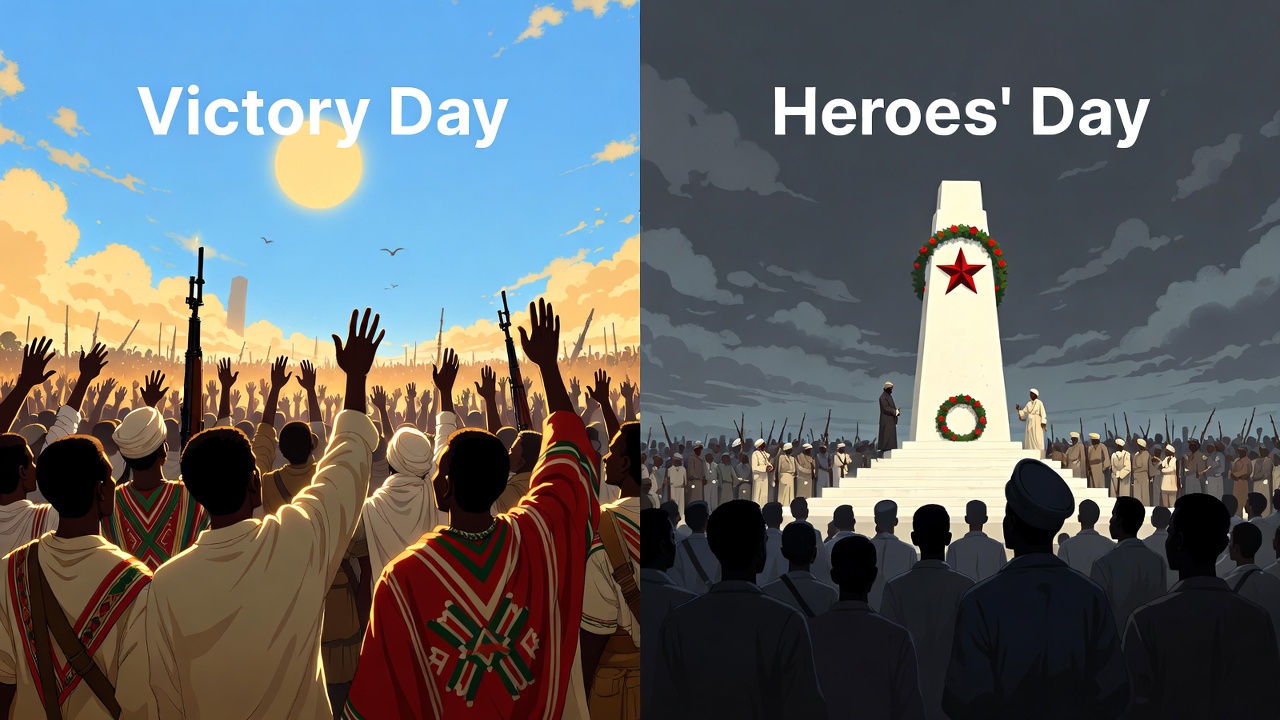
While Heroes’ Day is a day of solemn remembrance, Victory Day has a slightly different tone. It is a celebration of triumph. The war was over. The colonizers had agreed to leave. Mozambique’s long struggle for self-determination had finally succeeded. The mood on Victory Day leans more toward pride, gratitude, and national unity.
That said, Victory Day is not a purely joyful occasion. It is also a moment to acknowledge the cost of the war. The fighting lasted nearly a decade, from 1964 to 1974. Thousands of Mozambicans lost their lives. Communities were destroyed. Families were torn apart. Victory Day honors the outcome of that struggle while recognizing the immense price that was paid.
The Lusaka Accord: How Mozambique Won Its Freedom from Portugal
The story of the Lusaka Accord begins not in Mozambique or even in Zambia, but in Lisbon, Portugal.
For over 400 years, Portugal ruled Mozambique as a colony. The Portuguese extracted natural resources, exploited labor, and maintained a system that severely limited education and economic opportunity for indigenous Mozambicans. By the early 1960s, frustration had reached a breaking point. In September 1964, FRELIMO launched its armed guerrilla campaign against Portuguese forces.
The war lasted nearly ten years. FRELIMO fighters operated primarily in the northern provinces, using guerrilla tactics against a Portuguese military force of approximately 60,000 soldiers. The Portuguese mounted large-scale offensives, including Operation Gordian Knot in 1970, but could not crush the resistance. Meanwhile, Portugal was also fighting similar liberation wars in Angola and Guinea-Bissau. The financial and human cost of maintaining three colonial wars at once was staggering.
The turning point came on April 25, 1974, when a group of military officers in Lisbon overthrew the authoritarian Estado Novo regime in what became known as the Carnation Revolution. This peaceful coup restored democracy to Portugal and fundamentally changed the government’s attitude toward its overseas colonies.
The new Portuguese government, led by General António de Spínola, called for a ceasefire. Negotiations began almost immediately. The key figures were Samora Machel, who had succeeded Eduardo Mondlane as FRELIMO’s president, and Portuguese Foreign Minister Mário Soares. The talks were hosted by Zambian President Kenneth Kaunda in Lusaka.
On September 7, 1974, the Lusaka Accord was signed. The agreement had several key provisions:
- Portugal formally recognized Mozambique’s right to independence.
- A transitional government, appointed jointly by FRELIMO and Portugal, would manage the country during the transition period.
- A formal ceasefire took effect immediately.
- Full independence was set for June 25, 1975.
The transitional government was sworn in on September 20, 1974. Less than a year later, on June 25, 1975, Mozambique became an independent nation with Samora Machel as its first president.
The Lusaka Accord was more than a piece of paper. It was the culmination of a decade of armed struggle, diplomatic effort, and sacrifice. Zambia’s role as host was not forgotten. To this day, one of Maputo’s main avenues is named Avenida Acordos de Lusaka (Lusaka Accord Avenue), and another is named Avenida Kenneth Kaunda in honor of Zambia’s president.
Victory Day vs Heroes’ Day: Key Differences and Similarities Compared
Understanding the differences and similarities between these two holidays helps visitors and students of Mozambican history appreciate why both are essential to the national calendar.
Quick Comparison Table: Victory Day vs Heroes’ Day in Mozambique
| Feature | Heroes’ Day | Victory Day |
|---|---|---|
| Date | February 3 | September 7 |
| Portuguese Name | Dia dos Heróis Moçambicanos | Dia da Vitória / Dia do Acordo de Lusaka |
| Year Established | After independence (1975) | After independence (1975) |
| Historical Event | Assassination of Eduardo Mondlane (1969) | Signing of the Lusaka Accord (1974) |
| Primary Focus | Honoring those who died for independence | Celebrating the end of the war |
| Emotional Tone | Solemn, reflective | Triumphant, celebratory |
| Key Figure | Eduardo Mondlane | Samora Machel (signatory) |
| Main Ceremony Location | Praça dos Heróis Moçambicanos, Maputo | Praça dos Heróis Moçambicanos, Maputo |
| Activities | Wreath-laying, speeches, cultural events | Wreath-laying, parades, speeches |
| 2026 Day of the Week | Tuesday | Monday |
| Holiday Type | Public holiday (day off) | Public holiday (day off) |
Key Differences Between the Two Holidays
The most important difference is what each day commemorates. Heroes’ Day marks a tragedy: the death of the man who started the independence struggle. Victory Day marks a triumph: the agreement that ended it. One is about sacrifice. The other is about achievement.
Emotional tone is another difference. Heroes’ Day tends to be more solemn. The ceremonies focus on laying wreaths, honoring the dead, and reflecting on the cost of freedom. Victory Day, while still respectful, allows for more open celebration. Parades, festive gatherings, and expressions of national pride are more prominent.
Timing within the year also matters. Heroes’ Day comes in early February, during the rainy season in Mozambique. Victory Day falls in September, during the dry season. This affects how outdoor celebrations unfold and also influences tourist planning.
Key Similarities Between the Two Holidays
Both holidays are rooted in the same historical struggle: the Mozambican War of Independence (1964–1974). They are two chapters of the same story.
Both holidays feature wreath-laying ceremonies at the Praça dos Heróis Moçambicanos in Maputo. The President of Mozambique presides over these events, delivers a speech, and lays a wreath at the monument dedicated to national heroes.
Both are full public holidays. Schools, businesses, and government offices close. Mozambicans across the country participate in local celebrations, community gatherings, and cultural events.
Both holidays serve as moments of national unity. They remind Mozambicans of their shared history and common identity, regardless of ethnic group, province, or political affiliation.
How Do Mozambicans Celebrate Heroes’ Day and Victory Day?
If you visit Mozambique during either of these holidays, you will notice a mix of formal ceremonies and informal celebrations. The day typically unfolds in several layers.
Official Government Ceremonies
The most prominent event is the wreath-laying ceremony at the Praça dos Heróis Moçambicanos in Maputo. The President of Mozambique — currently Daniel Chapo, who took office in January 2025 — presides over the ceremony. Government officials, military leaders, diplomats, and veterans attend. The president delivers a speech that typically reflects on the country’s history and challenges the nation to continue building on the sacrifices of the past.
Similar ceremonies take place at provincial and district levels across the country. Local leaders lay wreaths at smaller monuments and memorials.
Military Parades and Cultural Performances
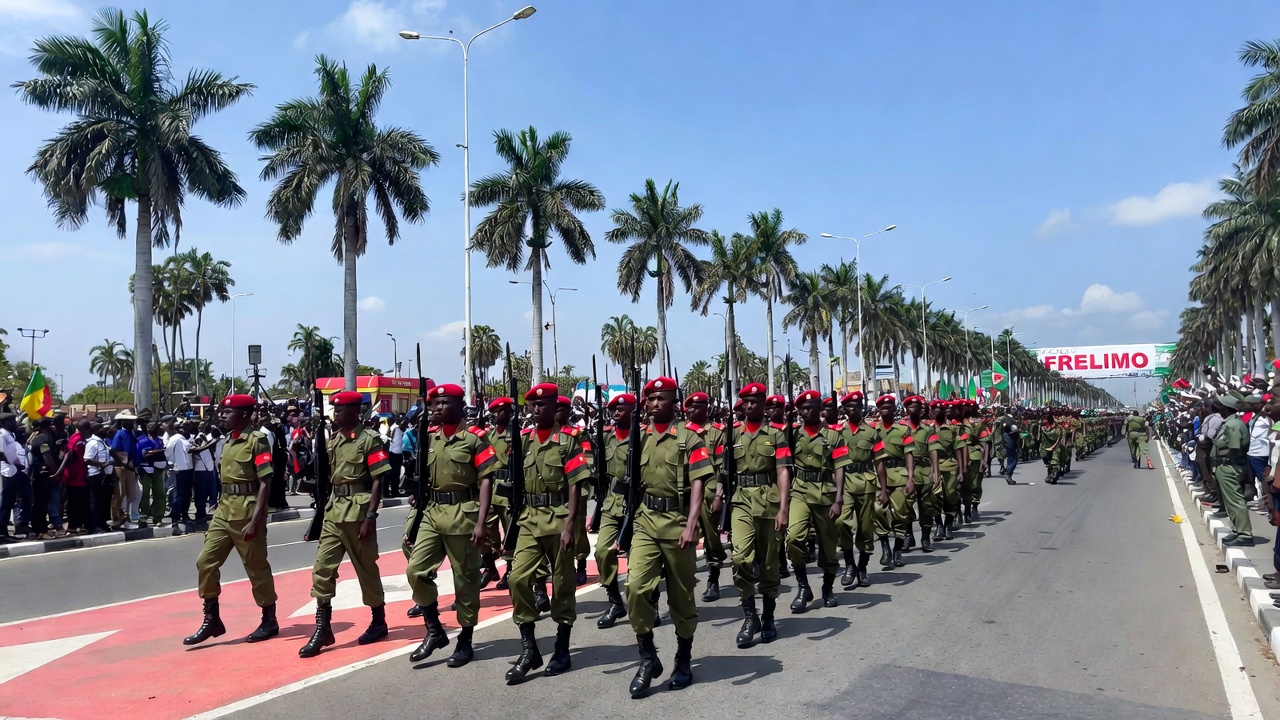
On Victory Day especially, military parades are common. Soldiers march in formation, sometimes with historical re-enactments of the war. Military bands play national songs. The display serves as both a tribute to the armed forces and a reminder of the military dimension of the independence struggle.
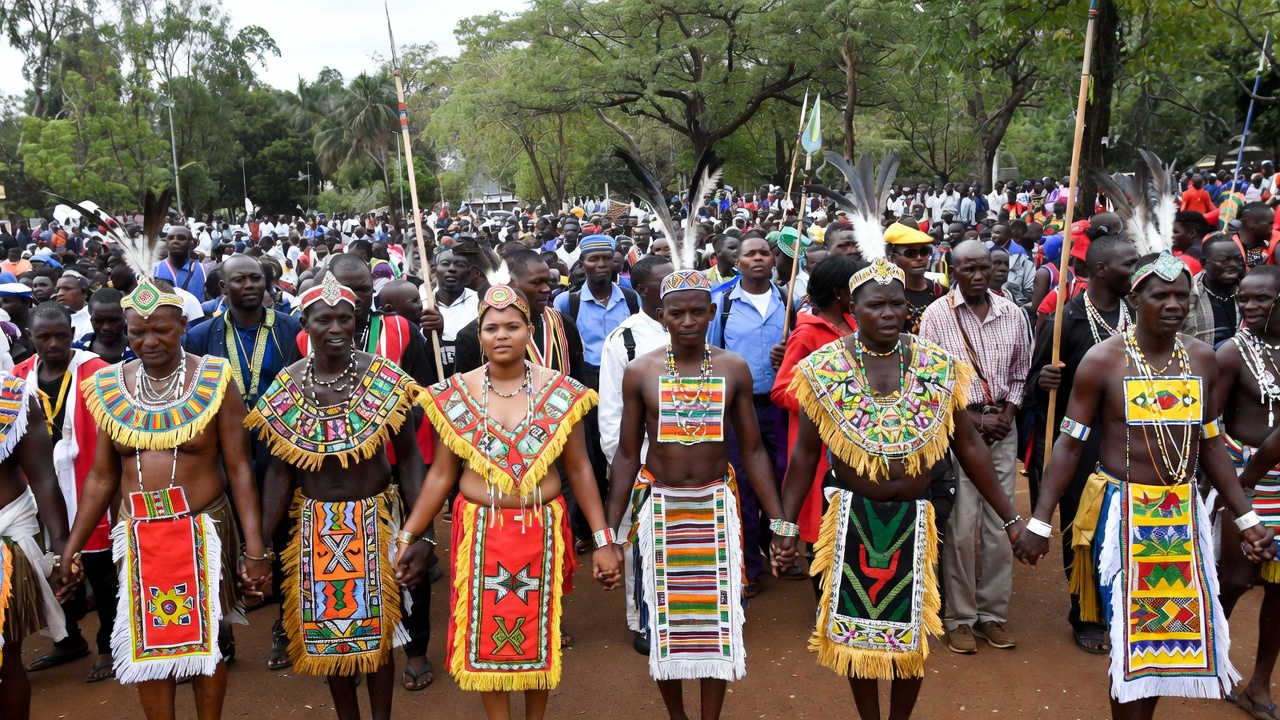
Cultural performances are a highlight of both holidays. Traditional dances, music, and theater are performed in public spaces. These performances vary by region, reflecting Mozambique’s rich ethnic diversity. You might see Makua stilt dancing in the north, Chopi timbila (xylophone) performances in the south, or Tufo dances in the coastal areas influenced by Swahili and Arab culture.
Community Gatherings and Family Celebrations
Beyond the official events, Mozambicans treat these holidays as family time. Extended families gather for large meals. Neighbors share food and conversation. In urban areas like Maputo, Beira, and Nampula, streets are often decorated with the national colors: green, black, yellow, white, and red.
In rural areas, the celebrations may be simpler but no less meaningful. Village elders often tell stories of the war and the heroes they knew personally. These oral traditions keep the history alive for younger generations who did not experience the struggle firsthand.
Schools and Educational Events
In the days leading up to both holidays, schools organize educational activities. Students learn about the independence struggle through lessons, performances, and projects. This is especially important for a country where more than 50% of the population is under the age of 18. For many young Mozambicans, these school events are their primary connection to the history behind the holidays.
Traditional Mozambican Food You Can Enjoy During National Holiday Celebrations
No Mozambican celebration is complete without food. During Heroes’ Day and Victory Day, families prepare traditional dishes that reflect the country’s diverse culinary heritage. Mozambican cuisine blends African, Portuguese, Indian, and Arab influences into something entirely its own.
Here are the dishes you are most likely to encounter during holiday celebrations:
Xima (pronounced “shee-mah”): This is the staple food of Mozambique. It is a thick, stiff porridge made from maize flour and water, similar to polenta. Xima is served alongside virtually every main dish and is eaten by hand, scooped up and used to pick up sauces and stews. It is filling, affordable, and deeply tied to Mozambican identity.
Matapa: This is often described as the national dish of Mozambique. It is made from pounded cassava leaves, slow-cooked in coconut milk with ground peanuts. Shrimp, crab, or fish are often added for flavor and protein. Matapa is typically served with rice or xima.
Piri-Piri Chicken (Frango com Piri-Piri): Mozambique is famous for its piri-piri sauce, made from the fiery African bird’s eye chili pepper, garlic, lemon, and vinegar. Chicken is marinated in this sauce and grilled over charcoal. The result is smoky, spicy, and utterly delicious. Piri-piri chicken is a centerpiece of many holiday feasts.
Galinha à Zambeziana: This dish comes from the Zambezia province in northern Mozambique. Half a chicken is marinated overnight in coconut milk, garlic, and lemon, then grilled over open flame while being basted with the marinade. The coconut adds a rich, creamy sweetness that balances the heat of the piri-piri.
Mucapata: A side dish made from mung beans, coconut milk, and rice, mashed together into a thick, savory mixture. It pairs well with grilled meats and stews.
Chamussas: These are Mozambique’s version of the Indian samosa. They are triangular pastries filled with spiced meat, vegetables, or seafood, then deep-fried until golden and crispy. Chamussas reflect the strong Indian influence on Mozambican cuisine, a legacy of centuries of trade across the Indian Ocean.
Peri-Peri Prawns: Mozambique’s 2,500-kilometer coastline provides an abundance of fresh seafood. Large prawns marinated in piri-piri sauce and grilled to perfection are a holiday favorite, especially in coastal cities like Maputo, Inhambane, and Vilanculos.
During holiday celebrations, families may also serve feijoada (a hearty bean stew with Portuguese roots), grilled fish with lemon, and cocada (a sweet coconut dessert). Traditional beverages include locally brewed beer and cashew nut juice.
The act of sharing a meal during these holidays is as important as the food itself. Eating together reinforces bonds of family and community. It is common for neighbors to bring dishes to each other’s homes. In rural areas, large communal meals are prepared and shared by entire villages.
Praça dos Heróis Moçambicanos: Where to Experience Mozambique’s National Heritage
If you visit Maputo during Heroes’ Day or Victory Day, the most important place to be is the Praça dos Heróis Moçambicanos (Mozambican Heroes’ Square). This large public square is the emotional center of both holidays and the most symbolically important site in the entire country.
Location and Design
The square is located along Avenida Acordos de Lusaka in Maputo, not far from the city center and the airport. It was designed by renowned Mozambican architect António Forjaz. The central structure is a striking star-shaped monument built from white marble. It serves as both a memorial and a mausoleum.
Surrounding the monument is a 95-meter-long mural that depicts Mozambique’s long struggle for independence. The mural tells the story visually, from the earliest days of colonial rule through the armed resistance and finally to independence. It is a powerful piece of public art that communicates the nation’s history to visitors and citizens alike.
Who Is Buried at Heroes’ Square?
The Praça dos Heróis Moçambicanos serves as the final resting place for Mozambique’s most revered national figures. Among those interred here are:
- Eduardo Mondlane — Founding president of FRELIMO
- Samora Machel — First president of independent Mozambique (died in a plane crash in 1986)
- José Craveirinha — Mozambique’s most celebrated poet, winner of the Camões Prize
- Justino Chemane — Renowned Mozambican composer
In recent years, the square has also become the resting place for figures beyond the military sphere, reflecting the broadening definition of “hero” in Mozambican culture.
Visiting the Square
Access to the Praça dos Heróis Moçambicanos is somewhat restricted. The square is typically only open to the public on specific national holidays, including Heroes’ Day (February 3), Independence Day (June 25), and Victory Day (September 7). On these days, visitors can enter the grounds, observe the ceremonies, and pay their respects at the monuments.
Photography is generally prohibited within the square, so be prepared to leave your camera in your bag. If you want to experience the mural and the exterior of the monument, you can view them from the surrounding streets at any time.
For a deeper experience, consider hiring a local guide who can explain the history and significance of each element. Many guides in Maputo are knowledgeable about the independence era and can bring the stories to life in ways that plaques and murals cannot.
Complete List of Mozambique National Holidays in 2026
Mozambique observes nine official public holidays each year. All of them are deeply connected to the country’s history, culture, and identity. Here is the full list for 2026:
| Date | Holiday | Description |
|---|---|---|
| January 1 | New Year’s Day | Celebrates the start of the new year |
| February 3 | Heroes’ Day | Honors those who died for independence |
| April 7 | Mozambican Women’s Day | Marks the death of Josina Machel (1971), a key figure in women’s liberation |
| May 1 | Workers’ Day | Celebrates the achievements of the labor movement |
| June 25 | Independence Day | Commemorates independence from Portugal (1975) |
| September 7 | Victory Day | Marks the signing of the Lusaka Accord (1974) |
| September 25 | Armed Forces Day / Revolution Day | Marks the start of the armed struggle (1964) |
| October 4 | Day of Peace and Reconciliation | Celebrates the signing of the General Peace Agreement (1992) |
| December 25 | Family Day | Known elsewhere as Christmas Day; celebrated as a family holiday |
Several things stand out about this list. First, there are no religious public holidays in Mozambique. This is unusual in Africa, where many countries observe Christian or Muslim holidays at the national level. Mozambique’s diverse religious landscape — roughly 59% Christian, 19% Muslim, 7% traditional religions, and 14% with no affiliation — makes it difficult to single out one faith for official recognition. Instead, the government has chosen secular holidays that unite all citizens.
Second, five of the nine holidays are directly related to the independence struggle and its aftermath. This underscores how central the fight for freedom is to Mozambican national identity.
Third, under Mozambican labor law, any holiday that falls on a Sunday is automatically observed on Monday. This ensures that workers always receive a day off.
Why Victory Day and Heroes’ Day Still Matter in Modern Mozambique in 2026
It would be easy to view these holidays as purely historical. The events they commemorate happened decades ago. Most Mozambicans alive today were born after independence. So why do these days still matter?
Preserving Collective Memory
Mozambique’s independence was not a gift. It was earned through nearly a decade of armed conflict, the loss of thousands of lives, and the sacrifice of leaders like Eduardo Mondlane. Without regular commemoration, these stories could fade from public memory. Heroes’ Day and Victory Day serve as annual reminders. They ensure that each generation understands the cost of the freedom they enjoy.
National Unity in a Diverse Country
Mozambique is home to more than 40 ethnic groups and dozens of languages. Portuguese is the official language, but it is not the mother tongue of most citizens. In a country this diverse, shared holidays provide common ground. When Mozambicans gather at Heroes’ Square or watch the president’s speech on television, they participate in a shared national experience that transcends ethnic and regional differences.
Navigating Current Challenges
The relevance of these holidays has been sharpened by recent events. Mozambique’s 2024 general elections were followed by widespread protests and political unrest. Opposition leader Venâncio Mondlane (no relation to Eduardo Mondlane) challenged the results, and demonstrations led to significant violence. President Daniel Chapo, who was inaugurated in January 2025 as the first FRELIMO leader born after independence, has faced the task of calming a divided nation.
In this context, Victory Day and Heroes’ Day take on renewed importance. They serve as occasions for national reflection. Leaders use these platforms to call for peace, unity, and reconciliation — messages that resonate deeply in a country still working through political tensions.
The northern province of Cabo Delgado also continues to face an insurgency linked to the Islamic State. This conflict, which has displaced nearly a million people since 2017, adds another layer of meaning to holidays that celebrate peace and sacrifice.
Inspiring the Next Generation
With more than half of Mozambique’s population under the age of 18, these holidays play an important educational role. They connect young Mozambicans to their history. They offer role models in figures like Eduardo Mondlane, who rose from a rural shepherd boy to a UN researcher, a university professor, and ultimately the leader of a liberation movement. His story is proof that determination, education, and courage can change the course of history.
Travel Tips for Visiting Mozambique During National Holidays
Traveling to Mozambique during Heroes’ Day or Victory Day offers a unique opportunity to experience the country at its most patriotic and culturally vibrant. Here are some practical tips to help you make the most of your visit.
Best Time to Visit for Each Holiday
Heroes’ Day (February 3) falls during the rainy season. Expect warm temperatures and afternoon thunderstorms, especially in the south. Road conditions in rural areas may be challenging due to flooding. But the green landscape is stunning, and the lower tourist numbers mean more authentic interactions.
Victory Day (September 7) falls during the dry season. The weather is warm and pleasant, with little rain. This is a more comfortable time for travel and outdoor activities. It also falls close to the South African school holiday period, so coastal areas like Tofo Beach and the Bazaruto Archipelago may be busier with regional tourists.
Getting Around
Mozambique’s infrastructure is improving but remains limited in some areas. The main cities — Maputo, Beira, Nampula, and Quelimane — are accessible by air through LAM (Linhas Aéreas de Moçambique) and other regional carriers. Internal flights can be unreliable, so build buffer time into your schedule.
In cities, chapas (minibuses) are the most common form of public transport. They are affordable but often crowded. Taxis and ride-sharing services are available in Maputo. For long-distance travel, consider renting a vehicle with a driver, especially if you plan to visit rural areas.
Where to Stay
During national holidays, accommodation in Maputo fills up quickly, especially hotels near the city center and the Praça dos Heróis. Book well in advance. Budget options include guesthouses in the Baixa (downtown) and Sommerschield neighborhoods. Mid-range and luxury options are available along the Marginal (waterfront promenade) and in upscale areas like Polana.
Outside the capital, coastal towns like Vilanculos, Inhambane, Tofo, and the Bazaruto Archipelago offer stunning beachside accommodation. These areas are ideal if you want to combine a cultural holiday experience with relaxation and water sports.
Cultural Etiquette
Mozambicans are warm and welcoming, but there are a few cultural norms to keep in mind:
- Dress respectfully when attending ceremonies, especially at Heroes’ Square. Avoid overly casual beachware.
- Photography restrictions apply at the Praça dos Heróis Moçambicanos. Always ask before photographing people or government buildings.
- Learn a few words of Portuguese. Even basic greetings like bom dia (good morning), obrigado/obrigada (thank you), and por favor (please) go a long way.
- Respect the solemnity of Heroes’ Day ceremonies. This is not a carnival. It is a day of remembrance.
Safety Considerations
Mozambique has experienced political unrest following the October 2024 elections, with protests in major cities throughout late 2024 and early 2025. While the situation has calmed considerably since President Chapo’s inauguration, travelers should stay informed about current conditions. Check travel advisories from your home government before departing.
The northern province of Cabo Delgado remains affected by an armed insurgency and is not recommended for casual tourism. The southern and central regions of the country, including Maputo, Inhambane, and the coast, are generally safe for visitors.
Frequently Asked Questions About Mozambique’s Victory Day and Heroes’ Day
Is Heroes’ Day the same as Victory Day in Mozambique? No. Heroes’ Day (February 3) honors those who died for independence, particularly Eduardo Mondlane. Victory Day (September 7) celebrates the signing of the Lusaka Accord that ended the war. They commemorate different events in the same historical struggle.
Are businesses open on these holidays? No. Both Heroes’ Day and Victory Day are full public holidays. Schools, government offices, banks, and most businesses are closed. Some restaurants, hotels, and tourist-oriented businesses remain open.
Can tourists visit Praça dos Heróis Moçambicanos? Yes, but only on specific national holidays when the square is opened to the public. These include Heroes’ Day, Independence Day (June 25), and Victory Day. Photography inside the square is generally prohibited.
What is FRELIMO? FRELIMO stands for Frente de Libertação de Moçambique (Front for the Liberation of Mozambique). It was founded in 1962 as the main liberation movement fighting Portuguese colonial rule. After independence in 1975, FRELIMO became the ruling political party. It has governed Mozambique ever since, though recent elections have been contested by opposition parties.
Who was the first president of Mozambique? Samora Machel became Mozambique’s first president when the country gained independence on June 25, 1975. He served until his death in a plane crash on October 19, 1986, in South Africa.
What language is spoken in Mozambique? Portuguese is the official language. However, most Mozambicans speak indigenous Bantu languages as their first language, including Emakhuwa, Xichangana, Cisena, and Elomwe. Portuguese is more widely spoken in urban areas.
What currency is used in Mozambique? The official currency is the Mozambican metical (MZN). US dollars and South African rand are sometimes accepted in tourist areas, but the metical is the standard for daily transactions.
The Lasting Legacy of Mozambique’s Independence Holidays
Mozambique’s national holidays are not museum pieces. They are living traditions that reflect the country’s past, engage with its present, and shape its future.
Heroes’ Day on February 3 reminds Mozambicans that freedom required sacrifice. It asks them to honor the memory of Eduardo Mondlane and the thousands of others who gave their lives. It challenges the living to be worthy of that sacrifice.
Victory Day on September 7 celebrates the moment when that sacrifice bore fruit. The Lusaka Accord was signed. The guns fell silent. A new nation was born. It is a day of pride and possibility.
Together, these two holidays form the backbone of Mozambique’s national identity. They tell a story that every Mozambican knows: the story of a people who refused to accept colonial rule, who fought for their freedom, and who won. In 2026, as Mozambique continues to navigate political challenges, economic development, and regional security concerns, these holidays serve as anchors. They connect the country to its roots. They remind citizens of what they have already overcome. And they inspire hope for what is still to come.
If you have the chance to be in Mozambique during either of these holidays, take it. Stand at the Praça dos Heróis. Listen to the speeches. Taste the xima and the piri-piri. Watch the dances. Talk to the people around you. You will witness a nation honoring its past — and you will leave with a deeper understanding of what it means to fight for freedom.