Your Complete Guide to Experiencing Japan’s February 11 Celebration at Tokyo’s Most Sacred Shrine
Introduction: Why Meiji Jingu on National Foundation Day Is a Must-See Experience
Every year on February 11, Japan celebrates Kenkoku Kinen no Hi—National Foundation Day. This public holiday commemorates the legendary founding of Japan and the ascension of Emperor Jimmu, the nation’s mythical first emperor. While celebrations take place across the country, nowhere is the experience more profound than at Meiji Jingu Shrine in Tokyo.
The National Foundation Day Parade transforms the streets from Jingu Gaien to Meiji Shrine into a spectacular procession of color, tradition, and spirituality. Mikoshi (portable shrines) are carried through the bustling neighborhoods of Harajuku and Omotesando. The sounds of taiko drums echo beneath ancient torii gates. Tens of thousands gather to witness this remarkable celebration of Japanese heritage.
This comprehensive guide will help you plan your visit to Meiji Jingu for National Foundation Day. We’ll cover everything from the parade route and timing to shrine etiquette and nearby attractions. Whether you’re a first-time visitor or a seasoned Japan traveler, this experience offers an unforgettable glimpse into Japanese culture, mythology, and national identity.
What Is National Foundation Day in Japan and Why Is It Celebrated?
National Foundation Day (建国記念の日, Kenkoku Kinen no Hi) is one of Japan’s most historically significant public holidays. The holiday has been celebrated since 1967, following the proclamation of it as a public holiday by a Cabinet Order the previous year.
The Legend of Emperor Jimmu and the Founding of Japan
The date February 11 holds deep mythological significance. 11 February is the accession date of the legendary first Emperor of Japan, Emperor Jimmu at Kashihara-gū, converted into Gregorian calendar of 660 BC which is written in Kojiki and chapter 3 of Nihon Shoki.
In Japanese mythology, Emperor Jimmu was a descendant of the sun goddess Amaterasu, through her grandson Ninigi, as well as a descendant of the storm god Susanoo. He launched a military expedition from Hyūga near the Seto Inland Sea, captured Yamato, and established this as his center of power.
| Key Facts About Emperor Jimmu | Details |
|---|---|
| Traditional Ascension Date | February 11, 660 BC |
| Divine Ancestry | Descendant of Amaterasu (Sun Goddess) |
| Mythological Journey | Traveled from Kyushu to Yamato |
| Symbol | Golden kite (kinki) that aided his victory |
| Burial Site | Near Mount Unebi in Kashihara, Nara Prefecture |
The Historical Evolution of Kenkoku Kinen no Hi
In its original form, the holiday was named Kigensetsu (紀元節). The national holiday was supported by those who believed that focusing national attention on the emperor would serve an unifying purpose.
The holiday has a somewhat complex history. It was originally celebrated as Kigensetsu (Empire Day) starting in 1873 during the Meiji period. However, it was abolished after World War II. It wasn’t until 1966 that the holiday was reinstated under its current name, Kenkoku Kinen no Hi, and first observed again in 1967.
Key historical milestones:
- 1873: Emperor Meiji established Kigensetsu during the Meiji Restoration
- 1889: February 11 also became the date of the Meiji Constitution’s promulgation
- 1948: Holiday abolished after World War II
- 1966: Reinstated as National Foundation Day
- 1967: First modern celebration of Kenkoku Kinen no Hi
The Grand Parade Route: From Jingu Gaien to Meiji Shrine
The National Foundation Day Celebration Parade is the highlight of February 11 in Tokyo. Understanding the parade route helps you find the best viewing spots.
Complete Parade Route Information
The National Foundation Day Celebration Parade is held annually in Tokyo on 11 February. Time: starts at 9:00 AM and ends at 2:00 PM. Route: 2.7 kilometres (1.7 mi) from Jingu Gaien Ginkgo Avenue (Namiki-dori) -> Aoyama-dori -> Omotesandō -> Meiji Jingu.
| Parade Details | Information |
|---|---|
| Start Time | 9:00 AM |
| End Time | 2:00 PM |
| Total Distance | 2.7 kilometers (1.7 miles) |
| Starting Point | Jingu Gaien Ginkgo Avenue |
| Route | Gaien-Nishi Street → Aoyama Street → Omotesando |
| Final Destination | Meiji Jingu Shrine |
Best Viewing Spots Along the Parade Route
1. Jingu Gaien Ginkgo Avenue (Starting Point)
- Arrive by 8:30 AM for the best views
- See the parade assemble and begin
- Less crowded than Omotesando
2. Aoyama-dori Junction
- Mid-point viewing location
- Good for photography
- Access via Omotesando Station (Ginza Line)
3. Omotesando Boulevard
- Most popular viewing area
- See mikoshi join the main procession
- Tree-lined avenue provides beautiful backdrop
4. Meiji Shrine Entrance
- Witness the grand arrival at the shrine
- Experience the Kigensai ceremony atmosphere
- Arrive early as this area fills quickly
Understanding the Mikoshi Parade: Japan’s Sacred Portable Shrines
The parade’s most captivating element is the procession of mikoshi—portable Shinto shrines believed to carry the spirits of deities.
What Is a Mikoshi and Why Is It Important?
A mikoshi (Japanese: 神輿) is a sacred religious palanquin (also translated as portable Shinto shrine). Shinto followers believe that it serves as the vehicle to transport a deity in Japan while moving between main shrine and temporary shrine during a festival or when moving to a new shrine.
Often, the mikoshi resembles a miniature building, with pillars, walls, a roof, a veranda and a railing.
The Tradition of Carrying Mikoshi
During a matsuri (Japanese festival) involving a mikoshi, people bear the mikoshi on their shoulders by means of two, four, or (rarely) six poles. They bring the mikoshi from the shrine, carry it around the neighborhoods that worship at the shrine, and in many cases leave it in a designated area, resting on blocks called uma (horse), for a time before returning it to the shrine.
What you’ll observe:
- Bearers (kamikoshi) dressed in traditional happi coats
- Headbands (hachimaki) adorned with kanji
- Tabi socks worn by participants
- Energetic chanting of “wasshoi!” to maintain rhythm
- Rhythmic swaying believed to amuse the deity
One of Meiji Shrine’s biggest festivals, the Kigensai here features a few thousand parade participants carrying mikoshi to the grounds as tens of thousands of spectators watch.
The Significance of Mikoshi in Japanese Culture
In Shintoism, it is believed that the local deity dwells in the shrine and it can only be moved by being carried within a similar structure. Mikoshi are very heavy and can weigh over a ton so carrying them is considered a big challenge.
Creating a mikoshi is a process of precision and tradition. Each piece is handcrafted to ensure the structure is durable for festival processions. Some weigh over a ton, requiring sound engineering.
Meiji Jingu Shrine: Tokyo’s Most Sacred Shinto Destination
Understanding Meiji Jingu enhances your National Foundation Day experience. This shrine is much more than a tourist attraction—it’s a sacred space that connects modern Japan with its imperial past.
The History and Significance of Meiji Shrine
Meiji Jingu is one of the Shinto shrines in Japan, with the vast land of the forest (70 ha.), located in the middle of the megacity, Tokyo. It was established in 1920, to commemorate the virtue of Emperor Meiji and Empress Shoken who took the initiative to make a foundation of modernized Japan.
The shrine was completed and dedicated to the Emperor Meiji and the Empress Shoken in 1920, eight years after the passing of the emperor and six years after the passing of the empress.
| Meiji Shrine Facts | Details |
|---|---|
| Established | 1920 |
| Dedicated To | Emperor Meiji (1852-1912) and Empress Shoken (1849-1914) |
| Forest Size | 70 hectares (173 acres) |
| Tree Species | 234 different varieties |
| Annual Visitors | Nearly 10 million |
| New Year Visitors | Over 3 million in first three days |
| 100th Anniversary | 2020 |
The Man-Made Eternal Forest
One of Meiji Jingu’s most remarkable features is its vast forest—entirely created by human effort.
The sacred forest surrounding the main shrine buildings of Meiji Jingu may seem natural but is actually man-made, planted by 110,000 volunteers in honor of Emperor Meiji (1852–1912) and Empress Shoken (1849–1914). Covering 70 hectares, it currently has 234 different varieties of trees, which were donated from all over Japan.
Every tree was chosen based on how it would look after 100 or 200 years, while still ensuring the forest looked natural when it was planted in 1920. The project was led by Dr. Honda Seiroku (1866–1952), who was also responsible for Hibiya Park.
Since the forest is considered sacred, there has been no human intervention since it was created. Nothing is added or taken away, and the plants must sustain themselves. When trees fall over they are left as they are, to return to the soil.
Main Structures and Areas to Explore
1. The Grand Torii Gates The journey to the shrine’s main complex begins with the massive torii gate, an architectural marvel that goes beyond the physical, linking us to the sacred. Crafted from ancient Japanese cypress that is over 1,600 years old, the gate’s towering presence at 12 meters in height and a span of 9.1 meters serves as a dramatic threshold to the spiritual world.
2. Main Shrine Buildings
- Six main buildings in the inner precinct
- Traditional Nagare-zukuri architectural style
- Japanese cypress and copper construction
3. Sake and Wine Barrel Display
- Over 200 traditional sake barrels
- Donated by breweries across Japan
- Wine barrels represent Emperor Meiji’s appreciation of Western culture
4. The Inner Garden (Meiji Jingu Gyoen) Although it requires an entrance fee, the garden is a beautiful labyrinth of scenic forest walks and traditional iris flower beds and features a classic Japanese tea house. Kiyomasa’s Well, named after the famous lord who dug it 400 years ago, is considered a “power spot,” a location where people visit to receive positive and restorative energy.
5. Meiji Jingu Museum Almost any building designed by Kuma Kengo is reason enough to visit, and the Meiji Jingu Museum is no exception. Spread over two floors, the beautiful sloping wooden roofs work in harmony with the floor-to-ceiling windows to display a number of art pieces, treasures, and personal belongings of the emperor and empress. Most notably, the carriage which Emperor Meiji rode to the formal declaration of the Meiji Consitution in 1889.
The Kigensai Ceremony: What Happens Inside Meiji Shrine on February 11
The parade culminates in the Kigensai (紀元祭)—the official National Foundation Day celebration ceremony at the shrine.
What to Expect at the Kigensai
Each year on February 11th, this shrine and many other Shinto shrines across the country host a National Foundation Day celebration known as Kigensai.
Ceremony highlights:
- Arrival of Mikoshi: Fourteen or more mikoshi pass through the torii gates
- Blessing Ceremony: High priest blesses the portable shrines
- Taiko Drumming: Giant drums beaten by two drummers resonate throughout
- Traditional Music: Musicians play on decorated floats
- Emperor Jimmu Float: Features a figurine of the legendary first emperor
Fourteen mikoshi mobile shrines passed through the tori (gateways) that lead to the sacred main enclosure, accompanied by cries of pilgrims carrying palanquins weighing several hundred kilos.
Proper Shrine Etiquette: How to Visit Meiji Jingu Respectfully
Visiting Meiji Jingu, especially during a major ceremony, requires understanding proper Shinto etiquette. Following these customs shows respect and enhances your experience.
Entering Through the Torii Gate
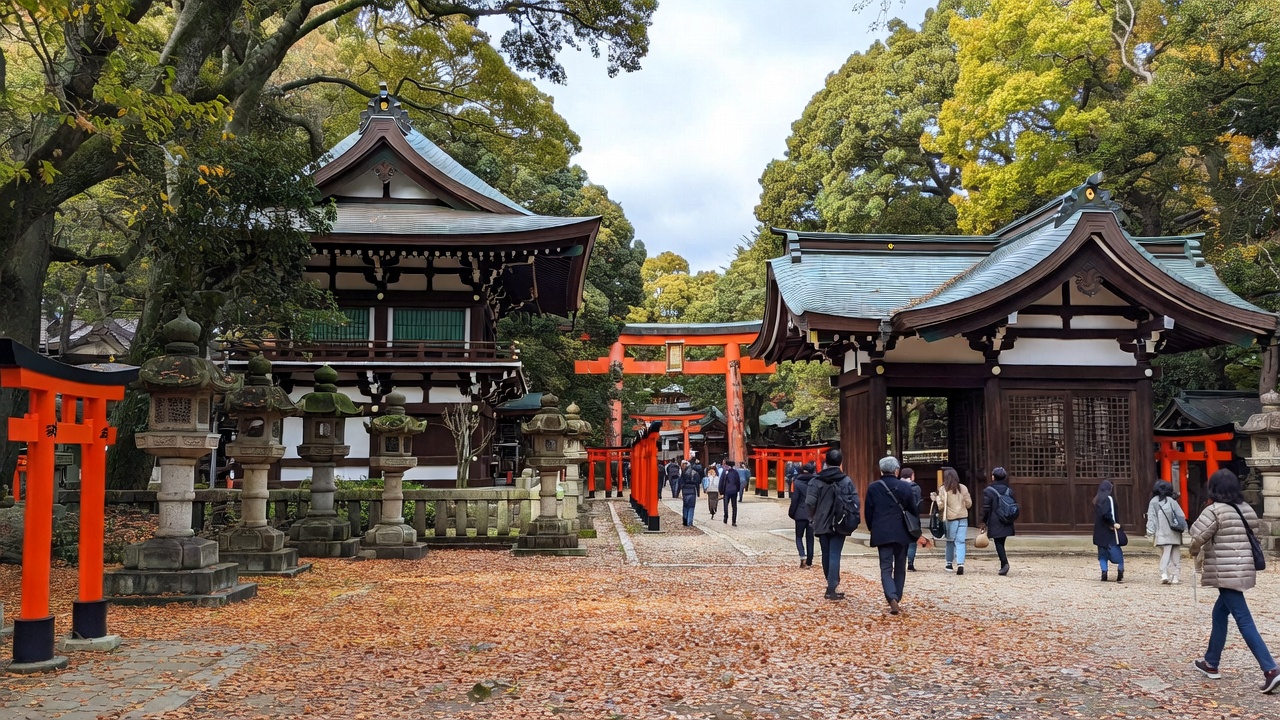
When you’re visiting a shrine, you enter its precincts by going through a gate, called a torii. This gate both marks where the realm of Shinto kami begins and separates it from the secular world. By entering the grounds through the gate, you are stepping onto sacred grounds.
Proper entry procedure:
- Stop before the torii gate
- Remove your hat if wearing one
- Bow once toward the shrine
- Enter through the left or right side (the center is for deities)
The center of the sando is called the seichu (meaning “the exact middle”) and is considered to be the path where the deities pass. For a person therefore, to walk along the same path is deemed disrespectful.
The Purification Ritual at Temizuya
Before approaching the main shrine, visitors should purify themselves at the temizuya (also called chozuya)—the purification fountain.
At the purification fountain near the shrine’s entrance, take one of the ladles provided, fill it with fresh water and rinse your left and right hands. Then transfer some water into your cupped hand, rinse your mouth and spit the water beside the fountain. You are not supposed to transfer the water directly from the ladle into your mouth or swallow the water.
Step-by-step purification:
| Step | Action |
|---|---|
| 1 | Hold ladle with right hand, rinse left hand |
| 2 | Switch ladle to left hand, rinse right hand |
| 3 | Transfer water to cupped left hand |
| 4 | Rinse mouth quietly (do not swallow) |
| 5 | Spit water beside fountain (not into it) |
| 6 | Tip ladle vertically to rinse handle |
How to Pray at a Shinto Shrine
A general rule of thumb when going to a shrine to worship: bow twice, clap twice, bow once.
The prayer process (nirei nihakushu ichirei):
- Approach the offering box at the main hall
- Toss a coin into the box (5-yen coins are considered lucky)
- Ring the bell if present (2-3 times)
- Bow deeply twice (90-degree angle)
- Clap twice (left hand slightly forward)
- Pray silently with hands pressed together
- Bow deeply once to conclude
Money made as an offering to deities is referred to as saisen. Although it may sound like a small amount, many people offer five-yen coins. The Japanese pronunciation for “five yen” is identical to “go-en,” which means “good luck” or “good relationships.”
General Etiquette Guidelines
Do:
- Behave calmly and quietly
- Dress modestly and respectfully
- Take photographs only in permitted areas
- Follow the flow of other worshippers
- Exit through the torii and bow toward the main hall
Don’t:
- Walk down the center of pathways
- Eat, drink, or smoke on shrine grounds
- Take photos during ceremonies
- Touch sacred objects
- Talk loudly or use phones near the main hall
Tokyo Weather in February: What to Wear and How to Prepare
February in Tokyo can be cold, so proper preparation ensures a comfortable experience at the parade and shrine.
February Weather Conditions in Tokyo
February weather in Tokyo is perfect for sightseers. The temperature reaches highs of 12.0°C (53.6°F) and lows of 1.9°C (35.4°F), with an average daytime temperature of around 6.5°C (43.7°F). With an average rainfall of about 6.5 millimeters, there are low levels of precipitation and a balance of sunny and cloudy days. While it’s still cold, snow falls only rarely.
| February Weather Stats | Data |
|---|---|
| Average High | 12°C (53.6°F) |
| Average Low | 2°C (35.4°F) |
| Rainfall | 6.5mm average |
| Rainy Days | 6 days average |
| Humidity | 47% |
| Sunrise | 6:13 – 6:42 AM |
| Sunset | 5:09 – 5:37 PM |
What to Wear for National Foundation Day
Start with a base layer of thermal underwear or heat-tech clothing (Uniqlo’s Heattech line is what every local wears). Add a middle layer like a wool sweater or fleece for insulation. Top it with a wind-proof, water-resistant jacket – not a massive ski parka. This system lets you adjust throughout the day.
Essential clothing checklist:
- Base layer: Thermal underwear or heat-tech tops
- Middle layer: Wool sweater or fleece
- Outer layer: Warm coat or insulated jacket
- Pants: Warm trousers or jeans (not leggings)
- Footwear: Comfortable, waterproof walking shoes
- Accessories: Gloves, scarf, and beanie
Special considerations for February 11:
- You’ll be standing for extended periods—dress warmly
- Indoor spaces are well-heated, so removable layers are practical
- Comfortable shoes are essential for the walking involved
- When visiting shrines and other religious places, it is best not to wear casual clothing. Pack your Sunday best.
Getting to Meiji Jingu: Transportation Guide for International Visitors
Meiji Jingu is conveniently located in central Tokyo with excellent public transportation access.
Train Access to Meiji Shrine
JR Yamanote Line:
- Harajuku Station (South Exit) – 1-minute walk to shrine entrance
- Most convenient for the main approach
Tokyo Metro:
- Meiji-jingumae Station (Chiyoda and Fukutoshin Lines) – 5-minute walk
- Yoyogi Station (JR Yamanote Line and Oedo Line) – 5-minute walk to north entrance
Please notice that the time shown above is the time to walk from the station to the shrine entrance. It takes at least another ten minutes from the entrance to the main shrine buildings.
Best Stations for Parade Viewing
| Location | Nearest Station | Lines |
|---|---|---|
| Jingu Gaien (Start) | Gaienmae | Ginza Line |
| Omotesando | Omotesando | Chiyoda, Ginza, Hanzomon Lines |
| Meiji Shrine (End) | Harajuku | JR Yamanote Line |
Transportation Tips for National Foundation Day
- Arrive early: Expect increased ridership on February 11
- Use IC cards: Suica or Pasmo cards speed up travel
- Consider walking: The parade route is walkable between stations
- Check schedules: JR and Metro operate on holiday schedules
Exploring Omotesando and Harajuku: Nearby Attractions for Your Visit
One of the parade’s greatest features is its route through two of Tokyo’s most exciting neighborhoods.
Omotesando: Tokyo’s Champs-Élysées
Over the past few years, Omotesando has become Japan’s home of modern high-end fashion, with many designer labels setting up stores along the lavish and spacious boulevards that line the area.
Known as the Champs-Élysées of Tokyo, Omotesando’s tree-lined streets are filled with beautiful shops, funky cafes and great restaurants. It is also the gateway to the entrance to the Meiji Jingu Shrine and links on to the very popular Harajuku area.
What the name means: Omotesando means “main approach to shrine”, so the street leads to the entrance of Meiji Shrine.
Must-visit Omotesando spots:
| Attraction | Description |
|---|---|
| Omotesando Hills | Six floors of upmarket shops and restaurants |
| Tokyu Plaza | Modern shopping complex with rooftop garden |
| Cat Street | Trendy boutiques connecting to Harajuku |
| Designer Flagships | Louis Vuitton, Dior, Prada, and more |
Harajuku: The Heart of Japanese Youth Culture
While Harajuku is often at the forefront of the next big local trend, Omotesando focuses on the international and timeless. While Omotesando is all about luxury brands, the streets of Harajuku are overflowing with thrift store jackets and novel accessories.
Harajuku highlights:
- Takeshita Street: 400-meter pedestrian shopping street
- LaForet Harajuku: Trendsetting fashion complex
- Crepe shops: Harajuku’s signature street food
- Kawaii culture: Colorful, cute fashion and accessories
Yoyogi Park: A Green Oasis
Adjacent to Meiji Shrine, Yoyogi Park offers a peaceful retreat and is perfect for combining with your shrine visit.
Meiji Shrine and Yoyogi Park are a lush, quiet area in contrast to the hustle and bustle of Harajuku’s Takeshita Street. Meiji Shrine is a solemn shrine surrounded by a vast forest. Yoyogi Park, adjacent to Meiji Shrine, is one of the largest parks in Tokyo.
Planning Your National Foundation Day Itinerary
Here’s a suggested schedule for making the most of February 11 at Meiji Jingu.
Morning Schedule (8:00 AM – 12:00 PM)
| Time | Activity |
|---|---|
| 8:00 AM | Arrive at Gaienmae Station |
| 8:30 AM | Position yourself at Jingu Gaien for parade start |
| 9:00 AM | Watch parade begin |
| 10:00 AM | Walk along route toward Omotesando |
| 10:30 AM | Find viewing spot on Omotesando Boulevard |
| 11:30 AM | Follow parade to Meiji Shrine entrance |
Afternoon Schedule (12:00 PM – 5:00 PM)
| Time | Activity |
|---|---|
| 12:00 PM | Observe Kigensai ceremony atmosphere |
| 12:30 PM | Explore Meiji Shrine grounds |
| 1:30 PM | Lunch break in Harajuku |
| 2:30 PM | Visit Inner Garden (if open) |
| 3:30 PM | Explore Meiji Jingu Museum |
| 4:30 PM | Shop on Omotesando or Takeshita Street |
Alternative Rainy Day Plan
If weather is unfavorable:
- Focus on arriving at Meiji Shrine for the Kigensai ceremony
- Explore covered shopping areas in Omotesando Hills
- Visit Meiji Jingu Museum for indoor cultural experience
- Enjoy cafes and restaurants in the area
Frequently Asked Questions About Visiting Meiji Shrine on National Foundation Day
Is National Foundation Day a Good Time to Visit Meiji Shrine?
Yes, but with considerations. The parade and Kigensai ceremony create a unique atmosphere unavailable on other days. However, expect larger crowds than usual. The trade-off is experiencing authentic Japanese tradition at its finest.
Can Non-Japanese Participate in the Parade?
The parade participants are typically members of local organizations and shrine associations. Visitors observe from the sidelines. You can, however, participate by following the procession to the shrine and offering prayers.
Is Photography Allowed?
Photography is generally permitted on shrine grounds and along the parade route. However, avoid photographing during actual ceremonies, and never photograph inside shrine buildings unless explicitly permitted.
What About the Inner Garden on February 11?
The Inner Garden typically remains open during National Foundation Day with regular admission fees. However, hours may be adjusted for the ceremonies—check the official Meiji Jingu website before visiting.
Meiji Jingu is open every day throughout the year with free of charge. Meiji Jingu opens with sunrise and closes with sunset.
How Crowded Will It Be?
Expect tens of thousands of visitors. The shrine sees nearly 10 million annual visitors, and National Foundation Day is one of its major festivals. Arrive early and be patient with crowds.
Is There Food Available at the Shrine?
Forest Terrace Meiji Jingu offers dining options near the shrine. Alternatively, Harajuku and Omotesando have countless restaurants and cafes within walking distance.
Other February Events to Combine with Your Visit
Setsubun Festival (February 3)
If you’re in Tokyo earlier in February, experience Setsubun—the bean-throwing festival marking the beginning of spring.
Held at the beginning of February, Setsubun marks the start of spring in Japan. It’s a traditional custom that is still observed by many, either at home or at gatherings at shrines and temples. The meaning behind the event is to welcome good fortune in the coming spring.
Plum Blossom Season
In Tokyo, plum blossom season begins in early February. These blossoms can range in color from pale pink to a pinkish cherry red.
Best spots for plum blossoms near Meiji Shrine:
- Yushima Tenjin Shrine
- Koishikawa Korakuen Garden
- Hanegi Park
Early Cherry Blossoms (Kawazu-zakura)
If you visit in late February, you can get a special preview. The Kawazu cherry blossoms (河津桜), a unique, deep-pink variety, begin to bloom.
Visiting Kashihara Jingu: The Alternative Pilgrimage
For travelers seeking an even deeper connection to National Foundation Day’s meaning, consider visiting Kashihara Jingu in Nara Prefecture.
Kashihara Jingu is particularly significant because it is enshrined to Emperor Jimmu and sits on the site where he is said to have ascended to the throne.
Japan’s first Emperor, Emperor Jimmu, is said to have acceded to the throne here. The shrine was built by Emperor Meiji in 1889. The first four emperors of Japan have mausoleums in the Kashihara-Jingu shrine.
Getting to Kashihara Jingu from Tokyo:
- Take the Shinkansen to Kyoto (approximately 2 hours 15 minutes)
- Transfer to the Kintetsu Railway to Kashiharajingumae Station
- 10-minute walk to the shrine
Accommodations Near Meiji Shrine for February 11
Recommended Areas to Stay
1. Shibuya
- 10-minute walk to Meiji Shrine
- Excellent nightlife and dining
- Major transportation hub
2. Harajuku/Omotesando
- Closest to parade route and shrine
- Premium pricing but convenient
- Walking distance to everything
3. Shinjuku
- Budget-friendly options available
- One JR Yamanote Line stop from Harajuku
- Wide variety of hotels
Booking Tips for National Foundation Day
- Book early: February 11 falls during a moderate tourism period
- Check cancellation policies: Weather might affect your plans
- Consider location: Staying near Harajuku means an easier morning
- February is one of the most budget-friendly months to visit Tokyo. As the winter off-season, you’ll find some of the year’s best deals on flights and accommodation.
Cultural Significance: Understanding What National Foundation Day Means to Japan Today
A Day of Reflection, Not Revolution
While there is no historical evidence that Jimmu actually existed or that the nation was founded in 660 BCE, the legend is deeply woven into Japan’s cultural identity. Today, the holiday is less about asserting historical fact and more about reflecting on the nation’s heritage. It is a day intended for citizens to recall the founding of the nation and cultivate a heart that loves the country.
A Quieter Celebration Than Expected
If you are expecting fireworks and massive street parties like the Fourth of July in the US or Bastille Day in France, you might be surprised. National Foundation Day is a relatively understated affair in Japan. Because of its pre-war associations with nationalism, many Japanese people treat it simply as a day of rest rather than a day of intense patriotic demonstration.
The Continuing Legacy of Emperor Jimmu
The monarchy of Japan is known to be the oldest continuous and hereditary monarchy in the world with 126 monarchs from Emperor Jimmu to Emperor Naruhito, the present Japanese emperor.
Essential Japanese Phrases for Your Visit
| English | Japanese | Pronunciation |
|---|---|---|
| Happy National Foundation Day | 建国記念日おめでとうございます | Kenkoku kinenbi omedetou gozaimasu |
| Excuse me | すみません | Sumimasen |
| Thank you | ありがとうございます | Arigatou gozaimasu |
| Shrine | 神社 | Jinja |
| Festival | 祭り | Matsuri |
| Portable shrine | 神輿 | Mikoshi |
| Emperor | 天皇 | Tennō |
| Beautiful | きれい | Kirei |
Photography Tips for Capturing the Grand Parade
Camera Settings Recommendations
| Condition | Recommended Settings |
|---|---|
| Parade Action | Shutter speed 1/500s or faster |
| Low Light (morning) | ISO 800-1600, wide aperture |
| Torii Gates | Wide-angle lens, f/8-f/11 |
| Mikoshi Details | Telephoto lens, fast shutter |
| Shrine Buildings | Tripod if permitted, low ISO |
Best Photo Opportunities
- Morning Light on Torii Gates: Arrive before 9 AM
- Mikoshi Procession: Position along Omotesando
- Sake Barrel Display: Morning light is best
- Forest Paths: Throughout the day
- Traditional Costumes: During parade and ceremony
Photography Etiquette
- Ask before photographing individuals
- Never photograph inside the main shrine buildings
- Avoid flash photography during ceremonies
- Keep moving—don’t block pathways for photos
- Be respectful of worshippers in your frames
Conclusion: Making Memories at Meiji Jingu on National Foundation Day
Visiting Meiji Jingu Shrine on National Foundation Day offers a rare window into Japan’s soul. The Grand Parade bridges ancient mythology with modern celebration. The mikoshi procession connects communities to their spiritual roots. The Kigensai ceremony honors traditions stretching back to the nation’s legendary founding.
Whether you come for the spectacle of the parade, the tranquility of the forest, or the cultural immersion of Shinto rituals, February 11 at Meiji Shrine delivers an unforgettable experience. Combined with exploring Harajuku’s vibrant streets and Omotesando’s sophisticated boulevards, this single day can become the highlight of your Tokyo journey.
Key takeaways for planning your visit:
- Arrive early (before 8:30 AM) for best parade viewing
- Dress warmly in layers suitable for standing outdoors
- Learn basic shrine etiquette before your visit
- Allow time to explore the shrine forest and museum
- Combine with Harajuku and Omotesando exploration
- Book accommodations in advance
- Check official schedules closer to your travel date
The spirits of Emperor Meiji and Empress Shoken watch over their shrine, just as the legend of Emperor Jimmu watches over all of Japan. By visiting Meiji Jingu on National Foundation Day, you become part of this continuing story—a witness to tradition, a participant in celebration, and a traveler touched by Japan’s enduring spirit.
Planning your trip to Japan? Don’t miss our other guides to [Tokyo’s best shrines], [February events in Japan], and [Japanese festival culture]. Subscribe to our newsletter for the latest travel tips and insider recommendations.
Useful Resources:
Understanding Shinto Religion: The Spiritual Foundation of National Foundation Day
To fully appreciate your visit to Meiji Jingu on National Foundation Day, understanding Shinto provides valuable context for everything you’ll witness.
What Is Shinto?
Shintoism is the indigenous religion of Japan and many traditions are tied to its belief system. One of the core beliefs is that there are 8 million gods (a number in ancient Japan that was synonymous with infinity), which explains why there seems to be a god for everything and every town.
Shinto, meaning “the way of the gods,” is Japan’s native spiritual tradition. Unlike Abrahamic religions, Shinto has no founder, no sacred scriptures, and no fixed dogma. Instead, it focuses on ritual practices connecting present-day Japan with its ancestors and the spiritual forces of nature.
Key Shinto Concepts
| Concept | Meaning | Relevance to Your Visit |
|---|---|---|
| Kami | Divine spirits or gods | Meiji Shrine enshrines the kami of Emperor and Empress Meiji |
| Jinja | Shrine | Meiji Jingu is one of Japan’s most important jinja |
| Torii | Sacred gate | The vermillion gates marking sacred space |
| Temizuya | Purification fountain | Where you cleanse before approaching the shrine |
| Omairi | The act of visiting a shrine | What you’re doing on National Foundation Day |
The Connection Between Emperor Worship and Shinto
The myth of origin has also had a stabilizing effect, ensuring that ancient traditions such as respect for ancestors, for the land itself, and loyalty to the people of the nation, have remained central to Japanese culture. Emperor Jimmu’s lineage from the sun goddess Amaterasu provides a divine justification for the authority and legitimacy of subsequent emperors in Japan.
Seasonal Events and Festivals at Meiji Shrine Throughout the Year
If National Foundation Day whets your appetite for Japanese ceremonies, Meiji Jingu hosts numerous events year-round.
Annual Festival Calendar at Meiji Jingu
| Month | Event | Description |
|---|---|---|
| January 1 | Saitansai (New Year’s Day) | Over 3 million visitors for hatsumode |
| February 11 | National Foundation Day Festival | Grand parade and Kigensai ceremony |
| April 29 – May 3 | Spring Grand Festival | Traditional performing arts |
| November 1-3 | Autumn Grand Festival | Emperor Meiji’s birthday celebration |
| December 31 | Joya-sai | Year-end ritual |
Spring Grand Festival (Late April – Early May)
Held from late April to early May, the Meiji Shrine Spring Grand Festival (Sukeishatai-sai) which takes place during the golden week is a spectacular showcase of traditional performing arts from masters in each field.
Traditional arts performed include:
- Bugaku: Ancient imperial court music
- Noh and Kyogen: Classical Japanese theatre
- Hogaku and Hobu: Classical Japanese dance
- Kyūdō: Japanese archery
- Sankyoku: Traditional Japanese music
- Satsuma biwa: Japanese lute
Historical Context: Emperor Meiji and Japan’s Modernization
Understanding Emperor Meiji helps contextualize both the shrine and National Foundation Day’s significance.
Emperor Meiji’s Transformative Reign
Emperor Meiji (1852-1912) and Empress Shoken led Japan to become a modernized nation. The emperor opened Japan to the West and laid the foundation to modernize the country. He played an important role in the Meiji Restoration (1868-1912), which marked the end of the feudal era.
Key achievements during the Meiji Era:
- Constitutional Government: Promulgated Japan’s first constitution (1889)
- Educational Reform: Established universal education system
- Military Modernization: Created a modern army and navy
- Industrial Development: Transformed Japan into an industrial power
- Cultural Integration: Balanced Western modernization with Japanese traditions
The Connection to National Foundation Day
February 11 holds double significance: it marks both Emperor Jimmu’s legendary ascension (660 BC) and the promulgation of the Meiji Constitution (1889). This connection links Japan’s mythological origins with its modern founding, making Meiji Shrine an especially meaningful place to celebrate the holiday.
Practical Tips for Enjoying the Day
Money and Payment
- Shrine offerings: Have small coins ready (5-yen coins are traditional)
- Cash preferred: Many small vendors and shops prefer cash
- ATMs: Available at convenience stores near stations
- IC Cards: Suica and Pasmo work throughout Tokyo transit
Communication and Connectivity
- WiFi: Available at JR stations and many cafes
- Rental WiFi: Consider pocket WiFi for all-day connectivity
- Translation apps: Download Japanese translation apps before arriving
- Maps offline: Download Google Maps area for offline use
Health and Safety
- Hydration: Bring water—vending machines are everywhere
- Restrooms: Available at stations, shrine grounds, and shopping areas
- First aid: Shrine staff can assist with minor issues
- Emergency numbers: Police (110), Ambulance (119)
The Legacy of National Foundation Day in Modern Japan
National Foundation Day continues to evolve in meaning for contemporary Japanese society. While some view it as a day to reflect on Japan’s rich cultural heritage, others see it simply as a welcome mid-February holiday break.
Contemporary Observance
The celebrations at Meiji Jingu represent how Japan balances respect for tradition with modern sensibilities. The parade and ceremonies maintain ancient customs while welcoming observers from around the world.
What Visitors Take Away
For international visitors, experiencing National Foundation Day at Meiji Shrine offers insights impossible to gain from books or documentaries. The sounds of taiko drums, the sight of mikoshi swaying through crowds, the smell of incense drifting from the shrine—these sensory experiences create lasting memories and deeper understanding of Japanese culture.