
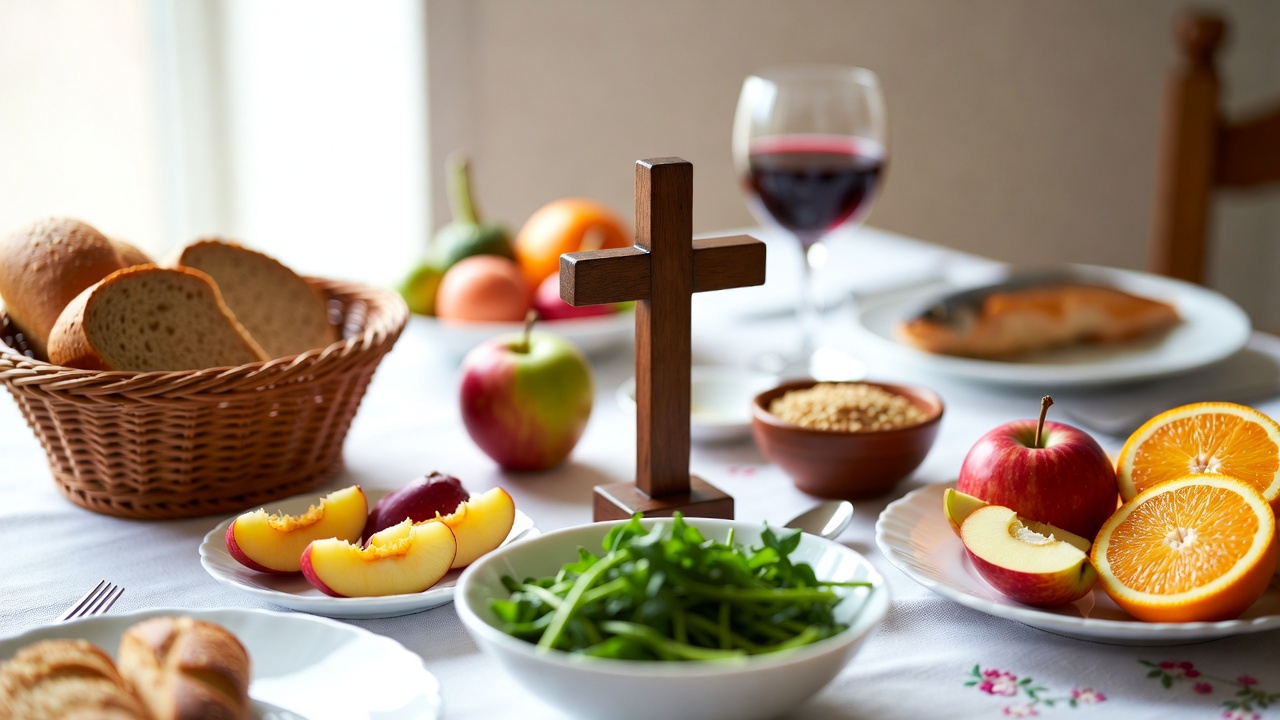
The scent of incense lingers in the cold February air. Parishioners file out of morning Mass, foreheads marked with ash in the shape of a cross. For over a billion Catholics worldwide—and millions of other Christians who observe the tradition—Ash Wednesday marks the beginning of a 40-day spiritual journey toward Easter Sunday.
But as the faithful leave church, many find themselves asking the same practical question: What exactly can I eat today?
If you’ve ever stood in your kitchen on Ash Wednesday morning, wondering whether your breakfast plans align with Church teaching, you’re not alone. The rules around Lenten fasting and abstinence can feel confusing, especially for those new to the practice or returning after years away.
This guide cuts through the confusion. Whether you’re a lifelong Catholic seeking a refresher, a convert learning the traditions for the first time, or simply someone curious about this ancient Christian practice, you’ll find everything you need to know about Ash Wednesday food rules right here.
Understanding Ash Wednesday: The Beginning of the Lenten Season
Before we dive into the specifics of what you can and cannot eat, it helps to understand why these fasting rules exist in the first place.
Ash Wednesday falls exactly 46 days before Easter Sunday. The date changes each year because Easter follows a lunar calendar—it’s always the first Sunday after the first full moon following the spring equinox. In 2024, Ash Wednesday falls on February 14th. In 2025, it lands on March 5th.
The day takes its name from the practice of placing ashes on the foreheads of the faithful. These ashes, traditionally made from burning the previous year’s Palm Sunday palms, serve as a powerful reminder of human mortality. As the priest applies the ashes, he speaks the ancient words: “Remember that you are dust, and to dust you shall return” or “Repent and believe in the Gospel.”
This sobering ritual sets the tone for the entire Lenten season—a period of prayer, penance, and self-denial that prepares Christians for the celebration of Christ’s resurrection at Easter.
Fasting on Ash Wednesday isn’t arbitrary religious rule-making. It connects modern believers to a practice stretching back nearly two millennia, linking them to countless generations who walked the same spiritual path.
Who Must Fast and Abstain on Ash Wednesday? Age Requirements Explained
Not everyone is required to follow Ash Wednesday fasting rules. The Catholic Church provides clear guidelines about who must participate and who receives exemptions.
Fasting Requirements by Age
| Requirement | Age Range | Details |
|---|---|---|
| Fasting | Ages 18-59 | One full meal permitted; two smaller meals that together don’t equal one full meal |
| Abstinence from Meat | Ages 14 and older | No meat consumption for the entire day |
| Exempt from Fasting | Under 18 or 60+ | Not required to fast, though may choose to participate |
| Exempt from Abstinence | Under 14 | Not bound by abstinence rules |
Who Receives Exemptions from Lenten Fasting Rules?
The Church recognizes that fasting isn’t appropriate or safe for everyone. Exemptions from Ash Wednesday fasting apply to:
- Pregnant and nursing mothers – Their nutritional needs take priority
- Those with medical conditions – Diabetes, eating disorders, and other health issues
- Manual laborers – Those whose work requires significant physical exertion
- The ill or infirm – Anyone whose health would be compromised
- The elderly – Generally those over 59, though this can vary
It’s worth noting that these exemptions reflect the Church’s pastoral concern for the faithful. Fasting is meant to be spiritually beneficial, not physically harmful. Anyone uncertain about whether they should fast is encouraged to consult with their priest or a healthcare provider.
What Does Fasting Actually Mean on Ash Wednesday? Rules and Definitions
Here’s where many people get confused. On Ash Wednesday, Catholics are required to observe two distinct practices: fasting and abstinence. These are related but separate obligations.
The Fasting Requirement Explained
Fasting on Ash Wednesday means limiting the quantity of food you eat:
- You may eat one full meal during the day
- You may also eat two smaller meals (sometimes called “collations”)
- These two smaller meals combined should not equal one full meal
- Snacking between meals is not permitted
- Liquids, including milk, juice, and coffee, are generally allowed between meals
Think of it this way: if your normal full meal is a plate of food, your two smaller meals should each be about half that size—so all three meals together roughly equal two normal meals rather than three.
The Abstinence Requirement Explained
Abstinence refers specifically to avoiding meat:
- No meat from mammals or fowl for the entire day
- This includes beef, pork, chicken, turkey, lamb, and other warm-blooded animals
- Fish and seafood are permitted – they are not considered “meat” in this context
- Eggs and dairy products are allowed
- Animal-derived products like broths, gravies, and fats made from meat are traditionally avoided
The distinction between fish and meat dates back to ancient Christian practices. In the early Church, meat was considered a luxury—something associated with feasting and celebration. Fish, by contrast, was everyday fare for many communities, particularly those along the Mediterranean.
What Can You Eat on Ash Wednesday? A Complete Food Guide
Now for the practical part. Here’s a comprehensive breakdown of foods allowed on Ash Wednesday.
Proteins Permitted During Lenten Fasting
Fish and Seafood – All varieties are acceptable:
- Salmon, tuna, cod, tilapia, catfish
- Shrimp, crab, lobster, scallops
- Clams, mussels, oysters
- Anchovies, sardines, mackerel
- Calamari and octopus
Other Protein Sources:
- Eggs (scrambled, fried, poached, hard-boiled)
- Tofu and tempeh
- Legumes (beans, lentils, chickpeas)
- Nuts and seeds
- Cheese and other dairy products
Vegetables and Grains for Ash Wednesday Meals
All vegetables and grains are permitted:
- Fresh vegetables: broccoli, carrots, spinach, kale, peppers
- Starchy vegetables: potatoes, sweet potatoes, corn, peas
- Grains: rice, pasta, bread, quinoa, oats
- Whole grains: brown rice, whole wheat bread, barley
Dairy Products Allowed During Lent
The following dairy products are completely acceptable:
- Milk (whole, skim, 2%)
- Cheese (all varieties)
- Yogurt
- Butter
- Cream
- Ice cream
- Sour cream
Fruits and Sweets
- All fresh, frozen, canned, and dried fruits
- Fruit juices
- Desserts made without meat products
- Chocolate and candy (in moderation, given the fasting requirement)
What Foods Are Not Allowed on Ash Wednesday? Meat Restrictions Explained
Understanding what to avoid on Ash Wednesday is just as important as knowing what you can eat.
Meats Prohibited During Ash Wednesday Abstinence
The following are not permitted on Ash Wednesday:
| Category | Examples |
|---|---|
| Red Meat | Beef, pork, lamb, venison, veal, goat |
| Poultry | Chicken, turkey, duck, goose, quail |
| Processed Meats | Bacon, sausage, hot dogs, pepperoni, salami |
| Organ Meats | Liver, kidneys, heart |
| Game Meats | Rabbit, bison, elk, wild boar |
Gray Areas: Foods That Cause Confusion
Some foods fall into uncertain territory. Here’s guidance on common questions:
Chicken broth or beef stock in soup? Traditionally, these should be avoided. The restriction on meat extends to meat-based broths. Opt for vegetable broth instead.
What about bacon bits on a salad? No—bacon is pork, and even small amounts violate the abstinence requirement.
Gelatin? This is a gray area. Gelatin is derived from animal collagen, usually from pork or beef. Some Catholics avoid it; others don’t consider it “meat” per se. When in doubt, choose alternatives.
Alligator, frog legs, or turtle? Interestingly, the U.S. Conference of Catholic Bishops has indicated that these are considered acceptable because they’re cold-blooded animals. The same applies to snake.
What about meat-flavored items that don’t contain actual meat? Generally permitted, though some choose to avoid them in the spirit of the fast.
Traditional Ash Wednesday Meals from Around the World
One of the most beautiful aspects of Lenten food traditions is how they vary across cultures. The requirement to abstain from meat has inspired centuries of culinary creativity.
Italian Ash Wednesday Traditions
In Italy, Mercoledì delle Ceneri brings families together around meatless tables laden with:
- Pasta e fagioli (pasta and bean soup)
- Risotto ai frutti di mare (seafood risotto)
- Baccalà (salt cod prepared countless ways)
- Pizza marinara (simple tomato and garlic pizza, no cheese)
- Minestrone with vegetable broth
Italian grandmothers have been perfecting these recipes for generations. The tradition of eating salt cod during Lent dates back to the Middle Ages when preservation methods made dried fish a staple during the weeks when fresh meat was forbidden.
Polish Lenten Cuisine
Poland’s Popielec (Ash Wednesday) features distinctive dishes:
- Żurek – sour rye soup, often served in a bread bowl
- Pierogi ruskie – dumplings filled with potato and cheese
- Śledź (herring) – prepared in oil, cream, or pickled
- Kapuśniak – sauerkraut soup
- Kluski – various dumplings and noodles
Polish Lenten traditions are particularly rich because of the country’s deep Catholic heritage. The creativity required to make satisfying meatless meals during long, cold late-winter days produced some of Poland’s most beloved comfort foods.
Mexican Ash Wednesday Food Traditions
In Mexico, Miércoles de Ceniza brings:
- Capirotada – a traditional bread pudding with cheese, piloncillo, and cinnamon
- Tortitas de camarón – dried shrimp fritters in red sauce
- Nopales (cactus paddles) – grilled or in salads
- Chiles rellenos – stuffed peppers with cheese
- Caldo de pescado – fish soup
The blending of Spanish Catholic traditions with indigenous Mexican ingredients created a unique Lenten cuisine that remains vibrant today.
Filipino Ash Wednesday Customs
The Philippines, with its strong Catholic identity, observes Miyerkules de Ceniza with:
- Ginataang kalabasa – squash in coconut milk
- Sinigang na hipon – sour shrimp soup
- Pinakbet – mixed vegetable stew
- Ginisang monggo – sautéed mung beans
- Pesang isda – fish in ginger broth
Filipino Lenten traditions reflect both Spanish colonial influence and local culinary traditions, creating dishes that are both familiar and uniquely Filipino.
Easy Ash Wednesday Meal Ideas for Busy Families
Modern life doesn’t always allow for elaborate cooking. Here are practical Ash Wednesday meal ideas that work for busy schedules.
Quick Ash Wednesday Breakfast Ideas
Since you’re fasting, breakfast might be one of your smaller meals:
- Greek yogurt with berries and granola – protein-rich and satisfying
- Toast with avocado and a poached egg – simple and nutritious
- Oatmeal with banana and walnuts – warming and filling
- Smoothie with spinach, banana, and almond butter – quick to prepare
- Cheese and vegetable omelet – classic and customizable
Simple Ash Wednesday Lunch Recipes
For your second smaller meal:
- Grilled cheese sandwich with tomato soup – comfort food classic
- Caesar salad with chickpeas (skip the anchovies if you prefer)
- Bean and cheese quesadilla – quick and kid-friendly
- Vegetable fried rice with egg – uses leftover rice
- Caprese salad with crusty bread – light and fresh
Satisfying Ash Wednesday Dinner Options
Your main meal of the day:
- Baked salmon with roasted vegetables – elegant and nutritious
- Shrimp stir-fry with rice – quick weeknight option
- Pasta primavera with garlic bread – family favorite
- Fish tacos with cabbage slaw – fun and flavorful
- Vegetable lasagna – can be prepared ahead
- Clam chowder with sourdough – hearty and warming
- Eggplant parmesan – satisfying meat alternative
- Crab cakes with coleslaw – special occasion worthy
Ash Wednesday Fasting Tips: How to Make It Through the Day
Fasting can be challenging, especially if you’re not accustomed to it. These tips for fasting on Ash Wednesday can help.
Preparing Your Body for the Fast
The day before Ash Wednesday:
- Eat regular, balanced meals (avoid overeating in anticipation)
- Stay well-hydrated
- Get adequate sleep
- Avoid alcohol, which can dehydrate you
The morning of:
- Drink a full glass of water upon waking
- Have your small breakfast early enough that you’ll be hungry for lunch
- Keep water or herbal tea nearby throughout the day
Managing Hunger During the Ash Wednesday Fast
- Stay busy – Hunger is often more psychological than physical
- Drink water – Sometimes thirst masquerades as hunger
- Offer it up – When hunger pangs hit, use them as reminders to pray
- Avoid food-focused environments – Skip the break room if colleagues are eating
- Plan your meals – Knowing what you’ll eat reduces anxiety
Common Fasting Mistakes to Avoid
- Skipping meals entirely – This isn’t required and can lead to overeating later
- Making your “small meals” too large – Be honest about portion sizes
- Constant snacking – Even small snacks between meals aren’t permitted
- Forgetting about liquids with calories – Sodas and sweetened coffees add up
- Being too rigid if you have health concerns – Consult your doctor if needed
The Spiritual Purpose Behind Ash Wednesday Fasting and Abstinence
While this guide focuses on the practical aspects of what to eat on Ash Wednesday, understanding the spiritual dimensions enriches the practice.
Why the Church Asks Us to Fast
Fasting serves multiple spiritual purposes:
Solidarity with the poor. When we voluntarily go without, we gain a small glimpse into the experience of those who have no choice. This awareness should inspire charitable giving and action.
Self-discipline. Saying no to legitimate pleasures strengthens our ability to resist illegitimate temptations. Fasting trains the will.
Prayer enhancement. Physical hunger can become spiritual hunger. The discomfort of fasting reminds us throughout the day to turn our thoughts to God.
Penance for sin. Fasting is a traditional form of penance, expressing sorrow for our failings and our desire to change.
Preparation for Easter. Just as athletes train for competition, Christians prepare spiritually for the great feast of the Resurrection.
The Biblical Roots of Fasting
Fasting appears throughout Scripture:
- Moses fasted 40 days on Mount Sinai (Exodus 34:28)
- Elijah fasted 40 days on his journey to Horeb (1 Kings 19:8)
- Jesus fasted 40 days in the wilderness (Matthew 4:2)
- The early Church fasted regularly (Acts 13:2-3)
The 40 days of Lent deliberately echo these biblical precedents, connecting modern believers to the great fasting traditions of faith.
Ash Wednesday Rules for Different Christian Denominations
While this guide primarily addresses Catholic Ash Wednesday fasting rules, other Christian traditions have their own approaches.
Eastern Orthodox Fasting Traditions
The Orthodox Church typically has stricter fasting requirements:
- Abstinence from all animal products (not just meat)
- This includes dairy, eggs, and sometimes fish
- Oil and wine may also be restricted on certain days
- The Great Lent begins on Clean Monday, not Ash Wednesday
Episcopal and Anglican Observances
The Episcopal Church recommends but doesn’t require fasting:
- Ash Wednesday and Good Friday are traditional fasting days
- The specifics are left to individual conscience
- Many Episcopalians follow practices similar to Catholics
Lutheran Traditions
Lutheran churches vary widely:
- Some observe Ash Wednesday with fasting
- Others focus on prayer and reflection without dietary restrictions
- The emphasis is typically on grace rather than law
Methodist and Other Protestant Approaches
Many Protestant denominations don’t formally require fasting but encourage:
- Giving up something meaningful for Lent
- Increased prayer and Scripture reading
- Acts of service and charity
Frequently Asked Questions About Ash Wednesday Eating Rules
Can I Drink Coffee on Ash Wednesday?
Yes. Coffee, tea, and other beverages are permitted between meals. However, if you add significant calories (like a large latte with flavored syrup), some would argue this approaches snacking. Plain coffee or coffee with a small amount of cream is generally fine.
Is It a Sin to Eat Meat on Ash Wednesday?
For Catholics bound by the rules (age 14 and over), knowingly and deliberately eating meat on Ash Wednesday without valid reason is considered a sin. The gravity depends on circumstances and intention. If you accidentally eat meat or have a legitimate reason for exemption, the situation is different. When in doubt, consult a priest.
Can I Eat Eggs and Cheese on Ash Wednesday?
Absolutely. Eggs and dairy products are permitted on Ash Wednesday and throughout Lent (except in some Eastern Catholic traditions). These provide valuable protein on meatless days.
What If Ash Wednesday Falls on a Special Occasion?
In 2024, Ash Wednesday coincidentally falls on Valentine’s Day. This presents a dilemma for some couples. The Church’s expectation is that the faithful observe the fast regardless. A meatless Valentine’s dinner—perhaps elegant seafood—can be both romantic and observant.
Do Children Have to Fast on Ash Wednesday?
Children under 14 are not bound by the abstinence rules, and those under 18 are not required to fast. However, parents are encouraged to help children participate in age-appropriate ways, perhaps by giving up a favorite food or treat.
Can I Take Medication on Ash Wednesday?
Yes. Necessary medication should always be taken as prescribed. If medication needs to be taken with food, eating the required amount doesn’t break the fast.
What About Food at Work Events?
If your workplace has a catered lunch meeting on Ash Wednesday, you can:
- Eat the meatless options and consider it your main meal
- Eat a smaller portion if the timing doesn’t align with your meal plan
- Politely decline and explain you’re fasting if comfortable doing so
Planning Your Lenten Meals: Beyond Ash Wednesday
Ash Wednesday is just the beginning. Here’s how to think about meatless Fridays during Lent and the weeks ahead.
The Friday Abstinence Rule During Lent
Catholics are required to abstain from meat every Friday during Lent, not just Ash Wednesday. The same rules apply:
- No meat from mammals or fowl
- Fish and seafood permitted
- Eggs and dairy permitted
- All ages 14 and up must participate
Building a Lenten Meal Rotation
To avoid “fish fatigue,” create variety:
Week 1: Baked tilapia, bean burritos Week 2: Shrimp scampi, cheese pizza Week 3: Salmon patties, pasta with marinara Week 4: Fish and chips, veggie stir-fry Week 5: Crab cakes, eggplant parmesan Week 6: Lobster ravioli, grilled cheese
Lenten Meal Prep Strategies
- Batch cook soups and stews on weekends
- Stock your freezer with fish fillets and veggie burgers
- Prepare grain bowls with different toppings
- Keep pantry staples like canned beans, pasta, and jarred sauce on hand
The Cultural Significance of Ash Wednesday Food Traditions
Food restrictions during Lent have shaped cultures around the world in ways that extend far beyond the kitchen.
The Fish Friday Economy
The demand for fish during Lent historically influenced entire economies. Fishing communities from Portugal to Poland depended on Lenten demand. The preservation methods developed to meet this need—salting, smoking, drying—created culinary traditions that persist today.
In the United States, the Friday fish fry became a social institution, particularly in Catholic communities of the Midwest. Churches, schools, and fraternal organizations host fish fry fundraisers that bring communities together.
Mardi Gras: The Feast Before the Fast
The exuberance of Mardi Gras (Fat Tuesday) exists precisely because of Ash Wednesday’s austerity. The tradition of indulging before Lent begins led to carnival celebrations from New Orleans to Rio de Janeiro. The word “carnival” itself likely derives from the Latin carne vale—”farewell to meat.”
Regional Ash Wednesday Customs
In New Orleans, locals enjoy one last rich meal before midnight signals the start of Lent. King cake season ends, and the city settles into a more subdued rhythm.
In Poland, the day before Ash Wednesday is Pączki Day, when doughnut shops sell millions of the beloved filled pastries.
In the United Kingdom, Pancake Day (Shrove Tuesday) uses up eggs and fat before the Lenten fast.
These traditions remind us that fasting has always been balanced with feasting—the rhythm of restriction and celebration marking the passage of sacred time.
Modern Challenges to Ash Wednesday Observance
Keeping traditional fasts in the modern world presents unique challenges.
Eating Out on Ash Wednesday
Restaurant dining requires extra attention:
- Check menus online beforehand for seafood or vegetarian options
- Don’t hesitate to ask servers about ingredients
- Request modifications (vegetables instead of meat, etc.)
- Fast-casual chains often have good meatless options
Social Situations and Fasting
You may encounter:
- Well-meaning hosts who forget about your dietary restrictions
- Colleagues who offer you food throughout the day
- Family members who don’t share your religious practice
Handling these situations gracefully involves:
- Communicating your needs in advance when possible
- Having a simple, non-preachy explanation ready
- Focusing on what you can eat rather than what you can’t
- Not making others feel guilty for eating normally
Travel and Ash Wednesday
If traveling on Ash Wednesday:
- Pack appropriate snacks (nuts, dried fruit, cheese)
- Research restaurant options at your destination
- Airport food courts usually have seafood or vegetarian choices
- Hotel breakfast buffets typically offer eggs and fruit
Teaching Children About Ash Wednesday Fasting Traditions
Passing on faith traditions to the next generation requires thoughtful engagement.
Age-Appropriate Participation
Toddlers and preschoolers:
- Explain simply: “We don’t eat meat today to remember Jesus”
- Let them help prepare meatless meals
- Focus on the ashes and their meaning
Elementary age:
- Introduce the concept of giving something up
- Let them choose something to sacrifice (screen time, dessert)
- Explain why we fast and what it means
Teenagers:
- Discuss the deeper spiritual purposes
- Encourage ownership of their Lenten practice
- Model joyful observance rather than grudging compliance
Making Meatless Meals Kid-Friendly
Children often resist unfamiliar foods. Ash Wednesday is not the time for experiments:
- Mac and cheese – A perennial favorite
- Fish sticks – Familiar and easy
- Cheese pizza – Almost universally loved
- Grilled cheese – Simple and comforting
- Pasta with butter and parmesan – Hard to refuse
Health Considerations for Ash Wednesday Fasting
While fasting has spiritual benefits, physical health must be considered.
Medical Conditions and Fasting
Consult your doctor if you have:
- Diabetes – Blood sugar management requires regular eating
- Eating disorders – Fasting can trigger unhealthy patterns
- Pregnancy – Nutritional needs are increased
- Hypoglycemia – May need frequent small meals
- Chronic illness – Individual assessment needed
Healthy Fasting Practices
If you’re able to fast:
- Prioritize nutrition – Make your meals count
- Stay hydrated – Drink water throughout the day
- Include protein – Eggs, fish, legumes, dairy
- Eat fiber – Keeps you satisfied longer
- Avoid junk – Empty calories won’t sustain you
Breaking the Fast Wisely
When Ash Wednesday ends:
- Don’t overeat at dinner
- Ease back into normal eating patterns
- Reflect on the experience
Ash Wednesday in 2024 and Beyond: Upcoming Dates
Planning ahead helps with observance:
| Year | Ash Wednesday | Easter Sunday |
|---|---|---|
| 2024 | February 14 | March 31 |
| 2025 | March 5 | April 20 |
| 2026 | February 18 | April 5 |
| 2027 | February 10 | March 28 |
| 2028 | March 1 | April 16 |
Conclusion: Embracing the Ash Wednesday Fast with Joy
As you prepare for Ash Wednesday, remember that the fasting rules exist not as burdens but as invitations—invitations to deeper prayer, greater charity, and more intentional living.
The question “What can I eat on Ash Wednesday?” has a simple answer: fish, seafood, eggs, dairy, vegetables, fruits, grains, and legumes. One full meal and two smaller meals. No meat.
But behind this simple answer lies a rich tradition connecting you to countless believers across centuries and continents. The Roman Christian abstaining from meat in the second century. The medieval peasant carefully preserving fish for Lent. The Polish grandmother ladling żurek into bowls. The Mexican family gathering around capirotada. Your grandparents and their grandparents, all observing the same ancient practice.
When hunger pangs hit on Ash Wednesday afternoon, let them remind you of this great communion of saints. Let them turn your heart toward those who hunger involuntarily. Let them strengthen your resolve for the Lenten journey ahead.
And when you sit down to your fish dinner that evening, give thanks. Not just for the food before you, but for the faith that gives it meaning.
Blessed Ash Wednesday, and a holy Lent to you.
The History of Lenten Fasting: How Ash Wednesday Rules Developed Over Centuries
Understanding how Ash Wednesday fasting traditions evolved helps us appreciate why we observe them today.
Early Church Fasting Practices (1st-4th Centuries)
The earliest Christians fasted intensely. First-century believers often fasted twice weekly—on Wednesdays and Fridays—commemorating Judas’s betrayal and Christ’s crucifixion. These were complete fasts, with no food until evening.
By the second century, a pre-Easter fast emerged, though its length varied dramatically by region. Some communities fasted for just two days; others observed forty hours (representing the time Christ lay in the tomb). The historian Irenaeus noted this diversity, writing that some fasted one day, others two, and still others “forty hours of day and night.”
The Council of Nicaea in 325 AD mentioned a forty-day Lenten period, though scholars debate whether this referred to fasting specifically or a general season of preparation. What’s clear is that by the fourth century, a structured pre-Easter period was becoming universal.
Medieval Lenten Disciplines (5th-15th Centuries)
Medieval Lent was far more austere than modern observance:
- Only one meal per day was permitted (usually after 3 PM)
- All animal products were forbidden—meat, eggs, dairy, and often fish
- Alcohol was restricted in many regions
- The fast extended to all 40 days, not just Ash Wednesday and Good Friday
These strict requirements led to remarkable culinary adaptations. The pretzel, for instance, may have originated as a Lenten food—its twisted shape representing arms crossed in prayer, made from the simple ingredients permitted during the fast: flour, water, and salt.
Dispensations (permissions to eat forbidden foods) became valuable commodities. The “Butterturm” (Butter Tower) of Rouen Cathedral was reportedly funded by donations from the faithful seeking permission to eat butter during Lent.
Reformation and Counter-Reformation Changes (16th-17th Centuries)
The Protestant Reformation challenged mandatory fasting. Martin Luther didn’t oppose fasting itself but rejected the idea that it earned merit with God. Many Protestant communities abandoned or significantly modified Lenten disciplines.
The Council of Trent (1545-1563) reaffirmed Catholic fasting requirements while clarifying that fasting was a practice of the Church, not a divine command capable of earning salvation on its own merit.
Modern Simplification (20th-21st Centuries)
Pope Paul VI’s 1966 apostolic constitution Paenitemini substantially simplified Lenten rules:
- Fasting was limited to Ash Wednesday and Good Friday
- Abstinence was required on those days plus all Fridays in Lent
- The rules for who was bound by age were clarified
- Emphasis shifted to the spirit of penance over strict legalism
This remains the framework Catholics observe today—much simpler than medieval practice but maintaining the essential elements of self-denial and spiritual preparation.
Complete Ash Wednesday Pantry List: Essential Ingredients for Lenten Cooking
Preparing for Ash Wednesday means having the right ingredients on hand. Stock these Lenten pantry essentials before the season begins.
Proteins to Keep in Stock
Frozen Fish and Seafood:
- Salmon fillets (wild-caught preferred)
- Tilapia or cod fillets
- Shrimp (peeled, deveined)
- Fish sticks for quick family meals
- Canned tuna (albacore or chunk light)
- Canned salmon
- Canned sardines (great on crackers or in pasta)
Plant-Based Proteins:
- Canned black beans
- Canned chickpeas (garbanzo beans)
- Dried lentils (red, green, or brown)
- Firm tofu
- Tempeh
- Canned white beans (cannellini or navy)
- Dried split peas
Dairy Proteins:
- Eggs (buy extra during Lent)
- Sharp cheddar cheese
- Parmesan cheese (freshly grated preferred)
- Ricotta cheese (for lasagna)
- Greek yogurt
- Cottage cheese
Grains and Starches
- Pasta (multiple shapes—spaghetti, penne, rotini)
- Rice (white and brown)
- Quinoa
- Bread crumbs (for breading fish)
- Tortillas (corn and flour)
- Couscous
- Barley
- Polenta or grits
Sauces and Seasonings
- Vegetable broth (essential for soups)
- Marinara sauce
- Olive oil (good quality for cooking and dressing)
- Lemon juice (fresh or bottled)
- Soy sauce
- Old Bay seasoning (perfect for seafood)
- Dried herbs (oregano, basil, thyme, dill)
- Garlic (fresh bulbs or minced in jar)
- Capers (excellent with fish)
Produce to Buy Fresh Weekly
- Lemons and limes
- Onions
- Celery and carrots (for soup bases)
- Leafy greens
- Fresh herbs when possible
- Seasonal vegetables
Detailed Ash Wednesday Recipe Collection: Breakfast, Lunch, and Dinner
Here are complete recipes for Ash Wednesday that are both satisfying and compliant with fasting rules.
Ash Wednesday Breakfast Recipe: Mediterranean Egg Scramble
Serves 2 | Prep time: 10 minutes | Cook time: 10 minutes
This substantial small meal features eggs with Mediterranean flavors—filling enough to carry you to your main meal.
Ingredients:
- 3 large eggs
- 2 tablespoons milk
- 2 tablespoons olive oil
- 1/4 cup diced tomatoes
- 2 tablespoons crumbled feta cheese
- 1 tablespoon fresh spinach, chopped
- Salt and pepper to taste
- Fresh dill for garnish
Instructions:
- Whisk eggs with milk, salt, and pepper
- Heat olive oil in a non-stick skillet over medium heat
- Add tomatoes and spinach; cook 2 minutes until spinach wilts
- Pour in egg mixture; gently stir as eggs set
- When nearly cooked, fold in feta cheese
- Serve immediately, garnished with fresh dill
Ash Wednesday Lunch Recipe: White Bean and Rosemary Soup
Serves 4 | Prep time: 15 minutes | Cook time: 25 minutes
A hearty soup that works perfectly as a smaller meal, leaving room for your main dinner.
Ingredients:
- 2 cans (15 oz each) white beans, drained and rinsed
- 4 cups vegetable broth
- 3 tablespoons olive oil
- 1 medium onion, diced
- 3 cloves garlic, minced
- 2 sprigs fresh rosemary
- 1/2 teaspoon red pepper flakes
- Salt and pepper to taste
- Parmesan rind (optional, for added flavor)
- Crusty bread for serving
Instructions:
- Heat olive oil in a large pot over medium heat
- Sauté onion until translucent, about 5 minutes
- Add garlic and cook 1 minute more
- Add beans, broth, rosemary, and parmesan rind if using
- Bring to a boil, then reduce heat and simmer 15 minutes
- Remove rosemary sprigs and parmesan rind
- Use an immersion blender to partially puree (leave some texture)
- Season with salt, pepper, and red pepper flakes
- Serve with crusty bread
Ash Wednesday Dinner Recipe: Herb-Crusted Baked Salmon with Roasted Vegetables
Serves 4 | Prep time: 20 minutes | Cook time: 25 minutes
An elegant main meal worthy of any dinner table, packed with protein and vegetables.
Ingredients:
For the salmon:
- 4 salmon fillets (6 oz each)
- 1/2 cup panko breadcrumbs
- 2 tablespoons fresh parsley, chopped
- 1 tablespoon fresh dill, chopped
- 2 tablespoons Dijon mustard
- 2 tablespoons olive oil
- Salt and pepper to taste
- Lemon wedges for serving
For the vegetables:
- 1 lb asparagus, trimmed
- 2 cups cherry tomatoes
- 3 tablespoons olive oil
- 4 cloves garlic, sliced
- Salt and pepper to taste
Instructions:
- Preheat oven to 400°F (200°C)
- Toss asparagus and tomatoes with olive oil, garlic, salt, and pepper
- Spread vegetables on a sheet pan; roast 10 minutes
- Meanwhile, combine breadcrumbs, parsley, dill, and olive oil
- Season salmon with salt and pepper; spread Dijon on top
- Press breadcrumb mixture onto the mustard-coated salmon
- After vegetables have roasted 10 minutes, push to sides of pan
- Place salmon fillets in center of pan
- Roast additional 12-15 minutes until salmon is cooked through
- Serve immediately with lemon wedges
Understanding the Difference Between Fasting and Abstinence: A Deeper Look
Many people use “fasting” and “abstinence” interchangeably, but in Catholic teaching, they represent distinct disciplines with different requirements.
Fasting: Limiting Quantity
Fasting concerns how much you eat:
- The core discipline is limiting food intake
- One full meal per day, plus two smaller meals
- The two smaller meals combined shouldn’t equal one full meal
- The purpose is experiencing voluntary hunger
- The sensation of hunger serves as a reminder to pray
- Fasting builds self-discipline and control over appetites
Practical example of a fasting day:
- Breakfast (small): Yogurt with berries (approximately 200 calories)
- Lunch (small): Half a sandwich with soup (approximately 300 calories)
- Dinner (full): Complete meal with protein, vegetables, and grains (approximately 600-800 calories)
Abstinence: Limiting Type
Abstinence concerns what you eat:
- The core discipline is avoiding certain foods
- Specifically, meat from warm-blooded animals
- The purpose is giving up something pleasurable
- Historically, meat was associated with feasting and luxury
- Abstinence expresses solidarity with the poor
- It creates a distinctive practice marking the community of believers
When Each Applies
| Day | Fasting Required | Abstinence Required |
|---|---|---|
| Ash Wednesday | Yes (ages 18-59) | Yes (ages 14+) |
| Fridays in Lent | No | Yes (ages 14+) |
| Good Friday | Yes (ages 18-59) | Yes (ages 14+) |
Understanding this distinction helps you observe each discipline correctly. On ordinary Lenten Fridays, you abstain from meat but may eat normal-sized meals. On Ash Wednesday and Good Friday, you do both.
Ash Wednesday Around the World: Global Celebrations and Local Customs
The universal Church observes the same basic Ash Wednesday requirements, but local customs add distinctive flavor to observances worldwide.
Ash Wednesday in Brazil
In Brazil, Quarta-feira de Cinzas follows the explosive celebration of Carnaval. The contrast couldn’t be starker—from sequined costumes and samba to ashes and fasting. Many Brazilians attend Mass still wearing remnants of their Carnaval celebrations, receiving ashes as a powerful symbol of the transition from revelry to repentance.
Traditional Brazilian Lenten foods include:
- Bacalhau (salt cod) in countless preparations
- Moqueca de peixe (fish stew with coconut milk)
- Caruru (okra and shrimp stew)
Ash Wednesday in Ireland
Irish Catholics have observed Ash Wednesday for over fifteen hundred years, since St. Patrick’s time. The island’s strong Catholic identity made Lenten observance nearly universal until recent decades.
Traditional Irish Lenten foods include:
- Colcannon (mashed potatoes with cabbage)
- Boxty (potato pancakes)
- Seafood chowder
- Smoked fish (a preservation method born of necessity)
Many Irish families still maintain the custom of eating no meat throughout all of Lent, not just Fridays—a more stringent practice than required.
Ash Wednesday in the Philippines
The Philippines observes Miyerkules de Ceniza with particular devotion. Churches overflow with the faithful seeking ashes, and the day marks the beginning of an intense Lenten period that culminates in elaborate Holy Week observances, including actual crucifixion reenactments in some regions.
Filipino Lenten specialties include:
- Ginataang tilapia (fish in coconut milk)
- Tortang talong (eggplant omelet)
- Bicol express made with vegetables instead of pork
Ash Wednesday in Germany
German Catholics observe Aschermittwoch with particular customs:
- Political Ash Wednesday (Politischer Aschermittwoch) features political parties holding rallies
- Herring eating is traditional in some regions
- Strong beer (Starkbier) was developed by monks as “liquid bread” for Lent
Ash Wednesday in the United States
American Ash Wednesday observance reflects the nation’s diversity:
- Fish fry traditions dominate the Midwest, especially in cities with large Catholic populations like Cincinnati, Milwaukee, and Chicago
- Seafood sales spike dramatically at grocery stores
- Fast-food chains promote fish sandwiches specifically for Lent
- Many restaurants offer Lenten specials throughout the season
Common Mistakes People Make on Ash Wednesday (And How to Avoid Them)
Even well-intentioned Catholics sometimes misunderstand Ash Wednesday fasting rules. Here are the most common errors:
Mistake #1: Thinking Fish Counts as Meat
This is perhaps the most common misunderstanding. Fish and seafood are explicitly permitted on days of abstinence. The Church has never classified aquatic creatures as “meat” in the context of Lenten discipline.
Why it happens: In everyday language, we often refer to any animal protein as “meat.”
The fix: Remember the historical context—fish was common, everyday food in the ancient Mediterranean world, while meat from land animals was associated with celebration and luxury.
Mistake #2: Assuming Fasting Means No Food At All
Some people think Ash Wednesday requires eating nothing all day. This is not correct and can actually be spiritually counterproductive—extreme hunger makes it hard to pray, work, or care for others.
The actual requirement: One full meal plus two smaller meals (that together don’t equal one full meal).
Mistake #3: Making Your “Small Meals” Too Large
The temptation to “just have a little more” at breakfast or lunch can easily undermine the fast.
A good rule of thumb: Your two smaller meals combined should total less than your full meal. Some people use the guide of each small meal being about half a normal meal’s size.
Mistake #4: Forgetting About Meat in Mixed Dishes
That soup with chicken broth? The beans cooked with bacon? The salad with bacon bits? All contain meat and should be avoided.
The fix: Read ingredients carefully, ask at restaurants, and when cooking at home, use vegetable broth and plant-based seasonings.
Mistake #5: Thinking Ash Wednesday Is Just for “Serious Catholics”
Some people feel they’re not “religious enough” to observe Ash Wednesday properly.
The truth: The Church invites all Catholics to participate, regardless of where they are in their spiritual journey. Observing Ash Wednesday can actually be a first step toward deeper faith practice.
Mistake #6: Treating the Fast as Purely Physical
Focusing only on the dietary rules misses the point entirely.
Remember: Fasting is meant to support prayer and charitable giving. If you fast perfectly but don’t pray more or give more generously, you’ve missed the spiritual purpose.
Conclusion: Embracing the Ash Wednesday Fast with Joy
As you prepare for Ash Wednesday, remember that the fasting rules exist not as burdens but as invitations—invitations to deeper prayer, greater charity, and more intentional living.
The question “What can I eat on Ash Wednesday?” has a simple answer: fish, seafood, eggs, dairy, vegetables, fruits, grains, and legumes. One full meal and two smaller meals. No meat.
But behind this simple answer lies a rich tradition connecting you to countless believers across centuries and continents. The Roman Christian abstaining from meat in the second century. The medieval peasant carefully preserving fish for Lent. The Polish grandmother ladling żurek into bowls. The Mexican family gathering around capirotada. Your grandparents and their grandparents, all observing the same ancient practice.
When hunger pangs hit on Ash Wednesday afternoon, let them remind you of this great communion of saints. Let them turn your heart toward those who hunger involuntarily. Let them strengthen your resolve for the Lenten journey ahead.
And when you sit down to your fish dinner that evening, give thanks. Not just for the food before you, but for the faith that gives it meaning.
Blessed Ash Wednesday, and a holy Lent to you.
Additional Resources for Your Lenten Journey
Looking for more guidance? These trusted resources can help:
- United States Conference of Catholic Bishops – Official guidelines on fasting and abstinence
- Catholic News Agency – Updates on Lenten practices and traditions
- Your local parish – Ash Wednesday Mass times and Lenten programs
This guide is intended to provide general information about Catholic Ash Wednesday fasting practices. For specific guidance regarding your personal situation, please consult your priest or spiritual director.