Colombia is a country of celebrations. From the flower-filled streets of Medellín during the Feria de las Flores to the pounding drums of Barranquilla’s Carnival, this South American nation knows how to honor its culture and history. But among all its colorful festivities, one date stands out for its deep political and social meaning: Constitution Day.
On July 4, 1991, Colombia adopted one of the most progressive constitutions in Latin America. That moment changed the country forever. It ended more than a century of governance under the old 1886 charter. It introduced groundbreaking protections for human rights, ethnic minorities, and the environment. And it was born not from a military coup or a backroom deal — but from a student-led movement that captured the hopes of an entire generation.
In 2026, Colombia marks the 35th anniversary of the 1991 Constitution. This milestone arrives during a heated political season, with legislative elections on March 8 and presidential elections on May 31. President Gustavo Petro has reignited debate about whether the country needs a new Constituent Assembly. These discussions make understanding Constitution Day more important than ever — for Colombians and for travelers who want to grasp the soul of this fascinating nation.
This guide explains everything you need to know about Constitution Day in Colombia. We cover its history, the dramatic events that led to the 1991 charter, the key reforms it introduced, how Colombians celebrate, and why it matters in 2026.
When Is Constitution Day Celebrated in Colombia?
Colombia commemorates its Constitution on July 4 each year. This is the date when the National Constituent Assembly formally enacted the Political Constitution of 1991. The document was later published in the official Constitutional Gazette (number 114) on July 7, 1991.
It is worth noting that July 4 is not a national public holiday in Colombia in the same way that Independence Day on July 20 is. There are no large public parades or fireworks for Constitution Day. Instead, the anniversary is marked through academic events, public discussions, media tributes, and institutional ceremonies. Universities hold conferences. Law schools host panels. Politicians give speeches. Newspapers publish special reports and opinion pieces reflecting on the Constitution’s achievements and shortcomings.
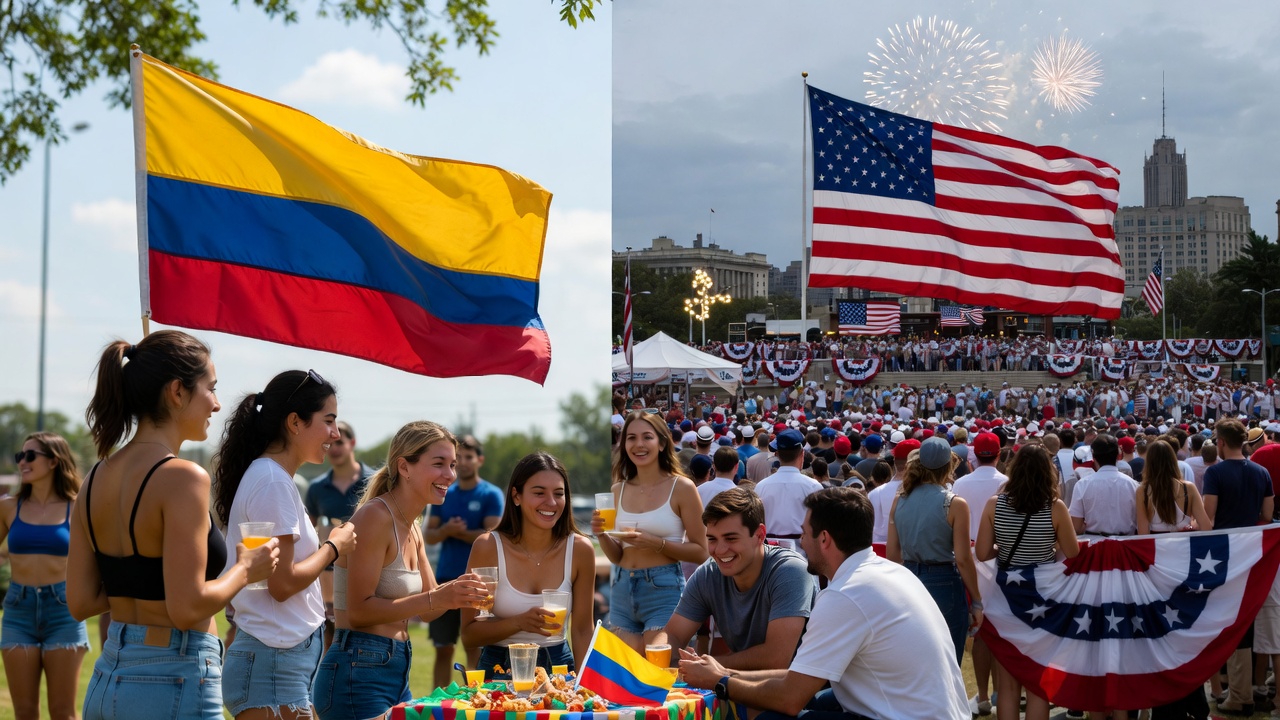
The significance of the date should not be confused with the United States’ Fourth of July. While the calendar overlap is a coincidence, both dates represent foundational moments for their respective nations. For Colombia, July 4 represents the birth of a modern democratic framework built on the ashes of extreme violence.
| Key Date | Event |
|---|---|
| August 25, 1989 | Silent March (Marcha del Silencio) after the assassination of Luis Carlos Galán |
| March 11, 1990 | Students deposit the Séptima Papeleta (Seventh Ballot) during legislative elections |
| May 27, 1990 | Official vote supporting a Constituent Assembly during presidential elections |
| December 9, 1990 | Election of 70 delegates to the National Constituent Assembly |
| February 5, 1991 | Constituent Assembly begins its work |
| July 4, 1991 | New Constitution is formally enacted |
Why Did Colombia Need a New Constitution in 1991?
To understand Constitution Day, you must first understand the crisis that made it necessary. By the late 1980s, Colombia was trapped in one of the most violent periods in its history. The old Constitution of 1886 — written over a century earlier — could not address the country’s deepening problems.
A Country Torn Apart by Violence
The 1886 Constitution had established a centralized, conservative state with a powerful executive branch. For decades, Colombian politics was dominated by two parties: the Liberals and the Conservatives. Their rivalry had already produced La Violencia, a brutal civil conflict from the late 1940s to the early 1960s that killed an estimated 200,000 people.
To end the bloodshed, the two parties created the Frente Nacional (National Front) in 1957. This system alternated the presidency between the two parties and split government positions evenly. While it stopped the immediate fighting, it also shut out every other political voice in the country. Indigenous communities, Afro-Colombians, women’s groups, labor unions, and leftist movements had no real way to participate in politics.
This exclusion bred new forms of violence. By the 1980s, Colombia faced threats from multiple armed groups. Guerrilla organizations like the FARC (Revolutionary Armed Forces of Colombia) and the ELN (National Liberation Army) had been fighting since the 1960s. New paramilitary groups emerged to oppose them. And the Medellín and Cali drug cartels, led by figures like Pablo Escobar, unleashed a campaign of terror against the state.
The Assassinations That Shocked a Nation
The late 1980s brought a wave of targeted killings that shook Colombia to its core. The violence was not random — it was aimed at the country’s democratic institutions.
- 1989: Twelve judicial officers were assassinated.
- August 18, 1989: Presidential candidate Luis Carlos Galán was shot and killed at a campaign rally in Soacha, a town near Bogotá. Galán, a Liberal reformist, had been the frontrunner for the 1990 elections.
- September 2, 1989: A bomb destroyed the offices of El Espectador, one of Colombia’s major newspapers.
- November 27, 1989: A bomb brought down Avianca Flight 203, killing all 107 people on board.
- December 6, 1989: A truck bomb exploded outside the headquarters of the DAS (Colombia’s intelligence agency) in Bogotá, killing 70 people.
- March 22, 1990: Presidential candidate Bernardo Jaramillo of the Patriotic Union was murdered.
- April 26, 1990: Presidential candidate Carlos Pizarro of the AD M-19 was shot dead on a commercial flight.
In less than two years, four presidential candidates were killed. Courts were paralyzed. Journalists feared for their lives. The existing constitutional framework had no answers for this crisis. The country needed a radical change — and it was the students who demanded it first.
How the Séptima Papeleta Student Movement Changed Colombia
The story of Colombia’s 1991 Constitution begins with a piece of paper — an unofficial ballot that changed history. It is called the Séptima Papeleta, or the Seventh Ballot. This student-led initiative remains one of the most remarkable examples of peaceful civic action in Latin American history.
The Silent March and Its Aftermath
Seven days after the assassination of Luis Carlos Galán on August 18, 1989, a group of law students at the Universidad del Rosario in Bogotá decided they could not stay silent. They organized the Marcha del Silencio (Silent March), a massive protest in which thousands of Colombians walked through the streets of the capital in complete silence. They carried candles and banners. Their message was clear: the violence must stop, and the political system must change.
The march inspired students across the country. From the elite private universities of Bogotá to the public universities of Medellín, Cali, and Manizales, a network of young people began to form. They created the Frente Unido Estudiantil de Colombia (United Student Front of Colombia) under a powerful motto: “For everything that unites us, against everything that divides us.”
What Was the Séptima Papeleta?
On March 11, 1990, Colombia held legislative elections. Voters were casting ballots on six different races: Senate, House of Representatives, departmental assemblies, municipal councils, mayors, and a Liberal Party primary. The students proposed adding a seventh ballot — the Séptima Papeleta — with a simple message: “I vote for Colombia. Yes to a Constituent Assembly.”
The seventh ballot had no legal authority. The electoral registry (Registraduría) refused to print it or count it officially. But the students found allies. Newspapers like El Tiempo and El Espectador printed the ballot so citizens could cut it out and bring it to the polls. Political parties, business leaders, and ordinary citizens joined the cause.
The result was extraordinary. An estimated 2 million Colombians deposited the seventh ballot — roughly 1.3 million were counted in unofficial tallies. The political message was impossible to ignore: the people wanted a new constitution.
From Student Protest to Constitutional Mandate
President Virgilio Barco responded by issuing Decree 927 on May 3, 1990, which authorized the electoral registry to count votes on the question of convening a Constituent Assembly during the presidential elections of May 27, 1990. The result was overwhelming. Over 5 million Colombians voted “yes” — roughly 88% of those who participated.
Newly elected President César Gaviria, who had been a strong supporter of constitutional reform, moved quickly. On December 9, 1990, Colombians elected 70 delegates to the National Constituent Assembly. The three co-presidents of the Assembly represented the breadth of the country’s political spectrum:
- Álvaro Gómez Hurtado — Conservative leader (National Salvation Movement)
- Horacio Serpa — Liberal Party leader
- Antonio Navarro Wolff — Former guerrilla commander (AD M-19)
The fact that a former guerrilla leader shared the presidency of the Assembly with establishment politicians was a powerful symbol of national reconciliation. It showed that Colombia was serious about building a new democracy that included everyone.
Inside the National Constituent Assembly: Who Wrote Colombia’s New Constitution?
The National Constituent Assembly that drafted the 1991 Constitution was unlike any political body Colombia had ever seen. Its 70 elected delegates represented a far broader cross-section of Colombian society than the traditional two-party system had ever allowed.
The election of delegates on December 9, 1990, produced a surprising result. The AD M-19 — the political party formed from the recently demobilized M-19 guerrilla movement — won 19 seats, making it the single largest bloc. The Liberal Party won 25 seats but was divided into multiple factions. The Conservative Party and its allied movement, the National Salvation Movement led by Álvaro Gómez Hurtado, secured significant representation as well.
For the first time, Indigenous communities had direct representatives in a constitution-making body. Two seats were reserved for Indigenous delegates. Afro-Colombian, evangelical Christian, and demobilized guerrilla groups (including representatives from the EPL and the Quintín Lame movement) also participated. Women, though still underrepresented, played important roles in the debates.
The Assembly worked intensely from February 5 to July 4, 1991. Debates were passionate. Delegates disagreed on many issues — the extent of presidential power, the role of the church, the structure of the judiciary, the rights of ethnic minorities. But they shared a common belief: Colombia needed a fresh start. The spirit of compromise that guided the Assembly produced a constitution that, while imperfect, reflected a genuine effort to build a more inclusive and democratic society.
The document that emerged is often called the “Constitution of Rights” (Constitución de los Derechos). It contains 380 articles organized into 13 titles. It opens with a preamble that invokes the protection of God and commits to “life, peaceful coexistence, work, justice, equality, understanding, freedom, and peace.” It defines Colombia as a “social state under the rule of law” — a phrase that carries deep meaning in a country where the rule of law had so often been ignored.
What Are the Key Reforms of the Colombian Constitution of 1991?
The 1991 Constitution transformed Colombia’s legal and political framework. The Constituent Assembly worked for approximately five months, debating and drafting a document that would replace the century-old 1886 charter. The result was one of the most progressive constitutions in the world at the time. Here are its most important reforms.
Recognition of Colombia as a Multicultural and Multi-Ethnic Nation
Article 7 of the 1991 Constitution declares that the state recognizes and protects the ethnic and cultural diversity of the Colombian nation. This was a historic shift. For the first time, Colombia formally acknowledged its Indigenous, Afro-Colombian, and Raizal communities as integral parts of the national identity.
Article 10 established Spanish as the official language but also recognized the languages and dialects of ethnic groups as official within their territories. The Constitution also guaranteed special political representation for Indigenous and Afro-Colombian communities in Congress.
The Acción de Tutela: A Legal Revolution
Perhaps the single most important innovation of the 1991 Constitution is the Acción de Tutela (Tutelage Action), established in Article 86. This mechanism allows any citizen to go before a judge and demand immediate protection of their fundamental rights when those rights are threatened by the actions — or the inaction — of any public authority.
The tutela is remarkable for several reasons:
- Speed: A judge must rule on a tutela within 10 days of filing.
- Accessibility: No lawyer is required. Any citizen can file one.
- Scope: The Constitutional Court has interpreted fundamental rights broadly, extending protection to areas like health, education, and social security.
The tutela has become the most widely used judicial mechanism in Colombia. Between 1991 and 2011, more than 4 million tutela actions were filed across the country. In 2019 alone, Colombians filed approximately 245,000 right-to-petition claims and 207,000 health-related claims through the tutela system. In about 69% of cases, the ruling favored the citizen.
Creation of the Constitutional Court
The 1991 Constitution created a dedicated Constitutional Court (Corte Constitucional), separate from the Supreme Court. This new body was given the power to:
- Review challenges to the constitutionality of laws
- Oversee the tutela process
- Examine legislative decrees and international treaties
- Protect citizens’ fundamental rights through judicial review
The Constitutional Court quickly became one of the most influential institutions in Colombia. It has issued landmark rulings on health care reform, the rights of internally displaced persons, same-sex marriage, and many other issues.
Decentralization and Local Autonomy
Under the 1886 Constitution, power was concentrated in Bogotá. The 1991 charter changed this by granting greater autonomy to departments, municipalities, and districts. Mayors and governors were elected by popular vote rather than appointed by the central government. Local governments received more control over budgets and public services.
Expanded Civil Liberties and Human Rights
The 1991 Constitution includes an extensive bill of rights. Among its key provisions:
| Right | Article | Description |
|---|---|---|
| Right to life | Art. 11 | The death penalty is abolished. |
| Freedom from torture | Art. 12 | No person shall be subjected to forced disappearance, torture, or cruel treatment. |
| Equality | Art. 13 | All persons are equal before the law and shall enjoy equal protection. |
| Freedom of expression | Art. 20 | Every person has the right to express and disseminate their thoughts and opinions. |
| Right to petition | Art. 23 | Every person has the right to present respectful petitions to authorities and receive prompt resolution. |
| Right to health | Art. 49 | Public health and environmental sanitation are public services of the state. |
| Right to education | Art. 67 | Education is an individual right and a public service with a social function. |
| Environmental protection | Art. 79 | Every person has the right to enjoy a healthy environment. |
Ban on Nuclear, Chemical, and Biological Weapons
Article 81 prohibits the manufacture, import, possession, and use of chemical, biological, and nuclear weapons in Colombia. It also bans the introduction of nuclear and toxic waste into Colombian territory.
Mechanisms for Citizen Participation
The Constitution introduced several new ways for citizens to participate directly in politics, including referendums, plebiscites, popular consultations, open town halls (cabildos abiertos), legislative initiatives, and the recall of elected officials. These mechanisms reflected the Assembly’s belief that democracy must go beyond simply voting every few years.
How the 1991 Constitution Protects Indigenous and Afro-Colombian Rights
One of the most groundbreaking aspects of the Colombian Constitution is its recognition of the country’s ethnic and cultural diversity. Before 1991, Colombia’s legal framework largely ignored its Indigenous and Afro-descendant populations. The new charter changed that dramatically.
The Constitution established special electoral districts for Indigenous and Afro-Colombian communities in Congress. Two Senate seats are reserved for Indigenous communities, and additional seats in the House of Representatives are set aside for Afro-Colombian and Indigenous groups.
In 1993, following the Constitution’s mandate, Law 70 granted Afro-Colombian communities collective land rights and cultural autonomy over territories they had inhabited for generations. This law was a direct result of the protections enshrined in the Constitution.
For Indigenous communities, the Constitution recognized their territorial rights, traditional governance systems, and languages. Indigenous territories (resguardos) were granted special legal status, and traditional Indigenous justice systems were acknowledged alongside the national judicial framework.
How Do Colombians Celebrate Constitution Day on July 4?
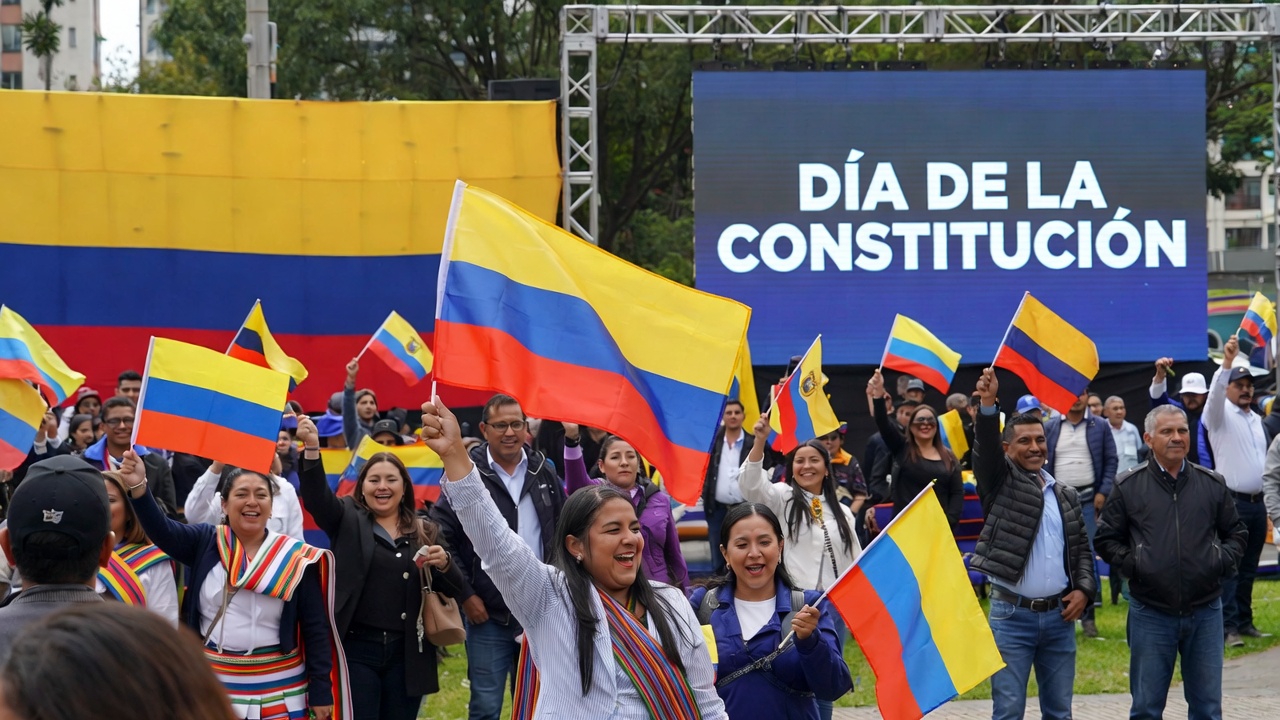
Constitution Day in Colombia is not a carnival. It does not involve parades, fireworks, or dancing in the streets. Instead, it is a day of reflection, debate, and civic education. Here is what typically happens across the country.
Academic and Institutional Events
Universities play a central role in marking the anniversary. Law schools and political science departments host conferences, seminars, and panel discussions. Experts analyze the Constitution’s achievements and failures. Students organize debates and forums.
Government institutions hold official ceremonies. The Congress of the Republic, the Constitutional Court, and the Office of the Human Rights Ombudsman (Defensoría del Pueblo) often release statements or host events reflecting on the charter’s significance.
Media Coverage and Public Debate
Colombian media devotes significant attention to the anniversary. Newspapers like El Tiempo and Semana publish special reports, editorials, and interviews with constitutional scholars, former members of the Constituent Assembly, and political figures. Television and radio programs feature discussions about the state of Colombian democracy.
Community and Civic Engagement
In some communities, local organizations use the anniversary as an opportunity to educate citizens about their constitutional rights. Workshops on the acción de tutela, voter registration drives, and public readings of the Constitution are common, especially in marginalized and rural areas where awareness of legal protections may be limited.
Remembering the Student Movement
The anniversary is also a moment to remember the young people who made the Constitution possible. The Séptima Papeleta movement is often highlighted in commemorative events. Former student leaders share their memories. Documentaries and archival footage are broadcast. The message is clear: ordinary citizens — especially young people — have the power to change their country.
The 35th Anniversary of the Colombian Constitution in 2026
The year 2026 is a milestone for Colombia’s constitutional history. July 4, 2026, marks 35 years since the promulgation of the 1991 Constitution. This anniversary arrives at a particularly charged moment in Colombian politics.
A Year of Elections
Colombia faces a busy election calendar in 2026. Legislative elections are scheduled for March 8, when voters will choose all 108 senators and 188 members of the House of Representatives. The presidential first round is set for May 31, with a potential runoff on June 21. Incumbent President Gustavo Petro, who was elected in 2022 as Colombia’s first leftist president, is constitutionally barred from seeking a consecutive second term.
The Constitution’s 35th anniversary will fall just weeks after the presidential vote, making it a natural focal point for discussions about Colombia’s democratic future.
Petro’s Push for a New Constituent Assembly
One of the most significant political debates surrounding the Constitution in 2026 involves President Petro’s repeated calls for a National Constituent Assembly. Petro has argued that while the 1991 Constitution is progressive on paper, many of its promises — particularly regarding land reform, health care, education, and peace — have never been fully realized.
According to Colombia Reports, Petro’s Justice Minister presented a bill proposing a 71-member Constituent Assembly with 27 seats reserved for specific socio-economic groups. The administration argues that the new body would not repeal the 1991 Constitution but expand and strengthen it.
However, this proposal has met strong opposition. Under Article 376 of the current Constitution, convening a Constituent Assembly requires Congressional approval through a special law, followed by a popular vote in which at least one-third of the electorate participates. Constitutional experts have warned that attempts to bypass this process could trigger a constitutional crisis.
The debate reflects a broader tension at the heart of Colombian democracy: How do you fulfill the promises of a constitution when the very institutions it created seem unable — or unwilling — to act?
How the Constitution Shaped the Colombian Peace Process
The 1991 Constitution did not end Colombia’s armed conflict. But it created the legal and political framework that made peace negotiations possible.
A Constitution Born from Peace Negotiations
The Constitution itself emerged partly from peace talks. The M-19 guerrilla movement had demobilized in 1990 and participated in the Constituent Assembly. Its leader, Antonio Navarro Wolff, served as one of the Assembly’s three co-presidents. The M-19’s inclusion in the constitutional process demonstrated that former armed actors could become legitimate political participants.
The 2016 Peace Agreement with the FARC
Decades later, the Constitution’s framework of rights and reconciliation helped make the 2016 peace agreement between the Colombian government and the FARC possible. Former President Juan Manuel Santos received the Nobel Peace Prize in 2016 for his role in ending more than 50 years of armed conflict.
The peace agreement included provisions for transitional justice, rural reform, political participation, and victim reparations — all areas rooted in the principles of the 1991 Constitution. The Constitution’s mechanisms for citizen participation were also used in the peace process, including a controversial national plebiscite on the agreement in October 2016.
Ongoing Challenges
Despite the peace agreement, Colombia continues to face security challenges. Violence from remaining armed groups, dissident FARC factions, and drug trafficking organizations persists in many regions. The 1991 Constitution provides the legal tools to address these issues, but implementation remains a work in progress.
Why the 1991 Constitution Matters for Travelers Visiting Colombia
If you are planning a trip to Colombia, understanding the Constitution might seem like an unusual recommendation. But this document shapes the very experiences you will have as a visitor.
Cultural Diversity You Can See and Feel
The Constitution’s recognition of Colombia’s multicultural identity is not just a legal abstraction. It is visible in the country’s incredible cultural diversity. When you visit San Basilio de Palenque — a town near Cartagena recognized by UNESCO as Intangible Cultural Heritage — you are witnessing a community whose linguistic and cultural rights are protected by the 1991 charter. When you attend the Festival de Música del Pacífico Petronio Álvarez in Cali, you are experiencing Afro-Colombian artistic traditions that the Constitution helped preserve.
Environmental Protections and Ecotourism
Colombia’s Constitution was one of the first in the world to include environmental rights. Article 79 guarantees the right to a healthy environment. Article 80 requires the state to plan for the management and use of natural resources to guarantee sustainable development. These provisions have supported the development of Colombia’s ecotourism industry, protecting places like the Amazon rainforest, the Sierra Nevada de Santa Marta, and the Caño Cristales river — often called the “River of Five Colors.”
A Country in Conversation with Its Own Democracy
Visiting Colombia during the anniversary of the Constitution — or during any election season — offers a unique chance to witness a democracy in action. Colombians are passionate about their politics. Conversations about the Constitution, the peace process, land reform, and social justice happen not just in university lecture halls but in cafés, buses, and family gatherings. Engaging with these discussions can deepen your understanding of the country far beyond what any guidebook offers.
Frequently Asked Questions About Constitution Day in Colombia
Is Constitution Day a Public Holiday in Colombia?
No. Constitution Day (July 4) is not an official public holiday in Colombia. Government offices, businesses, and schools remain open. The day is observed through academic events, institutional ceremonies, and media coverage rather than a day off from work.
What Is the Difference Between Constitution Day and Independence Day in Colombia?
Independence Day is celebrated on July 20 and commemorates the beginning of Colombia’s independence movement from Spain in 1810. It is a major national holiday with military parades, cultural festivals, music, traditional food, and patriotic celebrations. Constitution Day on July 4 marks the adoption of the 1991 Constitution. It is a more academic and reflective observance.
| Constitution Day (July 4) | Independence Day (July 20) | |
|---|---|---|
| Year established | 1991 | 1810 |
| Public holiday? | No | Yes |
| Type of celebration | Academic, institutional | Parades, festivals, food |
| Key theme | Democratic reform and rights | National sovereignty and freedom |
How Old Is Colombia’s Current Constitution?
The 1991 Constitution turns 35 years old on July 4, 2026. It replaced the 1886 Constitution, which had governed Colombia for 105 years.
What Is the Acción de Tutela?
The acción de tutela is a legal mechanism (Article 86) that allows any citizen to seek immediate judicial protection of their fundamental rights. A judge must decide the case within 10 days. No lawyer is needed. It is considered the most important legal innovation of the 1991 Constitution.
Can the 1991 Constitution Be Changed?
Yes. The Constitution can be amended through three mechanisms:
- Congressional legislation (Legislative Acts approved by Congress)
- Referendum (proposed by the government or citizens, approved by voters)
- National Constituent Assembly (convened through a special law approved by Congress and a popular vote)
The Constitution has been amended multiple times since 1991, with changes in 1993, 1995, 1996, 1997, 1999, 2000, 2001, 2002, 2003, 2004, 2005, and later years.
The Legacy of the 1991 Constitution: Achievements and Unfinished Business
What the Constitution Achieved
The 1991 Constitution transformed Colombia in measurable ways:
- The tutela system has processed millions of cases, giving ordinary citizens a direct line to justice.
- The Constitutional Court has become one of the most respected and influential judicial institutions in Latin America.
- Political participation expanded dramatically. New parties and movements emerged. Indigenous and Afro-Colombian communities gained representation in Congress.
- Decentralization gave local governments more power and resources.
- The peace process with the FARC was built on the constitutional framework of rights and reconciliation.
What Remains Unfinished
Despite its achievements, the 1991 Constitution has not solved all of Colombia’s problems. Critics point to several areas where the charter’s promises remain unfulfilled:
- Inequality: Colombia remains one of the most unequal countries in Latin America. In 2024, approximately 31.8% of Colombians lived below the poverty line, and the country’s Gini coefficient — a measure of income inequality — remained among the highest in the region.
- Land reform: The Constitution promised a more equitable distribution of land, but decades of conflict and institutional resistance have slowed progress. Rural areas continue to suffer from land concentration and poverty.
- Health care: While the tutela has helped millions access health services, the underlying health system remains strained. Long wait times, inadequate funding, and administrative failures continue to plague the system.
- Implementation of the peace agreement: Many provisions of the 2016 FARC peace deal — particularly regarding rural development, victim reparations, and political participation — have been only partially implemented.
- Violence: Although the overall level of violence has decreased since the 1990s, armed groups, drug trafficking, and political assassinations continue to affect parts of the country.
Constitution Day and the Broader Calendar of Colombian National Celebrations
To fully appreciate Constitution Day, it helps to see it in the context of Colombia’s broader calendar of national commemorations. These dates together tell the story of a country that has fought — and continues to fight — for its identity, freedom, and democracy.
| Date | Celebration | Significance |
|---|---|---|
| May 21 | Afro-Colombian Day | Marks the abolition of slavery in 1851 |
| July 4 | Constitution Day | Adoption of the 1991 Constitution |
| July 20 | Independence Day | Beginning of the independence movement in 1810 |
| August 7 | Battle of Boyacá | Decisive victory securing independence in 1819 |
| November 7 | Day of Races (Día de la Raza) | Celebration of Colombia’s cultural diversity |
For travelers, the period between early July and late August is a particularly rich time to visit Colombia. You can experience the reflective mood of Constitution Day, the patriotic fervor of Independence Day on July 20, and the historic pride of the Battle of Boyacá commemoration on August 7 — all in a span of roughly five weeks.
Practical Tips for Travelers Visiting Colombia During Constitution Day
If your trip to Colombia coincides with early July, here are some ways to engage with Constitution Day and the surrounding cultural events.
Visit the Casa del Florero Museum in Bogotá. This museum, also known as the July 20 Museum, is located on the northeast corner of the Plaza de Bolívar in the heart of Bogotá’s historic district. It occupies the house where the famous “flowerpot incident” of July 20, 1810, took place — the event that triggered the Colombian independence movement. While the museum focuses on independence, it also covers the broader arc of Colombian political history, including the Constitution.
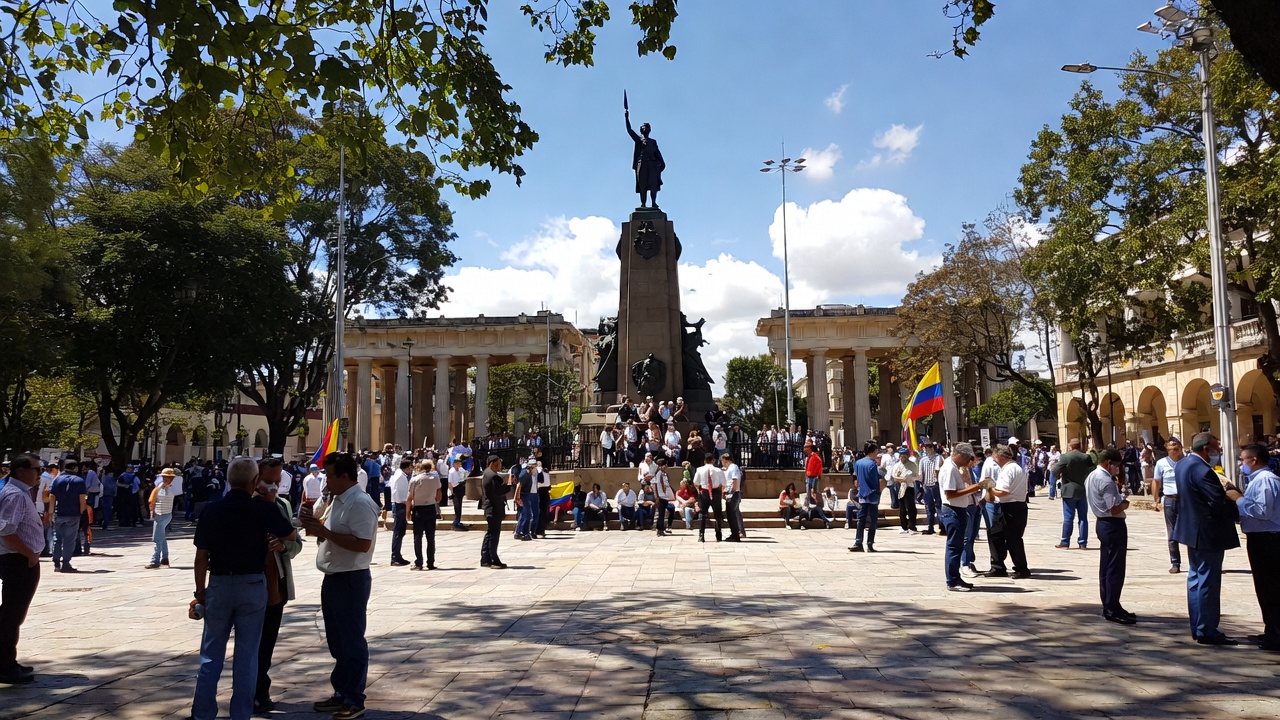
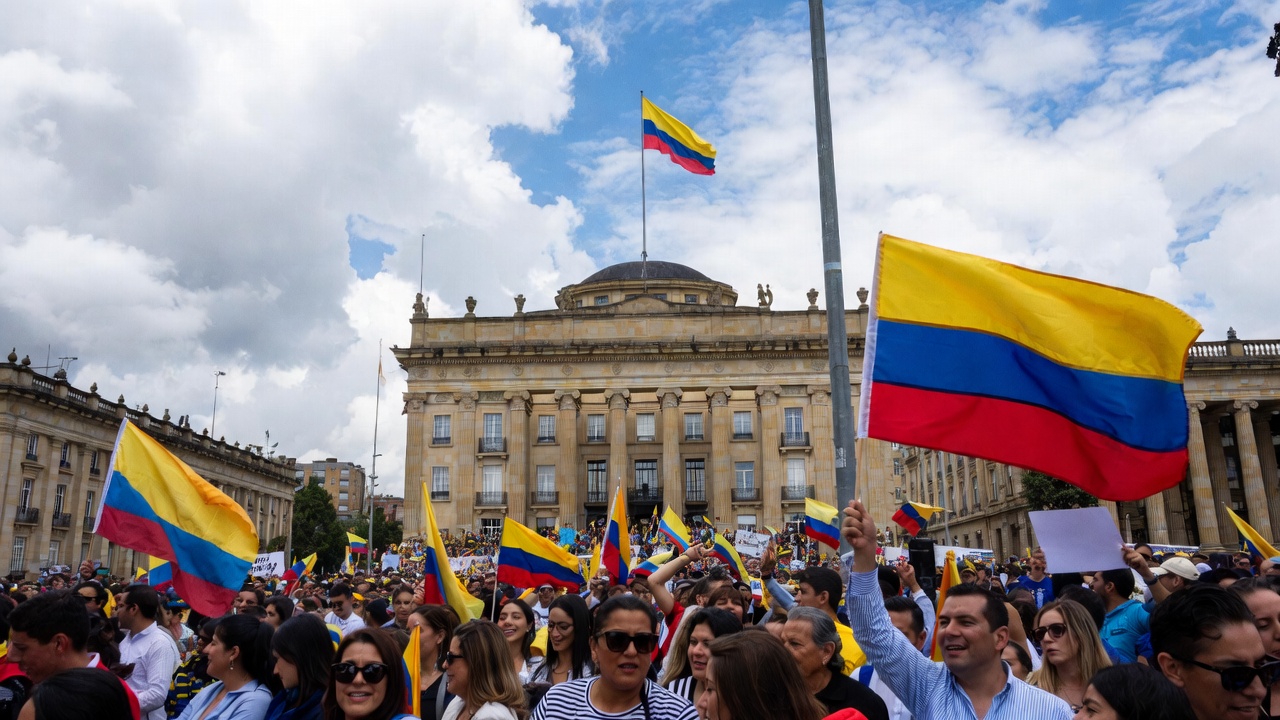
Explore the Plaza de Bolívar. This iconic square in Bogotá is surrounded by the Congress of the Republic, the Palace of Justice, the Cathedral, and the Bogotá Mayor’s Office. It is the symbolic heart of Colombian democracy and the site of many political demonstrations and civic events. During the Constitution’s anniversary, you may encounter gatherings, ceremonies, or student-organized events here.
Attend a university event. If you speak Spanish — or even if you are working on it — check the events calendars of major universities like the Universidad de los Andes, Universidad del Rosario, Universidad Nacional, or Universidad Externado. These institutions often host public lectures and panels around the anniversary.
Talk to Colombians. One of the greatest travel experiences is conversation. Ask your hotel host, your tour guide, or the person sitting next to you in a café what the Constitution means to them. Colombians are proud of their 1991 charter, but they are also honest about its limitations. You will hear thoughtful, passionate, and sometimes critical perspectives that no guidebook can offer.
Conclusion: Why Understanding Constitution Day Matters
Colombia’s Constitution Day is not a loud celebration. You will not see it on most tourist brochures. But it is one of the most important dates on the Colombian calendar. The 1991 Constitution was born from a moment of crisis — when a country terrorized by violence found the courage to reimagine itself. It was driven by students who refused to accept the status quo. It was shaped by a diverse assembly that included former guerrilla fighters, Indigenous leaders, conservative politicians, and liberal reformers.
Thirty-five years later, the Constitution remains a living document. It is invoked in courtrooms and in street protests. It is debated in Congress and in university classrooms. It is celebrated by those who see it as a triumph of democracy and challenged by those who believe its promises have not been kept.
For travelers, understanding this document is a key to understanding Colombia. It explains why a country with such a painful history can also be so hopeful. It reveals why Colombians are so passionate about justice, rights, and political participation. And it shows that the story of Colombia — like the story of any great democracy — is never finished.
Whether you visit Bogotá’s Plaza de Bolívar, hike through the coffee region, or dance salsa in Cali, the spirit of the 1991 Constitution is part of the Colombia you will experience. Knowing its story will make your journey richer, deeper, and more meaningful.