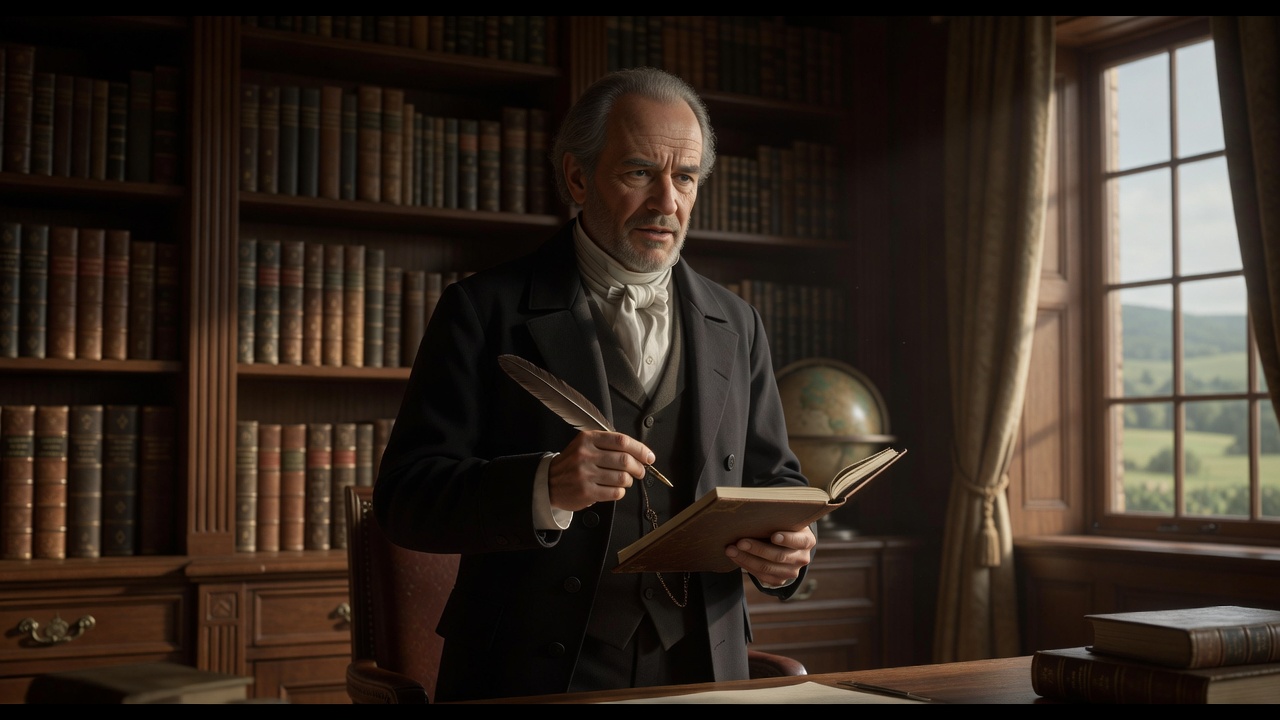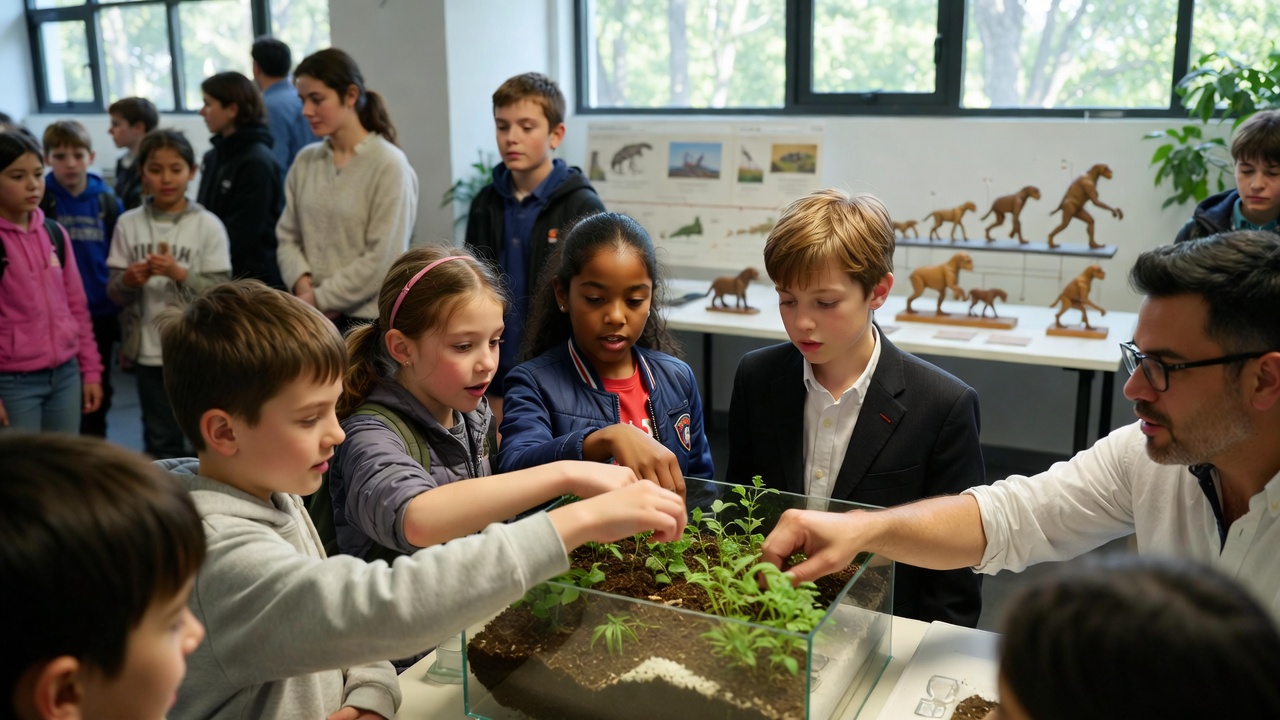
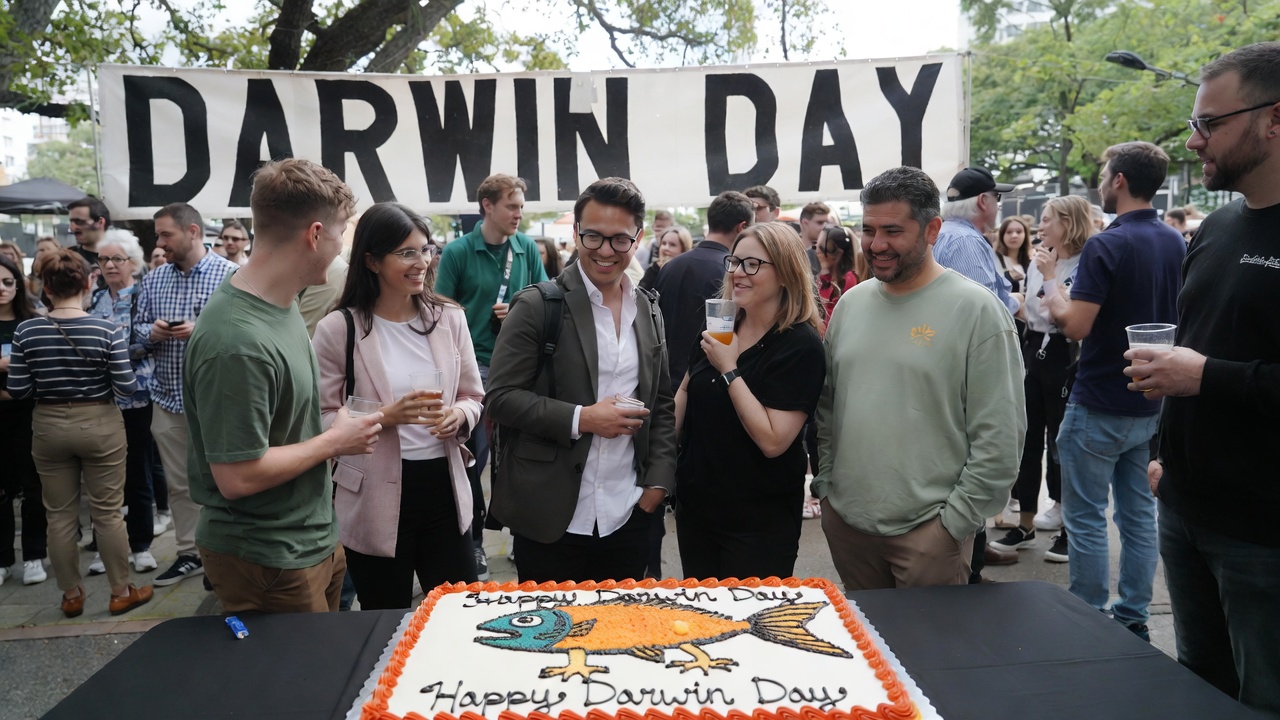
Every February, scientists, educators, and curious minds around the world come together for a day that celebrates one of the greatest thinkers in human history. Darwin Day, observed on February 12, honors the birth of Charles Robert Darwin — the English naturalist who forever changed how we understand life on Earth. But what exactly is Darwin Day? Why does it matter? And how do people celebrate it? This guide covers everything you need to know.
When Is Darwin Day Celebrated Every Year?
Darwin Day falls on February 12 every year. The date is not random. It marks the birthday of Charles Darwin, who was born on February 12, 1809, in the small market town of Shrewsbury, Shropshire, England. In 2026, Darwin Day falls on a Thursday, making it a perfect midweek moment for schools, museums, and universities to host lectures, film screenings, and community events.
Here is a fun coincidence worth noting: Charles Darwin and Abraham Lincoln were born on the exact same day — February 12, 1809. Two men, born on opposite sides of the Atlantic Ocean, who each reshaped the world in a different way. Darwin changed how humanity sees its own origin. Lincoln changed how a nation thinks about freedom.
Darwin Day is not a federal holiday in any country. It is not a day off from work. Yet hundreds of events take place worldwide each year. The spirit of the day is simple: celebrate science, promote curiosity, and encourage critical thinking.
The History of Darwin Day: How Did It Begin?
The celebration of Darwin’s life and legacy did not start overnight. It grew slowly, from small academic gatherings to a worldwide movement.
Early Tributes After Darwin’s Death in 1882
Charles Darwin died on April 19, 1882, at his family home, Down House, in the village of Downe on the southern outskirts of London. He was 73 years old. His body was laid to rest with full honors in Westminster Abbey, near the grave of Sir Isaac Newton — a fitting resting place for a man whose ideas hold equal weight in the history of science.
In the decades that followed, tributes to Darwin were mostly informal. Scientists held occasional dinners and lectures in his memory. Some hosted what they called “Phylum Feasts” — meals where the goal was to eat food from as many different biological phyla as possible. Records of such feasts go back to at least the 1970s in Canada. The idea was playful but pointed: it reminded participants of the stunning diversity of life that Darwin spent his career studying.
The 1909 Centennial: A Landmark Celebration
The first truly major global celebration came in 1909, on the 100th anniversary of Darwin’s birth and the 50th anniversary of his landmark book, On the Origin of Species. According to Wikipedia’s account of Darwin Day, more than 400 scientists and dignitaries from 167 countries gathered at Cambridge to honor his work and debate new scientific discoveries. That same year, the New York Academy of Sciences held an event at the American Museum of Natural History, where a bronze bust of Darwin was unveiled.
These early gatherings set the tone. They were not just celebrations of one man. They were celebrations of the scientific method itself.
The Modern Darwin Day Movement Takes Shape in the 1990s
The modern Darwin Day movement started in the early 1990s. The Humanist Community of Palo Alto, California, motivated by Dr. Robert Stephens, began planning an annual celebration in late 1993. Their first public event took place on April 22, 1995, and featured a lecture by Dr. Donald Johanson — the paleoanthropologist famous for discovering the early hominid fossil known as “Lucy.”
Around the same time, the London Evolution Group was formed to bring together evolutionary biologists from University College London, the Natural History Museum, and Imperial College. Their first gathering, called the “Darwin’s Birthday Party,” was held at the Linnean Society of London in 1994.
In 1997, Professor Massimo Pigliucci launched an annual Darwin Day event at the University of Tennessee. His program included public lectures and a teachers’ workshop designed to help elementary and secondary school educators explain evolution more effectively.
The Darwin Day Celebration Organization
In 2000, three Darwin enthusiasts — Dr. Robert Stephens, Professor Massimo Pigliucci, and Amanda Chesworth — created the Darwin Day Program. It was later renamed the Darwin Day Celebration, a nonprofit organization committed to science education. Today, the International Darwin Day Foundation operates as a project of the American Humanist Association and serves as the primary hub for events around the globe.
Why Is Darwin Day Important? The Significance of Celebrating Science
Darwin Day is more than a birthday party for a Victorian-era naturalist. It serves a deeper purpose. Here is why scientists, educators, and communities consider it important.
A Celebration of Scientific Thinking and Intellectual Curiosity
At its core, Darwin Day celebrates the qualities that define good science: curiosity, careful observation, evidence-based reasoning, and the courage to challenge established ideas. Charles Darwin spent more than 20 years collecting evidence before publishing On the Origin of Species in 1859. He was meticulous. He was patient. He was also brave. His ideas about evolution by natural selection directly challenged the dominant religious beliefs of his time.
The International Darwin Day Foundation describes the day as an opportunity to “reflect and act on the principles of intellectual bravery, perpetual curiosity, scientific thinking, and hunger for truth.” These are not just academic values. They are human values.
A Response to Ongoing Challenges in Science Education
Darwin Day also exists because the teaching of evolution remains contested in parts of the world, particularly in the United States. According to the National Center for Science Education (NCSE), some public schools still present creationism or intelligent design as alternatives to evolution in biology classes. The NCSE has reported that roughly one in eight U.S. public high school biology teachers explicitly present creationism, and six in ten are hesitant to teach evolution properly.
Darwin Day events push back against this trend. They provide a public platform for scientists and educators to make the case that evolution is well-supported science, not a matter of opinion.
Bridging Faith and Science
An important part of the Darwin Day movement involves building bridges between religious communities and the scientific community. Each year, the Clergy Letter Project organizes Religion and Science Weekend on the weekend closest to February 12. In 2026, the event takes place from February 13 to 15 and carries the theme “Truth Matters.”
As reported by the NCSE, dozens of congregations across the United States and around the world participate. They hold sermons and discussion groups focused on the idea that faith and science are not in conflict. The project, initiated by Michael Zimmerman, aims to show that religious people from many faiths understand that evolution is sound science and poses no threat to their beliefs.
This is a critical piece of the Darwin Day mission. It moves the conversation beyond a simple “science versus religion” debate. It invites nuance.
Who Was Charles Darwin? A Brief Biography of the Father of Evolution
To fully appreciate Darwin Day, it helps to understand the man behind it. Charles Darwin’s life is a story of unlikely beginnings, transformative travel, and decades of painstaking work.
Early Life and Education in Shrewsbury and Edinburgh
Charles Robert Darwin was born on February 12, 1809, in Shrewsbury, England. He was the fifth of six children. His father, Dr. Robert Darwin, was a wealthy doctor and financier. His mother, Susannah Wedgwood Darwin, was the daughter of the famous potter Josiah Wedgwood. She died when Charles was just eight years old.
Darwin’s grandfathers on both sides were remarkable men. Erasmus Darwin, his paternal grandfather, was a physician, poet, and early thinker about evolution who published his ideas in a work called Zoonomia (1794). Josiah Wedgwood was a prominent industrialist and abolitionist.
Young Charles showed an early fascination with nature. He collected insects, explored the fields around his home, and read nature books with passion. His father, hoping for a practical career, sent him to the University of Edinburgh in 1825 to study medicine. Darwin hated it. According to the Natural History Museum in London, the sight of blood and surgery without anesthesia made him ill.
His father, disappointed, then sent him to Christ’s College, Cambridge, to study divinity. But at Cambridge, Darwin found his true calling. He befriended the botany professor John Stevens Henslow, who encouraged his interest in natural history and would later recommend him for a life-changing voyage.
The Voyage of HMS Beagle: Five Years That Changed Everything
In 1831, at the age of 22, Darwin accepted an invitation to serve as naturalist and companion to Captain Robert FitzRoy aboard HMS Beagle. The ship left England on December 31, 1831, on a five-year survey voyage that would take Darwin around the world.
The Beagle traveled along the coasts of South America, visited the Galápagos Islands, and sailed to New Zealand, Australia, and South Africa. Darwin explored remote regions, marveled at extraordinary wildlife, and collected thousands of specimens — plants, animals, fossils, and geological samples.
The Galápagos Islands, off the coast of Ecuador, proved especially important. Darwin noticed that the finches on different islands had different beak shapes, each adapted to the specific food sources available on that island. He eventually realized that all the finch species had descended from a single common ancestor and had diversified through natural selection. This observation became one of the key pieces of evidence for his theory.
| Key Details of the HMS Beagle Voyage | |
|---|---|
| Departure Date | December 31, 1831 |
| Return Date | October 2, 1836 |
| Duration | Nearly 5 years |
| Ship | HMS Beagle |
| Captain | Robert FitzRoy |
| Key Locations Visited | South America, Galápagos Islands, Tahiti, New Zealand, Australia, South Africa |
| Darwin’s Age at Departure | 22 years old |
The Theory of Evolution by Natural Selection
After returning to England in 1836, Darwin did not rush to publish his ideas. He spent years sorting through his specimens, corresponding with other scientists, and building his case. He devised his theory of natural selection in 1838, but he sat on it for more than 20 years.
The theory has three core components:
- Variation — Individuals within a species vary from one another in their traits.
- Inheritance — Offspring tend to inherit traits from their parents.
- Selection — Individuals with traits better suited to their environment are more likely to survive and reproduce. Over time, favorable traits become more common in a population.
Darwin finally went public in 1858, when a young naturalist named Alfred Russel Wallace sent him a letter describing a remarkably similar theory. Wallace had independently arrived at the idea of natural selection while collecting specimens in the Malay Archipelago. Rather than compete, Darwin and Wallace presented their ideas jointly at a meeting of the Linnean Society of London on July 1, 1858.
The following year, Darwin published On the Origin of Species by Means of Natural Selection, or the Preservation of Favoured Races in the Struggle for Life — usually shortened to On the Origin of Species. The book was a sensation. Its first print run sold out on the day of publication.
Later Life, Legacy, and Death
Darwin spent his later years at Down House in Kent, continuing to write and conduct experiments. He published influential works on topics ranging from coral reefs and barnacles to earthworms and the expression of emotions in humans and animals. He suffered from chronic illness throughout much of his adult life — the cause of which remains debated by historians.
He died on April 19, 1882, of heart failure, and was buried in Westminster Abbey — a rare honor that reflected the scientific establishment’s deep respect for his contributions.
How Darwin’s Work Changed the World: The Lasting Impact of Natural Selection
Darwin’s influence extends far beyond biology. His ideas reshaped entire fields of human knowledge.
The Foundation of Modern Biology and Evolutionary Science
Before Darwin, biology lacked a unifying framework. His theory of evolution by natural selection provided one. It explained both the unity of life (all living things share common ancestry) and the diversity of life (species adapt to their environments through natural selection).
As the biologist Theodosius Dobzhansky famously wrote in 1973: “Nothing in biology makes sense except in the light of evolution.” Today, evolutionary theory underpins work in genetics, ecology, medicine, immunology, behavioral science, and many other disciplines.
Advances in Medicine and Public Health
Understanding evolution has direct medical applications. Doctors and researchers use evolutionary principles to study how viruses mutate, how antibiotic resistance develops, and how cancer cells evolve within the body. The field of evolutionary medicine applies Darwinian thinking to questions about human health, disease, and aging.
Influence on Other Academic Disciplines
Darwin’s impact extends into the humanities and social sciences. His work inspired new fields and approaches, including:
| Field | Connection to Darwin’s Ideas |
|---|---|
| Ecology | Study of how organisms interact with their environments |
| Ethology | Study of animal behavior in natural settings |
| Behavioral Genetics | Study of how genes influence behavior |
| Evolutionary Psychology | Study of how natural selection shaped the human mind |
| Biogeography | Study of the distribution of species across the planet |
| Paleontology | Study of fossil evidence for evolution |
| Conservation Biology | Applying evolutionary principles to protect endangered species |
Darwin Day Celebrations Around the World in 2026
Darwin Day is observed globally. Events range from large institutional programs to small community gatherings. Here is a look at some notable celebrations in 2026.
Darwin Days at the Paleontological Research Institution (Ithaca, New York)
The Paleontological Research Institution (PRI) and its Museum of the Earth in Ithaca, New York, have been hosting Darwin Days since 2006. The event is organized in collaboration with Cornell University and Ithaca College. In 2026, Darwin Days runs from February 10 to 14 and focuses on the theme of mollusk evolution, inspired by PRI’s special exhibition, Marvellous Mollusks: The Secret World of Shells. According to the PRI website, the celebration includes panel discussions, film screenings, speakers, and workshops.
The 29th Annual Darwin Day Celebration at MOSAC (Sacramento, California)
The Museum of Science and Curiosity (MOSAC) in Sacramento hosts one of the longest-running Darwin Day celebrations in the United States. The 29th annual event takes place on February 13, 2026, featuring a talk by Dr. Rick Grosberg, a marine evolutionary biologist whose research focuses on the major evolutionary transitions in the history of life. According to MOSAC’s event page, the Sacramento area has hosted this annual event since 1998.
Iowa City Darwin Day: Science Fest
Iowa City Darwin Day is a free, public science festival. In 2026, the event takes place on April 10 and 11, slightly later than the traditional February date, but still very much in the spirit of Darwin Day. According to the Iowa City Darwin Day website, the event features speakers, discussions, and community engagement focused on the contributions of science to humanity.
Evolution Day at UC Berkeley’s Essig Museum of Entomology
The Essig Museum of Entomology at the University of California, Berkeley, celebrates what it calls “Evolution Day” each year. The event honors not only Darwin but also Alfred Russel Wallace (born January 8, 1823) and Henry Walter Bates (born February 8, 1825) — two other pioneers of evolutionary biology. The museum offers behind-the-scenes tours of its insect collection.
Religion and Science Weekend (February 13–15, 2026)
The Clergy Letter Project organizes Religion and Science Weekend to coincide with Darwin Day. In 2026, the event spans February 13 to 15 with the theme “Truth Matters.” According to the NCSE, dozens of congregations worldwide participate by hosting sermons and discussion groups on the compatibility of faith and science. The 2026 edition marks the 21st annual Religion and Science Weekend.
Events at Universities, Libraries, and Museums Worldwide
Beyond these headline events, Darwin Day celebrations happen at hundreds of locations around the world. Universities host lectures. Libraries set up displays of Darwin’s works. Natural history museums offer special programming. Civic groups organize community discussions. The Darwin Day Celebration registry, maintained by the American Humanist Association, allows anyone to find or register local events.
Has the U.S. Congress Officially Recognized Darwin Day?
The push for official recognition of Darwin Day in the United States has a long history. Multiple members of Congress have introduced resolutions to designate February 12 as Darwin Day, but none have been passed into law.
Timeline of Congressional Darwin Day Resolutions
| Year | Sponsor | Chamber | Result |
|---|---|---|---|
| 2011 | Rep. Pete Stark (D-CA) | House | Died in committee |
| 2013 | Rep. Rush Holt (D-NJ) | House | Died in committee |
| 2014 | Rep. Rush Holt (D-NJ) | House | Died in committee |
| 2015 | Rep. Jim Himes (D-CT) / Sen. Richard Blumenthal (D-CT) | Both chambers | Died in committee |
| 2016 | Rep. Jim Himes (D-CT) | House | Died in committee |
| 2017 | Rep. Jim Himes (D-CT) | House | Died in committee |
| 2018 | Rep. Jim Himes (D-CT) / Sen. Richard Blumenthal (D-CT) | Both chambers | Died in committee |
The first resolution was introduced by Rep. Pete Stark of California — who was, at the time, the only openly atheist member of Congress. The American Humanist Association worked closely with Stark’s office on the legislation. Stark described the resolution as “a good time for us to reflect on the important role of science in our society.”
Subsequent efforts were led by Rep. Rush Holt of New Jersey (himself a physicist) and then by Rep. Jim Himes of Connecticut. Himes has been the most persistent advocate, reintroducing the resolution multiple years in a row. In 2017, he stated: “The efforts to understand our world and our universe through science are at the very fundamental core of what makes us human.” The American Humanist Association has supported each of these efforts.
At the state and local level, there has been more success. Governors and mayors in states including Delaware and Nebraska have issued Darwin Day proclamations in past years. But a national designation remains elusive.
Fascinating Facts About Charles Darwin You Probably Didn’t Know
Darwin’s life was full of surprising details. Here are some facts that go beyond the textbook version.
He Almost Didn’t Go on the Beagle Voyage
Darwin’s father initially refused to let him join the HMS Beagle expedition, considering it a waste of time. It was only after his uncle, Josiah Wedgwood II, intervened and persuaded Dr. Robert Darwin that the trip would be beneficial, that Charles was allowed to go. That intervention changed the course of scientific history.
He Learned Taxidermy from a Formerly Enslaved Man
At the University of Edinburgh, Darwin took about 40 daily, hour-long taxidermy lessons from John Edmonstone, a Black Briton originally from Demerara (now part of Guyana) in South America. Edmonstone had been taught taxidermy by the explorer Charles Waterton and was freed from slavery when he came to Scotland. Darwin described him as a “very pleasant and intelligent man.” These skills proved invaluable during the Beagle voyage.
Darwin and Lincoln: Born on the Same Day
As mentioned earlier, both Charles Darwin and Abraham Lincoln were born on February 12, 1809. Both men also lost their mothers at a young age. Darwin’s mother died when he was eight. Lincoln’s mother died when he was nine. Two men, two continents, two revolutions — one in science, one in politics.
He Loved Eating Unusual Animals
Darwin was a member of the Glutton Club at Cambridge, a dining society dedicated to eating unusual animals. He reportedly ate hawk, bittern, and owl during his university years. During the Beagle voyage, he continued sampling exotic species including armadillo, rhea (a large South American bird), and giant tortoise. His appetite for novelty extended to his dinner plate.
He Waited Over 20 Years to Publish His Theory
Darwin formulated the basic outline of natural selection in 1838, but he did not publish On the Origin of Species until 1859 — a gap of more than two decades. He was deeply aware of how controversial his ideas would be. He once wrote that admitting his theory felt “like confessing a murder.” It was only the arrival of Alfred Russel Wallace’s independently derived theory that finally pushed Darwin to go public.
His Face Was on the British £10 Note
Darwin’s portrait appeared on the British 10-pound banknote from 2000 to 2017. He replaced Charles Dickens on the note and was himself later replaced by Jane Austen. During those 17 years, Darwin was one of the most widely circulated faces in Britain — literally in people’s pockets every day.
He Had a Mountain Named After Him at Age 25
During the Beagle voyage, Captain FitzRoy named a peak in Tierra del Fuego (at the southern tip of South America) after Darwin. Mount Darwin, standing at 2,488 meters (8,163 feet), was a birthday gift for Darwin’s 25th birthday. It remains one of the highest peaks in the region.
He Married His First Cousin
Darwin married Emma Wedgwood in January 1839. She was his first cousin — the daughter of his uncle Josiah Wedgwood II. They had 10 children together, though three died in childhood. Despite the personal tragedy, their marriage was by all accounts a loving and supportive partnership. Emma nursed Darwin through his frequent bouts of illness and managed the household at Down House for decades.
How to Celebrate Darwin Day in 2026: Ideas for Students, Educators, and Families
You don’t need to be a scientist to celebrate Darwin Day. Here are some practical ways to mark the occasion.
Read On the Origin of Species
This is the most direct way to engage with Darwin’s legacy. The book is surprisingly readable for a 19th-century scientific text. Darwin wrote for a general audience, and his prose is clear and engaging. Free digital editions are available through Project Gutenberg and other online libraries.
Visit a Natural History Museum
Many natural history museums host special Darwin Day programming. Even if your local museum doesn’t have a specific event, a visit to see fossil collections, geological exhibits, or displays of biodiversity is a perfect way to honor Darwin’s spirit of exploration.
Host or Attend a Phylum Feast
A phylum feast is a meal where the goal is to include foods from as many different biological phyla as possible. Think plants, fungi, mollusks, crustaceans, fish, and more. It’s a fun, edible reminder of the diversity of life on Earth. Darwin himself was known for his adventurous palate, so this tradition fits perfectly.
Watch a Documentary About Evolution
Excellent documentaries about Darwin and evolution are widely available. Look for titles like Darwin’s Dangerous Idea (PBS), Galapagos (BBC), or First Life with David Attenborough. These programs bring the science to life with stunning visuals and expert narration.
Organize a Science Discussion or Lecture
Schools, libraries, and community centers can host discussions about evolution, natural selection, or the history of science. Invite a local biology professor or science teacher to give a talk. The Darwin Day Celebration website provides resources for organizing events.
Share on Social Media
Post about Darwin Day using the hashtag #DarwinDay. Share a favorite Darwin quote, a fact about evolution, or a photo from a natural history museum visit. Public engagement helps spread awareness and normalizes the celebration of science.
The Major Published Works of Charles Darwin: Books That Shaped Modern Science
Darwin was a prolific writer. While On the Origin of Species is his most famous book, he published many other works that contributed to biology, geology, and natural history. Understanding his full body of work helps us appreciate the breadth of his thinking.
The Voyage of the Beagle (1839)
Darwin’s first major publication was his journal of the HMS Beagle voyage. Originally published as part of a multi-volume set by Captain FitzRoy, it became a standalone bestseller. Written in vivid, personal prose, the book describes landscapes, wildlife, and geological formations Darwin encountered across South America, the Pacific Islands, and beyond. It made Darwin famous as a popular author long before he published his theory of evolution.
On the Origin of Species (1859)
This is the book that changed everything. In it, Darwin laid out his argument for evolution by natural selection. He used evidence from fossils, biogeography, embryology, and artificial selection (the breeding of domestic animals) to make his case. The book sold out on the first day of publication and sparked a debate that reshaped Western thought.
The Descent of Man, and Selection in Relation to Sex (1871)
In this work, Darwin applied his theory of evolution specifically to human beings. He argued that humans descended from earlier primates and introduced the concept of sexual selection — the idea that certain traits evolve not because they help with survival, but because they help individuals attract mates. The book was even more controversial than Origin, as it directly addressed the sensitive topic of human origins.
The Expression of the Emotions in Man and Animals (1872)
This book explored how emotional expressions like anger, fear, and joy are shared across species. Darwin used photographs and illustrations to show similarities between human and animal expressions. It was an early contribution to what would later become the fields of comparative psychology and ethology.
The Formation of Vegetable Mould Through the Action of Worms (1881)
Published just a year before his death, this book reflects Darwin’s lifelong interest in careful, detailed observation. He studied how earthworms transform soil and shape landscapes. It may sound humble, but the book demonstrated a key Darwinian principle: small, gradual changes over long periods of time can have enormous effects.
| Book | Year Published | Key Topic |
|---|---|---|
| The Voyage of the Beagle | 1839 | Travel journal and natural history observations |
| On the Origin of Species | 1859 | Evolution by natural selection |
| The Descent of Man | 1871 | Human evolution and sexual selection |
| The Expression of the Emotions | 1872 | Emotional expressions across species |
| Vegetable Mould and Worms | 1881 | Earthworms and soil formation |
Common Misconceptions About Darwin and Evolution
Darwin Day is also an opportunity to clear up some persistent myths.
“Darwin Said Humans Came from Monkeys”
This is a misunderstanding. Darwin argued that humans and modern apes share a common ancestor — not that one evolved from the other. The difference matters. Think of it like cousins who share the same grandparents but are not parent and child.
“Survival of the Fittest Means Only the Strongest Survive”
The phrase “survival of the fittest” was actually coined by Herbert Spencer, not Darwin. And “fittest” does not mean physically strongest. It means best adapted to a particular environment. A small, well-camouflaged insect can be more “fit” than a large predator if its traits help it survive and reproduce in its specific habitat.
“Evolution Is Just a Theory”
In everyday language, “theory” often means “guess.” In science, a theory is a well-tested explanation supported by a large body of evidence. The theory of evolution is supported by evidence from fossils, genetics, comparative anatomy, molecular biology, and direct observation of species change. It is as well-established as the theory of gravity.
“Darwin Rejected Religion Entirely”
Darwin’s relationship with religion was complex. He studied divinity at Cambridge and was not hostile to religion in his early career. Over time, he moved toward agnosticism, particularly after the death of his daughter Annie in 1851. But he never publicly attacked religious belief. His wife Emma was a devout Christian, and they maintained a respectful relationship around their differences.
The Ongoing Legacy of Darwin Day: Why It Matters More Than Ever
In an era of rapid misinformation, declining trust in scientific institutions, and ongoing debates about education standards, Darwin Day serves as an annual reminder of why science matters.
The challenges that face humanity in the 21st century — climate change, pandemic preparedness, biodiversity loss, antibiotic resistance — all require a solid understanding of evolutionary biology. They require the same qualities that Darwin himself embodied: patience, observation, willingness to follow evidence, and courage to challenge comfortable assumptions.
Darwin Day is not about worshipping a historical figure. It is about celebrating a way of thinking. It is about the idea that careful observation of the natural world, combined with honest reasoning, can reveal truths that change everything.
As Rep. Jim Himes said when introducing the Darwin Day resolution to Congress: “By celebrating today, the anniversary of the birth of Charles Darwin, we not only acknowledge his enormous contributions to our better understanding of the origins of life, but send a message that we value education, knowledge, and science as our guiding principles.“
Quick Reference: Darwin Day at a Glance
| Detail | Information |
|---|---|
| What | International Darwin Day |
| When | February 12 every year |
| 2026 Date | Thursday, February 12, 2026 |
| Honors | Charles Robert Darwin (1809–1882) |
| Purpose | Celebrate science, evolution, and intellectual curiosity |
| Founded By | Dr. Robert Stephens (1993) |
| Organized By | International Darwin Day Foundation (project of the American Humanist Association) |
| Official U.S. Holiday? | No (resolutions introduced but not passed) |
| Key Website | darwinday.org |
| Social Media Hashtag | #DarwinDay |
Frequently Asked Questions About Darwin Day
Is Darwin Day a Public Holiday?
No. Darwin Day is not a public holiday in any country. It is an informal observance celebrated by schools, universities, museums, science organizations, and individuals worldwide. There is no day off from work or school.
Who Organizes Darwin Day Events?
Events are organized independently by local groups. The International Darwin Day Foundation, a project of the American Humanist Association, maintains a registry of events and provides resources for organizers. The National Center for Science Education also promotes Darwin Day activities.
Can Religious People Celebrate Darwin Day?
Absolutely. Many religious communities participate in Darwin Day through the Clergy Letter Project’s Religion and Science Weekend. The project demonstrates that acceptance of evolution does not require abandoning faith. Hundreds of clergy members from diverse denominations have signed the Clergy Letter affirming the compatibility of religion and science.
What Is the Best Way to Learn About Darwin?
Start with Darwin’s own words. On the Origin of Species is available for free online. For a more accessible introduction, visit the Natural History Museum’s Darwin page or the National Geographic Education page on Darwin. Documentaries and museum visits are also excellent options.
How Can I Register a Darwin Day Event?
Visit darwinday.org to register your event. The website allows individuals, schools, libraries, museums, and community groups to list their celebrations so others can find and attend them.
Final Thoughts: Celebrating Curiosity on Darwin Day 2026
Charles Darwin did not set out to start a revolution. He was a quiet, curious man who liked beetles and barnacles. He took long walks. He wrote careful notes. He asked simple questions about the natural world — and then spent a lifetime searching for answers.
That spirit of humble curiosity is what Darwin Day celebrates. It is not about one man’s birthday. It is about the idea that anyone, anywhere, can observe the world carefully and contribute to human understanding.
On February 12, 2026, take a moment to step outside. Look at the birds. Look at the trees. Look at the endless variety of living things that share this planet with you. Ask a question. Seek an answer. That is the best way to honor Darwin’s legacy.
Happy Darwin Day.