
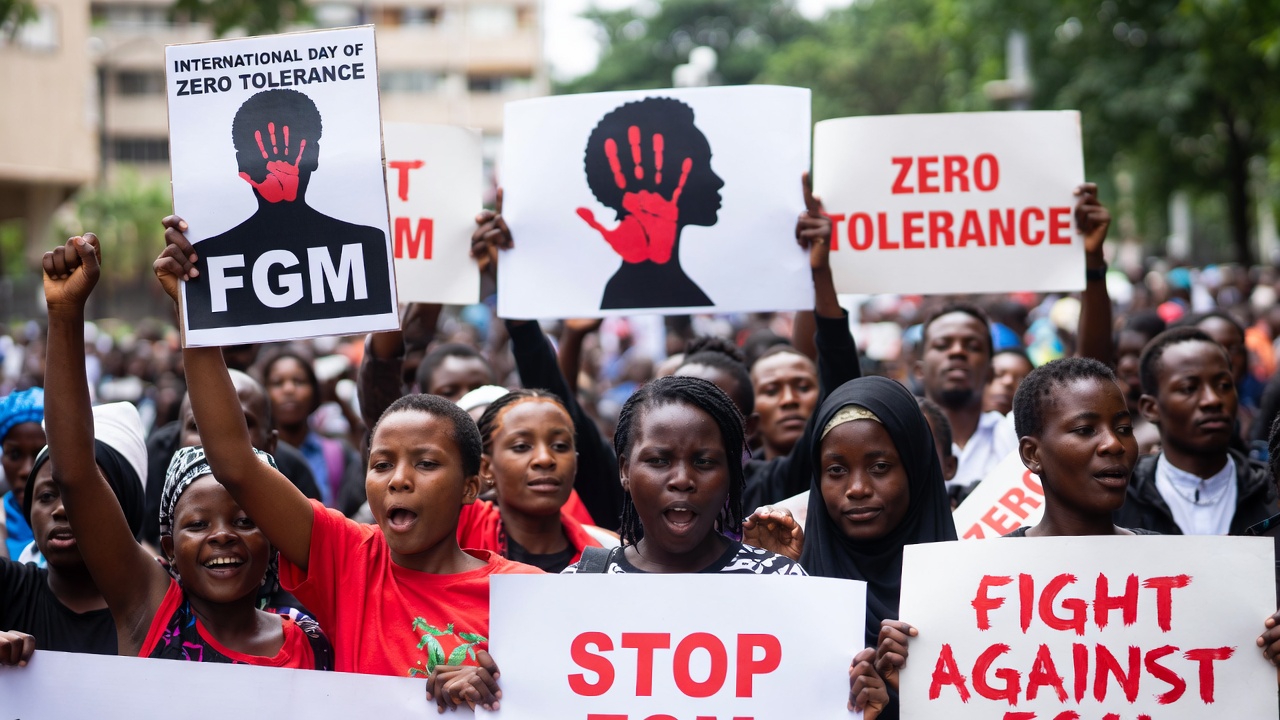
Every year on February 6, the world pauses to confront one of the most persistent human rights violations of our time. The International Day of Zero Tolerance for Female Genital Mutilation is not a celebration. It is a reckoning. It is a day when governments, communities, survivors, and advocates come together to demand an end to a practice that has scarred the lives of more than 230 million girls and women alive today.
In 2026, this day carries even greater urgency. The theme — “Towards 2030: No End to FGM Without Sustained Commitment and Investment” — is a blunt acknowledgment that time is running out. The United Nations set a target to eliminate FGM by 2030 under Sustainable Development Goal 5. With just four years remaining, the gap between ambition and reality is wide. Current efforts, while meaningful, are not moving fast enough.
This article offers a thorough, honest look at what female genital mutilation is, why it persists, how it harms, and what the world is doing — and must still do — to end it.
What Is Female Genital Mutilation and Why Does It Still Happen?
Female genital mutilation, commonly known as FGM, refers to all procedures that intentionally alter or injure the female genital organs for non-medical reasons. The World Health Organization defines FGM as comprising “all procedures that involve partial or total removal of the external female genitalia, or other injury to the female genital organs for non-medical reasons.”
The practice has no health benefits. It does not improve hygiene, fertility, or well-being. Instead, it causes lasting physical and psychological harm. Yet FGM persists in communities across Africa, the Middle East, and parts of Asia, as well as among diaspora populations in Europe, North America, and Australia.
Why does a practice with no medical basis continue in the 21st century? The answer lies in a complex web of social, cultural, and economic forces.
Social pressure is one of the most powerful drivers. In many communities where FGM is widely practiced, families face intense pressure to conform. A girl who has not undergone FGM may be seen as unmarriageable, unclean, or socially unacceptable. The fear of exclusion — for both the girl and her family — is a strong motivator.
Misconceptions about religion also play a role. FGM is sometimes framed as a religious duty, but it predates both Christianity and Islam. It is not required by any major religious text. The practice exists in some Christian, Muslim, and animist communities, while many followers of these same faiths reject it entirely.
Gender inequality is at the root of FGM. The practice is tied to beliefs about controlling female sexuality, ensuring virginity before marriage, and maintaining family honor. It reflects deeply entrenched power structures that position women and girls as objects to be managed rather than individuals with bodily autonomy.
Economic incentives also sustain FGM. Traditional practitioners, known as cutters, earn income from performing the procedure. In some communities, this role carries social prestige.
Understanding these drivers matters. It shows that ending FGM requires more than laws alone. It demands community engagement, education, and the transformation of long-held beliefs about gender and power.
How Many Girls and Women Are Affected by FGM Worldwide?
The numbers tell a devastating story.
According to UNICEF’s 2024 global report, over 230 million girls and women alive today have undergone some form of FGM. This figure represents a 15% increase compared to estimates from eight years earlier — an increase driven largely by population growth in communities where FGM is practiced.
Here is a breakdown of the global burden by region:
| Region | Estimated Survivors |
|---|---|
| Africa | Over 144 million |
| Asia | Over 80 million |
| Middle East | Over 6 million |
| Diaspora communities (Europe, North America, Australia) | 1–2 million |
Source: UNICEF Data, 2024
The practice is most common in 30 countries across West, East, and Northeast Africa, as well as parts of the Middle East and Southeast Asia. But a February 2025 report by the End FGM European Network found evidence of FGM in 94 countries, far more than previously recognized. This includes small or isolated communities and migrant populations in high-income nations.
An estimated 4 million girls are at risk of undergoing FGM in 2026 alone, according to UNFPA. Many of these girls are under the age of five. If current trends continue, 22.7 million additional girls will be affected by 2030.
The countries with the highest prevalence rates among women aged 15–49 include:
| Country | Prevalence Rate |
|---|---|
| Somalia | 99% |
| Guinea | 96% |
| Djibouti | 90% |
| Mali | 89% |
| Egypt | 87% |
| Sierra Leone | 83% |
| Sudan | 87% |
| Eritrea | 83% |
| The Gambia | 73% |
Source: UNICEF country profiles; figures based on most recent available national survey data
These numbers are not just statistics. Each one represents a girl — often a young child — whose body was altered without her consent.
What Are the Four Types of Female Genital Mutilation According to WHO?
The World Health Organization classifies FGM into four main types, based on the severity and nature of the procedure. All four types cause harm. None has any medical benefit.
Type I — Clitoridectomy
This involves the partial or total removal of the clitoris — the most sensitive part of the female genitalia. In rare cases, only the prepuce (the fold of skin around the clitoris) is removed. Type I is sometimes called “sunna” in some communities, though this term can be misleading, as the actual extent of cutting often goes beyond the clitoris.
Type II — Excision
This involves the partial or total removal of the clitoris and the labia minora (the inner folds of the vulva). It may also include removal of the labia majora (the outer folds). Type II is one of the most common forms of FGM globally.
Type III — Infibulation
This is the most severe form. It involves narrowing the vaginal opening by creating a covering seal. The seal is formed by cutting and repositioning the labia minora or labia majora, sometimes through stitching. The clitoris may or may not be removed. This type requires the sealed opening to be cut open later for sexual intercourse and childbirth — a process called deinfibulation. In some cultures, a woman may be reinfibulated after giving birth, meaning she undergoes repeated opening and closing procedures throughout her life.
Type IV — All Other Harmful Procedures
This category includes all other non-medical procedures that injure the female genitalia. Examples include pricking, piercing, incising, scraping, and cauterizing the clitoral area or vaginal tissues.
The following table summarizes the four types:
| Type | Name | Description |
|---|---|---|
| I | Clitoridectomy | Partial or total removal of the clitoris and/or prepuce |
| II | Excision | Removal of the clitoris and labia minora, with or without labia majora |
| III | Infibulation | Narrowing of the vaginal opening through a covering seal |
| IV | Other | Pricking, piercing, incising, scraping, cauterizing |
Source: WHO Regional Office for Africa
In most communities, the procedure is carried out by traditional practitioners — women who often hold respected roles, such as birth attendants. However, a growing and deeply troubling trend involves health workers performing FGM. This phenomenon, known as “medicalization,” is discussed in detail below.
What Are the Health Consequences of Female Genital Mutilation?
FGM causes harm at every stage of a woman’s life. The effects are both immediate and long-lasting. They span physical, sexual, and mental health.
A landmark April 2025 study published by WHO and HRP analyzed evidence from more than 75 studies across approximately 30 countries. The findings were stark.
Immediate Physical Risks
The procedure itself carries severe risks, especially when performed without anesthesia or sterile equipment — which is the case in the vast majority of instances. Immediate complications include:
- Severe bleeding (hemorrhage) — which can be fatal
- Intense pain and shock
- Swelling of genital tissues
- Infections, including tetanus and sepsis
- Difficulty urinating due to swelling or tissue damage
- Injury to surrounding tissue
In parts of Somalia, it has been estimated that complications from FGM — particularly infections in areas without access to antibiotics — can be fatal for a significant number of girls.
Long-Term Physical Health Problems
Women who survive the initial procedure often face lifelong medical complications:
- Chronic pain, including back and pelvic pain
- Recurrent urinary tract infections
- Menstrual difficulties, including painful periods and difficulty passing menstrual blood
- Cysts and abscesses at the site of the cutting
- Scar tissue formation (keloids)
- Chronic pelvic infections
Childbirth Complications and Risks to Newborns
The 2025 WHO study found that women who have undergone FGM face significantly elevated risks during childbirth. Specifically:
- More than double the risk of prolonged or obstructed labor
- More than double the risk of hemorrhage during delivery
- Significantly higher likelihood of emergency cesarean sections or forceps delivery
- Greater risk of complications for newborns, including the need for resuscitation
These risks increase with the severity of the cutting. Type III (infibulation) carries the most dangerous obstetric outcomes, as the sealed vaginal opening must be cut open to allow delivery.
Mental Health Impact of FGM on Survivors
The psychological toll of FGM is profound and often overlooked. The same 2025 WHO research found:
- Nearly three times greater risk of depression or anxiety among FGM survivors
- 4.4 times higher likelihood of experiencing post-traumatic stress disorder (PTSD)
- Lower self-esteem and difficulties with trust and intimacy
Many survivors carry the trauma silently. In communities where FGM is normalized, speaking about the pain or psychological effects can be taboo. This silence compounds the suffering.
The Financial Cost of FGM to Health Systems
The economic burden of FGM is enormous. The World Health Organization estimates that treating the health complications of FGM costs health systems approximately USD 1.4 billion per year. This figure is expected to rise unless the practice is abandoned.
Conversely, investing in prevention is highly cost-effective. According to WHO data shared for Zero Tolerance Day 2026, each dollar invested in ending FGM yields a tenfold return. An estimated USD 2.8 billion in prevention spending could avert 20 million cases and generate USD 28 billion in returns.
Why Is the Medicalization of FGM a Growing Concern in 2026?
One of the most alarming trends in recent years is the medicalization of FGM — the performance of the procedure by trained health workers rather than traditional practitioners.
Some families believe that having a doctor or nurse perform FGM makes it safer. This belief is wrong.
In April 2025, the WHO released a new guideline titled The Prevention of Female Genital Mutilation and Clinical Management of Complications. The guideline was the organization’s strongest response yet to the rise of medicalized FGM.
Key findings and recommendations include:
- As of 2020, an estimated 52 million girls and women were subjected to FGM by health workers — roughly 1 in 4 cases globally.
- In some countries, the rate of medicalization is even higher. A 2024 UNICEF report found that 66% of girls who recently underwent FGM in certain settings did so at the hands of a health worker.
- Evidence suggests that FGM performed by health workers can actually be more dangerous, resulting in deeper and more severe cuts.
- Medicalization unintentionally legitimizes FGM, making it harder to convince communities to abandon the practice.
WHO’s 2025 guideline recommends:
- Professional codes of conduct that explicitly prohibit health workers from performing FGM
- Training health workers to become advocates for abandonment rather than practitioners of FGM
- Community education programs that involve men and boys alongside women and girls
- Strong legal frameworks that criminalize FGM regardless of who performs it
Dr. Pascale Allotey, Director of Sexual and Reproductive Health and Research at WHO, stated that health workers “must be agents for change rather than perpetrators of this harmful practice.”
The medicalization of FGM is a challenge that demands both legal and cultural responses. Laws must be clear that the involvement of a medical professional does not make FGM acceptable. At the same time, health workers in affected communities need support, training, and ethical guidance to resist pressure from families and community leaders.
What Countries Have Laws Against FGM and How Effective Are They?
Legal prohibitions against FGM have expanded steadily over the past three decades. But passing a law is only the first step. Enforcement remains weak in many countries.
As of 2025, out of the 94 countries where FGM has been documented, only 58 (about 61%) have laws that explicitly prohibit the practice, according to the End FGM European Network. This means that millions of girls live in countries where there is no legal protection against FGM.
Among countries with legislation, the picture is mixed:
Countries with dedicated FGM laws include: Burkina Faso, Egypt, Ghana, Guinea, Kenya, Nigeria, Senegal, Somalia, Tanzania, Togo, Uganda, The Gambia, and many others across Africa. In Europe, the United Kingdom, France, and several other nations have enacted specific legislation. In the United States, a federal ban was in place until it was struck down in 2018, though many individual states have their own laws.
The Gambia: A Critical Legal Battleground in 2024–2026
One of the most closely watched legal battles in recent years took place in The Gambia, where approximately 73% of women and girls aged 15–49 have undergone FGM.
In 2015, The Gambia enacted the Women’s (Amendment) Act, which banned FGM. But in March 2024, a lawmaker introduced a bill in parliament to reverse the ban, arguing that it violated religious and cultural freedom. The bill passed its second reading with only five lawmakers voting against it — raising alarm among human rights organizations worldwide.
After months of intense advocacy by survivors, civil society groups, and international organizations, The Gambia’s National Assembly voted in July 2024 to uphold the ban, rejecting the repeal bill. The United Nations hailed the decision as a “critical win for girls’ and women’s rights.”
But the fight is not over. According to Human Rights Watch (February 2026), religious leaders and a member of parliament have taken the challenge to The Gambia’s Supreme Court, arguing that the ban violates constitutional rights to religious and cultural freedom. The court’s ruling could set a precedent not only for The Gambia but for the entire global movement against FGM.
This case illustrates a difficult truth: legislative victories are fragile. They can be reversed, challenged, or undermined by political and religious actors. Sustained community engagement is essential to ensure that laws are not merely symbolic but reflect genuine shifts in social norms.
What Is the International Day of Zero Tolerance for Female Genital Mutilation?
The International Day of Zero Tolerance for Female Genital Mutilation is observed every year on February 6. It is a United Nations-sponsored awareness day that calls on governments, organizations, and individuals to take action against FGM.
How Did Zero Tolerance Day for FGM Begin?
The day traces its origins to February 6, 2003, when Stella Obasanjo, then the First Lady of Nigeria and spokesperson for the Campaign Against Female Genital Mutilation, made a formal declaration of “Zero Tolerance to FGM” at a conference in Africa. The event was organized by the Inter-African Committee on Traditional Practices Affecting the Health of Women and Children.
The United Nations Sub-Commission on Human Rights subsequently adopted this day as an international awareness day. In 2012, the UN General Assembly passed Resolution 67/146, which intensified global efforts to eliminate FGM. The resolution described FGM as “an irreparable, irreversible abuse that impacts negatively on the human rights of women and girls.”
What Is the 2026 Theme for Zero Tolerance Day?
The 2026 theme is: “Towards 2030: No End to FGM Without Sustained Commitment and Investment.”
This theme reflects a growing concern that progress is at risk. Funding cuts, political pushback, and the increasing medicalization of FGM threaten to slow or reverse the gains of the past three decades.
The UNFPA-UNICEF Joint Programme on the Elimination of FGM — the largest global initiative dedicated to ending the practice — is calling on governments, donors, and civil society to:
- Increase and sustain financial investment in prevention programs
- Strengthen community-based approaches to changing social norms
- Support grassroots and youth-led organizations that are driving change from within
- Center the voices of survivors in all advocacy and policy efforts
The campaign hashtags for 2026 are #Invest2EndFGM and #EndFGM.
How Has the Global Movement to End FGM Progressed Over the Past 30 Years?
Progress toward ending FGM has been real but uneven. And it is not happening fast enough.
According to UNICEF, a girl today is one-third less likely to undergo FGM than she was 30 years ago. Half of the progress achieved over the past three decades was made in the last decade alone — a sign that awareness campaigns, legal reforms, and community programs are making a difference.
Some countries have seen dramatic reductions in prevalence among younger age groups. The WHO reported in April 2025 that:
- Burkina Faso has seen a roughly 50% reduction in FGM prevalence among 15–19-year-olds over 30 years
- Sierra Leone has seen approximately a 35% reduction in the same age group
- Ethiopia has seen about a 30% reduction
These success stories share common features: strong political commitment, sustained community engagement, and partnerships with local leaders — including religious leaders who clarify that FGM is not a religious requirement.
But this progress is fragile and uneven. Several forces are working against the movement:
Population growth in FGM-practicing communities means that even as prevalence rates decline, the absolute number of girls at risk may still increase. The global figure of 230 million survivors reflects this reality.
Funding cuts threaten to weaken community programs that are the backbone of prevention. Local organizations, especially those led by women and youth, face growing financial uncertainty. Without stable funding, programs that have taken years to build may collapse.
Political pushback is growing in several countries. The Gambia case is the most visible example, but resistance to anti-FGM laws exists in many contexts. Some political and religious actors frame efforts to end FGM as Western cultural imperialism — a narrative that can be effective in communities where trust in international institutions is low.
Conflict and instability disrupt services and protection systems. In areas affected by war or humanitarian crises, girls are especially vulnerable. When schools close, health services break down, and families are displaced, the risk of FGM can increase.
The COVID-19 pandemic set back progress significantly. Prevention programs were paused, schools were closed, and millions of girls lost access to the protective networks that kept them safe. While recovery has been underway, the pandemic’s impact is still being felt.
To meet the 2030 target, progress would need to be 27 times faster than the rate seen in the last decade. That is a staggering gap. It underscores the 2026 theme’s message: without sustained commitment and investment, the goal of ending FGM by 2030 will not be met.
What Is the UNFPA-UNICEF Joint Programme on the Elimination of FGM?
Since 2008, UNFPA and UNICEF have led the Joint Programme on the Elimination of Female Genital Mutilation — the longest-running and largest global initiative focused on ending FGM.
The program works across 17 countries in Africa and the Middle East, where FGM rates are highest. It focuses on:
- Community engagement — working with families, traditional leaders, and religious figures to shift social norms
- Health worker training — equipping medical professionals to counsel against FGM and provide care for survivors
- Legal reform and enforcement — supporting countries in creating and implementing laws against FGM
- Youth empowerment — engaging young people as agents of change in their communities
- Data collection — improving the evidence base to guide interventions
The program has contributed to the abandonment of FGM in thousands of communities. It has supported legal reforms in multiple countries and trained tens of thousands of health workers.
For 2026, the Joint Programme is emphasizing the economic case for ending FGM. Every dollar invested in prevention generates an estimated tenfold return. An investment of USD 2.8 billion could prevent 20 million cases and save USD 28 billion in health care costs and lost productivity.
How Can Communities End FGM Through Education and Engagement?
Top-down approaches — laws, international resolutions, and policy statements — are necessary but not sufficient. The most effective strategies for ending FGM are those that work from within communities.
Community Dialogue and Collective Abandonment
One of the most successful models involves community dialogue. This approach brings together families, elders, religious leaders, and young people to discuss FGM openly. Through guided conversations, participants explore the health consequences of FGM, examine its cultural origins, and consider alternative ways to honor tradition without causing harm.
In many cases, these dialogues lead to collective declarations of abandonment — public pledges by entire communities to stop practicing FGM. This collective approach is important because it removes the social pressure on individual families. When an entire community agrees to abandon the practice together, no single girl or family bears the stigma of going against the norm.
The Role of Men and Boys in Ending Female Genital Mutilation
Historically, campaigns against FGM focused primarily on women and girls. But research shows that involving men and boys is essential to achieving lasting change.
In many FGM-practicing communities, men hold significant decision-making power. Fathers, uncles, and community leaders often influence whether a girl is cut. The 2025 WHO guideline specifically recommends community awareness activities that engage men and boys, noting that this approach is effective in promoting girls’ rights and supporting shifts in attitudes.
Men who speak out against FGM can challenge the belief that the practice is about protecting men’s honor or ensuring a “proper” wife. Their voices can help dismantle the gender norms that sustain FGM.
Education as a Long-Term Strategy to Prevent FGM
Education — both formal schooling and community-based health education — is one of the strongest long-term protections against FGM.
Studies consistently show that girls who stay in school longer are less likely to undergo FGM. Education empowers girls to advocate for their own rights, exposes them to alternative perspectives, and gives them economic options that reduce their dependence on marriage.
Health education programs that reach parents — particularly mothers — with accurate information about the risks of FGM can also change minds. When families understand the true consequences of the practice, many choose to protect their daughters.
How Do Survivor Voices Shape the Global Movement to End FGM?
Survivors of FGM are at the heart of the movement to end the practice. Their experiences give weight to statistics. Their courage inspires action.
Many survivors have become powerful advocates, using their stories to educate communities, influence policy, and support other women and girls. Organizations like GAMCOTRAP in The Gambia, led by Dr. Isatou Touray, have been central to legal and social change.
The 2026 campaign lifts up hashtags like #HerVoiceMatters, reinforcing the message that survivors must be included in every aspect of the response — from program design to policy discussions.
Survivor-centered care is also a priority. The 2025 WHO guideline includes recommendations for:
- Mental health services, including treatment for depression, anxiety, and PTSD
- Obstetric care that addresses the specific risks faced by women with FGM
- Surgical options, including deinfibulation for women with Type III FGM
- Sexual health support, including counseling and, where appropriate, reconstructive procedures
- Counseling and informed consent before any medical intervention
These services are often unavailable in the regions where FGM is most prevalent. Expanding access to quality care for survivors is a critical and underfunded priority.
What Does FGM Mean for Diaspora Communities in Europe and North America?
FGM is not confined to the countries where it originated. As families migrate, the practice can travel with them.
In Europe, an estimated 500,000 women and girls are living with the effects of FGM, with additional numbers at risk. In the United States, estimates suggest approximately 513,000 women and girls have been affected or are at risk.
Diaspora communities face unique challenges. Many families are caught between the cultural expectations of their communities of origin and the legal and social norms of their adopted countries. Girls may be taken back to their families’ home countries during school holidays to undergo FGM — a practice known as “vacation cutting.”
Countries in Europe and North America have responded with a combination of legal protections and community outreach:
- The United Kingdom has enacted specific FGM legislation and established mandatory reporting requirements for health professionals
- France has prosecuted FGM cases and requires medical examinations for girls from at-risk communities
- Several European countries have developed national action plans that combine prevention, protection, and prosecution
- Community-based organizations in diaspora settings play a vital role in reaching families with culturally sensitive information
For diaspora communities, the key is engaging without stigmatizing. Approaches that treat all members of a particular ethnic or national group as suspects are counterproductive. Instead, outreach should be led by trusted community members and rooted in respect for the families involved.
What Can You Do to Support Efforts to End Female Genital Mutilation in 2026?
Ending FGM is not someone else’s problem. It is a global human rights issue that demands global solidarity.
Here are concrete steps you can take:
1. Educate yourself and others. Understanding what FGM is, why it happens, and how it harms is the first step. Share accurate information with your networks. Challenge myths and misconceptions when you encounter them.
2. Support organizations working on the ground. Groups like the UNFPA-UNICEF Joint Programme, Equality Now, End FGM European Network, and countless local organizations in Africa, Asia, and the Middle East are doing essential work. Financial support — even small donations — can make a difference.
3. Amplify survivor voices. Follow and share the stories of FGM survivors and advocates. Use the hashtags #EndFGM and #Invest2EndFGM to raise awareness on social media.
4. Advocate for policy change. If you live in a country without specific FGM legislation, push your representatives to act. If your country has laws in place, advocate for their enforcement and for funding to support prevention programs.
5. Engage men and boys. Encourage conversations about FGM in all spaces — not just women’s groups. Men have a role to play in challenging the gender norms that sustain the practice.
6. Support education for girls. Investing in girls’ education is one of the most effective ways to reduce FGM over the long term. Support scholarships, school-building initiatives, and programs that keep girls in school.
Frequently Asked Questions About Female Genital Mutilation and Zero Tolerance Day
Is FGM the same as female circumcision?
The terms are sometimes used interchangeably, but many advocates prefer the term “female genital mutilation” because it reflects the severity and harm of the practice. “Female circumcision” can imply a parallel with male circumcision, which is misleading — the health consequences of FGM are far more severe and the procedures are fundamentally different.
At what age is FGM typically performed?
FGM is most commonly performed on girls between infancy and age 15. In some communities, it is carried out on babies as young as a few days old. In others, it is performed as a rite of passage around puberty. A concerning trend is the lowering of the age at which FGM is performed, with more procedures being done on very young children, making detection and prevention more difficult.
Is FGM illegal?
FGM is banned in many countries, but not all. As of 2025, 58 out of 94 countries where FGM has been documented have specific laws against it. However, enforcement varies widely. In some countries, laws exist on paper but are rarely applied.
Can FGM be reversed?
Some of the physical effects of FGM can be partially addressed through surgery. Deinfibulation — the surgical opening of the seal created by Type III FGM — is an established procedure. Clitoral reconstruction surgery is available in some settings, though it is not universally accessible and its outcomes vary. The psychological effects of FGM require ongoing support through counseling and mental health services.
Why is the 2030 target to end FGM unlikely to be met?
Despite real progress, the current rate of decline in FGM is far too slow. To reach the 2030 target, progress would need to accelerate by 27 times compared to the pace of the last decade. Population growth in practicing communities, funding shortfalls, political pushback, and the effects of conflict and crisis are all contributing to the shortfall.
Looking Ahead: The Road From Zero Tolerance Day 2026 to SDG 2030
The International Day of Zero Tolerance for Female Genital Mutilation 2026 is not a day of despair. It is a day of clear-eyed determination.
Progress is real. Millions of girls have been spared because of the work of brave survivors, tireless advocates, engaged communities, and committed governments. Countries like Burkina Faso, Ethiopia, and Sierra Leone show that change is possible when the right ingredients come together.
But the window is closing. Four years remain before the 2030 deadline set by the Sustainable Development Goals. The 2026 theme — “Towards 2030: No End to FGM Without Sustained Commitment and Investment” — is both a warning and a call to action.
The path forward requires:
- Sustained and increased funding for prevention and care programs
- Community-led approaches that respect local cultures while firmly rejecting harmful practices
- Legal protections that are not only enacted but enforced
- Health system strengthening to train workers, support survivors, and stop medicalization
- The inclusion of survivors and young people in every level of decision-making
- Political courage to resist efforts to reverse hard-won gains
FGM is not an inevitable part of any culture. Cultures evolve. Traditions that cause harm can be replaced with new traditions that honor girls and women without harming them. This has already happened in thousands of communities across the world.
On February 6, 2026, the message is simple: Invest in ending FGM. Protect every girl. Leave no one behind.