Every year on February 5, millions of people across Pakistan, Azad Jammu and Kashmir (AJK), and dozens of countries around the world pause to mark Kashmir Solidarity Day — known in Urdu as Youm-e-Yakjehti-e-Kashmir (یوم یکجہتی کشمیر). It is a national public holiday in Pakistan, a day of political rallies, candlelight vigils, human chains, and a solemn one-minute silence observed at 10:00 a.m. sharp.
But what exactly does this day stand for? Why does it matter in 2026? And how did a single call for a strike in 1990 grow into one of South Asia’s most significant annual political observances?
This guide covers everything you need to know — the history, the politics, the traditions, the controversy, and the human stories behind Kashmir Solidarity Day 2026.
Why Is February 5 Observed as Kashmir Solidarity Day Every Year?
Kashmir Solidarity Day exists to express support for the people of Indian-administered Jammu and Kashmir and their demand for the right to self-determination. Pakistan considers the Jammu and Kashmir dispute one of the oldest unresolved conflicts on the United Nations Security Council’s agenda, and February 5 serves as the annual focal point for that position.
The day carries a simple message: the people of Kashmir are not alone. Whether through political speeches in Islamabad, prayer gatherings in Muzaffarabad, or diaspora marches in London, the observance aims to keep global attention fixed on the Kashmir question.
For Pakistan’s government, Kashmir Solidarity Day is also a statement of foreign policy. It reaffirms the country’s long-standing call for a UN-supervised plebiscite — a vote that was promised in multiple Security Council resolutions dating back to 1948 but has never been held.
India, for its part, maintains that Jammu and Kashmir is an integral part of the Indian Union. New Delhi views the dispute as a bilateral matter and opposes internationalization of the issue. This fundamental disagreement between the two nuclear-armed neighbors is what makes Kashmir one of the most sensitive geopolitical flashpoints in the world.
The History and Origin of Kashmir Solidarity Day in Pakistan
The story of Kashmir Solidarity Day begins not in the halls of parliament but in the streets of political activism.
The 1990 Proposal by Qazi Hussain Ahmad
The idea for a dedicated day of solidarity with Kashmir was first proposed in 1990 by Qazi Hussain Ahmad, the leader of Jamaat-e-Islami, one of Pakistan’s most influential religious-political parties. The late 1980s and early 1990s were a volatile period in the Kashmir Valley. An armed insurgency had erupted in 1989 against Indian rule, fueled by years of political disenfranchisement and allegations of rigged elections — particularly the controversial 1987 state elections in Indian-administered Kashmir.
Against that backdrop, Qazi Hussain Ahmad called for a nationwide strike and day of observance on February 5 to show solidarity with Kashmiris. The proposal received support from Nawaz Sharif, who was then Chief Minister of Punjab, and later from Prime Minister Benazir Bhutto.
From Strike to National Holiday
In 1991, then-Prime Minister Nawaz Sharif called for a “Kashmir Solidarity Day Strike,” though this was largely organized as a Jamaat-e-Islami affair. The Pakistan People’s Party subsequently formalized February 5 as a public holiday.
The day gained its current institutional shape in 2004, when the Federal Minister for Kashmir Affairs and Northern Areas officially announced that the government and people of Pakistan would observe February 5 as a day of solidarity with the aspirations of the Kashmiri people. Since then, every successive Pakistani government — whether civilian or military-backed — has maintained the tradition without exception.
Key Milestones in Kashmir Day’s Evolution
| Year | Development |
|---|---|
| 1990 | Qazi Hussain Ahmad of Jamaat-e-Islami first proposes the observance |
| 1991 | PM Nawaz Sharif calls for a Kashmir Solidarity Day strike |
| Early 1990s | Pakistan People’s Party declares February 5 a public holiday |
| 2004 | Federal Minister for Kashmir Affairs formalizes the day as an official national event |
| 2021 | New York State Assembly passes a resolution recognizing “Kashmir American Day” |
| 2026 | Pakistan’s Cabinet Division declares February 5 a public holiday; Sindh, Punjab announce extended weekends |
Understanding the Kashmir Conflict: A Brief Historical Background
To understand why Kashmir Solidarity Day exists, you need to understand the dispute itself. It is, by most accounts, the longest unresolved territorial conflict on the United Nations agenda.
The 1947 Partition and the First Kashmir War
When British India was partitioned in August 1947 into the independent nations of India and Pakistan, the subcontinent’s roughly 565 princely states were given the choice of joining either country or remaining independent. The princely state of Jammu and Kashmir was one of the largest. It had a Muslim-majority population but was ruled by Maharaja Hari Singh, a Hindu Dogra king.
Maharaja Hari Singh initially sought to remain independent. However, in October 1947, tribal fighters from Pakistan’s northwest entered the state. Facing this incursion, the Maharaja signed the Instrument of Accession with India on October 26, 1947, leading to the arrival of Indian troops in Srinagar the following day. Pakistan disputes the legality and even the existence of this document.
The ensuing First Kashmir War (1947–1949) resulted in a ceasefire brokered by the United Nations. The territory was divided along a ceasefire line — later renamed the Line of Control (LoC) after the 1972 Simla Agreement. India retained the larger portion, including the Kashmir Valley, Jammu, and Ladakh. Pakistan held what it calls Azad (Free) Jammu and Kashmir and Gilgit-Baltistan. China later came to control the Aksai Chin plateau in the northeast.
Current Territorial Division of Kashmir
| Administered By | Territory | Approximate Area |
|---|---|---|
| India | Jammu and Kashmir (Union Territory), Ladakh (Union Territory) | ~55% of the region |
| Pakistan | Azad Jammu and Kashmir, Gilgit-Baltistan | ~30% of the region |
| China | Aksai Chin, Trans-Karakoram Tract | ~15% of the region |
Three Wars and an Unresolved Dispute
India and Pakistan have fought three wars over Kashmir — in 1947, 1965, and 1999 (the Kargil conflict). They also fought a broader war in 1971 that resulted in the creation of Bangladesh. Both countries acquired nuclear weapons in 1998, raising the stakes of any future military confrontation dramatically.
Despite decades of diplomacy, back-channel talks, and confidence-building measures, no permanent resolution has been reached. The 2003 ceasefire understanding along the LoC, reaffirmed in February 2021, reduced cross-border shelling and saved civilian lives on both sides. But the political question — who does Kashmir belong to? — remains as contentious as ever.
What Do the United Nations Resolutions Say About Kashmir?
The UN’s involvement in Kashmir dates to January 1, 1948, when India itself referred the dispute to the Security Council. Since then, the Security Council has passed over a dozen resolutions on the matter.
UNSC Resolution 47 (1948): The Plebiscite Promise
The most frequently cited resolution is UNSC Resolution 47, adopted on April 21, 1948. It laid out a three-step process for resolving the conflict:
- Pakistan was asked to withdraw its nationals who had entered Kashmir for fighting.
- India was asked to progressively reduce its military forces to the minimum needed for law and order.
- A free and impartial plebiscite would then be held under UN auspices to let the people of Jammu and Kashmir decide their future.
The UNCIP Resolutions of August 13, 1948, and January 5, 1949 reinforced this framework. Both India and Pakistan accepted the mediation. A ceasefire took effect on January 1, 1949. But the demilitarization required before the plebiscite could proceed was never completed. India and Pakistan disagreed on the terms, and the promised vote was never held.
Why the Plebiscite Never Happened
The failure of the plebiscite remains one of the most debated questions in South Asian history. Pakistan argues that India has consistently avoided the vote because it fears the result. India counters that the conditions for the plebiscite — particularly Pakistan’s withdrawal from its portion of Kashmir — were never met.
Over the decades, India’s position shifted. By the mid-1950s, Indian leaders began arguing that Jammu and Kashmir’s accession was final. The resolution was passed under Chapter VI of the UN Charter, which deals with the peaceful settlement of disputes. This means the resolutions are recommendations, not binding directives — a legal distinction that India has used to argue against their enforcement.
Pakistan, along with multiple international observers and Kashmiri groups, maintains that the resolutions remain valid and morally binding. The United Nations Military Observer Group in India and Pakistan (UNMOGIP) still operates along the LoC — a living reminder that the UN considers this a dispute that awaits resolution.
How Did the Revocation of Article 370 in 2019 Change the Kashmir Situation?
If any single event has reshaped the modern Kashmir landscape, it is the Indian government’s decision on August 5, 2019, to revoke Article 370 of the Indian Constitution.
What Was Article 370?
Article 370 was added to India’s Constitution in 1949. It granted the state of Jammu and Kashmir a special autonomous status. Under this provision, the state had its own constitution, its own flag, and autonomy over all matters except defense, foreign affairs, and communications. A related provision, Article 35A, restricted non-residents from purchasing property or holding government jobs in the state, protecting the demographic character of the Muslim-majority region.
The Revocation and Its Aftermath
On August 5, 2019, the government of Prime Minister Narendra Modi and the ruling Bharatiya Janata Party (BJP) revoked Article 370 through a presidential order. The Indian Parliament also passed the Jammu and Kashmir Reorganisation Act, 2019, which split the former state into two Union Territories — Jammu and Kashmir (with a legislature) and Ladakh (without one).
The move was accompanied by:
- A communications blackout — internet, phone, and landline services were cut for months
- The deployment of tens of thousands of additional security forces
- The detention of prominent Kashmiri political leaders, including former Chief Ministers Omar Abdullah and Mehbooba Mufti
- Severe restrictions on movement and assembly
In December 2023, India’s Supreme Court unanimously upheld the constitutionality of the revocation, ruling that Article 370 had been a “temporary provision.” The court also directed the government to hold elections in the region, which eventually took place in late 2024.
Why This Matters for Kashmir Solidarity Day
The revocation of Article 370 injected new urgency into Kashmir Solidarity Day observances. Pakistan condemned the move as illegal under international law and a violation of UNSC resolutions. For supporters of the Kashmiri cause, August 5, 2019, became a second pivotal date alongside October 27, 1947 — the date of India’s initial military entry into the state.
Critics of the revocation fear that changes to domicile laws and property ownership rules will lead to demographic changes in the Muslim-majority region. Supporters in India argue that the move will bring economic development, better governance, and full integration of the region into the Indian constitutional framework.
Kashmir Solidarity Day 2026: What Is Happening This Year?
The Pakistani government has declared February 5, 2026, a nationwide public holiday. Here is what has been announced for this year’s observance.
Official Government Announcements
According to a notification issued by Pakistan’s Cabinet Division on February 2, 2026:
- All public and private offices across Pakistan will remain closed on February 5
- A one-minute silence will be observed at 10:00 a.m. to honor Kashmiri martyrs
- The Pakistan Stock Exchange will remain closed for the holiday
- Seminars, rallies, and prayer gatherings will be held in cities and towns across the country
Provincial Holidays and a Long Weekend
Several provinces have added holidays around February 5, creating extended breaks:
- Sindh declared a holiday for educational institutions on February 4 for Shab-e-Barat (15th of Shaban), meaning two consecutive days off
- Punjab announced holidays on February 6 and 7 for Basant celebrations, with Chief Minister Maryam Nawaz noting on social media platform X that the province would enjoy a long weekend starting with Kashmir Day
Events and Activities Planned
| Activity | Location | Details |
|---|---|---|
| National one-minute silence | Nationwide | 10:00 a.m., all offices and institutions |
| Political rallies and marches | Major cities (Islamabad, Lahore, Karachi, Peshawar) | Organized by political and religious parties |
| Human chains | Major routes to AJK, especially Kohala | Symbolic display of unity with Kashmir |
| Seminars and conferences | Universities, government buildings | Speeches by politicians, academics, opinion leaders |
| Special media programming | National TV and radio | Documentaries, talk shows, Kashmiri music and cultural features |
| Mosque prayers | Nationwide | Special prayers for Kashmiri people and regional peace |
| Diaspora events | London, Toronto, Dubai, New York, and other cities | Rallies, cultural nights, awareness campaigns |
How Is Kashmir Solidarity Day Observed Across Pakistan and AJK?
The observance of Kashmir Day follows a distinct pattern that has become deeply woven into Pakistan’s national calendar. It is not merely a government event. It involves political parties, religious organizations, civil society, educational institutions, the media, and ordinary families.
Rallies, Marches, and Political Speeches
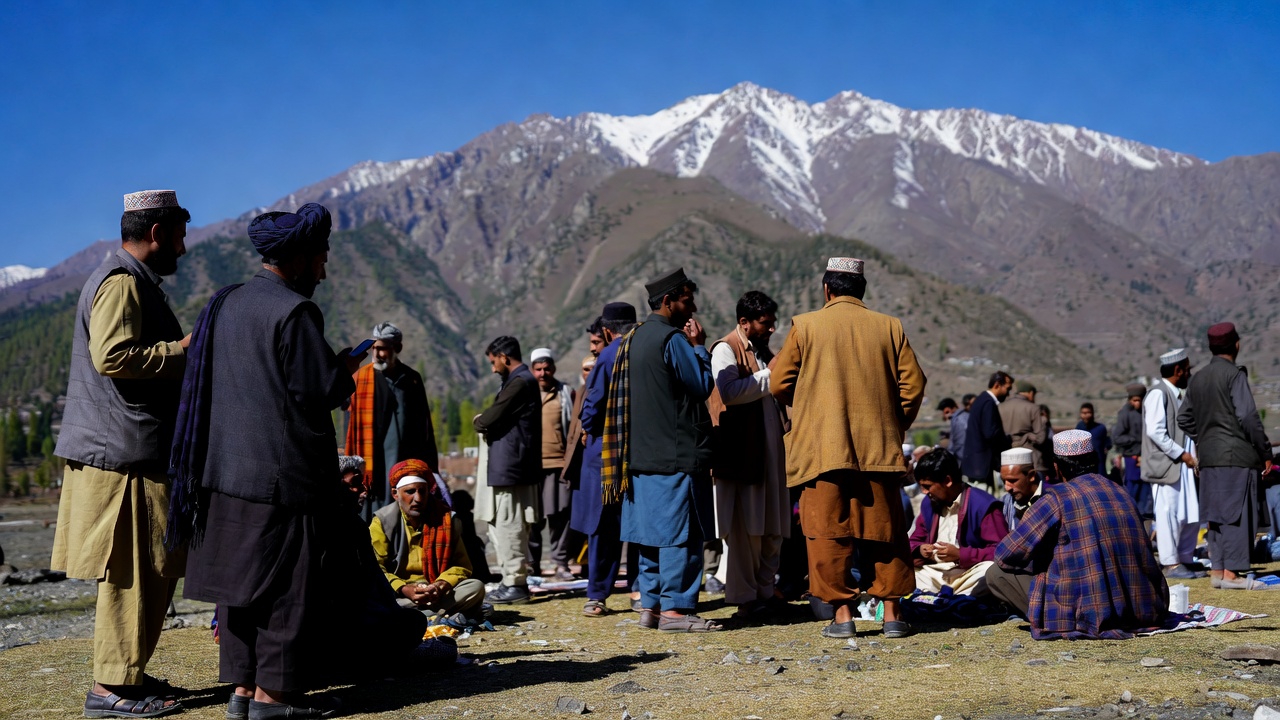
Every major political and religious party in Pakistan organizes events on February 5. Leaders address public gatherings, calling for a peaceful resolution to the Kashmir dispute and reaffirming support for Kashmiris. These speeches typically reference UN resolutions, human rights reports, and the events of August 5, 2019. The rallies are colorful affairs, with participants carrying Pakistani and AJK flags, placards with slogans, and banners featuring imagery of Kashmir’s snow-capped mountains and valleys.
The Iconic Human Chain
One of the most visually striking traditions of Kashmir Day is the formation of a human chain on all major routes connecting Pakistan to Azad Jammu and Kashmir. People stand in long rows, clasping hands, stretching for kilometers along highways and bridges — particularly at Kohala, the main crossing point between Punjab and AJK. The human chain is a symbol of unity. It sends the message that the people of Pakistan stand physically and figuratively with Kashmiris across the LoC.
The One-Minute Silence at 10 a.m.
At exactly 10:00 a.m. on February 5, the entire country observes a one-minute silence. Traffic stops. People stand still. Radio and television channels broadcast special transmissions. The silence honors those who have lost their lives in the conflict — a moment of solemn remembrance in an otherwise politically charged day.
Educational and Cultural Programs
Schools and universities hold debate competitions, essay contests, and dialogue forums where students discuss the Kashmir issue. Cultural programs featuring Kashmiri poetry, music, and art are organized to celebrate the region’s heritage. Documentaries about the history of the conflict and the daily lives of Kashmiris are screened on television channels and at public events.
Prayer Gatherings
Mosques across Pakistan hold special prayers on February 5 — prayers for the well-being of Kashmiris, for peace in the region, and for the souls of those killed in the decades-long conflict. These gatherings are particularly important in Azad Jammu and Kashmir, where the personal connections to the conflict are immediate and deeply felt.
Kashmir Day Observances Around the World: Diaspora and Global Solidarity
Kashmir Solidarity Day is not limited to Pakistan’s borders. It has become a global observance, driven by the Kashmiri and Pakistani diaspora and supported by Pakistani embassies and consulates worldwide.
Diaspora Events in Major Cities
Communities in London, Toronto, Dubai, New York, Sydney, Berlin, and dozens of other cities organize events on or around February 5. These range from peaceful marches and candlelight vigils to cultural evenings with Kashmiri food, poetry recitals, and panel discussions. Pakistani embassies host seminars where diplomats, community leaders, and Kashmiri activists speak about the region’s history and current situation.
The New York State Assembly Resolution
In a notable development in 2021, the New York State Assembly passed a resolution calling on the Governor of New York to recognize February 5 as “Kashmir American Day.” The resolution aimed to acknowledge the contributions of New York’s Kashmiri community and to advocate for human rights and religious freedom. This was seen as a significant step in bringing the Kashmir cause into the American political mainstream.
The Role of Social Media in Globalizing Kashmir Day
Social media has transformed Kashmir Solidarity Day from a largely regional observance into a global trending topic. Every February 5, hashtags such as #KashmirSolidarityDay, #StandWithKashmir, and #KashmirDay trend on platforms like X (formerly Twitter), Instagram, and Facebook. Kashmiri poets, artists, and activists share original content — poems, artwork, personal stories — that reaches audiences far beyond South Asia.
For the diaspora, social media provides a way to participate even when they cannot attend physical events. A Kashmiri student in Berlin can share a verse. A Pakistani doctor in Toronto can post a short video about why the day matters. A community organizer in Dubai can livestream a rally. The digital dimension has made Kashmir Day more accessible and more visible than ever before.
India’s Position on the Kashmir Dispute and Kashmir Solidarity Day
Any honest discussion of Kashmir Solidarity Day must include India’s perspective, even though the day itself is a Pakistani observance that India views critically.
India’s Core Argument
India’s position is that the accession of Jammu and Kashmir is legal and final. The Instrument of Accession, signed by Maharaja Hari Singh in October 1947, brought the state into the Indian Union. India argues that this accession was as valid as the accession of any other princely state and that subsequent elections and democratic participation by Kashmiris have confirmed the territory’s status as an integral part of India.
India views the Kashmir issue as a bilateral matter between India and Pakistan, to be resolved through direct dialogue — not through international mediation or United Nations involvement. New Delhi has long rejected calls for a plebiscite, arguing that conditions have changed fundamentally since 1948 and that Pakistan’s failure to withdraw from its portion of Kashmir invalidated the plebiscite framework.
India’s View of the 2019 Changes
The BJP government characterized the revocation of Article 370 as a step toward ending decades of corruption, political dysfunction, and separatism in Jammu and Kashmir. Supporters argued that special status had isolated the region from India’s economic growth and prevented national laws on education, labor rights, and property ownership from applying there.
After the December 2023 Supreme Court ruling upheld the revocation, Prime Minister Modi described the verdict as a step toward a stronger, more united India. Assembly elections were subsequently held in the region in late 2024, restoring a degree of elected governance.
India’s Response to Pakistan’s Kashmir Day
India has historically dismissed Pakistan’s observance of Kashmir Day as politically motivated interference in India’s internal affairs. Indian officials have called on Pakistan to address what they describe as human rights issues in Pakistan-administered Kashmir and Gilgit-Baltistan rather than focusing on Indian-administered territory.
This deep disagreement between the two nations means that Kashmir Solidarity Day is, by its nature, a one-sided observance. It reflects Pakistan’s narrative of the conflict. India tells a fundamentally different story. The people of Kashmir themselves hold a range of views — some aligned with Pakistan, some with India, and some favoring independence from both.
The Human Rights Dimension: Why International Organizations Monitor Kashmir
Kashmir is not just a territorial dispute between two nations. It is also a human rights issue that has drawn attention from the United Nations Office of the High Commissioner for Human Rights (OHCHR), Human Rights Watch, Amnesty International, and numerous other organizations.
UN Human Rights Reports
The OHCHR released significant reports on Kashmir in 2018 and 2019 — the first-ever UN human rights reports on the region. These reports documented allegations of excessive use of force by Indian security forces, including the use of pellet guns against civilians, extrajudicial killings, and restrictions on freedom of expression and assembly. The reports also noted concerns about human rights conditions in Pakistan-administered Kashmir, including restrictions on political expression and the rights of activists.
Concerns Raised Since 2019
The revocation of Article 370 and the accompanying security crackdown prompted widespread international concern. The extended communications blackout, mass detentions, and restrictions on press freedom were criticized by human rights organizations, foreign governments, and members of the European Parliament.
Pakistan’s government estimates that over 900,000 Indian security personnel are deployed in Indian-administered Jammu and Kashmir, making it one of the most heavily militarized regions in the world. India maintains that this presence is necessary to combat terrorism and maintain order.
The Broader Principle at Stake
For many observers, the Kashmir situation raises fundamental questions about the right to self-determination — a principle enshrined in the UN Charter and in international law. Whether one supports India’s position, Pakistan’s position, or Kashmiri independence, the human dimension of the conflict is undeniable. Families divided by the LoC, communities living under heavy military presence, and young people growing up amid political uncertainty — these are the realities that Kashmir Solidarity Day seeks to highlight.
Kashmir’s Geography and Cultural Heritage: Why the Region Captures Hearts
Beyond the politics, Kashmir is a place of extraordinary beauty and cultural richness. Understanding the region’s geography and heritage helps explain why it occupies such an emotional place in the hearts of South Asians.
The “Paradise on Earth”
Kashmir has been called “paradise on earth” — a phrase attributed to Mughal Emperor Jahangir, who reportedly said he would trade his entire empire for its beauty. The Kashmir Valley, cradled by the Himalayas and the Pir Panjal range, is famous for its:
- Dal Lake in Srinagar, with its iconic houseboats and floating gardens
- Snow-capped peaks including Nanga Parbat, one of the world’s highest mountains
- Lush meadows like Gulmarg and Sonamarg, popular with trekkers and skiers
- Ancient Mughal gardens — Shalimar Bagh, Nishat Bagh, and Chashme Shahi
- Saffron fields — Kashmir produces some of the world’s finest saffron
A Tapestry of Cultural Traditions
Kashmir’s cultural heritage spans millennia. The region was historically a center of Sanskrit and Buddhist scholarship before Islam became the dominant religion in the 14th century, spread largely through the teachings of Sufi mystics from Central Asia and Persia. This Sufi heritage gives Kashmiri Islam a distinctive character — deeply spiritual, tolerant, and connected to the arts.
Kashmiri cuisine is renowned across South Asia. Dishes like Rogan Josh (slow-cooked lamb in aromatic spices), Yakhni (yogurt-based curry), and the elaborate multi-course feast known as Wazwan are culinary traditions that reflect centuries of cultural exchange. Kahwa — a warm, saffron-infused green tea with almonds — is a daily ritual in Kashmiri homes and a symbol of hospitality.
Kashmiri handicrafts — Pashmina shawls, papier-mâché boxes, walnut wood carvings, and intricate carpet weaving — are globally recognized for their craftsmanship. These traditions provide livelihoods for thousands of artisans and are a source of deep cultural pride.
Kashmir Solidarity Day, at its best, also celebrates this heritage. Cultural programs on February 5 showcase Kashmiri art, music, poetry, and cuisine, reminding the world that behind the political dispute is a living, breathing culture with a story stretching back thousands of years.
How to Observe Kashmir Solidarity Day in 2026: Practical Guide for Participants
Whether you are in Pakistan, in the diaspora, or simply someone who wants to learn more, here are practical ways to engage with Kashmir Solidarity Day 2026.
For People in Pakistan and AJK
- Observe the one-minute silence at 10:00 a.m. on February 5, wherever you are
- Attend local rallies, seminars, or prayer gatherings organized by political parties, mosques, or community groups
- Participate in the human chain if you are near a major route to AJK
- Watch special programming on PTV, Radio Pakistan, and private channels featuring documentaries and discussions about Kashmir
- Discuss the history of the Kashmir conflict with younger family members — the day is an opportunity for civic education
For the Kashmiri and Pakistani Diaspora
- Attend or organize community events — marches, panel discussions, cultural nights — in your city
- Contact your local Pakistani embassy or consulate to learn about official events
- Use social media to share factual, respectful content about the Kashmir situation
- Write to your elected representatives if you live in a country where Kashmir-related human rights resolutions have been or could be introduced
For International Observers and Researchers
- Read the UN OHCHR reports on Kashmir (2018 and 2019) for a balanced human rights perspective
- Follow coverage from international outlets and South Asian media to understand multiple perspectives
- Engage with Kashmiri voices directly — scholars, journalists, and activists from all parts of Kashmir offer nuanced perspectives that go beyond government narratives
Frequently Asked Questions About Kashmir Solidarity Day
What Is the Date of Kashmir Solidarity Day 2026?
Kashmir Solidarity Day falls on Thursday, February 5, 2026. It is a national public holiday in Pakistan.
Is Kashmir Solidarity Day a Public Holiday in Pakistan?
Yes. All public and private offices, banks, and educational institutions in Pakistan are closed on February 5. The Pakistan Stock Exchange also suspends trading for the day. Essential services continue to operate.
Who Started Kashmir Solidarity Day?
The observance was first proposed in 1990 by Qazi Hussain Ahmad, the leader of Jamaat-e-Islami. It was formalized as a public holiday by the Pakistan People’s Party and became an official government-organized event in 2004.
Is Kashmir Solidarity Day Observed Only in Pakistan?
No. While it is a national holiday only in Pakistan, the day is observed by Kashmiri and Pakistani communities worldwide. Events are held in cities across the United Kingdom, Canada, the United States, the Middle East, Europe, and Australia. In 2021, the New York State Assembly recognized a version of the day as “Kashmir American Day.”
What Is the One-Minute Silence on Kashmir Day?
At 10:00 a.m. local time on February 5, a one-minute silence is observed across Pakistan to honor those who have lost their lives in the Kashmir conflict. Traffic stops, broadcasts pause, and people stand in remembrance.
Does India Observe Kashmir Solidarity Day?
No. India does not recognize Kashmir Solidarity Day and views it as interference by Pakistan in India’s internal affairs. India maintains that Jammu and Kashmir is an integral part of the Indian Union.
What Are the Main UN Resolutions on Kashmir?
The key resolutions include:
- Resolution 39 (1948) — Established the UN Commission for India and Pakistan (UNCIP)
- Resolution 47 (1948) — Called for demilitarization and a plebiscite
- UNCIP Resolutions of August 13, 1948, and January 5, 1949 — Outlined ceasefire and plebiscite conditions
- Resolution 80 (1950) and Resolution 91 (1951) — Reaffirmed the plebiscite framework
The Role of Media Coverage and International Attention on Kashmir Day
Media plays a central role in shaping how Kashmir Solidarity Day is perceived both domestically and internationally.
Domestic Media Coverage in Pakistan
Every February 5, Pakistani television channels — both state-owned PTV and private networks — broadcast marathon transmissions dedicated to the Kashmir issue. These typically include:
- Documentaries tracing the history of the Kashmir conflict from 1947 to the present
- Live coverage of rallies, human chains, and political speeches across the country
- Panel discussions featuring politicians, retired military officials, academics, and Kashmiri leaders
- Cultural programming including Kashmiri music, poetry recitals, and artistic performances
- Special news bulletins with messages from the President and Prime Minister of Pakistan
Radio Pakistan also broadcasts special programming throughout the day, reaching audiences in rural areas and border regions where television access may be limited.
International Media and the Challenge of Balanced Reporting
International media coverage of Kashmir Day is typically limited compared to the extensive domestic coverage in Pakistan. Major global outlets tend to cover the day briefly, often framing it within the broader India-Pakistan rivalry. However, the quality and depth of international coverage has improved in recent years, particularly following the 2019 revocation of Article 370, which brought unprecedented global attention to the Kashmir question.
For Kashmiri activists and the Pakistani government, one of the ongoing challenges is persuading international journalists and editors that the Kashmir story deserves sustained attention — not just on February 5, but throughout the year. The diaspora’s use of social media has helped fill this gap, but there remains a significant imbalance between the scale of the conflict and the level of international media attention it receives.
Digital Advocacy and Online Campaigns
The digital transformation of Kashmir Day advocacy has been remarkable. In 2026, organized online campaigns are expected to include:
- Coordinated social media posts using unified hashtags across platforms
- Virtual seminars and webinars that allow participants from multiple countries to join a single event
- Short documentary films and video testimonials shared on YouTube and social media
- Infographics and data visualizations summarizing key facts about the Kashmir dispute
- Petitions and open letters addressed to international organizations and foreign governments
These digital tools have made it possible for a 22-year-old Kashmiri student in Manchester to reach the same global audience as a diplomat in Islamabad. That democratization of advocacy is one of the most significant developments in the history of Kashmir Solidarity Day.
The Road Ahead: What Does the Future Hold for Kashmir and Solidarity Day?
The Kashmir dispute enters 2026 with no resolution in sight. India and Pakistan remain far apart on the fundamental question of the territory’s status. The revocation of Article 370 has created new realities on the ground. Assembly elections have been held in the Indian-administered Union Territory of Jammu and Kashmir, restoring a measure of democratic governance. But the broader political and human rights questions remain unresolved.
For Pakistan, Kashmir Solidarity Day continues to serve as an annual reaffirmation of its position. For the Kashmiri diaspora, it is a day to ensure the world does not forget their cause. For international observers, it is a reminder that one of the world’s longest-running disputes continues to shape the politics, security, and daily lives of millions of people in South Asia.
Whatever one’s political perspective, the human dimension of the Kashmir story is undeniable. Families separated by a line drawn in 1949 still wait to be reunited. Communities on both sides of the LoC carry the scars of conflict. Young Kashmiris — whether in Srinagar, Muzaffarabad, or the diaspora — navigate identities shaped by a dispute they did not create but cannot escape.
Kashmir Solidarity Day, in its essence, asks a simple question: When will the people of Kashmir get to decide their own future? The answer, in 2026, remains the same as it has been for nearly eight decades — not yet.
Key Resources and Further Reading
For those who want to explore this topic further, the following resources provide valuable background:
- United Nations Security Council Resolution 47 (1948) — The foundational resolution calling for a plebiscite
- Kashmir Conflict — Britannica — A comprehensive historical overview
- Kashmir: The Effects of Revoking Article 370 — UK House of Commons Library — Analysis of the 2019 constitutional changes
- Indian Revocation of Kashmir’s Special Status — CSIS — A policy analysis from a leading think tank
- UN Mediation of the Kashmir Dispute — Wikipedia — Detailed history of UN involvement
- Office Holidays: Kashmir Solidarity Day in Pakistan — Practical holiday information
This article was written as a factual guide to Kashmir Solidarity Day. The Kashmir dispute is viewed very differently by India, Pakistan, China, and various Kashmiri groups. This guide has endeavored to present the major perspectives accurately and respectfully. Readers are encouraged to seek out multiple sources to form their own understanding of this complex issue.