A Complete Guide to the Beloved Mardi Gras Tradition That Brings Good Fortune and Community Together
Walking through the streets of New Orleans during Carnival season, you will notice something magical happening inside every bakery window. Rows of ring-shaped pastries decorated in brilliant purple, green, and gold sit waiting for their next home. The sweet, cinnamon-scented aroma drifts through the air. This is king cake season. And if you have ever wondered why there is a tiny plastic baby hidden inside this beloved treat, you are not alone.
King cake represents far more than just a delicious dessert. It embodies centuries of history, religious significance, and community celebration. From its ancient Roman origins to the bakery counters of modern-day Louisiana, this festive confection tells a story of faith, cultural exchange, and the human desire to come together around something sweet.
In this comprehensive guide, we will explore everything you need to know about king cake. We will uncover the fascinating history behind this Mardi Gras tradition. We will explain the symbolism of the colors and that mysterious plastic baby. Whether you are planning to visit New Orleans for Carnival or want to understand this cultural phenomenon from afar, this article will give you the complete picture.
What is a King Cake and Why is It Called That?
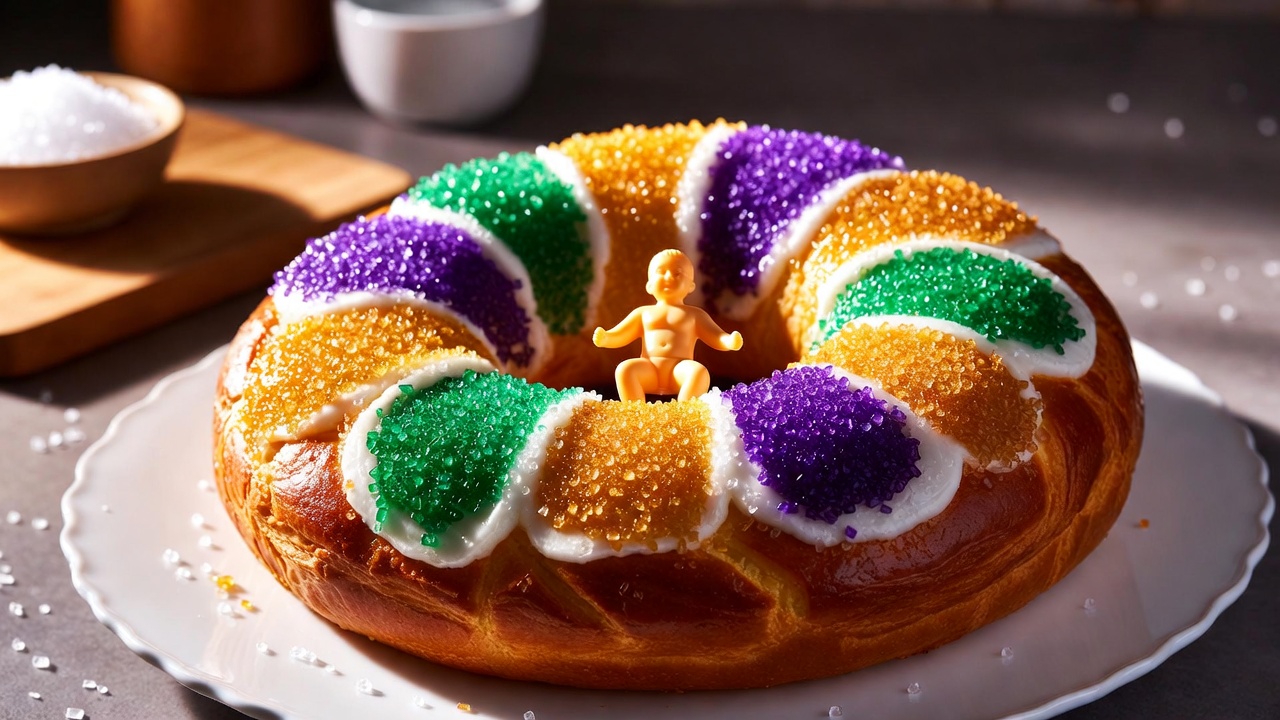
King cake is a sweet, ring-shaped pastry traditionally served during the Carnival season. In its most common American form, it features a braided brioche-style dough swirled with cinnamon and topped with colorful icing and sugar in the Mardi Gras colors of purple, green, and gold.
The name “king cake” comes directly from the biblical story of the Three Wise Men. These three kings traveled to Bethlehem bearing gifts for the newborn Jesus. The Christian celebration of their arrival is called Epiphany, which falls on January 6th each year. This date is also known as Twelfth Night because it occurs twelve days after Christmas.
The cake honors these three kings. It is shaped like an oval or circle to represent a crown. In many cultures, the cake is actually called “three kings cake” or referred to by local names that translate to “cake of kings.”
| Name | Country | Meaning |
|---|---|---|
| King Cake | United States | Cake of the Kings |
| Galette des Rois | France (North) | Cake of Kings |
| Gâteau des Rois | France (South) | Cake of Kings |
| Rosca de Reyes | Mexico/Spain | Ring of Kings |
| Roscón de Reyes | Spain | Ring of Kings |
| Bolo Rei | Portugal | King Cake |
| Vasilopita | Greece | Basil’s Cake |
| Dreikönigskuchen | Germany/Switzerland | Three Kings Cake |
The tradition of eating a special cake on Epiphany spread across Europe during the Middle Ages. Each region developed its own version. When French settlers came to Louisiana in the 18th century, they brought this beloved custom with them. The tradition took root in New Orleans and eventually became inseparable from Mardi Gras celebrations.
The History and Origin of King Cake Traditions
Ancient Roman Roots of the King Cake Custom
The concept of hiding objects inside baked goods stretches back thousands of years. Historians trace this practice to the ancient Roman festival of Saturnalia. These winter festivals honored Saturn, the god of agriculture. Romans celebrated the longer days returning after the winter solstice.
During Saturnalia, Romans baked special cakes with hidden beans or coins inside. Whoever discovered the hidden object became “king for a day.” This playful reversal of social order brought joy during the darkest part of the year. The tradition of selecting a temporary king through chance created a sense of fun and equality among participants.
Medieval Europe and the Spread of Epiphany Cakes
By the Middle Ages, the Catholic Church had transformed this pagan custom into a Christian celebration. The Feast of the Epiphany commemorated the Three Wise Men’s visit to the baby Jesus. Baking special cakes for this occasion became widespread across Europe.
In medieval England, the Twelfth Night cake was extremely popular. Samuel Pepys, the famous diarist, recorded attending a party on Epiphany night in 1660. He described how the cake determined the “King” and “Queen” for the evening’s festivities. A bean hidden in one side designated the king. A pea hidden in the other side determined the queen.
In France, two distinct traditions emerged. Northern France developed the galette des rois, a flat puff pastry filled with almond frangipane cream. Southern France created the gâteau des rois, a brioche-style ring cake topped with candied fruits and sugar. Both versions included a hidden token, traditionally called a fève (meaning fava bean in French).
How French Settlers Brought King Cake to New Orleans
French settlers introduced king cake to North America in the early 18th century. The earliest known reference to king cake in North America dates to 1649 in Port Royal, Acadia (now Nova Scotia). An early French settler was required to deliver annually a “round cake made with a quarter bushel of the finest white wheat flour” with “a black bean placed in the cake’s edge.”
When French explorers established settlements along the Gulf Coast, they brought their Epiphany traditions with them. In 1699, French explorer Iberville and his men explored the Mississippi River. They named a spot 60 miles south of present-day New Orleans “Point du Mardi Gras” on March 3rd. This marked the beginning of Carnival celebrations in Louisiana.
The modern New Orleans king cake tradition became established during the 1870s. This is when local bakeries began producing king cakes in larger quantities for public sale. The sweet treat gradually became associated not just with Epiphany, but with the entire Carnival season leading up to Fat Tuesday.
When is King Cake Season and When Should You Eat It?
The Official King Cake Season Dates
King cake season officially begins on January 6th (Epiphany or Twelfth Night) and ends on Mardi Gras Day. The season lasts anywhere from four to nine weeks, depending on when Easter falls that year.
Mardi Gras, which translates to “Fat Tuesday” in French, always occurs 47 days before Easter Sunday. Because Easter is a moveable feast, Mardi Gras can fall on any Tuesday from February 3rd to March 9th.
| Year | Mardi Gras Date | King Cake Season Length |
|---|---|---|
| 2025 | March 4 | 57 days |
| 2026 | February 17 | 42 days |
| 2027 | February 9 | 34 days |
| 2028 | February 29 | 54 days |
| 2029 | February 13 | 38 days |
For 2026, king cake season runs from January 6th through February 17th. That gives you 42 days to enjoy this beloved treat.
Why New Orleanians Never Eat King Cake Before January 6th
True New Orleans residents consider eating king cake before Twelfth Night extremely bad form. Some locals believe it brings bad luck. Others simply see it as uncouth, like drinking eggnog in July.
This tradition has practical origins as well. King cake marks the transition from the Christmas season to Carnival season. Eating it early disrupts the natural rhythm of celebration that defines life in South Louisiana.
As one local baker put it, “We wait all year for king cake season. Jumping the gun takes away from the anticipation and excitement of that first bite.”
Some bakeries now offer king cakes year-round to meet tourist demand. However, traditionalists maintain that true king cake should only be consumed during its proper season.
The Meaning Behind the Baby in King Cake
Why is There a Plastic Baby Hidden in King Cake?
The tiny plastic baby hidden inside king cake represents the infant Jesus. This symbolism connects directly to the Epiphany story. The Three Wise Men came seeking the Christ Child, and whoever finds the baby in their slice shares in this discovery.
However, the plastic baby tradition is relatively modern. For centuries, king cakes contained beans, coins, or other small tokens. The person who found the hidden object was declared “king for a day” or received special privileges.
Donald Entringer and the Birth of the King Cake Baby Tradition
The credit for putting the first plastic babies in king cakes goes to Donald Entringer Sr. of McKenzie’s Pastry Shoppes. This New Orleans baker made the innovation in the 1940s that would define king cake for generations to come.
According to food historian Poppy Tooker, host of “Louisiana Eats!” on NPR member station WWNO, Entringer encountered a traveling salesman with a large stock of tiny porcelain dolls from France. These small figures, called “Frozen Charlottes,” were designed for dollhouses. The salesman suggested Entringer use them as prizes in king cakes.
Entringer loved the idea. He obtained approval from the New Orleans health department. Then he began baking these porcelain babies into his king cakes. When his supply of porcelain dolls ran out, Entringer found a supplier of plastic babies in the French Quarter.
By the 1950s, McKenzie’s aggressive advertising campaign had popularized the king cake baby across New Orleans. By the 1960s, Entringer switched to cheaper plastic babies. Other bakeries and home cooks followed his lead. The tradition became standard practice throughout Louisiana.
The earliest newspaper mention of a king cake baby appeared in January 1908 in The Daily Picayune. The article reported that “during the evening the king cake was cut and the doll fell to Miss A. Barrow.” However, this practice remained sporadic until Entringer standardized it decades later.
What Happens When You Find the Baby in Your King Cake?
Finding the baby in your slice of king cake comes with both privileges and responsibilities. The person who discovers the baby is declared “king” or “queen” for the day or the moment. They receive special recognition and are said to have good luck coming their way.
However, finding the baby also means you must continue the celebration. Tradition dictates that the finder must:
- Host the next king cake party
- Purchase the next king cake
- Bring a king cake to the next gathering
This custom ensures that the festivities continue throughout Carnival season. One king cake party leads to another. Friends, family members, and coworkers take turns hosting as the baby passes from one finder to the next.
Some people believe finding the baby has additional meanings. A 2018 story from the Shreveport Times reported that some locals take the baby quite literally. One woman told the newspaper that finding it “means you’re the next one to pop out a baby.” Whether this belief is widespread or just local folklore remains uncertain.
Modern Changes to the King Cake Baby Tradition
Today, most bakeries no longer bake the plastic baby inside the cake. Health and safety concerns about baking plastic have led to changes in practice. Liability issues related to choking hazards also played a role.
Instead, bakeries typically include the baby separately. They place it in the center of the ring or package it alongside the cake. This allows customers to insert the baby themselves before serving.
The standard king cake baby is pink or peach colored. However, in the mid-1980s, bakeries began including brown king cake babies to reflect the racial demographics of New Orleans. Today, king cake babies come in a variety of colors, including purple, green, and gold to match Mardi Gras colors.
Some bakeries have returned to using porcelain figurines. Alberta Lewis sells porcelain figurines to Haydel’s Bakery, creating new designs each year. These collectible items add a special touch to the king cake experience.
The Meaning of King Cake Colors: Purple, Green, and Gold
The Official Mardi Gras Colors and Their Symbolism
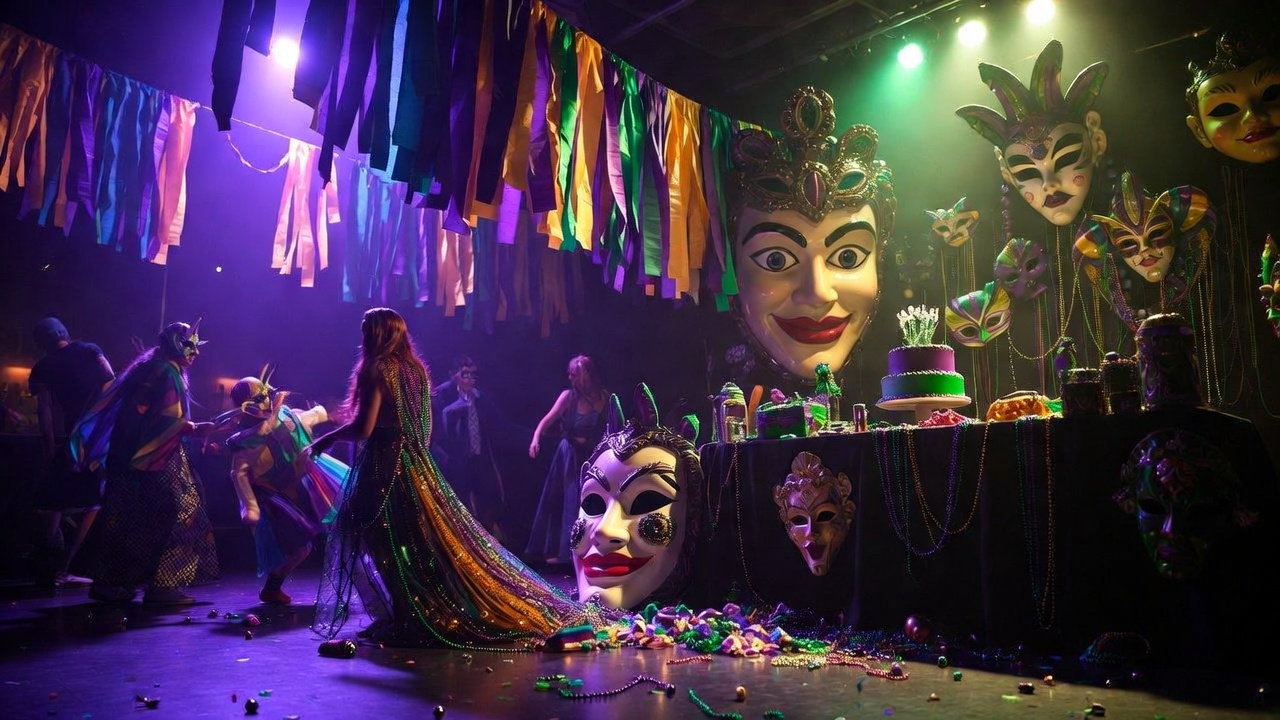
Purple, green, and gold are the official colors of Mardi Gras. These vibrant hues appear everywhere during Carnival season. You see them on parade floats, costumes, beads, decorations, and of course, king cakes.
Each color carries specific symbolic meaning:
| Color | Meaning | Significance |
|---|---|---|
| Purple | Justice | Represents fairness and righteousness |
| Green | Faith | Symbolizes belief and spiritual devotion |
| Gold | Power | Signifies wealth, prestige, and authority |
These meanings were officially assigned in 1892. That year, the Rex parade theme was “Symbolism of Colors.” This gave formal significance to colors that had been used for twenty years.
The Rex Organization and the Origin of Mardi Gras Colors
The colors of Mardi Gras can be traced to the first Rex parade in 1872. The Rex organization, one of the oldest and most prestigious Mardi Gras krewes, introduced these colors that year.
In a royal proclamation, Rex (Latin for “King”) instructed citizens to drape their balconies in purple, green, and gold. Newspapers of the day published this decree. However, they never explained why these specific colors were chosen.
For generations, New Orleanians believed the colors honored the visiting Russian Grand Duke Alexei Alexandrovich Romanov. The Duke arrived in New Orleans during Carnival season in 1872. According to popular legend, the Rex organization selected these colors to welcome him.
However, local historian Errol Flynn Laborde discovered the truth while researching for the 125th anniversary of Rex. He found no evidence supporting the Russian Grand Duke theory. Instead, Laborde concluded that the Rex founders believed “a king must have a kingdom, and a kingdom must have a flag.”
Why Rex Chose These Specific Three Colors
The selection of three colors made sense because the United States, Great Britain, and France all had tricolor flags. A tricolor flag for the “King of Carnival” seemed appropriate.
Laborde’s research pointed to heraldry rules as the likely explanation. Traditional heraldry requires both colors and metals in a coat of arms. The metal choices were limited to silver and gold. Gold became the obvious choice given its associations with royalty and wealth.
Purple has symbolized royalty for thousands of years. Ancient purple dye was extremely rare and expensive. Legend says Roman emperors were born in rooms painted with deep purple. This is the origin of the phrase “born in the purple.”
For the third color, the Rex founders chose between green and black. Green won out, possibly because it represented hope and renewal. Some historians suggest green may have been chosen simply because it looked good with purple and gold.
How King Cake Colors Connect to Faith and Celebration
Some scholars suggest deeper religious connections to the Mardi Gras colors. As the final festivity before Lent begins, Carnival carries spiritual weight. The colors may reflect this Catholic tradition.
Purple connects to ideas of penance and preparation. This aligns with Lent’s spiritual purpose. Green symbolizes growth and renewal. Gold represents the reward that comes through faith and sacrifice.
The colors on king cake serve a dual purpose. They identify the cake as part of Mardi Gras celebration. They also remind participants of the values that underpin this season of revelry before the solemnity of Lent.
What Does King Cake Taste Like and How is It Made?
Traditional King Cake Flavors and Ingredients
King cake is made from a sweet brioche-style dough flavored with cinnamon. The texture resembles a cross between a Danish pastry and a cinnamon roll. The dough is rich, tender, and slightly sweet.
Traditional New Orleans king cake includes the following components:
Brioche Dough Ingredients:
- Warm milk
- Active dry yeast
- Butter
- Eggs
- Vanilla extract
- Ground cinnamon
- Ground nutmeg
- Salt
- All-purpose flour
- Sugar
Filling Options:
- Cinnamon and brown sugar (traditional)
- Cream cheese
- Pecan praline
- Fruit fillings (apple, strawberry, blueberry, lemon)
- Chocolate
- Bavarian cream
Topping:
- Powdered sugar glaze
- Purple, green, and gold colored sugar
- Sometimes additional icing in Mardi Gras colors
The Process of Making Traditional King Cake
Making king cake follows a process similar to making cinnamon rolls. The enriched yeast dough requires time to rise properly. Most recipes take about four hours from start to finish, with much of that being rising time.
Here is the basic process:
- Proof the yeast in warm milk with a little sugar
- Mix wet ingredients including butter, eggs, and vanilla
- Add dry ingredients and knead until smooth and elastic
- Let the dough rise for about 90 minutes until doubled
- Roll out the dough into a large rectangle
- Spread the filling over the surface
- Roll up the dough lengthwise like a jelly roll
- Shape into a ring or oval, connecting the ends
- Let rise again for about 30 minutes
- Bake at 375°F for approximately 30 minutes
- Cool, ice, and decorate with colored sugars
Some bakers braid the dough for a more decorative appearance. They divide the dough into three portions, roll each into a rope, braid them together, and then form the braid into a ring shape.
Modern King Cake Flavors and Variations
Today’s king cakes go far beyond the traditional cinnamon version. Creative bakeries offer dozens of flavor combinations:
- Cream cheese with various fruit toppings
- German chocolate
- Café au lait
- Bananas Foster
- Pecan praline
- Almond wedding cake
- Strawberry cream cheese
- Apple cinnamon
- Lemon
- Coconut
- Boudin (a savory sausage version)
- Crawfish (another savory option)
The boudin king cake craze hit the Mardi Gras scene in 2014. This savory sibling to the traditional sweet treat uses Louisiana boudin sausage as the filling. It represents the continuing evolution of king cake traditions.
Some bakeries also create specialty king cakes for dietary restrictions. Vegan, gluten-free, and organic options have appeared in recent years as demand has grown.
Where to Find the Best King Cake in New Orleans
Legendary New Orleans King Cake Bakeries
New Orleans residents take their king cake seriously. Arguments about which bakery makes the best king cake can get heated. Everyone has their favorite, and loyalty runs deep.
Here are some of the most respected king cake producers in the New Orleans area:
Dong Phuong Bakery
- Location: New Orleans East
- Style: Light, flaky brioche with cream cheese buttercream
- Notable: James Beard American Classic award winner
- Unique: Round shape with no hole in the center
- Vietnamese-French fusion approach
- Often sells out before noon
Manny Randazzo’s King Cakes
- Location: Metairie
- Style: Hand-braided traditional with Randazzo icing
- Notable: Family-owned since 1965
- Famous for: Classic cinnamon and Royal King Cake (strawberry, lemon, and apple)
Haydel’s Bakery
- Location: Old Jefferson
- Style: Traditional with various flavors
- Notable: Owner David Haydel is Louisiana’s only internationally certified Master Baker
- Famous for: 2010 Guinness World Record for World’s Largest King Cake
- Ships nationwide with history scroll and porcelain collectible
Gambino’s Bakery
- Location: Multiple locations
- Style: Classic with fondant topping
- Notable: Family-owned since 1949
- Famous for: Doberge cakes and wide variety of king cake fillings
Randazzo’s Camellia City Bakery
- Location: Metairie
- Style: Traditional braided
- Famous for: Pecan praline filling
New Orleans King Cake Tasting Tips
If you are visiting New Orleans during king cake season, plan strategically. The most popular bakeries sell out quickly. Here are some tips:
- Order ahead – Many bakeries take pre-orders online
- Arrive early – Popular spots sell out before noon
- Try multiple bakeries – Each has its own style
- Ask locals – Every New Orleanian has opinions
- Check authorized resellers – Popular bakeries distribute through grocery stores
- Consider shipping – Most major bakeries ship nationwide
The King Cake Hub in New Orleans offers a unique experience. It brings together multiple bakeries in one location, allowing visitors to sample and compare different styles.
King Cake Around the World: International Variations
The French Galette des Rois
In northern France, the galette des rois is a flat, round puff pastry cake. It differs significantly from the New Orleans style. The galette features:
- Flaky, buttery puff pastry
- Almond frangipane filling
- Golden glaze from egg wash
- Intricate scored designs on top
- A hidden porcelain fève
- A golden paper crown
The filling is made from almond meal, butter, eggs, and sugar. When baked, it becomes a sticky, aromatic confection. Each slice offers a taste of buttery pastry and subtle almond sweetness.
French bakeries begin selling galettes des rois in mid-December. The tradition continues through Epiphany. Each purchased cake comes with a paper crown for the person who finds the fève.
Southern France has a different tradition called the gâteau des rois. This version more closely resembles the New Orleans king cake. It is a brioche-style ring cake flavored with cognac or orange blossom water. Candied fruits and granulated sugar top the cake to resemble a jeweled crown.
The Mexican and Spanish Rosca de Reyes
In Mexico and Spain, the rosca de reyes (or roscón de reyes) takes center stage on Epiphany. This oval-shaped sweet bread features:
- Soft yeasted dough similar to brioche
- Orange blossom water or citrus flavoring
- Candied fruit decorations on top
- Sugar paste stripes
- One or more hidden baby figurines
- Sometimes filled with whipped cream
The shape symbolizes a crown, honoring the Three Kings. The candied fruits represent the jewels of royalty.
In Mexico, finding the baby creates a specific obligation. The person who discovers the figurine must host a party on Día de la Candelaria (Candlemas) on February 2nd. They typically provide tamales for the guests. This extends the holiday celebration well beyond Epiphany.
The rosca de reyes tradition is so important in Mexico that Three Kings Day often rivals Christmas in significance. Children receive gifts from the Three Kings rather than (or in addition to) Santa Claus.
Other International King Cake Traditions
Portugal’s bolo rei features a ring-shaped cake with a hole in the center. The dough contains raisins and various nuts. Crystallized and dried fruits cover the top. A dried fava bean hidden inside obligates the finder to pay for next year’s cake. Portuguese bakeries sell bolo rei from early December through Epiphany.
The German and Swiss Dreikönigskuchen is shaped like a wreath or round. It consists of separate rolls arranged together. The cake uses an almond as the hidden token. Some versions include rum-soaked raisins or chocolate chips.
The Greek vasilopita is eaten on New Year’s Day rather than Epiphany. It honors St. Basil. A coin hidden inside brings good fortune to the finder. Although connected to a different holiday, the tradition shares the same ancient roots as other king cakes.
King Cake Etiquette and Traditions You Should Know
How to Properly Serve and Cut a King Cake
King cake cutting follows specific traditions in Louisiana. The goal is fair distribution so the baby’s location remains truly random.
Traditional cutting method:
- Have the youngest person present go under the table
- This person cannot see the cake being cut
- The cake cutter asks “Who gets this piece?” for each slice
- The person under the table calls out names randomly
- This ensures no one can deliberately avoid or seek the baby
This tradition adds an element of fun and fairness to the serving process. It also builds anticipation as each person receives their slice.
What to Do If You Find the Baby
Finding the baby is both an honor and a responsibility. Here is proper king cake etiquette:
- Announce your find – Let everyone know you got the baby
- Accept congratulations – You are king or queen for the moment
- Accept your responsibility – You owe the next king cake
- Plan ahead – Think about when you will fulfill your obligation
- Keep the baby – Many people collect them over the years
Some workplaces have continuous king cake parties throughout Carnival season. The person who gets the baby on Monday brings the cake for Friday. This creates a delightful cycle of celebration.
King Cake Party Planning Tips
Hosting a king cake party requires some thought. Here are suggestions for a successful celebration:
Essential elements:
- At least one king cake (more for larger groups)
- Mardi Gras decorations in purple, green, and gold
- Beads for guests
- A crown for whoever finds the baby
- Coffee to accompany the cake
- Napkins (king cake can be messy)
Optional additions:
- Savory foods to balance the sweetness
- Hurricane cocktails or other New Orleans drinks
- Zydeco or jazz music
- Photo opportunities with Mardi Gras props
- Multiple king cake flavors for variety
The spirit of king cake parties is community and celebration. Keep the atmosphere light and fun. Embrace the “laissez les bons temps rouler” attitude that defines Carnival in Louisiana.
How to Make Your Own King Cake at Home
Essential Ingredients for Homemade King Cake
Making king cake at home is similar to making cinnamon rolls. You need patience for the rising time, but the process itself is straightforward.
For the dough:
- 3/4 cup warm milk (100-110°F)
- 1/4 cup honey or sugar
- 2 1/4 teaspoons active dry yeast
- 1/2 cup unsalted butter, melted
- 2 large eggs
- 1 teaspoon vanilla extract
- 1 teaspoon ground cinnamon
- 1/4 teaspoon ground nutmeg
- 1 teaspoon salt
- 4-5 cups all-purpose flour
For the cinnamon filling:
- 1/2 cup brown sugar
- 2 tablespoons ground cinnamon
- 1/4 cup softened butter
For the icing:
- 2 cups powdered sugar
- 2-3 tablespoons milk
- 1 teaspoon vanilla extract
For decorating:
- Purple, green, and gold sanding sugars or sprinkles
- 1 small plastic baby
Step-by-Step King Cake Instructions
Day before or morning of:
- In a large bowl, combine warm milk, honey, and yeast
- Let stand 10 minutes until foamy
- Add melted butter, eggs, vanilla, cinnamon, nutmeg, and salt
- Mix well
- Add flour gradually, about 1 cup at a time
- Knead until smooth and elastic (8-10 minutes by hand, 5 minutes with stand mixer)
- Place in greased bowl, cover, let rise 90 minutes until doubled
Shaping:
- Punch down dough and roll into large rectangle (about 24×10 inches)
- Mix filling ingredients and spread over dough
- Roll up lengthwise like a jelly roll
- Form into oval or circle, pinching ends to seal
- Place on parchment-lined baking sheet
- Let rise 30 minutes
Baking and decorating:
- Preheat oven to 375°F
- Bake 25-30 minutes until golden brown
- Cool completely on wire rack
- Mix icing ingredients and drizzle over cake
- Immediately sprinkle colored sugars in alternating sections
- Insert plastic baby from the bottom
Tips for Perfect Homemade King Cake
Dough tips:
- Water that is too hot will kill the yeast
- The dough should be soft and slightly sticky
- Don’t add too much flour or the cake will be dry
- Let the dough rise in a warm, draft-free place
Baking tips:
- Line your pan with parchment for easy cleanup
- Filling may leak during baking (this is normal)
- Check for doneness at 22 minutes for braided cakes
- The cake should be golden brown but not dark
Decorating tips:
- Make icing while cake cools
- Drizzle icing generously
- Add colored sugars immediately before icing sets
- Create distinct color sections (purple, gold, green)
- Insert the baby from the bottom so it is hidden
King Cake FAQs: Your Questions Answered
Can You Eat King Cake Year-Round?
Traditionally, king cake is only eaten during Carnival season. New Orleanians generally consider eating it outside this period unlucky or inappropriate.
However, demand from tourists and transplants has led some bakeries to offer king cakes year-round. Some bakeries also produce special versions for other occasions, such as king cakes decorated in black and gold for New Orleans Saints football season.
Is King Cake Just a Louisiana Thing?
King cake is most strongly associated with Louisiana, but versions exist worldwide. The French galette des rois, Mexican rosca de reyes, and other international variations share the same ancient origins. Mobile, Alabama also has strong king cake traditions, as Mardi Gras celebrations there predate those in New Orleans.
What Do You Do with Old King Cake?
King cake is best eaten fresh within a few days. If you have leftover king cake:
- Store at room temperature for 2-3 days
- Refrigerate for up to one week
- Freeze for up to three months (wrap tightly)
- Transform into French toast or bread pudding
Many New Orleans restaurants serve king cake bread pudding during Carnival season. This creative use of leftovers has become a tradition in itself.
Can You Ship King Cake?
Yes, most major New Orleans bakeries ship king cakes nationwide. Some even ship internationally. The cakes typically arrive within 1-2 days via overnight or expedited shipping.
Popular shipping options include:
- Haydel’s Bakery
- Gambino’s Bakery
- Manny Randazzo’s
- Dong Phuong Bakery
- Sucre
- Brennan’s
Many companies also offer the option to ship multiple king cakes together or set up regular deliveries throughout the Carnival season.
Is King Cake Safe for Children?
The main safety concern with king cake is the hidden plastic baby. The baby presents a choking hazard, especially for young children.
Safety tips:
- Warn all guests about the baby before serving
- Consider removing the baby when serving to young children
- Cut pieces carefully and check for the baby
- Use a larger, more visible token for family parties with small children
Some bakeries now offer edible alternatives, such as candy or chocolate babies, to address safety concerns.
The Cultural Significance of King Cake in Louisiana
King Cake as a Community Connector
King cake represents more than just dessert in Louisiana. It serves as a powerful community connector during Carnival season. The tradition of sharing king cakes brings people together in meaningful ways.
In offices across Louisiana, king cake becomes a weekly ritual. The person who found last week’s baby brings this week’s cake. Co-workers gather around the break room table. For a few minutes, work stops. People connect over something sweet.
Families use king cake as a reason to gather. Friends host parties. Neighbors share slices. The obligation to “bring the next one” creates a chain of connection that lasts throughout the season.
The Economics of King Cake Season
King cake represents a significant business for Louisiana bakeries. During the 1980s, the local McKenzie’s chain sold 33,000 cakes per week during Carnival. Gambino’s Bakery sold nearly 9,000 per week. Haydel’s Bakery sold almost 50,000 in the final week of Carnival alone.
Today, the king cake industry has grown even larger. Online shipping has expanded the market nationally and internationally. What was once a local tradition now brings a taste of New Orleans to people around the world.
King Cake’s Place in Louisiana Identity
For many Louisianans, king cake is inseparable from their cultural identity. Like gumbo, jazz, and Mardi Gras parades, it defines what makes Louisiana unique.
The tradition has shown remarkable resilience. When Hurricane Katrina devastated New Orleans in 2005, many worried about the loss of cultural traditions. But king cake season returned. Bakeries rebuilt. The tradition continued.
This resilience speaks to the importance of king cake in Louisiana life. It is not just food. It is heritage. It is community. It is celebration. It is home.
Conclusion: The Sweet Legacy of King Cake
King cake tells a story that spans centuries and continents. From ancient Roman festivals to medieval European courts to the streets of New Orleans, this sweet tradition has evolved while maintaining its essential purpose: bringing people together.
The plastic baby hidden inside represents more than just baby Jesus. It symbolizes the surprise and delight that comes from shared celebration. Finding the baby means good fortune, but it also means responsibility to continue the party. This obligation creates a chain of connection that links friends, families, and communities.
The colors of purple, green, and gold speak to values that resonate beyond Carnival season. Justice, faith, and power are aspirations that transcend any single holiday. When we see these colors on a king cake, we are reminded of what matters.
Whether you enjoy your king cake from a legendary New Orleans bakery or make one yourself at home, you participate in a living tradition. Each slice connects you to generations who have celebrated in the same way. Each bite links you to people around the world who share this custom.
So the next time you cut into a king cake, take a moment to appreciate what you hold. It is not just a pastry. It is history. It is culture. It is community wrapped in brioche dough and decorated in the colors of celebration.
Laissez les bons temps rouler. Let the good times roll.