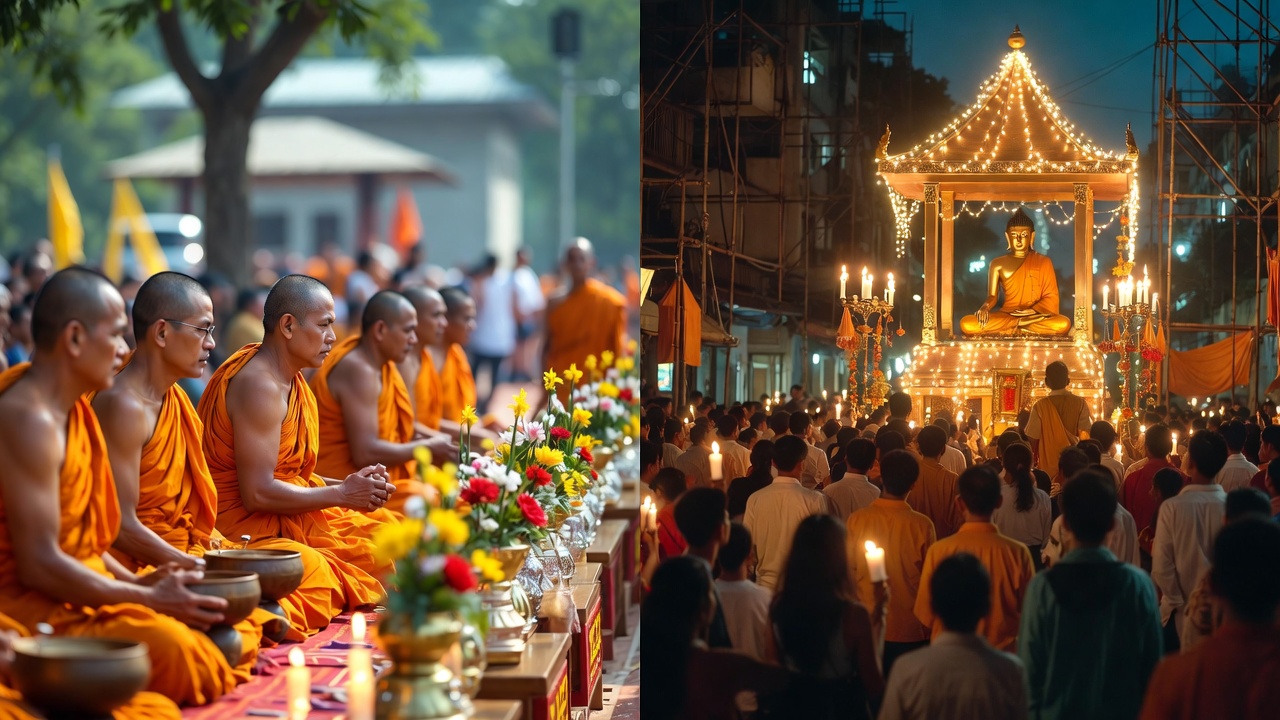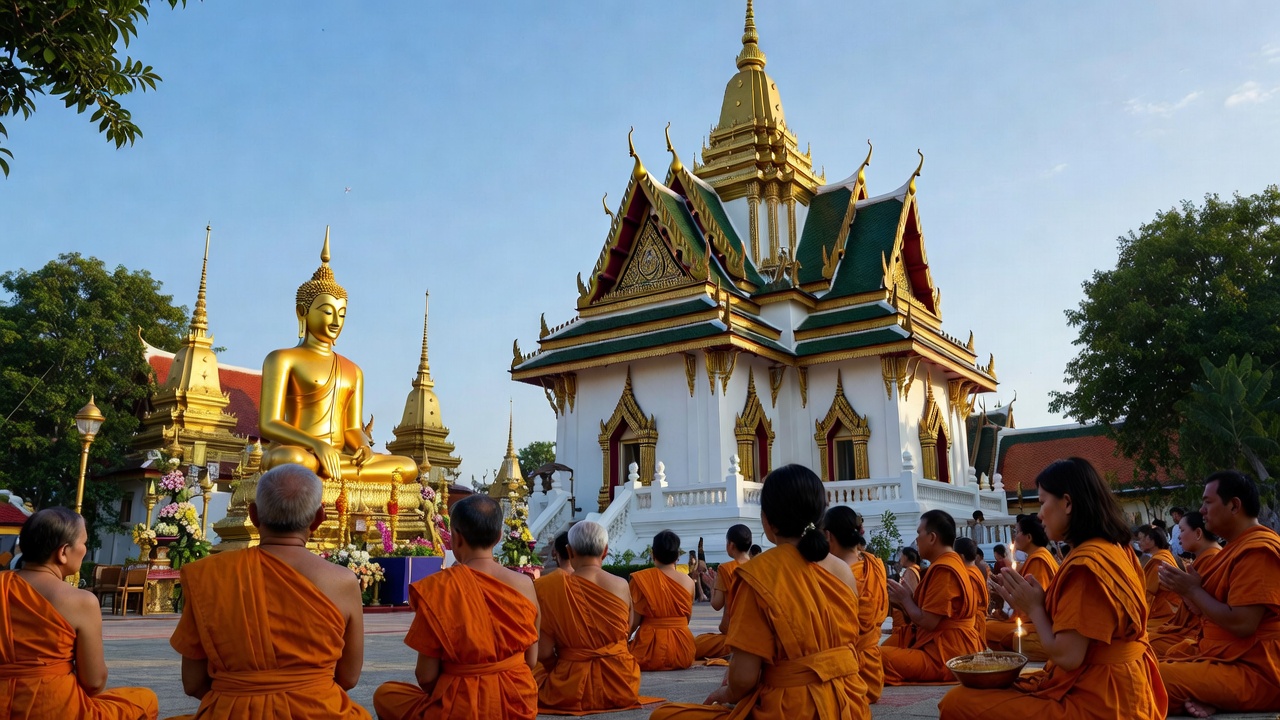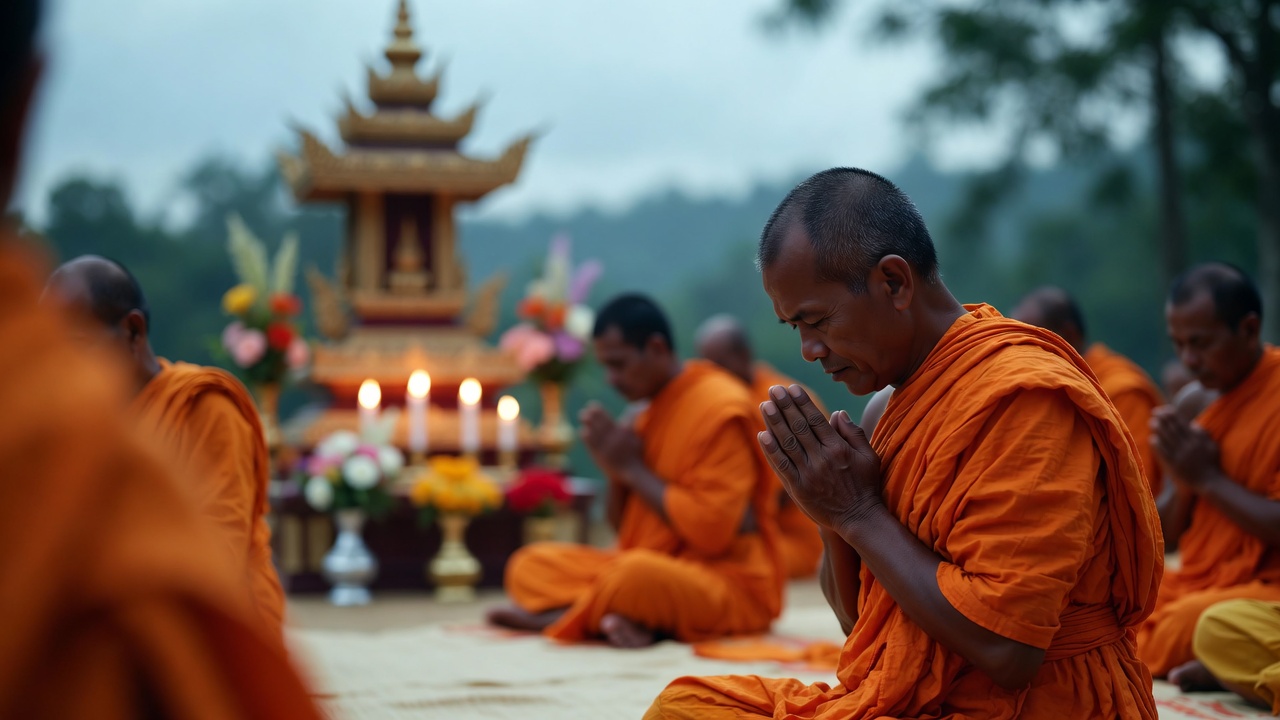
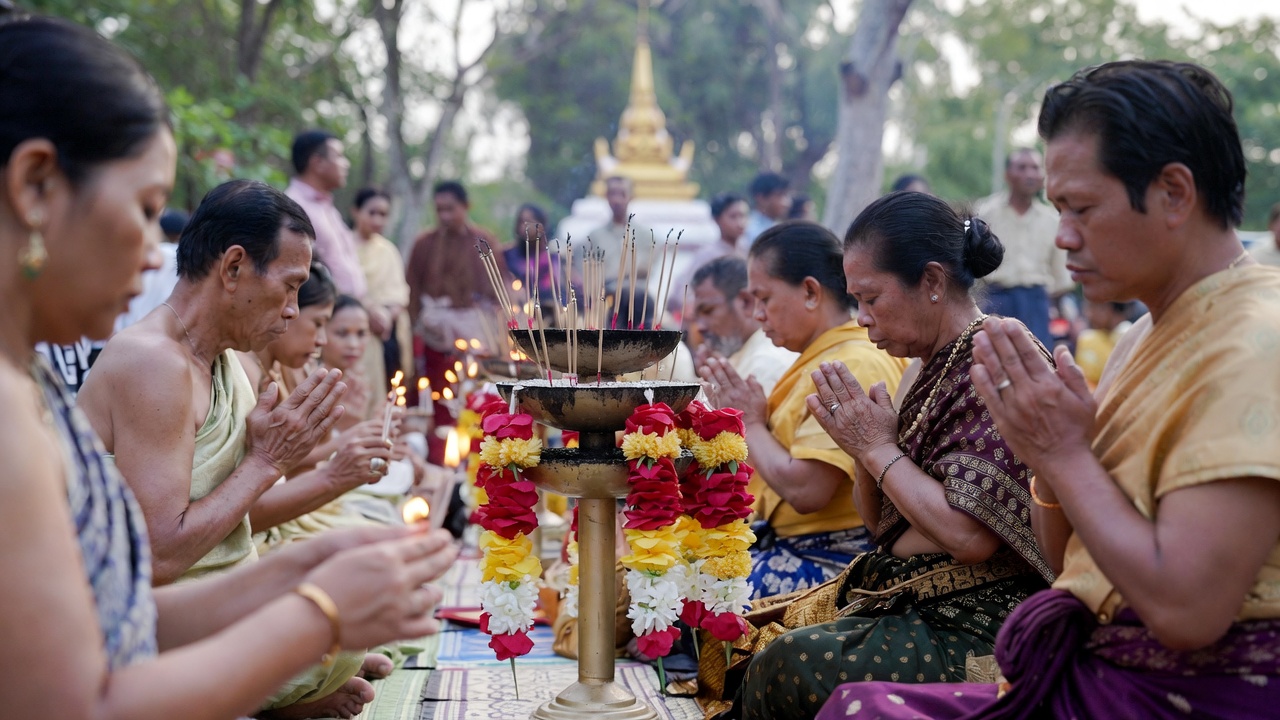
Picture this. The tropical sun has just slipped below the horizon. A warm breeze carries the scent of lotus blossoms and incense across a centuries-old temple courtyard. Thousands of devotees — monks in saffron robes, families in white, wide-eyed travelers clutching borrowed candles — begin walking slowly, silently, around the ordination hall. The only sounds are bare feet on stone and the soft crackling of candlelight. This is Makha Bucha Day in Thailand, and it is one of the most moving spiritual experiences you will ever witness in Southeast Asia.
Whether you are planning your first trip to the Land of Smiles or simply want to understand what this Buddhist holiday is all about, this guide covers everything you need to know. From its ancient origins at a bamboo grove in India to the candlelit processions you can join at temples across Thailand in 2026, we will walk you through the history, traditions, practical travel tips, and cultural etiquette that will turn you from a curious bystander into a respectful, informed participant.
What Does Makha Bucha Mean in English? Understanding the Name and Its Pali Roots
Before we dive into history and ritual, let’s clear up what this holiday is actually called — and why you will see it spelled half a dozen different ways.
Makha Bucha (Thai: มาฆบูชา) is the Thai pronunciation of two words from Pali, the ancient language of Theravada Buddhist scripture. “Makha” (Pali: Māgha) refers to the third month of the traditional Indian lunar calendar. “Bucha” (Pali: Pūjā) means to venerate, to honor, or to worship. Put together, Makha Bucha simply means “to pay respect on the full moon of the third lunar month.”
You may also encounter the holiday written as:
| Spelling | Where It Is Used |
|---|---|
| Māgha Pūjā | International Buddhist communities, academic texts |
| Makha Bucha | Thailand (most common English transliteration) |
| Meak Bochea | Cambodia |
| Magha Puja | Laos, Western Buddhist organizations |
| Tabaung Full Moon Day | Myanmar (celebrated on a different calendar month) |
Other names for this day include Sangha Day, Fourfold Assembly Day, and even Buddhist All Saints Day. Each name highlights a slightly different aspect of what happened over 2,500 years ago — but they all point to the same remarkable event.
When Is Makha Bucha Day 2026? Full Moon Date and Thai Public Holiday Calendar
Because Makha Bucha follows the Buddhist lunar calendar, its date shifts each year on the Western (Gregorian) calendar. It always falls on the full moon day of the third lunar month, which typically lands in late February or early March. In a Buddhist leap year, it can shift to the full moon of the fourth lunar month instead.
In 2026, Makha Bucha Day falls on Tuesday, March 3.
Here is how recent and upcoming dates compare:
| Year | Makha Bucha Date | Day of Week |
|---|---|---|
| 2024 | February 24 | Saturday |
| 2025 | February 12 | Wednesday |
| 2026 | March 3 | Tuesday |
| 2027 | February 21 | Sunday |
Makha Bucha is a national public holiday in Thailand. Government offices, schools, banks, and many businesses close for the day. In the Buddhist calendar used in Thailand, 2026 corresponds to the year 2569 BE (Buddhist Era).
For travelers, the most important thing to know is that this is also one of Thailand’s five annual “dry days” — days when the sale of alcohol is banned nationwide for 24 hours, from midnight to midnight. Bars, pubs, and nightclubs are closed. We will cover exactly what that means for your trip in a later section.
The History Behind Makha Bucha Day: Why 1,250 Monks Gathered Without Being Called
The story behind Makha Bucha reaches back roughly 2,600 years, to a time when Siddhartha Gautama — the historical Buddha — was still alive and teaching in northern India. Understanding this story is the key to understanding everything else about the holiday.
The Miraculous Fourfold Assembly at Veluvana Bamboo Grove
Nine months after the Buddha attained enlightenment, he was staying at the Veluvana Vihara (the Bamboo Grove monastery) near the city of Rajagaha (present-day Rajgir, in the Indian state of Bihar). On the full moon afternoon of the third lunar month, something extraordinary happened — an event Buddhists call the Cāturaṅgasannipāta, or the “Fourfold Assembly.”
Four remarkable things occurred at once:
- 1,250 disciples came to see the Buddha — all arriving at the same place on the same evening.
- All of them came spontaneously, without any prior arrangement or formal summons.
- All of them were arahants — fully enlightened beings who had been ordained directly by the Buddha himself (a rare distinction expressed by the Pali phrase ehi bhikkhu).
- It was the full moon day of the month of Māgha.
The fact that more than a thousand enlightened monks independently decided to visit the Buddha on the same day, at the same time, without a single message being sent, is considered one of the most miraculous events in the Theravada Buddhist tradition. Many of these monks had been students of the recently converted three Kassapa brothers and the great disciples Sariputta and Moggallana.
The Ovada Patimokkha: The Heart of Buddhist Teaching
During this gathering, the Buddha delivered what is arguably his most important sermon: the Ovada Patimokkha (also spelled Ovādapāṭimokkha). This teaching laid out the core principles of Buddhism in three clear directives:
- Cease from all evil (sabba pāpassa akaraṇaṃ)
- Do only good (kusalassa upasampadā)
- Purify the mind (sa citta pariyodapanaṃ)
These three lines may sound simple, but they form the backbone of Buddhist ethics that has guided monks and laypeople for millennia. The Ovada Patimokkha also outlined the discipline and moral duties expected of the monastic community (the Sangha). Over time, these principles evolved into the 227 rules of the monastic discipline code observed by fully ordained Theravada monks today.
A Second Significant Event: The Buddha’s Prediction of His Own Passing
Makha Bucha carries a second layer of meaning. According to Buddhist tradition, 45 years after the Fourfold Assembly, on this same full moon day of the third lunar month, the Buddha announced that he would attain Parinibbana (final nirvana — the departure of the mind from the body, and death) within three months. This prediction came true on the full moon of the sixth lunar month, an event now commemorated by Visakha Bucha Day.
So Makha Bucha holds both a joyful significance — the unity of the early Buddhist community — and a solemn one — the Buddha’s acknowledgment that his time on earth was ending. This duality gives the holiday its distinctive emotional texture: gratitude and reflection, celebration and quiet contemplation.
How Did Makha Bucha Become a National Holiday in Thailand? A Brief History
Makha Bucha has not always been a widespread public celebration in Thailand. Its modern history is tied to the Thai monarchy and the evolution of state-sponsored Buddhism.
King Rama IV (King Mongkut, who reigned from 1851 to 1868) was the first Thai monarch to formally decree Makha Bucha as an official observance. A former Buddhist monk himself, Rama IV initially held the ceremony within the Temple of the Emerald Buddha (Wat Phra Kaew) in Bangkok’s Grand Palace. Only members of the royal court were allowed to attend.
King Rama V (King Chulalongkorn) later expanded the celebration beyond the palace walls, believing it could strengthen Buddhist faith among the general population. By 1913, Makha Bucha was established as an official public holiday across the kingdom.
In 2006, the Thai government added another layer to the holiday by naming it “National Gratitude Day” (Wan Khob Khun). This was partly a cultural campaign to offer Thai youth a spiritual alternative to Valentine’s Day, which falls in the same period and had become associated with concerns about teenage behavior. The campaign encouraged young people to express love and gratitude through acts of merit rather than commercial gift-giving.
In Northern Thailand, it is worth noting that Makha Bucha was only introduced to the region in the 1960s by a monk named Paññananda Bhikkhu. The candlelight procession tradition only became widely associated with Makha Bucha in Northern Thailand during the 1990s. Regional variations — such as the worship of Buddhist relics during the Māgha period in the Northeast — reflect the diversity of Thai Buddhist practice.
How Is Makha Bucha Day Celebrated in Thailand? Traditions, Rituals, and Ceremonies
Makha Bucha is not a festival of fireworks, parades, or street food stalls (though you may find some at larger celebrations). It is a day of quiet devotion, reflection, and merit-making. Here is what a typical Makha Bucha Day looks like across Thailand, from dawn to well past dark.
Morning: Almsgiving and Temple Visits
The day begins early. At sunrise, devoted Thai Buddhists wake before dawn to give alms (tak bat) to monks who walk barefoot through neighborhoods with their alms bowls. Offerings typically include steamed rice, prepared dishes, fruit, and sometimes practical items like toiletries.
After almsgiving, families head to their local temple (wat). At the temple, they will:
- Listen to sermons (thet) given by senior monks recounting the story of the Fourfold Assembly
- Offer food and donations to the monastic community
- Chant Buddhist scriptures together with monks and other laypeople
- Meditate in group sessions, sometimes for several hours
Some temples organize extended meditation retreats where participants wear white robes, sleep at the temple overnight, and observe the stricter eight precepts (rather than the usual five). These retreats offer a deeper immersion into Buddhist practice.
The Five Precepts: Moral Commitments on Makha Bucha Day
On Makha Bucha, many Thai Buddhists make a conscious effort to strictly observe the five fundamental Buddhist precepts (sila):
- Refrain from harming any living being
- Refrain from taking what is not given (do not steal)
- Refrain from sexual misconduct
- Refrain from false speech (do not lie, gossip, or slander)
- Refrain from intoxicants (no alcohol or drugs)
These are not laws — they are personal moral commitments. But on Makha Bucha, they carry extra weight. The fifth precept, in particular, is reinforced by the nationwide alcohol sales ban, which has been strictly enforced since 2015.
Evening: The Wian Thian Candlelight Procession — The Most Beautiful Buddhist Ritual You Will Ever See
The highlight of Makha Bucha comes after sunset. As the full moon rises over temple rooftops, the most beloved ritual of the day begins: the Wian Thian (เวียนเทียน) candlelight procession.
“Wian” means to walk in a circle. “Thian” means candle.
Here is how it works. Each participant holds three items:
- A lit candle — representing the light of the Buddha’s wisdom
- Three sticks of incense — representing the Buddha, the Dharma (his teachings), and the Sangha (the monastic community)
- A lotus flower or other offering — symbolizing purity rising from muddy waters
Led by monks, the congregation walks three times clockwise around the ubosot (ordination hall), the most sacred building in a Thai temple. Each lap honors one of the Three Jewels (Triratna) of Buddhism:
- First lap: The Buddha
- Second lap: The Dharma (the teachings)
- Third lap: The Sangha (the community of monks and nuns)
The procession is conducted in near silence. Participants walk slowly, mindfully, many with eyes closed or fixed on the flickering flame in their hands. The combined glow of hundreds or thousands of candles moving through the tropical darkness is genuinely breathtaking. It is one of those travel experiences that lives in your memory long after you have returned home.
Where to Experience Makha Bucha Day in Thailand: Best Temples and Locations for Travelers in 2026
Almost every temple in Thailand holds some form of Makha Bucha ceremony, so wherever you find yourself on March 3, 2026, you will be able to participate. That said, certain locations offer especially memorable experiences.
Bangkok: Grand Temples and Golden Stupas
- Wat Saket (the Golden Mount): Monks lead a procession up the hilltop pagoda, creating a stunning spiral of candlelight against the Bangkok skyline. This is one of the most photographed Makha Bucha scenes in the country.
- Wat Benchamabophit (the Marble Temple): Known for its elegant Italian marble architecture, this temple offers a serene, less crowded alternative in the heart of the city.
- Wat Pho: Home to the famous Reclining Buddha, Wat Pho’s Makha Bucha ceremonies draw large but respectful crowds.
- Phutthamonthon Buddhist Park (Nakhon Pathom, just outside Bangkok): This massive park centers on a 16-meter standing Buddha statue and hosts some of the largest Makha Bucha gatherings in the region.
Chiang Mai: Northern Traditions at Ancient Temples
Chiang Mai’s Lanna-style temples add a distinct northern flavor to Makha Bucha celebrations. Key temples include:
- Wat Phra Singh — Chiang Mai’s most revered temple, home to a highly venerated Buddha image
- Wat Chedi Luang — A partially ruined 14th-century temple with a powerfully atmospheric evening procession
- Wat Umong — A forest temple known for its meditation tunnels and peaceful setting
- Wat Ched Yot — Modeled after India’s Mahabodhi Temple, with a distinctly international Buddhist feel
Unique Regional Celebrations Worth the Trip
- Prachin Buri Province (3 hours northeast of Bangkok): The local government hosts an annual Makha Bucha Fair at the Sa Morakot Archaeological Site, which features Thailand’s oldest and largest bodhi tree. Activities include lantern releases, exhibitions about Buddhism, cultural processions, and local markets.
- Nakhon Si Thammarat: At Wat Phra Mahathat, one of southern Thailand’s most important temples, devotees wrap a long piece of sacred yellow cloth around the base of the temple’s stupa. Other activities include merit-making rituals and the traditional preparation of yacoo (rice milk).
- Yasothon Province (Northeastern Thailand): The village of Ban Fa Yat holds a traditional Garland Procession the day before Makha Bucha, with strings of popped rice and flowers paraded through the streets.
- Phayao Lake: Wat Tilok Aram, a temple built on an island in the center of the lake, holds the only Wian Thian procession conducted on water — believed to be unique in the world. Devotees hold candles while floating around the island temple by boat.
- Kalasin Province: Celebrations are held at the ancient Phrathat Yakhu, the largest chedi in the historical town of Fa Daet Song Yong.
Makha Bucha Day Alcohol Ban in Thailand 2026: What Travelers Need to Know
This is the section that catches many first-time visitors off guard. If you are planning a night out in Bangkok, Pattaya, Phuket, or anywhere else in Thailand on March 3, 2026, you need to read this.
The Rules: No Alcohol Sales for 24 Hours
On Makha Bucha Day, the sale of alcohol is prohibited nationwide for a full 24 hours, from midnight to midnight. This applies to:
- Convenience stores (7-Eleven, FamilyMart, etc.)
- Supermarkets and department stores
- Restaurants (most will not serve alcohol with your meal)
- All bars, pubs, and nightclubs — which must close entirely
Penalties for businesses that violate the ban are severe: fines of up to 10,000 Thai baht and potential imprisonment of up to six months.
Exceptions to the Alcohol Sales Ban
Following reforms under Thailand’s updated Alcoholic Beverage Control Act (No. 2) 2025, which took effect in late 2025, a small number of venue types are now exempt from the religious holiday alcohol ban:
- Duty-free shops at international airports
- Hotels (in-room minibars and hotel restaurants may still serve alcohol to guests)
- Licensed entertainment venues in designated tourist areas, as approved by the Public Health Minister
- Venues hosting major national or international events, as designated by the Tourism and Sports Minister
Practical Tips for Travelers
- Drinking alcohol is not illegal on Makha Bucha — only buying it is. If you have alcohol in your hotel room from a previous day, you are free to drink it privately.
- Stock up the day before if having a drink in the evening is important to you.
- Do not argue with staff at stores or restaurants who refuse to sell you alcohol. They face heavy fines and jail time if they break the law.
- Hotel bars are your most reliable option for a legal drink on Makha Bucha Day.
- Respect the spirit of the day. Even if you are not Buddhist, the widespread closing of nightlife creates a rare opportunity to experience a quieter, more reflective side of Thailand. Many travelers who initially felt frustrated by the ban later describe it as one of the highlights of their trip.
How Is Makha Bucha Celebrated in Other Countries? Cambodia, Laos, Myanmar, and Beyond
Thailand is where Makha Bucha receives the most elaborate and widely observed celebrations, but this is not a Thai holiday alone. It is observed across the Theravada Buddhist world and increasingly among Buddhist communities in the West.
Cambodia: Meak Bochea
In Cambodia, the holiday is known as Meak Bochea. Devotees visit pagodas, make merit, cook meals for elderly relatives, and clean their homes as a form of spiritual purification. Since the late 2010s, the day has become increasingly popular among Cambodian youth, with more pagodas organizing public ceremonies. Cambodia’s Ministry of Cults and Religion has actively promoted the day as an educational opportunity for younger generations. However, in 2019, the Cambodian government removed Meak Bochea from the official list of national holidays in an effort to reduce the total number of public holidays and improve economic competitiveness.
Laos: Boun Makha Bouxa
In Laos, the celebration is called Boun Makha Bouxa and follows a similar pattern to Thai observances — temple visits, almsgiving, candlelit processions, and chanting for peace and happiness. The best places to observe the festival include the many temples of Luang Prabang, Vientiane, and the ancient Wat Phou temple complex in Champasak Province (a UNESCO World Heritage Site).
Myanmar: Tabaung Full Moon Day
Myanmar observes Makha Puja on the full moon day of Tabaung, the final month of the Burmese calendar (usually March). The celebrations are closely tied to the country’s most sacred Buddhist sites. Tradition holds that a king completed the construction of the Shwedagon Pagoda in Yangon and enshrined a lock of the Buddha’s hair on this day. The Shwedagon Pagoda Festival begins fifteen days before the full moon, featuring ten days of continuous recitations of Buddhist texts and offerings to the 28 Buddhas. Thousands of candles are lit around the Kyaiktiyo Pagoda (the Golden Rock). In Mandalay and the north, devotees build sand pagodas in honor of the Buddha.
Sri Lanka and the Western Buddhist World
Sri Lanka observes Māgha Pūjā as a day of worship and merit-making at temples across the island. In Western countries, Buddhist communities in the United States, the United Kingdom, Australia, and Europe hold smaller but heartfelt celebrations. Among some Western Buddhist schools, Makha Bucha has become a day for exchanging gifts — a practice not traditionally associated with the holiday in Southeast Asia.
What to Wear and How to Behave on Makha Bucha Day: Cultural Etiquette for Visitors
Makha Bucha is a deeply sacred day for millions of Thai Buddhists. As a traveler, your respect will be noticed and deeply appreciated. Here are the guidelines you should follow.
Dress Code for Temple Visits
- Cover your shoulders and knees. No tank tops, shorts, or miniskirts. Long pants or a skirt below the knee and a shirt with sleeves are standard.
- White clothing is preferred if you plan to participate in meditation retreats or spend extended time at a temple. White symbolizes purity in Thai Buddhist culture.
- Remove your shoes before entering any temple building (the ubosot, viharn, or any indoor space with a Buddha image).
- Remove hats and sunglasses when inside temple grounds.
Behavioral Etiquette
- Keep your voice low within temple grounds. Makha Bucha is a contemplative day, not a party.
- Never point your feet toward a Buddha image or a monk. When sitting on the floor, tuck your feet behind you or sit cross-legged.
- Women should never touch a monk or hand objects directly to a monk. Place any offering on the cloth or tray provided.
- Ask permission before photographing monks or ceremonies. Most people are happy for you to take photos, but it is polite to ask.
- Turn off your phone or set it to silent mode during ceremonies.
Can Non-Buddhists Participate?
Absolutely yes. Thai temples are welcoming places, and monks are generally happy to see foreigners showing interest in their traditions. You do not need to be Buddhist to observe a Wian Thian procession, give alms, listen to sermons, or meditate at a temple. Simply be quiet, be respectful, and follow the lead of the Thai people around you.
If you want to participate in the candlelight procession, temples typically provide candles and incense for free or for a small donation. Just join the line, hold your candle, and walk slowly with everyone else. Nobody will quiz you on your religious beliefs.
Makha Bucha Day and Thai Food: What to Eat and Where to Eat on This Buddhist Holiday
Makha Bucha does not have specific “festival food” the way some holidays do, but the day’s spiritual emphasis shapes what is available and how people eat.
What to Expect
- Many devoted Buddhists eat only vegetarian food on Makha Bucha, particularly those observing the eight precepts at temples.
- Street food stalls and markets operate as usual in most areas, though some family-run shops may close.
- Restaurants are generally open, but most will not serve alcohol with your meal.
- Food courts in shopping malls remain open and offer a wide range of options.
Foods Commonly Offered at Temples
If you visit a temple in the morning, you might see (or be offered) some of the following foods, which are traditionally prepared for almsgiving:
- Khao tom — rice porridge, a gentle and nourishing morning staple
- Som tam — green papaya salad (a lighter version, often without dried shrimp for vegetarians)
- Kanom jeen — fermented rice noodles with curry
- Fresh tropical fruit — mango, papaya, pineapple, longan, rambutan
- Sticky rice with banana, wrapped in banana leaf
In Nakhon Si Thammarat, the traditional Makha Bucha specialty is yacoo — a sweet, warm rice milk drink made from glutinous rice.
How Makha Bucha Day Compares to Other Buddhist Holidays in Thailand
Thailand has several major Buddhist holidays on its calendar. Understanding how they relate to each other helps put Makha Bucha in context.
| Holiday | What It Commemorates | Typical Month | Key Ritual |
|---|---|---|---|
| Makha Bucha | Fourfold Assembly of 1,250 monks; Ovada Patimokkha teaching | Feb/Mar | Wian Thian candlelight procession |
| Visakha Bucha | Buddha’s birth, enlightenment, and death | May/Jun | Wian Thian, temple fairs, largest Buddhist holiday |
| Asalha Bucha | Buddha’s first sermon after enlightenment | Jul | Temple visits, Dharma talks |
| Khao Phansa (Buddhist Lent begins) | Start of the monks’ three-month rain retreat | Jul (day after Asalha Bucha) | Candle offerings to temples |
| Ok Phansa (Buddhist Lent ends) | End of the monks’ rain retreat | Oct | Boat races, Loy Krathong, merit-making |
Makha Bucha is widely considered the second most important Buddhist holiday in the Thai calendar, after Visakha Bucha. All five of these days are national public holidays with a nationwide alcohol ban.
Is Makha Bucha Day a Good Time to Visit Thailand? Travel Planning Tips for March 2026
If you are wondering whether to plan your Thailand trip around Makha Bucha, the answer depends on what kind of experience you want. Here are some things to consider.
Weather in Thailand in Early March 2026
March 3 falls at the end of Thailand’s cool season and the beginning of the hot season. You can expect:
- Bangkok: Hot and humid, around 30–35°C (86–95°F), with low chance of rain
- Chiang Mai: Warm days (30–36°C), cooler evenings (around 20°C). This is the start of the smoky season, when agricultural burning can reduce air quality.
- Southern Islands (Phuket, Koh Samui): Warm and mostly dry, with beautiful beach weather
Practical Considerations
- Government offices, banks, and some businesses close on Makha Bucha Day. If you need to handle any official paperwork, plan around it.
- Tourist attractions, shopping malls, and most restaurants remain open.
- Alcohol is unavailable for purchase for 24 hours. Stock up the day before if needed.
- Public transport runs normally. BTS, MRT, and buses in Bangkok operate on a holiday schedule (slightly reduced frequency).
- Temple visits are busier than usual, especially in the evening for the Wian Thian procession. Arrive early to find a good spot.
Why Makha Bucha Is Worth Experiencing
For travelers interested in culture, spirituality, or photography, Makha Bucha offers one of the most authentic windows into Thai Buddhist life. Unlike Songkran (which has become heavily commercialized) or Loy Krathong (which is also popular with tourists), Makha Bucha remains a genuinely local, deeply spiritual event. You will not find organized tours selling “Makha Bucha packages.” You will find real families, real monks, and real devotion — lit by real candlelight under a real full moon.
What Is the Ovada Patimokkha? Understanding the Core Teaching of Makha Bucha Day
Because the Ovada Patimokkha is the reason Makha Bucha exists as a holiday, it deserves a closer look. This teaching is not just a set of rules. It is a distillation of Buddhist philosophy into its most essential form — a kind of spiritual compass meant to guide every aspect of a person’s life.
The full text of the Ovada Patimokkha, as recorded in Pali scripture, contains three main principles and several supporting guidelines. Here is a breakdown:
The Three Core Principles
| Pali | English Translation | Practical Meaning |
|---|---|---|
| Sabba pāpassa akaraṇaṃ | Cease from all evil | Actively avoid causing harm through actions, speech, or thought |
| Kusalassa upasampadā | Cultivate good | Deliberately do things that benefit yourself and others |
| Sa citta pariyodapanaṃ | Purify the mind | Practice meditation, mindfulness, and self-awareness to clear mental clutter |
These three principles are sometimes called the “Teaching of All Buddhas” because, according to tradition, every Buddha throughout history has taught these same truths. They are considered universal and timeless.
The Supporting Guidelines
Beyond the three core principles, the Ovada Patimokkha also outlined expectations for the monastic community. Monks were instructed to practice patience as the highest form of spiritual discipline, to avoid harming others, and to live with restraint and mindfulness. The teaching emphasized that nirvana — freedom from suffering — is the supreme goal of Buddhist practice.
For non-Buddhists, the Ovada Patimokkha can be read as a remarkably clear ethical framework. You do not need to be a Buddhist to find value in the idea that a good life involves avoiding harm, doing good, and keeping your mind clear. This universal appeal is one reason Makha Bucha resonates with visitors from all backgrounds.
How to Prepare for Your First Makha Bucha Day Experience as a Traveler
If you have never attended a Buddhist ceremony before, Makha Bucha is an excellent place to start. The rituals are straightforward, the atmosphere is welcoming, and the visual beauty of the candlelight procession makes it deeply rewarding even if you do not understand every detail. Here is how to prepare.
Before the Day
- Learn the basics. Read this guide (you are already ahead of most travelers). Understanding why the holiday exists will make the experience far more meaningful.
- Buy or borrow modest clothing. A plain white shirt and long dark pants are perfect. Avoid bright colors, logos, and anything too casual.
- Bring a small offering. A lotus flower, a single candle, or a small donation (20–100 baht) shows respect and supports the temple.
- Charge your phone but plan to put it away. You will want a few photos, but the real experience happens when you put the screen down and simply watch.
- Eat a good dinner before the evening procession. Food options near temples may be limited after dark.
During the Procession
- Follow the crowd. You do not need to know what to do in advance. Watch the Thai people around you and do what they do. If someone offers you a candle, accept it with both hands and a slight bow of your head.
- Walk slowly. The procession is not a race. Match the pace of those around you.
- Stay silent or speak very softly. Some participants will be chanting softly in Pali. You do not need to join in, but maintain the quiet atmosphere.
- Shield your candle flame from the wind. Cupping your hand around the flame is perfectly acceptable. Some people use small paper cones.
- After the three laps, place your candle, incense, and flowers at the designated spot near the ubosot. You will see sand-filled troughs or racks set up for this purpose.
After the Procession
- Sit and absorb the atmosphere. Many Thais linger at the temple after the procession to meditate, chat quietly with friends, or simply enjoy the full moon. There is no rush to leave.
- Thank the monks if they address you. A simple wai (palms pressed together at chest level with a slight bow) is the appropriate gesture.
- Reflect on the experience. Makha Bucha is designed to encourage personal reflection. Many travelers find that the quiet hours after the procession are the most moving part of the evening.
Frequently Asked Questions About Makha Bucha Day in Thailand
Q: Is Makha Bucha Day the same as Vesak or Buddha Day? No. Makha Bucha commemorates the Fourfold Assembly of 1,250 monks and the Buddha’s core teachings. Vesak (called Visakha Bucha in Thailand) celebrates the Buddha’s birth, enlightenment, and death. They are separate holidays on different dates.
Q: Can I buy alcohol on Makha Bucha Day in Thailand? Not from most retailers. Alcohol sales are banned nationwide for 24 hours. Hotels and airport duty-free shops are the main exceptions. You can drink alcohol you already own in private.
Q: Do I need to be Buddhist to attend a temple on Makha Bucha? No. Everyone is welcome. Just dress modestly, behave respectfully, and follow the customs of those around you.
Q: Are beaches, national parks, and tourist attractions open on Makha Bucha? Yes. Most tourist attractions remain open. Some may have reduced hours.
Q: Is Makha Bucha only celebrated in Thailand? No. It is observed in Cambodia, Laos, Myanmar, Sri Lanka, and by Buddhist communities around the world. Thailand has the most extensive celebrations.
Q: What is the Wian Thian ceremony? It is a candlelight procession where devotees walk three times clockwise around a temple’s ordination hall while holding a candle, incense, and flowers. Each lap honors one of the Three Jewels of Buddhism. It takes place in the evening.
Q: Is Makha Bucha Day 2026 on a weekday or weekend? It falls on Tuesday, March 3, 2026. Since it is a national holiday, most government workers and students have the day off.
Final Thoughts: Why Makha Bucha Day Matters Beyond Religion
Makha Bucha is more than a religious observance. It is a living thread that connects 21st-century Thailand to events that took place in a bamboo grove in ancient India over two and a half millennia ago. In a world that moves faster every year — where notification alerts have replaced morning prayers and social media feeds have replaced community gatherings — Makha Bucha asks everyone, Buddhist or not, to slow down.
Stop doing harm. Do something good. Clear your mind.
Those three instructions from the Ovada Patimokkha are as relevant now as they were 2,600 years ago. They require no special equipment, no subscription, no app download. They ask only for attention and intention — two things that cost nothing but are increasingly hard to find.
For Thailand, Makha Bucha also serves a vital role in cultural preservation. In an era when Bangkok’s skyline fills with new skyscrapers every year and Thailand’s tourism industry pushes ever toward modernization, this single day of quiet devotion anchors the nation to its deepest spiritual roots. It is a day when grandparents walk alongside grandchildren, when smartphones are tucked away, and when the oldest traditions in Thai culture are renewed for another year.
A 2017 poll by the National Institute of Development Administration (NIDA) found that 58 percent of Thai respondents could not explain why Makha Bucha was important. But at the same time, a separate Dusit poll showed that 75 percent knew it was the day the Buddha taught the Ovada Patimokkha, and 66 percent knew about the 1,250 monks who gathered spontaneously. The knowledge is there, even if it is sometimes buried beneath the routines of modern life. Makha Bucha is the day that brings it back to the surface.
For travelers, this is the gift. You are not watching a performance staged for tourists. You are witnessing a genuine act of collective faith that has repeated itself — with minor variations — for centuries. The monks walking ahead of you in the candlelight procession are following the same path their predecessors walked decades ago. The candle in your hand is the same symbol that has been carried by millions of hands before yours.
And on the evening of March 3, 2026, when the full moon rises over Thailand and thousands of candle flames begin their slow journey around temple walls, you might just find that a quiet walk in the dark is exactly what you needed.
Saadhu. Saadhu. Saadhu.
(A Pali expression of blessing, spoken three times, used by Thai Buddhists to affirm a meritorious act.)
Makha Bucha Day Photography Tips: Capturing the Candlelight Procession
The Wian Thian procession is one of the most photogenic events in Southeast Asia. If you want to bring home images that do justice to the experience, keep these tips in mind.
- Arrive early to scout the temple layout and find the best vantage points. Corners of the procession route often provide the most dramatic angles.
- Use a fast lens (f/1.8 or f/2.8) to capture candlelight without a flash. Flash photography is disruptive and unwelcome during ceremonies.
- Raise your ISO to 1600–3200 to handle the low light. Modern smartphone night modes also work well.
- Focus on details: a monk’s hands cupped around a candle, wax dripping onto stone, the reflection of flames in a temple window. These close-up shots often tell a stronger story than wide angles.
- Include the full moon in your frame if you can. The combination of moonlight, candlelight, and temple architecture creates an unforgettable composition.
- Be unobtrusive. Do not block other participants, stand in the procession path, or use a tripod where it could trip someone. Respect the ceremony first; get the shot second.
- Put the camera down for at least one full lap of the procession. Walk, hold a candle, and experience it without a screen between you and the moment. The memory you form will last longer than any JPEG file.
Planning a trip to Thailand for Makha Bucha 2026? Arrive a day or two early to settle in, visit temples during daylight to familiarize yourself with the layout, and clear your evening of March 3 for the Wian Thian procession. No reservation needed. No ticket required. Just a candle, a quiet heart, and a willingness to walk slowly.