Every winter, as snow blankets the mountains of the Armenian Highlands, young Armenians eat unbearably salty cookies before bed and pray for a glimpse of their future beloved in a dream. This is the magic of Saint Sarkis Day — Armenia’s own celebration of love, faith, and ancient folklore.
If you have ever asked an Armenian friend about Valentine’s Day, they probably told you about Surb Sarkis instead. Long before February 14 became a global holiday of hearts and roses, the Armenian people already had their own patron saint of love and youth — Saint Sarkis the Warrior (Սուրብ Սարգիس Զորավար). His feast day is one of the oldest and most beloved celebrations on the Armenian Apostolic Church calendar, blending deep Christian devotion with enchanting folk customs that have survived for over 1,600 years.
In 2026, the Feast of Saint Sarkis falls on Saturday, January 31. It is a moveable feast, observed exactly 63 days before Easter each year. Whether you are of Armenian heritage, a cultural traveler, or simply someone curious about the world’s most fascinating holidays, this guide will walk you through everything you need to know about Saint Sarkis Day — from its dramatic historical origins in 4th-century Cappadocia and Persia to the love-dreaming traditions that young people still practice today.
Who Was Saint Sarkis the Warrior? The True Story Behind Armenia’s Patron Saint of Love
To understand Saint Sarkis Day, you first need to know the remarkable man behind it. Saint Sarkis — also spelled Sargis — was not Armenian by birth. He was a Cappadocian Greek born in the region of Caesarea (modern-day Kayseri, Turkey) during the 4th century. He lived during one of the most pivotal periods in Christian history: the era of Emperor Constantine the Great.
Sarkis rose through the ranks of the Roman military thanks to his courage, leadership, and deep faith. Around 337 AD, Emperor Constantine appointed him as General in Chief (Stratelates) of the Cappadocian region bordering Armenia. But Sarkis was not just a soldier. He was a passionate Christian who used his authority to tear down pagan idols, build churches on the sites of former temples, and preach the Gospel across the territories under his command.
His life took a dramatic turn when Constantine died. The new emperor, Julian the Apostate (reigned 361–363 AD), reversed the empire’s support for Christianity and launched brutal persecutions against Christians. Churches were destroyed. Believers were killed. The Roman Empire became hostile territory for followers of Christ.
According to Armenian hagiographic tradition, Jesus appeared to Sarkis in a vision and told him to leave the empire, just as the patriarch Abraham had once left his homeland. Sarkis obeyed. He abandoned his rank, title, and wealth. Together with his son, Mardiros (also spelled Martiros), he fled eastward to Armenia, where King Tiran — the grandson of King Tiridates III (Trdat the Great) — welcomed them warmly.
But even Armenia was not safe for long. As Julian’s armies advanced toward Syria and the East, King Tiran urged Sarkis to seek refuge further away, among the Persians. Sarkis and Mardiros crossed into the Sassanid Empire, where King Shapur II recognized Sarkis’s military genius and appointed him as a commander of the Persian army.
The Martyrdom of Sarkis and His Son Mardiros
Sarkis continued to win battles for Shapur. He also continued to preach Christianity, baptizing many of his Persian soldiers. This did not sit well with the Zoroastrian king. Some of Sarkis’s own unbaptized soldiers betrayed him. They reported to Shapur that Sarkis was spreading a foreign faith and undermining the king’s authority.
Shapur summoned Sarkis and his son to a feast at a pagan temple. He demanded that Sarkis offer a sacrifice to the Zoroastrian fire gods. Sarkis refused. He declared he would worship only the one true God — the Holy Trinity who created heaven and earth. Then, in an act of defiant faith, he spat in the king’s face and smashed the temple idols.
The enraged crowd attacked. Mardiros was killed before his father’s eyes. Sarkis was thrown into prison, where he remained steadfast in his faith. Eventually, Shapur ordered his execution. According to tradition, a radiant light appeared over Sarkis’s body after his death — a sign, his followers believed, of divine approval.
Fourteen loyal soldiers who had stood by Sarkis took care of his body after his martyrdom. When Shapur learned of this, he had them killed too. Sarkis’s remains were eventually sent to the city of Amida in Assyria. There they stayed for decades, until the 5th century, when Saint Mesrop Mashtots — the legendary creator of the Armenian alphabet — retrieved the relics and brought them to Armenia. He interred them in the village of Ushi in Aragatsotn Province, where a monastery was built over the saint’s remains.
When Is Saint Sarkis Day 2026? Understanding the Moveable Feast Date
One of the most common questions people ask is: when exactly is Saint Sarkis Day? Unlike fixed holidays, this feast moves each year because it is tied to the date of Easter in the Armenian Church calendar.
The rule is straightforward. The Feast of Saint Sarkis is always celebrated on a Saturday, exactly 63 days before Easter. This places it somewhere between mid-January and late February each year.
Here is a table showing recent and upcoming dates for Saint Sarkis Day:
| Year | Saint Sarkis Day | Easter (Armenian) |
|---|---|---|
| 2023 | February 4 | April 9 |
| 2024 | January 27 | March 31 |
| 2025 | February 15 | April 20 |
| 2026 | January 31 | April 5 |
Source: Armenian Church Liturgical Calendar 2026 and the Diocese of the Armenian Apostolic Church in Georgia.
So if you are planning to experience this holiday firsthand in 2026, mark your calendar for Saturday, January 31, 2026. The celebrations begin on the evening before — Friday night, January 30 — when the most beloved folk traditions take place.
Why Is Saint Sarkis Considered the Armenian Patron Saint of Love and Youth?
You might wonder: how did a 4th-century military commander become the patron saint of love? The answer lies in a captivating Armenian folk legend that has been passed down through generations.
The Legend of the White Horse and the Kiss That Saved a Life
According to one of the most popular versions of the story, Sarkis and 40 of his soldiers returned from a great military victory and were invited to celebrate at a royal palace. The Persian ruler hosted a lavish feast. Exhausted from battle, the soldiers ate, drank, and fell asleep.
But it was a trap. The ruler ordered 40 young women to enter the sleeping quarters. Each woman was given a sharp dagger and told to plunge it into the heart of a sleeping soldier.
Thirty-nine women obeyed. But the 40th woman, the one assigned to kill Sarkis, could not bring herself to do it. She was captivated by his beauty. Instead of striking him with the dagger, she leaned down and kissed him.
Sarkis awoke. Horrified by the massacre around him, he grabbed the woman, leaped onto his white horse, and rode away into a raging snowstorm. Thunder cracked. Lightning split the sky. The image of a brave warrior on a white horse, fleeing through a winter storm with the woman who chose love over violence, became the defining symbol of romance in Armenian culture.
This is why, in Armenian folk tradition, Saint Sarkis is the patron of love, youth, and storms. The white horse represents hope. The storm represents adversity. And the kiss represents the triumph of love over death.
A Symbol of Courage in Love
The story of Saint Sarkis is not a conventional love story. It is a story about choosing the right thing when everything around you falls apart. The young woman disobeyed a king’s command because she recognized something worth protecting. Sarkis responded not with vengeance, but with rescue.
This is perhaps why Sarkis holds a deeper meaning for Armenians than a typical patron saint of romance. He represents moral courage, faithfulness, and the refusal to compromise one’s values — in faith, in battle, and in love.
What Is the Five-Day Fast of Catechumens Before Saint Sarkis Day?
Every year, the Feast of Saint Sarkis is preceded by an important period of fasting known as the Fast of Catechumens. This fast is unique to the Armenian Apostolic Church — no other Christian denomination observes it.
The fast begins on the Monday before the feast and traditionally lasts five days, ending on Friday. In modern practice, many Armenian Christians observe it for three days instead. During the fast, the faithful abstain from animal products and rich foods. In ancient times, people were permitted to eat only bread and salt.
The origin of this fast goes back even further than Sarkis himself. According to the Armenian Diocese of Canada, the Fast of Catechumens was established by Saint Gregory the Illuminator — the founding father of Armenian Christianity. In the early 4th century, after Gregory was released from the deep pit (Khor Virap) where he had been imprisoned for 13 years, he cured King Tiridates III and converted him to Christianity. Gregory then ordered the king and all new converts to fast for five days before baptism as a way to cleanse themselves of pagan practices.
The five days of fasting symbolize the purification of the five human senses. Over the centuries, this fast became closely linked to the Feast of Saint Sarkis because the feast always falls on the Saturday immediately after the fast ends.
There is an interesting historical note here. During the Middle Ages, the Byzantine and Georgian Churches criticized the Armenian Church for this fast. They associated it with Sarkis himself and accused the tradition of containing elements of sorcery. Armenian scholars of the period pushed back, pointing out that early Greek and Latin Churches also observed similar fasting periods before baptism.
Today, the Fast of Catechumens remains a meaningful spiritual practice. It serves as a quiet, reflective prelude to the joyful celebrations of Saint Sarkis Day.
How Do Armenians Celebrate Saint Sarkis Day? Traditional Customs and Folk Rituals
The beauty of Saint Sarkis Day lies in its blend of solemn religious worship and enchanting folk customs. Here is how Armenians mark this beloved holiday, both in Armenia and across the global diaspora.
Eating the Salty Cookie (Aghablit) to Dream of Your Future Spouse
This is the most famous and widely practiced tradition of Saint Sarkis Day. On the evening before the feast — known as the Eve of Saint Sarkis — unmarried young people eat a special salty cookie called aghablit (also written as “aghi blit” in Armenian).
The recipe for aghablit is simple. It is made from flour, a large amount of salt, and water. The dough is rolled out, cut into shapes, and baked until golden. The key detail is that the cookie must be extremely salty — almost unbearably so.
After eating the aghablit, the young person must not eat or drink anything else for the rest of the night. They go to bed thirsty. The belief is that during sleep, Saint Sarkis will send a vision of their future spouse — specifically, a person who will appear in the dream offering them water.
The details of the dream are believed to reveal important clues about the future marriage:
- A golden cup of water means the future spouse will be wealthy.
- A silver cup means average wealth.
- A copper or clay cup means the future spouse will be humble.
- The amount of water in the cup suggests how long the union will last.
According to the Ecokayan resort in Dilijan, Armenia, many Armenians swear by this tradition. There are countless personal stories of people who saw someone in their dream and later married that exact person.
Placing Flour on the Rooftop for the Hoofprint of Sarkis’s White Horse
Another beloved custom involves flour. On the eve of Saint Sarkis Day, families place a tray filled with flour — or sometimes porridge — on their rooftop, balcony, or doorstep.
The belief is that during the night, Saint Sarkis rides his white horse across the sky, accompanied by angels. If you find a hoofprint pressed into the flour the next morning, it is considered a powerful sign of good fortune. Your dreams of love and happiness will come true.
This tradition connects directly to the legendary image of Sarkis as a rider on a white horse — a symbol deeply embedded in Armenian visual art. In many medieval Armenian paintings and textiles, Sarkis is shown on horseback with his son Mardiros sitting behind him. One notable example is a large printed curtain from 1710, now held by the Victoria and Albert Museum in London, that depicts this very scene.
Feeding Birds and Watching Their Flight Direction
In some Armenian communities, a third folk tradition is practiced on the morning of Saint Sarkis Day. Young people take pieces of bread outside and feed the birds. They then watch carefully which direction the birds fly. The direction of flight is believed to indicate where the future spouse will come from.
This gentle, nature-connected custom adds yet another layer of poetic beauty to the holiday.
Church Services and the Blessing of Youth
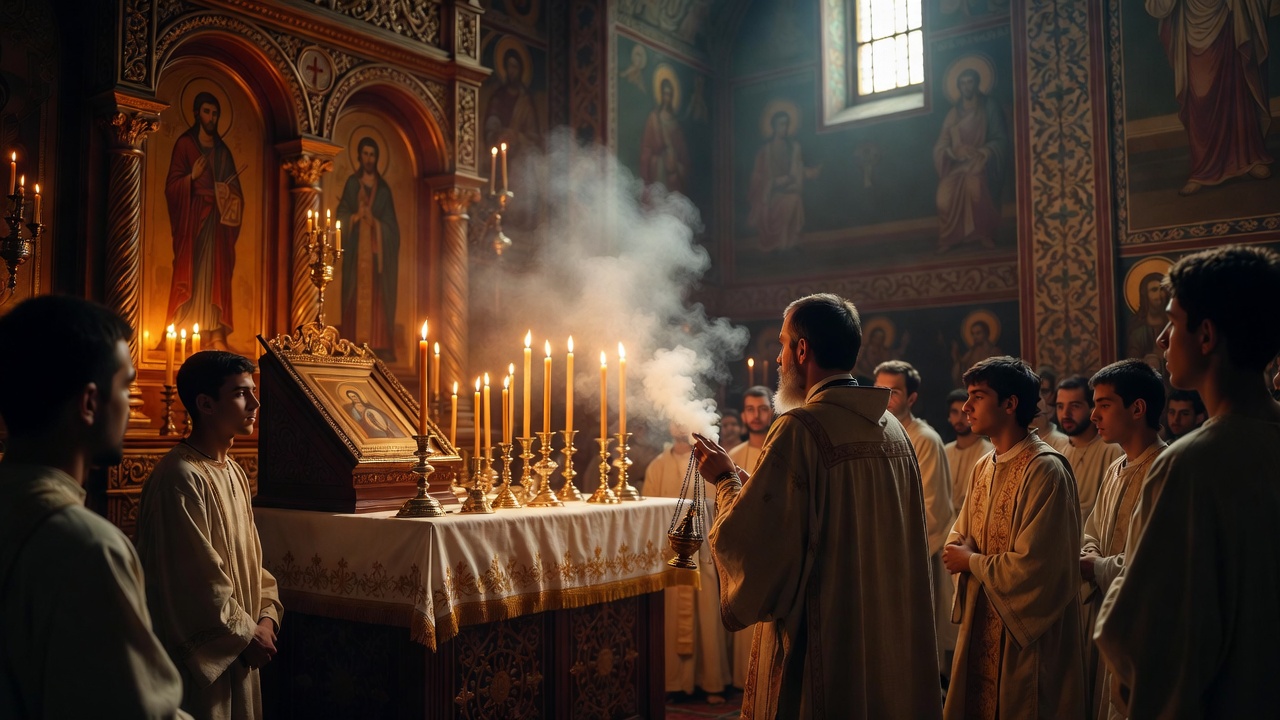
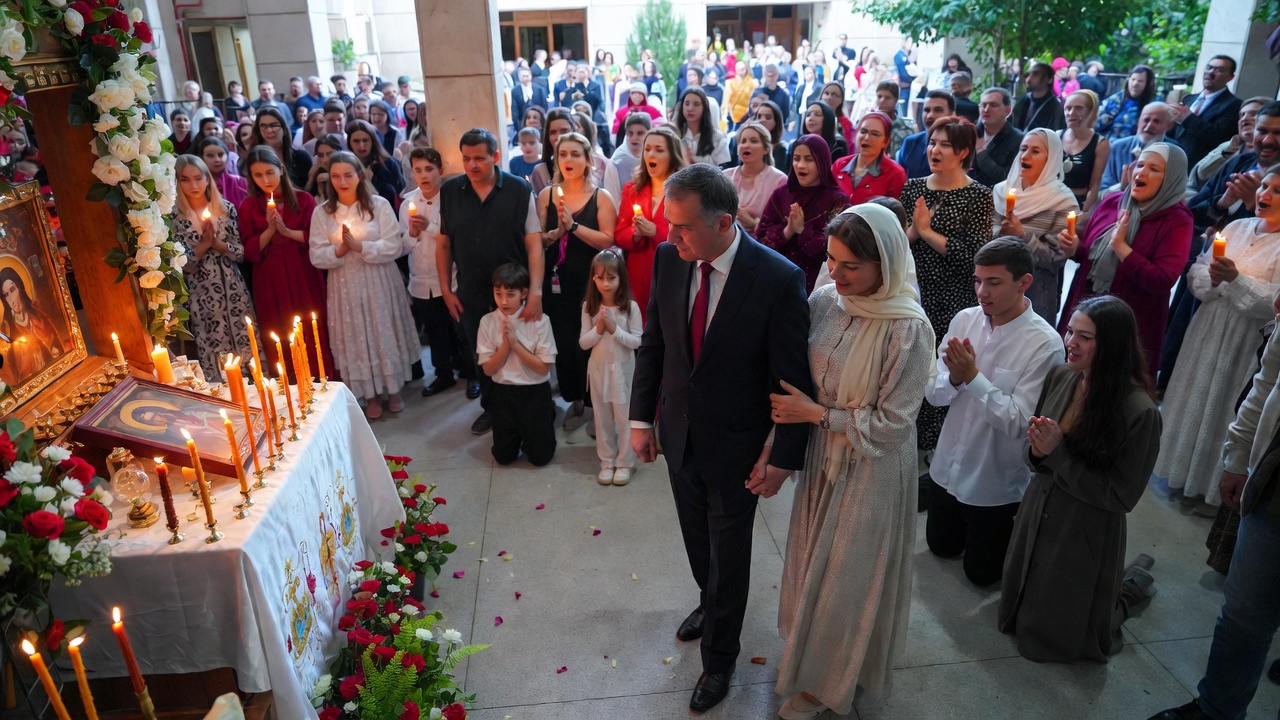
On the day of the feast itself, Divine Liturgy is celebrated in all Armenian Apostolic churches, especially those named after Saint Sarkis. In 2007, His Holiness Karekin II, the Supreme Patriarch and Catholicos of All Armenians, officially declared the Feast of Saint Sarkis as the Day of Blessing the Youth. Since that year, a special blessing ceremony for young people has been conducted at the end of every Liturgy on this day.
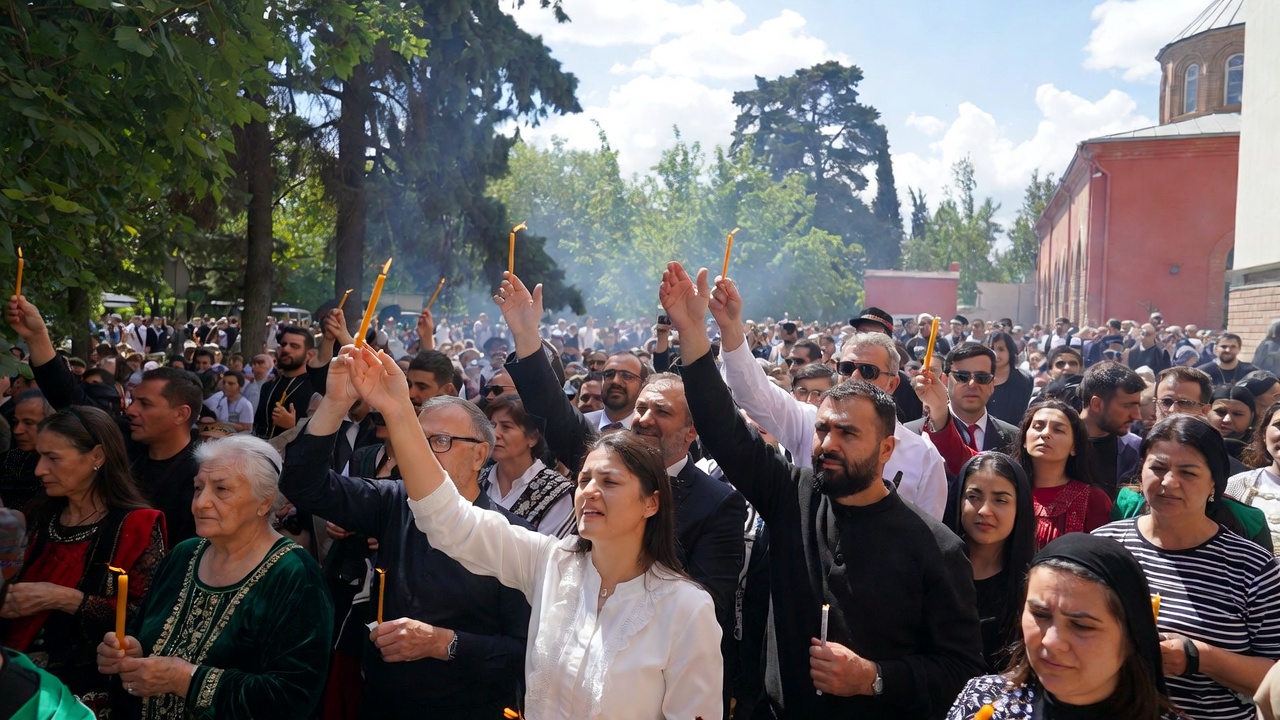
In Yerevan, Armenia’s capital, the celebration is particularly grand. A solemn procession carries a relic of Saint Sarkis from the Mother See of Holy Etchmiadzin Cathedral to the Saint Sarkis Cathedral in Yerevan. The streets fill with young couples and families. Cultural events, concerts, exhibitions, and traditional folk performances accompany the religious ceremonies.
Exchanging Gifts, Flowers, and Sweets
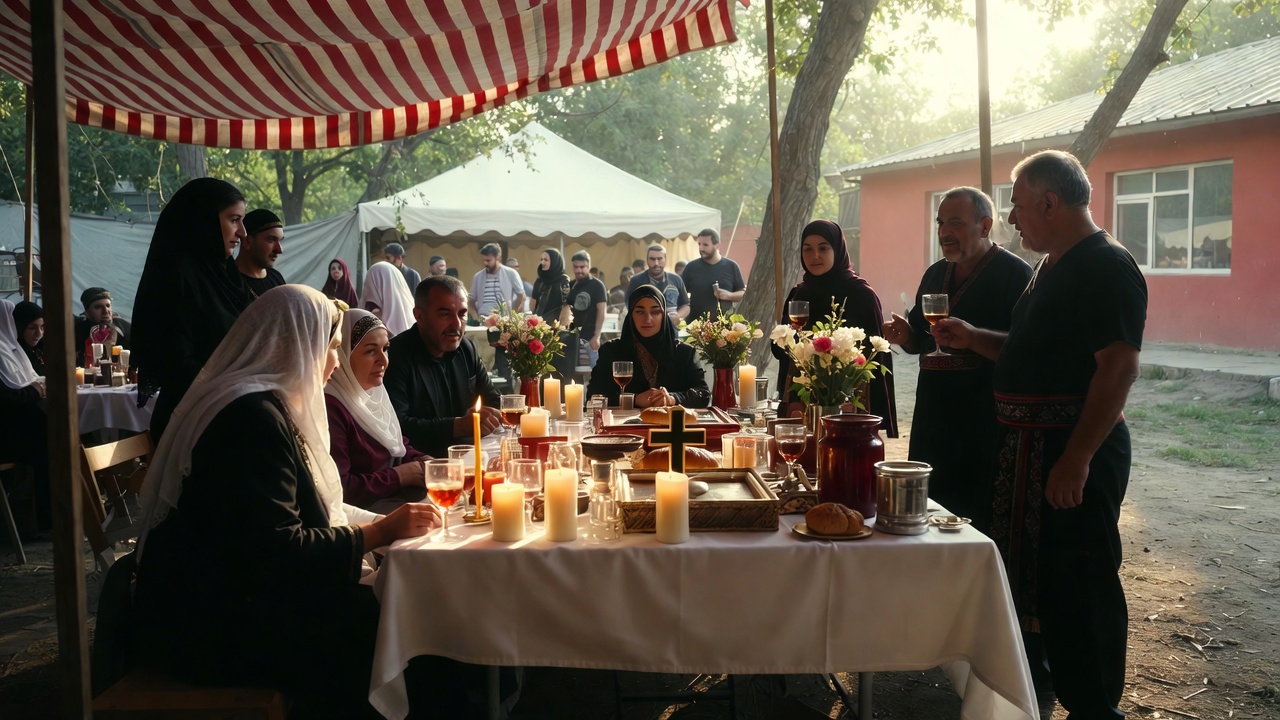
After the church service, the holiday takes on a festive, social character. Young people exchange gifts, flowers, and sweets with those they love — much like Valentine’s Day in the Western world. But the feeling is distinctly Armenian. The gifts tend to be handmade, personal, and meaningful rather than commercially driven. Homemade halva, hand-written cards, and traditional pastries are the norm.
What Is Saint Sarkis Halva? The Traditional Armenian Sweet for the Feast Day
No discussion of Saint Sarkis Day is complete without mentioning the holiday’s signature dessert: Saint Sarkis Halva (Sourp Sarkis Halva). This chewy, sesame-coated sweet is the centerpiece of the feast day table.
Ingredients and Preparation
Saint Sarkis Halva is unlike the flour-based or tahini-based halvas found in Middle Eastern cuisines. Its main ingredients are:
- White granulated sugar
- Orange blossom water (or rose water)
- Lemon juice
- Marshmallow cream (or traditionally, whipped soapwort root liquid)
- Sesame seeds
- Nuts — typically walnuts, pistachios, or almonds
The process involves boiling sugar, water, lemon juice, and orange blossom water into a golden syrup. Marshmallow cream is then mixed in. The hot mixture is poured onto a bed of sesame seeds and shaped by hand. Nuts are pressed into the center, and the confections are rolled or flattened into pieces and coated with more sesame seeds.
According to the Armenian Mirror-Spectator, the traditional version of this halva uses the reduced liquid from boiled dried soapwort roots instead of marshmallow cream. Soapwort (known as cher armat in Armenian) creates a natural foaming agent that gives the halva its signature chewy texture. Today, marshmallow cream is a widely accepted shortcut used in both Armenian and diaspora communities.
The Symbolism of Halva on Saint Sarkis Day
The halva carries deep symbolic meaning. After enduring the extremely salty aghablit the night before, the sweet halva on the morning of the feast represents a reward — a transition from austerity to abundance, from longing to fulfillment. It mirrors the journey of love itself: patience, endurance, and then sweetness.
In many Armenian families, the halva is blessed at church and then shared among family members and friends. Sharing the halva strengthens community bonds and extends the saint’s blessings outward.
Other Traditional Foods
While halva and aghablit are the most iconic, several other traditional dishes are associated with Saint Sarkis Day in different Armenian communities:
| Dish | Description |
|---|---|
| Aghablit | Extremely salty cookie eaten the night before to induce love dreams |
| Saint Sarkis Halva | Sweet sesame-and-nut confection eaten on the feast day morning |
| Kumba Cake | A spiced, dense cake from the Musa Dagh tradition; contains no dairy or eggs, making it suitable for Lenten observance |
| Khashil Don | A traditional wheat pudding served with yogurt and butter |
| Klontrak | A halva made from toasted ground wheat, butter, and mulberry syrup or honey |
Saint Sarkis Day vs. Valentine’s Day: How the Armenian Holiday of Love Compares
People often call Saint Sarkis Day the “Armenian Valentine’s Day,” and it is easy to see why. Both holidays celebrate romantic love. Both fall in the winter months. Both involve the exchange of gifts and sweets between loved ones.
But the similarities end there. The two holidays have very different roots, meanings, and cultural textures.
| Feature | Saint Sarkis Day | Valentine’s Day |
|---|---|---|
| Origin | 4th-century Armenian Christian martyrdom | 3rd-century Roman Christian martyrdom (debated) |
| Date | Moveable (63 days before Armenian Easter) | Fixed: February 14 |
| Patron Saint | Saint Sarkis the Warrior (Stratelates) | Saint Valentine of Rome |
| Focus | Youth, love, faith, and divine blessing | Romantic love and affection |
| Key Traditions | Salty cookies, love dreams, flour on rooftops, halva | Cards, chocolates, flowers, dinner dates |
| Religious Aspect | Deeply integrated with church liturgy and fasting | Largely secularized in modern practice |
| Commercial Element | Minimal; emphasis on homemade gifts and traditional foods | Heavily commercialized worldwide |
What makes Saint Sarkis Day special is its spiritual depth. The holiday is not simply about romance. It is about faith, sacrifice, courage, and the blessing of youth. The folk traditions — the salty cookie, the dream, the flour on the rooftop — connect young people to centuries of Armenian cultural memory. The church service reminds them that love is not just an emotion. It is a gift that requires moral courage and devotion.
Many Armenians today celebrate both holidays. Saint Sarkis Day carries the weight of cultural heritage. Valentine’s Day, adopted more recently, provides an additional occasion for expressing love in more contemporary ways.
Where to Celebrate Saint Sarkis Day in Armenia: Top Pilgrimage Sites and Locations
If you are planning a trip to Armenia to experience Saint Sarkis Day in 2026, several locations stand out as must-visit destinations.
Saint Sarkis Cathedral in Yerevan
The Saint Sarkis Cathedral is one of Yerevan’s most recognizable landmarks. The current building was constructed between 1835 and 1842, though a church dedicated to Sarkis has stood on this site for centuries. The cathedral underwent major renovations in the 1970s under the direction of architect Rafayel Israyelian. Its exterior is covered in warm Ani orange tufa stone, and the bell tower was completed in 2000.
On the Feast of Saint Sarkis, this cathedral becomes the focal point of the celebrations in Yerevan. A procession carries the saint’s relic from Holy Etchmiadzin to the cathedral, drawing large crowds of worshippers and onlookers alike.
Saint Sarkis Monastery of Ushi (Aragatsotn Province)
For a deeper, more spiritual experience, visit the Saint Sarkis Monastery near the village of Ushi in Aragatsotn Province, about 37 kilometers from Yerevan. This is where Saint Mesrop Mashtots brought the relics of Sarkis in the 5th century. The monastery was built directly over those relics.
The complex includes a 10th-century chapel, the 13th-century Surp Astvatsatsin Church, a gavit (narthex), a belfry, a refectory, and a fortification wall built in 1654. Earthquakes in 1679 and 1827 severely damaged the monastery, and it was buried under several meters of soil for centuries. Excavations in the late 1990s uncovered the complex, and restoration of the Saint Sarkis Chapel was completed in 2004.
Today, the monastery is a pilgrimage site where the faithful come to pray on the Feast of Saint Sarkis. The relics themselves have since been transferred to the museums of Holy Etchmiadzin.
Mother See of Holy Etchmiadzin
The Mother See of Holy Etchmiadzin, located in the city of Vagharshapat near Yerevan, is the spiritual center of the Armenian Apostolic Church and the seat of the Catholicos. On Saint Sarkis Day, the ceremonies here carry particular gravity. The relic procession that heads to Yerevan’s Saint Sarkis Cathedral originates here, making Etchmiadzin a key starting point for the day’s celebrations.
Diaspora Churches Worldwide
Saint Sarkis Day is also celebrated with great enthusiasm in Armenian diaspora communities across the world. Major Armenian churches in Los Angeles, London, Sydney, Beirut, Paris, Toronto, and New York hold special liturgies and community gatherings on the feast day.
In London, the Saint Sarkis Church in Kensington — a beautiful building designed by Calouste Gulbenkian — hosts a full Divine Liturgy followed by a community celebration with music, dance performances, and traditional food.
In Texas, the St. Sarkis Armenian Orthodox Church — which won the Building of the Year 2022 award — is planning its Third Parish Pilgrimage to Armenia in June 2026, reflecting the deep connection between diaspora communities and the homeland.
The Role of Saint Sarkis in Armenian Art, Literature, and Cultural Identity
Saint Sarkis is far more than a religious figure. He is a cultural icon woven into the fabric of Armenian identity.
In Art
Armenian manuscripts, frescoes, and textiles have depicted Sarkis for centuries. The most common image shows him on his white horse, often with his son Mardiros riding behind him. This iconographic tradition stretches from medieval Armenian illuminated manuscripts to folk art and modern illustrations. As noted earlier, the Victoria and Albert Museum in London holds a 1710 printed curtain from Madras (Chennai, India) that features the classic image of Sarkis and Mardiros on horseback — evidence of how far the Armenian diaspora carried this cultural tradition.
In Folklore
In Armenian folk songs and oral tradition, Sarkis is depicted as a powerful, handsome warrior who commands storms. When he twirls his spear, blizzards arise. When his horse gallops, the earth trembles. He is both a protector and a figure of romantic mystery — the kind of character who belongs equally to history and to fairy tale.
He was so widely venerated that his fame even crossed ethnic boundaries. According to Wikipedia’s entry on Sargis the General, Saint Sarkis entered into Kurdish folklore as well. Churches dedicated to him once stood across the Armenian Highlands, including in the historic regions of Bitlis, Xizan, Bales, and Van.
In the Armenian Diaspora
For Armenians living outside their homeland — a community estimated at 7 to 10 million people worldwide — Saint Sarkis Day serves as a powerful link to cultural roots. Making aghablit, preparing halva, and attending church together on this day reinforces a sense of shared identity and continuity. These are not just rituals. They are acts of cultural preservation, especially meaningful for a people who survived genocide and forced displacement in the 20th century.
How Has Saint Sarkis Day Changed in Modern Times? Traditions Evolving in 2026
Like all living traditions, Saint Sarkis Day continues to evolve. While the core elements — the fast, the aghablit, the halva, and the church service — remain intact, some notable changes have occurred in recent decades.
Official Recognition as the Day of Blessing the Youth
One of the most significant modern developments came in 2007, when Catholicos Karekin II formally designated the feast as the Day of Blessing the Youth. This official recognition elevated the holiday’s status within the Armenian Church and brought renewed attention to its traditions. Since then, every Liturgy on Saint Sarkis Day ends with a special youth blessing ceremony, in which young people gather before the altar to receive the clergy’s prayers for their future.
Cultural Events and Festivals
In the years since 2007, the celebrations in Armenia have expanded beyond the purely religious. The feast day now includes exhibitions, concerts, traditional folk events, and community gatherings organized in Yerevan and other Armenian cities. These events help keep the holiday relevant for younger generations who might not attend church regularly but still feel connected to their cultural heritage.
Social Media and the Diaspora
In the age of Instagram, TikTok, and YouTube, Saint Sarkis Day has found new life online. Armenian families across the diaspora share photos and videos of their aghablit-making, halva-baking, and dream interpretations. Recipes that were once passed down orally are now documented in food blogs and video tutorials. This digital dimension has made the holiday more accessible to younger Armenians who grew up far from the homeland and may not speak Armenian fluently.
Vegan and Modern Adaptations of Traditional Recipes
The traditional Saint Sarkis Halva is naturally suited to Lenten and vegan diets, since the classic recipe contains no dairy or eggs. In recent years, cookbooks like “The Vegan Armenian Kitchen Cookbook” (2020) by Lena Tashjian and Siroon Parseghian have helped popularize plant-based versions of holiday recipes. This trend has made Saint Sarkis Day foods more inclusive and appealing to health-conscious and ethically motivated eaters.
The Wedding Season Connection: Why Armenians Rush to Marry After Saint Sarkis Day
There is a practical reason why Saint Sarkis Day carries such romantic weight in Armenia. The holiday falls just two to three weeks before the start of Great Lent — the 48-day fasting period that precedes Easter. During Great Lent, the altar curtains of Armenian churches are closed, and no wedding ceremonies are performed.
This means the brief window between Saint Sarkis Day and the start of Great Lent is one of the last opportunities for couples to marry before a long pause in the wedding calendar. As a result, the weeks following the feast are traditionally one of the busiest wedding seasons in Armenia. Couples who want to avoid waiting nearly two months for Lent to end rush to hold their weddings during this narrow period.
This practical dimension adds urgency and excitement to the holiday. Saint Sarkis Day is not just about dreaming of a future spouse — for many, it is the starting signal for wedding season.
In 2026, with the feast falling on January 31 and Great Lent beginning on February 15, couples will have a two-week window to plan their nuptials.
Frequently Asked Questions About Saint Sarkis Day
Is Saint Sarkis Day a Public Holiday in Armenia?
Saint Sarkis Day is not an official public holiday in Armenia. However, it is one of the most widely observed religious and cultural celebrations in the country. Many businesses, especially in the food and floral industries, see increased activity around the feast.
What Is the Armenian Name for Saint Sarkis Day?
The Armenian name is Sourb Sarkis Zoravar (Սուրբ Սարգիս Զորավար), which translates to “Saint Sarkis the General” or “Saint Sarkis the Warrior.” The feast is formally called the Feast of Saint Sarkis the Captain, Patron of Love and Youth, his son Martyros, and his 14 Soldiers-Companions.
Can Non-Armenians Participate in Saint Sarkis Day?
Absolutely. Armenian communities are generally welcoming to visitors who wish to attend church services or participate in cultural events. If you are visiting Armenia during the feast, attending the Divine Liturgy and tasting the halva are wonderful ways to experience the holiday. Just approach the traditions with respect and genuine curiosity.
How Is Saint Sarkis Day Different from Trndez?
Trndez is another Armenian holiday that takes place around the same time of year, roughly two weeks after Saint Sarkis Day. Trndez involves the tradition of jumping over a bonfire and is associated with purification, fertility, and the blessing of newlyweds. While both holidays have romantic themes, they are distinct celebrations with different origins and customs. Saint Sarkis Day focuses on dreaming of love and honoring a martyr saint. Trndez focuses on fire, purification, and the strengthening of marriage bonds.
Did Saint Sarkis Really Exist?
The historical existence of a military commander named Sargis (Sergius) in 4th-century Cappadocia is supported by hagiographic sources, though details of his life are wrapped in layers of legend and religious tradition. The primary account of his life, known as the “History of the Life of Saint Sargis the General,” was commissioned by Patriarch Nerses and based on an Armenian translation of a Syriac text. Historians note that the prominence of miraculous elements suggests the account was composed well after the events it describes.
A Living Bridge Between Faith, Love, and Armenian Heritage
Saint Sarkis Day is one of those rare holidays that manages to be deeply sacred and genuinely fun at the same time. It honors a man who gave up everything — his rank, his country, and ultimately his life — for his faith. It invites young people to dream about love in a way that is innocent, hopeful, and connected to centuries of tradition. And it brings families and communities together around church pews, kitchen tables, and trays of halva.
In a world where so many holidays have been stripped of their original meaning and turned into commercial events, Saint Sarkis Day stands out as something authentic. The salty cookie is not a product you buy in a store. The dream is not an app on your phone. The halva is made by hand, shared with love, and eaten with gratitude.
Whether you are Armenian or not, there is something deeply moving about a culture that has maintained these traditions for more than 16 centuries — through empires, invasions, genocide, exile, and diaspora. The fact that young Armenians in Los Angeles, Sydney, Beirut, and Yerevan still eat aghablit on the same night, still place flour on their doorsteps, and still wake up hoping to see a stranger offering them water in a dream — that is not just folklore. That is cultural resilience.
So this January 31, as you go about your day, spare a thought for the rider on the white horse. Think of the young woman who chose a kiss over a dagger. And if you happen to eat something very salty before bed, pay close attention to your dreams. Saint Sarkis might just be riding through.
Barov Surb Sarkis! (Blessed Saint Sarkis Day!)